
Back to cruise search
Home/Cruises/28-Day Legendary Solar Eclipse with Greenland & Scotland
28-Day Legendary Solar Eclipse with Greenland & Scotland from Dover, UK, 24 Jul 2026 (28 nights)
5.0 ship ratingNieuw Statendam - Holland America Line

Cruise search
We are checking available sailings, ship details and guide prices for you.
Ask our cruise specialists about cruise line loyalty benefits, status match options, drinks packages, gratuities and any current offers available on this sailing.
Sail with confidence
We explain the relevant financial protection before you book.
Always here to help
When plans change, your cruise specialists are here to help.
Carefully selected cruises
From short breaks to big adventures, we help narrow down the right sailing.
Cruise summary
Gallery

Dining
1 of 12 onboard highlights
Your itinerary
Port descriptions and imagery are shown where available for each day or port.
Dover, in the county of Kent in southeast England, has understandably been one of the most important ports of entry to the country for centuries, given its location on the English Channel across from France. The famous White Cliffs of Dover greet you as you arrive, and the city has a number of historic sights, including a medieval castle. For many travelers, however, it is primarily a gateway to London. Few places can compete with England’s capital for sheer energy, atmosphere and variety. London’s vibrancy—in art, in music, in architecture—is formidable. It’s a city with not only multiple attractions, grand structures and great cultural institutions (though there are plenty of those) but also scenic parks, walkable villages and striking modern additions.Culinary pioneers are reviving traditional techniques and introducing menus that are at the forefront of the world’s premier restaurant experiences. Leg-powered sightseeing (by bike or on foot) around London maximizes opportunities fo…
Often called the gateway to Europe, the port city of Rotterdam is full of old-world charm. The harbor offers amazing views and a maze of wharves and canals, along with towering spires make for a beautiful sight. Take a stroll and duck into one of the pubs or eateries along the way. Only three pre World War II buildings in the city centre have survived and are worth a look - city hall, St. Laurence church and the White House. Explore the Museum Boymans van Beuningen, which houses a unique collection dating from the 14th century, or the Museum Voor Volkenkunde - home to ethnological exhibits. Exquisite architecture can be seen in many areas of Rotterdam, most notably in the Delfshaven quarter of the city - where 18th century houses are on display. For a laugh, check out Kijk-Kubus, an upside-down house.
One of southern Norway's most picturesque attractions. Take a walk among the white wooden houses, or visit the variety of shops. You'll discover the town's interesting geometric layout designed during the Renaissance.
In the shadow of snowy peaks and near stunning blue-green fjords, Eidfjord is considered by many to be one of the most beautiful villages in Norway. Even though it has a population of less than 1,000, scores of visitors come here each year to bask in the area's natural splendor. Hardangervidda, near Eidfjord, is Europe's largest mountain plateau as well as Norway's largest national park. Interestingly, the legendary polar explorer Roald Amundsen, who led the first expedition to reach the South Pole, and Fridtjof Nansen, who made the first successful crossing of the Greenland interior, both used Hardangervidda to prepare for their expeditions. Walking, hiking, cycling and cross-country skiing are popular, and the area is home to Europe's largest population of wild reindeer. Numerous canyons, including the famous Måbødalen Valley, lead south from the Hardangervidda plateau to the fjords along the coast, and about 16 kilometers (10 miles) south of Eidfjord, visitors can see the dramatic…
The lush valleys and dramatic waterfalls of Seyðisfjörður are some of the most picturesque sights on Iceland’s east coast. And at the head of the fjord sits the colorful, lively town of Seyðisfjörð with a thriving art and music scene thanks to the LungA Art Festival and concerts in the landmark Blue Church each summer. The Skaftfell Center for Visual Art, open year round, exhibits the work of young artists and also has a popular bistro and a bookstore. Seyðisfjörð was founded in the 19th century by Norwegian settlers, who built some of the brightly painted wooden buildings you see today. The town, population 700, has kept its connection to the European mainland: It's the only port in Iceland that regularly sees passenger ships from Europe, through a ferry service to and from Denmark and the Faroe Islands. The residents in the area surrounding Seyðisfjörð are more likely to be wild reindeer—originally imported from Norway, they're the only such animals in Iceland—and arctic foxes, whil…
Djúpivogur, a quiet fishing village with fewer than 500 residents, sits on the eastern coast of Iceland and dates back to the days of the Vikings. Despite the fearsome reputation of those who first established Djúpivogur, today what draws visitors to this remote corner of the country is its dramatic natural setting. Located on Berufjörður, it is near stunning natural wonders like the Hofellsjökull Glacier and the Valley of Waterfalls. Wherever you journey in the region, you'll come upon stunning vistas and a landscape shaped by glaciers and geothermal activity. The village itself is home to intriguing sites like Langabúð, a log house built in 1790 that now houses artifacts related to Iceland’s long-held folk traditions. (These include a belief in “hidden folk” who live in the ancient windswept landscapes of rock, glacier and lava.) You can also journey to nearby Papey Island and meet some of eastern Iceland's seabird population including cute and quirky puffins. These birds are so bel…
Often described as the capital of north Iceland, the country's second-largest city is both vibrant and pretty, and serves as an ideal hub for exploring the incredible landscape that surrounds it. Located at the head of a 60-kilometer fjord—the country’s longest—and surrounded by snow-streaked mountains, Akureyri was originally settled in the 9th century and was first officially mentioned as a city in the 16th century. Today it boasts a population of around 17,000, a scenic harbor and an array of interesting shops, buzzy cafés and upscale restaurants. Its main sights include the Akureyri Church, a wonderful botanical garden (founded in 1912) and the fascinating Akureyri Museum. From here it’s possible to explore some of the country’s most memorable landscapes, starting with Akureyri’s own fjord, Eyjafjörður, where you'll find several museums (including the Icelandic Folk and Outsider Art Museum), fishing villages like Grenivík and plenty of dramatic mountain scenery. Farther afield are…
Bordered on three sides by dramatic mountains that form a natural harbor, the idyllic town of Ísafjörður—population 2,600—serves as a charming exploration hub for the surrounding Westfjords peninsula. Settled since the 16th century, and traditionally dependent on fishing as its main source of income, its streets are today lined with old wooden houses interspersed with occasional shops, restaurants and cafés. Despite its low-key atmosphere, Ísafjörður offers plenty to do, from visiting local museums and enjoying a game of golf, to hiking, biking and kayaking around the town and harbor. The town also hosts several notable events, such as Iceland's oldest cross-country ski race, the mud-football European Championships and a classical music festival, Við Djúpið. The rugged and remote Westfjords offer many more attractions. A daily summer ferry transports visitors to the scenic Hornstrandir Nature Reserve and to Vigur, an island that's home to many protected bird populations. Follow the re…
Grundarfjörður is a town in the north of the Snæfellsnes peninsula in the west of Iceland. It is situated between a mountain range and the sea. The nearby mountain Kirkjufell forms a small peninsula.
Paamiut formerly Frederikshab With more time at sea and more out-of-the-way ports, there’s much to explore—both on and off your ship. Discover the medieval art of Cherbourg. Stroll the gardens of Madeira. Relax and enjoy yourself.
Nuuk, formerly known as Gothab, is Greenland's modern capital, with a university, cafes, museums, buses and shops. When in this small metropolis of 14,000, you'll find that you are never far from nature—eagles glide majestically over glaciated peaks, and late, late sunsets are illuminated by the mysterious Northern Lights.
Greenland's southernmost town, Nanortalik is surrounded by the steep mountain peaks of Tasermiut Fjord - whose rugged landscape and lush vegetation attracts serious climbers all year long. Inside the fjord are the ruins of an Augustinian monastery and the towering trees of the Qingua Valley. In this region, the northern lights dance across the sky in the evenings and polar bears have been known to drift by on ice floes. Visit the old town around the colonial harbor where the museum includes exhibits of rare Norse clothing. This harbor is thought to be the last point of departure of the Norse voyagers when they sailed to or from Greenland. The importance of the site is evidenced in the ruins of boathouses. Take a chilly trip to the ice cap by boat, or warm up in the natural hot springs at Uunartoq.
The name "Qaqortoq" means "the White Place," and indeed, 85% of the area is under ice. Explore the small town of 3,400 and learn how people survive on this immense, remote island administered by the Danes but desperate for individual recognition of its distinctive culture.
This charming Arctic settlement of around 4,500 people (and millions of wild puffins) offers unique opportunities for sightseeing. The visually dramatic setting is particularly suited to photographers looking to capture memorable vistas.
See dramatic evidence of Iceland's volcanic origins: geysers, hotsprings, vast fields of cooled lava. Swim in the naturally-warmed Blue Lagoon.
Situated on the picturesque island of Eysturoy, the small village of Runavík is your gateway to the Faroe Islands. This ethereal archipelago and autonomous region of Denmark lies in the North Atlantic between Scotland, Iceland and Norway. Explore the islands’ pastoral landscapes, dotted with colorful cottages, grass roofed wooden churches, Viking stone farmhouses, and sheep grazing on green pastures of scotch heather.
Inhabited for more than 6,000 years, the Isle of Lewis has a rich history and rugged beauty. Explore the islands varied scenery from fjord-like lochs and dramatic sea-cliffs to barren peat moors and romantic heather covered uplands; marvel at the mysterious Standing Stones at Callanish, the most remarkable piece of antiquity in the Western Isles; and shop for famous Harris Tweed, hand-woven and uniquely dyed using indigenous plants.
The skirl of Highland bagpipes calls you ashore. Go in search of your clan tartan, and "Nessie," the spurious monster often sighted in Loch Ness.
History was made in this port, just across the Firth of Forth from Rosyth, when the future Queen Margaret of Scotland arrived around 1071. Her devout religious attitude established 'Queen's Ferry' as the place for pilgrims from abroad to alight on their way to St. Andrews—Scotland's ecclesiastical capital in the Middle Ages. Margaret's legacy continues less than a dozen miles away at Edinburgh Castle. A key attraction up on the castle's rock is St. Margaret's Chapel, believed to be the oldest section of the fortifications and the place where she worshipped. There's more to Scotland's capital than the Castle, though. Edinburgh proudly displays multiple exhibits on national and international scientific achievement at the National Museum of Scotland, as well as some fantastic works of visual art at the National Galleries of Scotland. South Queensferry's moorings are also within easy striking distance of Scotland's largest metropolis: the city of Glasgow. Transformed in many ways since th…
History was made in this port, just across the Firth of Forth from Rosyth, when the future Queen Margaret of Scotland arrived around 1071. Her devout religious attitude established 'Queen's Ferry' as the place for pilgrims from abroad to alight on their way to St. Andrews—Scotland's ecclesiastical capital in the Middle Ages. Margaret's legacy continues less than a dozen miles away at Edinburgh Castle. A key attraction up on the castle's rock is St. Margaret's Chapel, believed to be the oldest section of the fortifications and the place where she worshipped. There's more to Scotland's capital than the Castle, though. Edinburgh proudly displays multiple exhibits on national and international scientific achievement at the National Museum of Scotland, as well as some fantastic works of visual art at the National Galleries of Scotland. South Queensferry's moorings are also within easy striking distance of Scotland's largest metropolis: the city of Glasgow. Transformed in many ways since th…
Dover, in the county of Kent in southeast England, has understandably been one of the most important ports of entry to the country for centuries, given its location on the English Channel across from France. The famous White Cliffs of Dover greet you as you arrive, and the city has a number of historic sights, including a medieval castle. For many travelers, however, it is primarily a gateway to London. Few places can compete with England’s capital for sheer energy, atmosphere and variety. London’s vibrancy—in art, in music, in architecture—is formidable. It’s a city with not only multiple attractions, grand structures and great cultural institutions (though there are plenty of those) but also scenic parks, walkable villages and striking modern additions.Culinary pioneers are reviving traditional techniques and introducing menus that are at the forefront of the world’s premier restaurant experiences. Leg-powered sightseeing (by bike or on foot) around London maximizes opportunities fo…
What's included
Fare overview
This sailing is shown as a cruise-only guide fare with Holland America Line. The fare is linked to the ship, itinerary and cabin category you choose. Drinks packages, gratuities, Wi-Fi, flights, transfers and shore experiences are only treated as included where they are confirmed before booking.
Sailing aboard
Nieuw Statendam
Your ship
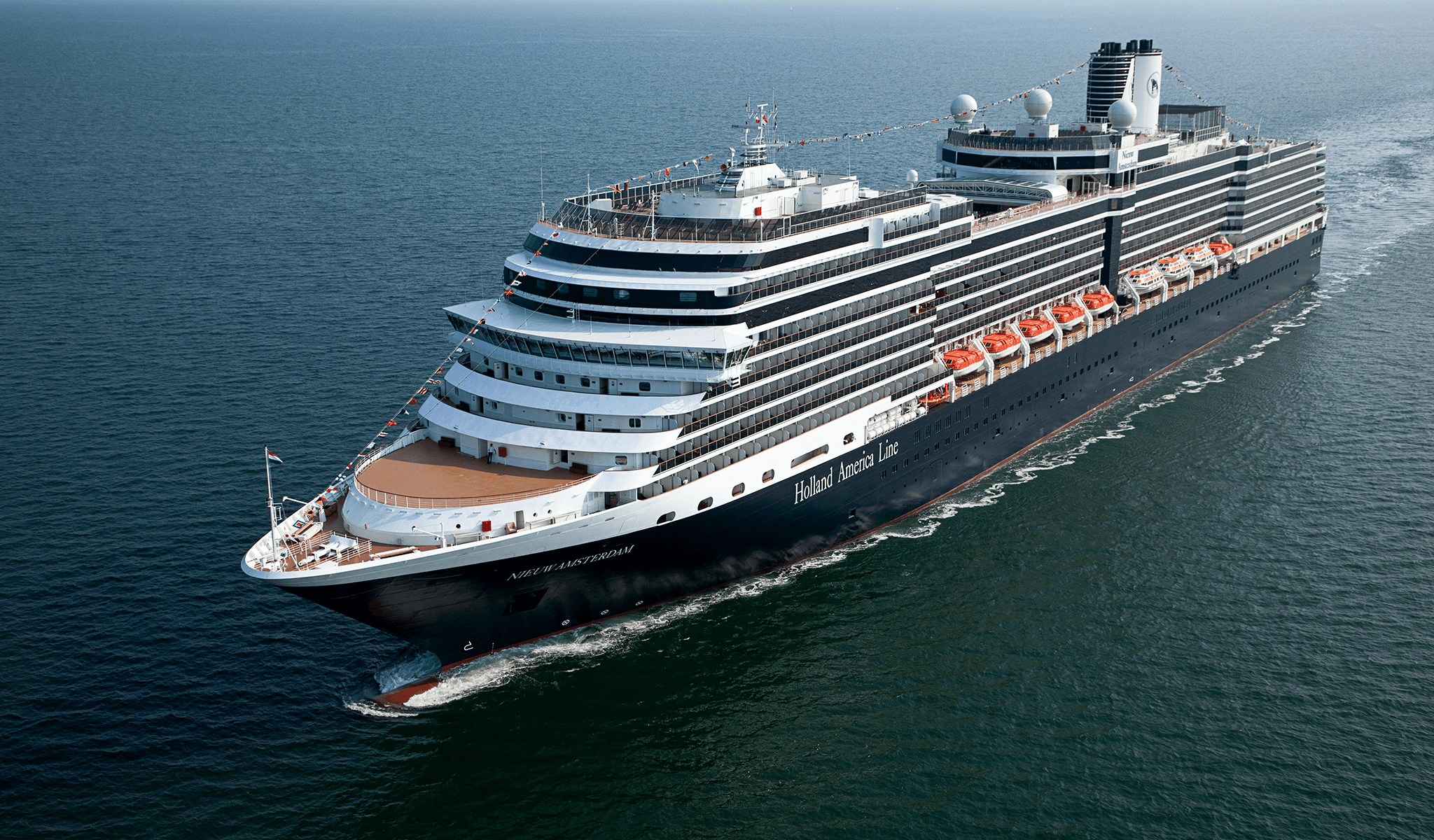
Nieuw Statendam, a sister ship to Koningsdam and the second of our Pinnacle-class ships, features a design inspired by the fluid curves of musical instruments. Guests can savor her innovative specialty restaurants—from Sel de Mer to the Grand Dutch Cafe. Enjoy live music and entertainment from the Rolling Stone Rock Room, B.B. King's Blues Club, and more. Explore the thrill of BBC Earth Experiences presentations at our spectacular two-story World Stage.
Onboard facilities

Bars/Lounges
Deck plans
Explore the ship deck by deck. Deck plans can change and should be checked before booking.
Beethoven Deck

These facilities are available aboard the ship. Their deck locations can be confirmed before booking.
Match cabin grade codes and colours to the selected deck plan.
Choose your cabin
Compare the cabin types and onboard features shown for this sailing. Final price and availability are confirmed before booking.
Use horizontal scrolling, trackpad gestures, touch swipes, or the arrow keys to browse cabin types.
Cabin details
Inside
Code
I
Deck
Beethoven Deck
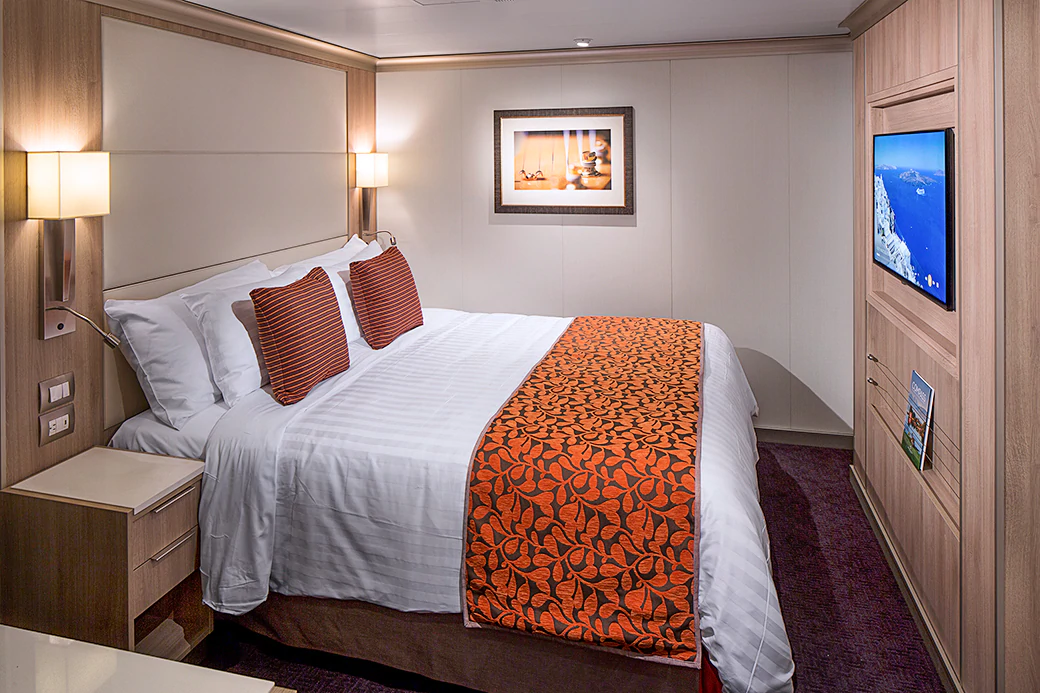
Two lower beds convertible to one queen-size bed—our signature Mariner's Dream bed with plush Euro-Top mattresses, premium massage shower heads and a host of amenities are featured in these comfortable staterooms. The configuration of staterooms may vary from the images shown.
Facilities and amenities
Cabin details
Inside
Code
IQ
Size
225 sq. ft
Deck
Panorama Deck
Approximately 143-225 sq. ft. These staterooms feature spa amenities such as yoga mats and access to spa treatments from the Greenhouse Spa & Salon. There are two lower beds convertible to one queen-size bed—our Signature Mariner's Dream bed with plush Euro-Top mattresses, premium massage shower heads and a host of amenities are featured in these comfortable staterooms. The configuration of staterooms may vary from the images shown.
Facilities and amenities
Cabin details
Inside
Code
J
Deck
Beethoven Deck
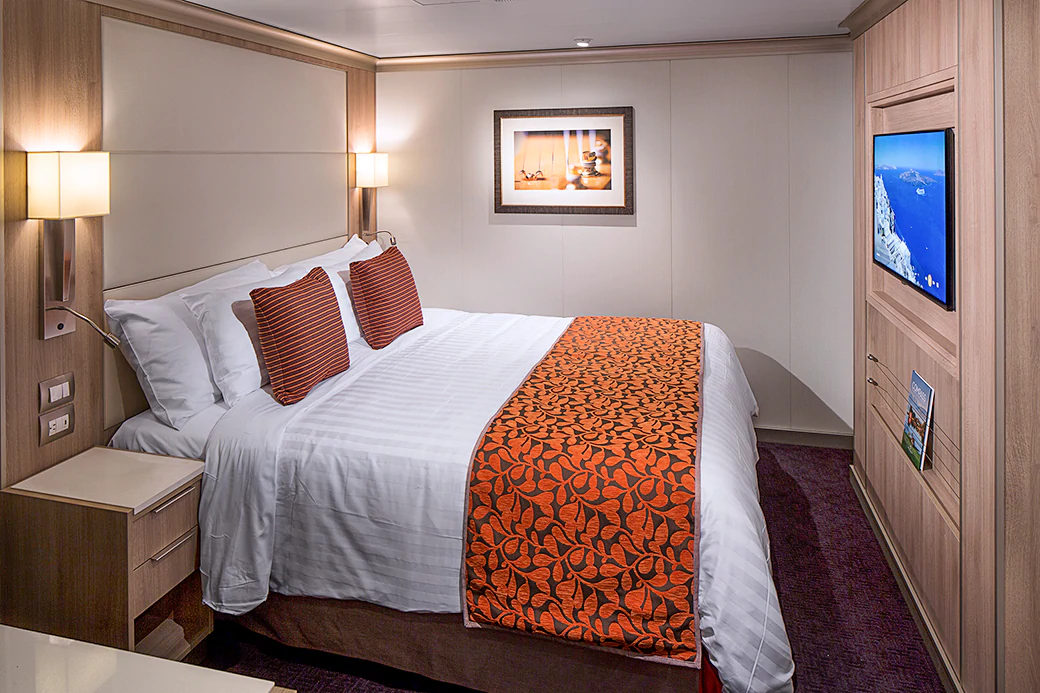
Two lower beds convertible to one queen-size bed—our signature Mariner's Dream bed with plush Euro-Top mattresses, premium massage shower heads and a host of amenities are featured in these comfortable staterooms. The configuration of staterooms may vary from the images shown.
Facilities and amenities
Cabin details
Inside
Code
K
Deck
Beethoven Deck
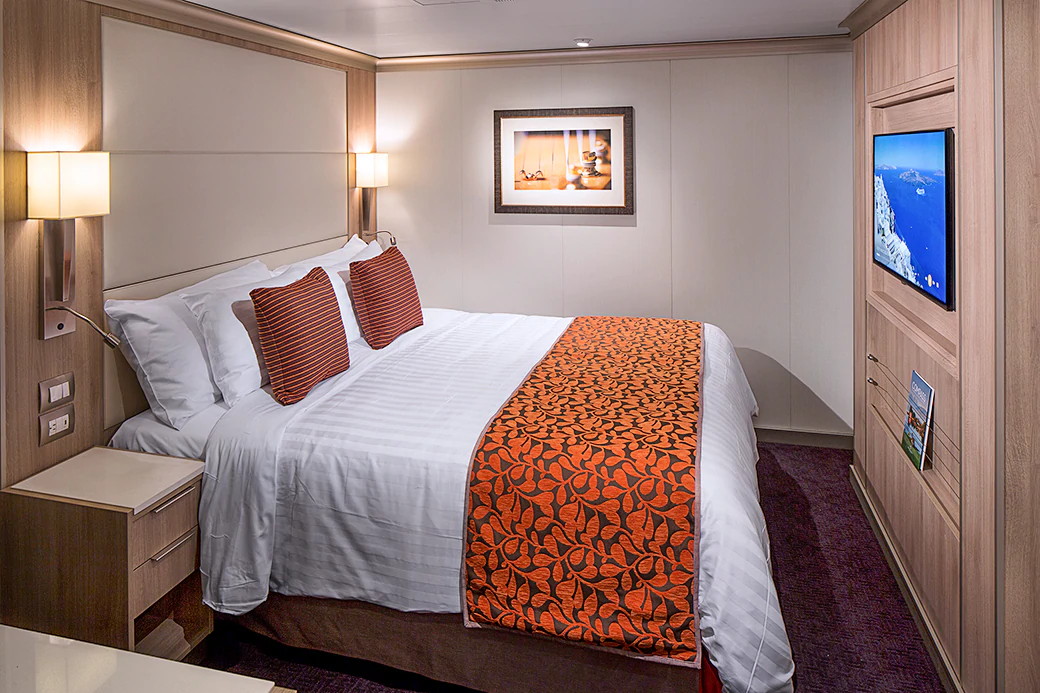
Two lower beds convertible to one queen-size bed—our signature Mariner's Dream bed with plush Euro-Top mattresses, premium massage shower heads and a host of amenities are featured in these comfortable staterooms. The configuration of staterooms may vary from the images shown.
Facilities and amenities
Cabin details
Inside
Code
L
Deck
Beethoven Deck
Two lower beds convertible to one queen-size bed—our signature Mariner's Dream bed with plush Euro-Top mattresses, premium massage shower heads and a host of amenities are featured in these comfortable staterooms. The configuration of staterooms may vary from the images shown.
Facilities and amenities
Cabin details
Inside
Code
N
Deck
Beethoven Deck
Two lower beds convertible to one queen-size bed—our signature Mariner's Dream bed with plush Euro-Top mattresses, premium massage shower heads and a host of amenities are featured in these comfortable staterooms. The configuration of staterooms may vary from the images shown.
Facilities and amenities
Cabin details
Outside/Oceanview
Code
FB
Size
231 sq. ft
Deck
Main Deck
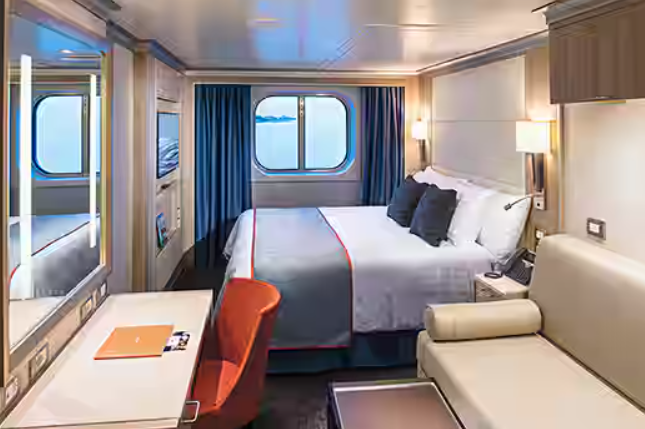
Approximately 222-231 sq. ft With accommodations for five guests, this stateroom includes two lower beds convertible to one queen-size bed and one upper bed—all are our signature Mariner's Dream beds with plush Euro-Top mattresses, plus one sofa bed for two persons. There are two bathrooms: one with bathtub, shower, sink and toilet, one with shower and sink. The configuration of staterooms may vary from the images shown.
Facilities and amenities
Cabin details
Outside/Oceanview
Code
FA
Size
231 sq. ft
Deck
Main Deck
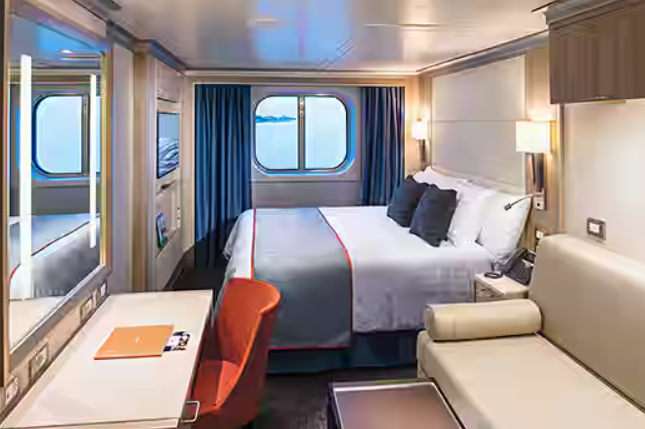
Approximately 222-231 sq. ft With accommodations for five guests, this stateroom includes two lower beds convertible to one queen-size bed and one upper bed—all are our signature Mariner's Dream beds with plush Euro-Top mattresses, plus one sofa bed for two persons. There are two bathrooms: one with bathtub, shower, sink and toilet, one with shower and sink. The configuration of staterooms may vary from the images shown.
Facilities and amenities
Cabin details
Outside/Oceanview
Code
CQ
Deck
Panorama Deck
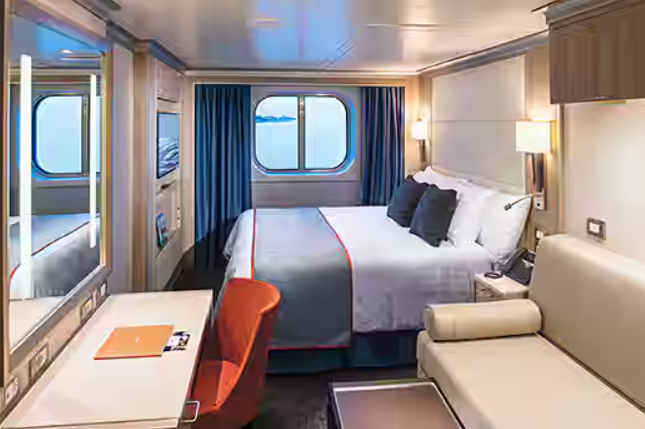
These ocean-view staterooms offer spa amenities such as yoga mats and exclusive spa treatments from the nearby Greenhouse Spa and Salon. It includes two lower beds convertible to one queen-size bed—our signature Mariner's Dream bed with plush Euro-Top mattresses, premium massage shower heads, a host of amenities and an ocean view. The configuration of staterooms may vary from the images shown.
Facilities and amenities
Cabin details
Outside/Oceanview
Code
C
Deck
Main Deck
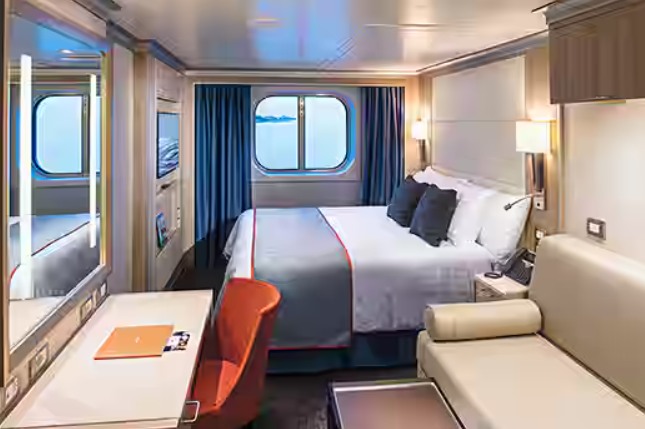
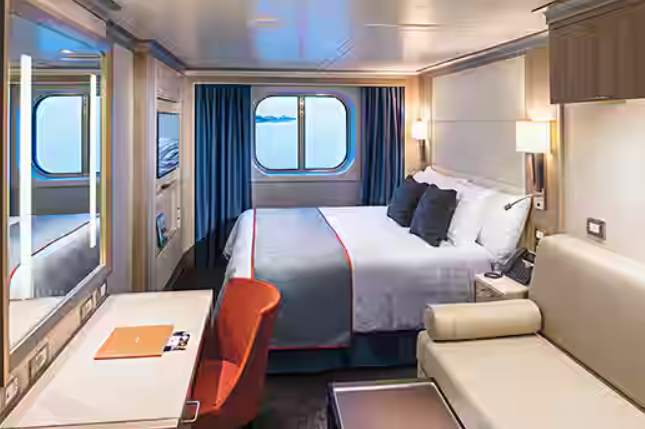
These expansive staterooms include two lower beds convertible to one queen-size bed—our Signature Mariner's Dream bed with plush Euro-Top mattresses, premium massage shower heads, a host of amenities and an ocean view. The configuration of staterooms may vary from the images shown.
Facilities and amenities
Cabin details
Outside/Oceanview
Code
E
Deck
Beethoven Deck
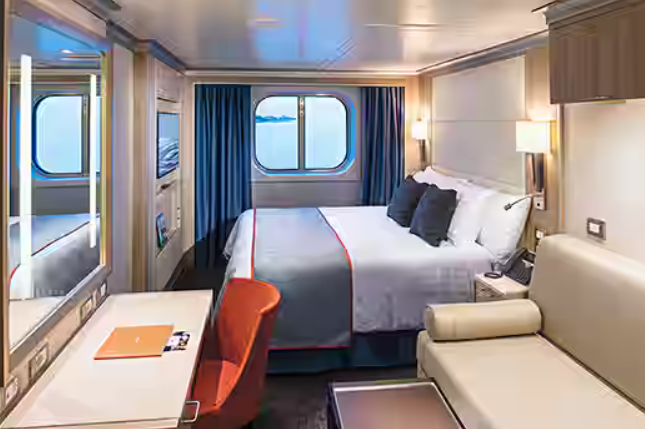
These expansive staterooms include two lower beds convertible to one queen-size bed—our Signature Mariner's Dream bed with plush Euro-Top mattresses, premium massage shower heads, a host of amenities and an ocean view. The configuration of staterooms may vary from the images shown.
Facilities and amenities
Cabin details
Outside/Oceanview
Code
D
Deck
Schubert Deck
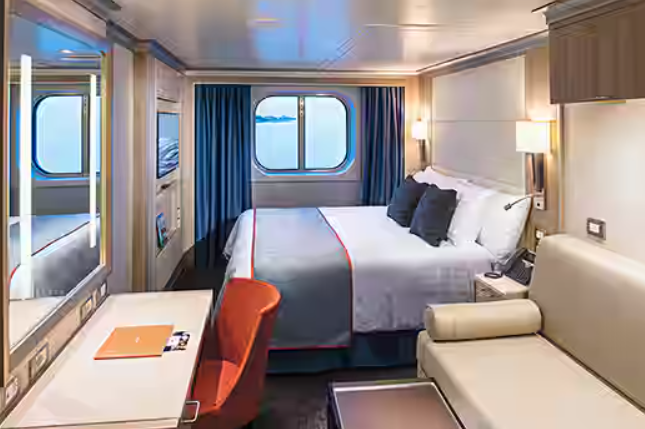
These expansive staterooms include two lower beds convertible to one queen-size bed—our Signature Mariner's Dream bed with plush Euro-Top mattresses, premium massage shower heads, a host of amenities and an ocean view. The configuration of staterooms may vary from the images shown.
Facilities and amenities
Cabin details
Outside/Oceanview
Code
F
Deck
Main Deck
These expansive staterooms include two lower beds convertible to one queen-size bed—our Signature Mariner's Dream bed with plush Euro-Top mattresses, premium massage shower heads, a host of amenities and an ocean view. The configuration of staterooms may vary from the images shown.
Facilities and amenities
Cabin details
Outside/Oceanview
Code
OO
Size
172 sq. ft
Deck
Main Deck
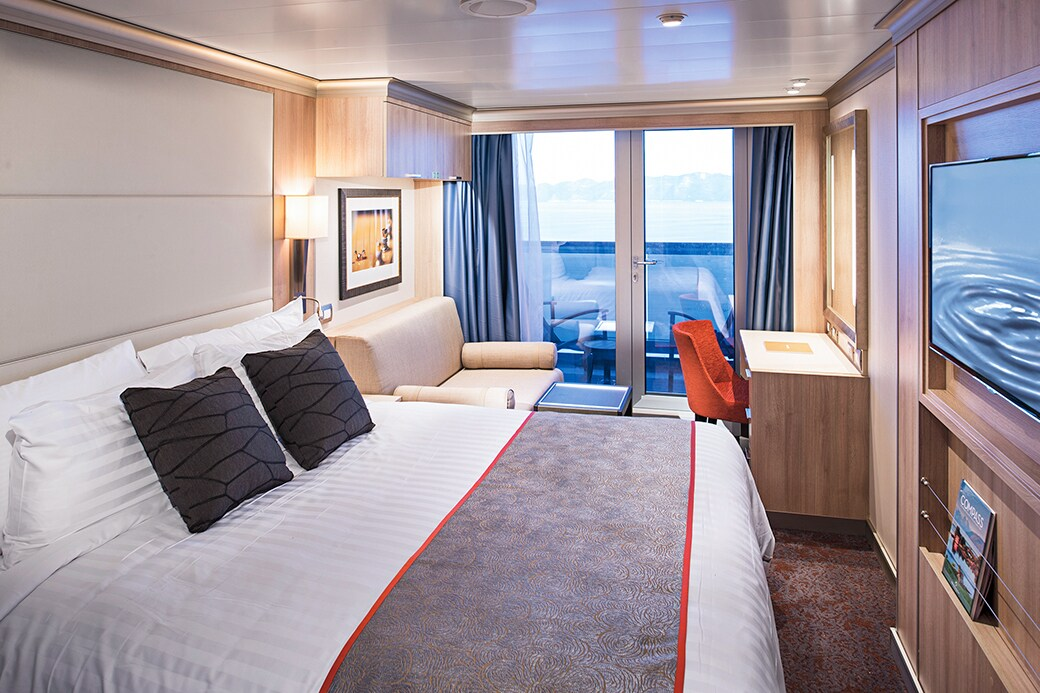
Approximately 127-172 sq. ft. Perfect for guests traveling solo, these staterooms feature one full-size Signature Mariner's Dream bed with plush Euro-top mattress, plus a shower with premium massage head, an array of modern amenities and an ocean view. The configuration of staterooms may vary from the images shown.
Facilities and amenities
Cabin details
Balcony
Code
VS
Size
405 sq. ft
Deck
Gershwin Deck
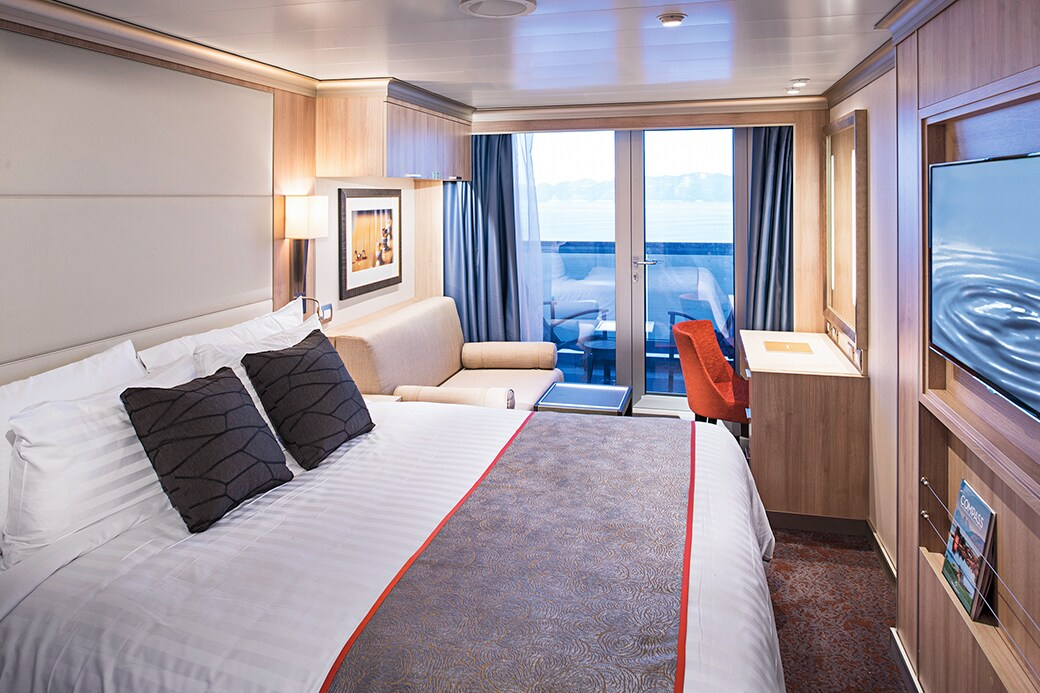
Approximately 228-405 sq. ft. including verandah Filled with light from floor-to-ceiling windows overlooking a private verandah, these staterooms include a sitting area, two lower beds convertible to one queen-size bed—our signature Mariner's Dream bed with plush Euro-Top mattresses, and shower with premium massage showerheads. The configuration of staterooms may vary from the images shown.
Facilities and amenities
Cabin details
Balcony
Code
V
Deck
Gershwin Deck
Filled with light from floor-to-ceiling windows overlooking a private verandah, these staterooms include a sitting area, two lower beds convertible to one queen-size bed—our signature Mariner's Dream bed with plush Euro-Top mattresses, and shower with premium massage showerheads. The configuration of staterooms may vary from the images shown.
Facilities and amenities
Cabin details
Balcony
Code
VA
Size
405 sq. ft
Deck
Mozart Deck
Approximately 228-405 sq. ft. including verandah Filled with light from floor-to-ceiling windows overlooking a private verandah, these staterooms include a sitting area, two lower beds convertible to one queen-size bed—our signature Mariner's Dream bed with plush Euro-Top mattresses, and shower with premium massage showerheads. The configuration of staterooms may vary from the images shown.
Facilities and amenities
Cabin details
Balcony
Code
VB
Size
405 sq. ft
Deck
Beethoven Deck
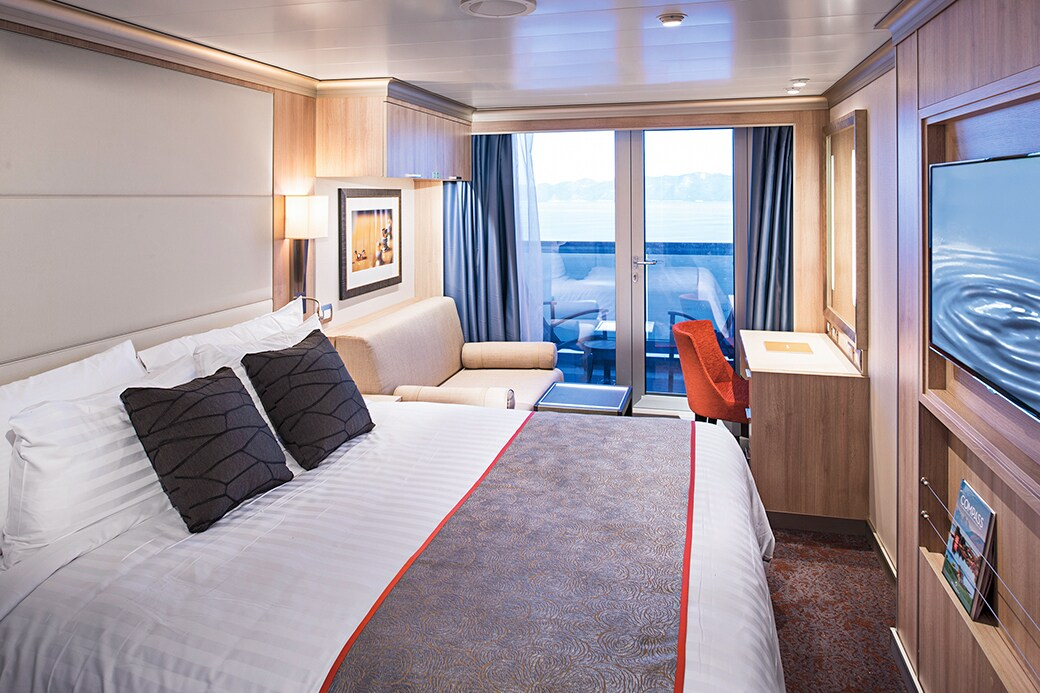
Approximately 228-405 sq. ft. including verandah Filled with light from floor-to-ceiling windows overlooking a private verandah, these staterooms include a sitting area, two lower beds convertible to one queen-size bed—our signature Mariner's Dream bed with plush Euro-Top mattresses, and shower with premium massage showerheads. The configuration of staterooms may vary from the images shown.
Facilities and amenities
Cabin details
Balcony
Code
VC
Size
405 sq. ft
Deck
Gershwin Deck
Approximately 228-405 sq. ft. including verandah Filled with light from floor-to-ceiling windows overlooking a private verandah, these staterooms include a sitting area, two lower beds convertible to one queen-size bed—our signature Mariner's Dream bed with plush Euro-Top mattresses, and shower with premium massage showerheads. The configuration of staterooms may vary from the images shown.
Facilities and amenities
Cabin details
Balcony
Code
VD
Size
405 sq. ft
Deck
Gershwin Deck
Approximately 228-405 sq. ft. including verandah Filled with light from floor-to-ceiling windows overlooking a private verandah, these staterooms include a sitting area, two lower beds convertible to one queen-size bed—our signature Mariner's Dream bed with plush Euro-Top mattresses, and shower with premium massage showerheads. The configuration of staterooms may vary from the images shown.
Facilities and amenities
Cabin details
Balcony
Code
VE
Size
405 sq. ft
Deck
Navigation Deck
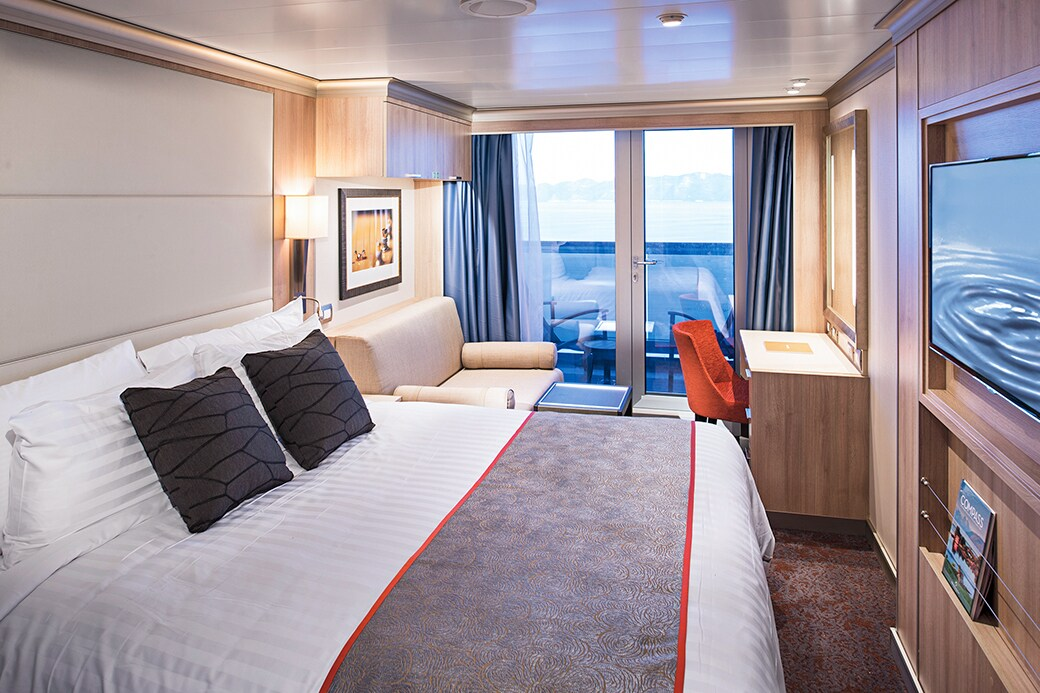
Approximately 228-405 sq. ft. including verandah Filled with light from floor-to-ceiling windows overlooking a private verandah, these staterooms include a sitting area, two lower beds convertible to one queen-size bed—our signature Mariner's Dream bed with plush Euro-Top mattresses, and shower with premium massage showerheads. The configuration of staterooms may vary from the images shown.
Facilities and amenities
Cabin details
Balcony
Code
VF
Size
405 sq. ft
Deck
Beethoven Deck
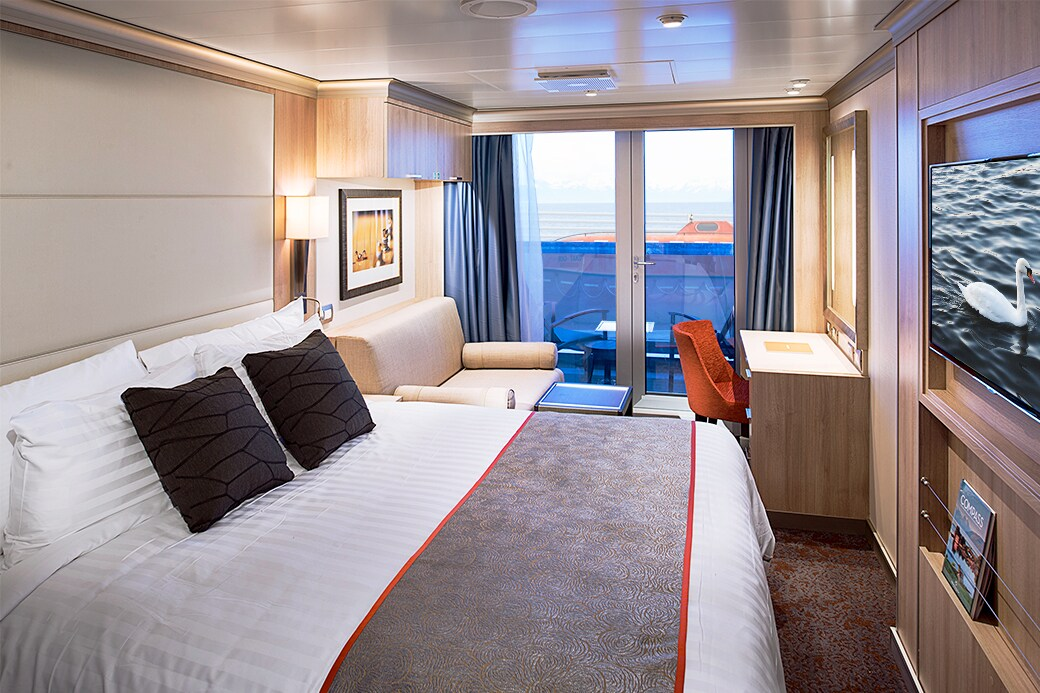
Approximately 228-405 sq. ft. including verandah Filled with light from floor-to-ceiling windows overlooking a private verandah, these staterooms include a sitting area, two lower beds convertible to one queen-size bed—our signature Mariner's Dream bed with plush Euro-Top mattresses, and shower with premium massage showerheads. The configuration of staterooms may vary from the images shown.
Facilities and amenities
Cabin details
Balcony
Code
VH
Size
405 sq. ft
Deck
Beethoven Deck
Approximately 228-405 sq. ft. including verandah Filled with light from floor-to-ceiling windows overlooking a private verandah, these staterooms include a sitting area, two lower beds convertible to one queen-size bed—our signature Mariner's Dream bed with plush Euro-Top mattresses, and shower with premium massage showerheads. The view is partially obstructed. The configuration of staterooms may vary from the images shown.
Facilities and amenities
Cabin details
Balcony
Code
VQ
Size
405 sq. ft
Deck
Panorama Deck
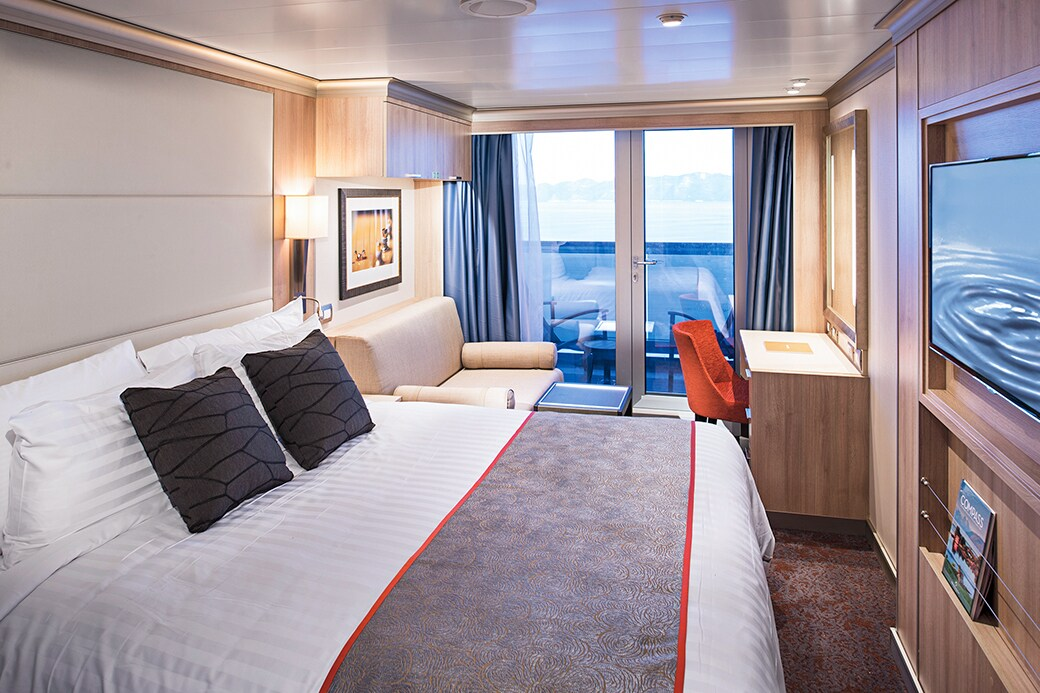
Approximately 228-405 sq. ft. including verandah With floor-to-ceiling windows and a private verandah, these light-infused staterooms feature two lower beds convertible to one queen-size bed—our Signature Mariner's Dream bed with plush Euro-Top mattresses, shower with premium massage showerheads and thoughtful amenities. The configuration of staterooms may vary from the images shown.
Facilities and amenities
Cabin details
Suite
Code
AS
Size
356 sq. ft
Deck
Beethoven Deck
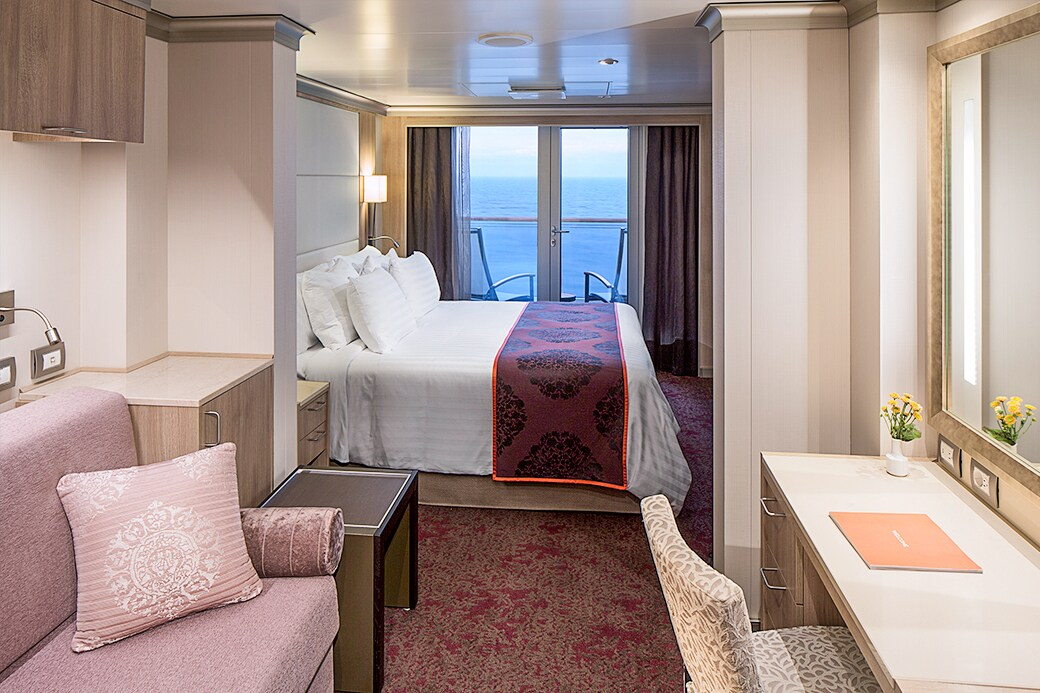
Approximately 260-356 sq. ft. including verandah. With a teak-lined verandah, floor-to-ceiling windows and comfortable sitting area, these comfortable suites are filled with light. They include two lower beds convertible to one queen-size bed—our signature Mariner's Dream bed with plush Euro-Top mattresses plus a shower with premium massage head and a refrigerator. The configuration of staterooms may vary from the images shown.
Facilities and amenities
Cabin details
Suite
Code
SA
Size
502 sq. ft
Deck
Schubert Deck
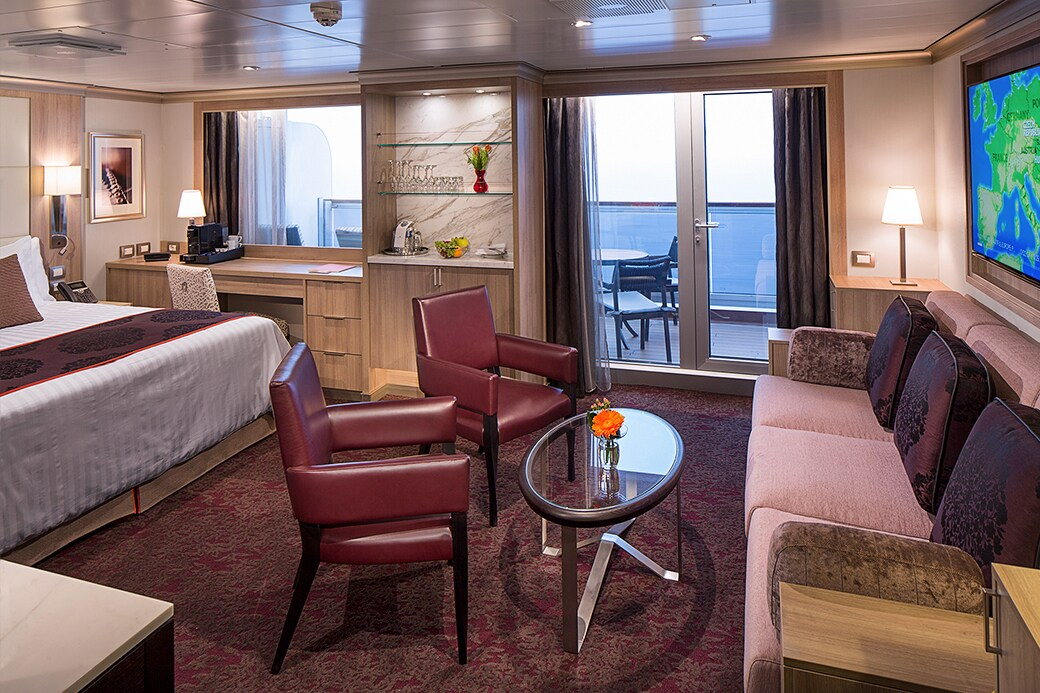
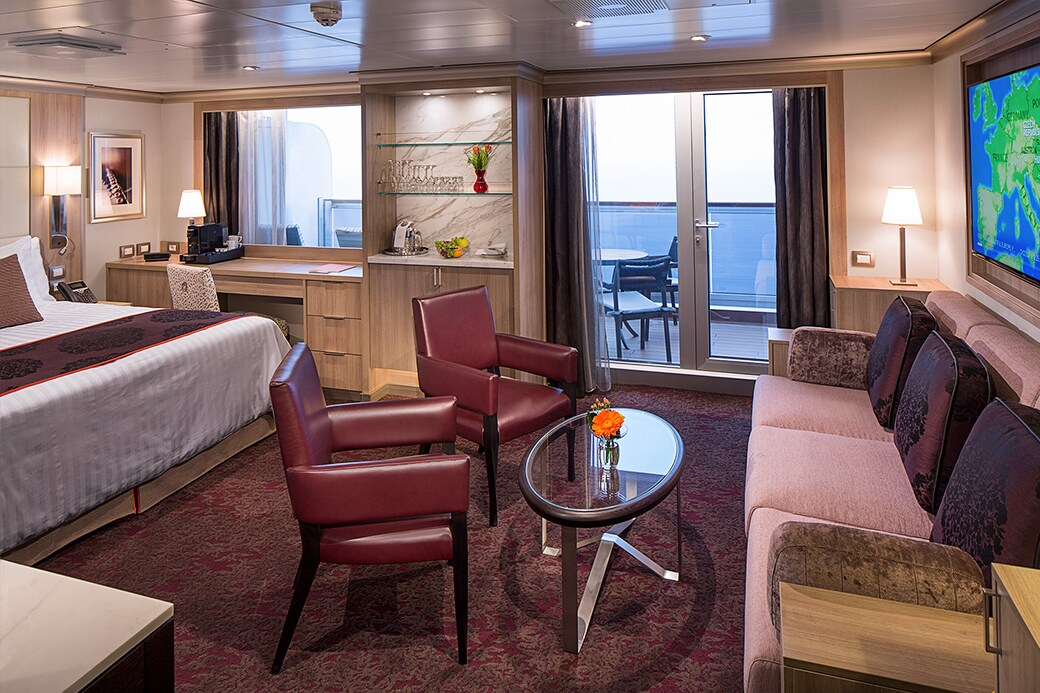
Approximately 465-502 sq. ft. including verandah With floor-to-ceiling windows overlooking a private verandah, these spacious suites are flooded with light. They feature a large sitting area and two lower beds convertible to one king-size bed—our signature Mariner's Dream bed with plush Euro-Top mattresses. The bathroom comes with a dual-sink vanity and some suites have a shower-only option while others provide a full-size whirlpool bath and shower, and an additional shower stall. Amenities include use of the exclusive Neptune Lounge, a private concierge and an array of complimentary services. The configuration of staterooms may vary from the images shown.
Facilities and amenities
Cabin details
Suite
Code
SB
Size
502 sq. ft
Deck
Beethoven Deck
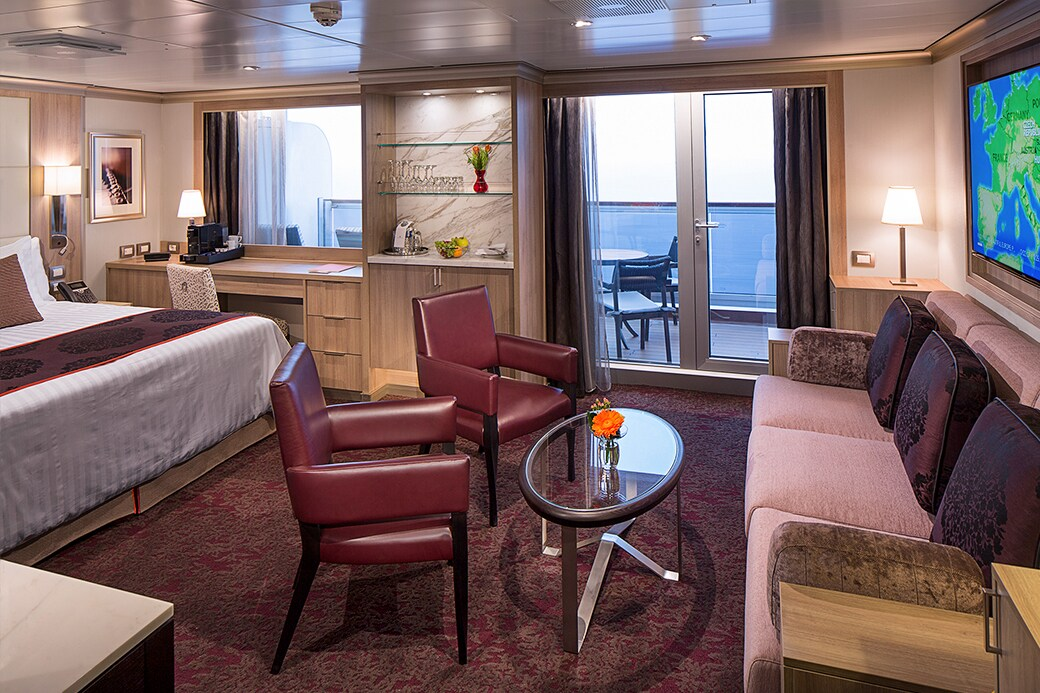
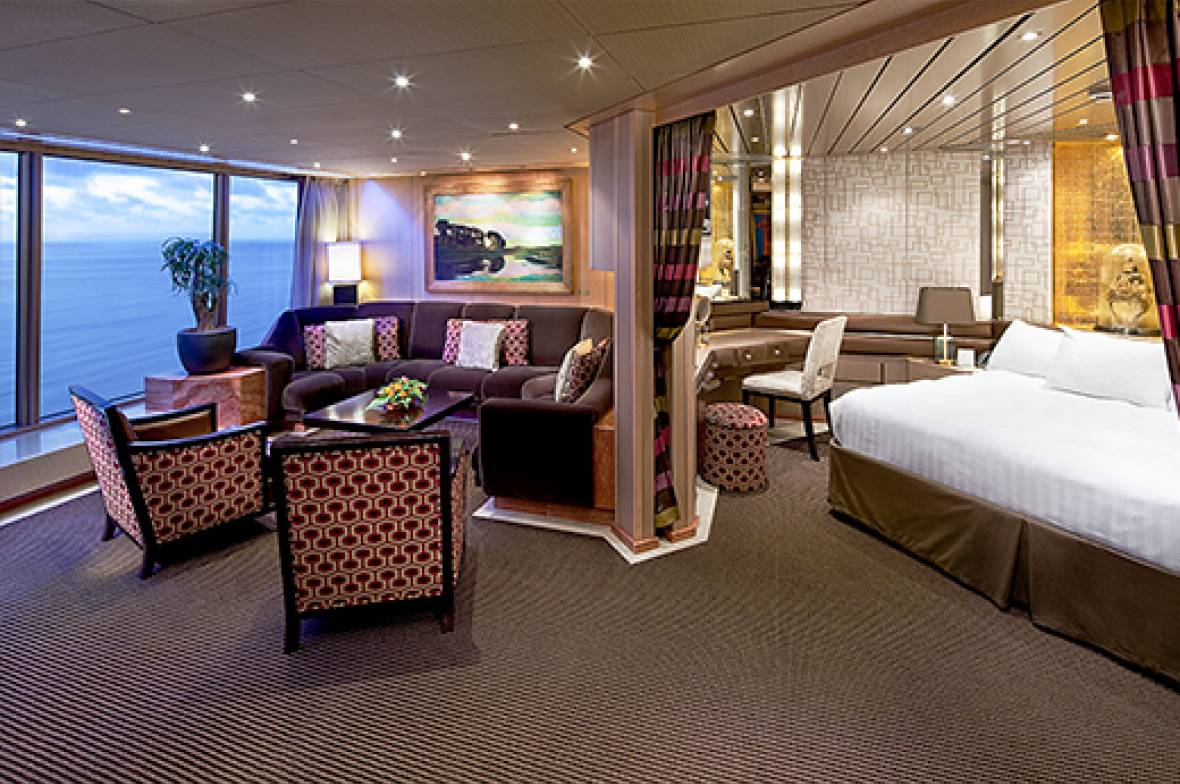
Approximately 465-502 sq. ft. including verandah With floor-to-ceiling windows overlooking a private verandah, these spacious suites are flooded with light. They feature a large sitting area and two lower beds convertible to one king-size bed—our signature Mariner's Dream bed with plush Euro-Top mattresses. The bathroom comes with a dual-sink vanity and some suites have a shower-only option while others provide a full-size whirlpool bath and shower, and an additional shower stall. Amenities include use of the exclusive Neptune Lounge, a private concierge and an array of complimentary services. The configuration of staterooms may vary from the images shown.
Facilities and amenities
Cabin details
Suite
Code
SC
Size
502 sq. ft
Deck
Sun Deck
Approximately 465-502 sq. ft. including verandah With floor-to-ceiling windows overlooking a private verandah, these spacious suites are flooded with light. They feature a large sitting area and two lower beds convertible to one king-size bed—our signature Mariner's Dream bed with plush Euro-Top mattresses. The bathroom comes with a dual-sink vanity and some suites have a shower-only option while others provide a full-size whirlpool bath and shower, and an additional shower stall. Amenities include use of the exclusive Neptune Lounge, a private concierge and an array of complimentary services. The configuration of staterooms may vary from the images shown.
Facilities and amenities
Cabin details
Suite
Code
PS
Size
290 sq. ft
Deck
Schubert Deck
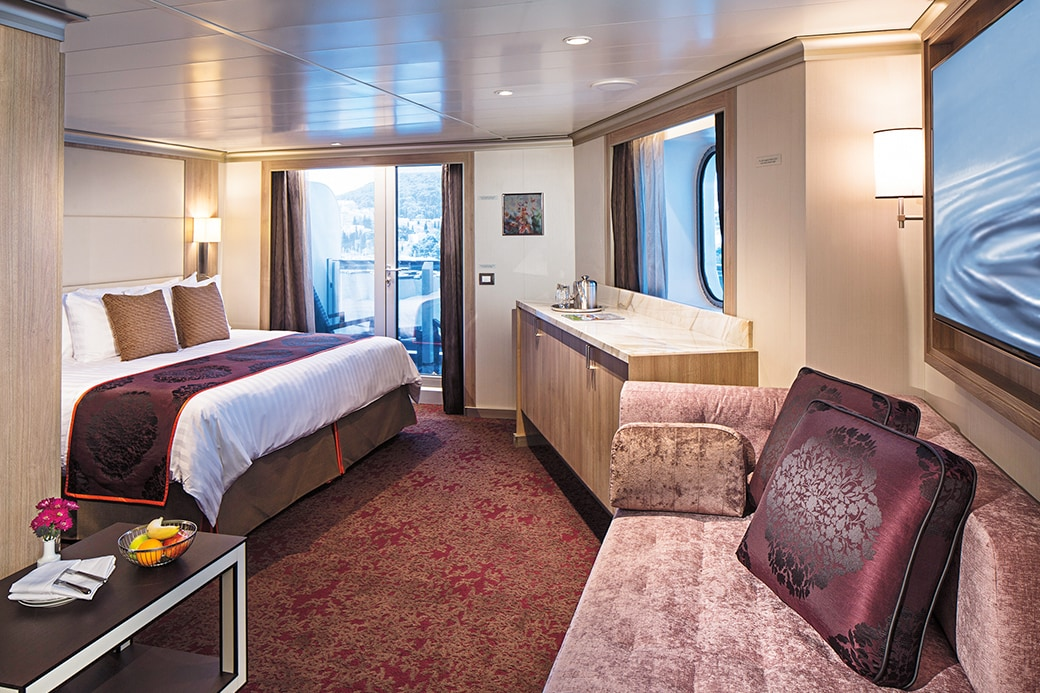
Approximately 1,290 sq. ft. including verandah. Generously proportioned and filled with light, these elegant suites include a living room, dining room, pantry with microwave and refrigerator, and floor-to-ceiling windows overlooking a private verandah with whirlpool. The bedroom features a king-size bed—our Signature Mariner's Dream bed with plush Euro-Top mattresses, and the bath includes an oversize whirlpool bath and shower as well as an additional shower stall. There's also a sofa bed, suitable for two people, and a guest toilet. Amenities include a private stereo system, use of the exclusive Neptune Lounge, private concierge and an array of complimentary services. The configuration of staterooms may vary from the images shown.
Facilities and amenities
Cabin details
Suite
Code
SY
Size
400 sq. ft
Deck
Gershwin Deck
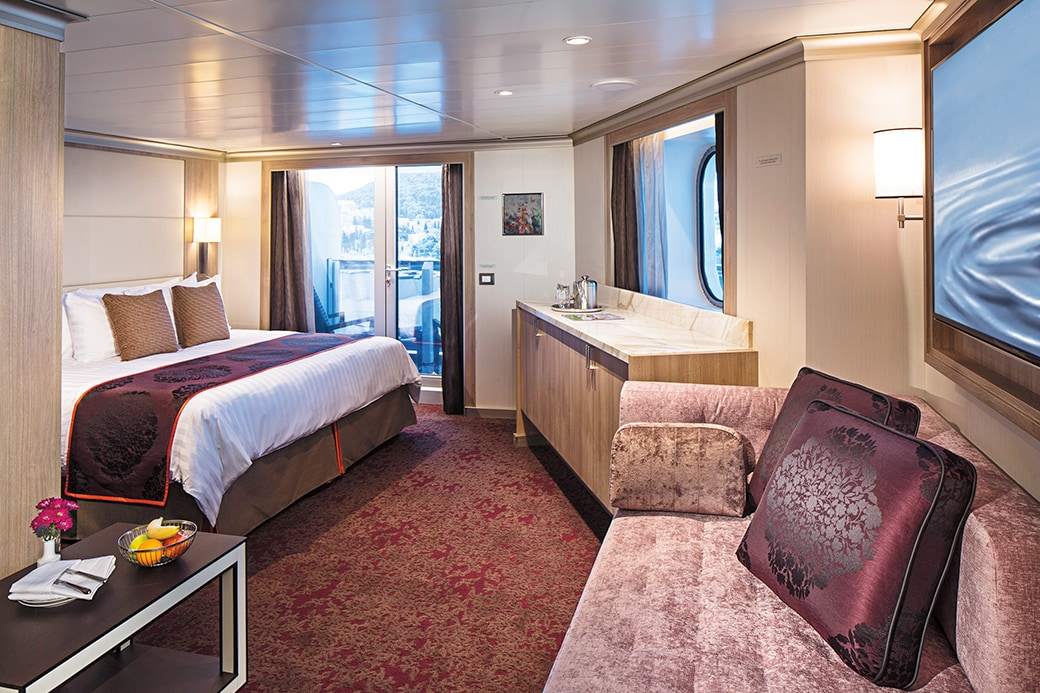
Approximately 393-400 sq. ft. including verandah These large, comfortable suites feature a spacious sitting area with floor-to-ceiling windows overlooking a private verandah, two lower beds convertible to one king-size bed—our signature Mariner's Dream bed with plush Euro-Top mattresses, and one murphy bed for one person. The bathroom includes a dual-sink vanity and shower. The configuration of staterooms may vary from the images shown.
Facilities and amenities
Cabin details
Suite
Code
SS
Size
400 sq. ft
Deck
Schubert Deck
Approximately 393-400 sq. ft. including verandah These large, comfortable suites feature a spacious sitting area with floor-to-ceiling windows overlooking a private verandah, two lower beds convertible to one king-size bed—our signature Mariner's Dream bed with plush Euro-Top mattresses, and one murphy bed for one person. The bathroom includes a dual-sink vanity and shower. The configuration of staterooms may vary from the images shown.
Facilities and amenities
Cabin details
Suite
Code
SQ
Size
502 sq. ft
Deck
Panorama Deck
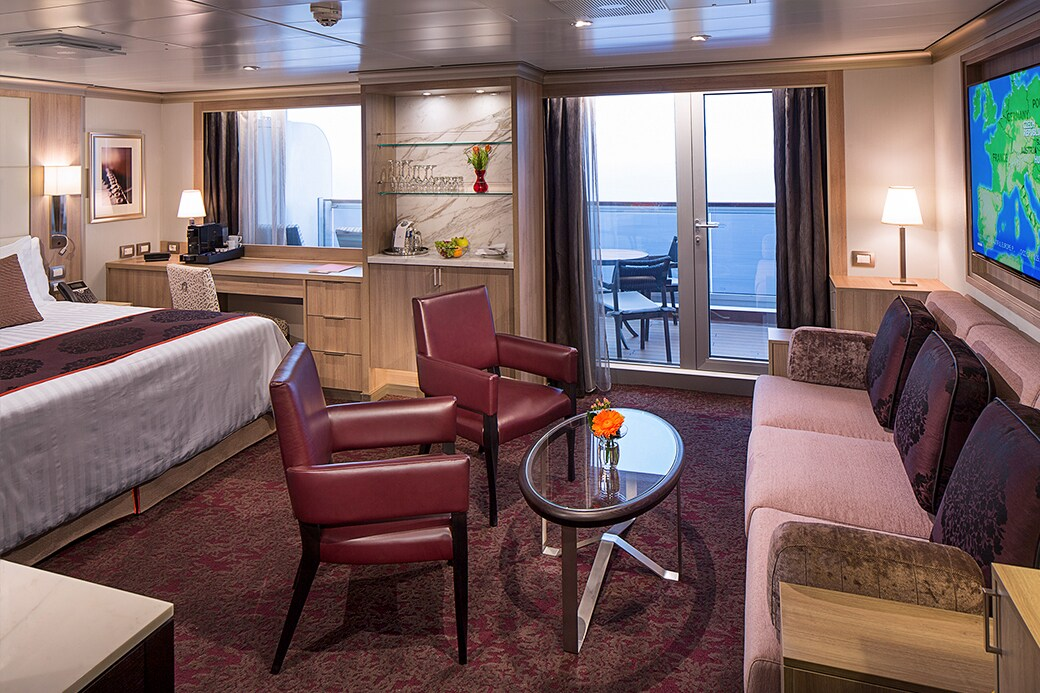
Approximately 465-502 sq. ft. including verandah. With floor-to-ceiling windows overlooking a private verandah, these suites feature spa amenities such as yoga mats and access to spa treatments from the Greenhouse Spa & Salon. They feature a large sitting area and two lower beds convertible to one king-size bed—our signature Mariner's Dream bed with plush Euro-Top mattresses. The bathroom comes with a dual-sink vanity and some suites have a shower-only option while others provide a full-size whirlpool bath and shower, and an additional shower stall. Amenities include use of the exclusive Neptune Lounge, a private concierge and an array of complimentary services. The configuration of staterooms may vary from the images shown.
Facilities and amenities
Cabin details
Suite
Code
A
Size
356 sq. ft
Deck
Beethoven Deck
Approximately 260-356 sq. ft. including verandah With a teak-lined verandah, floor-to-ceiling windows and comfortable sitting area, these comfortable suites are filled with light. They include two lower beds convertible to one queen-size bed—our signature Mariner's Dream bed with plush Euro-Top mattresses plus a shower with premium massage head and a refrigerator. The configuration of staterooms may vary from the images shown.
Facilities and amenities
Cabin details
Suite
Code
B
Size
356 sq. ft
Deck
Navigation Deck
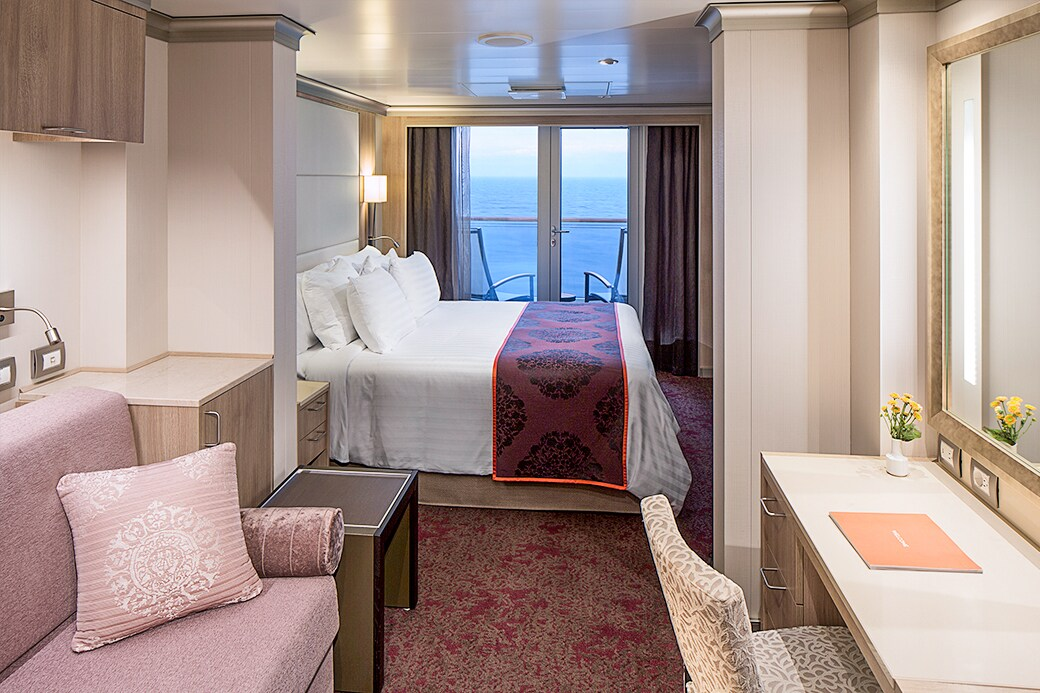
Approximately 260-356 sq. ft. including verandah With a teak-lined verandah, floor-to-ceiling windows and comfortable sitting area, these comfortable suites are filled with light. They include two lower beds convertible to one queen-size bed—our signature Mariner's Dream bed with plush Euro-Top mattresses plus a shower with premium massage head and a refrigerator. The configuration of staterooms may vary from the images shown.
Facilities and amenities
Cabin details
Suite
Code
BC
Size
356 sq. ft
Deck
Beethoven Deck
Approximately 260-356 sq. ft. including verandah With a teak-lined verandah, floor-to-ceiling windows and comfortable sitting area, these comfortable suites are filled with light. They include two lower beds convertible to one queen-size bed—our signature Mariner's Dream bed with plush Euro-Top mattresses plus a shower with premium massage head and a refrigerator. The configuration of staterooms may vary from the images shown.
Facilities and amenities
Next step
Continue to a separate page to review cruise extras and booking options around this sailing.
More sailings
Use horizontal scrolling, touch swipes, or the arrow keys to browse.
Holland America Line - Nieuw Statendam
From
£2,009
Holland America Line - Nieuw Statendam
From
£1,909
Important information
ATOL protected holidays
Where your booking includes flights, ATOL protection applies so your money and travel arrangements are financially protected.
Travel Trust Association
Book with confidence through a Travel Trust Association member, with customer money protected under approved trust arrangements.
Low deposit options
Secure selected sailings with flexible low deposit options, then spread the remaining balance before you travel.
Excellent customer service
Our cruise specialists are here before, during and after booking. Send an enquiry or call 0161 222 0822 for friendly support.
Clear price checks
Live prices and cabin options are checked before you continue.