
Back to cruise search
Home/Cruises/28-Day Arctic Circle & Oktoberfest Collectors' Voyage
28-Day Arctic Circle & Oktoberfest Collectors' Voyage from Rotterdam, 30 Aug 2026 (28 nights)
5.0 ship ratingRotterdam - Holland America Line

Cruise search
We are checking available sailings, ship details and guide prices for you.
Ask our cruise specialists about cruise line loyalty benefits, status match options, drinks packages, gratuities and any current offers available on this sailing.
Sail with confidence
We explain the relevant financial protection before you book.
Always here to help
When plans change, your cruise specialists are here to help.
Carefully selected cruises
From short breaks to big adventures, we help narrow down the right sailing.
Cruise summary
Gallery

Dining
1 of 13 onboard highlights
Your itinerary
Port descriptions and imagery are shown where available for each day or port.
Often called the gateway to Europe, the port city of Rotterdam is full of old-world charm. The harbor offers amazing views and a maze of wharves and canals, along with towering spires make for a beautiful sight. Take a stroll and duck into one of the pubs or eateries along the way. Only three pre World War II buildings in the city centre have survived and are worth a look - city hall, St. Laurence church and the White House. Explore the Museum Boymans van Beuningen, which houses a unique collection dating from the 14th century, or the Museum Voor Volkenkunde - home to ethnological exhibits. Exquisite architecture can be seen in many areas of Rotterdam, most notably in the Delfshaven quarter of the city - where 18th century houses are on display. For a laugh, check out Kijk-Kubus, an upside-down house.
Although a popular cruise destination, Norway’s Viking capital is often overlooked by other travelers in favor of Oslo and the fjords. Yet Norway’s third-biggest city has plenty to offer those who make the time to explore. The compact city center, enclosed by the Nidelva River, is easy to get around on foot. Within a couple of hours you can explore the main downtown sights and still have time for a bite to eat. The medieval Gothic grandeur of the Nidaros Cathedral is a must-see, as is the historic riverside Bakklandet neighborhood just a few steps away. Despite so much history, the city has a youthful feel to it, thanks to the dominance of NTNU, Norway’s leading technology university. The presence of thousands of students means Trondheim scores well on café culture and shopping. Music lovers will feel right at home here. The Rockheim and Ringve museums chronicle the importance of music to the city’s past, while vinyl stores and basement bars showcase the present.
For many travelers, the sparsely populated settlement of Honningsvåg is nothing more than a pit stop en route to the North Cape, the northernmost point of continental Europe. (The North Cape is rightly an iconic bucket-list destination with postcard views across the open ocean.) But amidst its colorful buildings, Honningsvåg has a lively cultural life powered by local spirit and an economy driven by shipping through the Barents Sea, which is ice-free year round thanks to the warming influences of the Gulf Stream. The town's several notable cultural institutions include a museum and a busy cultural center. Honningsvåg is also a terrific base for exploring the rest of rugged arctic Norway, whether on foot, all-terrain vehicle or on the water. Back in town, be sure to stop by the statue of Bamse, the Saint Bernard dog that became the mascot of the Free Norwegian Forces during World War II. The city was destroyed in bombing during the war and the harrowing experiences of that period are d…
Gateway to the Arctic and overhung by lofty snowcapped peaks, it's still a bright and lively place, thanks to the Midnight Sun. Visit the Tromso and Polar Museums for fascinating displays of wildlife and Arctic explorations.
Located north of the Arctic Circle, Harstad has a surprisingly mild climate. During the summer months, bask in the midnight sun, head out on one of the area’s scenic hiking trails, explore Trondene Church, built in 1250, or make a big splash in the Grottebadet Waterpark
The fishing life used to be harsh and brutal on Norway’s wind-whipped Lofoten archipelago. Boats would head out from the town of Leknes in search of cod and risk never returning, but today visitors follow a well-paved road that skirts small farms below craggy, snowcapped peaks and twists around bogs and lakes and over precipitous bridges that link one rocky islet after another. In summer, fish hang on wooden drying racks at every turn. With its airport and cruise terminal, Leknes, on Vestvågøya in the middle of the archipelago, is the gateway to a series of sheltered fishing hamlets with traditional houses perched on the rocky seafront. Just minutes down the road at the tip of the island, Skottinden is a 671-meter-high (2,200-foot) sort of mini-Matterhorn—an iconic landmark that sets the tone for countless peaks to come. With their art galleries and cafés, Henningsvær and larger Svolvær are two destinations from which Zodiacs launch to get visitors closer to orcas and sea eagles. Surp…
Ålesund, a quaint fishing town of approximately 45,000 in western Norway, has been called Norway’s most beautiful city. A fire in 1904 destroyed much of it, resulting in the town being rebuilt in the Art Nouveau style—also known as Jugendstil—that was popular around the turn of the 20th century. A year after the fire, Norway gained its independence from Sweden, which led to a campaign to build a "Norwegian town" to mark the creation of the new nation. The colorful buildings feature castlelike turrets and spires with intricate facades of ornamental flowers, gargoyles and Viking-inspired decorations. Bordering the Norwegian Sea, this area is also famous for its mountain ranges and fjords. For those looking for a more active visit, Ålesund offers great hiking, mountain biking and kayaking. One of the highlights is climbing the 418 steps that lead up Mount Aksla for a spectacular view of the city and the Sunnmøre Alps. Nearby is the Geirangerfjord, a UNESCO World Heritage Site known for i…
Although part of the United Kingdom, Shetland’s roots are as much Norse as Scottish. This is reflected in the archipelago's many archaeological sites, cultural events and a unique dialect that borrows heavily from Old Norse. Although economically driven by energy, in particular the North Sea oil industry and a growing number of wind farms, Shetland’s heritage of fishing and textile production lives on. Tradition also drives the islands’ main festivals, including the world-famous Viking-themed Up Helly Aa festival of fire held every January, and smaller folk festivals held throughout the year. Located midway between Scotland, Norway and the Faroe Islands, the archipelago is home to diverse animal life including the iconic Shetland ponies, easily recognizable by their distinctive short legs and heavy fur coats. Get a closer look at the ponies and the unique black Shetland sheep on the scenic drive to the remarkable Bronze Age archaeological site at Jarlshof. If you choose to linger in L…
Often called the gateway to Europe, the port city of Rotterdam is full of old-world charm. The harbor offers amazing views and a maze of wharves and canals, along with towering spires make for a beautiful sight. Take a stroll and duck into one of the pubs or eateries along the way. Only three pre World War II buildings in the city centre have survived and are worth a look - city hall, St. Laurence church and the White House. Explore the Museum Boymans van Beuningen, which houses a unique collection dating from the 14th century, or the Museum Voor Volkenkunde - home to ethnological exhibits. Exquisite architecture can be seen in many areas of Rotterdam, most notably in the Delfshaven quarter of the city - where 18th century houses are on display. For a laugh, check out Kijk-Kubus, an upside-down house.
At the head of Oslofjord, Norway's handsome capital is the logical first stop in Scandinavia. Thor Heyerdahl's raft, Kon Tiki, recalls a voyage between Easter Island and Tahiti to prove a theory about the earliest colonization of Oceania. Watch the changing of the palace guard; ferry to the open-air Folke Museum with its 12th-century stave church
At the head of Oslofjord, Norway's handsome capital is the logical first stop in Scandinavia. Thor Heyerdahl's raft, Kon Tiki, recalls a voyage between Easter Island and Tahiti to prove a theory about the earliest colonization of Oceania. Watch the changing of the palace guard; ferry to the open-air Folke Museum with its 12th-century stave church
Copenhagen is one of the easiest European capitals to fall in love with. The sights of old buildings, cobbled streets and the tower- and turret-dotted skyline lend fairy-tale charm—this was, after all, the home of author Hans Christian Andersen. But make no mistake: This is a thoroughly modern city with international clout. Restaurants around the world draw inspiration from the New Nordic cuisine pioneered by Noma and other Copenhagen restaurants, while Danish design from this century and the last is universally admired and coveted. Urban planners flock here to try to work out just how the city remains so livable and yet so functional, and despite its wealth of old buildings, Copenhagen’s not locked in the past; there are also thrilling examples of modern architecture. Copenhagen is a city that’s easy to find things to do and explore on foot or by excellent public transport, where everyone speaks perfect English, the food is fresh and innovative, and there’s plenty of locally brewed b…
Inseparable from its modern history, Berlin decidedly features it. In the former Soviet/American/British sectors are the Berlin Cathedral, Checkpoint Charlie, Unter den Linden Boulevard and the stunning Brandenburg Gate. In the Western sector, browse the lively Kurfurstendamm for snazzy clothing stores, delicate hand-painted porcelain and a snack of beer and bratwurst.
A university town, naval base, and Germany's largest passenger port, Kiel offers the perfect blend of urban charm, culture and history. Kiel also serves as your gateway for Hamburg, a beautiful port city on the Elbe River. Spend a delightful day exploring St. Michael's baroque church, the St. Pauli District, and the gardens and cafés around Alster Lake. Sample shore excursions: Hamburg – Germany’s Gateway to the World; Medieval Lüneburg by Horse & Carriage.
Medieval capital of Bornholm Island, rich in history. Marvel at Viking relics and 12th-century fortress churches.
Always center stage, Gdansk was the city whose invasion launched World War II, and was the milieu for the explosive Solidarity Movement that ultimated led to democracy for Poland in the 1980s. Explore the beautifully restored Old Town with its galleries, markets and waterfront walkways, bridges, museums and classical architecture.
The distinctly German-style timber-frame buildings that line the cobbled streets of Klaipėda's Old Town hint at its past life as the former capital of Prussia. Controlled on and off by Germany well into the 20th century, the city went by the name Memel until 1945, when it formally adopted the Lithuanian name Klaipėda. Now the country's third-largest metropolis, Klaipėda retains much of its historic and maritime flavor, but there’s also a growing arts scene, with lively exhibition spaces and modern sculptures scattered around the city. The most popular gathering place for locals and visitors is Old Town’s Theatre Square, which features the city’s famed sculpture of a young girl, Taravos Anikė. Nearby, the “Crafts Yard” is home to timber-frame buildings dating from the 18th century; here you can visit various workshops and see how crafts, art and home goods are made. A short ferry ride across a narrow strait takes you to Smiltynė, where you’ll find the Maritime Museum and Aquarium, whic…
The capital of Latvia, Riga is an Art Nouveau gem, rich in fun, flamboyant architecture that somewhat belies the many centuries of war and changes of power in its long history. Founded in 1201 by German traders, the port city was a powerful member of the Hanseatic League for several hundred years until it came under Swedish rule; in the 1800s, the Russian empire assumed control, with turbulent periods of uprisings, followed by Nazi and Soviet occupation. In 1990, Latvia regained its independence and Riga quickly became a popular tourist destination thanks to the beauty of its Old Town—a UNESCO World Heritage Site—and flourishing restaurant and nightlife scenes. Among the top attractions are Riga Castle; the 13th-century Riga Cathedral, with one of the largest organs in the world; Alberta Iela (Alberta Street), a stunning Art Nouveau street; and the Central Market, housed in former zeppelin hangars. The city also has a booming bohemian quarter, centered around Miera Iela, or “Peace Str…
Often called the gateway to Europe, the port city of Rotterdam is full of old-world charm. The harbor offers amazing views and a maze of wharves and canals, along with towering spires make for a beautiful sight. Take a stroll and duck into one of the pubs or eateries along the way. Only three pre World War II buildings in the city centre have survived and are worth a look - city hall, St. Laurence church and the White House. Explore the Museum Boymans van Beuningen, which houses a unique collection dating from the 14th century, or the Museum Voor Volkenkunde - home to ethnological exhibits. Exquisite architecture can be seen in many areas of Rotterdam, most notably in the Delfshaven quarter of the city - where 18th century houses are on display. For a laugh, check out Kijk-Kubus, an upside-down house.
What's included
Fare overview
This sailing is shown as a cruise-only guide fare with Holland America Line. The fare is linked to the ship, itinerary and cabin category you choose. Drinks packages, gratuities, Wi-Fi, flights, transfers and shore experiences are only treated as included where they are confirmed before booking.
Sailing aboard
Rotterdam
Your ship
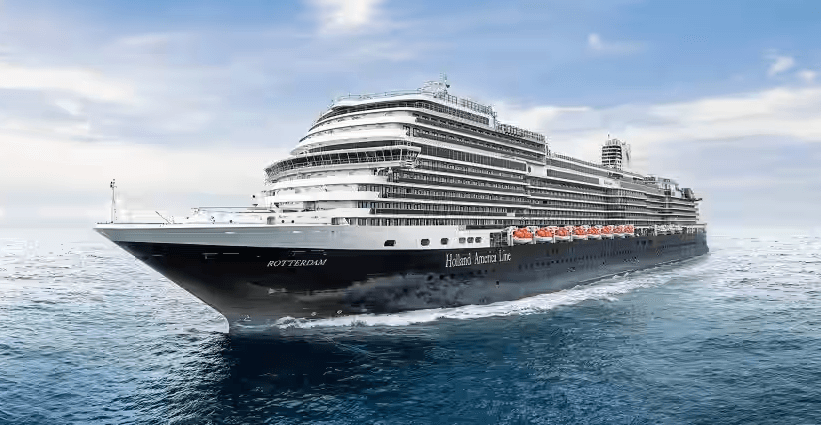
In honor of some of the most memorable ships in Holland America Line's history, our third Pinnacle-class ship (and new flagship) will be named Rotterdam. This new addition to our fleet will fill your journey with a rhythm all its own, putting music front and center, creating the soundtrack to the discoveries you make every day. At the heart of it all is Music Walk: an exclusive collection of five venues featuring live music and electrifying performances from accomplished musicians, dancers and artists every night. Rotterdam hits all the right notes: exquisite dining experiences, enhanced staterooms and suites, the finest service at sea and craftsmanship that reflects nearly 150 years of seafaring expertise. The result is a ship that moves you — from the start of your first day to the end of each perfect night.
Onboard facilities

Bars/Lounges
Deck plans
Explore the ship deck by deck. Deck plans can change and should be checked before booking.
Beethoven Deck

These facilities are available aboard the ship. Their deck locations can be confirmed before booking.
Match cabin grade codes and colours to the selected deck plan.
Choose your cabin
Compare the cabin types and onboard features shown for this sailing. Final price and availability are confirmed before booking.
Next step
Continue to a separate page to review cruise extras and booking options around this sailing.
More sailings
Use horizontal scrolling, touch swipes, or the arrow keys to browse.
Important information
ATOL protected holidays
Where your booking includes flights, ATOL protection applies so your money and travel arrangements are financially protected.
Travel Trust Association
Book with confidence through a Travel Trust Association member, with customer money protected under approved trust arrangements.
Low deposit options
Secure selected sailings with flexible low deposit options, then spread the remaining balance before you travel.
Excellent customer service
Our cruise specialists are here before, during and after booking. Send an enquiry or call 0161 222 0822 for friendly support.
Clear price checks
Live prices and cabin options are checked before you continue.
Use horizontal scrolling, trackpad gestures, touch swipes, or the arrow keys to browse cabin types.
Cabin details
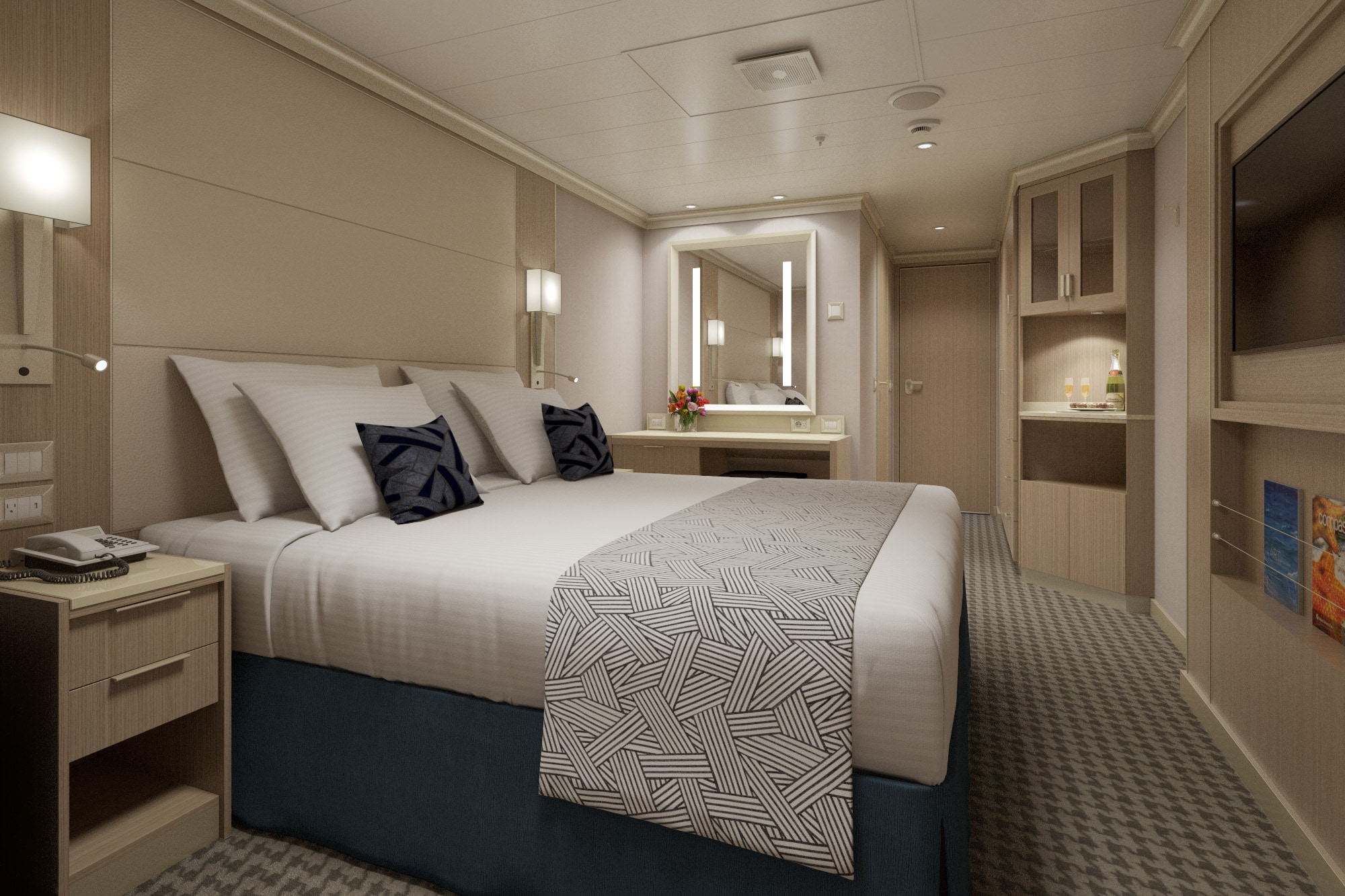
Inside
£7,149
Cabin fare
Code
IQ
Occupancy
Up to 2 guests
Decks
Beethoven Deck, Panorama Deck
Sleeps up to 2 guests 2 beds convertible to 1 queen bed Shower Steps away from Greenhouse Spa & Salon® Yoga mat All Stateroom Amenities Enjoy the Amenities available for the room & have a wonderful journey with this pleasant experience. Daily housekeeping Complimentary 24-hour room service Elemis Aromapure soap, lotion, shampoo Luxurious bathrobes Generous storage Fresh fruit upon request Safe Shoeshine TV with On Demand movies, programming
Facilities and amenities
Cabin details
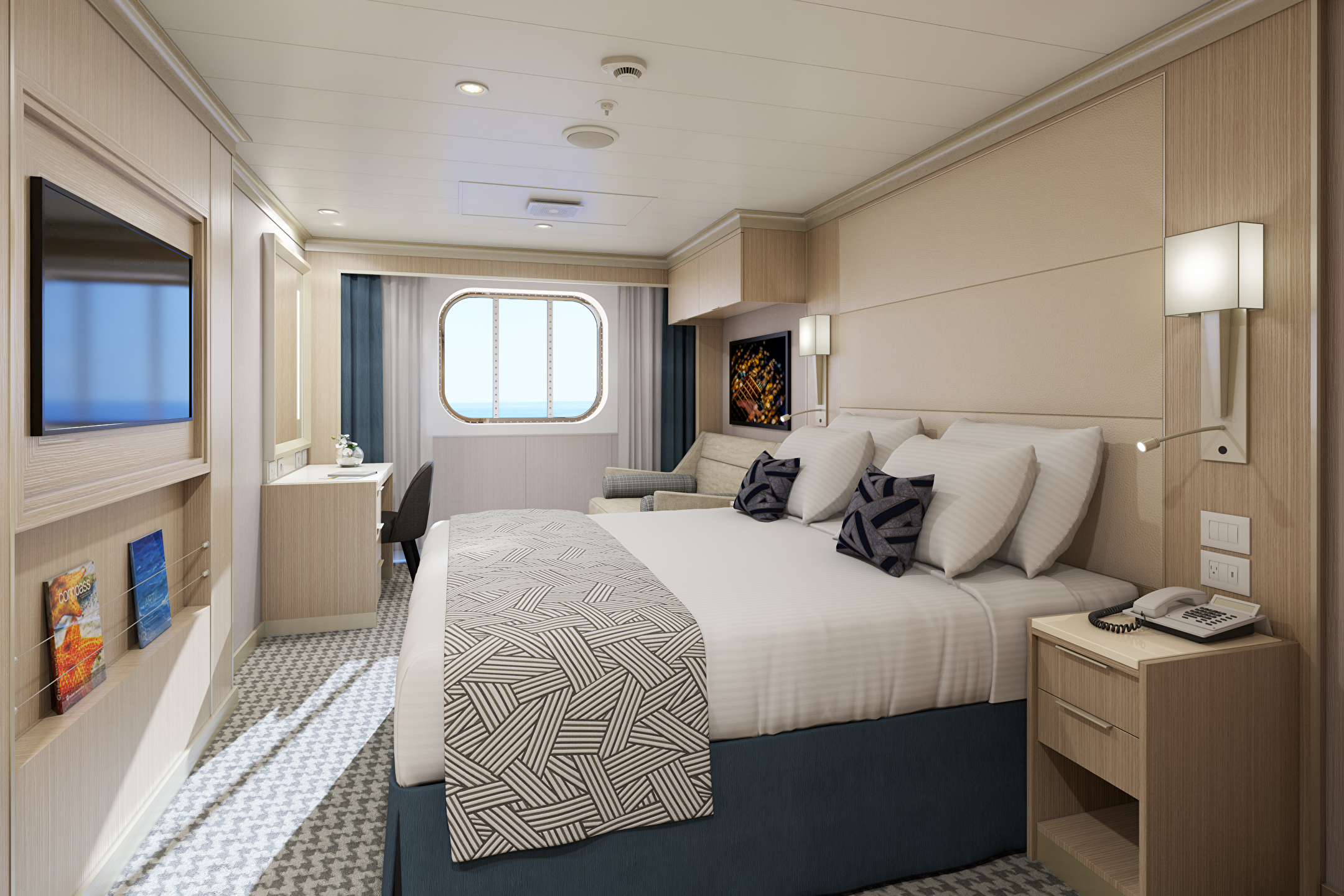
Outside/Oceanview
£7,829
Cabin fare
Code
FA
Decks
Beethoven Deck, Main Deck, Panorama Deck, Schubert Deck
With accomodations for five guests, this stateroom includes two lower beds convertible to one queen-size bed and one upper bed—all are our signature Mariner's Dream beds with plush Euro-Top mattresses, plus one sofa bed for two persons. There are two bathrooms: one with bathtub, shower, sink and toilet, one with shower and sink.
Facilities and amenities
Cabin details
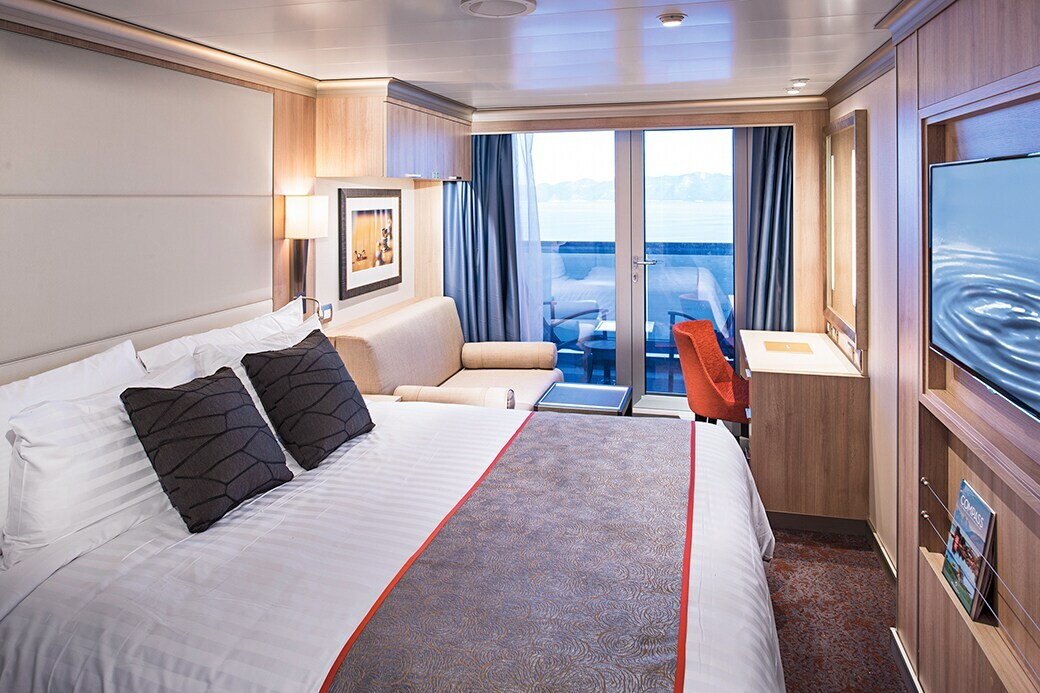
Balcony
£8,729
Cabin fare
Code
VD
Size
405 sq. ft
Decks
Beethoven Deck, Gershwin Deck, Mozart Deck, Navigation Deck, Panorama Deck
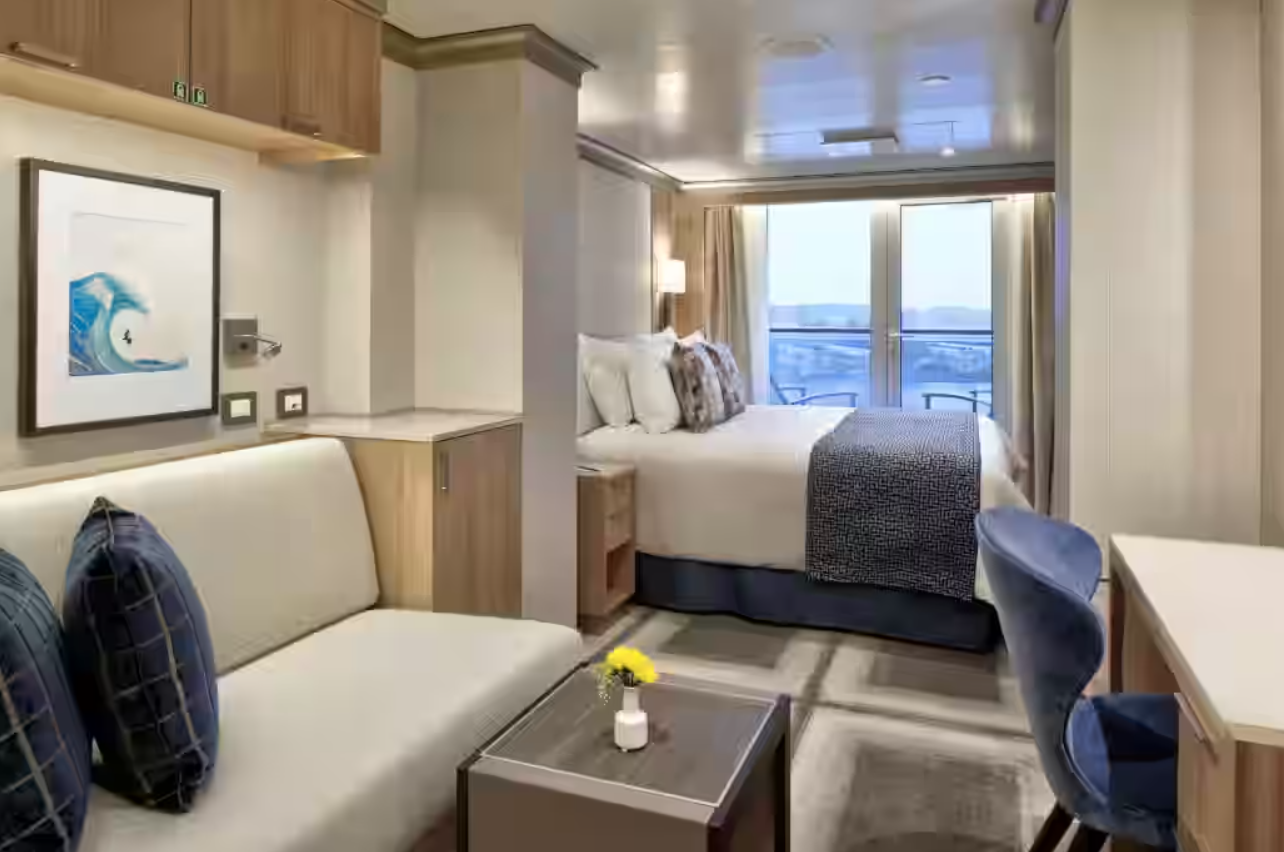
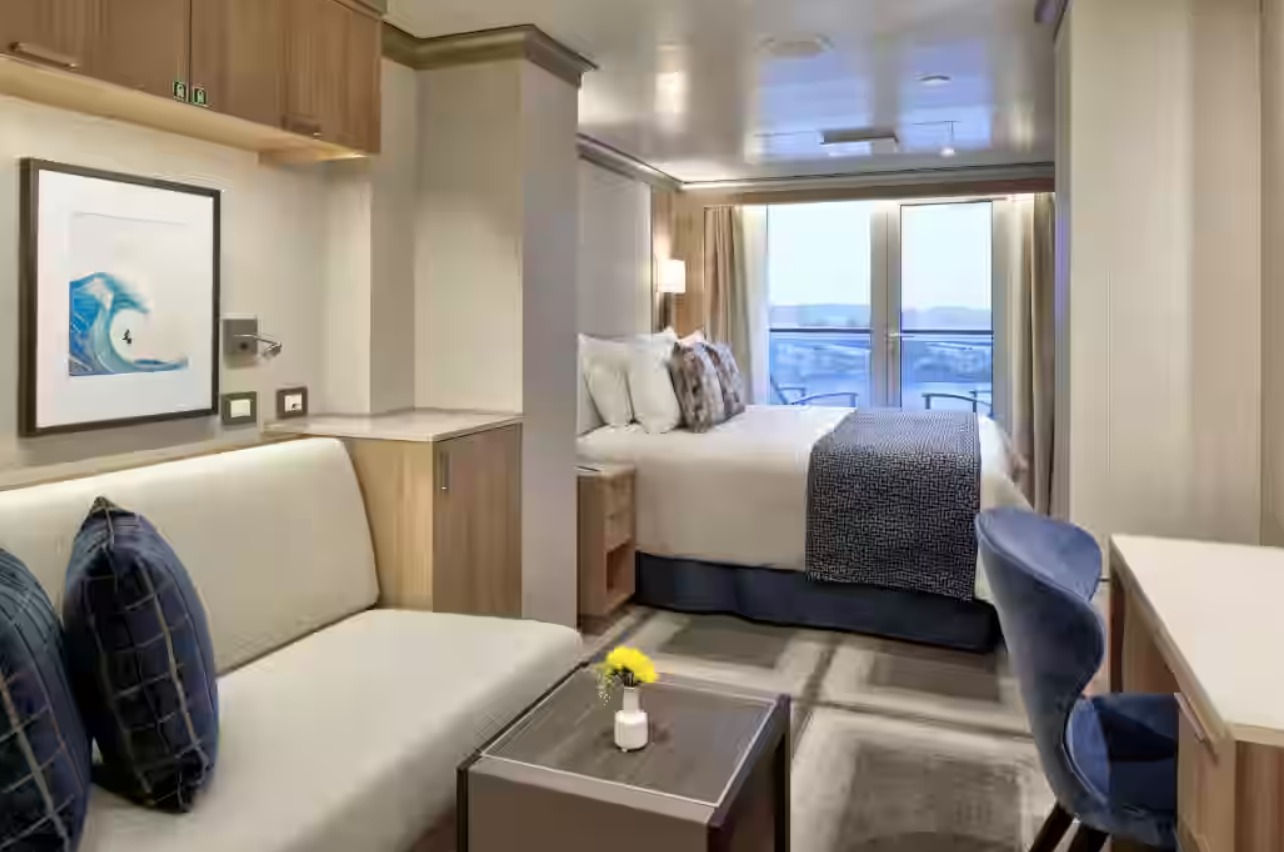
2 lower beds convertible to 1 queensize bed, shower, sitting area, private verandah, floor-to-ceiling windows. Approximately 228–405 sq. ft. including verandah
Facilities and amenities
Cabin details
Suite
Code
AS
Deck
Beethoven Deck
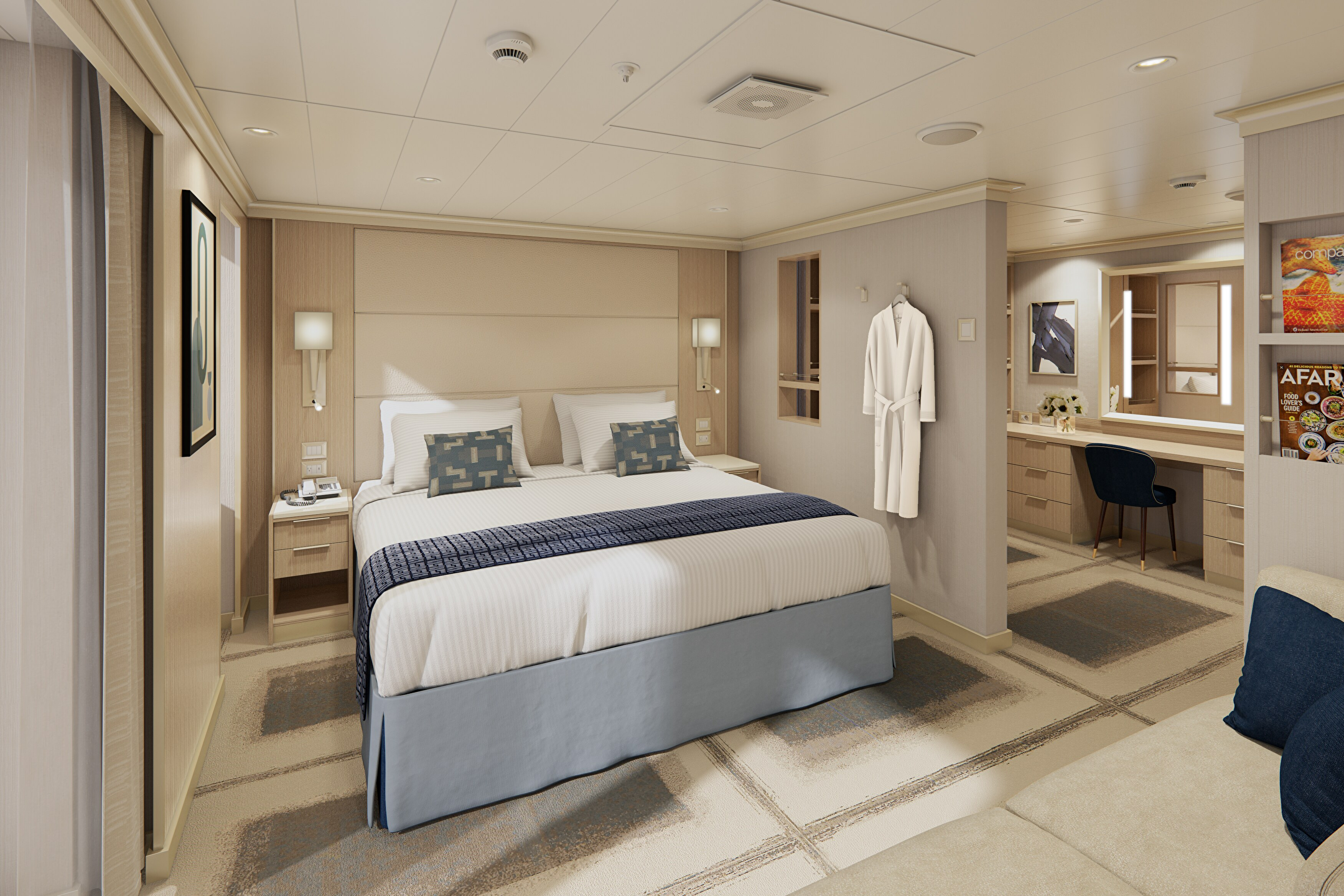
With a teak-lined verandah, floor-to-ceiling windows and comfortable sitting area, these comfortable suites are filled with light. They include two lower beds convertible to one queen-size bed—our signature Mariner's Dream bed with plush Euro-Top mattresses, plus a shower, mini-bar and refrigerator.
Facilities and amenities
Cabin details
Suite
Code
SB
Deck
Beethoven Deck
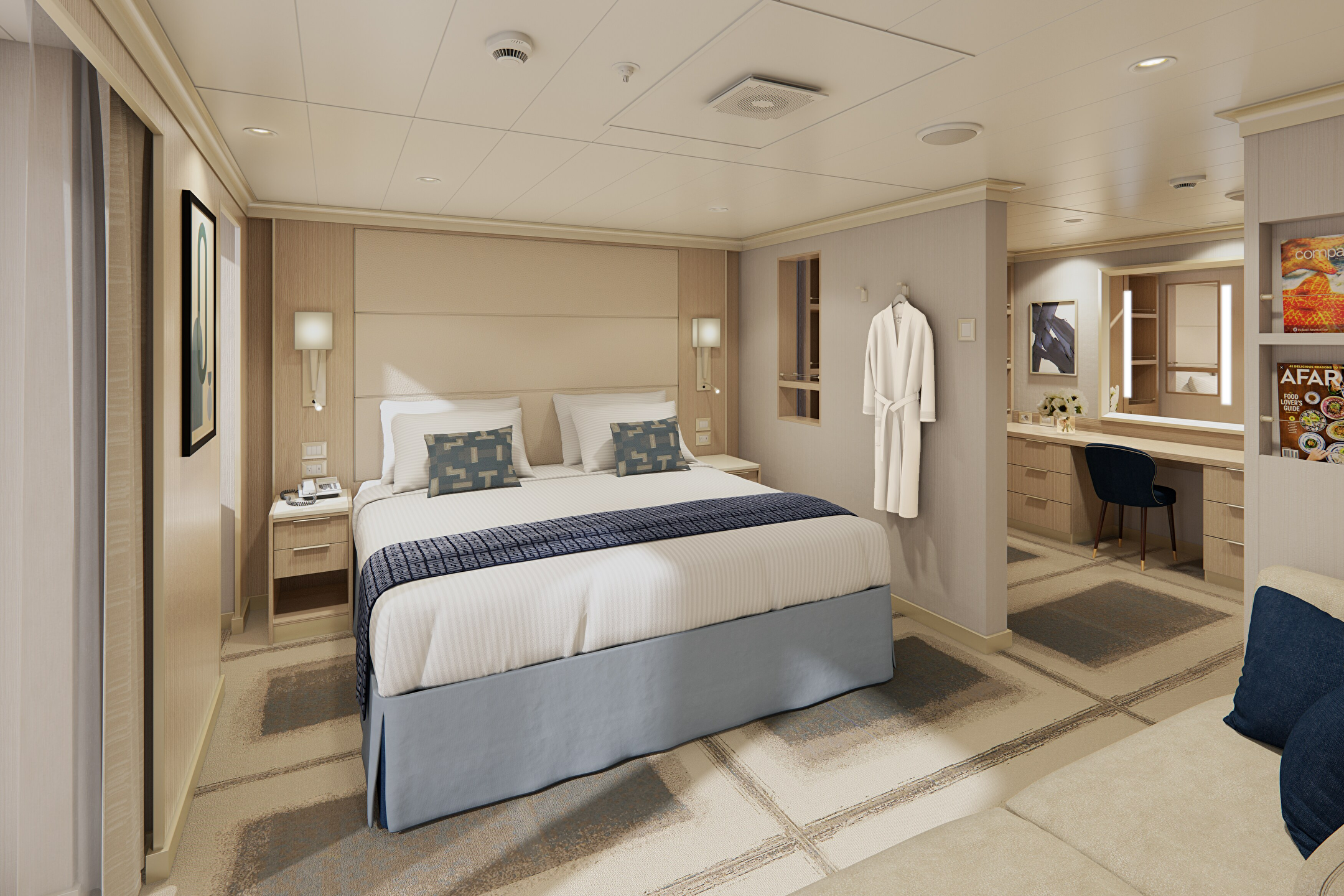
With floor-to-ceiling windows overlooking a private verandah, these spacious suites are flooded with light. They feature a large sitting area and two lower beds convertible to one king-size bed—our signature Mariner's Dream bed with plush Euro-Top mattresses. The bathroom comes with a dual-sink vanity, full-size whirlpool bath and shower, plus additional shower stall. Amenities include use of the exclusive Neptune Lounge, a private concierge and an array of complimentary services.
Facilities and amenities
Cabin details
Suite
Code
SC
Deck
Sun Deck
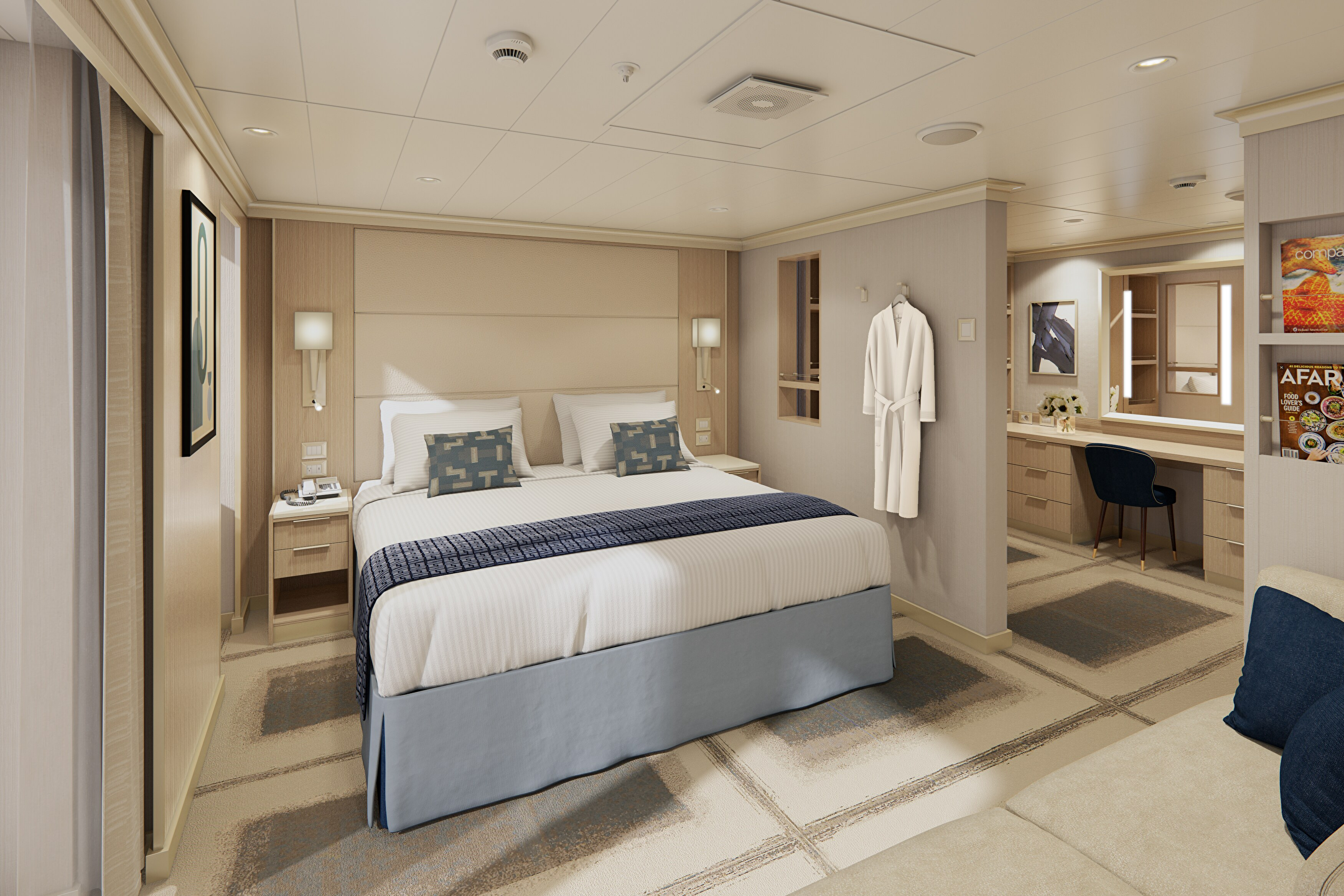
With floor-to-ceiling windows overlooking a private verandah, these spacious suites are flooded with light. They feature a large sitting area and two lower beds convertible to one king-size bed—our signature Mariner's Dream bed with plush Euro-Top mattresses. The bathroom comes with a dual-sink vanity, full-size whirlpool bath and shower, plus additional shower stall. Amenities include use of the exclusive Neptune Lounge, a private concierge and an array of complimentary services.
Facilities and amenities
Cabin details
Suite
Code
SA
Deck
Schubert Deck
With floor-to-ceiling windows overlooking a private verandah, these spacious suites are flooded with light. They feature a large sitting area and two lower beds convertible to one king-size bed—our signature Mariner's Dream bed with plush Euro-Top mattresses. The bathroom comes with a dual-sink vanity, full-size whirlpool bath and shower, plus additional shower stall. Amenities include use of the exclusive Neptune Lounge, a private concierge and an array of complimentary services.
Facilities and amenities
Cabin details
Suite
Code
PS
Deck
Schubert Deck
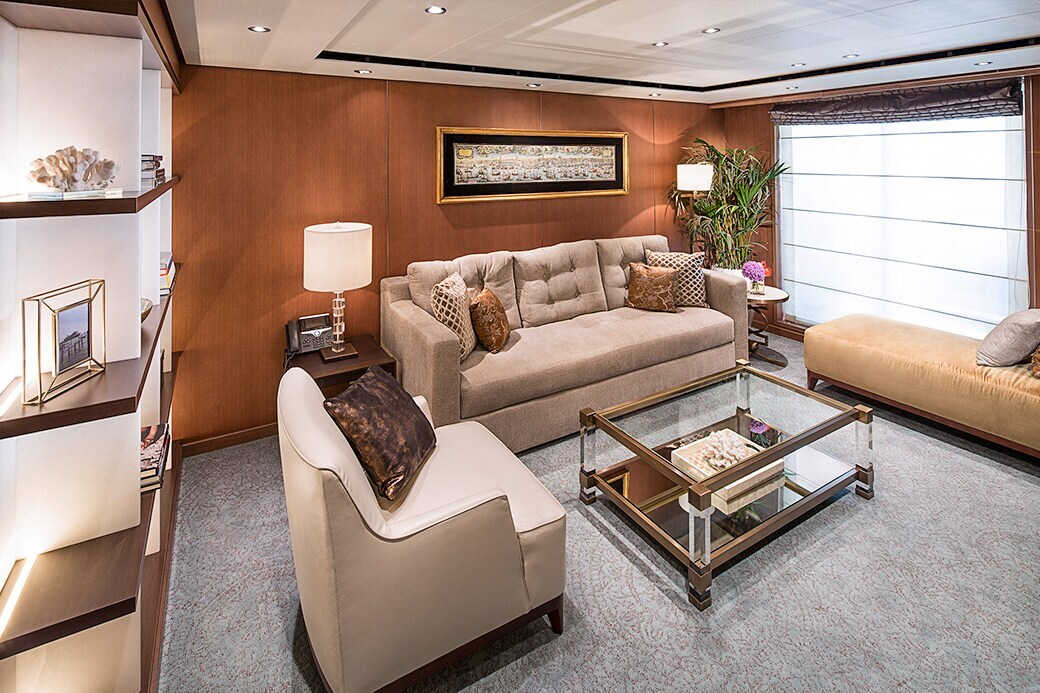
Generously proportioned and filled with light, these elegant suites include a living room, dining room, pantry with microwave, refrigerator and built-in bar, and floor-to-ceiling windows overlooking a private verandah with whirlpool. The bedroom features a king-size bed—our Signature Mariner's Dream bed with plush Euro-Top mattresses, and the bath includes an oversize whirlpool bath and shower as well as an additional shower stall. There's also a sofa bed, suitable for two people, and a guest toilet. Amenities include a private stereo system, use of the exclusive Neptune Lounge, private concierge and an array of complimentary services.
Facilities and amenities
Cabin details
Suite
Code
SS
Deck
Schubert Deck
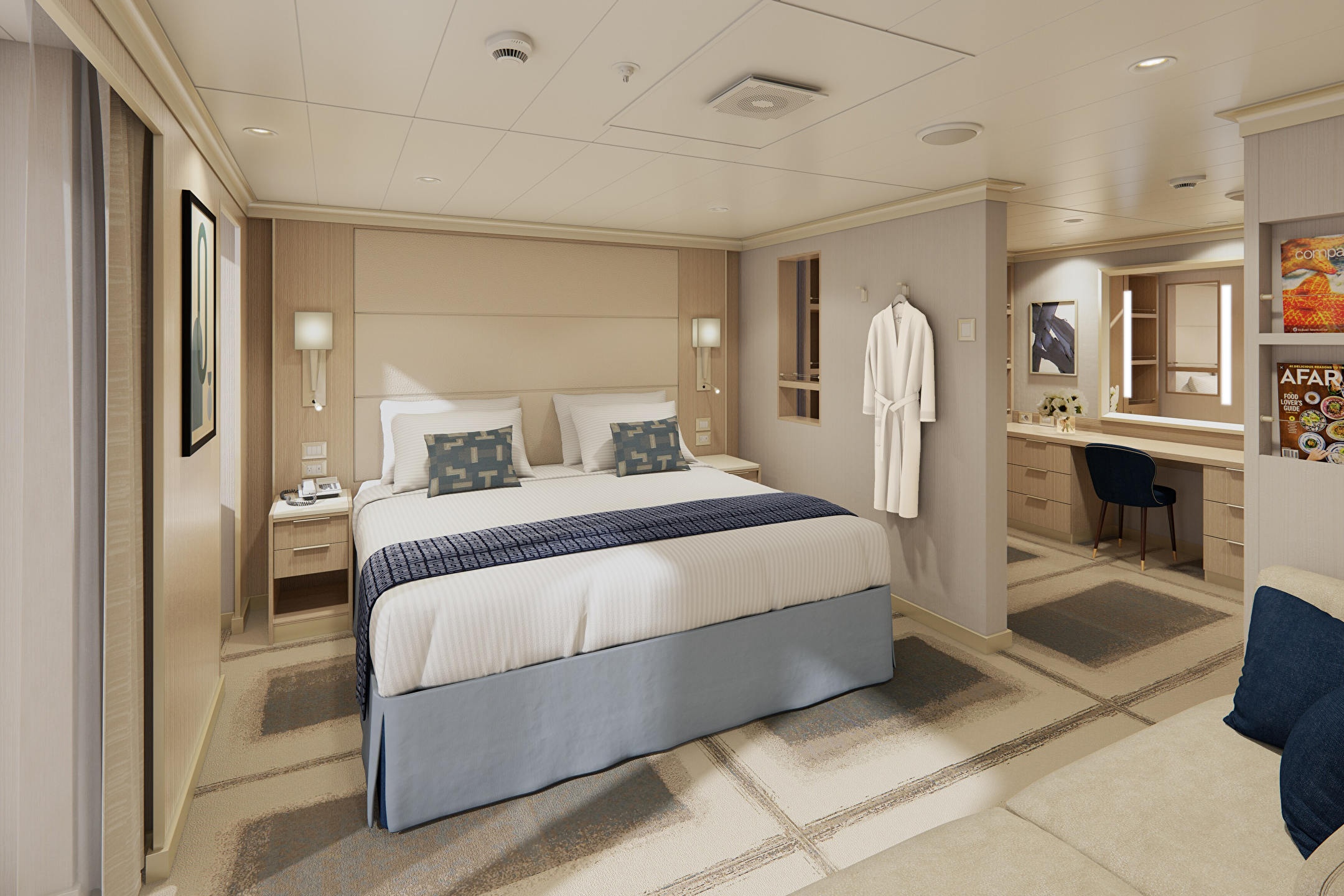
These large, comfortable suites feature a spacious sitting area with floor-to-ceiling windows overlooking a private verandah, two lower beds convertible to one queen-size bed—our signature Mariner's Dream bed with plush Euro-Top mattresses, and one murphy bed for one person. The bathroom includes a dual-sink vanity, full-size whirlpool bath and shower, and an additional shower stall.
Facilities and amenities
Cabin details
Suite
Code
SY
Deck
Gershwin Deck
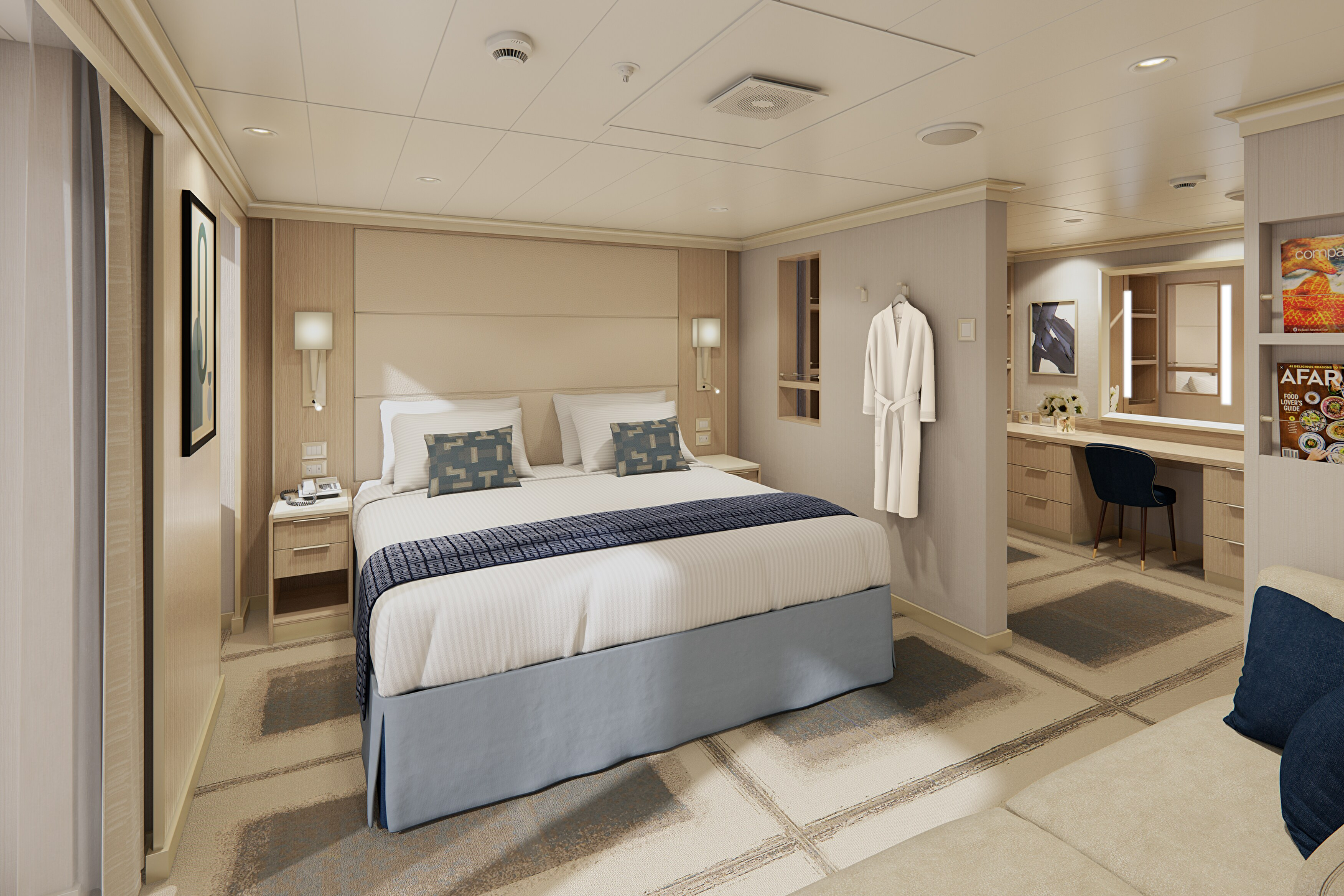
These large, comfortable suites feature a spacious sitting area with floor-to-ceiling windows overlooking a private verandah, two lower beds convertible to one queen-size bed—our signature Mariner's Dream bed with plush Euro-Top mattresses, and one murphy bed for one person. The bathroom includes a dual-sink vanity, full-size whirlpool bath and shower, and an additional shower stall.
Facilities and amenities
Cabin details
Suite
Code
SQ
Occupancy
Up to 2 guests
Deck
Panorama Deck
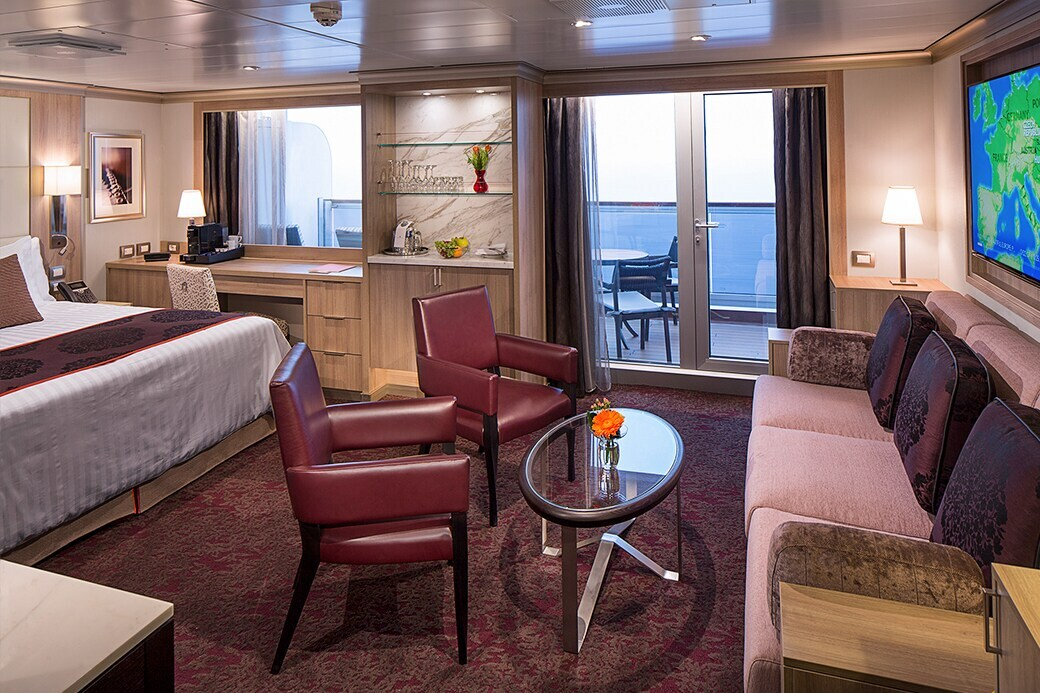
Sleeps up to 2 guests 2 beds convertible to 1 queen bed Shower Steps away from Greenhouse Spa & Salon® Yoga mat All Stateroom Amenities Enjoy the Amenities available for the room & have a wonderful journey with this pleasant experience. Daily housekeeping Complimentary 24-hour room service Elemis Aromapure soap, lotion, shampoo Luxurious bathrobes Generous storage Fresh fruit upon request Safe Shoeshine TV with On Demand movies, programming
Facilities and amenities
Cabin details
Suite
Code
A
Deck
Beethoven Deck
With a teak-lined verandah, floor-to-ceiling windows and comfortable sitting area, these comfortable suites are filled with light. They include two lower beds convertible to one queen-size bed—our signature Mariner's Dream bed with plush Euro-Top mattresses, plus a shower, mini-bar and refrigerator.
Facilities and amenities
Cabin details
Suite
Code
B
Deck
Navigation Deck
With a teak-lined verandah, floor-to-ceiling windows and comfortable sitting area, these comfortable suites are filled with light. They include two lower beds convertible to one queen-size bed—our signature Mariner's Dream bed with plush Euro-Top mattresses, plus a shower, mini-bar and refrigerator.
Facilities and amenities
Cabin details
Suite
Code
BC
Deck
Beethoven Deck
With a teak-lined verandah, floor-to-ceiling windows and comfortable sitting area, these comfortable suites are filled with light. They include two lower beds convertible to one queen-size bed—our signature Mariner's Dream bed with plush Euro-Top mattresses, plus a shower, mini-bar and refrigerator.
Facilities and amenities