Back to cruise search
Home/Cruises/Sea of Japan with Nebuta & Summer Festivals
Sea of Japan with Nebuta & Summer Festivals from Yokohama, Tokyo, 28 Jul 2026 (8 nights)
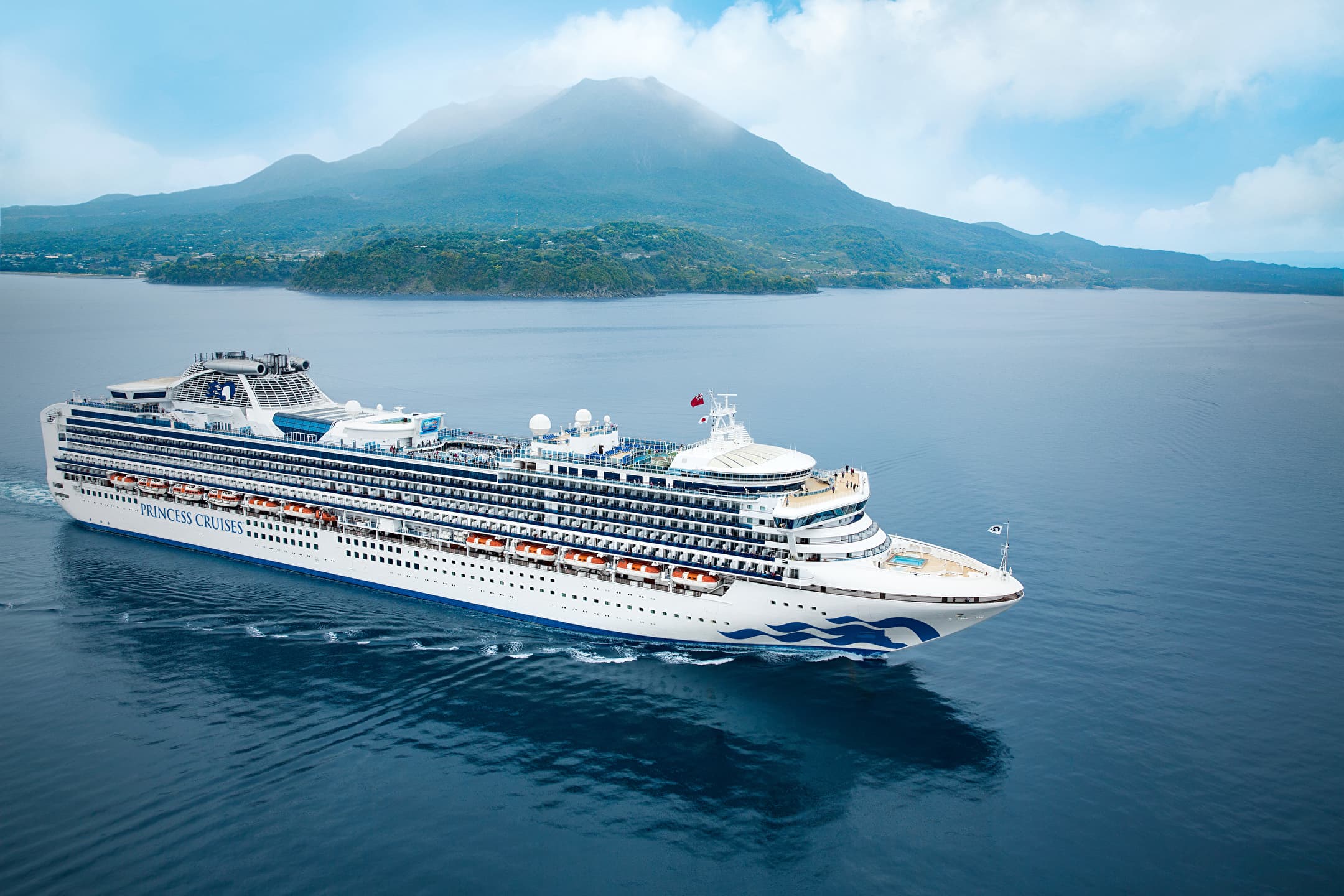
5.0 ship ratingDiamond Princess - Princess Cruises

Cruise search
We are checking available sailings, ship details and guide prices for you.
Ask our cruise specialists about cruise line loyalty benefits, status match options, drinks packages, gratuities and any current offers available on this sailing.
Sail with confidence
We explain the relevant financial protection before you book.
Always here to help
When plans change, your cruise specialists are here to help.
Carefully selected cruises
From short breaks to big adventures, we help narrow down the right sailing.
Cruise summary
Gallery

Dining
1 of 13 onboard highlights
Your itinerary
Port descriptions and imagery are shown where available for each day or port.
Yokohama and Edo began life as sleepy fishing villages. That changed in the early 17th century after Tokugawa Ieyasu became Shogun. Edo became the center of political power in Japan, a position the city retained even after the restoration of Imperial rule in 1866. Contemporary Tokyo may be the most astonishing city on earth. It's a paradoxical mix of ancient tradition and postmodern culture. The Ginza - an international shopping mecca - stands near the serene grounds of the Imperial Palace, and the hyper-speed of 21st century consumerism is mysteriously reconciled with the elegance and serenity of traditional culture. Tokyo provides the traveler with a dizzying experience. With the Meiji Restoration of 1868, Edo was renamed Tokyo, the "Eastern Capital," to distinguish it from the old imperial capital at Kyoto, the "Western Capital."
For most travelers, Nagasaki is a symbol of the horror and the inhumanity of war. An estimated 75,000 people perished in 1945 when the city became the second target of a nuclear attack. Today, Nagasaki's Peace Park and Atomic Bomb Museum draw visitors from around the world. But this beautiful city on Kyushu offers other sights. Often described as the San Francisco of Japan, the city occupies verdant hills surrounded by a deep-water bay. For three centuries, Nagasaki was Japan's sole window on the world. The city is also celebrated as the setting for Puccini's opera "Madame Butterfly."
The second largest city in South Korea, Busan is your gateway to a fascinating land whose culture is a unique amalgam of old and new. Modern high-rise towers dwarf ancient Buddhist temples. The city's bustling business district offers a stark contrast to the serene grounds of Yongdusan Park. In short, Busan is a microcosm of South Korea, a nation whose startling economic success often obscures one of Asia's most sophisticated and venerable cultures. Busan was the scene of bitter fighting during the Korean War. The United Nations Memorial Cemetery marks the final resting place for the troops from 16 nations who gave their lives during the conflict.
The capital of the Aomori Prefecture in northern Japan, Aomori derives much of its beauty from the apple orchards and cherry blossoms that encompass its landscape and the snow-covered Hakkoda Mountains that look on from a distance. Throughout its history, the city has been stricken with misfortune time and time again - in 1910, a fire destroyed Aomori, and during World War II, the city was left in ruins following an air raid - yet it always prevails. Aomori is cherished by many who believe a local legend that the grave of Jesus Christ lies within the southern part of Aomori prefecture. However, Aomori is perhaps best known for its renowned Nebuta Festival, an elaborate yearly event in which participants illuminate giant paper representations of samurai warriors, animals, and popular cartoon characters while parading them through the streets.
It took Commodore Perry and American gunboat diplomacy to open Japan to the outside world after two centuries of self-imposed isolation. In 1859, the port of Hakodate became the first Japanese city fully opened to Westerners under the Treaty of Amity and Commerce. Foreigners soon flocked to Hakodate, and today visitors wandering the cobblestone streets of the city's Motomachi District can view their Western-style frame houses. Hakodate, once a fishing port famed for its high quality fish and shellfish, quickly became Hokkaido's largest city and one of Japan's most important ports. The Great Hakodate Fire of 1934 dealt the city a near fatal blow - a blow from which Hakodate was slow to recover. Today the city is Hokkaido's third largest - surpassed by Sapporo and Asahikawa - but retains its foremost position as the finest Japanese producer of sushi's raw product: the high quality seafood caught in Hokkaido's cold waters. It may not compare to Tokyo's Tsukiji's Fish Market, but at Hakod…
Yokohama and Edo began life as sleepy fishing villages. That changed in the early 17th century after Tokugawa Ieyasu became Shogun. Edo became the center of political power in Japan, a position the city retained even after the restoration of Imperial rule in 1866. Contemporary Tokyo may be the most astonishing city on earth. It's a paradoxical mix of ancient tradition and postmodern culture. The Ginza - an international shopping mecca - stands near the serene grounds of the Imperial Palace, and the hyper-speed of 21st century consumerism is mysteriously reconciled with the elegance and serenity of traditional culture. Tokyo provides the traveler with a dizzying experience. With the Meiji Restoration of 1868, Edo was renamed Tokyo, the "Eastern Capital," to distinguish it from the old imperial capital at Kyoto, the "Western Capital."
What's included
Fare overview
This sailing is shown as a cruise-only guide fare with Princess Cruises. The fare is linked to the ship, itinerary and cabin category you choose. Drinks packages, gratuities, Wi-Fi, flights, transfers and shore experiences are only treated as included where they are confirmed before booking.
Sailing aboard
Diamond Princess
Your ship
Diamond Princess is a treasure trove of exceptional delights waiting to be discovered. Dine on freshly prepared sashimi in Kai Sushi, watch street performers in the dazzling Atrium, or take in a lavish production show in our state-of-the-art theater. And for a unique treat visit the Izumi Japanese Bath, the largest of its kind at sea.
Onboard facilities

Bars/Lounges
Deck plans
Explore the ship deck by deck. Deck plans can change and should be checked before booking.
Deck 10 - Caribe

These facilities are available aboard the ship. Their deck locations can be confirmed before booking.
Match cabin grade codes and colours to the selected deck plan.
Choose your cabin
Compare the cabin types and onboard features shown for this sailing. Final price and availability are confirmed before booking.
Next step
Continue to a separate page to review cruise extras and booking options around this sailing.
Important information
ATOL protected holidays
Where your booking includes flights, ATOL protection applies so your money and travel arrangements are financially protected.
Travel Trust Association
Book with confidence through a Travel Trust Association member, with customer money protected under approved trust arrangements.
Low deposit options
Secure selected sailings with flexible low deposit options, then spread the remaining balance before you travel.
Excellent customer service
Our cruise specialists are here before, during and after booking. Send an enquiry or call 0161 222 0822 for friendly support.
Clear price checks
Live prices and cabin options are checked before you continue.
Use horizontal scrolling, trackpad gestures, touch swipes, or the arrow keys to browse cabin types.
Cabin details
Inside
Code
IA
Size
162 sq ft
Deck
Deck 10 - Caribe
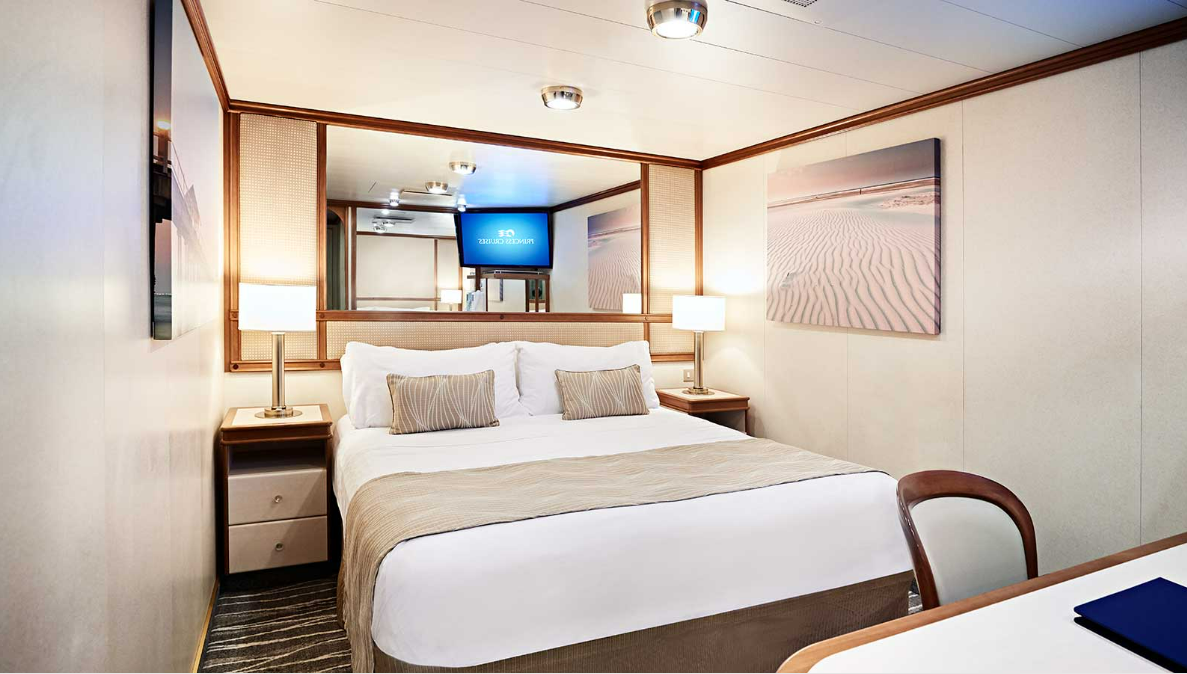
These staterooms are the perfect place to recharge your batteries. Our most affordable option, featuring two twin beds or a queen-size bed. Other amenities include a refrigerator, hair dryer, TV, closet and bathroom with shower. Stateroom Features Approx. 158 to 162 sq ft. Comfortable queen or two twin beds Refrigerator. Flat-panel television Private bathroom with shower 100% cotton, high-thread count linens Complimentary 24-hour room service Spacious closet Desk with chair Hair dryer & bathroom amenities Digital security safe
Facilities and amenities
Cabin details
Inside
Code
IB
Size
162 sq ft
Deck
Deck 10 - Caribe
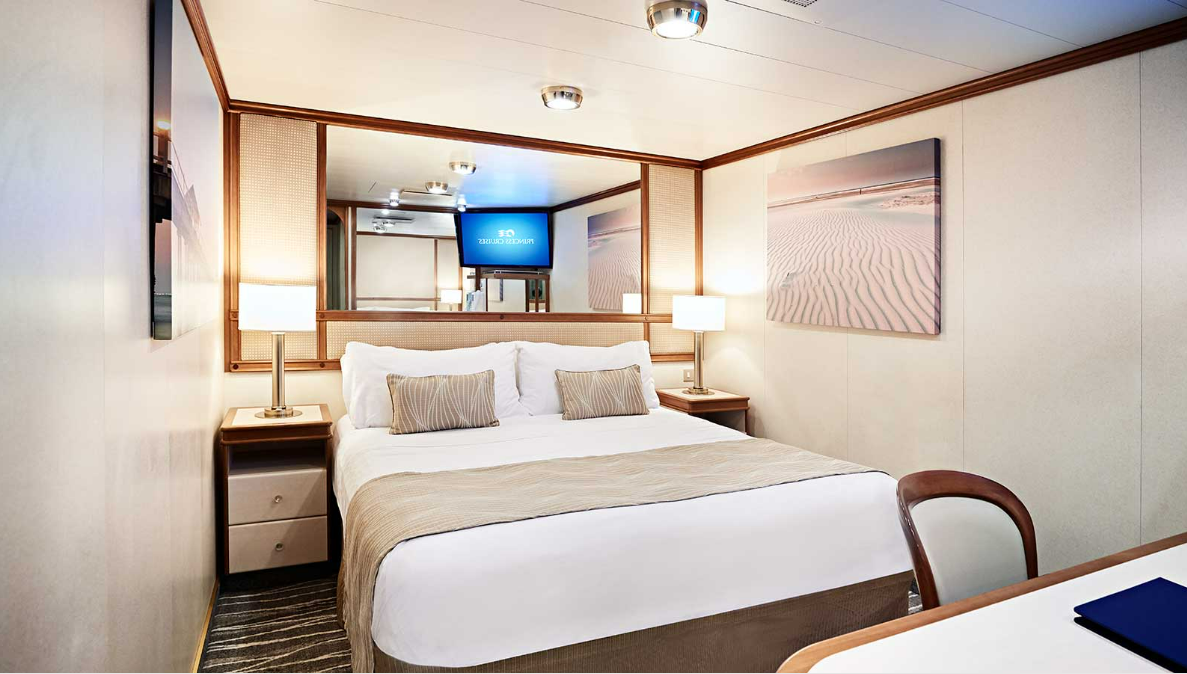
These staterooms are the perfect place to recharge your batteries. Our most affordable option, featuring two twin beds or a queen-size bed. Other amenities include a refrigerator, hair dryer, TV, closet and bathroom with shower. Stateroom Features Approx. 158 to 162 sq ft. Comfortable queen or two twin beds Refrigerator. Flat-panel television Private bathroom with shower 100% cotton, high-thread count linens Complimentary 24-hour room service Spacious closet Desk with chair Hair dryer & bathroom amenities Digital security safe
Facilities and amenities
Cabin details
Inside
Code
IC
Size
162 sq ft
Deck
Deck 14 - Lido
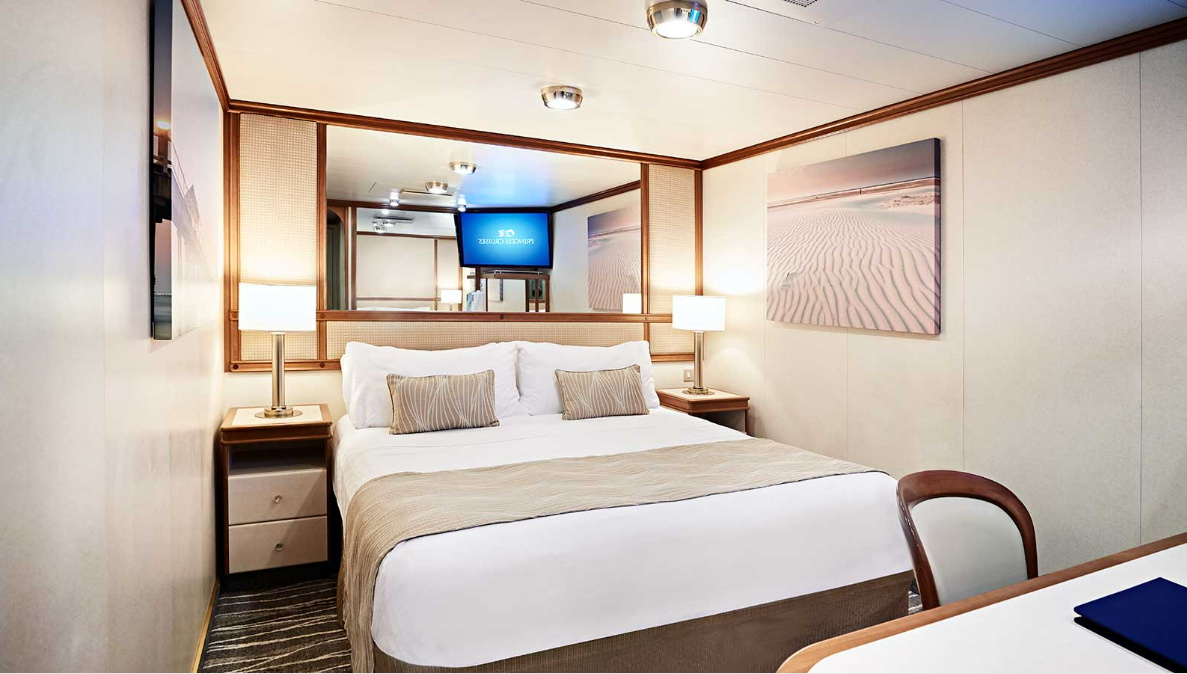
These staterooms are the perfect place to recharge your batteries. Our most affordable option, featuring two twin beds or a queen-size bed. Other amenities include a refrigerator, hair dryer, TV, closet and bathroom with shower. Stateroom Features Approx. 158 to 162 sq ft. Comfortable queen or two twin beds Refrigerator. Flat-panel television Private bathroom with shower 100% cotton, high-thread count linens Complimentary 24-hour room service Spacious closet Desk with chair Hair dryer & bathroom amenities Digital security safe
Facilities and amenities
Cabin details
Inside
Code
ID
Size
162 sq ft
Deck
Deck 10 - Caribe
These staterooms are the perfect place to recharge your batteries. Our most affordable option, featuring two twin beds or a queen-size bed. Other amenities include a refrigerator, hair dryer, TV, closet and bathroom with shower. Stateroom Features Approx. 158 to 162 sq ft. Comfortable queen or two twin beds Refrigerator. Flat-panel television Private bathroom with shower 100% cotton, high-thread count linens Complimentary 24-hour room service Spacious closet Desk with chair Hair dryer & bathroom amenities Digital security safe
Facilities and amenities
Cabin details
Inside
Code
IE
Size
162 sq ft
Deck
Deck 10 - Caribe
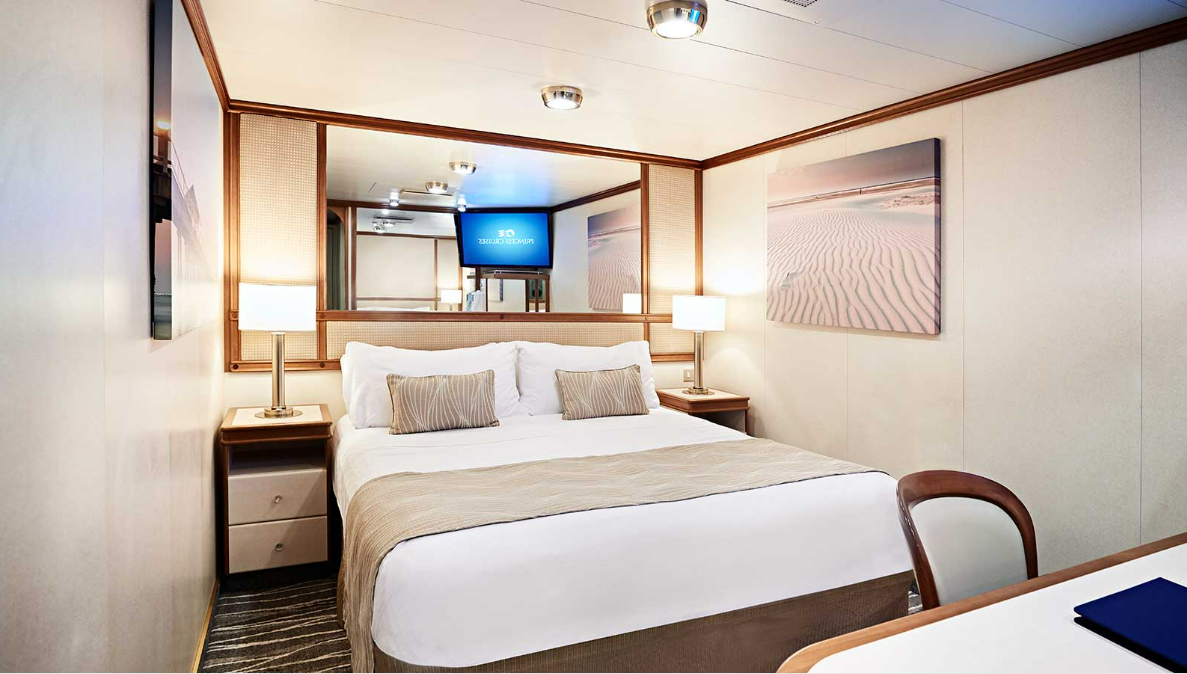
These staterooms are the perfect place to recharge your batteries. Our most affordable option, featuring two twin beds or a queen-size bed. Other amenities include a refrigerator, hair dryer, TV, closet and bathroom with shower. Stateroom Features Approx. 158 to 162 sq ft. Comfortable queen or two twin beds Refrigerator. Flat-panel television Private bathroom with shower 100% cotton, high-thread count linens Complimentary 24-hour room service Spacious closet Desk with chair Hair dryer & bathroom amenities Digital security safe
Facilities and amenities
Cabin details
Inside
Code
IF
Size
162 sq ft
Deck
Deck 14 - Lido
These staterooms are the perfect place to recharge your batteries. Our most affordable option, featuring two twin beds or a queen-size bed. Other amenities include a refrigerator, hair dryer, TV, closet and bathroom with shower. Stateroom Features Approx. 158 to 162 sq ft. Comfortable queen or two twin beds Refrigerator. Flat-panel television Private bathroom with shower 100% cotton, high-thread count linens Complimentary 24-hour room service Spacious closet Desk with chair Hair dryer & bathroom amenities Digital security safe
Facilities and amenities
Cabin details
Outside/Oceanview
Code
OF
Size
194 sq. ft
Deck
Deck 5 - Plaza
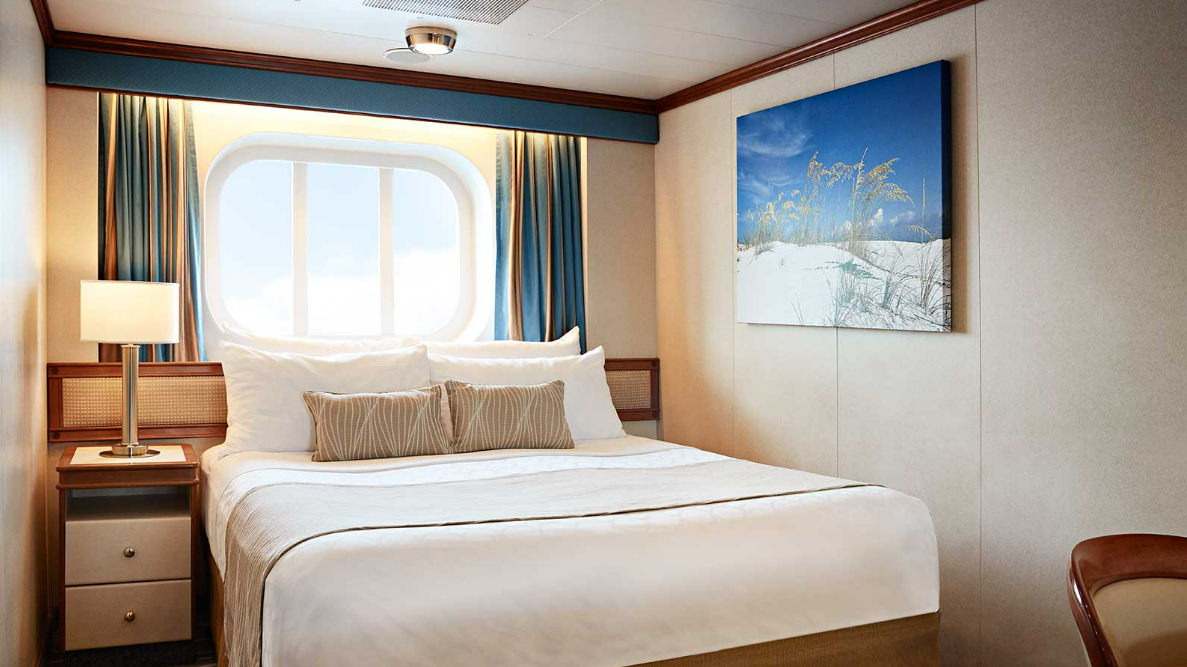
Approximately 194 sq. ft., this well appointed stateroom features a picture window for memorable views. Enjoy the added benefit of a view of the ocean from either a picture window or porthole that brings in natural light. This stateroom includes all the amenities of an interior room. A spacious picture window for memorable views. Comfortable queen or two twin beds. Refrigerator. Flat-panel television. Private bathroom with shower. 100% cotton, high-thread count linens. Complimentary 24-hour room service. Spacious closet. Desk with chair. Hair dryer & bathroom amenities. Digital security safe.
Facilities and amenities
Cabin details
Outside/Oceanview
Code
OC
Size
194 sq. ft
Deck
Deck 5 - Plaza
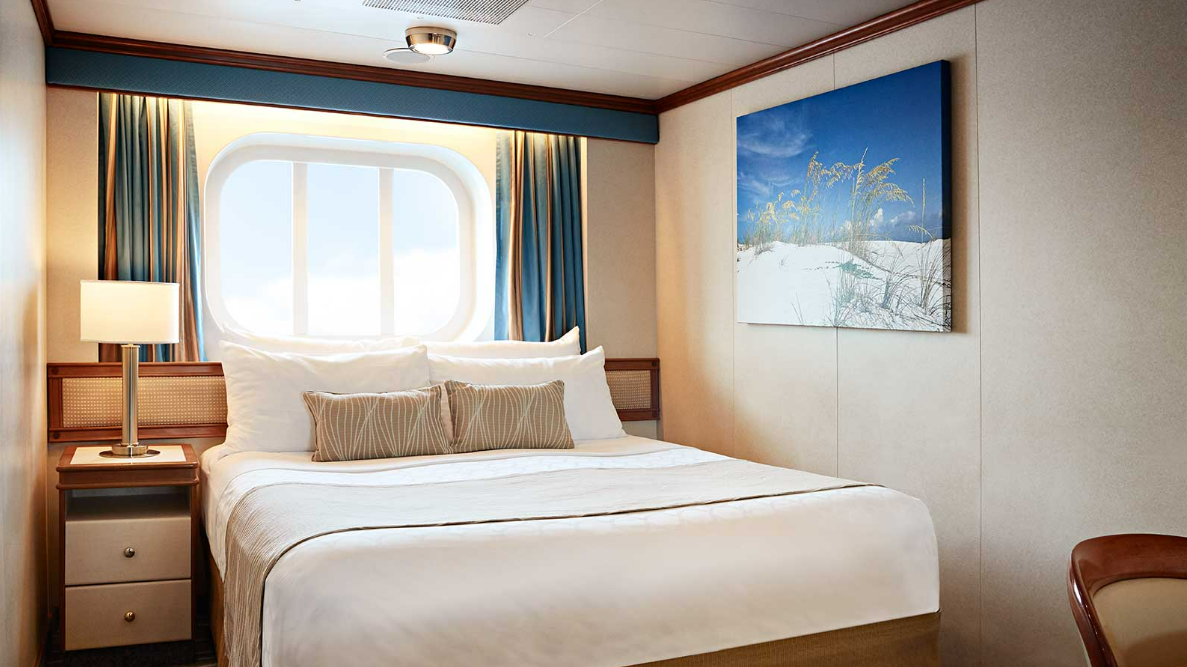
Approximately 194 sq. ft., this well appointed stateroom features a picture window for memorable views. Enjoy the added benefit of a view of the ocean from either a picture window or porthole that brings in natural light. This stateroom includes all the amenities of an interior room. A spacious picture window for memorable views. Comfortable queen or two twin beds. Refrigerator. Flat-panel television. Private bathroom with shower. 100% cotton, high-thread count linens. Complimentary 24-hour room service. Spacious closet. Desk with chair. Hair dryer & bathroom amenities. Digital security safe.
Facilities and amenities
Cabin details
Outside/Oceanview
Code
OY
Size
183 sq. ft
Deck
Deck 10 - Caribe
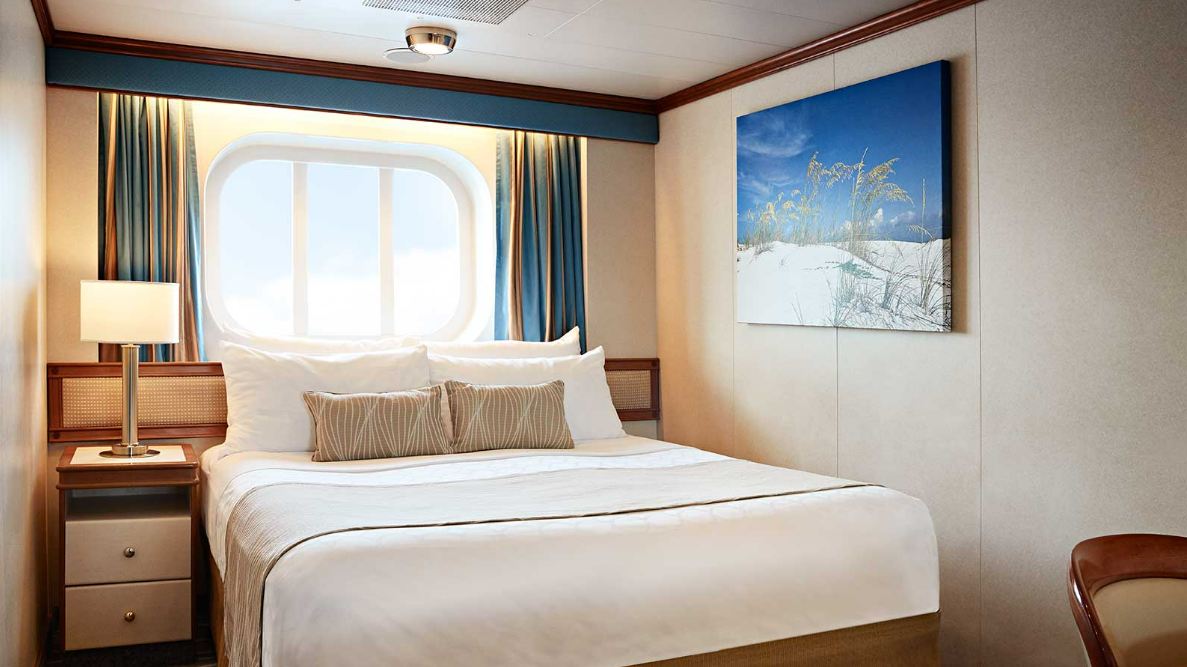
Approximately 183 sq. ft., this well appointed stateroom features a picture window with an obstructed view. Enjoy the added benefit of a view of the ocean from either a picture window or porthole that brings in natural light. This stateroom includes all the amenities of an interior room. A spacious picture window for memorable views. Comfortable queen or two twin beds. Refrigerator. Flat-panel television. Private bathroom with shower. 100% cotton, high-thread count linens. Complimentary 24-hour room service. Spacious closet. Desk with chair. Hair dryer & bathroom amenities. Digital security safe.
Facilities and amenities
Cabin details
Outside/Oceanview
Code
OZ
Size
183 sq. ft
Deck
Deck 8 - Emerald
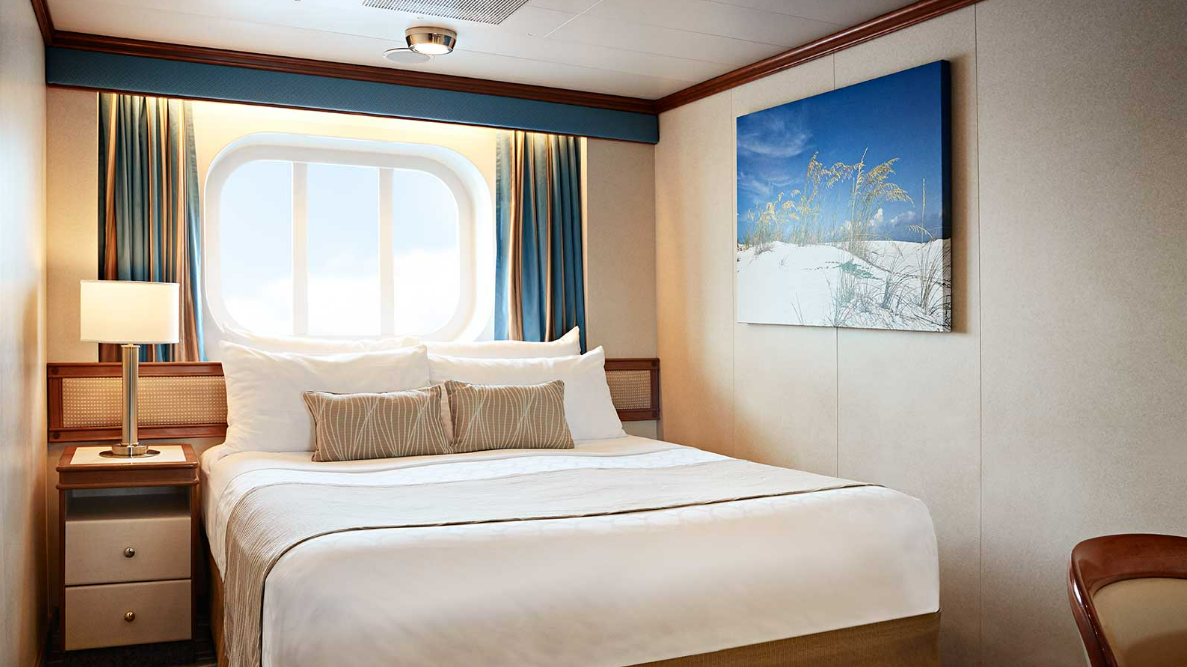
Approximately 183 sq. ft., this well appointed stateroom features a picture window with an obstructed view. Enjoy the added benefit of a view of the ocean from either a picture window or porthole that brings in natural light. This stateroom includes all the amenities of an interior room. A spacious picture window for memorable views. Comfortable queen or two twin beds. Refrigerator. Flat-panel television. Private bathroom with shower. 100% cotton, high-thread count linens. Complimentary 24-hour room service. Spacious closet. Desk with chair. Hair dryer & bathroom amenities. Digital security safe.
Facilities and amenities
Cabin details
Outside/Oceanview
Code
OV
Size
183 sq. ft
Deck
Deck 8 - Emerald
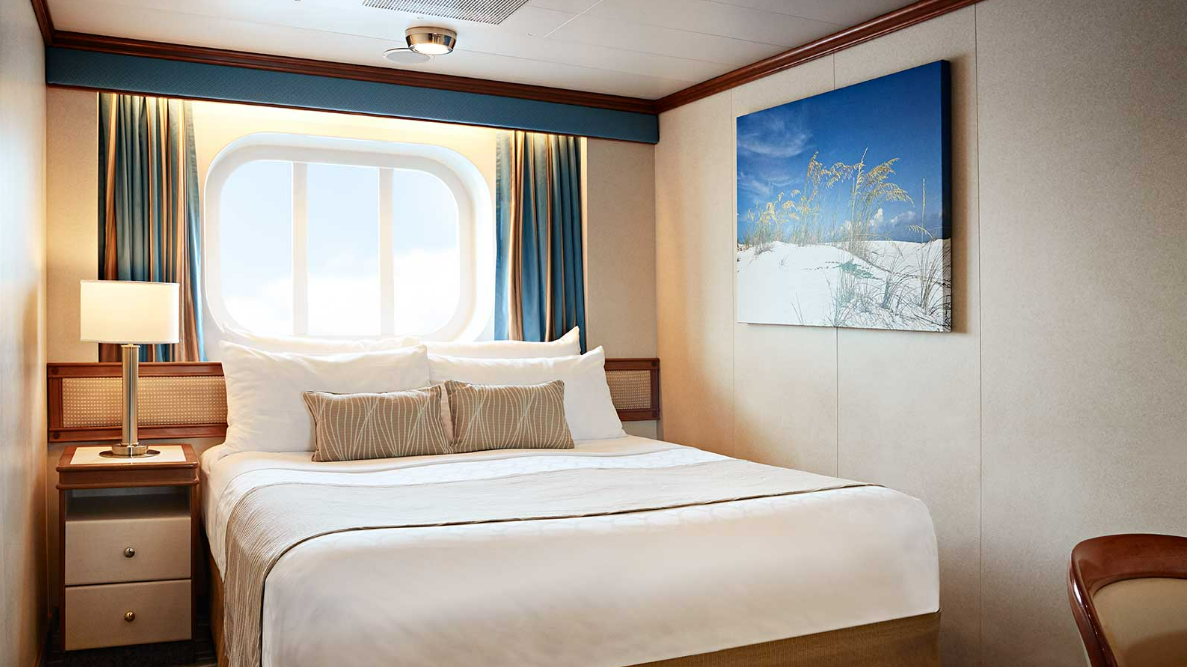
Approximately 183 sq. ft., this well appointed stateroom features a picture window with an obstructed view. Enjoy the added benefit of a view of the ocean from either a picture window or porthole that brings in natural light. This stateroom includes all the amenities of an interior room. A spacious picture window for memorable views. Comfortable queen or two twin beds. Refrigerator. Flat-panel television. Private bathroom with shower. 100% cotton, high-thread count linens. Complimentary 24-hour room service. Spacious closet. Desk with chair. Hair dryer & bathroom amenities. Digital security safe.
Facilities and amenities
Cabin details
Outside/Oceanview
Code
OW
Size
183 sq. ft
Deck
Deck 8 - Emerald
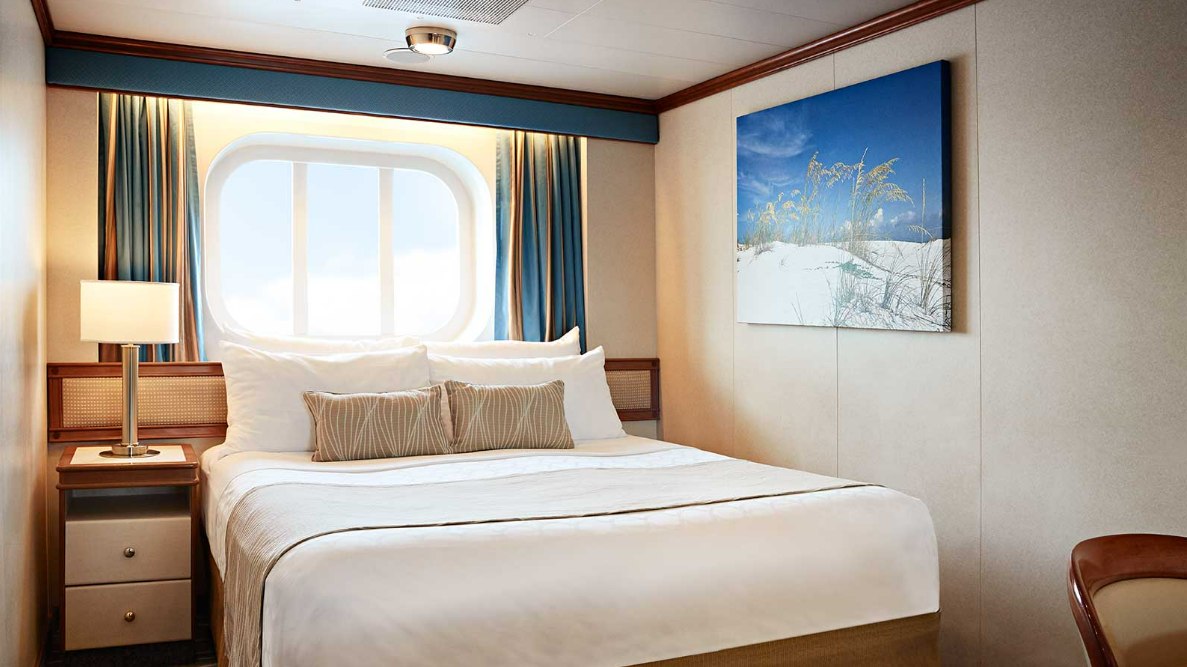
Approximately 183 sq. ft., this well appointed stateroom features a picture window with an obstructed view. Enjoy the added benefit of a view of the ocean from either a picture window or porthole that brings in natural light. This stateroom includes all the amenities of an interior room. A spacious picture window for memorable views. Comfortable queen or two twin beds. Refrigerator. Flat-panel television. Private bathroom with shower. 100% cotton, high-thread count linens. Complimentary 24-hour room service. Spacious closet. Desk with chair. Hair dryer & bathroom amenities. Digital security safe.
Facilities and amenities
Cabin details
Outside/Oceanview
Code
O5
Size
200 sq. ft
Deck
Deck 10 - Caribe
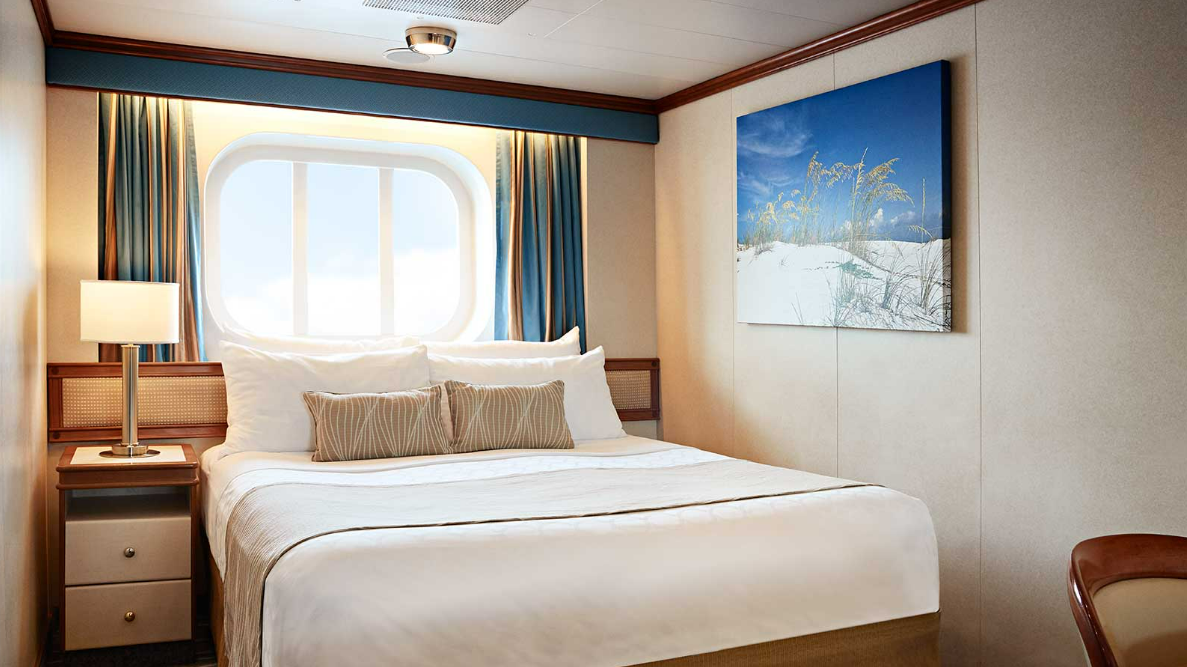
Approximately 200 sq. ft., this well appointed stateroom features a forward-facing cabin for memorable views. Enjoy the added benefit of a view of the ocean from either a picture window or porthole that brings in natural light. This stateroom includes all the amenities of an interior room. A spacious picture window for memorable views. Comfortable queen or two twin beds. Refrigerator. Flat-panel television. Private bathroom with shower. 100% cotton, high-thread count linens. Complimentary 24-hour room service. Spacious closet. Desk with chair. Hair dryer & bathroom amenities. Digital security safe.
Facilities and amenities
Cabin details
Balcony
Code
B2
Size
277 sq. ft
Deck
Deck 10 - Caribe
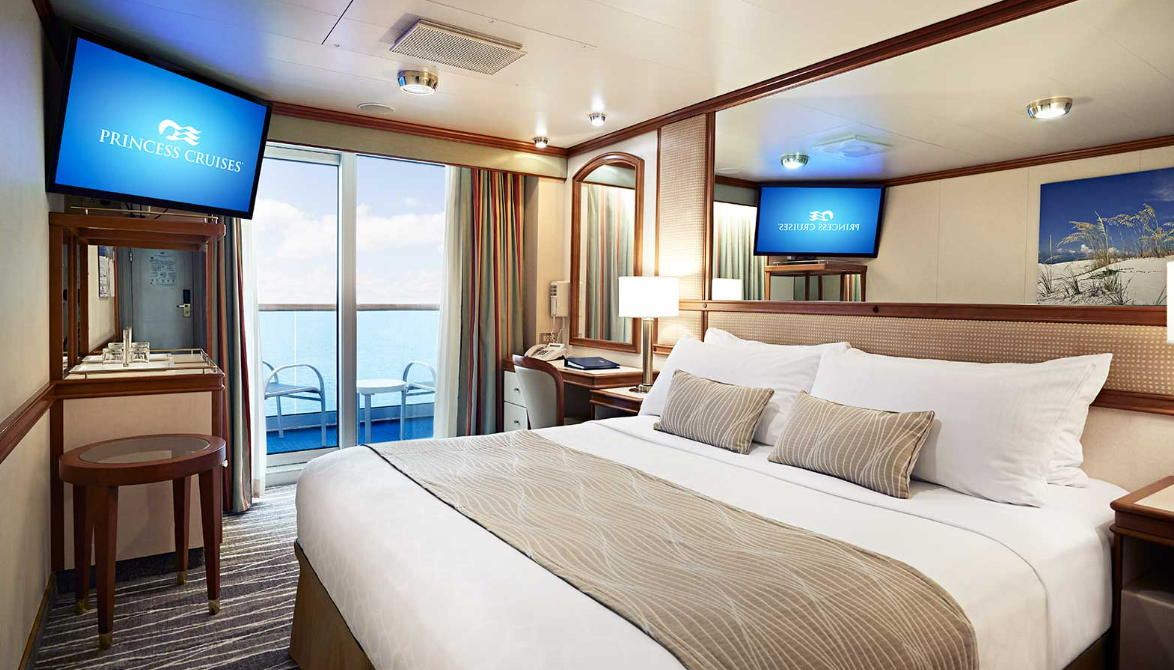
Approximately 237 to 277 sq. ft. including balcony, this cabin provides dramatic wake views from a rear-facing private balcony. This impressive stateroom offers the added indulgence of a balcony and gives you more space than a standard stateroom. Enjoy your own private outdoor space with a table, two chairs, and a relaxing view of the inspiring scenery surrounding you, whether a beautiful sunset over the ocean or a new city to explore. It’s also perfect to enjoy cocktails before dinner or a leisurely breakfast. Balcony with 2 chairs and table. Floor-to-ceiling sliding glass doors. Comfortable queen or two twin beds. Refrigerator. Flat-panel television. Private bathroom with shower. 100% cotton, high-thread count linens. Complimentary 24-hour room service. Spacious closet. Desk with chair. Hair dryer & bathroom amenities. Digital security safe.
Facilities and amenities
Cabin details
Balcony
Code
B4
Size
277 sq. ft
Deck
Deck 10 - Caribe
Approximately 237 to 277 sq. ft. including balcony, this cabin provides dramatic wake views from a rear-facing private balcony. This impressive stateroom offers the added indulgence of a balcony and gives you more space than a standard stateroom. Enjoy your own private outdoor space with a table, two chairs, and a relaxing view of the inspiring scenery surrounding you, whether a beautiful sunset over the ocean or a new city to explore. It’s also perfect to enjoy cocktails before dinner or a leisurely breakfast. Balcony with 2 chairs and table. Floor-to-ceiling sliding glass doors. Comfortable queen or two twin beds. Refrigerator. Flat-panel television. Private bathroom with shower. 100% cotton, high-thread count linens. Complimentary 24-hour room service. Spacious closet. Desk with chair. Hair dryer & bathroom amenities. Digital security safe.
Facilities and amenities
Cabin details
Balcony
Code
BA
Size
237 sq. ft
Deck
Deck 11 - Baja
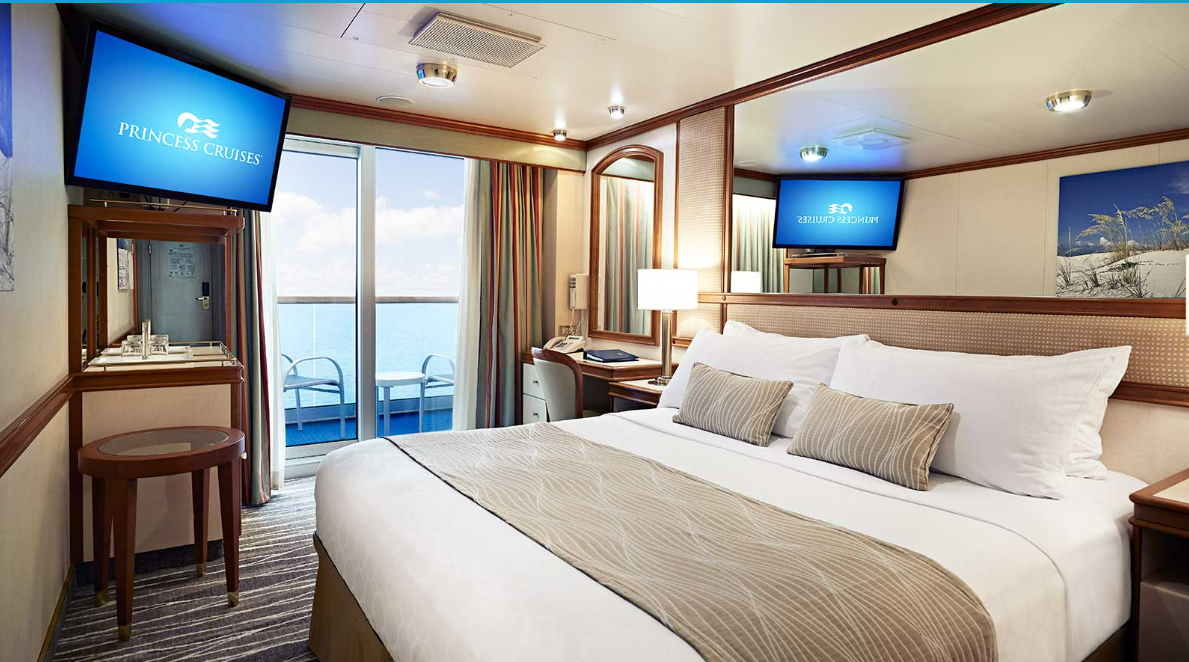
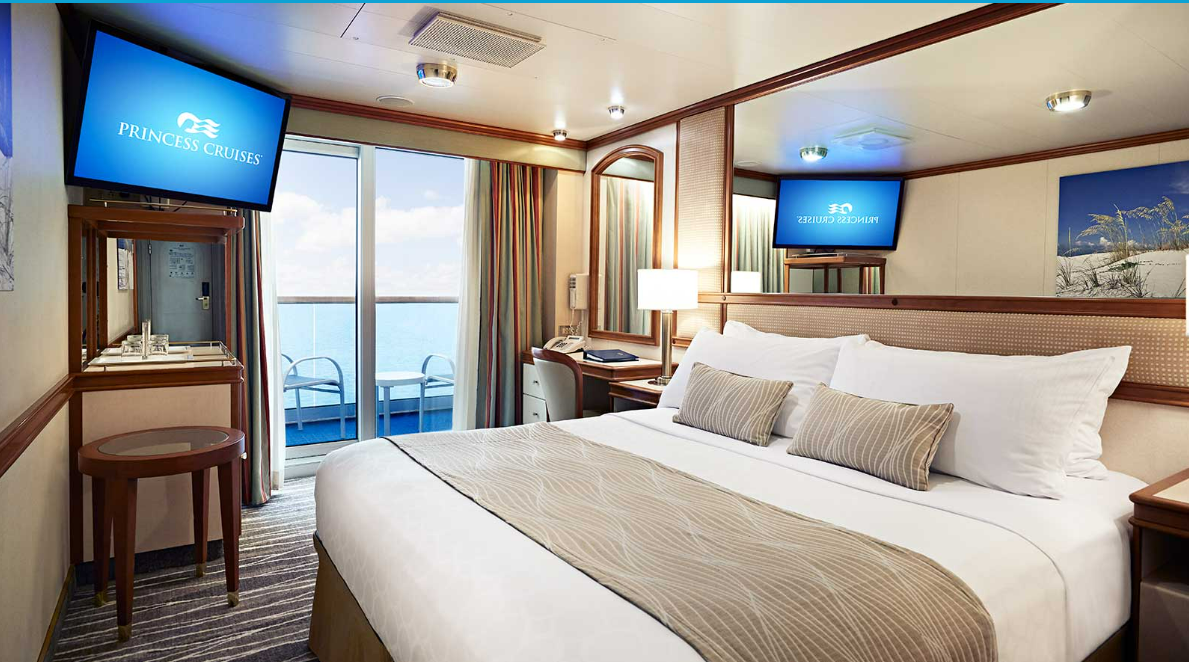
This impressive stateroom offers the added indulgence of a balcony and gives you more space than a standard stateroom. Enjoy your own private outdoor space with a table, two chairs, and a relaxing view of the inspiring scenery surrounding you, whether a beautiful sunset over the ocean or a new city to explore. It’s also perfect to enjoy cocktails before dinner or a leisurely breakfast. Approx. 237 sq. ft. Balcony with 2 chairs and table Floor-to-ceiling sliding glass doors Comfortable queen or two twin beds Refrigerator. Flat-panel television Private bathroom with shower 100% cotton, high-thread count linens Complimentary 24-hour room service Spacious closet Desk with chair Hair dryer & bathroom amenities Digital security safe
Facilities and amenities
Cabin details
Balcony
Code
BB
Size
237 sq. ft
Deck
Deck 11 - Baja
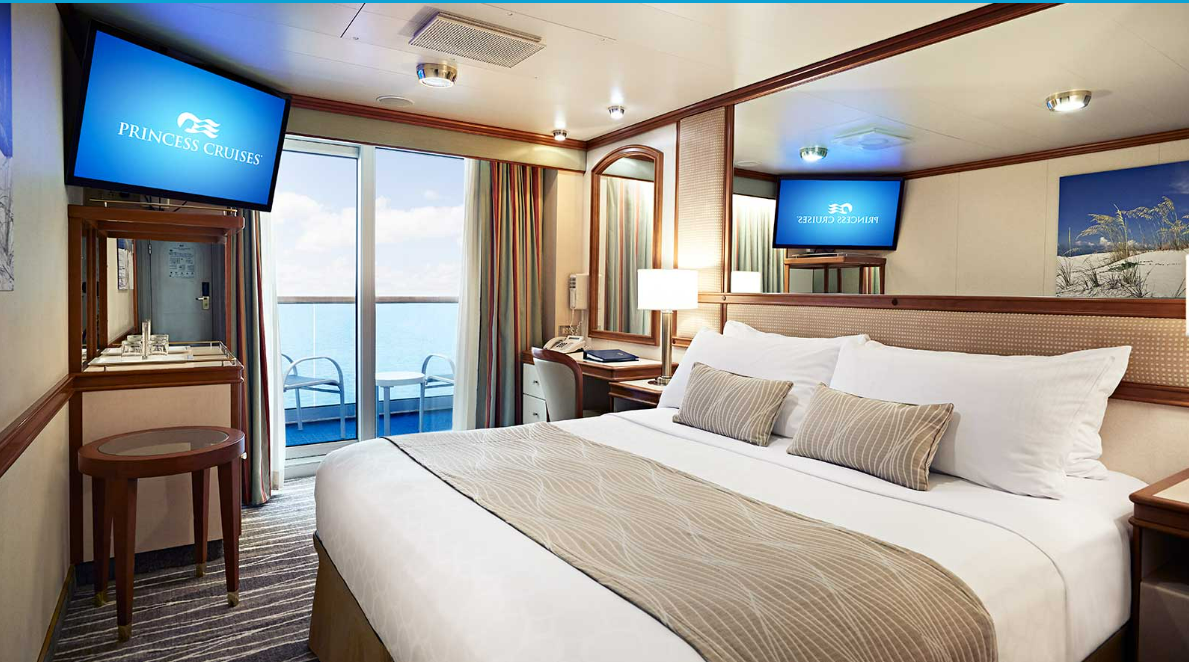
This impressive stateroom offers the added indulgence of a balcony and gives you more space than a standard stateroom. Enjoy your own private outdoor space with a table, two chairs, and a relaxing view of the inspiring scenery surrounding you, whether a beautiful sunset over the ocean or a new city to explore. It’s also perfect to enjoy cocktails before dinner or a leisurely breakfast. Approx. 237 sq. ft. Balcony with 2 chairs and table Floor-to-ceiling sliding glass doors Comfortable queen or two twin beds Refrigerator. Flat-panel television Private bathroom with shower 100% cotton, high-thread count linens Complimentary 24-hour room service Spacious closet Desk with chair Hair dryer & bathroom amenities Digital security safe
Facilities and amenities
Cabin details
Balcony
Code
BC
Size
237 sq. ft
Deck
Deck 14 - Lido
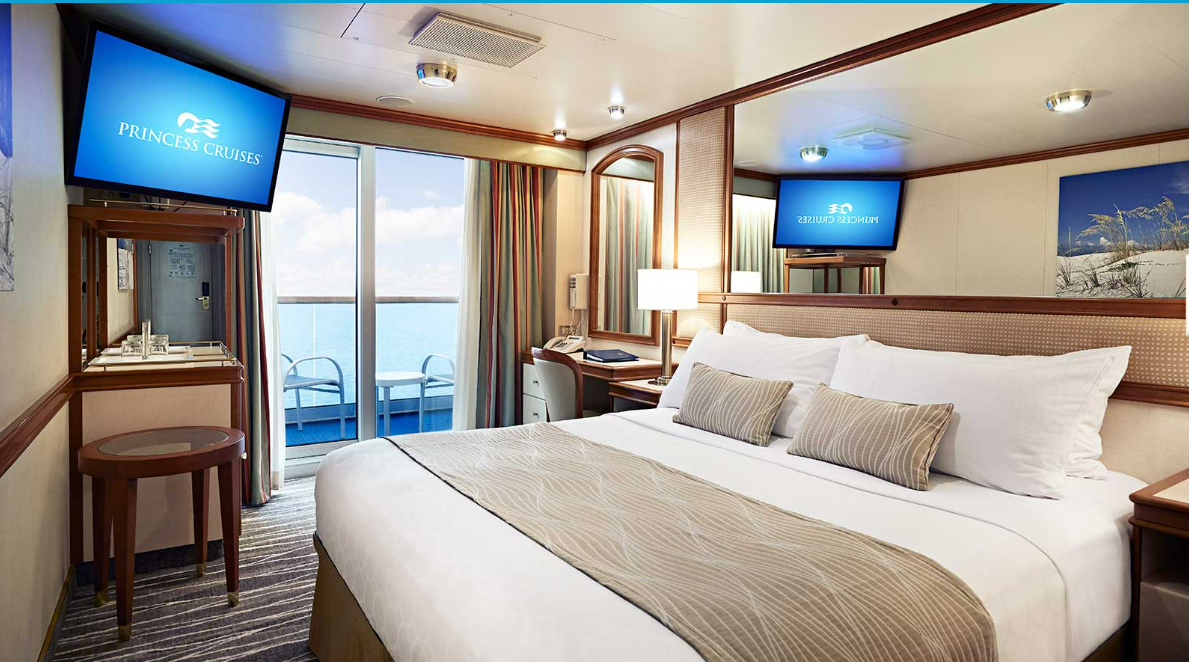
This impressive stateroom offers the added indulgence of a balcony and gives you more space than a standard stateroom. Enjoy your own private outdoor space with a table, two chairs, and a relaxing view of the inspiring scenery surrounding you, whether a beautiful sunset over the ocean or a new city to explore. It’s also perfect to enjoy cocktails before dinner or a leisurely breakfast. Approx. 237 sq. ft. Balcony with 2 chairs and table Floor-to-ceiling sliding glass doors Comfortable queen or two twin beds Refrigerator. Flat-panel television Private bathroom with shower 100% cotton, high-thread count linens Complimentary 24-hour room service Spacious closet Desk with chair Hair dryer & bathroom amenities Digital security safe
Facilities and amenities
Cabin details
Balcony
Code
BD
Size
237 sq. ft
Deck
Deck 10 - Caribe
This impressive stateroom offers the added indulgence of a balcony and gives you more space than a standard stateroom. Enjoy your own private outdoor space with a table, two chairs, and a relaxing view of the inspiring scenery surrounding you, whether a beautiful sunset over the ocean or a new city to explore. It’s also perfect to enjoy cocktails before dinner or a leisurely breakfast. Approx. 237 sq. ft. Balcony with 2 chairs and table Floor-to-ceiling sliding glass doors Comfortable queen or two twin beds Refrigerator. Flat-panel television Private bathroom with shower 100% cotton, high-thread count linens Complimentary 24-hour room service Spacious closet Desk with chair Hair dryer & bathroom amenities Digital security safe
Facilities and amenities
Cabin details
Balcony
Code
BE
Size
237 sq. ft
Deck
Deck 10 - Caribe
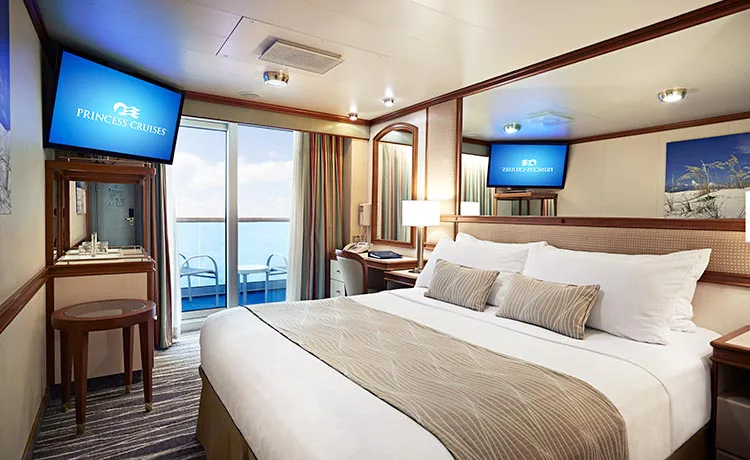
This impressive stateroom offers the added indulgence of a balcony and gives you more space than a standard stateroom. Enjoy your own private outdoor space with a table, two chairs, and a relaxing view of the inspiring scenery surrounding you, whether a beautiful sunset over the ocean or a new city to explore. It’s also perfect to enjoy cocktails before dinner or a leisurely breakfast. Approx. 237 sq. ft. Balcony with 2 chairs and table Floor-to-ceiling sliding glass doors Comfortable queen or two twin beds Refrigerator. Flat-panel television Private bathroom with shower 100% cotton, high-thread count linens Complimentary 24-hour room service Spacious closet Desk with chair Hair dryer & bathroom amenities Digital security safe
Facilities and amenities
Cabin details
Balcony
Code
BF
Size
237 sq. ft
Deck
Deck 14 - Lido
This impressive stateroom offers the added indulgence of a balcony and gives you more space than a standard stateroom. Enjoy your own private outdoor space with a table, two chairs, and a relaxing view of the inspiring scenery surrounding you, whether a beautiful sunset over the ocean or a new city to explore. It’s also perfect to enjoy cocktails before dinner or a leisurely breakfast. Approx. 237 sq. ft. Balcony with 2 chairs and table Floor-to-ceiling sliding glass doors Comfortable queen or two twin beds Refrigerator. Flat-panel television Private bathroom with shower 100% cotton, high-thread count linens Complimentary 24-hour room service Spacious closet Desk with chair Hair dryer & bathroom amenities Digital security safe
Facilities and amenities
Cabin details
Suite
Code
M1
Size
354 sq. ft
Deck
Deck 9 - Dolphin
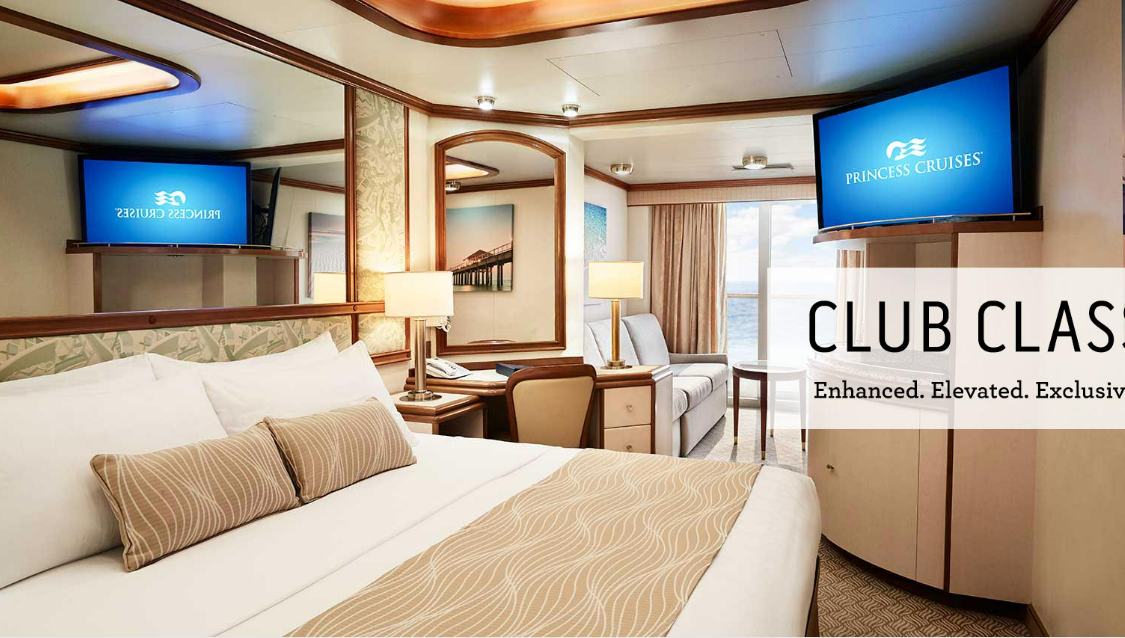
Approximately 354 sq. ft. including balcony, this spacious cabin provides a seating area with sofa bed, and full bath with combination tub and shower. Choose a luxurious Mini-Suite with balcony* which is substantially larger than a Balcony stateroom and receive a complimentary welcome glass of bubbly. Mini-Suites include a separate sitting area with sofa bed and two flat-panel televisions. For families or groups needing a little extra space, Mini-Suites offer an appealing and affordable option. Balcony with 2-4 chairs, table and ottoman Bathroom tub and massage shower head Floor-to-ceiling sliding glass doors Separate sitting area with sofa bed & coffee table Complimentary welcome glass of bubbly on embarkation day Luxury mattress topper and pillows Two flat-panel televisions Comfortable queen or two twin beds Refrigerator 100% cotton, high-thread count linens Complimentary 24-hour room service† Spacious closet Desk with chair Hair dryer & bathroom amenities Digital security safe
Facilities and amenities
Cabin details
Suite
Code
S8
Size
613 sq. ft
Occupancy
Up to 6 guests
Deck
Deck 9 - Dolphin
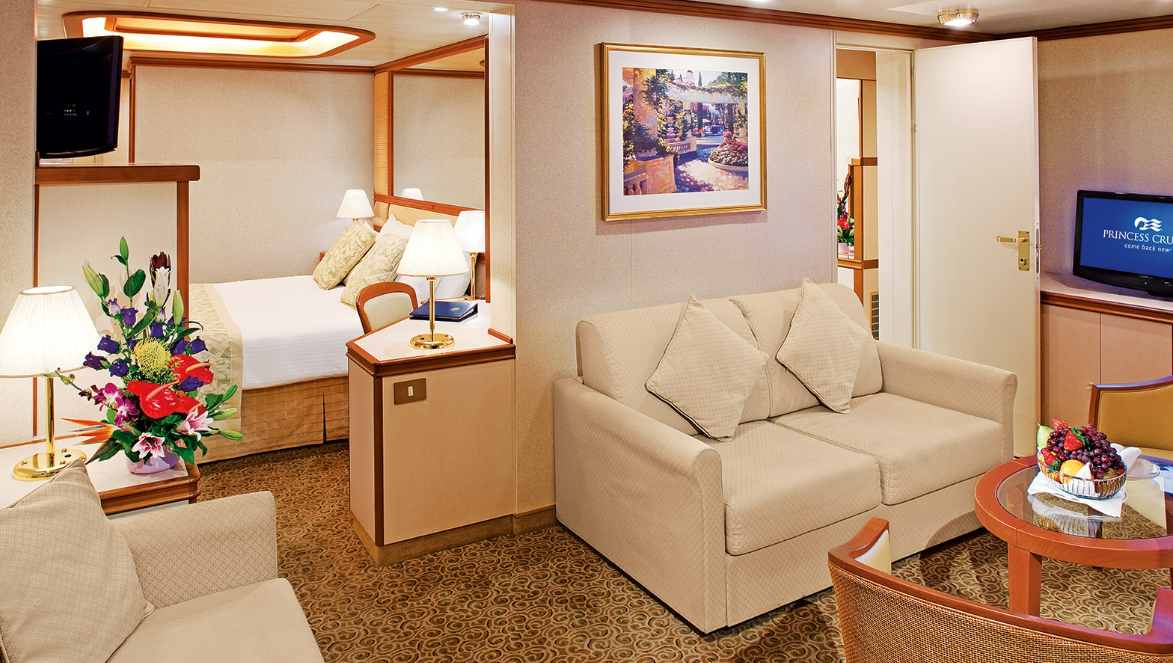
Approximately 613 sq. ft. including balcony, the Two Bedroom Family Suite features 2 bedrooms to accommodate up to 6 passengers. Enjoy exclusive suite-only upgrades and benefits. These suites are for larger families or groups traveling together and include special suite-only benefits and two bathrooms , connected by a large living room, which leads to an expansive private balcony. Each suite sleeps up to eight people. Mini-Suite stateroom connected to an inside cabin via a shared lounge. Balcony with 2-4 chairs, table and ottoman. 2 bathrooms, one with bath tub the other with a walk-in shower. Floor-to-ceiling sliding glass doors. Separate sitting area with sofa bed & coffee table. Complimentary welcome glass of champagne on embarkation day. Luxury mattress topper and pillows. Two flat-panel televisions. Comfortable queen or two twin beds. Refrigerator. Flat-panel televisions. Desk with chair. Hair dryer & fine bathroom amenities. Digital security safe. 100% cotton, high-thread count linens. Complimentary 24-hour room service. Spacious closet.
Facilities and amenities
Cabin details
Suite
Code
S1
Size
329 sq. ft
Deck
Deck 11 - Baja
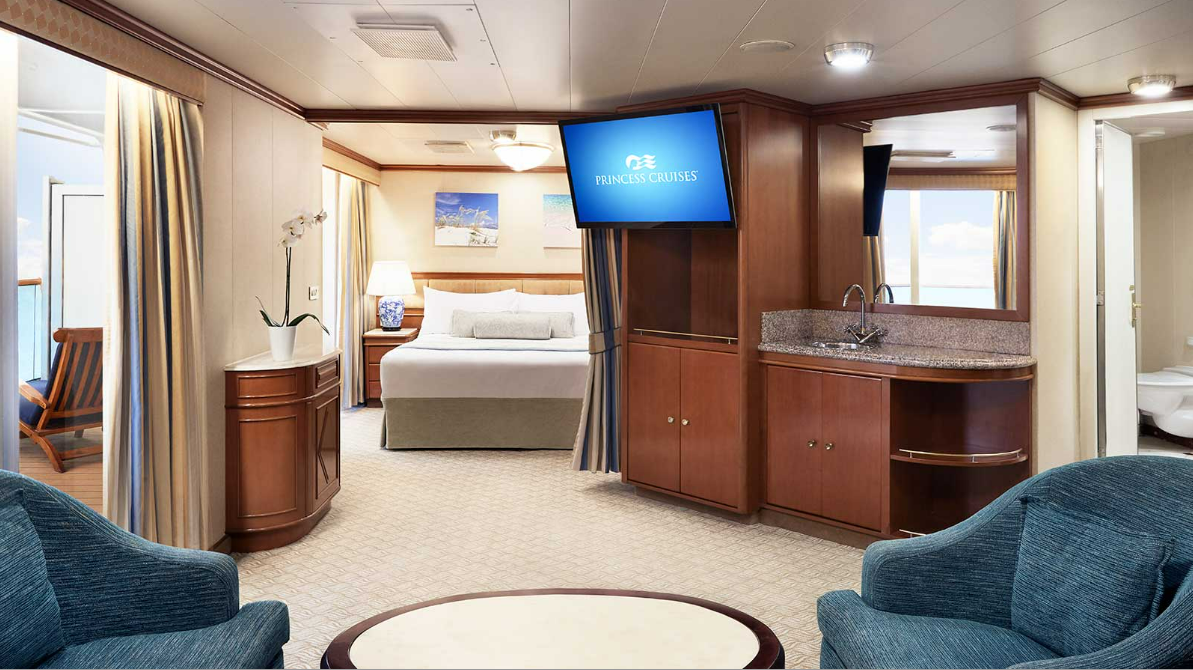
Approximately 1,329 sq. ft. including balcony, the Grand Suite features an expansive cabin and oversized aft-facing balcony. Enjoy exclusive suite-only upgrades and benefits. Surrounding you with deluxe accommodations, a spacious Suite with balcony* includes all the amenities of a Club Class Mini-Suite, plus incredible premiums. Enjoy more living space, a sofa bed and separate seating areas, and wonderfully enhanced amenities that range from priority embarkation and disembarkation to a complimentary mini-bar setup in suite and so much more. Luxury balcony furniture including 2 loungers, 4 chairs, table and ottoman. 2 floor-to-ceiling sliding glass doors. Separate sitting area with sofa bed, chair and 2 tables. One complimentary mini-bar setup and free daily bottled water. Spacious closet. Complimentary laundry and professional cleaning services. Complimentary Specialty Dining Dinner on embarkation evening. Priority specialty dining and shore excursion reservation. Priority disembarkation at tender ports. Comfortable queen or two twin beds. Refrigerator. Two flat-panel televisions. Private bathroom with tub and separate shower. 100% cotton, high-thread count linens. Complimentary 24-hour room service. Desk with chair. Hair dryer & fine bathroom amenities. Digital security safe.
Facilities and amenities
Cabin details
Suite
Code
MB
Size
354 sq. ft
Deck
Deck 9 - Dolphin
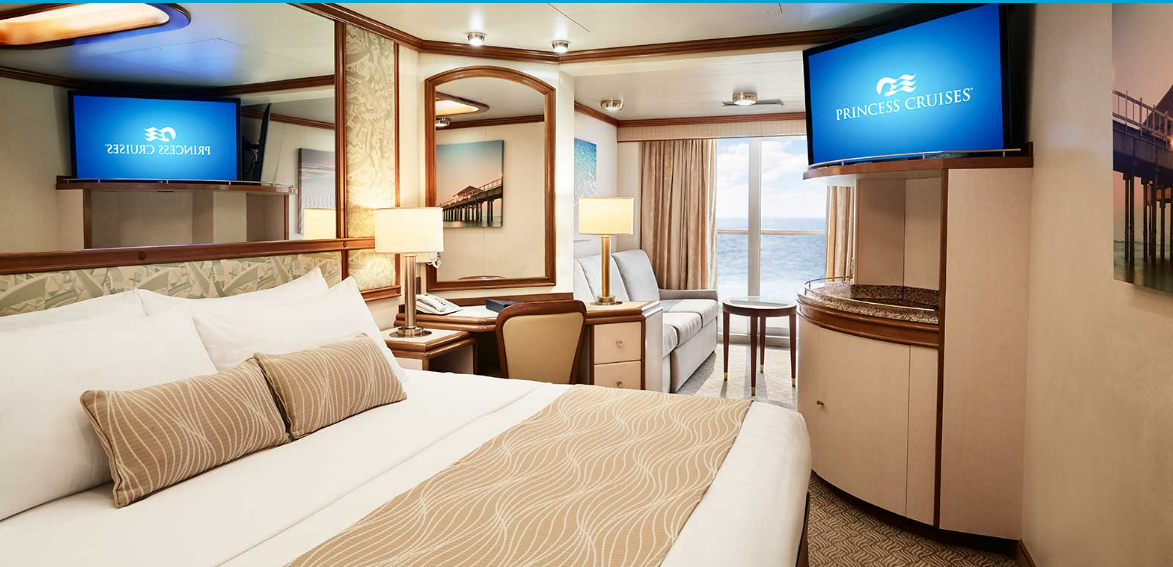
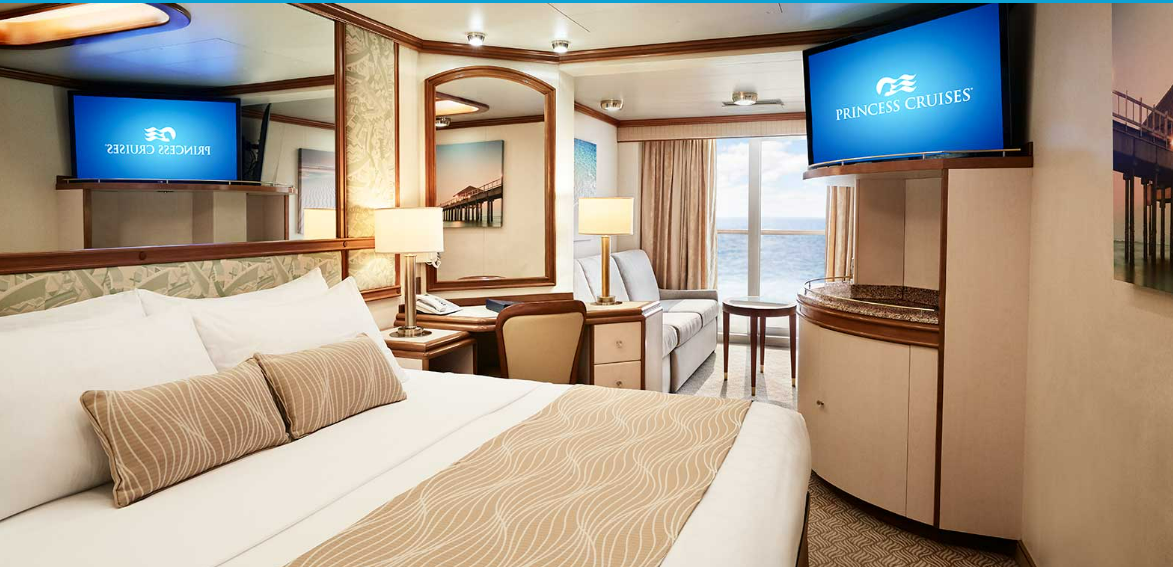
Approximately 354 sq. ft. including balcony, this spacious cabin provides a seating area with sofa bed, and full bath with combination tub and shower. Choose a luxurious Mini-Suite with balcony* which is substantially larger than a Balcony stateroom and receive a complimentary welcome glass of bubbly. Mini-Suites include a separate sitting area with sofa bed and two flat-panel televisions. For families or groups needing a little extra space, Mini-Suites offer an appealing and affordable option. Balcony with 2-4 chairs, table and ottoman Bathroom tub and massage shower head Floor-to-ceiling sliding glass doors Separate sitting area with sofa bed & coffee table Complimentary welcome glass of bubbly on embarkation day Luxury mattress topper and pillows Two flat-panel televisions Comfortable queen or two twin beds Refrigerator 100% cotton, high-thread count linens Complimentary 24-hour room service† Spacious closet Desk with chair Hair dryer & bathroom amenities Digital security safe
Facilities and amenities
Cabin details
Suite
Code
MD
Size
354 sq. ft
Deck
Deck 9 - Dolphin
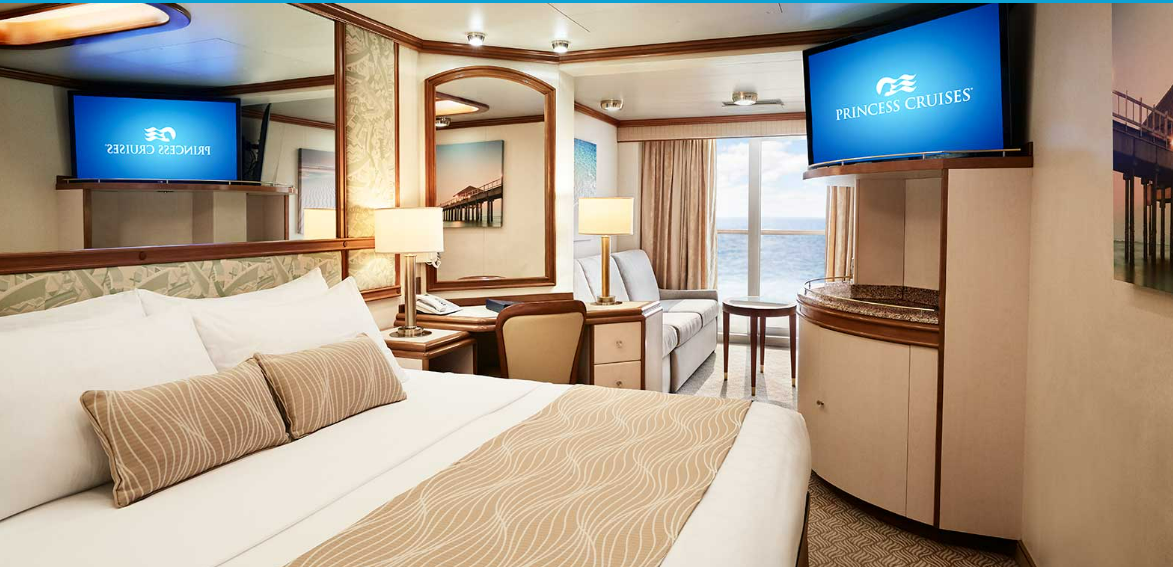
Approximately 354 sq. ft. including balcony, this spacious cabin provides a seating area with sofa bed, and full bath with combination tub and shower. Choose a luxurious Mini-Suite with balcony* which is substantially larger than a Balcony stateroom and receive a complimentary welcome glass of bubbly. Mini-Suites include a separate sitting area with sofa bed and two flat-panel televisions. For families or groups needing a little extra space, Mini-Suites offer an appealing and affordable option. Balcony with 2-4 chairs, table and ottoman Bathroom tub and massage shower head Floor-to-ceiling sliding glass doors Separate sitting area with sofa bed & coffee table Complimentary welcome glass of bubbly on embarkation day Luxury mattress topper and pillows Two flat-panel televisions Comfortable queen or two twin beds Refrigerator 100% cotton, high-thread count linens Complimentary 24-hour room service† Spacious closet Desk with chair Hair dryer & bathroom amenities Digital security safe
Facilities and amenities
Cabin details
Suite
Code
ME
Size
354 sq. ft
Deck
Deck 9 - Dolphin
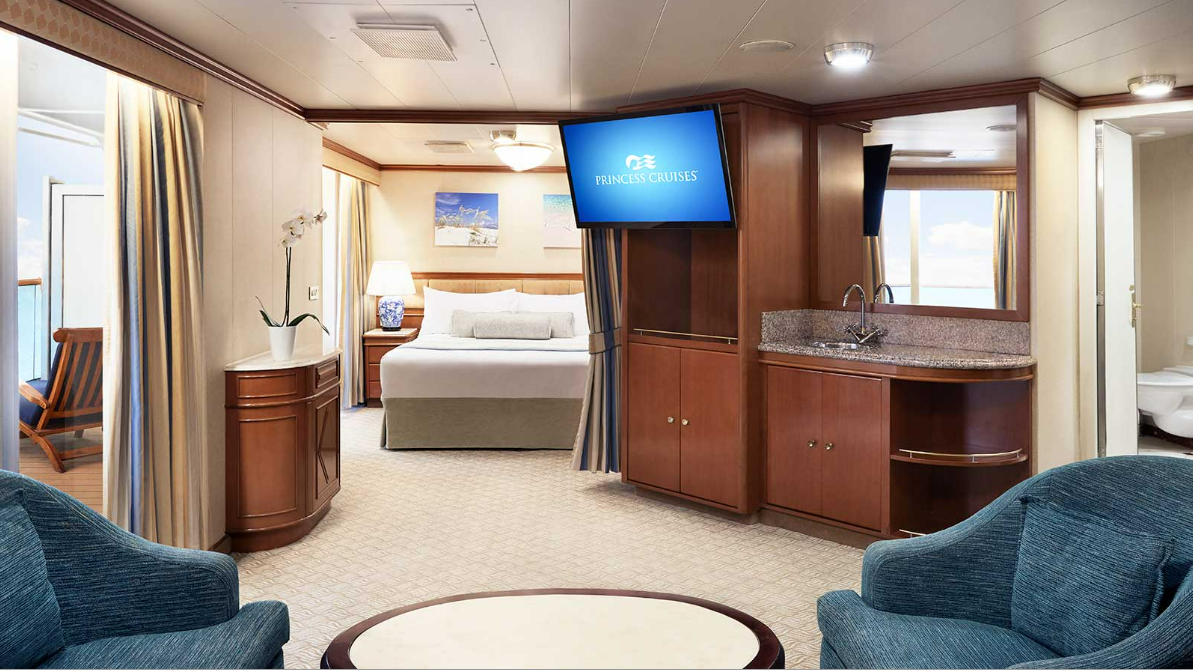
Approximately 354 sq. ft. including balcony, this spacious cabin provides a seating area with sofa bed, and full bath with combination tub and shower. Choose a luxurious Mini-Suite with balcony* which is substantially larger than a Balcony stateroom and receive a complimentary welcome glass of bubbly. Mini-Suites include a separate sitting area with sofa bed and two flat-panel televisions. For families or groups needing a little extra space, Mini-Suites offer an appealing and affordable option. Balcony with 2-4 chairs, table and ottoman Bathroom tub and massage shower head Floor-to-ceiling sliding glass doors Separate sitting area with sofa bed & coffee table Complimentary welcome glass of bubbly on embarkation day Luxury mattress topper and pillows Two flat-panel televisions Comfortable queen or two twin beds Refrigerator 100% cotton, high-thread count linens Complimentary 24-hour room service† Spacious closet Desk with chair Hair dryer & bathroom amenities Digital security safe
Facilities and amenities
Cabin details
Suite
Code
S2
Size
692 sq. ft
Deck
Deck 11 - Baja
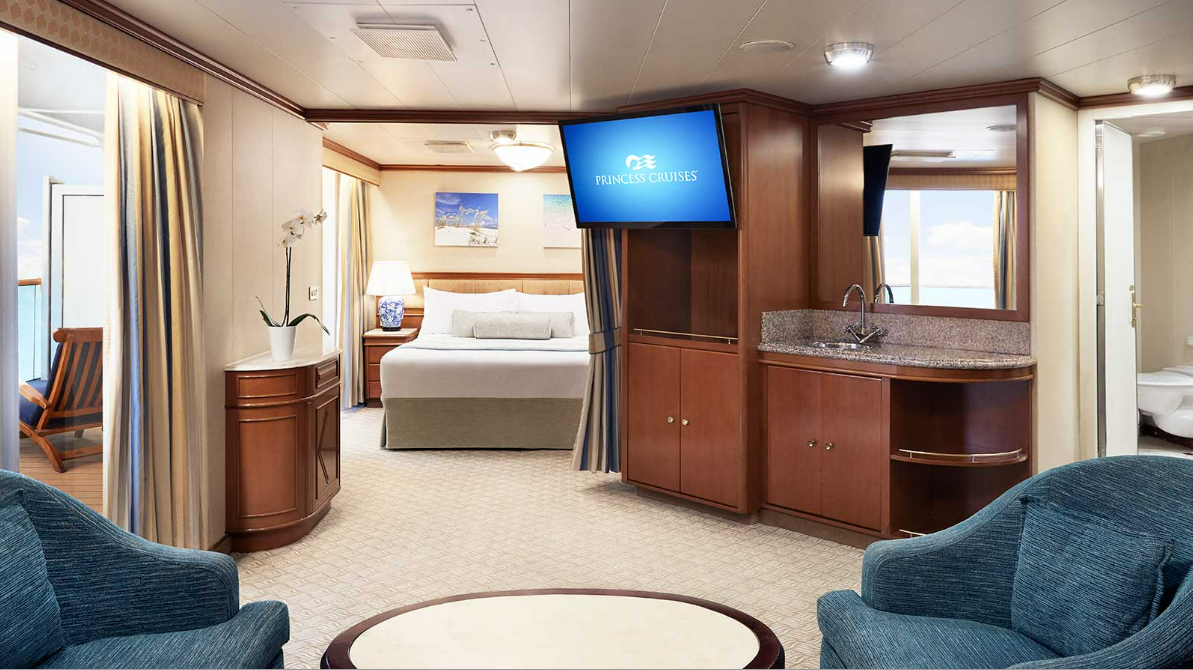
Approximately 692 sq. ft. including balcony, the Owner's Suite features an expansive cabin and oversized aft-facing balcony. Enjoy exclusive suite-only upgrades and benefits. Surrounding you with deluxe accommodations, a spacious Suite with balcony* includes all the amenities of a Club Class Mini-Suite, plus incredible premiums. Enjoy more living space, a sofa bed and separate seating areas, and wonderfully enhanced amenities that range from priority embarkation and disembarkation to a complimentary mini-bar setup in suite and so much more. Luxury balcony furniture including 2 loungers, 4 chairs, table and ottoman. 2 floor-to-ceiling sliding glass doors. Separate sitting area with sofa bed, chair and 2 tables. One complimentary mini-bar setup and free daily bottled water. Spacious closet. Complimentary laundry and professional cleaning services. Complimentary Specialty Dining Dinner on embarkation evening. Priority specialty dining and shore excursion reservation. Priority disembarkation at tender ports. Comfortable queen or two twin beds. Refrigerator. Two flat-panel televisions. Private bathroom with tub and separate shower. 100% cotton, high-thread count linens. Complimentary 24-hour room service. Desk with chair. Hair dryer & fine bathroom amenities. Digital security safe.
Facilities and amenities
Cabin details
Suite
Code
S4
Size
572 sq. ft
Deck
Deck 10 - Caribe
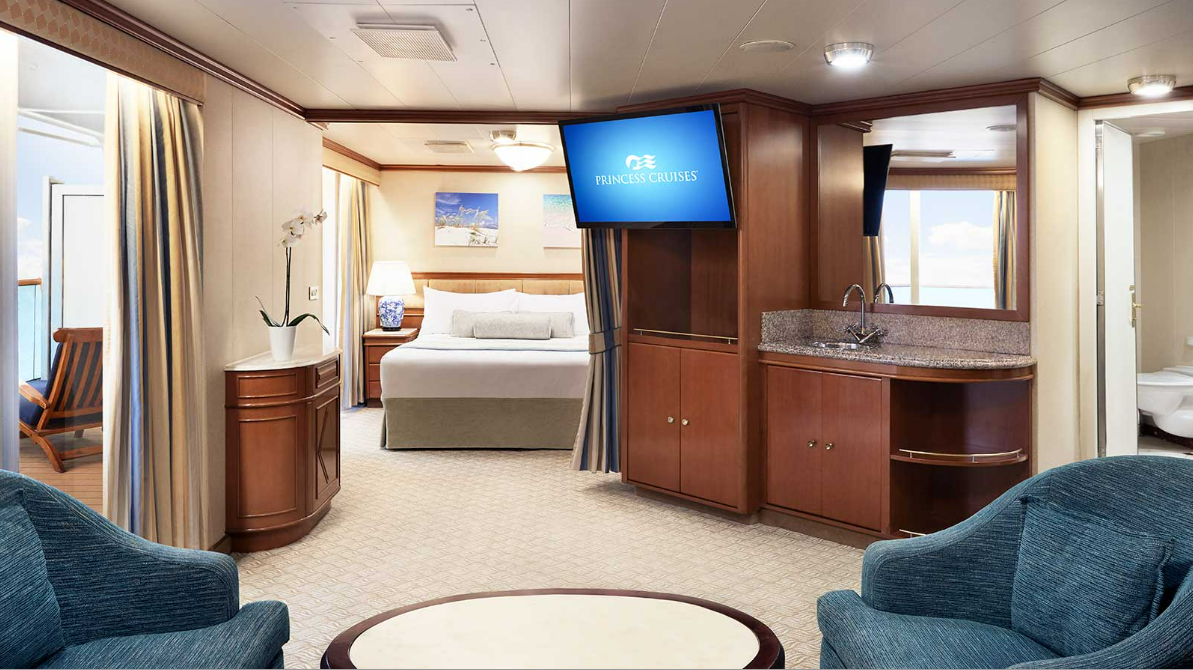
Approximately 525 to 572 sq. ft. including balcony, the Penthouse Suite features a spacious cabin and aft-facing balcony. Enjoy exclusive suite-only upgrades and benefits. Surrounding you with deluxe accommodations, a spacious Suite with balcony* includes all the amenities of a Club Class Mini-Suite, plus incredible premiums. Enjoy more living space, a sofa bed and separate seating areas, and wonderfully enhanced amenities that range from priority embarkation and disembarkation to a complimentary mini-bar setup in suite and so much more. Luxury balcony furniture including 2 loungers, 4 chairs, table and ottoman. 2 floor-to-ceiling sliding glass doors. Separate sitting area with sofa bed, chair and 2 tables. One complimentary mini-bar setup and free daily bottled water. Spacious closet. Complimentary laundry and professional cleaning services. Complimentary Specialty Dining Dinner on embarkation evening. Priority specialty dining and shore excursion reservation. Priority disembarkation at tender ports. Comfortable queen or two twin beds. Refrigerator. Two flat-panel televisions. Private bathroom with tub and separate shower. 100% cotton, high-thread count linens. Complimentary 24-hour room service. Desk with chair. Hair dryer & fine bathroom amenities. Digital security safe.
Facilities and amenities
Cabin details
Suite
Code
S3
Size
572 sq. ft
Deck
Deck 10 - Caribe
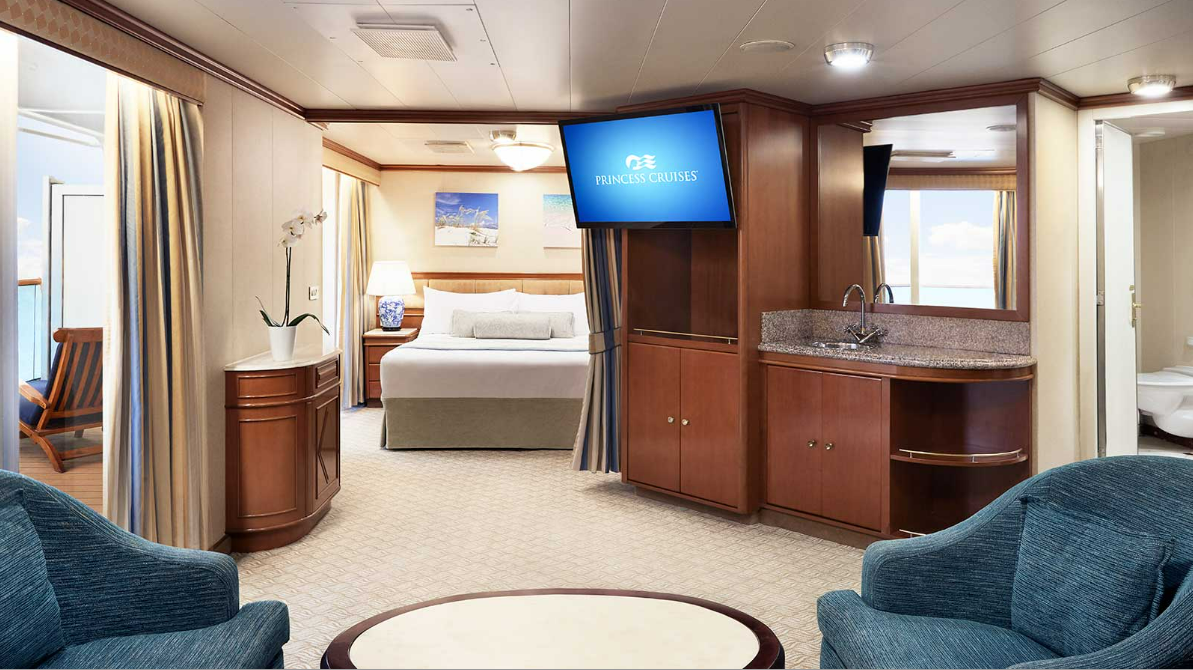
Approximately 525 to 572 sq. ft. including balcony, the Penthouse Suite features a spacious cabin and aft-facing balcony. Enjoy exclusive suite-only upgrades and benefits. Surrounding you with deluxe accommodations, a spacious Suite with balcony* includes all the amenities of a Club Class Mini-Suite, plus incredible premiums. Enjoy more living space, a sofa bed and separate seating areas, and wonderfully enhanced amenities that range from priority embarkation and disembarkation to a complimentary mini-bar setup in suite and so much more. Luxury balcony furniture including 2 loungers, 4 chairs, table and ottoman. 2 floor-to-ceiling sliding glass doors. Separate sitting area with sofa bed, chair and 2 tables. One complimentary mini-bar setup and free daily bottled water. Spacious closet. Complimentary laundry and professional cleaning services. Complimentary Specialty Dining Dinner on embarkation evening. Priority specialty dining and shore excursion reservation. Priority disembarkation at tender ports. Comfortable queen or two twin beds. Refrigerator. Two flat-panel televisions. Private bathroom with tub and separate shower. 100% cotton, high-thread count linens. Complimentary 24-hour room service. Desk with chair. Hair dryer & fine bathroom amenities. Digital security safe.
Facilities and amenities
Cabin details
Suite
Code
S5
Size
705 sq. ft
Deck
Deck 10 - Caribe
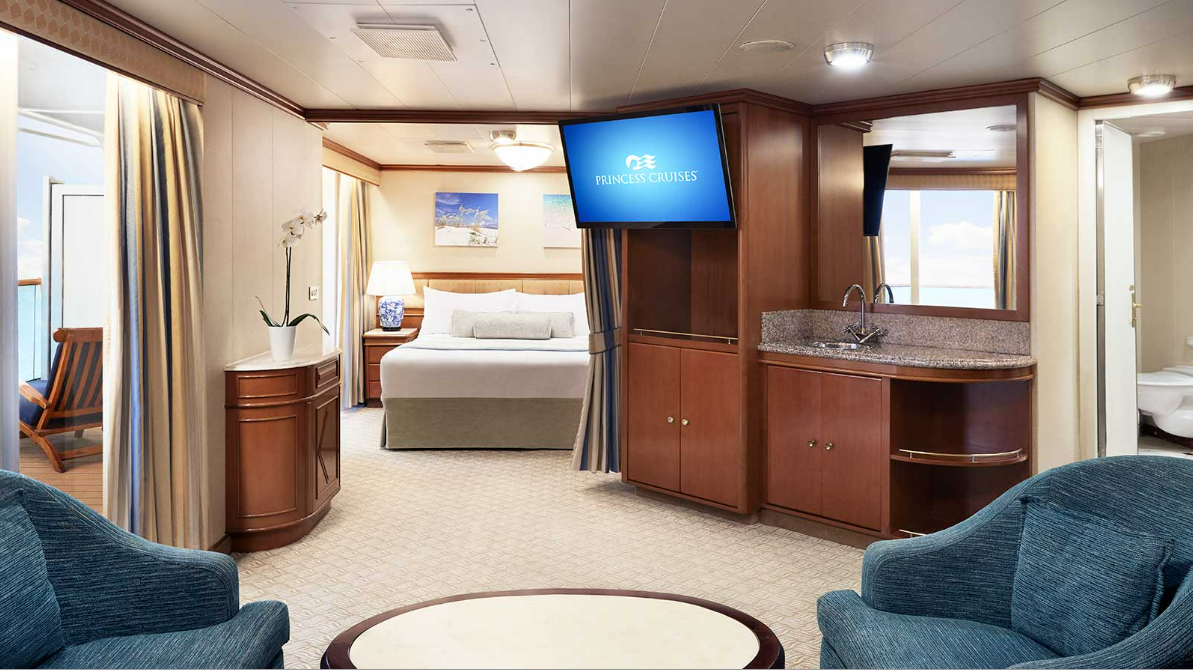
Approximately 705 sq. ft. including balcony, the Premium Suite features a spacious cabin and separate seating area with a sofa bed. Enjoy exclusive suite-only upgrades and benefits. Surrounding you with deluxe accommodations, a spacious Suite with balcony* includes all the amenities of a Club Class Mini-Suite, plus incredible premiums. Enjoy more living space, a sofa bed and separate seating areas, and wonderfully enhanced amenities that range from priority embarkation and disembarkation to a complimentary mini-bar setup in suite and so much more. Luxury balcony furniture including 2 loungers, 4 chairs, table and ottoman. 2 floor-to-ceiling sliding glass doors. Separate sitting area with sofa bed, chair and 2 tables. One complimentary mini-bar setup and free daily bottled water. Spacious closet. Complimentary laundry and professional cleaning services. Complimentary Specialty Dining Dinner on embarkation evening. Priority specialty dining and shore excursion reservation. Priority disembarkation at tender ports. Comfortable queen or two twin beds. Refrigerator. Two flat-panel televisions. Private bathroom with tub and separate shower. 100% cotton, high-thread count linens. Complimentary 24-hour room service. Desk with chair. Hair dryer & fine bathroom amenities. Digital security safe.
Facilities and amenities
Cabin details
Suite
Code
S6
Size
548 sq. ft
Deck
Deck 10 - Caribe
Approximately 525 to 548 sq. ft. including balcony, the Vista Suite features a spacious cabin and aft-facing balcony. Enjoy exclusive suite-only upgrades and benefits. Luxury balcony furniture including 2 loungers, 4 chairs, table and ottoman. 2 floor-to-ceiling sliding glass doors. Separate sitting area with sofa bed, chair and 2 tables. One complimentary mini-bar setup and free daily bottled water. Spacious closet. Complimentary laundry and professional cleaning services. Complimentary Specialty Dining Dinner on embarkation evening. Priority specialty dining and shore excursion reservation. Priority disembarkation at tender ports. Comfortable queen or two twin beds. Refrigerator. Two flat-panel televisions. Private bathroom with tub and separate shower. 100% cotton, high-thread count linens. Complimentary 24-hour room service. Desk with chair. Hair dryer & fine bathroom amenities. Digital security safe.
Facilities and amenities