
Back to cruise search
Home/Cruises/Barcelona To Athens Grand Voyage
Barcelona To Athens Grand Voyage, 13 Aug 2026 (37 nights)
5.0 ship ratingAzamara Onward - Azamara

Cruise search
We are checking available sailings, ship details and guide prices for you.
Ask our cruise specialists about cruise line loyalty benefits, status match options, drinks packages, gratuities and any current offers available on this sailing.
Sail with confidence
We explain the relevant financial protection before you book.
Always here to help
When plans change, your cruise specialists are here to help.
Carefully selected cruises
From short breaks to big adventures, we help narrow down the right sailing.
Cruise summary
Gallery

Dining
1 of 13 onboard highlights
Your itinerary
Port descriptions and imagery are shown where available for each day or port.
Dynamic Barcelona is all about architecture, from the magnificent medieval buildings of the Gothic Quarter to the Modernist movement typified by the work of Antoni Gaudi. Though his materials were stone and metal, his forms were organic, awash in curves, swirls, and colors. His masterpiece is the amazing Church of the Sagrada Familia, colossal and as yet unfinished, though construction began in 1882. A contemporary contribution to the scene is Ricardo Bofill's post modernist National Theater of Catalonia, an imaginative combination of classical and modern design, with a greenhouse-like lobby.
Roses
Marseille, a port city in southern France, has been a crossroads of immigration and trade since its founding by the Greeks circa 600 B.C. At its heart is the Vieux-Port (Old Port), where fishmongers sell their catch along the boat-lined quay. Basilique Notre-Dame-de-la-Garde is a Romanesque-Byzantine church. Modern landmarks include Le Corbusier’s influential Cité Radieuse complex and Zaha Hadid’s CMA CGM Tower.
Nestled between Marseilles and Toulon, the port of Sanary-sur-Mer is located in Provence on the Cote d’Azur, and is arguably the sunniest place in France. Its beautiful coastline is dotted with small beaches, while Sanary’s quiet, pedestrian streets cluster around the medieval 13th century watchtower—now home to the Frédéric Dumas Diving Museum, and featuring original equipment of undersea explorer Jacques Cousteau. Visit église Saint Nazaire, a late 19th century Gothic Revival church, or admire the view from the Chapelle Notre-Dame-de-Pitié, built in 1560. Cap your stay with a stroll along the palm-lined harbor, where you’ll find rows of old Provençal wooden fishing boats, pointus, and if you’re lucky, some local fishermen selling the day’s catch. Or simply taste the freshest seafood in any number of Sanary restaurants and enjoy watching the bustle of everyday life in this charming and inviting town.
The tiny principality of Monaco, a sovereign state of just under one square mile, has an outsized resume, boasting some of the planet's most expensive real estate, and the world's most prestigious casino. Facing the sea, and engulfed on the other three sides by France, it has been the domain of the Grimaldi dynasty since the 14th century, and enjoys the same glamorous reputation as the rest of the Riviera.
Ah, Florence—sublime birthplace of the Renaissance, its historic center full to bursting with elegant squares, imposing palaces, magnificent churches, and museums with such an abundance of riches it could make an art lover weep for joy. The list of illustrious names connected with this city is mind-boggling: Botticelli, Dante, Da Vinci, Michelangelo, Galileo. Other colorful and fascinating characters were of dubious reputation: Machiavelli, and the religious extremist Savonarola, with his bonfire of the vanities. For many years the city was ruled by the powerful Medici family, patrons of the arts and bankers to the papacy, whose line included six kings and two popes.
Ah, Florence—sublime birthplace of the Renaissance, its historic center full to bursting with elegant squares, imposing palaces, magnificent churches, and museums with such an abundance of riches it could make an art lover weep for joy. The list of illustrious names connected with this city is mind-boggling: Botticelli, Dante, Da Vinci, Michelangelo, Galileo. Other colorful and fascinating characters were of dubious reputation: Machiavelli, and the religious extremist Savonarola, with his bonfire of the vanities. For many years the city was ruled by the powerful Medici family, patrons of the arts and bankers to the papacy, whose line included six kings and two popes.
When you picture classic Italian romance (think Lady-and-the-Tramp-sharing-a-plate-of-spaghetti-and-meatballs-while-staring-into-each-other’s-eyes romance), the setting could be Portovenere. Set on the Gulf of Poets (Golfo dei Poeti), Portovenere served as inspiration for the works of English poets Lord Byron and Percy Shelley in the early 1800s, which speaks volumes for just how romantic this idyllic seaside village really is.
Portoferraio is a town and comune in the province of Livorno, on the edge of the eponymous harbour of the island of Elba. It is the island's largest city. Because of its terrain, many of its buildings are situated on the slopes of a tiny hill bordered on three sides by the sea.
Rome has something special to offer to all visitors, no matter their interests and tastes. Whether you daydream about fighting with gladiators in the Coliseum, debating with togaed senators in the Forum, tossing a coin in a fabled fountain, or being awestruck by the magnificence of St Peter’s Basilica and Michelangelo’s masterpieces, Rome seems to live up to its sobriquet – the Eternal City. When you need sustenance, today’s Rome will provide delizioso pasta e vino. Or perhaps you draw strength from a little retail therapy – the Italians are also renowned for their sense of style.
A warming sun and gentle sea breezes have been attracting visitors to this fair spot for two millennia. Its reputation as a playground of the ancient rich and famous resulted in the building of lavish villas and palaces, an emperor relocated to the Isle of Capri nearby, and over the centuries it has been a haven for artists and artisans, writers and poets, politicians and philosophers, and all manner of aristocrats. You will be a welcome addition. The massive eruption of nearby Vesuvius in 79 AD caused considerable damage, but the resulting volcanic ash is responsible for Sorrento’s modern day fertility, thriving olive orchards, and excellent wine.
Renowned for its sheer cliffs and striking beauty, the town of Amalfi on the Gulf of Salerno is known for its photographic splendor and its close proximity to Sorrento, Positano and Isle of Capri. This enviable area of Italy also produces the most beautiful handmade paper. For a most interesting afternoon, take a tour the Museo della Carta, the paper museum, and take home the most beautiful souvenirs. Amalfi is also the burial place of Saint Andrew; the town's cathedral is named in his honor.
Between the Mediterranean Sea and Mount Etna lies the beautiful city of Catania, where it’s “if it ain’t Baroque don’t fix it” architecture has earned it UNESCO World Heritage status. Along with flamboyantly designed buildings, Catania is home to many ancient sites, like the Odeon and Amphitheatre—unearthed from under Mount Etna’s lava that covered the city at least seven times. These ruins can be viewed in the archaeological park, in the compact (AKA great for walking) city center.
Siracusa is known for the archaeological and historical sights that define its grand past, as one of the major powers of the Mediterranean world in the 5th century BC. They include a Greek theater, still in use, where Aeschylus produced some of his plays; a dramatic necropolis with burial niches cut into the rock that include the tomb of Archimedes, famous mathematician, engineer, and inventor; and the Ear of Dionysus, a cave with amazing acoustical properties. The “modern” city was rebuilt in Sicilian Baroque style after the devastating earthquake of 1693.
The Port of Crotone is a small port in Italy. Crotone, with its old town and the Castel of Charles V. Santa Severina, named among the most beautiful Italian places in italy.
Taranto is a coastal city in southern Italy. It lies between the Mar Grande (Big Sea) and Mar Piccolo (Little Sea) bodies of water. Bridges link the mainland to the old town, on a small island. This is home to the 15th-century Aragonese Castle, the Spartan Museum of Taranto, and San Cataldo Basilica, with a baroque facade. The MArTA Archaeological Museum has a collection of artifacts from prehistory to the Middle Ages.
Kotor’s beautiful bay has long attracted passing ships that stopped to trade, plunder, or conquer, and merchants, pirates, and soldiers of numerous empires have walked this maze of cobblestone streets before you. One of Europe’s best-preserved cities of medieval or Renaissance vintage, its walls were constructed right into the steep slopes of the mountain behind it, providing protection and making it an amazing sight on approach from the sea. Venetian ramparts enclose a rich history, with churches of varying styles, and a Romanesque cathedral built on the foundations of an earlier church, and a still earlier Roman temple.
Both beautiful and historical, Ravenna is not only a destination in and of itself, but also the gateway to Bologna and San Marino. Once the capital of the Roman Empire, it's hard to miss the influences of Eastern Europe found in its precious marbles and rich mosaics.
A key commercial center with a Venetian past, Koper is Slovenia's only deep-water port. Stroll the narrow streets of the "old city" to the Praetorian Palace, which could easily be the setting of a Renaissance drama, sip a coffee in the square, then visit the Cathedral of St. Nazarius, the largest in Slovenia.
Perched on Adriatic Sea in Croatia, Zadar is a truly captivating city, where history-drenched cobblestone streets meet contemporary life, then surrounded by deep blue sea, green olive groves, and white stone. Dubbed an “outdoor museum”, Zadar is rich in monuments and churches from ancient and medieval times—the circular 9th century Church St. Donat, the Church of St. Simeon and the Romanesque Cathedral of St. Anastasia—while nature lovers should explore Krka National Park and its seven waterfalls. Meander through the pedestrian-only Old Town, with its fortified city walls, towers and gates, then visit Zadar’s famous urban installations on the Riva, where art, architecture and science combine. Be sure to check out The Sea Organ, which extends into the sea and “whistles” with the waves and air pressure, and Greeting to the Sun, a circular construction of glass plates that produces an exceptional light show.
Hvar frequently appears on lists of the world’s most appealing islands. Its fertile plains and fresh water springs support glowing fields of lavender, fruit orchards, ancient olive trees, and vineyards, which you are invited to visit, producing some award winning “garage” wines, which you are encouraged to taste. Or perhaps you prefer an espresso while people watching in the town square, followed by a stroll through picturesque streets that reveal centuries of Dalmatian history. Of note is the handmade agave lace, now on the UNESCO list of Intangible Cultural Heritage, made by Benedictine nuns in their secluded convent.
To visit Dubrovnik is to step back in time to the Middle Ages. The town is one massive museum, its thick walls constructed from the 13th to the 17th century encircle the entire city, and contain within them a treasure trove of striking architecture – squares, fountains, palaces, churches, and monasteries, all built from the same stone, line streets free of motor vehicles. Once the only city-state on the Adriatic to rival Venice, Dubrovnik has long been a center for Croatian culture, and home to artists and scholars of all disciplines. It is possible to circumnavigate the city atop the medieval walls.
Kotor’s beautiful bay has long attracted passing ships that stopped to trade, plunder, or conquer, and merchants, pirates, and soldiers of numerous empires have walked this maze of cobblestone streets before you. One of Europe’s best-preserved cities of medieval or Renaissance vintage, its walls were constructed right into the steep slopes of the mountain behind it, providing protection and making it an amazing sight on approach from the sea. Venetian ramparts enclose a rich history, with churches of varying styles, and a Romanesque cathedral built on the foundations of an earlier church, and a still earlier Roman temple.
One of the most beautiful islands in all of the Mediterranean, Corfu is said to cast a spell upon those who land upon its shores, which is perhaps why Shakespeare set his magical play, The Tempest, here. Millions of silvery olive trees grace the hillsides, the scent of lemon blossoms perfumes the air, and picturesque views of sapphire bays set against verdant hills capture your attention. A leisurely stroll through the narrow alleyways of Corfu old town will reveal many local treasures - old churches, a Byzantine cathedral, small enticing shops, and tavernas offering local wines and fresh seafood.
The capital and “heart” of the Greek Island of Kefalonia, Argostoli is a modern town with a traditional soul. Although devastated by a major earthquake in 1953, the city has been largely rebuilt, and there are still many places of myth and legend to explore. With its stunning display of stalactites and stalagmites, the famous Drogati Cave and underground Melissani Lake routinely top must-see lists. There’s also the vibrant central square, Plateia Valianou, with its many bars, restaurants and tavernas, and the picturesque Lithostroto, a pedestrian-only cobblestoned shopping street.
One look at Monemvasia as you pull in to port and it’s easy to understand why locals nicknamed it The Rock. Shrouded by precipitous cliffs along the brilliant teal waters of the Myrtoan Sea, Monemvasia is a castle town suspended in history. Adding to the feeling that it comes from another time, Monemvasia is tethered to our world by a simple causeway.
On the northwest side of Crete rests the old Venetian port of Chania, the second largest city on the island. Inhabited since the Neolithic era, Chania is a modern city built over the ruins of the ancient city of Kydonia. Stroll through the old city and see how it has been touched by the intersection of diverse civilizations throughout history, with a mixture of Greek, Venetian, and Ottoman influences on every corner: Minoan ruins, Byzantine churches, and impressive frescos. The Archaeological Museum of Chania houses an extensive collection of Minoan and Roman artifacts, and with replicas of ships dating back to the Bronze Age, the Naval Museum is a great way to explore the ages of Chania.
You could spend a lifetime in Europe’s oldest city and still not see everything it has to offer. Settled over 3,500 years ago, Athens is like a mythological crossroads of the past and present, where modern buildings share the skyline with spectacular ruins like the Parthenon. To see a veritable “greatest hits” line-up, make your way to Vasilissis Amalias Street for the archaeological walk. Winding through the heart of the ancient city, the route leads to landmarks like the Temple of Olympian Zeus, Ancient Agora, Arch of Hadrian, and of course, the Acropolis.
Sure, we could chat about the resort town of Kusadasi and its beaches and restaurants, or nearby places like Dilek Peninsula National Park, but let’s talk Turkey: The star attraction in this neck of the woods is Ephesus. Once the second largest city in the Roman Empire, eclipsed only by Rome, here are just a few of the incredible sights just waiting to be gobbled up! (Sorry, we couldn’t resist.) There’s the Library of Celsus, still magnificent almost 2,000 years later; the Odeon, home of our “Ephesus: Back to Ancient Times” AzAmazing Evenings eventSM; and the 24,000-capacity Great Theatre, where St. Paul used to preach. Stretching from this jaw-dropping amphitheatre to the harbor is the marble-made Arcadian Street. Stroll past the marketplaces, colonnades, and fields of wild fennel, and into bath complexes that once offered piped-in hot water and a sauna.
Filled with jasmine, wild tulips, majestic trees and intoxicating fragrances, this island boasts an array of natural beauty as well as the “Medieval Villages”, a collection of preserved Byzantine communities. Known as the “fragrant flower of the Aegean”, Chios is a must see destination for everyone.
As the second-biggest city in Greece and the second-most important city of the Byzantine Empire, the word “second” is often used to describe Thessaloniki, but we’re here to tell you: Thessaloniki is anything but second-rate! The energy in this ancient cultural capital is palpable—especially in the vibrant downtown that was rebuilt in a spectacular Byzantine style after a devastating fire in the early 1900s. And this second chance at urban planning resulted in a city built around Aristotelous Square, which acts as a gateway for the surrounding neighborhoods.
The mythical “City of the Argonauts”, Volos is a modern city in the heart of Greece. Dating back to the Neolithic age, this prominent port overlooking the Pagasetic Gulf was built on ancient cities, and is a place of immense natural beauty and cultural heritage. Stroll along the famous seaside promenade to watch the fishing boats and yachts. Fill your day with swimming or sailing at one of the many beaches. Visit one of the area’s many archaeological sites or discover the city’s classic architecture, neoclassical buildings, churches, monuments and museums: the Tsalapatas Brickworks Museum, Kitsos Makris Folklore Center at the Topali Mansion or the impressive Archaeological Museum. Reward your palate with delicious flavors at any number of tavernas or fresh food markets. The traditional picturesque villages of Mount Pelion are the perfect backdrop to what truly is one of Greece’s most alluring cities.
Charming Paros is part of the Cyclades, perhaps the most popular region in all the Greek isles. Sure, its island counterparts Mykonos and Santorini may be more well known, but Paros has attractions all its distinctly own (not the least of which is fewer crowds). The very definition of the term “picturesque”, Paros’ town of Parikia welcomes you with its landmark windmill, whitewashed homes with blue painted doors, and gardens of oranges and pomegranates. Meander along the cobblestone streets and soak in the laid-back atmosphere at a harborside taverna.
Mykonos is living proof that picture postcard destinations do exist. Its many charms include its iconic windmills, fabulous beaches, and an irresistible traditional town with a maze of twisting streets and alleys originally designed to confuse marauding pirates. Dazzling sunlight reflects off of whitewashed houses and hundreds of small chapels. Other adornments include shaded courtyards and balconies lush with flowers, and a lively nightlife that some claim is the best in Europe. Nearby you can visit the uninhabited island of Delos, birthplace of Apollo, fittingly the god of sunlight, music and beauty.
You could spend a lifetime in Europe’s oldest city and still not see everything it has to offer. Settled over 3,500 years ago, Athens is like a mythological crossroads of the past and present, where modern buildings share the skyline with spectacular ruins like the Parthenon. To see a veritable “greatest hits” line-up, make your way to Vasilissis Amalias Street for the archaeological walk. Winding through the heart of the ancient city, the route leads to landmarks like the Temple of Olympian Zeus, Ancient Agora, Arch of Hadrian, and of course, the Acropolis.
What's included
Fare overview
This sailing is shown as a cruise-only guide fare with Azamara. The fare is linked to the ship, itinerary and cabin category you choose. Drinks packages, gratuities, Wi-Fi, flights, transfers and shore experiences are only treated as included where they are confirmed before booking.
Sailing aboard
Azamara Onward
Your ship
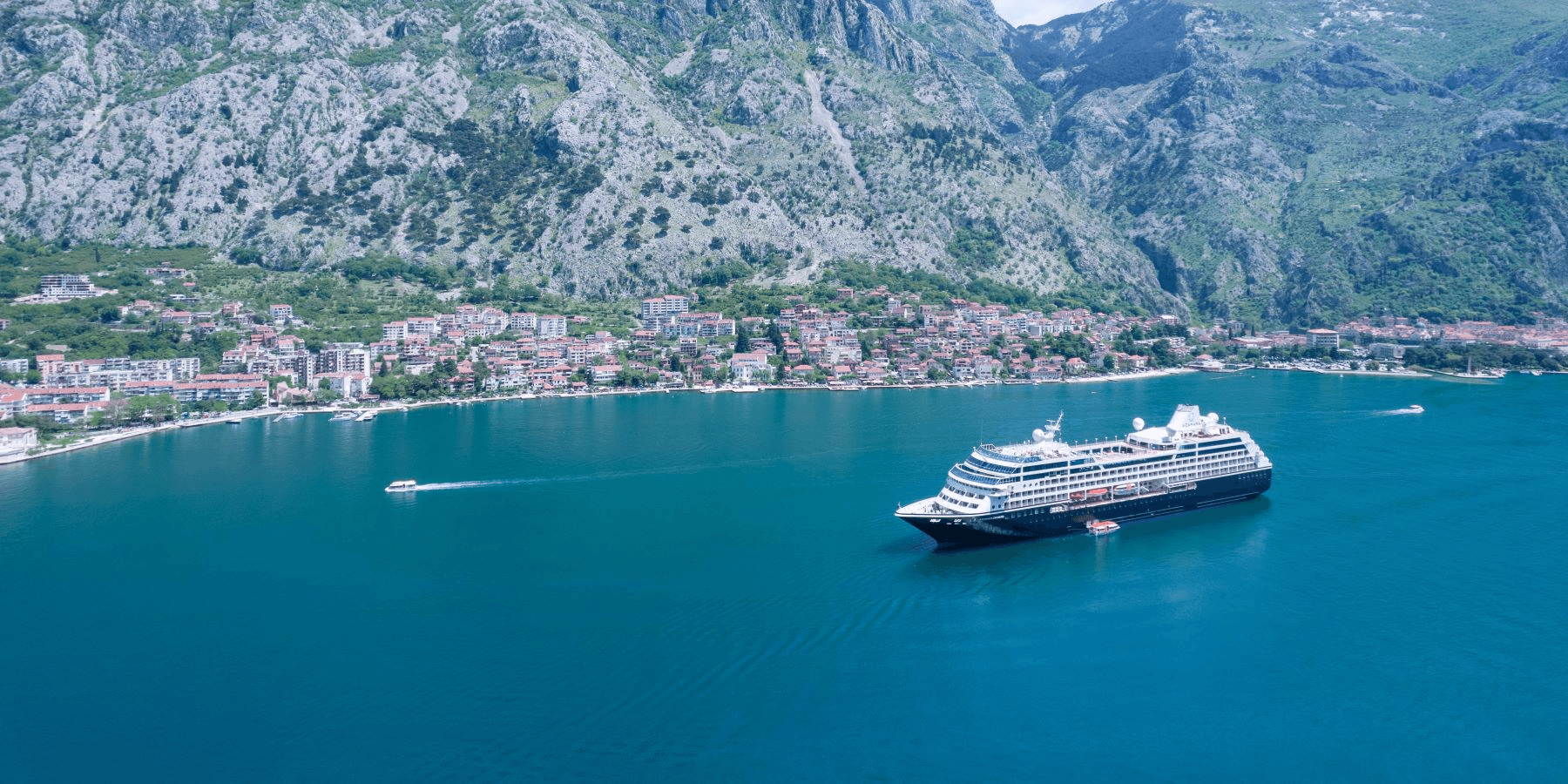
Step aboard the new Azamara Onward℠, and arrive at the doorstep of the globe’s most hidden gems and storied cities. Built to cross oceans, cruise along scenic waterways and dock at locations larger ships can’t access — this small ship cruising experience is unlike any other. Throughout your journey, you’ll find so many ways to immerse yourself in your travels. Our thoughtfully-planned itineraries feature more extended stays, more overnights, and unique night touring, giving you more time for what matters — experiencing the history, arts, cuisine, and local customs that make each port memorable. And after a day spent discovering the treasures of your destination, retreat to your seaside sanctuary for ocean views, saltwater breezes, and all the lush amenities you can imagine. From 24-hour room service to five-star butler service, our luxury staterooms and spacious suites deliver genuine tranquility and comfort. Azamara ships are designed to meet your every need, no matter where you’re going. That’s why our list of onboard amenities is almost as far-reaching as the locations we visit. Discover a world of flavors at our specialty restaurants, recharge and relax at our state-of-the-art spa and fitness center, and take in nightly on-board entertainment, from signature shows, comedy nights, and unforgettable events. While our destinations may bring you on board, it’s our international crew that keeps you coming back. Across the fleet, our authentic service goes beyond the expectations of even the most well-traveled cruisers. From anticipating your needs and knowing you by name to offering the most dedicated attention to detail, personal connections are always a moment away.
Onboard facilities

Bars/Lounges
Deck plans
Explore the ship deck by deck. Deck plans can change and should be checked before booking.
Deck 4

These facilities are available aboard the ship. Their deck locations can be confirmed before booking.
Match cabin grade codes and colours to the selected deck plan.
Choose your cabin
Compare the cabin types and onboard features shown for this sailing. Final price and availability are confirmed before booking.
Use horizontal scrolling, trackpad gestures, touch swipes, or the arrow keys to browse cabin types.
Cabin details
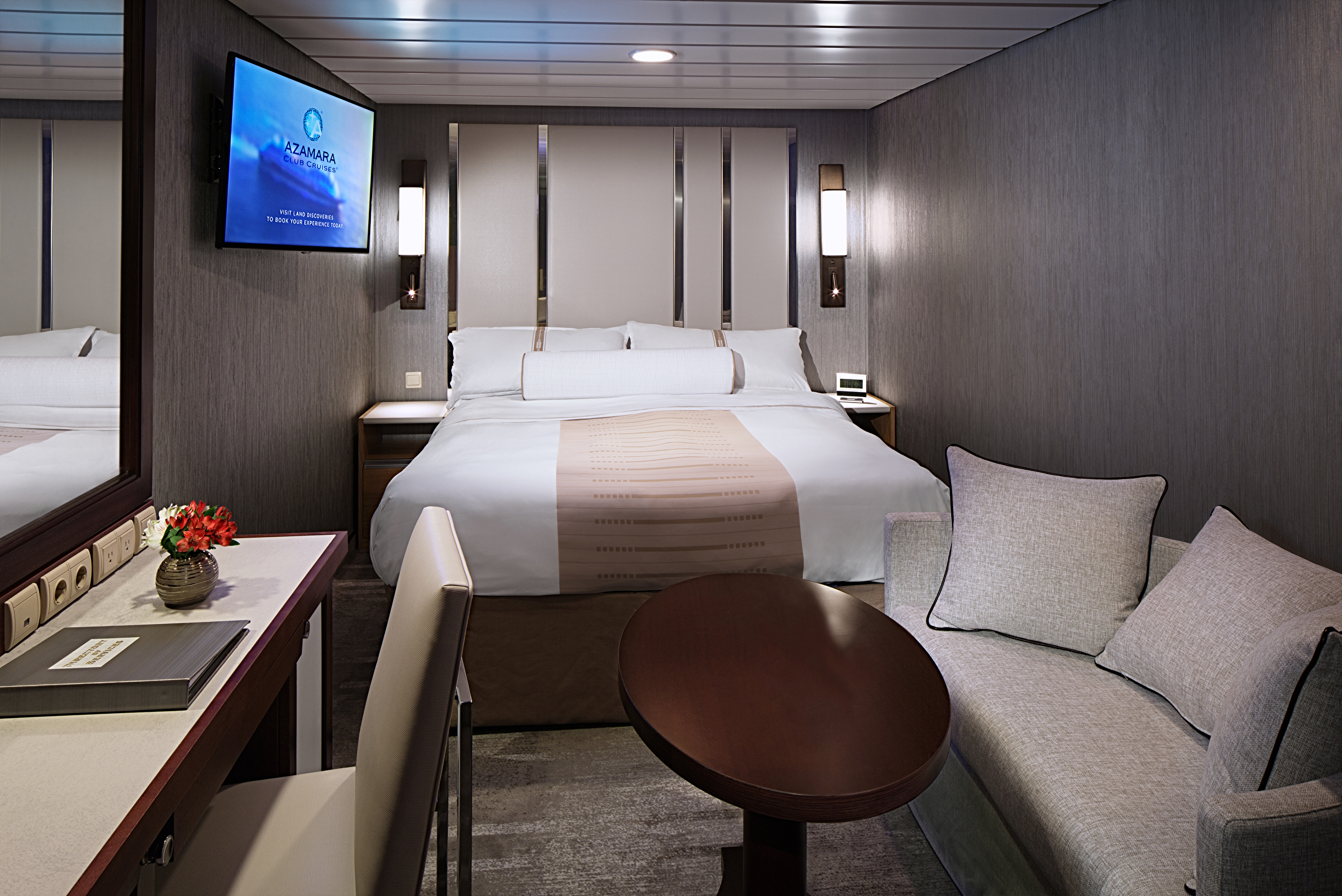
Inside
Code
10
Size
158 square feet
Deck
Deck 7
Two lower beds convertible to one Queen size bed. 40” flat-screen television. Refrigerator with mini-bar. Thermostat-controlled air conditioner. Direct-dial telephone with voice mail. Writing desk. In-room safe. Hand-held hairdryer. USB ports under bedside reading lamps. (158 square feet).
Facilities and amenities
Cabin details
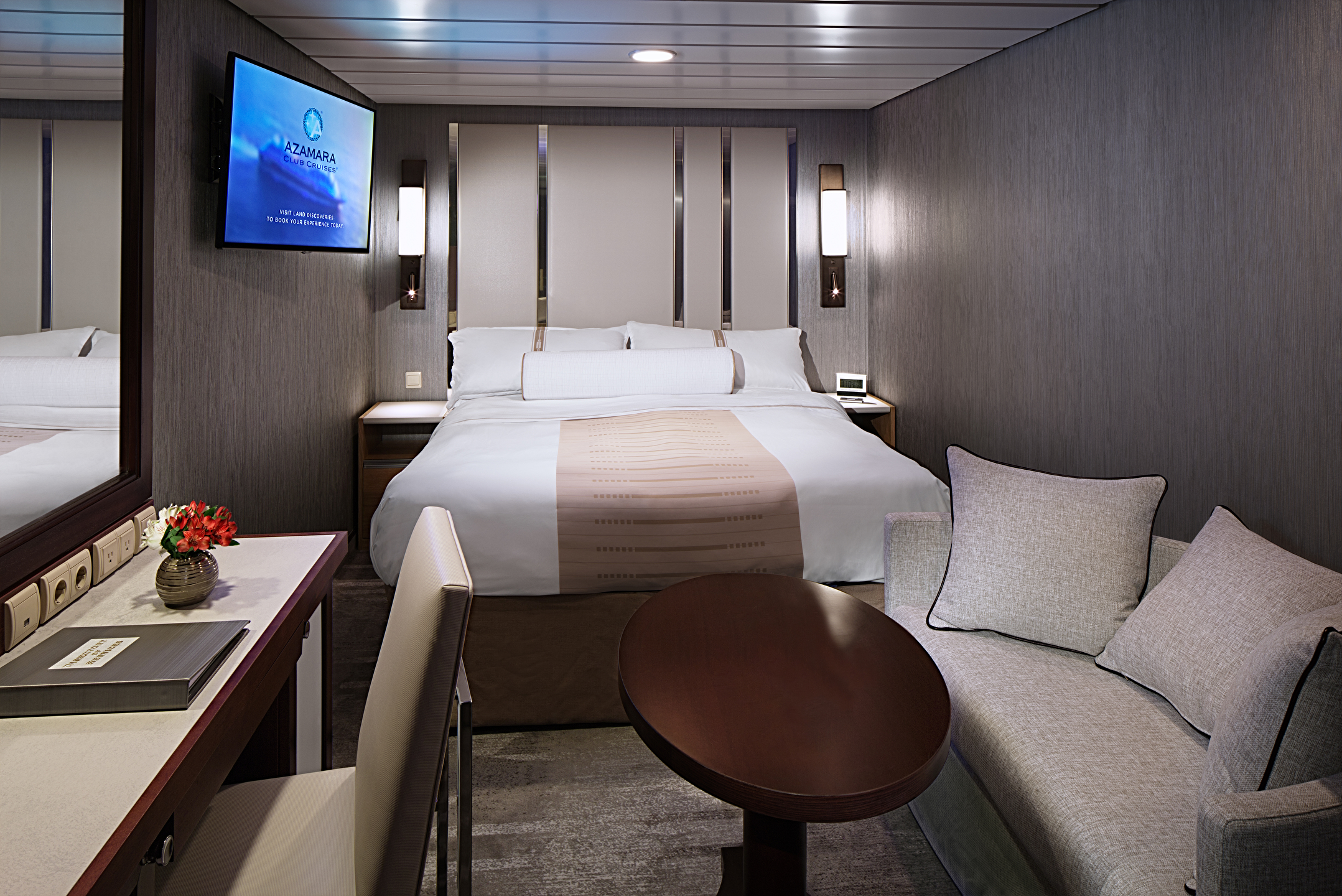
Inside
Code
11
Size
158 square feet
Deck
Deck 7
Two lower beds convertible to one Queen size bed. 40” flat-screen television. Refrigerator with mini-bar. Thermostat-controlled air conditioner. Direct-dial telephone with voice mail. Writing desk. In-room safe. Hand-held hairdryer. USB ports under bedside reading lamps. (158 square feet).
Facilities and amenities
Cabin details
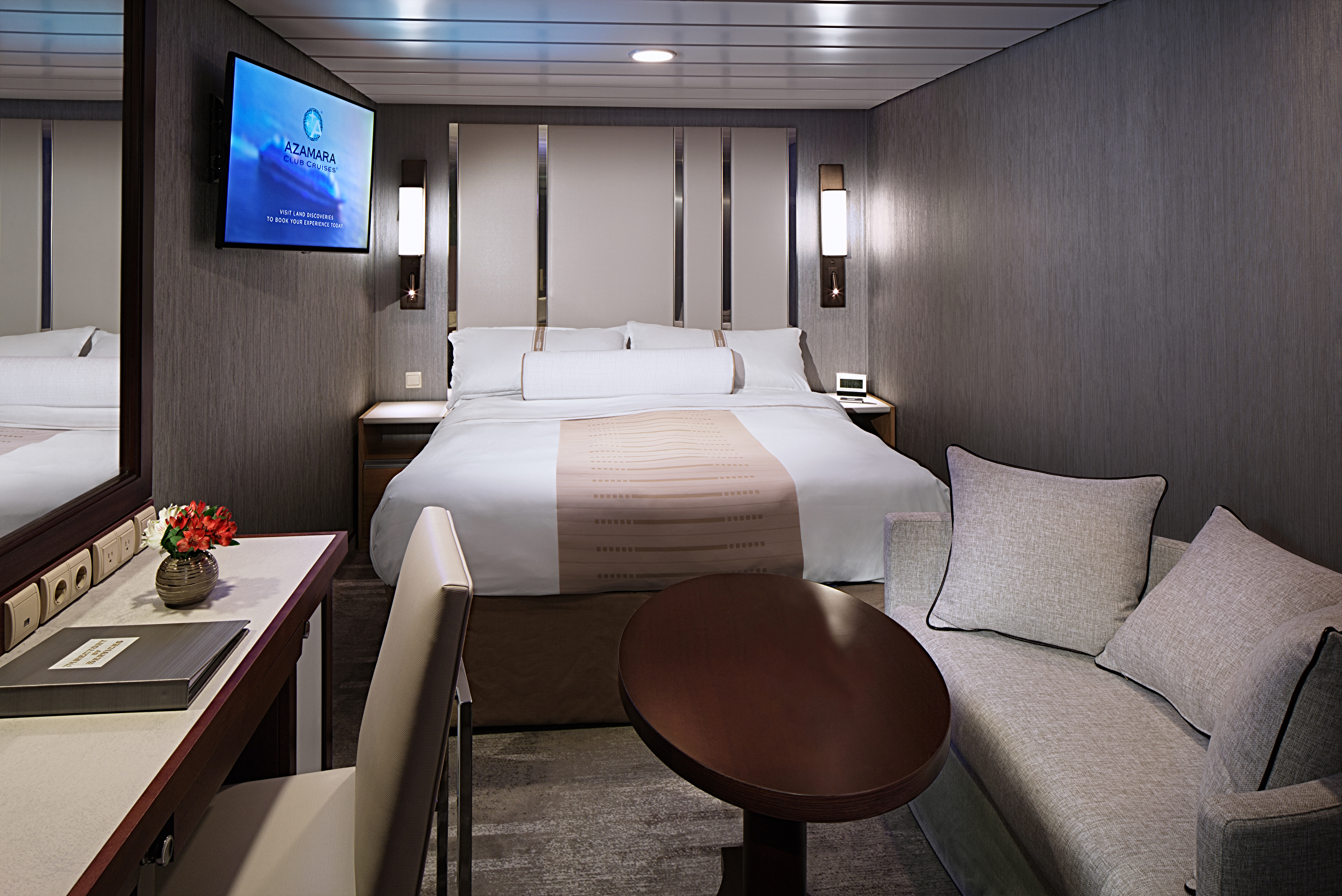
Inside
Code
09
Size
158 square feet
Deck
Deck 8
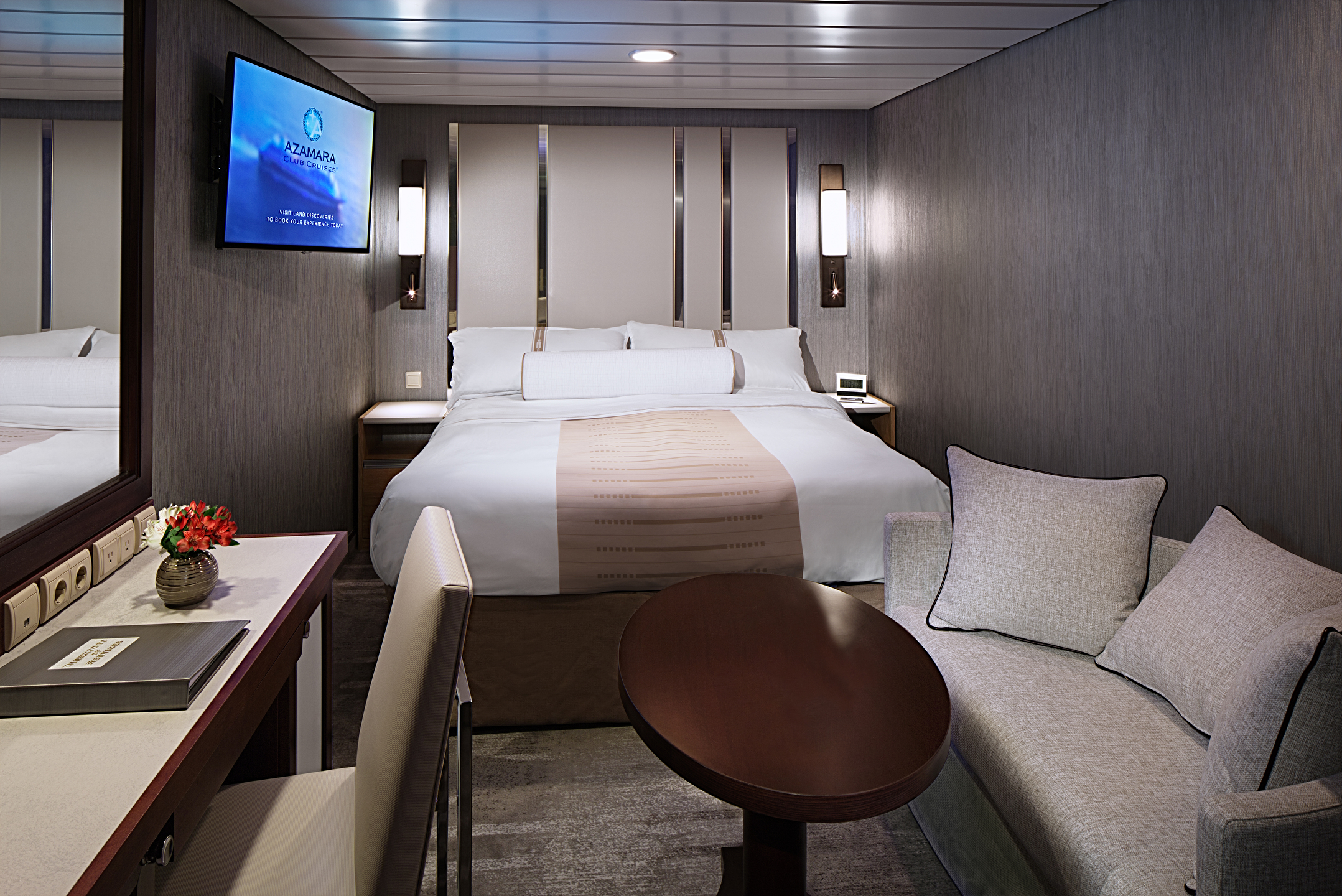
Two lower beds convertible to one Queen size bed. 40” flat-screen television. Refrigerator with mini-bar. Thermostat-controlled air conditioner. Direct-dial telephone with voice mail. Writing desk. In-room safe. Hand-held hairdryer. USB ports under bedside reading lamps. (158 square feet).
Facilities and amenities
Cabin details
Inside
Code
12
Deck
Deck 4
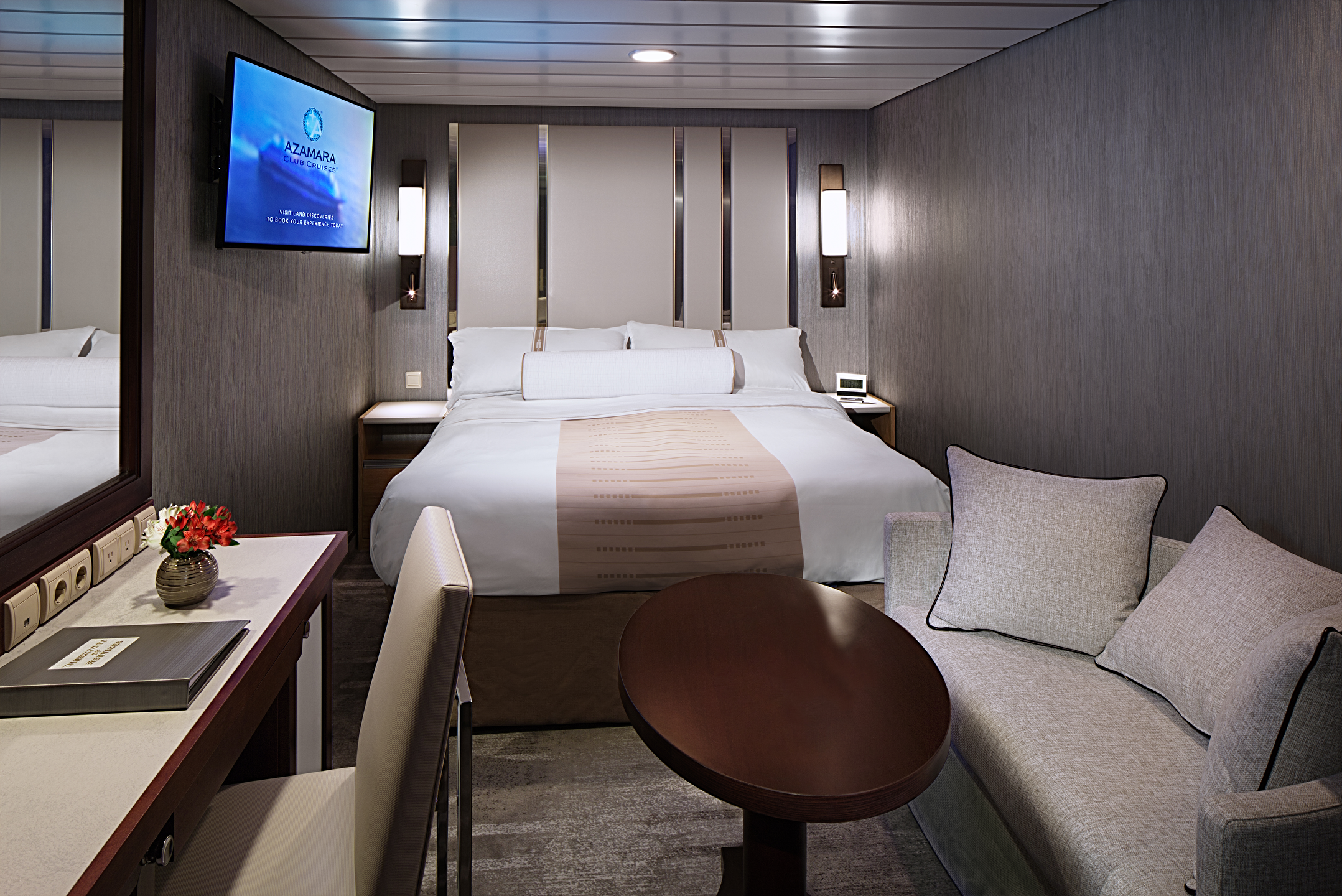
Two lower beds convertible to one Queen size bed. 40” flat-screen television. Refrigerator with mini-bar. Thermostat-controlled air conditioner. Direct-dial telephone with voice mail. Writing desk. In-room safe. Hand-held hairdryer. USB ports under bedside reading lamps. Stateroom door width: at least 32 inches. Bathroom door width: at least 32 inches. No doorsill to get into stateroom. Ramped bathroom thresholds. Bathroom grab bars. Lowered sink and stateroom vanity. Roll-in showers or accessible bathtubs. Fold-down shower bench. Lowered closet rod. Refrigerator in stateroom (upon request). Adjustable height commode chairs (upon request). Accessible balconies (selected staterooms).
Facilities and amenities
Cabin details
Inside
Code
Z
Guarantee - Inside
Facilities and amenities
Cabin details
Outside/Oceanview
Code
05
Size
255 square feet
Deck
Deck 4
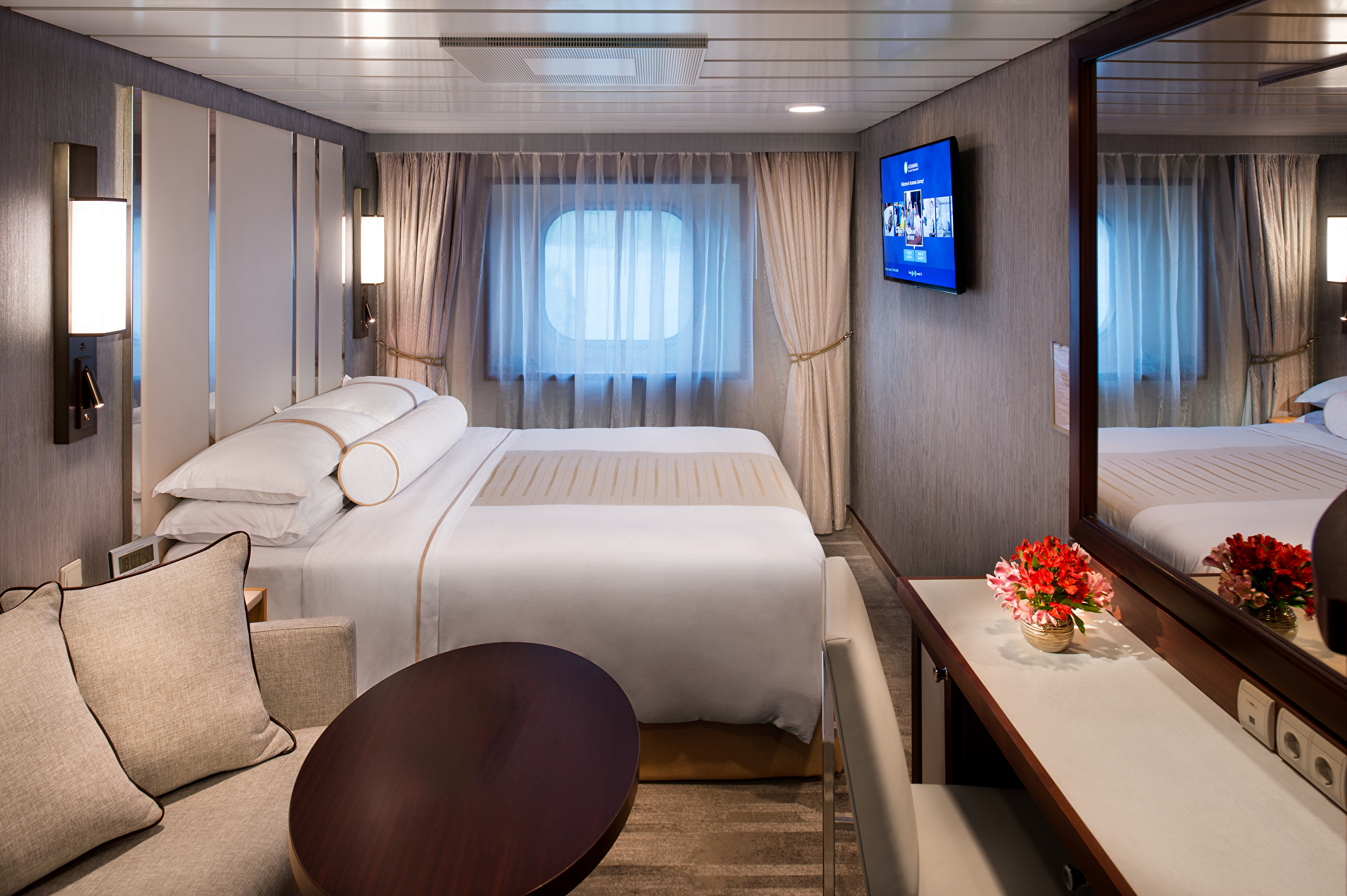
Two lower beds convertible to queen size; some with sofa bed; flat-screen television; refrigerator with mini-bar; thermostat-controlled air conditioning, direct-dial telephone and voicemail; desk; in-room safe; hand-held hairdryer. (255 square feet). Accessible stateroom features: stateroom door width: at least 33 inches; bathroom door width: at least 34 inches; no doorsill to get into stateroom; ramped bathroom thresholds; bathroom grab bars; lowered sink and stateroom vanity; roll-in showers; fold-down shower bench; hand-held showerheads; lowered closet rod; refrigerator in stateroom (upon request); adjustable height commode chairs (upon request).
Facilities and amenities
Cabin details
Outside/Oceanview
Code
08
Size
170 square feet
Deck
Deck 6
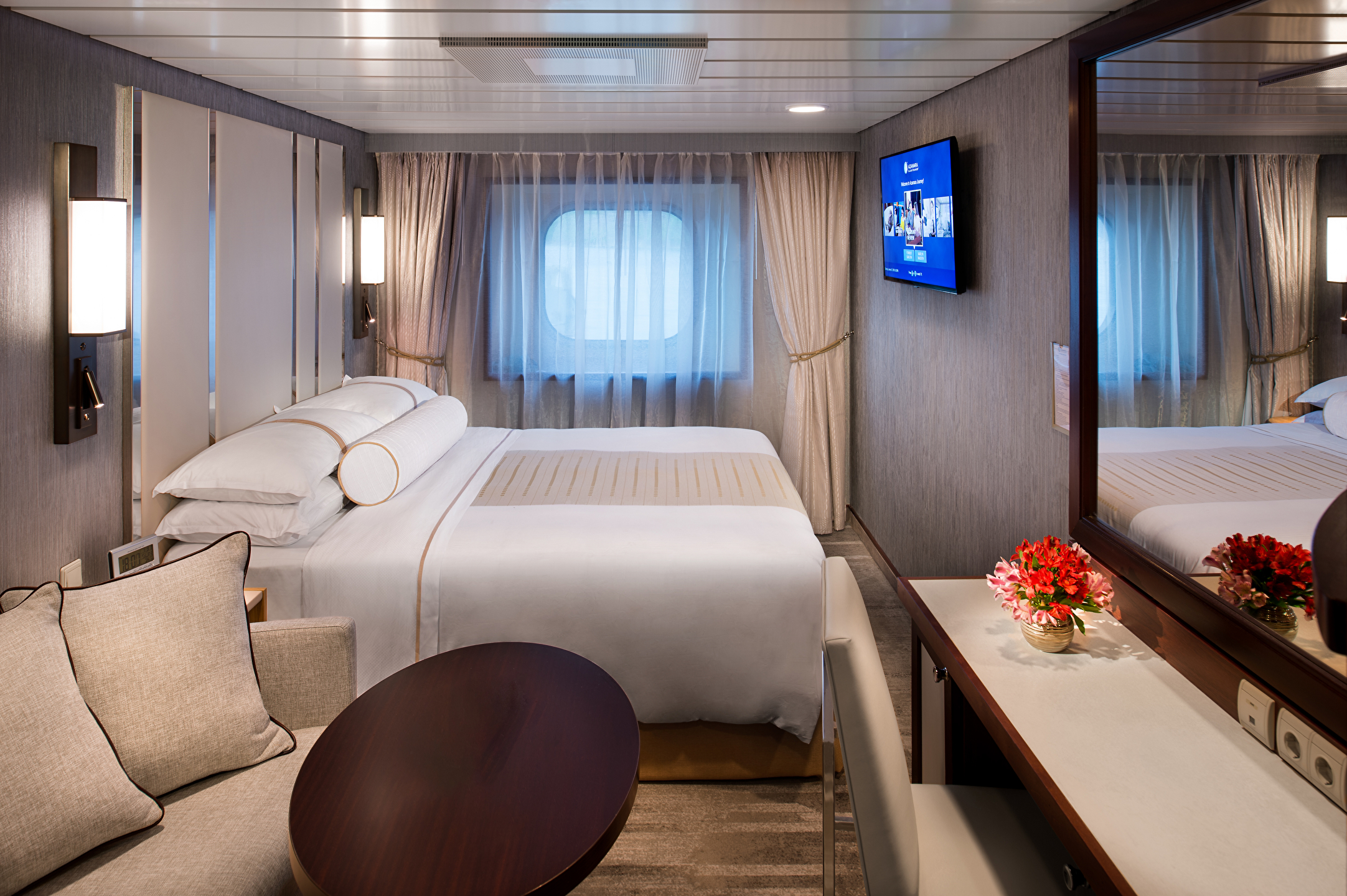
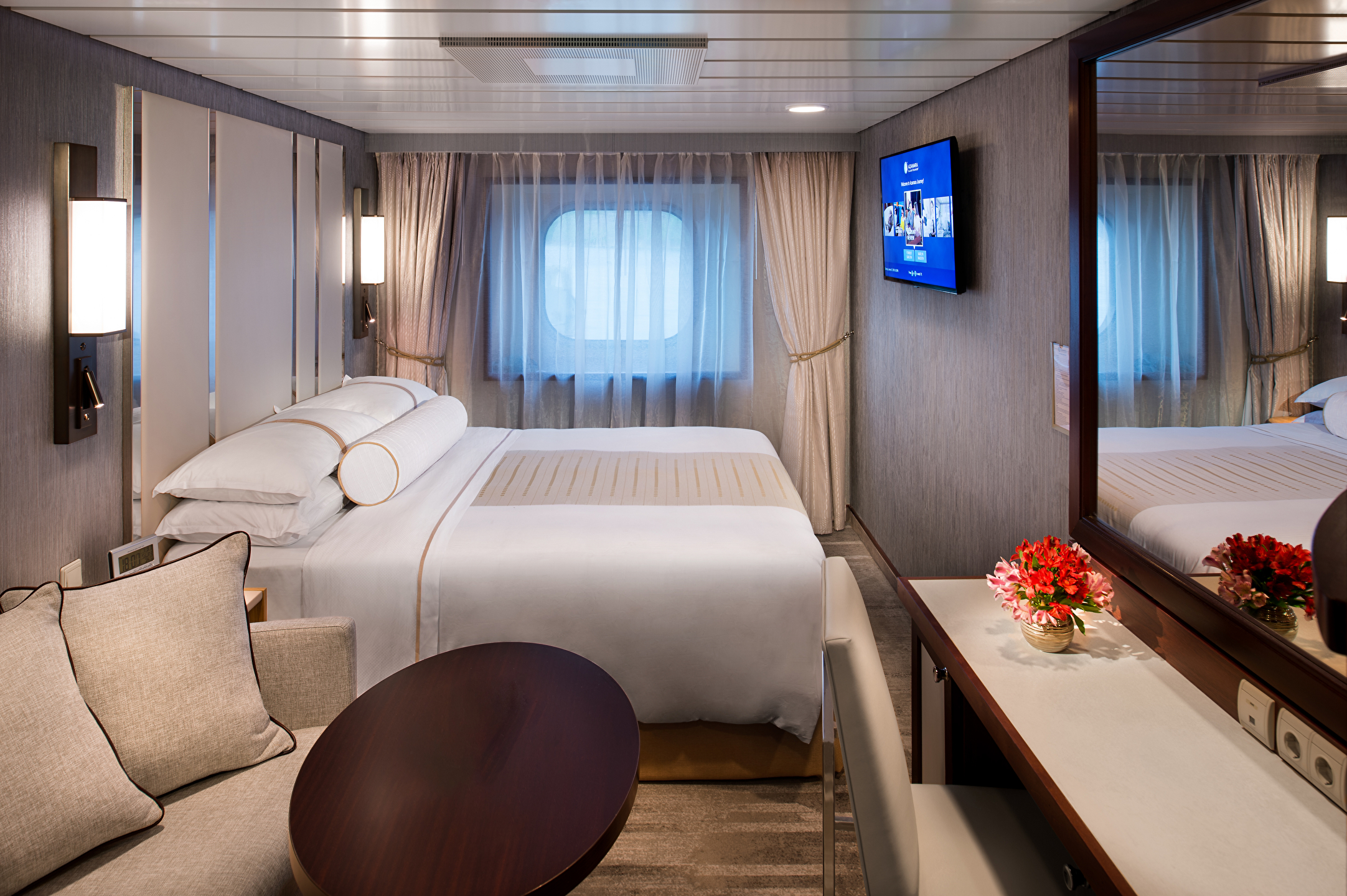
Two lower beds convertible to one Queen size bed, some staterooms feature sofa bed, 40” flat-screen TV, veranda, refrigerator with mini-bar, thermostat-controlled air conditioner, direct-dial telephone with voice mail, writing desk, in-room safe, and hand-held hairdryer. Categories 04, 05, 06 (170 square feet) with picture window. Category 07 (170 square feet) porthole window. Category 08 (143 square feet) with obstructed views.
Facilities and amenities
Cabin details
Outside/Oceanview
Code
06
Size
170 square feet
Deck
Deck 4
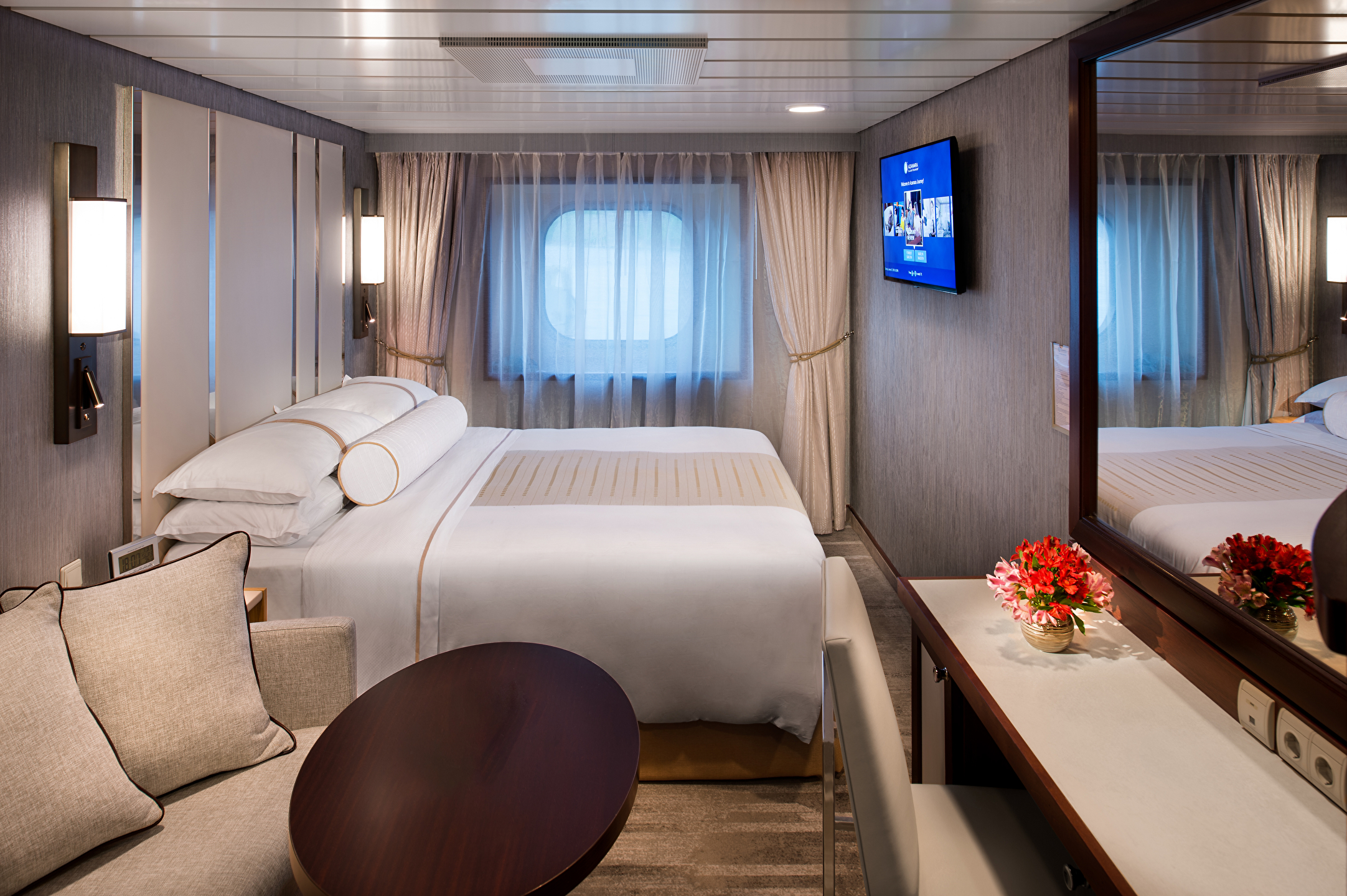
Two lower beds convertible to one Queen size bed, some staterooms feature sofa bed, 40” flat-screen TV, veranda, refrigerator with mini-bar, thermostat-controlled air conditioner, direct-dial telephone with voice mail, writing desk, in-room safe, and hand-held hairdryer. Categories 04, 05, 06 (170 square feet) with picture window. Category 07 (170 square feet) porthole window. Category 08 (143 square feet) with obstructed views.
Facilities and amenities
Cabin details
Outside/Oceanview
Code
04
Size
170 square feet
Deck
Deck 6
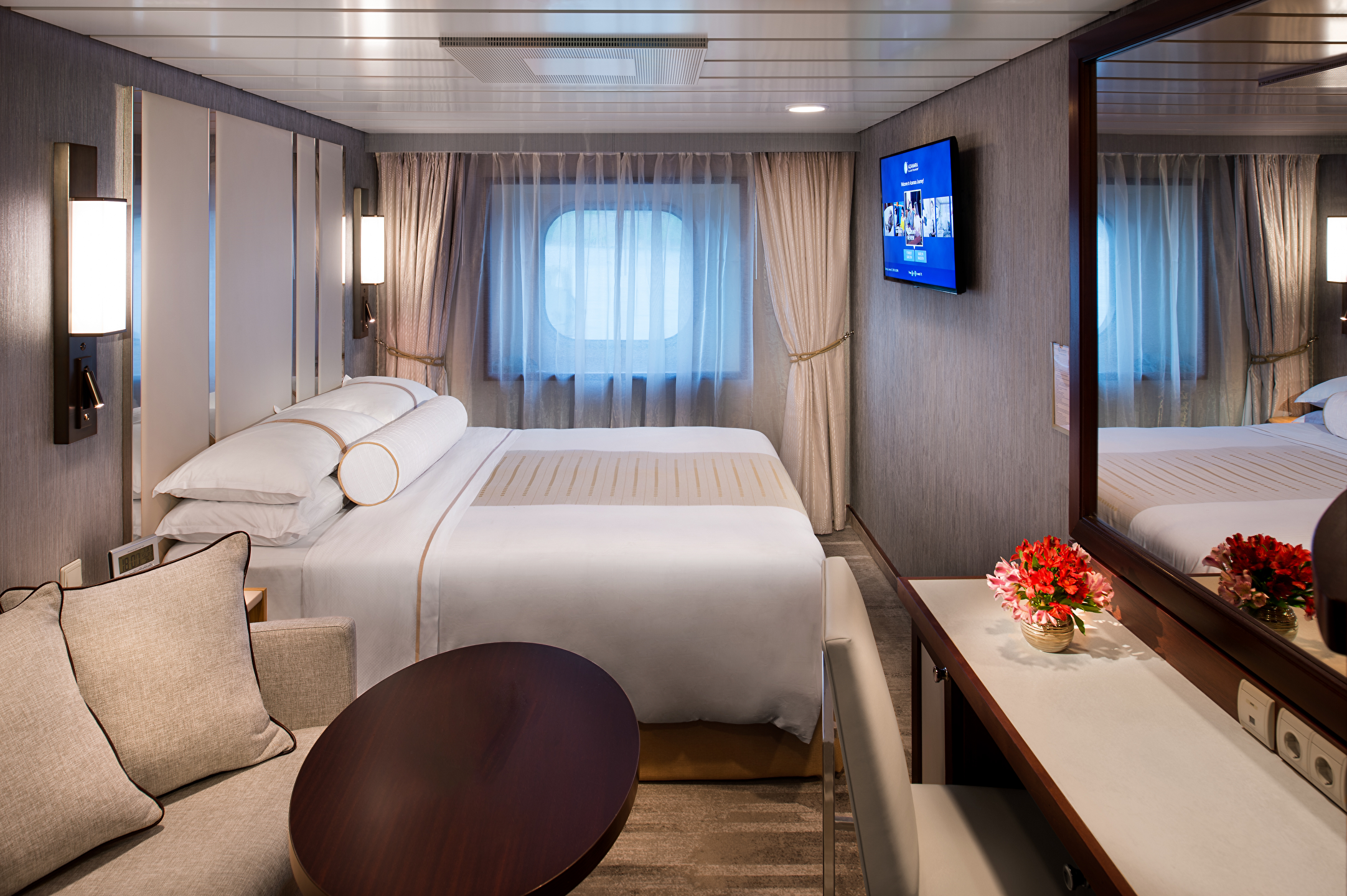
Two lower beds convertible to one Queen size bed, some staterooms feature sofa bed, 40” flat-screen TV, veranda, refrigerator with mini-bar, thermostat-controlled air conditioner, direct-dial telephone with voice mail, writing desk, in-room safe, and hand-held hairdryer. Categories 04, 05, 06 (170 square feet) with picture window. Category 07 (170 square feet) porthole window. Category 08 (143 square feet) with obstructed views.
Facilities and amenities
Cabin details
Outside/Oceanview
Code
Y
Guarantee - Oceanview
Facilities and amenities
Cabin details
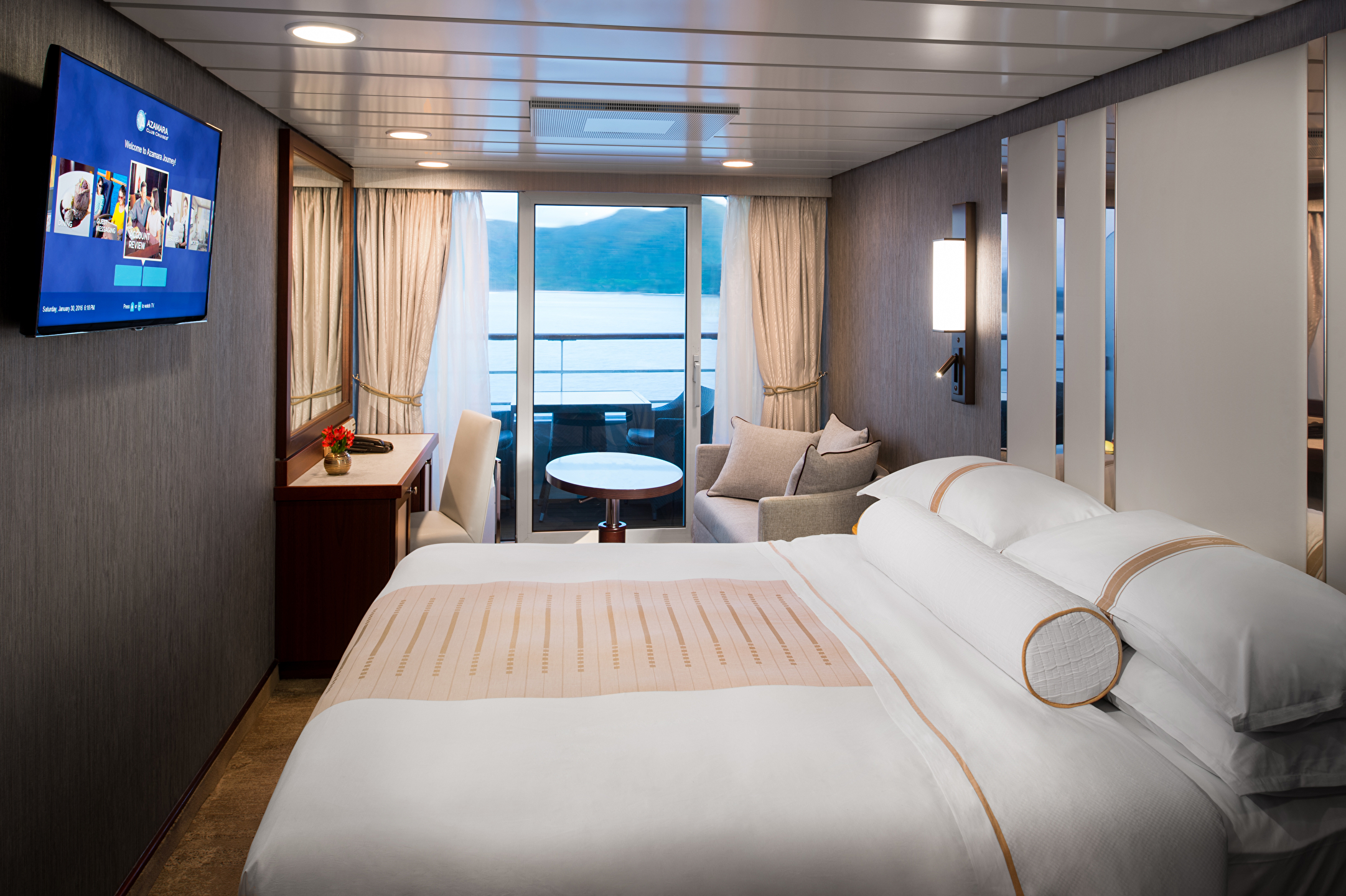
Balcony
Code
P1
Deck
Deck 7
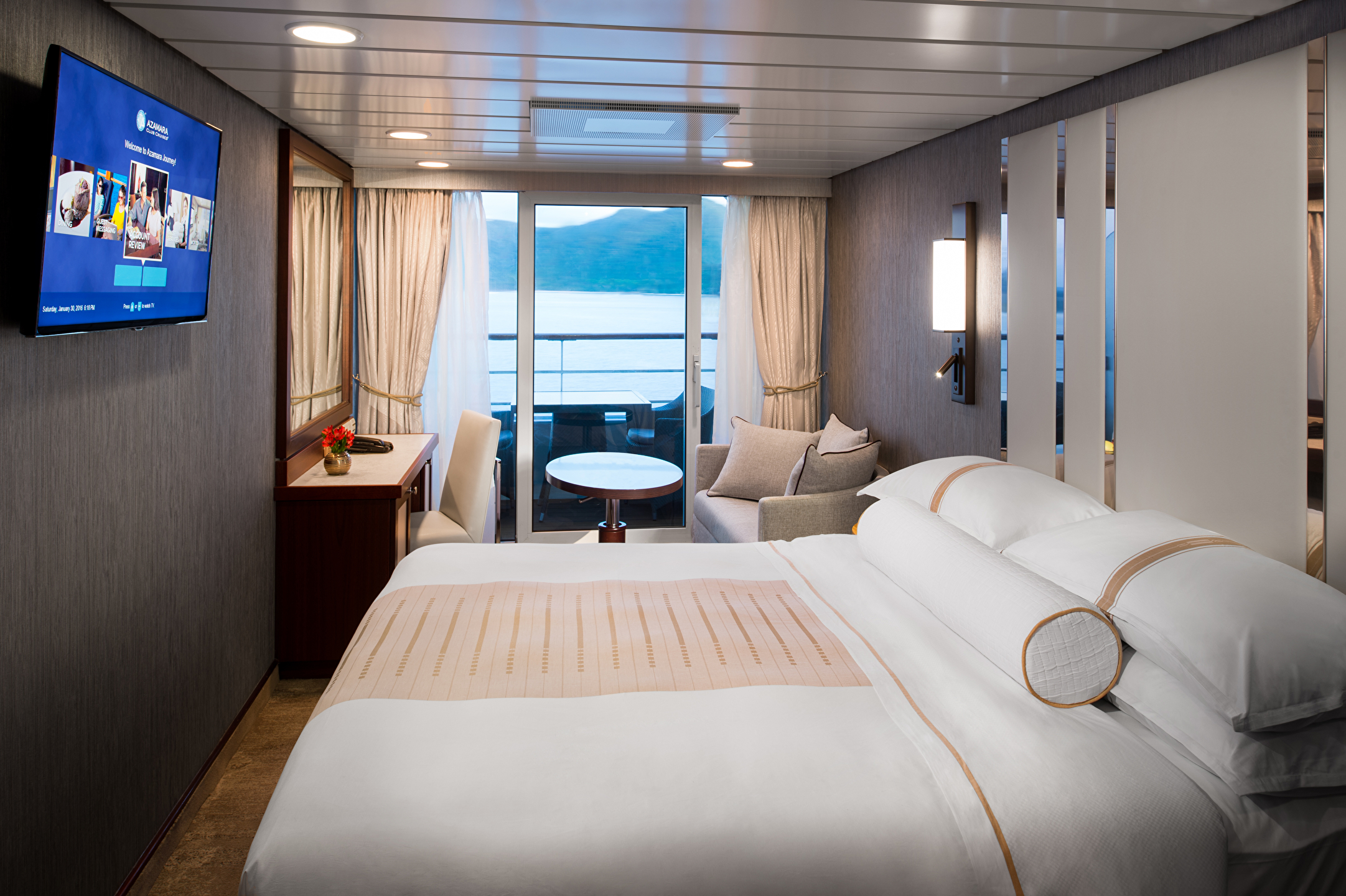
Two lower beds convertible to one Queen size bed. Sitting area with 40” flat-screen TV, veranda, refrigerator with mini-bar, thermostat-controlled air conditioner. Direct-dial telephone with voice mail. writing desk, in-room safe, hand-held hairdryer, USB ports under bedside reading lamps. 120 complimentary Internet minutes or $130 USD towards a full voyage unlimited package, one free bag of laundry service per stateroom, every seven days, one night of complimentary specialty dining for two, every seven days, priority embarkation and debarkation, and complimentary in-room spirits.
Facilities and amenities
Cabin details
Balcony
Code
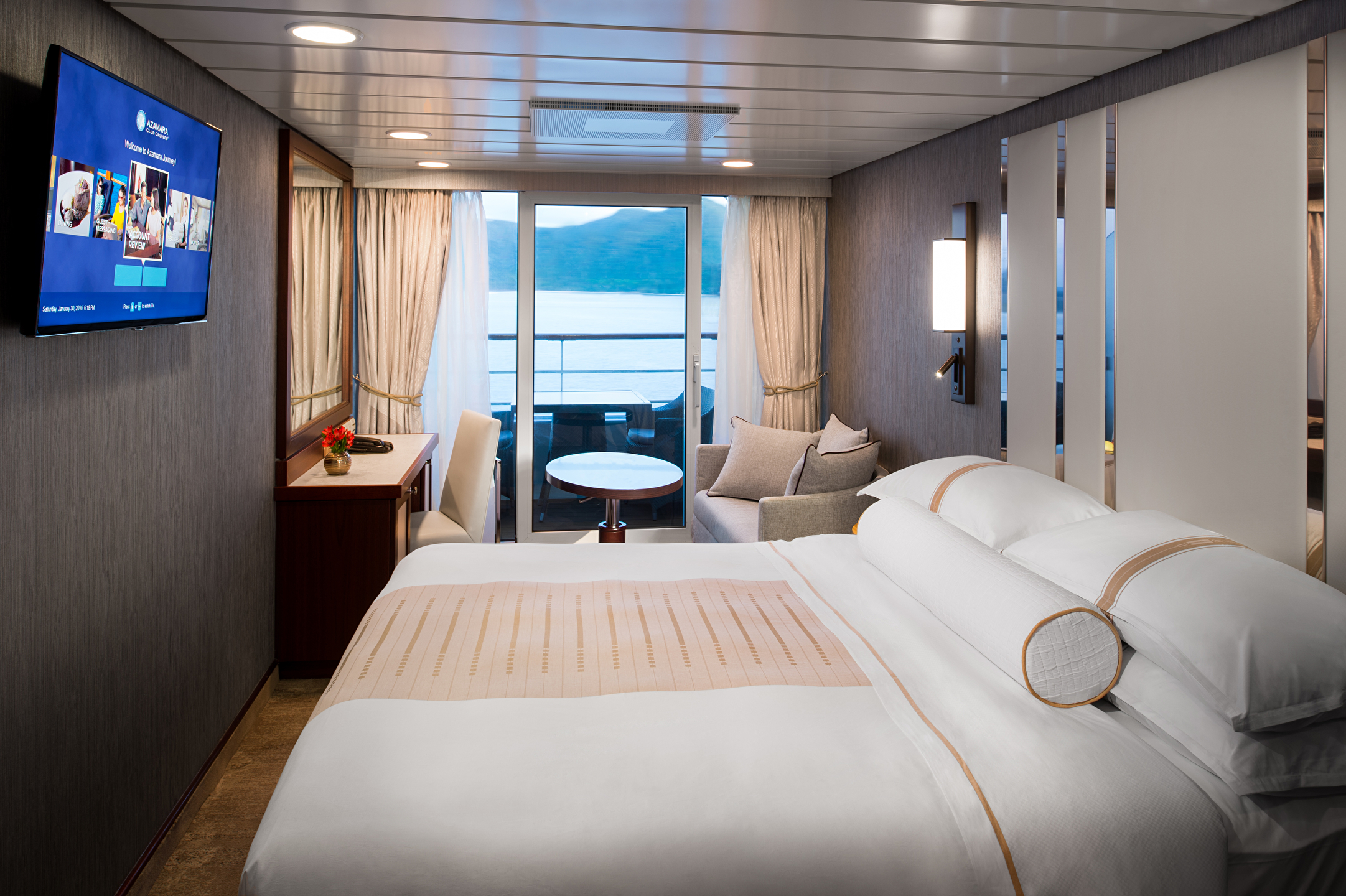
P2
Deck
Deck 8
Two lower beds convertible to one Queen size bed. Sitting area with 40” flat-screen TV, veranda, refrigerator with mini-bar, thermostat-controlled air conditioner. Direct-dial telephone with voice mail. writing desk, in-room safe, hand-held hairdryer, USB ports under bedside reading lamps. 120 complimentary Internet minutes or $130 USD towards a full voyage unlimited package, one free bag of laundry service per stateroom, every seven days, one night of complimentary specialty dining for two, every seven days, priority embarkation and debarkation, and complimentary in-room spirits.
Facilities and amenities
Cabin details
Balcony
Code
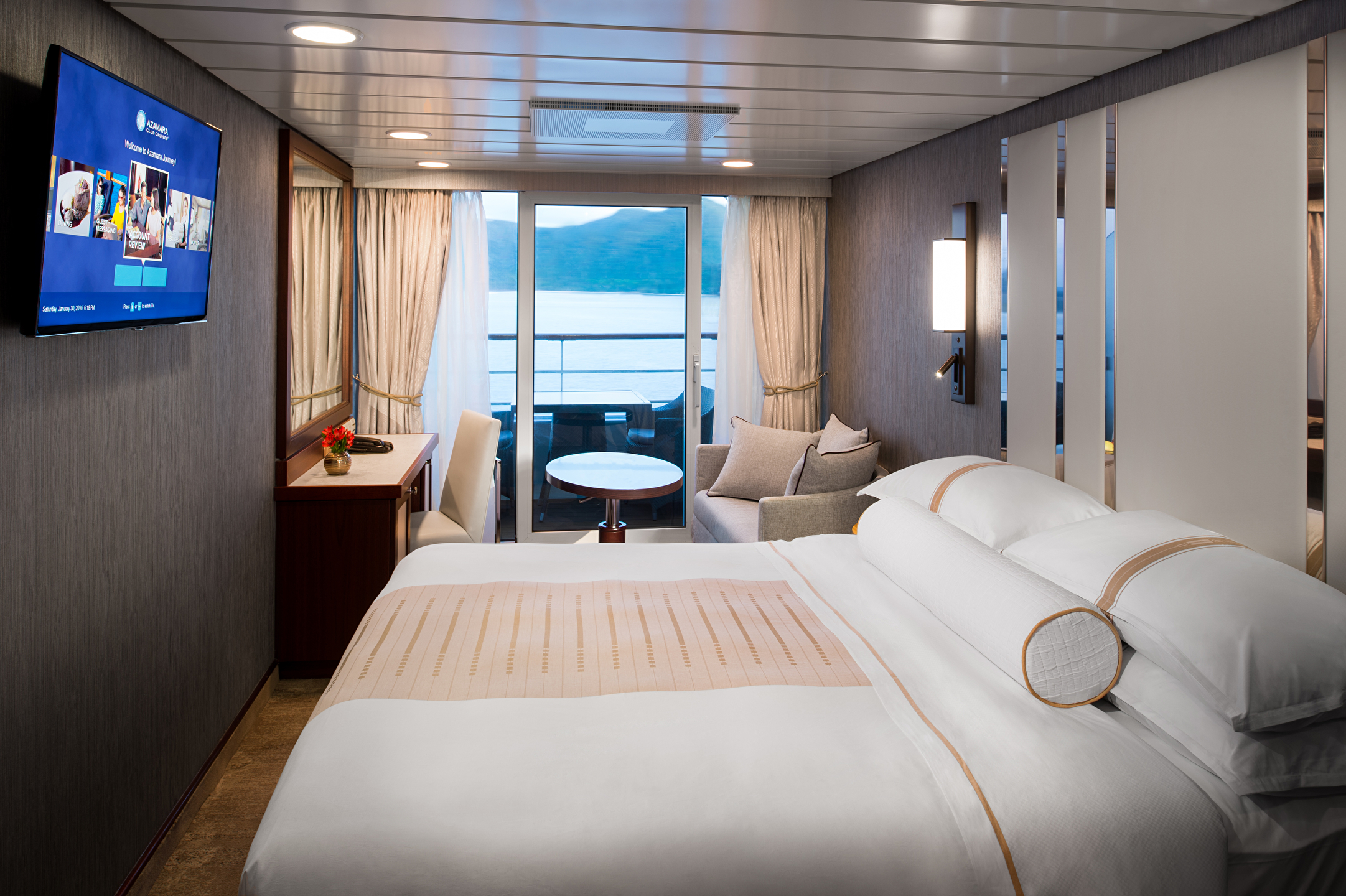
P3
Deck
Deck 8
Two lower beds convertible to one Queen size bed. Sitting area with 40” flat-screen TV, veranda, refrigerator with mini-bar, thermostat-controlled air conditioner. Direct-dial telephone with voice mail. writing desk, in-room safe, hand-held hairdryer, USB ports under bedside reading lamps. 120 complimentary Internet minutes or $130 USD towards a full voyage unlimited package, one free bag of laundry service per stateroom, every seven days, one night of complimentary specialty dining for two, every seven days, priority embarkation and debarkation, and complimentary in-room spirits.
Facilities and amenities
Cabin details
Balcony
Code
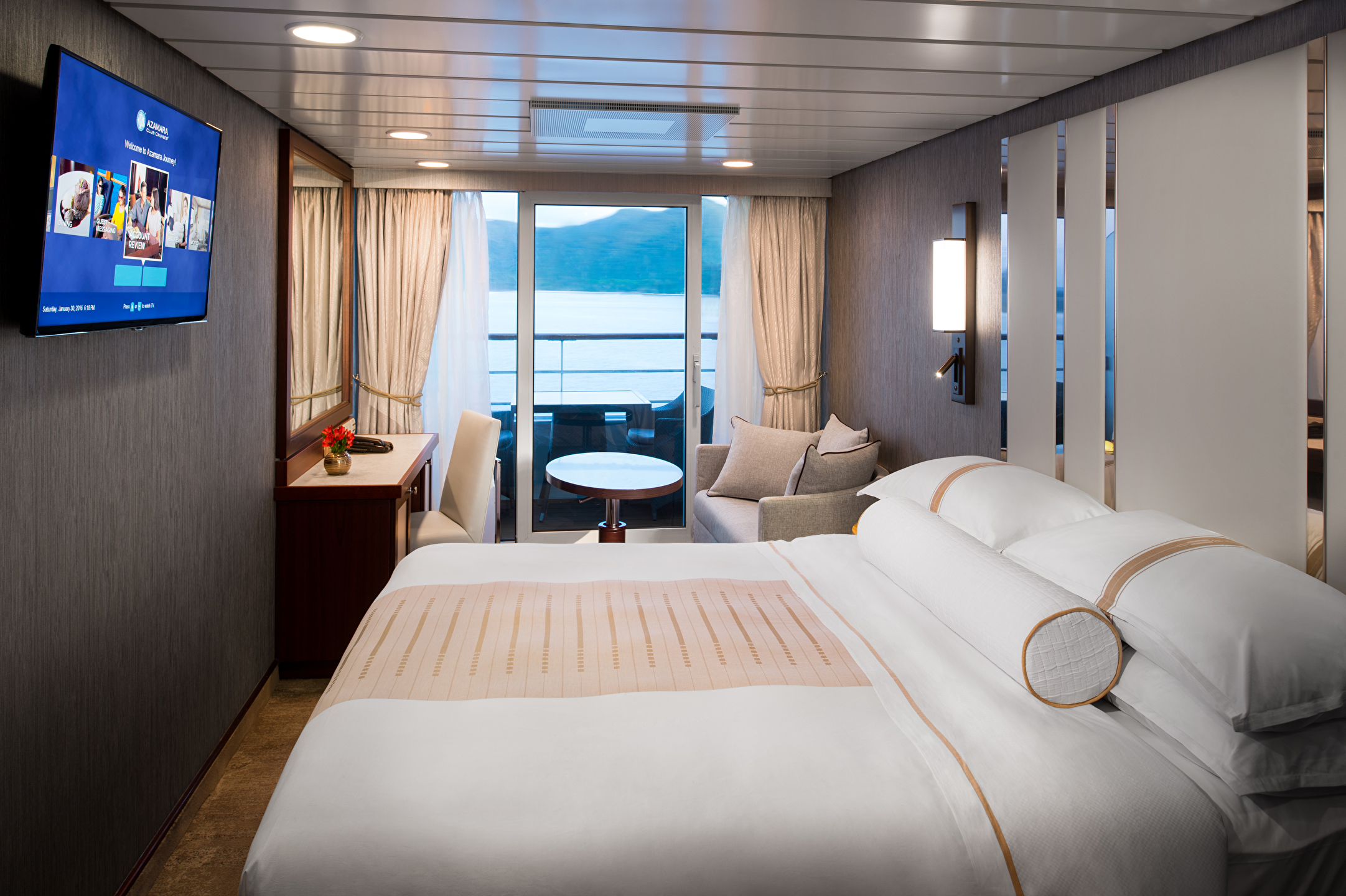
V1
Size
175 square feet
Deck
Deck 7
Two lower beds convertible to one Queen size bed. Comfortable sitting area with 40” flat-screen TV. Veranda. Refrigerator with mini-bar. Thermostat-controlled air conditioner. Direct-dial telephone with voice mail. Writing desk. In-room safe. Hand-held hairdryer. USB ports under bedside reading lamps.(175 square feet; veranda 40 square feet)
Facilities and amenities
Cabin details
Balcony
Code
V2
Size
175 square feet
Deck
Deck 7
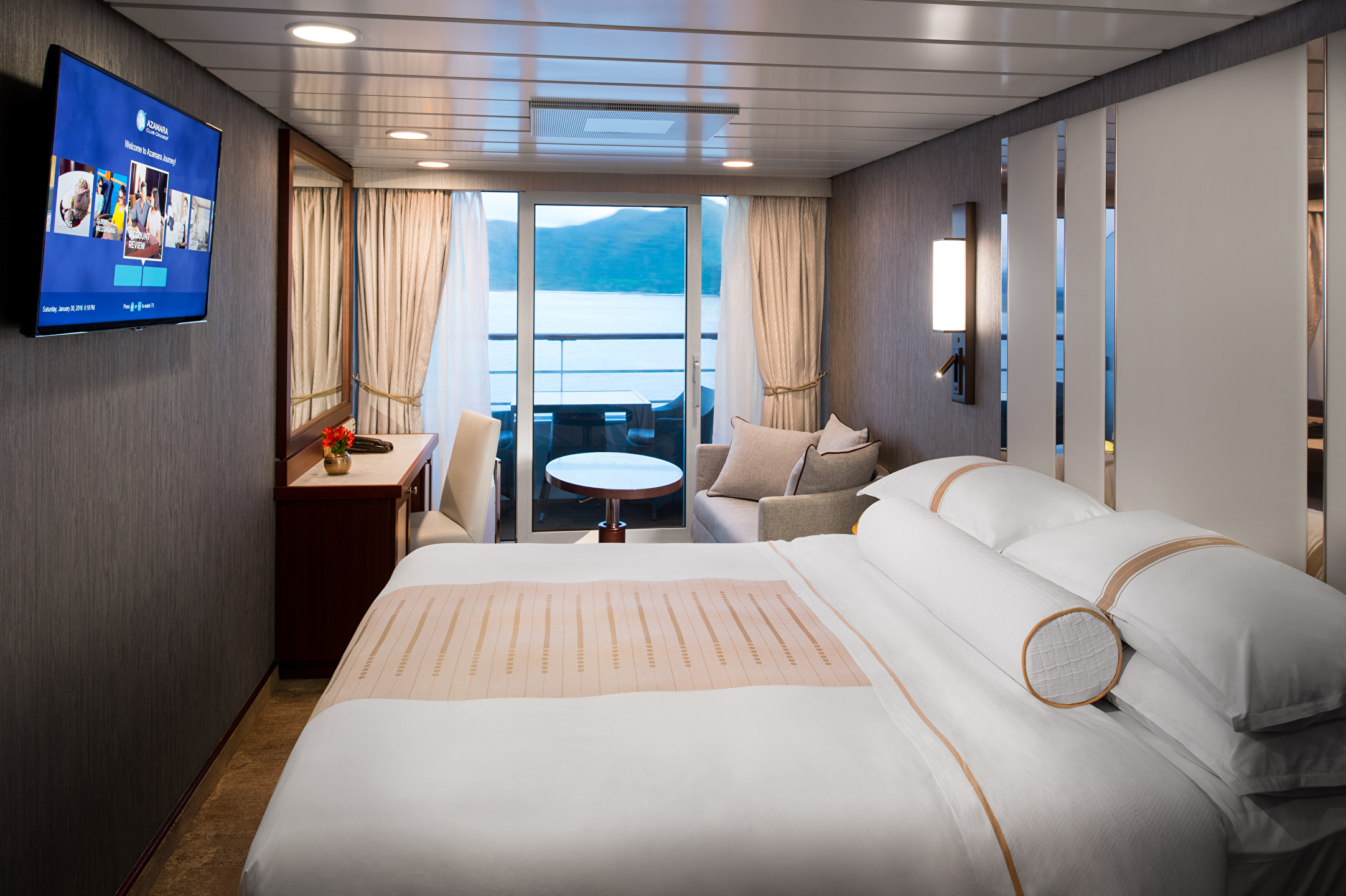
Two lower beds convertible to one Queen size bed. Comfortable sitting area with 40” flat-screen TV. Veranda. Refrigerator with mini-bar. Thermostat-controlled air conditioner. Direct-dial telephone with voice mail. Writing desk. In-room safe. Hand-held hairdryer. USB ports under bedside reading lamps.(175 square feet; veranda 40 square feet)
Facilities and amenities
Cabin details
Balcony
Code
V3
Size
175 square feet
Deck
Deck 6
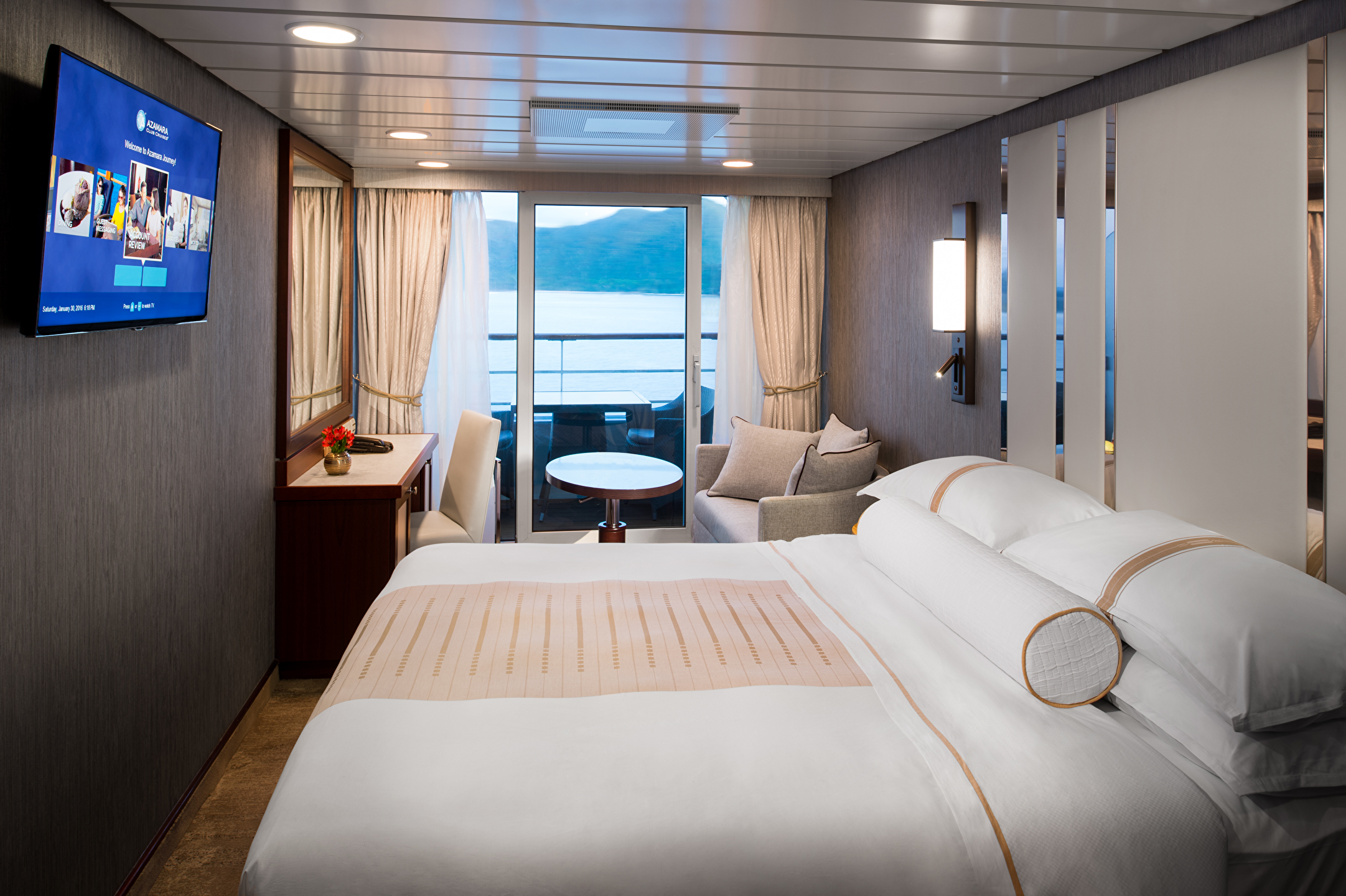
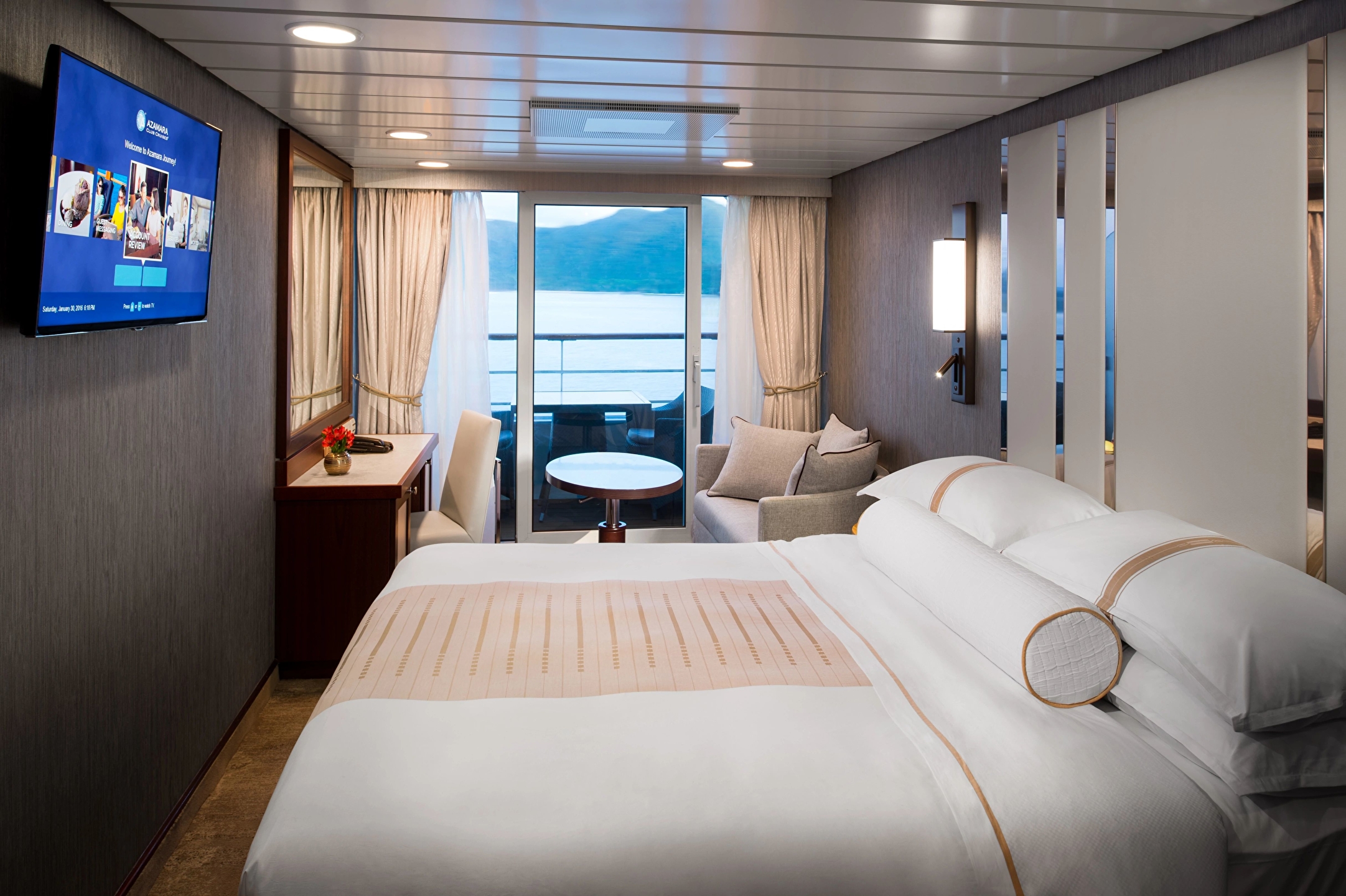
Two lower beds convertible to one Queen size bed. Comfortable sitting area with 40” flat-screen TV. Veranda. Refrigerator with mini-bar. Thermostat-controlled air conditioner. Direct-dial telephone with voice mail. Writing desk. In-room safe. Hand-held hairdryer. USB ports under bedside reading lamps.(175 square feet; veranda 40 square feet)
Facilities and amenities
Cabin details
Balcony
Code
X
Guarantee - Veranda
Facilities and amenities
Cabin details
Balcony
Code
XP
Size
175 sq. ft
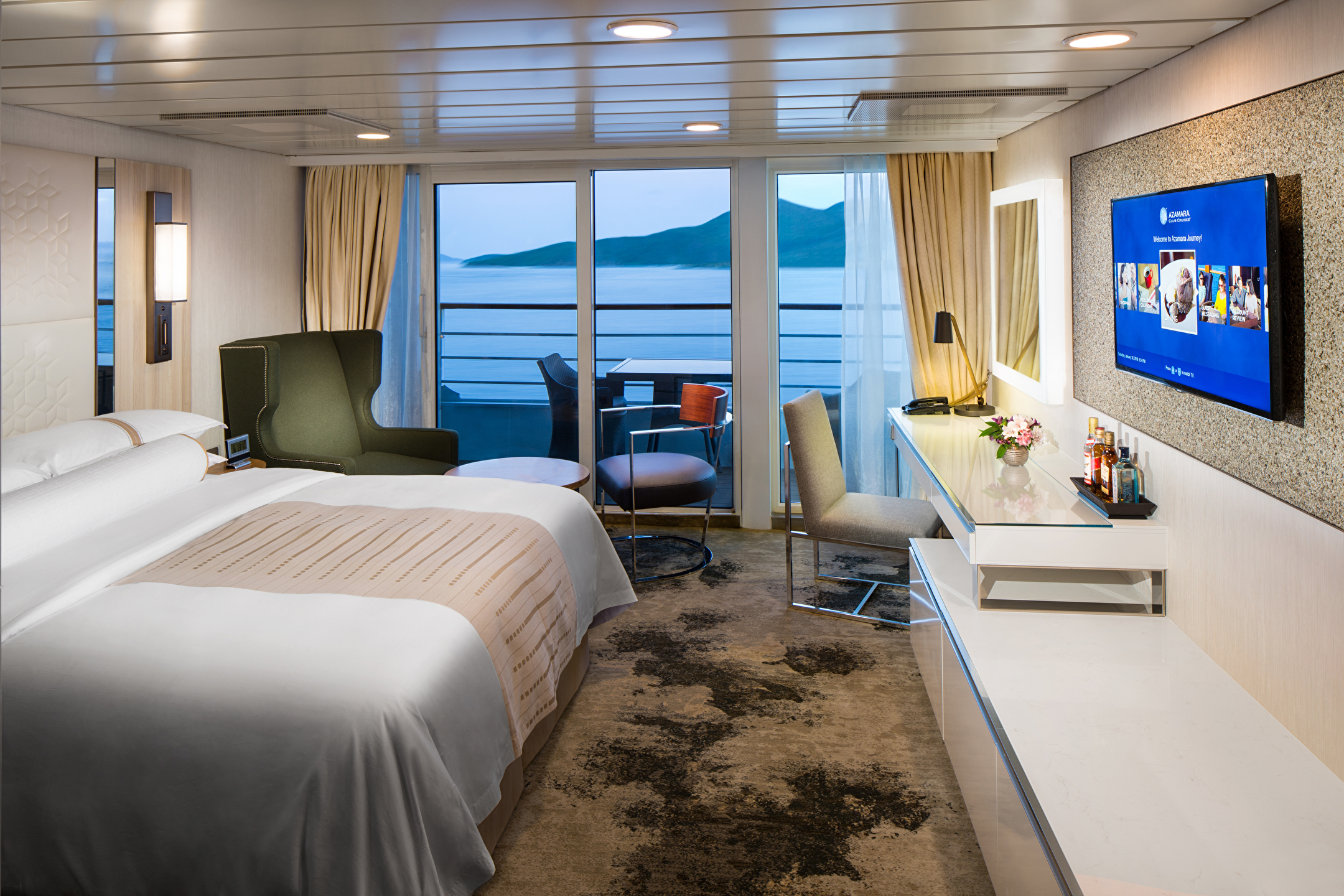
Stateroom Features Veranda Two lower beds convertible to one Queen size bed Sitting area with 40” flat-screen TV Mini-bar Thermostat-controlled air conditioner Direct-dial telephone with voice mail Writing desk In-room safe Hand-held hairdryer USB ports under bedside reading lamps Stateroom: 175 sq. ft. (16.3 sq. m.) | Veranda: 46–64 sq. ft. (4.3-6 sq. m.) Included Stateroom Amenities Luxurious cotton bed linens with duvet Terry bathrobes and slippers 24-hour room service Tote bag Use of umbrella Shoe shine-service Turndown treats Daily news bulletin Complimentary Internet (120 minutes or 25% off the unlimited internet package) per guest One free bag of laundry service per stateroom, every seven days One night of complimentary specialty dining for two, every seven days Priority embarkation and debarkation Complimentary in-room spirits
Facilities and amenities
Cabin details
Suite
Code
N2
Size
266 square feet
Deck
Deck 8
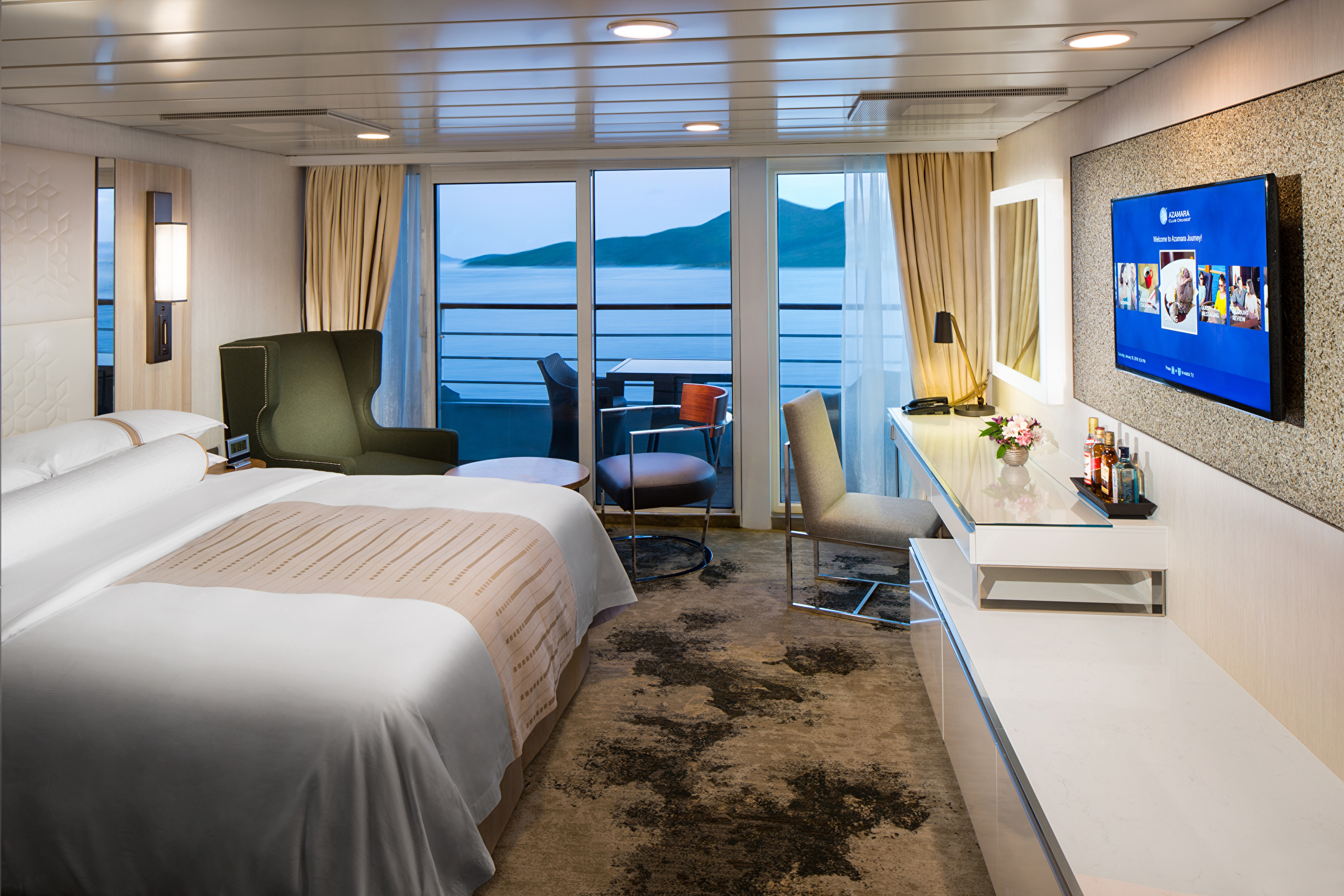
Two lower beds convertible to one Queen size. Spacious and comfortable sitting area with 55” flat-screen television. Roomy bathroom with shower, some also feature a tub. Floor-to-ceiling sliding glass doors, veranda, refrigerator with mini-bar, thermostat-controlled air conditioner, direct-dial telephone with voice mail, writing desk, in-room safe and hand-held hair dryer. (266 square feet; veranda 60 square feet).
Facilities and amenities
Cabin details
Suite
Code
N1
Size
266 square feet
Deck
Deck 8
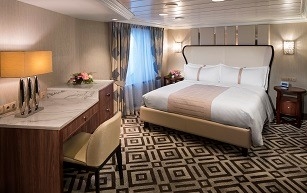
Two lower beds convertible to one Queen size. Spacious and comfortable sitting area with 55” flat-screen television. Roomy bathroom with shower, some also feature a tub. Floor-to-ceiling sliding glass doors, veranda, refrigerator with mini-bar, thermostat-controlled air conditioner, direct-dial telephone with voice mail, writing desk, in-room safe and hand-held hair dryer. (266 square feet; veranda 60 square feet).
Facilities and amenities
Cabin details
Suite
Code
CO
Size
233 sq.ft
Deck
Deck 7
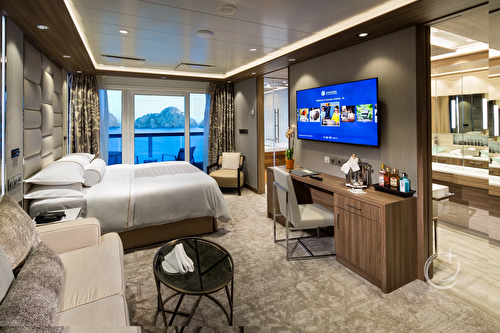
Spacious living room with a separate master bedroom. Master bedroom with one king size bed and a 40” flat-screen television. 55” flat-screen television in living room. Marble master bathroom with shower. Journey and Quest suites feature a tub.. Dressing room with vanity and ample closet space. Floor-to-ceiling sliding glass doors in living room and master bedroom. Spacious 233 sq.ft. (21.7 sq.m.) veranda. Refrigerator with mini-bar. Thermostat-controlled air conditioner. Direct-dial telephone with voice mail. Writing desk. In-room safe. Hand-held hair dryer(Suite ranging from 440 to 501 square feet and veranda 233 square feet)*
Facilities and amenities
Cabin details
Suite
Code
SP
Size
414 square feet
Deck
Deck 9
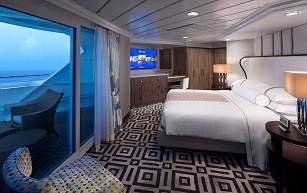
Two lower beds convertible to one queen size bed. Spacious glass-enclosed bathtub. Separate rain shower. Comfortable sitting area. 55” flat-screen television in sitting area. In-room spa music. Floor-to-ceiling sliding glass doors. Veranda. Refrigerator with mini-bar. Thermostat-controlled air conditioner. Direct-dial telephone with voice mail. Writing desk. In-room safe. Hand-held hair dryer.(414 square feet and veranda 40 square feet).
Facilities and amenities
Cabin details
Suite
Code
CW
Size
233 sq.ft
Deck
Deck 7
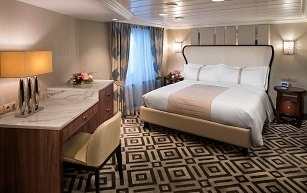
Spacious living room with a separate master bedroom. Master bedroom with one king size bed and a 40” flat-screen television. 55” flat-screen television in living room. Marble master bathroom with shower. Journey and Quest suites feature a tub.. Dressing room with vanity and ample closet space. Floor-to-ceiling sliding glass doors in living room and master bedroom. Spacious 233 sq.ft. (21.7 sq.m.) veranda. Refrigerator with mini-bar. Thermostat-controlled air conditioner. Direct-dial telephone with voice mail. Writing desk. In-room safe. Hand-held hair dryer. (560 square feet; veranda 233 square feet).
Facilities and amenities
Cabin details
Suite
Code
W
Guarantee - Suite
Cabin facilities
Cabin facilities will be confirmed before booking.
Next step
Continue to a separate page to review cruise extras and booking options around this sailing.
More sailings
Use horizontal scrolling, touch swipes, or the arrow keys to browse.
Azamara - Azamara Onward
From
£2,289
Azamara - Azamara Onward
From
£2,749
Azamara - Azamara Onward
From
£3,199
Azamara - Azamara Onward
From
£4,039
Azamara - Azamara Onward
From
£2,649
Important information
ATOL protected holidays
Where your booking includes flights, ATOL protection applies so your money and travel arrangements are financially protected.
Travel Trust Association
Book with confidence through a Travel Trust Association member, with customer money protected under approved trust arrangements.
Low deposit options
Secure selected sailings with flexible low deposit options, then spread the remaining balance before you travel.
Excellent customer service
Our cruise specialists are here before, during and after booking. Send an enquiry or call 0161 222 0822 for friendly support.
Clear price checks
Live prices and cabin options are checked before you continue.