Mediterranean Cruise : Greece, Italy & Spain
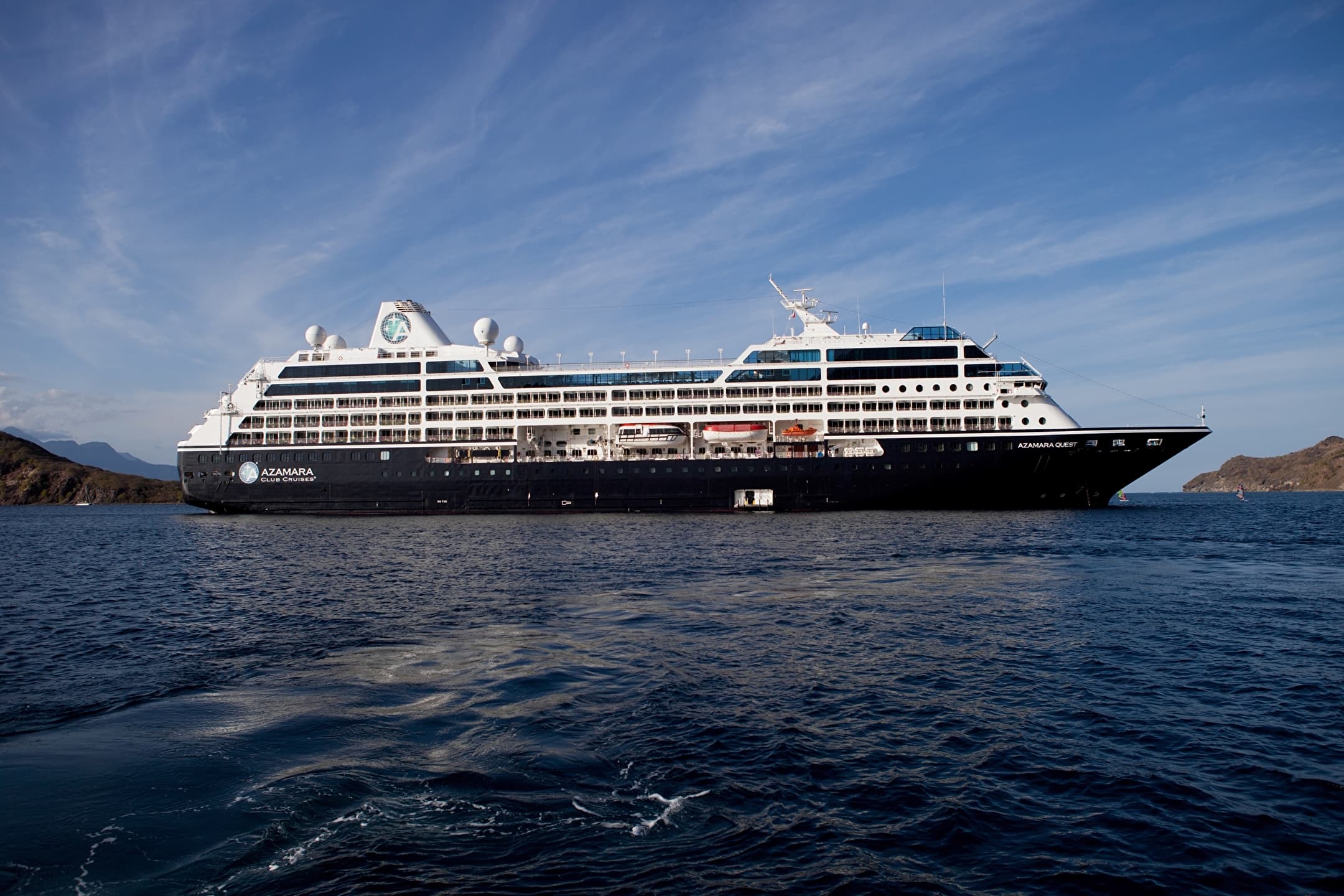
Azamara · Azamara Quest
Depart
Oct 24, 2026
Return
Nov 23, 2026
Port
Athens (Piraeus), Greece
Nights
30 nights
At a glance
- Launched
- 2007
- Tonnage
- 30277
- Cabins
- 355
- Crew
- 408
Your boutique hotel at sea, the Azamara Quest is a mid-sized ship with a deck plan that’s intimate but never crowded, and offers everything modern voyagers are looking for—plus some unexpected extras. Across the fleet, our authentic service goes beyond the expectations of even the most well-traveled cruisers. Friendly and approachable, our staff are attentive, and happy to offer everything from poolside service to recommendations for your on-shore exploration. After all, we love sailing the world just as much as you do! Re-imagined staterooms include modern amenities, furnishings, and European linens. Plus the ship features a large number of staterooms and suites with verandas, perfect for starting your day with fresh sea air and stunning views. Add to all of that world-class dining options, spa experiences to relax and refresh, and all-new entertainment offerings, you’ve got an onboard experience that’s matched only by the immersive cultural encounters we’ve got in store on shore.
Ship features
- Drawing Room
- Restaurant
- Aqualina Restaurant
- Sanctum Spa
Ask our cruise specialists about cruise line loyalty benefits, status match options, drinks packages, gratuities and any current offers available on this sailing.
On board

Aqualina Restaurant
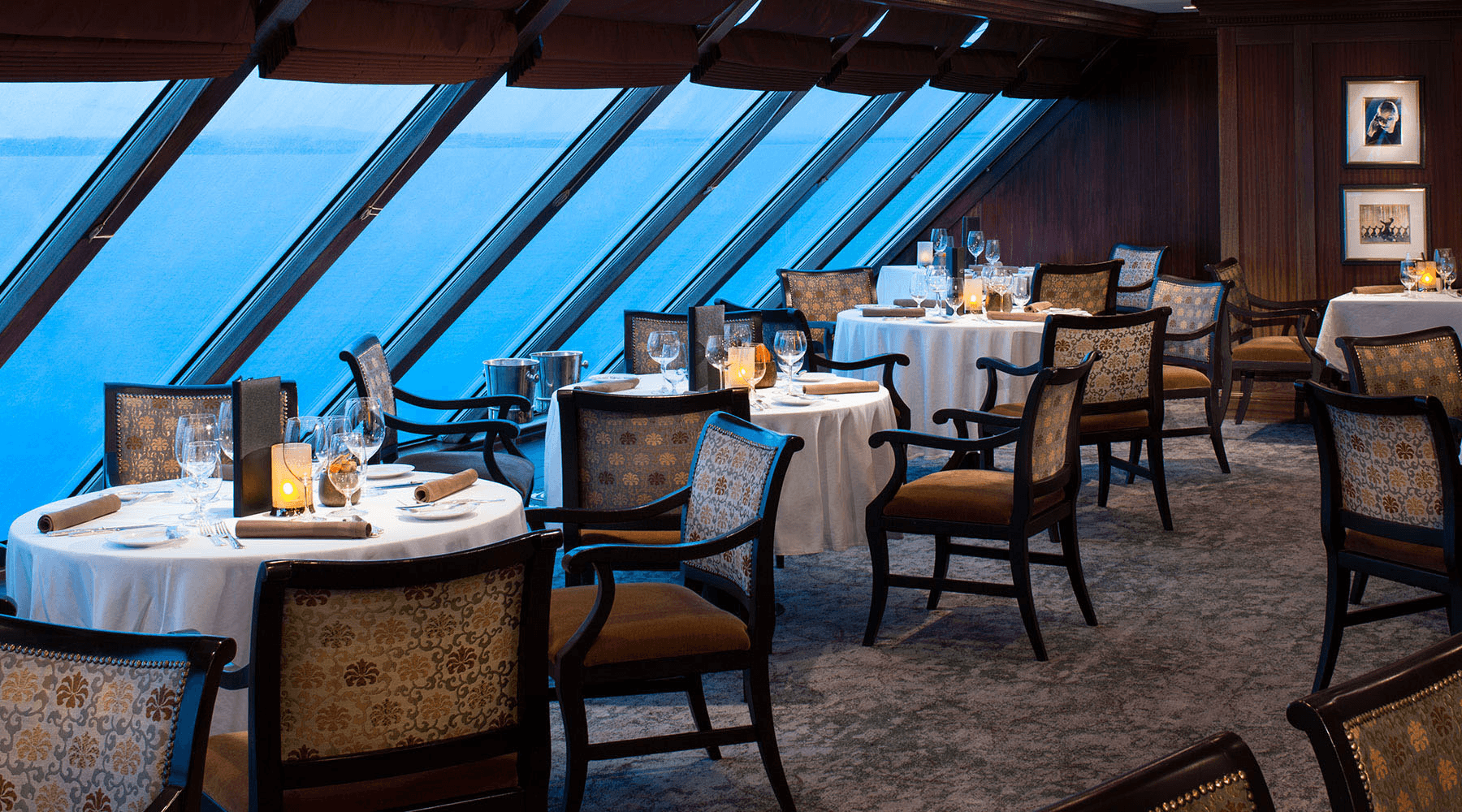
Onboard Dining

Restaurant
Itinerary
- 1Athens (Pireaus)Days 1, 8
- 2SantoriniDay 2
- 3RhodesDay 4
- 4Ephesus (Kusadasi), TurkeyDay 5
- 5PatmosDay 6
- 6MykonosDay 7
- 7Olympia (Katakolon), GreeceDay 9
- 8SarandeDay 10
- 9Siracusa, SicilyDay 11
- 10Catania, SicilyDay 12
- 11SalernoDay 13
- 12Rome (Civitavecchia), ItalyDay 15
- 13Florence /pisa (Livorno), ItalyDay 16
- 14GenoaDay 18
- 15NiceDay 19
- 16Provence (Marseille)Day 20
- 17PalamosDay 21
- 18BarcelonaDay 22
- 19ValenciaDay 23
- 20Cartagena, SpainDay 24
- 21MalagaDay 25
- 22GibraltarDay 26
- 23Seville, SpainDay 27
- 24LisbonDay 31
Port locations are shown; visiting order is not confirmed on this map. 1 port location is not available.
Cruise from Athens (Piraeus), Greece to Lisbon
Day 1Athens (Pireaus)Oct 24, 2026 • Departs at: 6 pm
You could spend a lifetime in Europe’s oldest city and still not see everything it has to offer. Settled over 3,500 years ago, Athens is like a mythological crossroads of the past and present, where modern buildings share the skyline with spectacular ruins like the Parthenon. To see a veritable “greatest hits” line-up, make your way to Vasilissis Amalias Street for the archaeological walk. Winding through the heart of the ancient city, the route leads to landmarks like the Temple of Olympian Zeus, Ancient Agora, Arch of Hadrian, and of course, the Acropolis.
Day 2SantoriniOct 25, 2026 • Arrives at: 8 am • Departs at: 8:30 pm
Your daydream of a Greek island meets reality in Santorini – its whitewashed villages cling to cliff sides, and bright blue roofs reflect the sea and sky. So beautiful is it, that you can almost believe the myths that claim it as the birthplace of gods. Born itself as a volcanic cone, the island blew its top in 1450 BC, its center sank, and it assumed its current crescent shape, outlined by three main islands. The capital, Fira, a pedestrian haven with narrow, meandering cobblestone lanes, is reachable only by cable car, donkey, or for the fit and fearless, a flight of 600 steps.
Day 3Agios NikolaosOct 26, 2026 • Arrives at: 8 am • Departs at: 10 pm
Known for having “three faces to the sea”, this port on Crete’s east coast seamlessly blends the charm of a small fishing village with the glamor of a chic resort town. With a diverse range of dining, shopping, and nightlife options, you can find your own personal paradise in Agios Nikolaos. At the center of town sits Lake Voulismeni, the deep waters of which have inspired many a local folk tale. Here you’ll find residents and visitors chatting over coffee, sipping ouzo at authentic tarvernas, or savoring lunch at a fine dining restaurant. For a taste of the beach life, you wont have to travel far. Several beaches are just a short walk from the town center and they are popular hangouts for fashionable young Greeks.
Day 4RhodesOct 27, 2026 • Arrives at: 8 am • Departs at: 10 pm
Rhodes, the friendliest city in the Mediterranean, welcomes you with seemingly eternal sunshine thanks to more sunny days than any other place in Europe. Situated at the island's most northern point, Rhodes' only neighbors on the east and west are gleaming blue seas. This sunny retreat is also home to many historic sites ranging from the ruins of the Temple of Venus to the medieval Street of Knights.
Day 5Ephesus (Kusadasi), TurkeyOct 28, 2026 • Arrives at: 8 am • Departs at: 10 pm
Sure, we could chat about the resort town of Kusadasi and its beaches and restaurants, or nearby places like Dilek Peninsula National Park, but let’s talk Turkey: The star attraction in this neck of the woods is Ephesus. Once the second largest city in the Roman Empire, eclipsed only by Rome, here are just a few of the incredible sights just waiting to be gobbled up! (Sorry, we couldn’t resist.) There’s the Library of Celsus, still magnificent almost 2,000 years later; the Odeon, home of our “Ephesus: Back to Ancient Times” AzAmazing Evenings eventSM; and the 24,000-capacity Great Theatre, where St. Paul used to preach. Stretching from this jaw-dropping amphitheatre to the harbor is the marble-made Arcadian Street. Stroll past the marketplaces, colonnades, and fields of wild fennel, and into bath complexes that once offered piped-in hot water and a sauna.
Day 6PatmosOct 29, 2026 • Arrives at: 8 am • Departs at: 6 pm
There is no missing the Monastery of St. John, a massive dark fortress atop a hill, standing out against the traditional white houses of the village of Hora that surround it. It was constructed in the late 11th century to honor St. John the Divine, who is said to have had his apocalyptic vision while in Patmos, leading him to write the Book of Revelation. The monastery is a warren of interconnecting courtyards, arcades, galleries, and roof terraces. There are lovely chapels, some with 12th century frescoes; the treasury exhibits an impressive array of art; and the library contains a wealth of historic texts.
Day 7MykonosOct 30, 2026 • Arrives at: 8 am • Departs at: 6 pm
Mykonos is living proof that picture postcard destinations do exist. Its many charms include its iconic windmills, fabulous beaches, and an irresistible traditional town with a maze of twisting streets and alleys originally designed to confuse marauding pirates. Dazzling sunlight reflects off of whitewashed houses and hundreds of small chapels. Other adornments include shaded courtyards and balconies lush with flowers, and a lively nightlife that some claim is the best in Europe. Nearby you can visit the uninhabited island of Delos, birthplace of Apollo, fittingly the god of sunlight, music and beauty.
Day 8Athens (Pireaus)Oct 31, 2026 • Arrives at: 5 am • Departs at: 5 pm
You could spend a lifetime in Europe’s oldest city and still not see everything it has to offer. Settled over 3,500 years ago, Athens is like a mythological crossroads of the past and present, where modern buildings share the skyline with spectacular ruins like the Parthenon. To see a veritable “greatest hits” line-up, make your way to Vasilissis Amalias Street for the archaeological walk. Winding through the heart of the ancient city, the route leads to landmarks like the Temple of Olympian Zeus, Ancient Agora, Arch of Hadrian, and of course, the Acropolis.
Day 9Olympia (Katakolon), GreeceNov 1, 2026 • Arrives at: 1 pm • Departs at: 8 pm
This Greek seaside town is the gateway to the ruins of Olympia, where the ancient games began in 776 BC, and continued for over 1000 years, until they were outlawed as a pagan festival, after Rome officially adopted Christianity as the only legitimate imperial religion. The complex is made up of temples, workshops, and the training structures that have given us the word we still use today to describe such facilities – gymnasium. The games did not recommence until 1896, but their ancient roots are acknowledged when the modern Olympic flame is lit here every four years, before beginning its long journey to the host nation.
Day 10SarandeNov 2, 2026 • Arrives at: 8 am • Departs at: 3 pm
Sarandë is a resort on the Albanian Riviera, in southern Albania. Sandwiched between the Ionian Sea and hills of olive groves, the town is on a horseshoe-shaped bay, edged by beaches and a promenade. In the center are the archaeological remains of a 5th-century synagogue, later an early Christian basilica. Intricate floor mosaics are still evident. The 16th-century Lëkurësi Castle is on a hilltop above the town.
Day 11Siracusa, SicilyNov 3, 2026 • Arrives at: 1 pm • Departs at: 10 pm
Siracusa is known for the archaeological and historical sights that define its grand past, as one of the major powers of the Mediterranean world in the 5th century BC. They include a Greek theater, still in use, where Aeschylus produced some of his plays; a dramatic necropolis with burial niches cut into the rock that include the tomb of Archimedes, famous mathematician, engineer, and inventor; and the Ear of Dionysus, a cave with amazing acoustical properties. The “modern” city was rebuilt in Sicilian Baroque style after the devastating earthquake of 1693.
Day 12Catania, SicilyNov 4, 2026 • Arrives at: 8 am • Departs at: 5 pm
Between the Mediterranean Sea and Mount Etna lies the beautiful city of Catania, where it’s “if it ain’t Baroque don’t fix it” architecture has earned it UNESCO World Heritage status. Along with flamboyantly designed buildings, Catania is home to many ancient sites, like the Odeon and Amphitheatre—unearthed from under Mount Etna’s lava that covered the city at least seven times. These ruins can be viewed in the archaeological park, in the compact (AKA great for walking) city center.
Day 13SalernoNov 5, 2026 • Arrives at: 9 am
Day 14SalernoNov 6, 2026 • Departs at: 4 pm
Day 15Rome (Civitavecchia), ItalyNov 7, 2026 • Arrives at: 6 am
Rome has something special to offer to all visitors, no matter their interests and tastes. Whether you daydream about fighting with gladiators in the Coliseum, debating with togaed senators in the Forum, tossing a coin in a fabled fountain, or being awestruck by the magnificence of St Peter’s Basilica and Michelangelo’s masterpieces, Rome seems to live up to its sobriquet – the Eternal City. When you need sustenance, today’s Rome will provide delizioso pasta e vino. Or perhaps you draw strength from a little retail therapy – the Italians are also renowned for their sense of style.
Day 16Florence /pisa (Livorno), ItalyNov 8, 2026 • Arrives at: 8 am
Ah, Florence—sublime birthplace of the Renaissance, its historic center full to bursting with elegant squares, imposing palaces, magnificent churches, and museums with such an abundance of riches it could make an art lover weep for joy. The list of illustrious names connected with this city is mind-boggling: Botticelli, Dante, Da Vinci, Michelangelo, Galileo. Other colorful and fascinating characters were of dubious reputation: Machiavelli, and the religious extremist Savonarola, with his bonfire of the vanities. For many years the city was ruled by the powerful Medici family, patrons of the arts and bankers to the papacy, whose line included six kings and two popes.
Day 17Florence /pisa (Livorno), ItalyNov 9, 2026 • Departs at: 8 pm
Ah, Florence—sublime birthplace of the Renaissance, its historic center full to bursting with elegant squares, imposing palaces, magnificent churches, and museums with such an abundance of riches it could make an art lover weep for joy. The list of illustrious names connected with this city is mind-boggling: Botticelli, Dante, Da Vinci, Michelangelo, Galileo. Other colorful and fascinating characters were of dubious reputation: Machiavelli, and the religious extremist Savonarola, with his bonfire of the vanities. For many years the city was ruled by the powerful Medici family, patrons of the arts and bankers to the papacy, whose line included six kings and two popes.
Day 18GenoaNov 10, 2026 • Arrives at: 8 am • Departs at: 8 pm
Located on the northwestern coast of Italy, the ancient maritime city of Genoa is renowned for its architecture, history, music, and art, as well as being the birthplace of Christopher Columbus. And with part of its old town listed as a UNESCO World Heritage Site, no wonder Genoa is nicknamed la Superba (“the Superb one”) due to its glorious past and outstanding landmarks—including the Palace of St. George built in 1260, the Lanterna (lighthouse) built in 1543, and the historic city walls dating back to the 9th century, of which Genoa has the most and the longest in all of Italy.
Day 19NiceNov 11, 2026 • Arrives at: 8 am • Departs at: 10 pm
Nice, Queen of the Riviera, is imbued with the joie de vivre that epitomizes this fabled coastline. Perhaps it is that famous light and color that has long attracted artists, that makes one feel so alive, makes a stroll down the wide seaside Promenade des Anglais so exhilarating. The old town is a warren of meandering lanes edged by tall houses, and small, alluring shops. A treasure trove of archaeological and fine art museums is not to be ignored, nor is the famous flower market, awash in the heady scent and glowing hues of blossoms, and amazing displays of produce.
Day 20Provence (Marseille)Nov 12, 2026 • Arrives at: 8 am • Departs at: 9 pm
Marseille, a port city in southern France, has been a crossroads of immigration and trade since its founding by the Greeks circa 600 B.C. At its heart is the Vieux-Port (Old Port), where fishmongers sell their catch along the boat-lined quay. Basilique Notre-Dame-de-la-Garde is a Romanesque-Byzantine church. Modern landmarks include Le Corbusier’s influential Cité Radieuse complex and Zaha Hadid’s CMA CGM Tower.
Day 21PalamosNov 13, 2026 • Arrives at: 8 am • Departs at: 7 pm
Palamos sits right in the heart of the Costa Brava, the Wild Coast, deriving its name from the rugged, rocky shoreline, punctuated by excellent beaches and picturesque fishing villages.
Day 22BarcelonaNov 14, 2026 • Arrives at: 6 am • Departs at: 6 pm
Dynamic Barcelona is all about architecture, from the magnificent medieval buildings of the Gothic Quarter to the Modernist movement typified by the work of Antoni Gaudi. Though his materials were stone and metal, his forms were organic, awash in curves, swirls, and colors. His masterpiece is the amazing Church of the Sagrada Familia, colossal and as yet unfinished, though construction began in 1882. A contemporary contribution to the scene is Ricardo Bofill's post modernist National Theater of Catalonia, an imaginative combination of classical and modern design, with a greenhouse-like lobby.
Day 23ValenciaNov 15, 2026 • Arrives at: 7:30 am • Departs at: 10 pm
One of the country's biggest and bustling cities was defended against the Moors by the legendary Spaniard "El Cid." Work up an appetite taking in la Calle de Los Caballeros and La Lonja, Valencia's old stock-exchange building of 1483, and reward your curiosities with a Paella Valenciana, Spain's most famous contribution to the world's tables.
Day 24Cartagena, SpainNov 16, 2026 • Arrives at: 11 am • Departs at: 6 pm
Strategically located along historic sailing routes, Cartagena has been colonized by a veritable who’s who of Mediterranean superpowers over the millennia, resulting in a rich and multi-layered cultural heritage, and a history both glorious and turbulent. From atop a hill, Concepción Castle served as a fortress for Carthaginians, Romans, Visigoths, Arabs, and Castilians. The 13th century Old Cathedral stands on the remains of a Roman Theater just discovered in 1987. More recent architectural contributions include modernist designs of public buildings and private dwellings by pupils of the famous architect Antoni Gaudi.
Day 25MalagaNov 17, 2026 • Arrives at: 7:30 am • Departs at: 10 pm
Málaga is the lively capital of the Costa del Sol, famed for its beaches and mild climate, and gateway to Andalusia, with its Moorish architectural heritage. The city’s Alcazaba is a fine example, an 11th century citadel sitting in majestic splendor overlooking the African coast. It contains three magnificent palaces and graceful gardens with ornate fountains. In addition to their rich cultural heritage, Malagueños are also very proud of their most famous citizens – Picasso, for whom there is a museum commemorating his birth here, and actor Antonio Banderas, so far without a monument.
Day 26GibraltarNov 18, 2026 • Arrives at: 8 am • Departs at: 8 pm
The towering Rock of Gibraltar is a sight to behold. Overlooking the mouth of the Mediterranean Sea from a height of 1,400 ft, it is a natural fortress, in a strategic position to control all naval traffic between the Mediterranean and the Atlantic. Only three miles long and a mile wide, this peninsula attached to the Spanish mainland juts out into the Strait of Gibraltar, which separates continental Europe from North Africa, a distance of only 14 miles. One feature most unusual for Europe is the troupes of semi-wild and curiously tailless Barbary macaques that have taken up residence on The Rock’s upper reaches.
Day 27Seville, SpainNov 19, 2026 • Arrives at: 7:30 pm
Seville is the capital and largest city of the Spanish autonomous community of Andalusia and the province of Seville. It is situated on the lower reaches of the River Guadalquivir, in the southwest of the Iberian Peninsula
Day 28Seville, SpainNov 20, 2026
Seville is the capital and largest city of the Spanish autonomous community of Andalusia and the province of Seville. It is situated on the lower reaches of the River Guadalquivir, in the southwest of the Iberian Peninsula
Day 29Seville, SpainNov 21, 2026 • Departs at: 7 pm
Seville is the capital and largest city of the Spanish autonomous community of Andalusia and the province of Seville. It is situated on the lower reaches of the River Guadalquivir, in the southwest of the Iberian Peninsula
Day 30At SeaNov 22, 2026
Day 31Cruise returns to LisbonNov 23, 2026 • Arrives at: 6 am
Lisbon is one of the oldest cities in the world. Its magnificent harbor made it a logical trading port as far back as the Phoenicians, as well as a departure point for 15th century voyages sponsored by Prince Henry the Navigator, patron of Portuguese explorers. The city is rich in architecture, from Romanesque and Gothic to Post Modern, and criss-crossed by monument-studded grand boulevards. Today it is seeking a place on the world stage by hosting, in addition to its own active cultural calendar, film festivals, art, fashion, and design shows, book fairs, marathons, and rock concerts.
Cabin options
Choose your cabin type, compare its fares, then pick your cabin. Prices and availability are checked for your party.
See cabins to check current grades, prices and availability for your party.
Next step
Choose your cabin type
View every cabin grade and current availability on the next step.
This sailing is too close to departure to book online.