Back to cruise search
Home/Cruises/Fremantle (Perth), Western Australia to Lautoka
Fremantle (Perth), Western Australia to Lautoka, 20 Aug 2026 (40 nights)
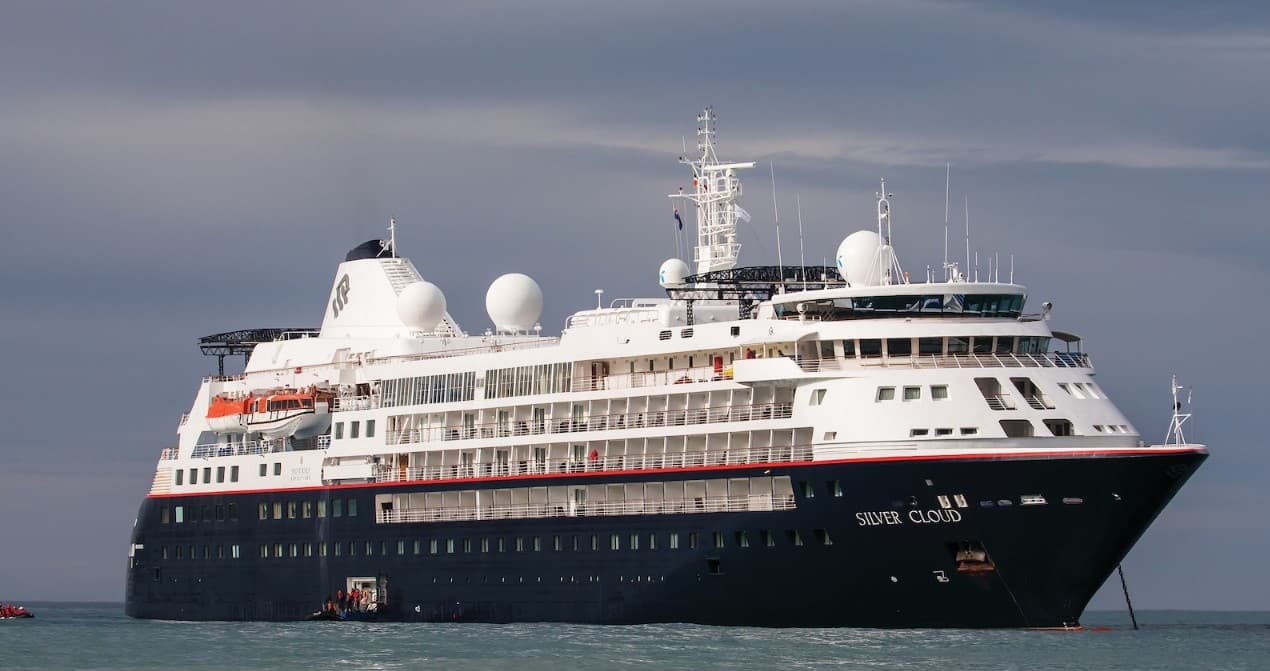
5.0 ship ratingSilver Cloud - Silversea

Cruise search
We are checking available sailings, ship details and guide prices for you.
Ask our cruise specialists about cruise line loyalty benefits, status match options, drinks packages, gratuities and any current offers available on this sailing.
Sail with confidence
We explain the relevant financial protection before you book.
Always here to help
When plans change, your cruise specialists are here to help.
Carefully selected cruises
From short breaks to big adventures, we help narrow down the right sailing.
Cruise summary
Gallery
Dining
1 of 10 onboard highlights
Your itinerary
Port descriptions and imagery are shown where available for each day or port.
Coming in at number seven on Lonely Planet’s list of best places to live, Fremantle has finally begun to shake off the shadow of neighbouring big brother Perth. With just 20 kilometres separating the two cities, Perth, with its happy hippie vibe has long been the big pull for visitors to the region. But Fremantle’s colourful past and bright future gives Perth as good as it gets. The coastal city has undergone a complete revamp since the America’s Cup thrust Fremantle into the spotlight in 1987. Over AUS$ 1,3 billion has been poured into revamping the city, and the fruits of the city’s labour are ripe for picking. Investment in the arts has brought Fremantle to the fore of thriving urban culture, while generous grants for small businesses has led to groovy live-music rooms, hipster bars, boutique hotels, left-field bookshops, craft-beer breweries, Indian Ocean seafood shacks amid the buskers and beaches. If that doesn’t not sound like your glass of beer, we guarantee a stroll along the…
Three island groups make up the Houtman Abrolhos Islands. The Wallabi, Easter and Pelsaert groups stretch across 100 kilometers from north to south with a total of 122 islands. Named Houtman after the Dutch captain who first described them in 1619, the Portuguese word “Abrolhos” refers to the reefs and dangers they posed to unsuspecting seafarers –sometimes taken to mean “open your eyes”. The Houtman Abrolhos are known for cray fishing and pearling activities, as well as for their bird and marine life. The islands and their surrounding reef communities form one of Western Australia’s unique marine areas of tropical and temperate sea life.
Three island groups make up the Houtman Abrolhos Islands. The Wallabi, Easter and Pelsaert groups stretch across 100 kilometers from north to south with a total of 122 islands. Named Houtman after the Dutch captain who first described them in 1619, the Portuguese word “Abrolhos” refers to the reefs and dangers they posed to unsuspecting seafarers –sometimes taken to mean “open your eyes”. The Houtman Abrolhos are known for cray fishing and pearling activities, as well as for their bird and marine life. The islands and their surrounding reef communities form one of Western Australia’s unique marine areas of tropical and temperate sea life.
Adele Island is an island located in the Indian Ocean approximately 104 kilometres North of Ardyaloon off the Kimberley coast in Western Australia
Set off the coast of Western Australia, the Buccaneer Archipelago is one of the Kimberley’s finest secrets. The Archipelago, 50 k2 (19 sq mi), is made up of around 800 islands and protect the mainland from the huge 12 metre tides and astonishing speed of the Yampi (or, in traditional Aborigine, “Yampee”) Sound. The speed and power of the water many not make for pleasant bathing, but do however result in fantastic natural phenomena. One fine example is the horizontal reversible waterfall in Talbot Bay. The tidal pull is responsible for the “reversible” nature of the falls, however, this also hides narrow gaps between the islands, making for treacherous sailing conditions. Isolated graves of sailors and divers are testimony to the danger. William Dampier sighted the Archipelago in 1688 but it would not be until 1821 that the Archipelago would become known as Buccaneer (a term coined by Captain Phillip Parker King) "in commemoration of William Dampier’s visit to this part of the coast ".…
Set off the coast of Western Australia, the Buccaneer Archipelago is one of the Kimberley’s finest secrets. The Archipelago, 50 k2 (19 sq mi), is made up of around 800 islands and protect the mainland from the huge 12 metre tides and astonishing speed of the Yampi (or, in traditional Aborigine, “Yampee”) Sound. The speed and power of the water many not make for pleasant bathing, but do however result in fantastic natural phenomena. One fine example is the horizontal reversible waterfall in Talbot Bay. The tidal pull is responsible for the “reversible” nature of the falls, however, this also hides narrow gaps between the islands, making for treacherous sailing conditions. Isolated graves of sailors and divers are testimony to the danger. William Dampier sighted the Archipelago in 1688 but it would not be until 1821 that the Archipelago would become known as Buccaneer (a term coined by Captain Phillip Parker King) "in commemoration of William Dampier’s visit to this part of the coast ".…
Set off the coast of Western Australia, the Buccaneer Archipelago is one of the Kimberley’s finest secrets. The Archipelago, 50 k2 (19 sq mi), is made up of around 800 islands and protect the mainland from the huge 12 metre tides and astonishing speed of the Yampi (or, in traditional Aborigine, “Yampee”) Sound. The speed and power of the water many not make for pleasant bathing, but do however result in fantastic natural phenomena. One fine example is the horizontal reversible waterfall in Talbot Bay. The tidal pull is responsible for the “reversible” nature of the falls, however, this also hides narrow gaps between the islands, making for treacherous sailing conditions. Isolated graves of sailors and divers are testimony to the danger. William Dampier sighted the Archipelago in 1688 but it would not be until 1821 that the Archipelago would become known as Buccaneer (a term coined by Captain Phillip Parker King) "in commemoration of William Dampier’s visit to this part of the coast ".…
The Hunter River is home to an immense mangrove system surrounded by soaring red sandstone cliffs. Narrow mangrove channels shelter numerous bird species, mudskippers, fiddler crabs and the infamous saltwater crocodile; the most aggressive crocodile species known to man. Naturalist Island at the mouth of the river has a stunning stretch of sandy beach that makes a perfect landing site for small helicopters that can pick up visitors wishing to explore some of the Kimberley’s vast interior. View less The highlight inland is the famous Mitchell Falls where four tiers of waterfalls plunge into deep pools that flow out into the mighty Mitchell River. The headwaters of the falls are cool and a dip in the fresh water is a welcome reprieve from the heat of the heartland.
The Territory of Ashmore and Cartier Islands is an uninhabited external territory of Australia consisting of four low-lying tropical islands in two separate reefs, and the 12-nautical-mile territorial sea generated by the islands
"Australia's capital of the north is a uniquely tropical city, and a historically isolated outpost of this vast, diverse country. Reaching up towards the equator, a full 2,000 miles from Sydney and Melbourne, the city was named in honour of Charles Darwin by the British settlers who established a frontier outpost here. With a unique history, beautiful islands nearby, and a palette of sizzling Pacific flavours, colourful Darwin is an enchanting and exotic Australian destination. Crocodiles patrol the jungled waterways and tropical rainforests around Australia's gateway to the Top End. Explore via airboat to look down on the veiny waterways of the mist-laced Kakadu National Park. The sounds of chattering birdlife and the gentle splash of fountains and waterfalls will fill your ears in George Brown Darwin Botanic Gardens. Soak it all in, before kicking back and relaxing with a picnic and a crackling barbecue. The sunshine and famous tropical pink sunsets mean many visitors naturally grav…
"Australia's capital of the north is a uniquely tropical city, and a historically isolated outpost of this vast, diverse country. Reaching up towards the equator, a full 2,000 miles from Sydney and Melbourne, the city was named in honour of Charles Darwin by the British settlers who established a frontier outpost here. With a unique history, beautiful islands nearby, and a palette of sizzling Pacific flavours, colourful Darwin is an enchanting and exotic Australian destination. Crocodiles patrol the jungled waterways and tropical rainforests around Australia's gateway to the Top End. Explore via airboat to look down on the veiny waterways of the mist-laced Kakadu National Park. The sounds of chattering birdlife and the gentle splash of fountains and waterfalls will fill your ears in George Brown Darwin Botanic Gardens. Soak it all in, before kicking back and relaxing with a picnic and a crackling barbecue. The sunshine and famous tropical pink sunsets mean many visitors naturally grav…
Kwatisore Bay is a 2 km wide bay located west of Kwatisore Peninsula at the southwestern end of the wide Cenderawasih (bird of paradise) Bay. An area of 1,453,500 hectares, a great part of the bay, has been declared a national park. Within the national park is Indonesia’s largest marine national park. Some dive companies claim that Cenderawasih Bay is the whale shark capital of the world, and the area near Kwatisore Bay is one of the few places in the world where encounters can almost be guaranteed. View less The whale sharks seem to be permanent residents of the protected marine park and as the locals believe whale sharks are under the protection of spirits and will bring good luck, not only has fishing them been traditionally prohibited, the fishermen actively encourage their presence by feeding them small amounts of their catch. Therefor the best places and time to look for the whale sharks –and to swim or dive with them- are the local fishing pontoons during the early morning hour…
Only about 30 kilometers (19 miles) from the Indonesian border, Vanimo is the capital of the Sandaun (or Sundown) Province. It is one of only two towns in this remote region of Papua New Guinea. Although the Sepik River originates in the province, it bypasses Vanimo far to the south. The Sandaun Province is relatively undeveloped, but Vanimo has lovely beaches and some picturesque villages in the vicinity. The interior is covered in rainforest and logging is an important activity putting to use Vanimo’s port and protected bay.
Ali Island is one of the four islands located close to Aitape, off the northern coast of Papua New Guinea. The eastern shore of Ali Island has a beautiful white sandy beach and offers swimming and snorkeling. The five villages on the island connect via well-maintained trails that lead to the school and Catholic church closer to the northern end of the island.
The eastern half of the island of New Guinea - second largest in the world - was divided between Germany (north) and the UK (south) in 1885. The latter area was transferred to Australia in 1902, which occupied the northern portion during World War I and continued to administer the combined areas until independence in 1975. A nine-year secessionist revolt on the island of Bougainville ended in 1997 after claiming some 20,000 lives.
The volcanic island of Garove is part of the Witu Islands and once had a 5-kilometer-wide (3.1 miles) caldera. The island was historically used to produce copra and cocoa, and in fact, still is today. Most of the villages are located around the exterior of the volcano. Steep cliffs explain why there is only one area settled on the inside. A promontory at the entrance’s southwestern corner is taken up by the school and the catholic church of the village of Widu, the only village inside the caldera.
If surreal and unique experiences are your thing, then the Papua New Guinean town of Rabaul should tick your travel boxes. Found on the north eastern tip of New Britain Island (the largest island off mainland PNG) Rabaul, the former provincial capital, has quite a remarkable location. The town is inside the flooded caldera of a giant volcano and several sub-vents are still quite active today! The lively city was almost entirely devastated by Mount Tavurvur in 1994, covering the city in ashfall, but thankfully costing no lives. View less Since then, thanks to Rabaul’s deep-water port, commerce has been on the up, and a few shops and hotels have managed to find an audience. However, Rabaul’s remote location together with the volcano still being one of the most active and dangerous in Papua New Guinea means tourism in not rife. Rabaul has an impressive WWII history which includes a 300-mile network of tunnels dug by Japanese POW designed to conceal munitions and stores. After the Pearl H…
Kennedy Island is a small uninhabited island in the Solomon Islands that was named after John F. Kennedy, following an incident involving Kennedy during his World War II naval career. Kennedy Island lies 15 minutes by boat from Gizo, the provincial capital of the Solomon Islands' Western Province.
Port Mary is the name of the bay adjacent to Ghupuna, the main village in Santa Ana. A bright white sand beach with huge shade-giving trees runs along the shoreline in front of the tidy village. The houses here are made with local materials and most are built on stilts. Islanders generally welcome visitors with traditional songs and dances performed by members of the three different villages on Santa Ana. Some local people will also set up stands offering souvenirs for purchase. View less The Solomons are best known for strings of traditional shell money and elegant carvings based on local stories and legends.
Unlike Espiritu Santo with its raised coral reefs and white sand, Ambrym is a volcanically active island with dark sand beaches. Ambrym is known as the island of magic and is the source of five local languages that all evolved on Ambrym. This handful of languages contributes to the well over 100 languages of Vanuatu. Some of Ambrym’s magic takes place in the lush greenery of the local community of Ranon. Here the people perform a very special and traditional ‘Rom’ dance. Participants prepare their masks and costumes in secrecy and the dance is reserved for special occasions.
Lautoka is often described as the sugar city. Sugar cane is the major industry of Fiji and Lautoka is its main base. Here are the industries' headquarters, the largest sugar mill, modern loading facilities and a large wharf. It features 70 miles of roads, almost all paved, a wonderful botanical garden and royal palm trees decorating the city's main street, Vitogo Parade. The municipal market is another attraction from both outside and inside. Fiji typifies the image of paradise. The people here live as they have done for centuries, retaining their ancient traditions and simple and carefree lifestyle supported by the harvest of a generous land and bountiful sea.
What's included
Fare overview
This sailing is shown as a cruise-only guide fare with Silversea. The fare is linked to the ship, itinerary and cabin category you choose. Drinks packages, gratuities, Wi-Fi, flights, transfers and shore experiences are only treated as included where they are confirmed before booking.
Sailing aboard
Silver Cloud
Your ship
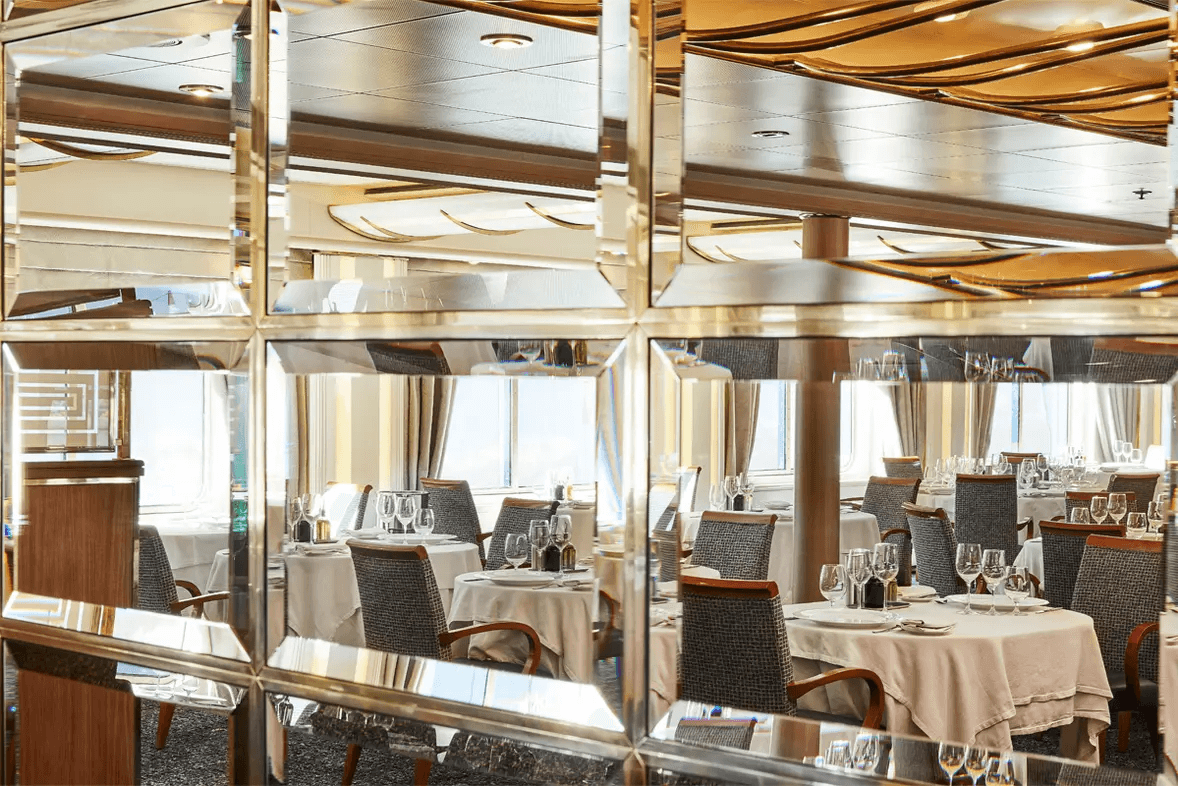
After extensive refurbishment, Silver Cloud is the most spacious and comfortable ice class vessel in expedition cruising. Her large suites, her destination itineraries and her unparalleled service make her truly special. Her four dining options will tantalise your taste buds and as 80% of her suites include a veranda, watching a breaching whale or a few cavorting penguins has never been so personal. A limited number of guests in polar waters, mean that Silver Cloud has the highest space to guest and crew to guest ratios in expedition cruising. With her 18 zodiacs, 10 kayaks, possibilities are almost limitless with ship-wide simultaneous explorations.
Onboard facilities
Bars/Lounges
Deck plans
Explore the ship deck by deck. Deck plans can change and should be checked before booking.
Deck 3

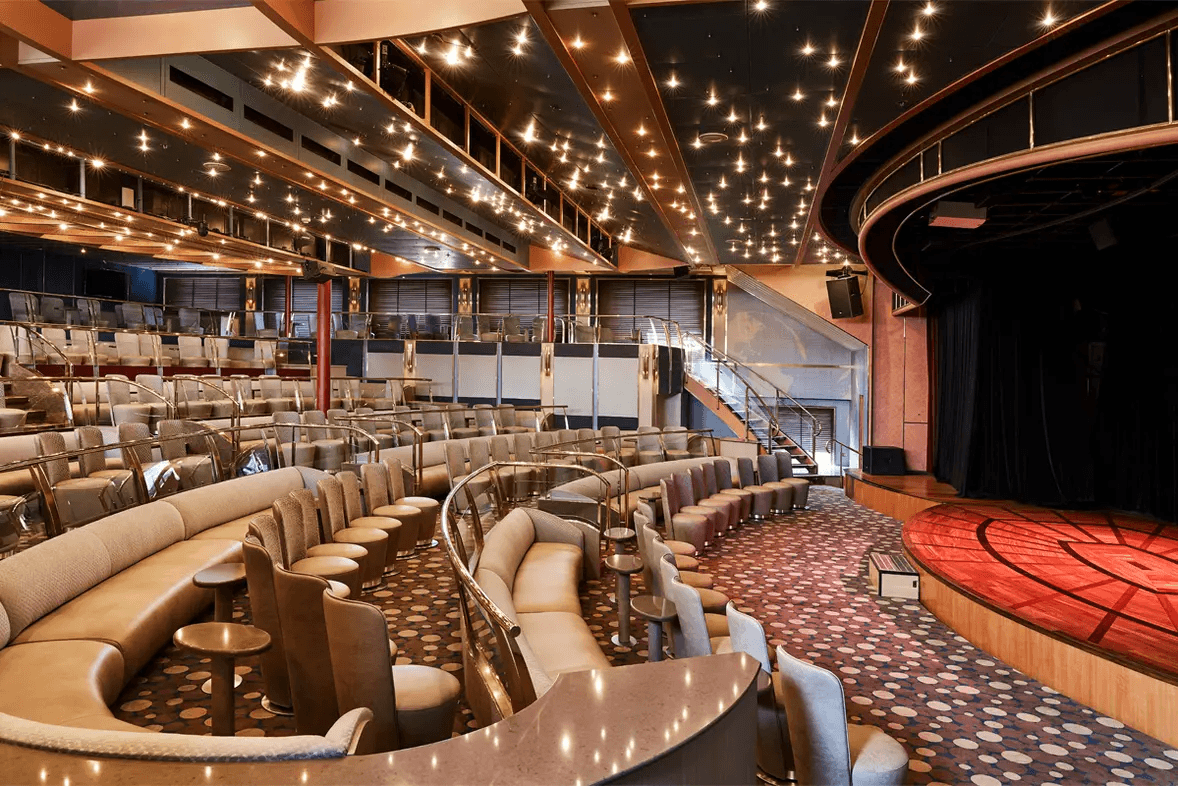
These facilities are available aboard the ship. Their deck locations can be confirmed before booking.
No cabin types are listed for this deck.
Match cabin grade codes and colours to the selected deck plan.
Choose your cabin
Compare the cabin types and onboard features shown for this sailing. Final price and availability are confirmed before booking.
Next step
Continue to a separate page to review cruise extras and booking options around this sailing.
More sailings
Use horizontal scrolling, touch swipes, or the arrow keys to browse.
Silversea - Silver Cloud
From
£11,700
Silversea - Silver Cloud
From
£13,200
Silversea - Silver Cloud
From
£21,200
Silversea - Silver Cloud
From
£21,400
Silversea - Silver Cloud
From
£18,700
Silversea - Silver Cloud
From
£19,900
Important information
ATOL protected holidays
Where your booking includes flights, ATOL protection applies so your money and travel arrangements are financially protected.
Travel Trust Association
Book with confidence through a Travel Trust Association member, with customer money protected under approved trust arrangements.
Low deposit options
Secure selected sailings with flexible low deposit options, then spread the remaining balance before you travel.
Excellent customer service
Our cruise specialists are here before, during and after booking. Send an enquiry or call 0161 222 0822 for friendly support.
Clear price checks
Live prices and cabin options are checked before you continue.
Use horizontal scrolling, trackpad gestures, touch swipes, or the arrow keys to browse cabin types.
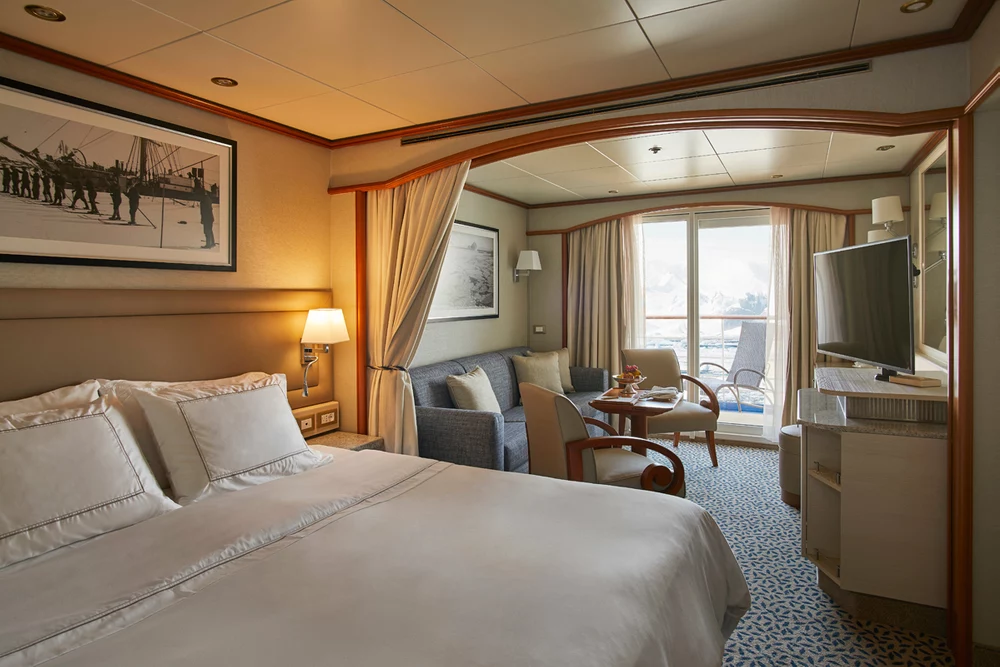
Cabin details
Suite
Code
DV
Deck
Deck 5
A Silversea signature, with a preferred central location, the Veranda Suite is spacious and welcoming.Floor-to-ceiling glass doors open onto a furnished private teak veranda from where you can contemplate anything from the midnight sun to an antarctic sunrise. The Deluxe Veranda Suite offers preferred central location with identical accommodation to a Veranda Suite. Veranda with patio furniture and floor-to-ceiling glass doors. Sitting area. Twin beds or queen-sized bed. Marble bathroom with shower (some with bath/shower combination). Walk-in wardrobe with personal safe. Writing desk. Hair dryer. Unlimited Standard Wifi.
Facilities and amenities
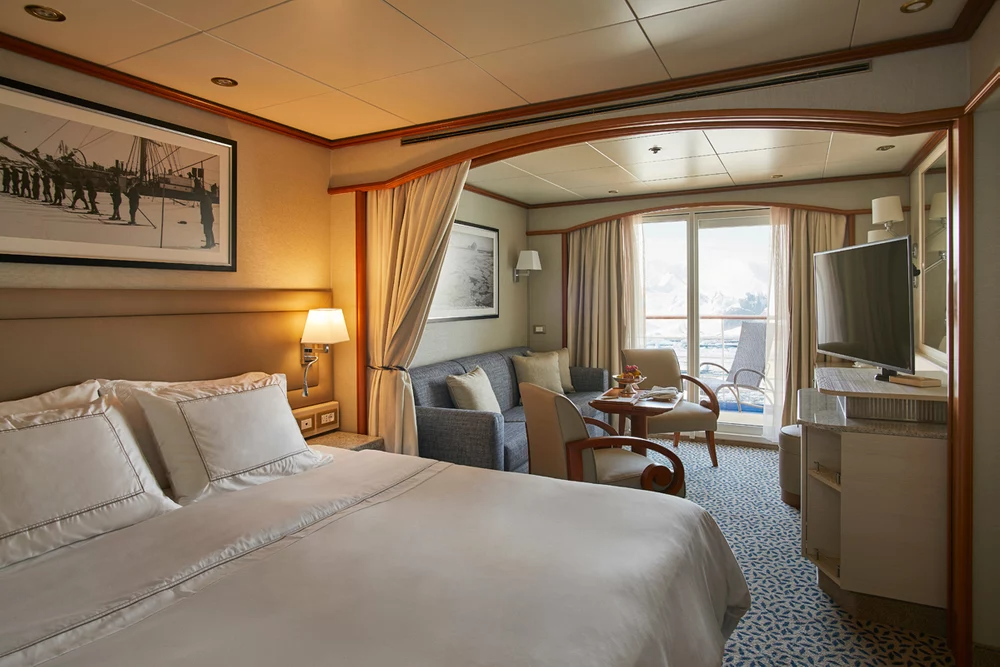
Cabin details
Suite
Code
SV
A Silversea signature, with a preferred central location, the Veranda Suite is spacious and welcoming.Floor-to-ceiling glass doors open onto a furnished private teak veranda from where you can contemplate anything from the midnight sun to an antarctic sunrise. The Deluxe Veranda Suite offers preferred central location with identical accommodation to a Veranda Suite. Veranda with patio furniture and floor-to-ceiling glass doors. Sitting area. Twin beds or queen-sized bed. Marble bathroom with shower (some with bath/shower combination). Walk-in wardrobe with personal safe. Writing desk. Hair dryer. Unlimited Standard Wifi.
Facilities and amenities
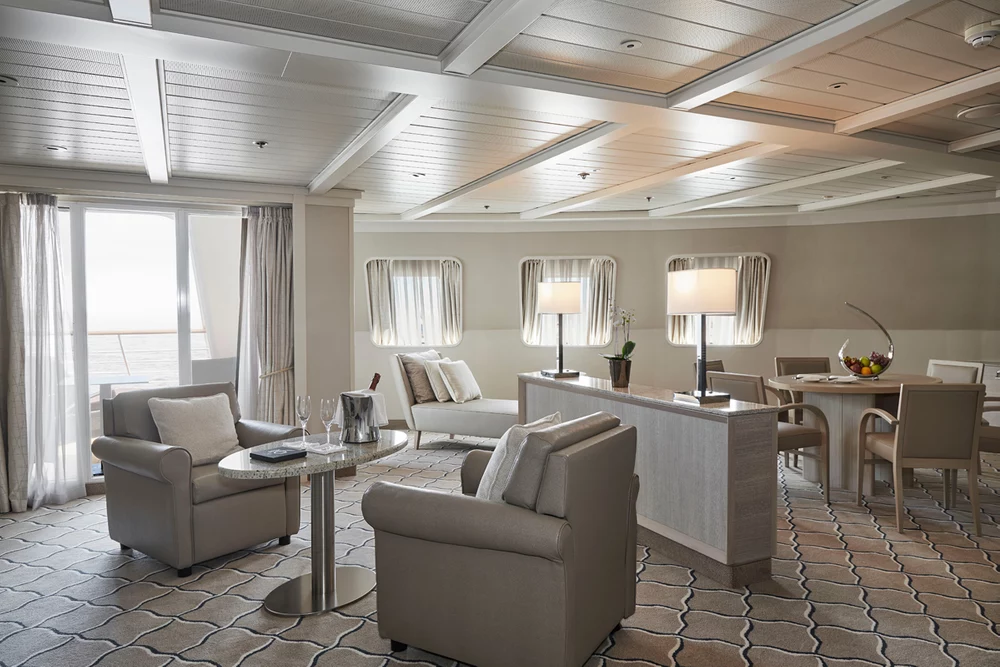
Cabin details
Suite
Code
G1
Deck
Deck 7
Expertly designed and exquisitely appointed. The ideal space for sharing stories with fellow explorers and new friends. With enough space to roam both in and outside, this suite is perfect relaxing and recounting the highlights of your day. Available as a one-bedroom configuration or as two-bedroom by adjoining with a Veranda Suite. Large veranda with patio furniture and floor-to-ceiling glass doors; bedroom two has additional large picture window. Living room with sitting area; bedroom two has additional sitting area. Separate dining area. Twin beds or queen-sized bed; bedroom two has additional twin beds or queen-sized bed. Marble bathroom with full-sized bath and separate shower; bedroom two has additional marble bathroom with shower (no bath as indicated in diagram). Walk-in wardrobe(s) with personal safe. Vanity table(s) with hair dryer. Writing desk(s). Bose Sound system with Bluetooth Connectivity. Unlimited Premium Wifi. Illy Espresso machine.
Facilities and amenities
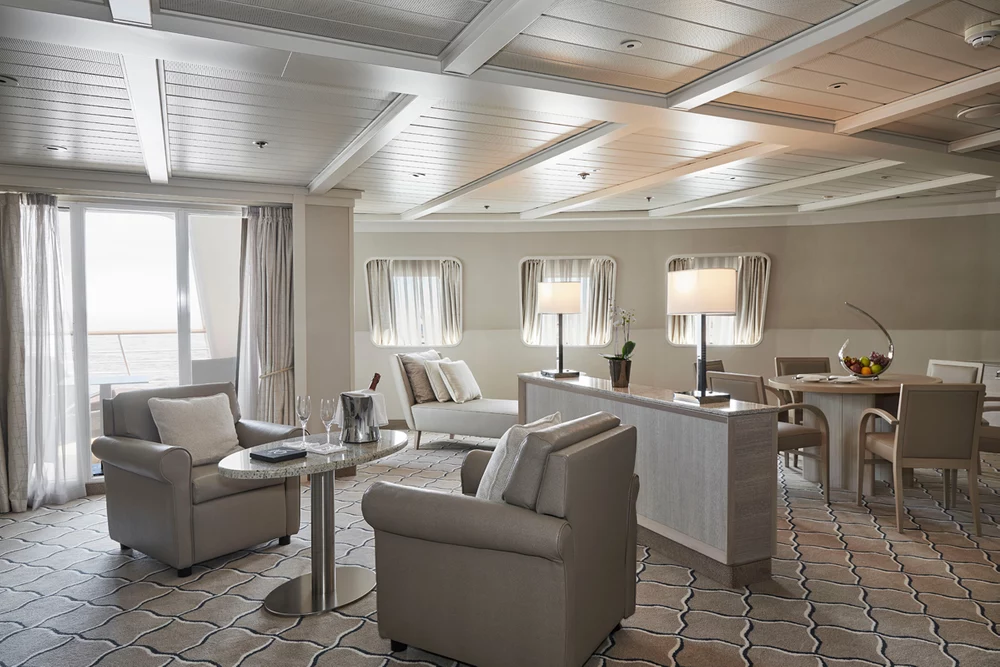
Cabin details
Suite
Code
G2
Expertly designed and exquisitely appointed. The ideal space for sharing stories with fellow explorers and new friends. With enough space to roam both in and outside, this suite is perfect relaxing and recounting the highlights of your day. Available as a one-bedroom configuration or as two-bedroom by adjoining with a Veranda Suite. Large veranda with patio furniture and floor-to-ceiling glass doors; bedroom two has additional large picture window. Living room with sitting area; bedroom two has additional sitting area. Separate dining area. Twin beds or queen-sized bed; bedroom two has additional twin beds or queen-sized bed. Marble bathroom with full-sized bath and separate shower; bedroom two has additional marble bathroom with shower (no bath as indicated in diagram). Walk-in wardrobe(s) with personal safe. Vanity table(s) with hair dryer. Writing desk(s). Bose Sound system with Bluetooth Connectivity. Unlimited Premium Wifi. Illy Espresso machine.
Facilities and amenities
Cabin details
Suite
Code
ME
Deck
Deck 5
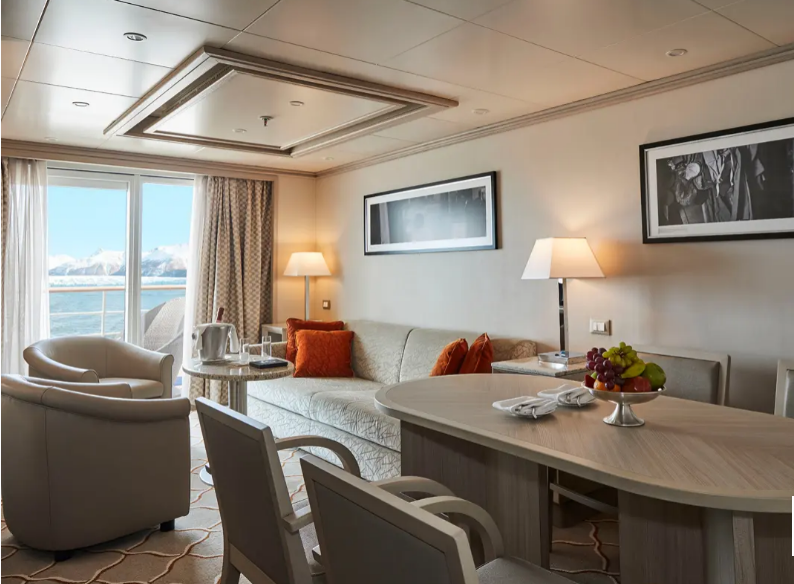
With a room configuration that favours watching the sun rise from the comfort of your bed and losing yourself in the mesmerising seascapes, this suite is the perfect answer to adventure cruising. A large walk-in wardrobe, and an expansive living make the Medallion Suite a your home away from home on the high seas. Medallion Suites accommodate three guests. Veranda with patio furniture and floor-to-ceiling glass doors. Living room with convertible sofa to accommodate an additional guest. Sitting area. Separate dining area. Twin beds or queen-sized bed. Medallion has marble bathroom with shower; Silver Suite has two bathrooms with shower. Walk-in wardrobe with personal safe. Vanity table with hair dryer. Writing desk. Bose Sound system with Bluetooth Connectivity. Unlimited Premium Wifi. Illy Espresso machine.
Facilities and amenities
Cabin details
Suite
Code
O1
Deck
Deck 7
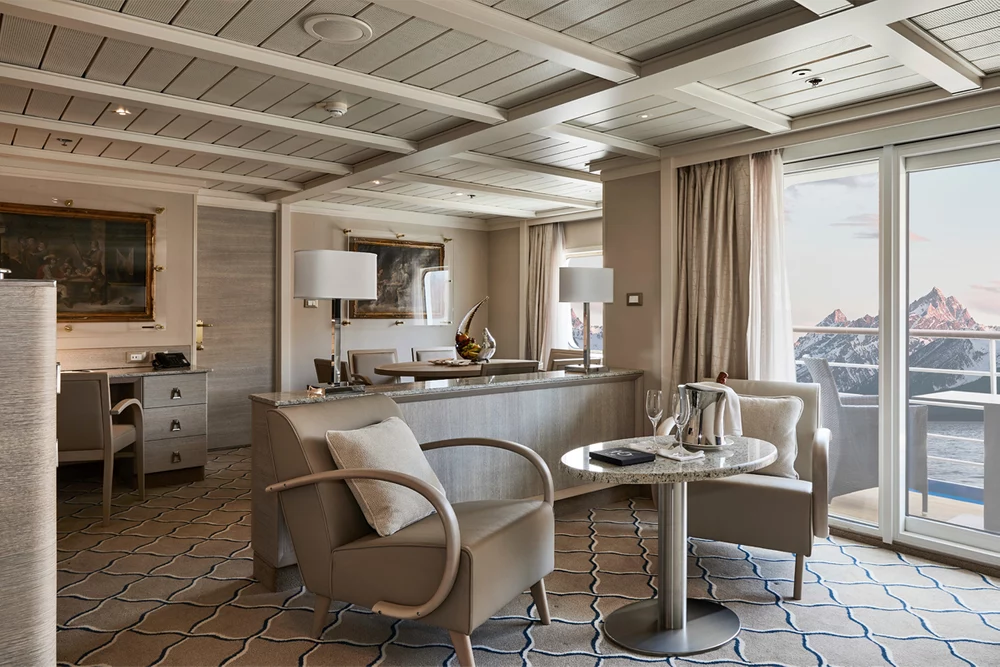
Available as a one-bedroom configuration oras two bedrooms (as illustrated) by adjoiningwith a Vista Suite. Large veranda with patio furniture and floor-to-ceiling glass doors; bedroom two has additional large picture window. Living room with sitting area; bedroom two has additional sitting area. Separate dining area. Twin beds or queen-sized bed; bedroom two has additional twin beds or queen-sized bed. Marble bathroom with full-sized bath and separate shower; bedroom two has additional marble bathroom with shower (no bath as indicated in diagram). Walk-in wardrobe(s) with personal safe. Vanity table(s) with hair dryer. Writing desk(s). Bose Sound system with Bluetooth Connectivity. Unlimited Premium Wifi. Illy Espresso machine.
Facilities and amenities
Cabin details
Suite
Code
O2
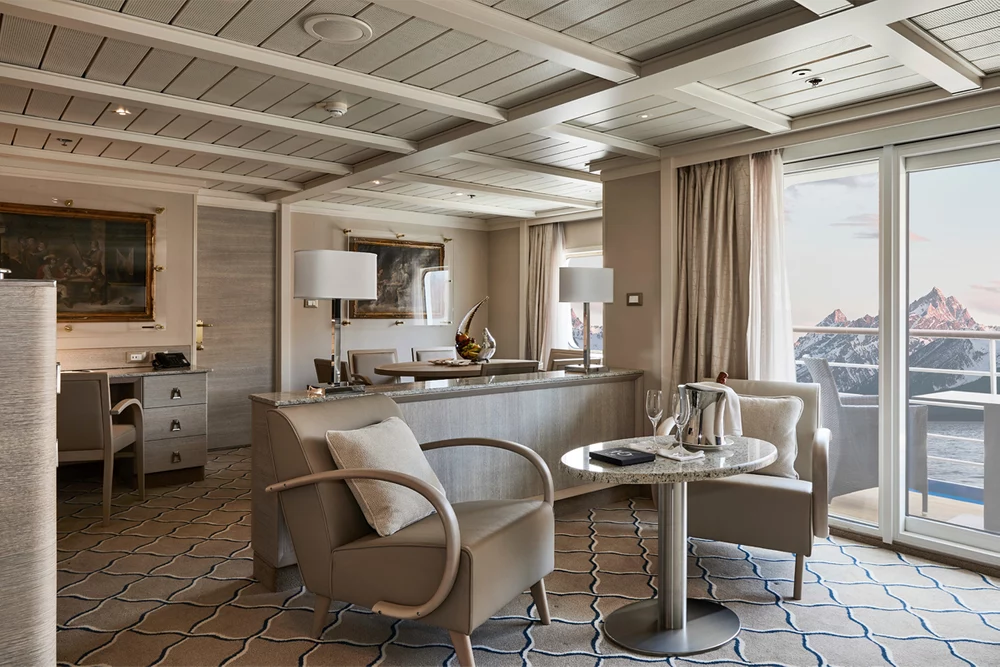
Available as a one-bedroom configuration oras two bedrooms (as illustrated) by adjoiningwith a Vista Suite. Large veranda with patio furniture and floor-to-ceiling glass doors; bedroom two has additional large picture window. Living room with sitting area; bedroom two has additional sitting area. Separate dining area. Twin beds or queen-sized bed; bedroom two has additional twin beds or queen-sized bed. Marble bathroom with full-sized bath and separate shower; bedroom two has additional marble bathroom with shower (no bath as indicated in diagram). Walk-in wardrobe(s) with personal safe. Vanity table(s) with hair dryer. Writing desk(s). Bose Sound system with Bluetooth Connectivity. Unlimited Premium Wifi. Illy Espresso machine.
Facilities and amenities
Cabin details
Suite
Code
R1
Deck
Deck 6
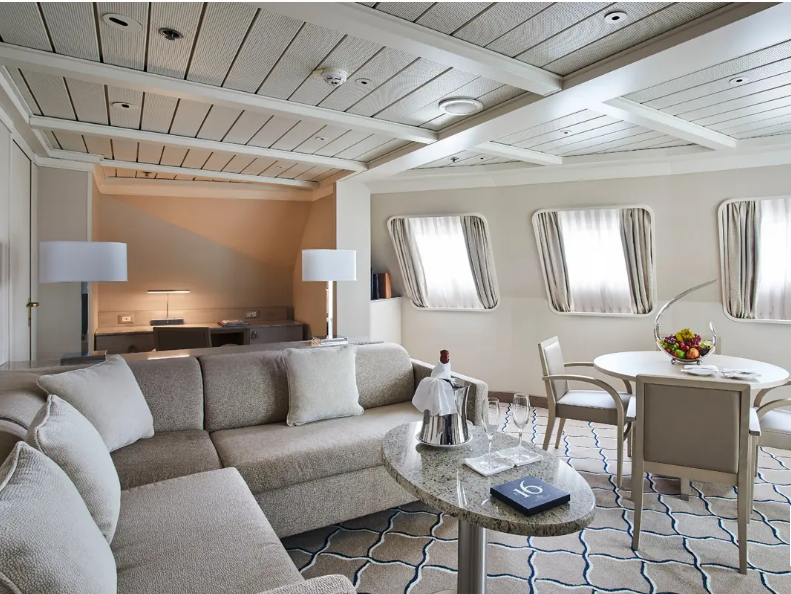
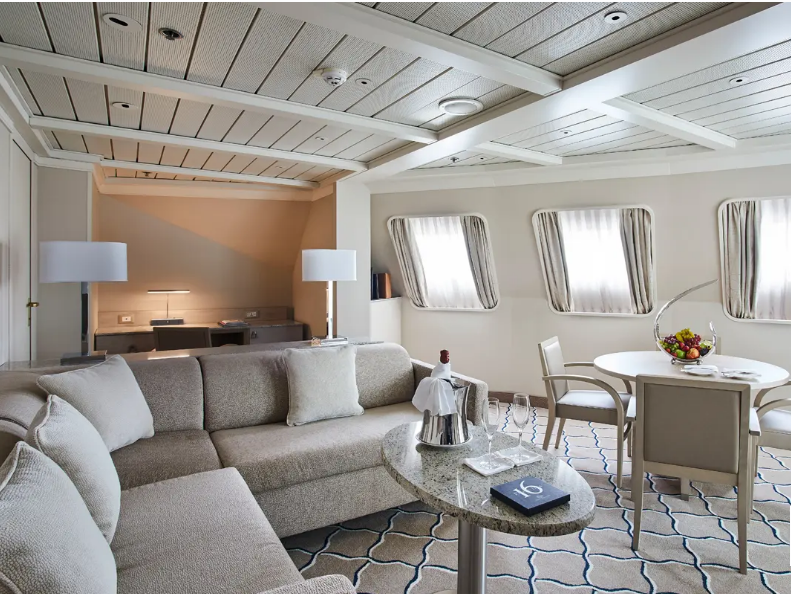
Stately. Commanding and majestic. Perfect for relaxing after a days’ exploring and looking through your photos. With lectures being streamed live to your room, this is the pinnacle of good living at sea. Available as a one-bedroom configuration or as two-bedroom by adjoining with a Veranda Suite. Large veranda with patio furniture and floor-to-ceiling glass doors; bedroom two has additional veranda. Living room with sitting area; bedroom two has additional sitting area. Separate dining area. Twin beds or queen-sized bed; bedroom two has additional twin beds or queen-sized bed. Marble bathroom with full-sized bath and separate shower; bedroom two has additional marble bathroom with shower (no bath as indicated in diagram). Walk-in wardrobe(s) with personal safe. Vanity table(s) with hair dryer. Writing desk(s). Bose Sound system with Bluetooth Connectivity. Unlimited Premium Wifi. Illy Espresso machine.
Facilities and amenities
Cabin details
Suite
Code
R2
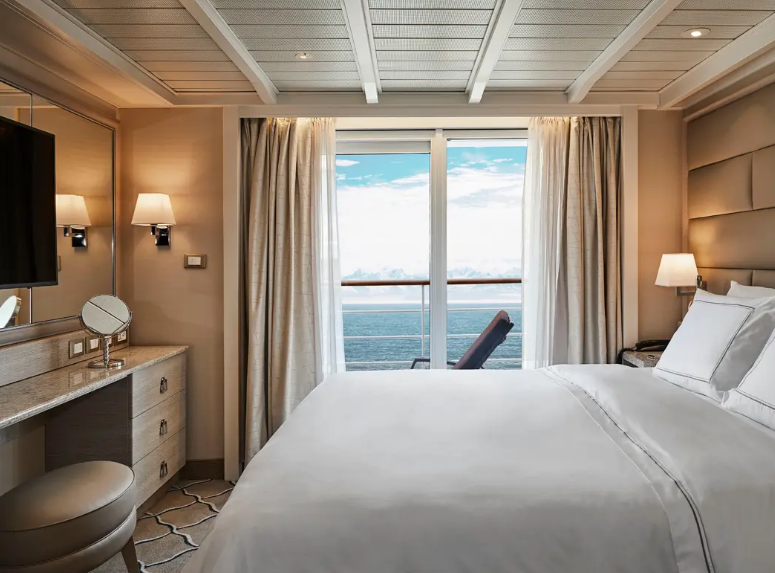
Stately. Commanding and majestic. Perfect for relaxing after a days’ exploring and looking through your photos. With lectures being streamed live to your room, this is the pinnacle of good living at sea. Available as a one-bedroom configuration or as two-bedroom by adjoining with a Veranda Suite. Large veranda with patio furniture and floor-to-ceiling glass doors; bedroom two has additional veranda. Living room with sitting area; bedroom two has additional sitting area. Separate dining area. Twin beds or queen-sized bed; bedroom two has additional twin beds or queen-sized bed. Marble bathroom with full-sized bath and separate shower; bedroom two has additional marble bathroom with shower (no bath as indicated in diagram). Walk-in wardrobe(s) with personal safe. Vanity table(s) with hair dryer. Writing desk(s). Bose Sound system with Bluetooth Connectivity. Unlimited Premium Wifi. Illy Espresso machine.
Facilities and amenities
Cabin details
Suite
Code
SL
Deck
Deck 6
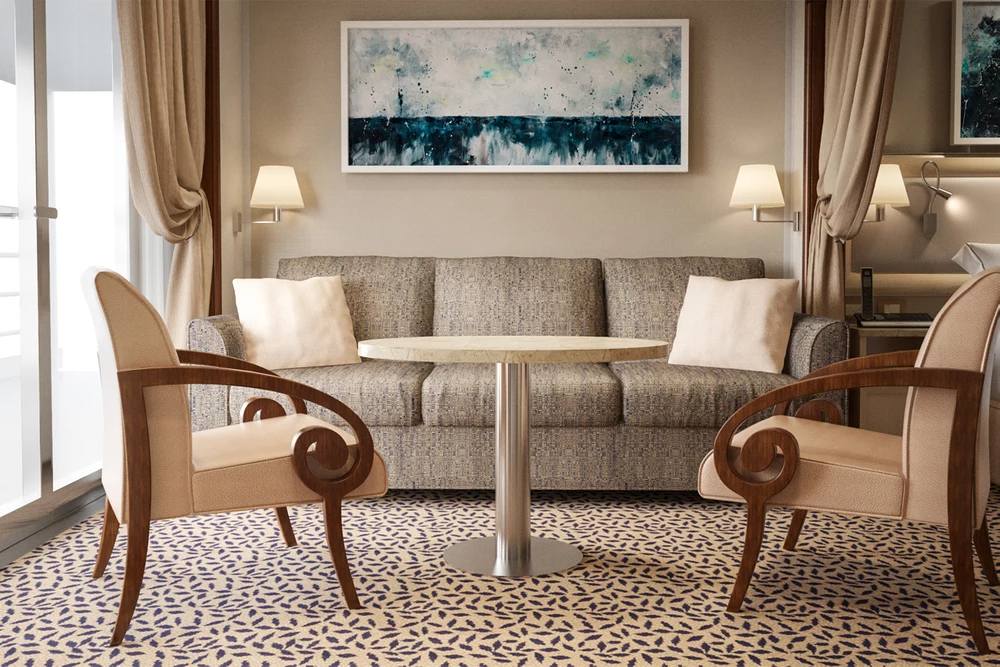
Stylish and sophisticated with larger verandas, excellent for taking pictures and bird-watching. Situated midship, this suite is perfection in design and comfortable living. A huge walk in wardrobe, a beautiful marbled bathroom and a spacious living area completes the picture. Silver Suites accommodate three guests. Veranda with patio furniture and floor-to-ceiling glass doors. Living room with convertible sofa to accommodate an additional guest. Sitting area. Separate dining area. Twin beds or queen-sized bed. Medallion has marble bathroom with shower; Silver Suite has two bathrooms with shower. Walk-in wardrobe with personal safe. Vanity table with hair dryer. Writing desk. Bose Sound system with Bluetooth Connectivity. Unlimited Premium Wifi. Illy Espresso machine.
Facilities and amenities
Cabin details
Suite
Code
CV
A Silversea signature, the Veranda Suite is spacious and welcoming. Floor-to-ceiling glass doors open onto a furnished private teak veranda from where you can contemplate anything from the midnight sun to an antarctic sunrise. Some Veranda Suites accommodate three guests (Suites going from 505 to 510 and from 605 to 610). The Deluxe Veranda Suite offers preferred central location with identical accommodation to a Veranda Suite. Veranda with patio furniture and floor-to-ceiling glass doors. Sitting area. Twin beds or queen-sized bed. Marble bathroom with shower (some with bath/shower combination). Walk-in wardrobe with personal safe. Writing desk. Hair dryer. Unlimited Standard Wifi.
Facilities and amenities
Cabin details
Suite
Code
VI
Deck
Deck 4
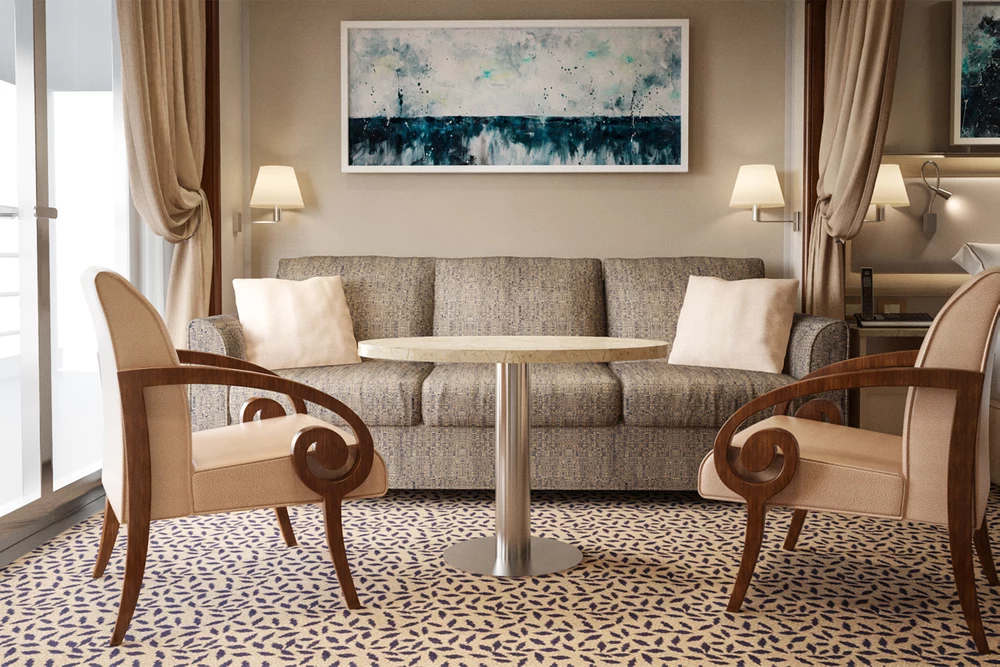
Your home away from home while you embrace the intrepid explorer within. The suite’s seating area has plenty of room to relax while you go over your notes, ready for the next adventure. Large picture windows frame panoramic ocean views, ideal for appraising the local wildlife. Large picture window providing panoramic ocean views. Sitting area. Twin beds or queen-sized bed. Marble bathroom with shower (some with bath/shower combination). Walk-in wardrobe with personal safe. Writing desk. Hair dryer. Unlimited Standard Wif.
Facilities and amenities
Cabin details
Suite
Code
VR
Deck
Deck 5
A Silversea signature, the Veranda Suite is spacious and welcoming. Floor-to-ceiling glass doors open onto a furnished private teak veranda from where you can contemplate anything from the midnight sun to an antarctic sunrise. Some Veranda Suites accommodate three guests (Suites going from 505 to 510 and from 605 to 610). The Deluxe Veranda Suite offers preferred central location with identical accommodation to a Veranda Suite. Veranda with patio furniture and floor-to-ceiling glass doors. Sitting area. Twin beds or queen-sized bed. Marble bathroom with shower (some with bath/shower combination). Walk-in wardrobe with personal safe. Writing desk. Hair dryer. Unlimited Standard Wifi.
Facilities and amenities