Back to cruise search
Home/Cruises/Southern Spain & Canary Islands
Southern Spain & Canary Islands from Barcelona, 30 Oct 2026 (18 nights)
4.0 ship ratingWind Spirit - Windstar Cruises

Cruise search
We are checking available sailings, ship details and guide prices for you.
Ask our cruise specialists about cruise line loyalty benefits, status match options, drinks packages, gratuities and any current offers available on this sailing.
Sail with confidence
We explain the relevant financial protection before you book.
Always here to help
When plans change, your cruise specialists are here to help.
Carefully selected cruises
From short breaks to big adventures, we help narrow down the right sailing.
Cruise summary
Gallery
Dining
1 of 13 onboard highlights
Your itinerary
Port descriptions and imagery are shown where available for each day or port.
Barcelona, the cosmopolitan capital of Spain’s Catalonia region, is known for its art and architecture. The fantastical Sagrada Família church and other modernist landmarks designed by Antoni Gaudí dot the city. Museu Picasso and Fundació Joan Miró feature modern art by their namesakes. City history museum MUHBA, includes several Roman archaeological sites
Tarragona is a port city in northeastern Spain’s Catalonia region. Many ancient ruins remain from its time as the Roman colony of Tarraco. The Amfiteatre Romà is a 2nd-century arena facing the Mediterranean, the Necropolis contains Roman tombs, and traces of the Forum stand among the alleys of the walled, medieval Old Town. A walkway along the ramparts, the Passeig Arqueològic, has sweeping views of the city.
Mallorca is an island of emerald mountains, turquoise seas, lemon and orange orchards, olive groves, and cedar-studded hills. In Palma, the capital, you’ll find a dramatic seafront cathedral to explore and leafy promenades to stroll. Visit the Arab Baths for a glimpse of the town’s Moorish past. Or simply enjoy the sun, sand, and sea that have beguiled celebrities, jet setters, and royal families for years.
Valencia is a focal point of art and imagination, where visitors can enjoy fascinating exhibitions in the city's many museums. The Museo de Bellas Artes (Fine Arts Museum) is one of the best of its kind, with a large collection of Gothic altarpieces as well as works by Sorolla, Velázquez, Van Dyck, Goya, Murillo and El Greco among others. The IVAM (Valencian Museum of Modern Art) offers the latest tendencies in contemporary art in its permanent and temporary exhibitions. The Marques de Dos Aguas Palace, seat of the National Ceramics Museum, is a building of intriguing beauty, a prime example of flamboyant Gothic architecture. The great sculpted alabaster doorway, by José Vergara, and the sumptuous rooms, are its most outstanding features.
Cartagena is a seaport in southeast Spain on the Mediterranean Sea, in the autonomous community of Murcia. It is a walled town and has a fine harbor defended by forts. In the time of Philip II of Spain, it was a major naval seaport of Spain. It is still an important naval seaport and a large naval shipyard is still in existence. There are plenty of parks and squares to rest in, surrounded by good restaurants and bars and you will almost certainly find life here very slow and easy going. The seashore offers a wide range of activities from sailing to windsurfing and good diving. The local countryside is perfect for hiking, horseriding and cycling. From Cartagena you can easily explore the ancient city of Murcia, the coastal resorts of Mazarrón, Cala Cortina and Cabo de Palos or a little further north, the world famous resort of Mar Meno
Malaga is the major coastal city of Andalucia and is a genuine and typical Andaluz city with a gritty individualism untouched by tourism and, to a large extent, the passage of time. The Moors occupied the city until the mid fifteenth century, after which it grew to become one of the foremost merchant centres in the entire Iberian Peninsula.
Malaga is the major coastal city of Andalucia and is a genuine and typical Andaluz city with a gritty individualism untouched by tourism and, to a large extent, the passage of time. The Moors occupied the city until the mid fifteenth century, after which it grew to become one of the foremost merchant centres in the entire Iberian Peninsula.
Tangier, a Moroccan port on the Strait of Gibraltar, has been a strategic gateway between Africa and Europe since Phoenician times. Its whitewashed hillside medina is home to the Dar el Makhzen, a palace of the sultans that's now a museum of Moroccan artifacts. The American Legation Museum, also in the medina, documents early diplomatic relations between the U.S. and Morocco in an 1821 Moorish-style former consulate.
One of Europe's smallest capital cities, Lisbon is for many, one of it most beguiling – an easily accessible mix of new and old worlds. Elegant outdoor cafés line Lisbon's mosaic cobblestone sidewalks along grand 18th-century boulevards. Turn-of-the-century funiculars dot its steep hills. Two-thirds of the city was leveled in a 1755 earthquake, but in its churches, peeling buildings, tiny alleyways, hidden squares, you can still feel the glorious past.
Funchal is the capital city of Portugal's Madeira archipelago. It's backed by hills, and known for its harbor, gardens and Madeira wine cellars. The centuries-old Funchal Cathedral, which mixes Gothic and Romanesque styles, is notable for its carved wooden ceiling. Fronting the harbor is the São Tiago Fortress, built in the 1600s. It now houses the Contemporary Art Museum, with a large collection of Portuguese works.
San Sebastián is a resort town on the Bay of Biscay in Spain’s mountainous Basque Country. It’s known for Playa de la Concha and Playa de Ondarreta, beaches framed by a picturesque bayfront promenade, and world-renowned restaurants helmed by innovative chefs. In its cobblestoned old town (Parte Vieja), upscale shops neighbor vibrant pintxo bars pairing local wines with bite-size regional specialties.
Santa Cruz de La Palma is the capital city of the island of La Palma, in Spain’s Canary Islands. It’s known for its centuries-old architecture, cobbled streets and busy port. A former convent hosts the Museum of the Island of La Palma, with an art collection and exhibits on natural history and ethnography. The Naval Museum is in a replica of Christopher Columbus's 15th-century Santa Maria sailing ship.
Las Palmas de Gran Canaria, the capital of the island, is located in the north-eastern part of the island set in a magnificent scenery composed of two bays and their beautiful beaches – Playa de las Canteras and Playa de las Alcaravaneras. Founded in 1478, Las Palmas de Gran Canaria boasts an important historical and cultural heritage, much of which can be found in the district of Vegueta, the oldest quarter of the town, which was declared a UNESCO World Heritage Site in 1990.
Santa Cruz de Tenerife is a province of Spain, consisting of the western part of the autonomous community of the Canary Islands. Around its important port are wide avenues, squares and exotic landscaped areas, not forgetting some beautiful examples of modernist architecture. Its privileged setting allows you to enjoy beautiful beaches such as las Teresitas, get to know the city of San Cristóbal de La Laguna, declared World Heritage, or visit the Teide National Park, the symbol of the island.
What's included
Fare overview
This sailing is shown as a cruise-only guide fare with Windstar Cruises. The fare is linked to the ship, itinerary and cabin category you choose. Drinks packages, gratuities, Wi-Fi, flights, transfers and shore experiences are only treated as included where they are confirmed before booking.
Sailing aboard
Wind Spirit
Your ship
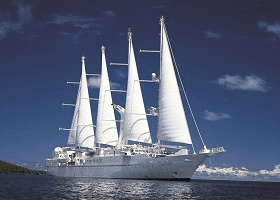
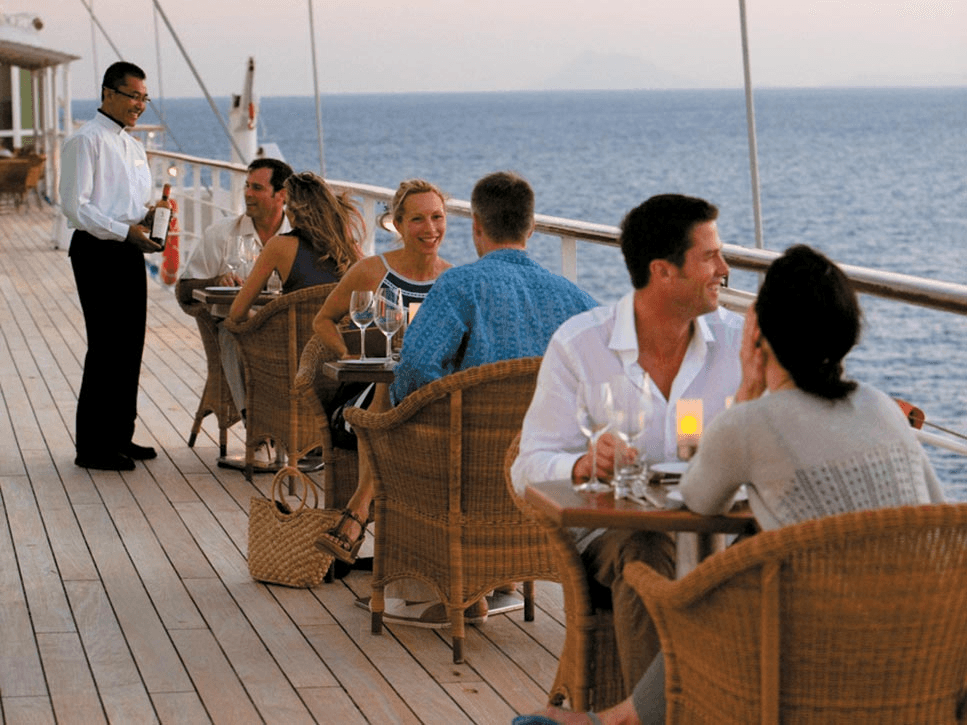
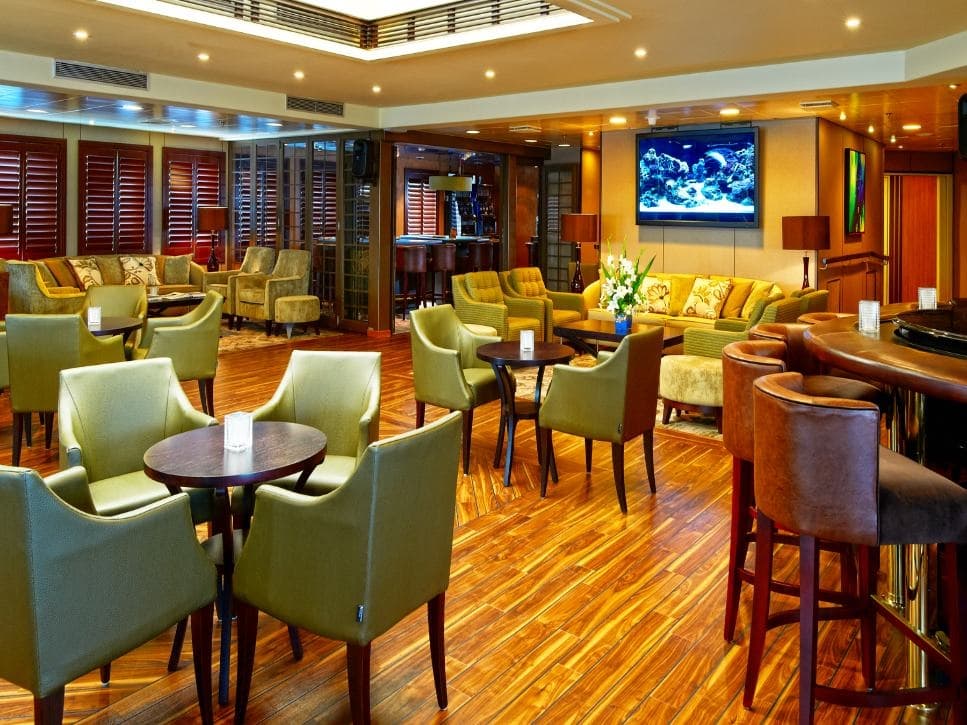
The Wind Spirit is a sleek, 4-masted sailing ship accommodating 148 guests. With four decks and a gross tonnage of 5,736, Wind Spirit feels like your own private small ship. Wind Spirit features wide open, teak decks—quite unusual for small ships. Guests will find hidden nooks for private moments giving them a feeling of being on their own private veranda. All staterooms have ocean views, queen beds, flat-screen TV with DVD player, and Bose SoundDock speakers for Apple iPods. The Owner’s Suite includes a sitting area. Wind Spirit offers two primary dining venues. Amphora restaurant offers gourmet, course-by-course cuisine in the evenings and Veranda restaurant offers casual buffet and full-service dining for breakfast and lunch. All dining is open seating. And, for dining under the stars, make a reservation for Candles which features steaks and skewers. Wind Spirit amenities include: WindSpa, Watersports Platform, Lounge, Library, Pool, and Hot Tub.
Onboard facilities
Bars/Lounges
Deck plans
Explore the ship deck by deck. Deck plans can change and should be checked before booking.
Deck 1

These facilities are available aboard the ship. Their deck locations can be confirmed before booking.
Match cabin grade codes and colours to the selected deck plan.
Choose your cabin
Compare the cabin types and onboard features shown for this sailing. Final price and availability are confirmed before booking.
Next step
Continue to a separate page to review cruise extras and booking options around this sailing.
More sailings
Use horizontal scrolling, touch swipes, or the arrow keys to browse.
Windstar Cruises - Wind Spirit
From
£3,675
Windstar Cruises - Wind Spirit
From
£3,199
Windstar Cruises - Wind Spirit
From
£9,190
Important information
ATOL protected holidays
Where your booking includes flights, ATOL protection applies so your money and travel arrangements are financially protected.
Travel Trust Association
Book with confidence through a Travel Trust Association member, with customer money protected under approved trust arrangements.
Low deposit options
Secure selected sailings with flexible low deposit options, then spread the remaining balance before you travel.
Excellent customer service
Our cruise specialists are here before, during and after booking. Send an enquiry or call 0161 222 0822 for friendly support.
Clear price checks
Live prices and cabin options are checked before you continue.
Use horizontal scrolling, trackpad gestures, touch swipes, or the arrow keys to browse cabin types.
Cabin details
Outside/Oceanview
Code
BX
Deck
Deck 1
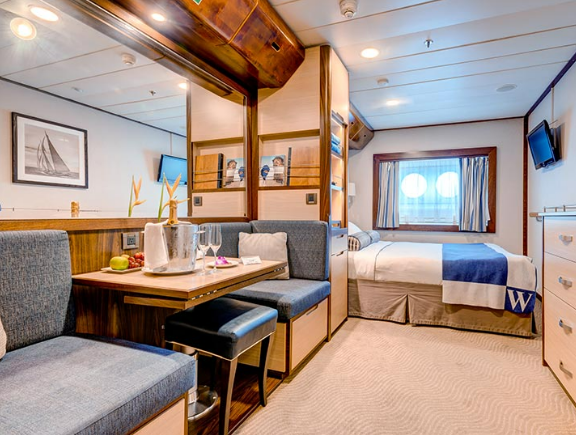
Every inch of your stateroom is designed for comfort. Luxurious Egyptian cotton linens wrap you in pleasant sleepiness as you stretch out in your queen bed (can be separated into twins if you prefer). Your spacious bath features granite counter tops, ample storage, and a roomy shower with massage shower head. L’Occitane bath products invite you to indulge, while comfy waffle-weave robe and slippers entice you to relax. You’ll find fresh fruit and flowers always waiting for you after a day of sun or sightseeing. And, of course, everything else you need and expect — flat-screen television and DVD, private safe. And always at your fingertips, anything you wish from room service.
Facilities and amenities
Cabin details
Outside/Oceanview
Code
AX
Deck
Deck 2
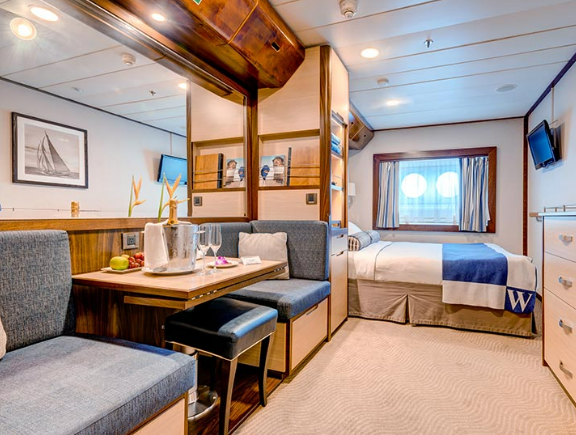
Every inch of your stateroom is designed for comfort. Luxurious Egyptian cotton linens wrap you in pleasant sleepiness as you stretch out in your queen bed (can be separated into twins if you prefer). Your spacious bath features granite counter tops, ample storage, and a roomy shower with massage shower head. L’Occitane bath products invite you to indulge, while comfy waffle-weave robe and slippers entice you to relax. You’ll find fresh fruit and flowers always waiting for you after a day of sun or sightseeing. And, of course, everything else you need and expect — flat-screen television and DVD, private safe. And always at your fingertips, anything you wish from room service.
Facilities and amenities
Cabin details
Outside/Oceanview
Code
A
Deck
Deck 2
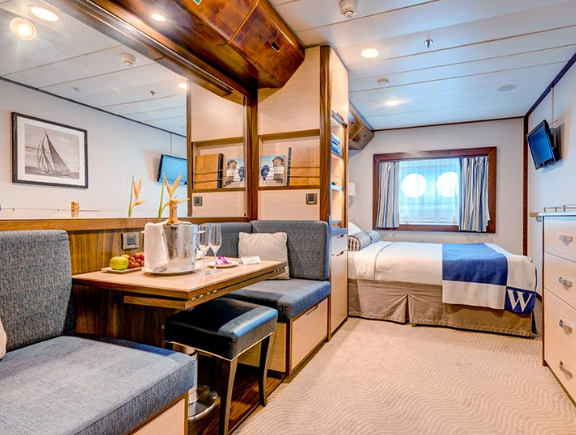
Every inch of your stateroom is designed for comfort. Luxurious Egyptian cotton linens wrap you in pleasant sleepiness as you stretch out in your queen bed (can be separated into twins if you prefer). Your spacious bath features granite counter tops, ample storage, and a roomy shower with massage shower head. L’Occitane bath products invite you to indulge, while comfy waffle-weave robe and slippers entice you to relax. You’ll find fresh fruit and flowers always waiting for you after a day of sun or sightseeing. And, of course, everything else you need and expect — flat-screen television and DVD, private safe. And always at your fingertips, anything you wish from room service.
Facilities and amenities
Cabin details
Outside/Oceanview
Code
B
Deck
Deck 1
Every inch of your stateroom is designed for comfort. Luxurious Egyptian cotton linens wrap you in pleasant sleepiness as you stretch out in your queen bed (can be separated into twins if you prefer). Your spacious bath features granite counter tops, ample storage, and a roomy shower with massage shower head. L’Occitane bath products invite you to indulge, while comfy waffle-weave robe and slippers entice you to relax. You’ll find fresh fruit and flowers always waiting for you after a day of sun or sightseeing. And, of course, everything else you need and expect — flat-screen television and DVD, private safe. And always at your fingertips, anything you wish from room service.
Facilities and amenities
Cabin details
Suite
Code
OW
Size
220 square feet
Deck
Deck 1
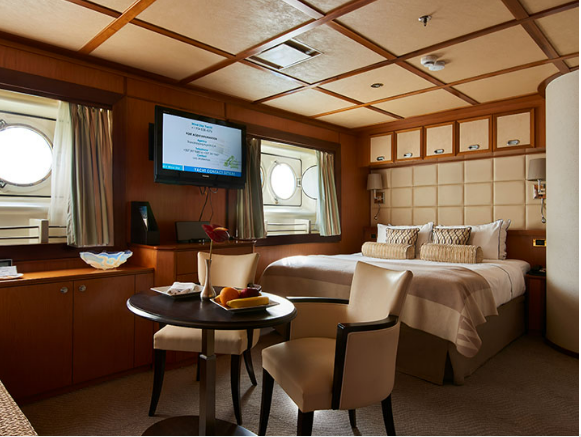
With an expansive 220 square feet, the Owner’s Suite gives you everything offered in a stateroom, plus lots more, including a beautiful sitting area and separate in-room dining space.
Facilities and amenities