
Denmark, Norway & Sweden Combination Cruise: Copenhagen, Trondheim & Stockholm
Azamara · Azamara Quest
Depart
Jul 19, 2027
Return
Aug 13, 2027
Port
Copenhagen, Denmark
Nights
25 nights
At a glance
- Launched
- 2007
- Tonnage
- 30277
- Cabins
- 355
- Crew
- 408
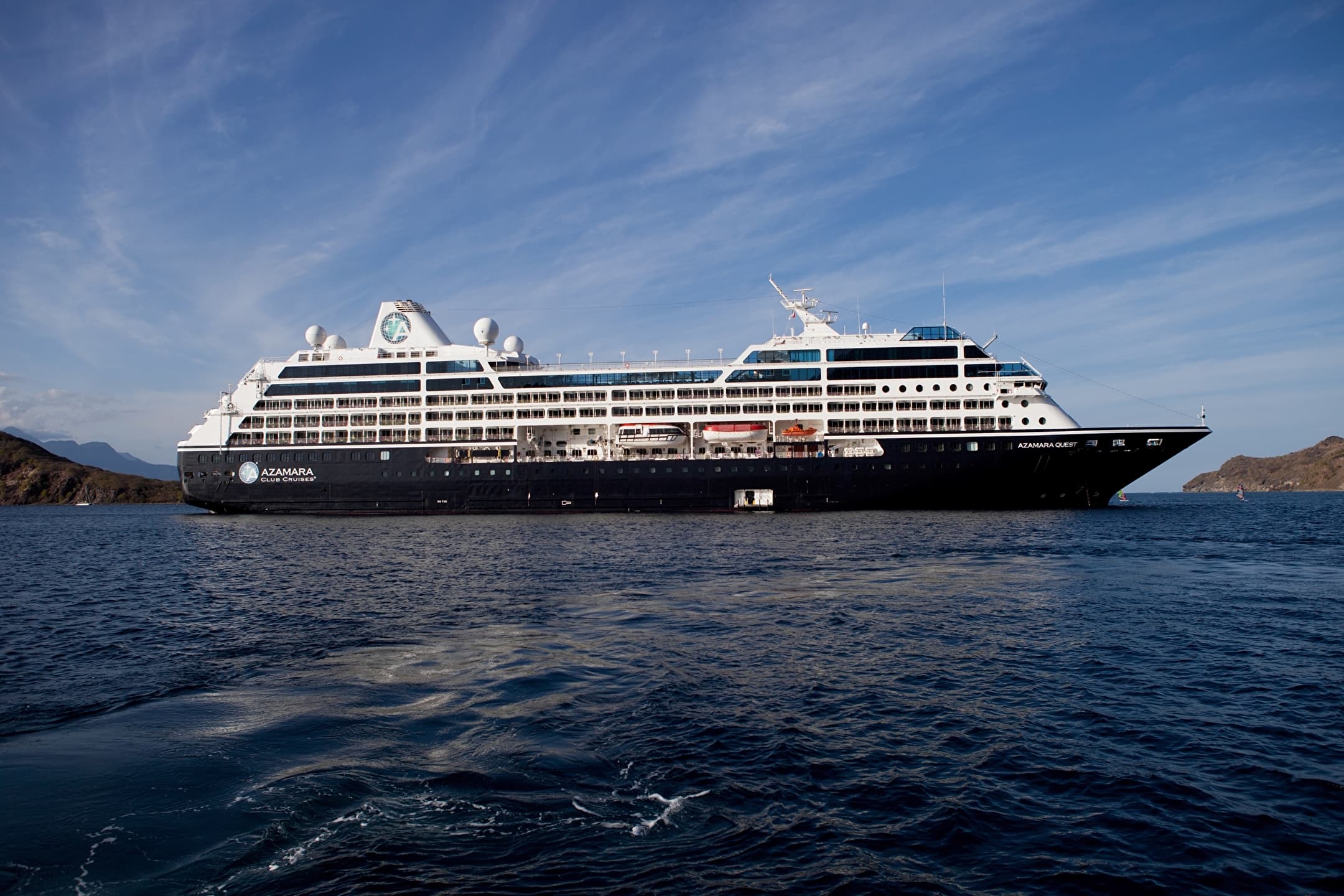
Your boutique hotel at sea, the Azamara Quest is a mid-sized ship with a deck plan that’s intimate but never crowded, and offers everything modern voyagers are looking for—plus some unexpected extras. Across the fleet, our authentic service goes beyond the expectations of even the most well-traveled cruisers. Friendly and approachable, our staff are attentive, and happy to offer everything from poolside service to recommendations for your on-shore exploration. After all, we love sailing the world just as much as you do! Re-imagined staterooms include modern amenities, furnishings, and European linens. Plus the ship features a large number of staterooms and suites with verandas, perfect for starting your day with fresh sea air and stunning views. Add to all of that world-class dining options, spa experiences to relax and refresh, and all-new entertainment offerings, you’ve got an onboard experience that’s matched only by the immersive cultural encounters we’ve got in store on shore.
Ship features
- Drawing Room
- Restaurant
- Aqualina Restaurant
- Sanctum Spa
Ask our cruise specialists about cruise line loyalty benefits, status match options, drinks packages, gratuities and any current offers available on this sailing.
On board

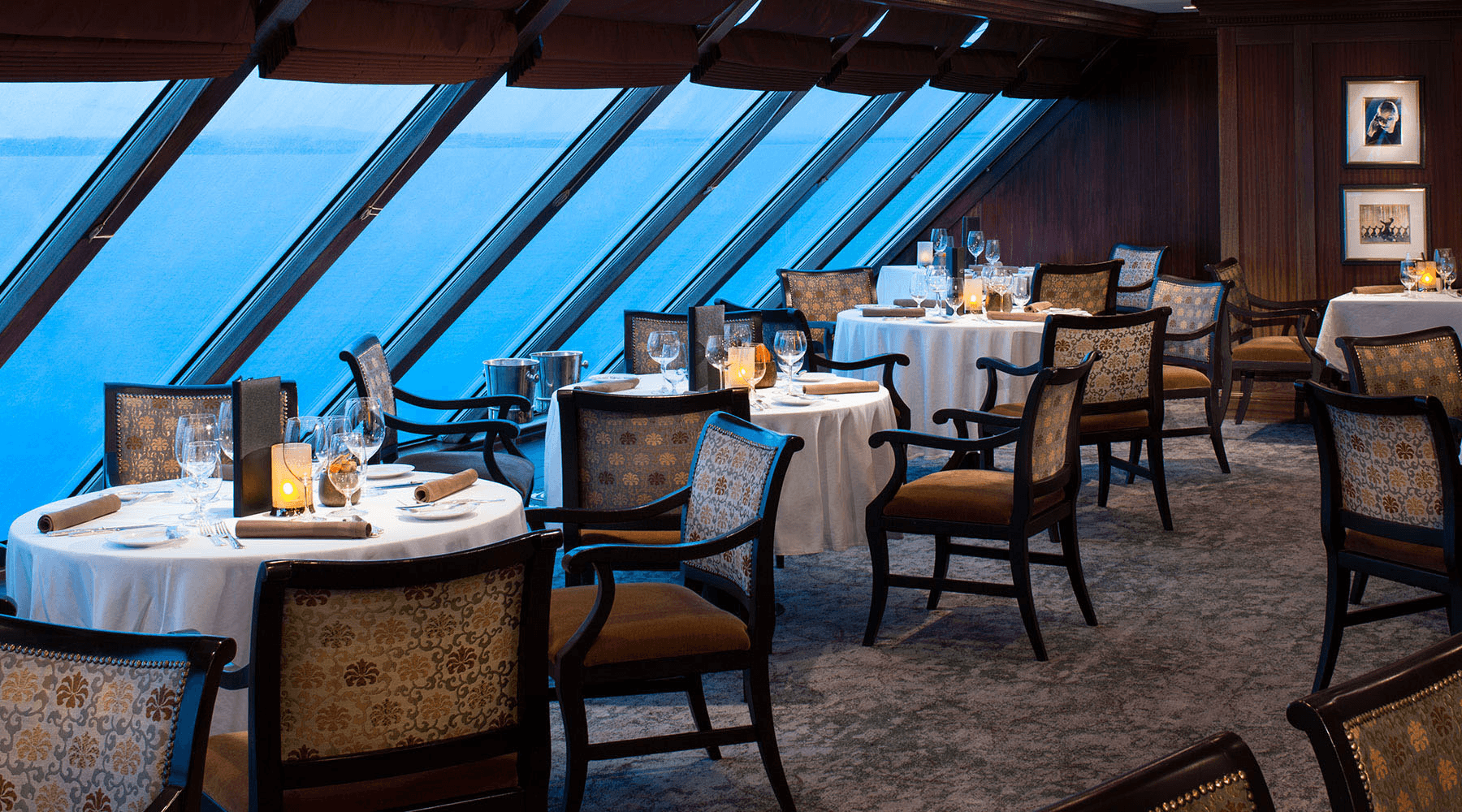
Aqualina Restaurant
Onboard Dining

Restaurant
Itinerary
- 1Copenhagen, DenmarkDays 1, 11
- 2SkagenDay 2
- 3Skjolden, NorwayDay 4
- 4AlesundDay 5
- 5TrondheimDay 6
- 6StavangerDay 8
- 7ArendalDay 9
- 8Gothenburg, SwedenDay 10
- 9VisbyDay 12
- 10StockholmDay 13
- 11TurkuDay 15
- 12HelsinkiDay 16
- 13TallinnDay 17
- 14RigaDay 19
- 15Gdansk (Gdynia), PolandDay 21
- 16Ronne, BornholmDay 22
- 17WismarDay 23
- 18Kiel CanalDay 24
- 19Portsmouth, UKDay 26
Port locations are shown; visiting order is not confirmed on this map. 1 port location is not available.
Cruise from Copenhagen, Denmark to Portsmouth, UK
Day 1Cruise departs from Copenhagen, DenmarkJul 19, 2027 • Departs at: 5 pm
Copenhagen is known as a city of spires: the skyline of its medieval core is punctuated only by the steeples of churches and towers of palaces, though a modern building boom has overtaken other parts of the city. Today's Copenhagen is known for its excellent quality of life and environmental consciousness - with many parks, it is green both literally and in today's sense of the word. It is also bicycle-friendly, with bike paths lining almost every major street. After a ride or wander through the old town, stop for a local repast of Smørrebrød, traditional open-face sandwiches, or a mouthwatering Danish pastry.
Day 2SkagenJul 20, 2027 • Arrives at: 8 am • Departs at: 5 pm
This seaside town is one of Denmark’s main fishing ports, a cute little get-away destination with lovely beaches. In the late 19th century the wild landscape and quality of light drew the attention of artists, who came to paint and take a break from the city. They became quite famous as the Skagen School, and some of their work is featured in the local art museum. Each July the town hosts a major folk festival, with performances by bands from around the world – folk, folk rock, jazz, ballads, blues, and perhaps some never before heard new variations on the theme.
Day 3At SeaJul 21, 2027
Day 4Skjolden, NorwayJul 22, 2027 • Arrives at: 8 am • Departs at: 8 pm
Day 5AlesundJul 23, 2027 • Arrives at: 8 am • Departs at: 8 pm
Alesund's architecture is known far and wide. Turrets, spires, and other whimsical Art Nouveau architectural touches give the town its distinctive character like something from a fairytale. The scenic spectacle of the Geirangerfjord, one of Norway's best-known attractions, is just a stone's throw from this quaint little town.
Day 6TrondheimJul 24, 2027 • Arrives at: 8 am • Departs at: 10 pm
A city founded over 1,000 years ago is certain to be rich in history and culture. Now the country’s third largest municipality, it’s been Norway’s capital city, a site of countless coronations, and an important pilgrimage for worshipers of the Christian faith. Today, Trondheim is a vibrant, youthful city that embraces the simplicity of Scandinavian life. But don’t let this laid back lifestyle fool you— there is so much to discover beneath Trondheim’s calm exterior.
Day 7At SeaJul 25, 2027
Day 8StavangerJul 26, 2027 • Arrives at: 7 am • Departs at: 6 pm
Stavanger is a fascinating blend of old and new – from the Middle Ages when Vikings ruled the seas to today’s North Sea drilling platforms that have made Norway one of the world’s leading oil producers. Echoing this duality is the contrast of modern architecture and trendy, stylish cafés with ancient cobblestone walkways, and rows of 18th-century whitewashed wooden houses. As you wander around town, keep your eyes open for the 23 identical cast iron figures by sculptor Antony Gormley that are scattered about. They are six feet tall and all face 10° west.
Day 9ArendalJul 27, 2027 • Arrives at: 9 am • Departs at: 10 pm
Arendal is a city in Agder county, Norway. The city is the administrative centre of the municipality of Arendal and the seat of the County Governor of Agder. The city also includes a small area in the neighboring municipality of Grimstad as well.
Day 10Gothenburg, SwedenJul 28, 2027 • Arrives at: 8 am • Departs at: 5 pm
Gothenburg, a major city in Sweden, is situated off the Göta älv river on the country's west coast. An important seaport, it's known for its Dutch-style canals and leafy boulevards like the Avenyn, the city's main thoroughfare, lined with many cafes and shops. Liseberg is a popular amusement park with themed rides, performance venues and a landscaped sculpture garden.
Day 11Copenhagen, DenmarkJul 29, 2027 • Arrives at: 6:30 am • Departs at: 5 pm
Copenhagen is known as a city of spires: the skyline of its medieval core is punctuated only by the steeples of churches and towers of palaces, though a modern building boom has overtaken other parts of the city. Today's Copenhagen is known for its excellent quality of life and environmental consciousness - with many parks, it is green both literally and in today's sense of the word. It is also bicycle-friendly, with bike paths lining almost every major street. After a ride or wander through the old town, stop for a local repast of Smørrebrød, traditional open-face sandwiches, or a mouthwatering Danish pastry.
Day 12VisbyJul 30, 2027 • Arrives at: 1:30 pm • Departs at: 7 pm
Visby boasts a rich history with tales of the Viking Age when it was a stronghold and trading post, a flourishing medieval period, and its membership in the powerful Hanseatic League. Today Visby is best known as the Town of Roses and Ruins; you can stop and smell the blooms in all their glory in the Botanical Garden, and visit an array of impressive ruined medieval churches. Wander a maze of cobbled streets in the old walled city, bicycle through beguiling countryside and dramatic coastal scenery, cast a line on a fishing expedition, or take a few swings at one of the seven excellent golf courses.
Day 13StockholmJul 31, 2027 • Arrives at: 8 am
Lively, cosmopolitan Stockholm sports an appealing mix of modern Scandinavian architecture and fairy tale palaces, watched over by a Board of Beauty, responsible for preserving the city. One third of its area is devoted to green space, and another third to waterways, providing lots of room to breathe. Gamla Stan is the oldest section, retaining the medieval layout of narrow meandering paths. For the contemporary take there's Sodermalm, known trendily as SoFo, with welcoming restaurants and pubs, specialty shops and boutiques. Stieg Larson fans hang out here, as it is the area of the city where most action in the Millennium novels takes place.
Day 14StockholmAug 1, 2027 • Departs at: 4 pm
Lively, cosmopolitan Stockholm sports an appealing mix of modern Scandinavian architecture and fairy tale palaces, watched over by a Board of Beauty, responsible for preserving the city. One third of its area is devoted to green space, and another third to waterways, providing lots of room to breathe. Gamla Stan is the oldest section, retaining the medieval layout of narrow meandering paths. For the contemporary take there's Sodermalm, known trendily as SoFo, with welcoming restaurants and pubs, specialty shops and boutiques. Stieg Larson fans hang out here, as it is the area of the city where most action in the Millennium novels takes place.
Day 15TurkuAug 2, 2027 • Arrives at: 8 am • Departs at: 8 pm
Day 16HelsinkiAug 3, 2027 • Arrives at: 8 am • Departs at: 10 pm
Helsinki is a successful blend of traditional and modern architecture and design, interwoven with the beauty of nature, and a few quirky, purely Finnish touches - such as a church built inside a giant chunk of granite, and a venue that is a unique combination of café, restaurant, bar, laundromat, and sauna. Classic Russian onion-domed churches share the stage with Nordic minimalism, and a large concentration of Art Nouveau buildings. Prominent globally in the fields of technology (think Nokia) and design (Marimekko and Aero), Finland has also recently topped the charts as having the world's best educational system.
Day 17TallinnAug 4, 2027 • Arrives at: 8 am • Departs at: 10 pm
Despite occupation at one time or another by each of its near neighbors, Tallinn is independent-minded and has creative ways of showing it - consider the Singing Revolution of 1988, the massive musical demonstration against Soviet rule that set Estonia on the path to independence. Visit St Olav's Church, once the tallest building in the world, at least until 1625. Then pull up a chair at one of the cafés in the charming town square, heart of the city for 800 years. After your coffee, explore St. Catherine's Passage, a quaint old lane, home to a collection of craft workshops, and check out the secret 17th C. tunnel system.
Day 18At SeaAug 5, 2027
Day 19RigaAug 6, 2027 • Arrives at: 7 am • Departs at: 6 pm
Riga’s Old Town is a UNESCO World Heritage site, its winding, wobbly lanes are beautiful to wander through. But the most outstanding are the avenues of art nouveau buildings some, with their adornments of femmes fatales and fiendish gargoyles, are so amazing you can’t pass without stopping.
Day 20Klaipeda, LithuaniaAug 7, 2027 • Arrives at: 1 pm • Departs at: 10 pm
Walk the cobblestoned Old Town in Klaipėda and you’ll see its German heritage in the half-timbered architecture, beginning at Theatre Square where Hitler once spoke. The old warehouses by the Dane River are now pubs and restaurants - try a traditional Lithuanian lunch of fish stew with warm black bread. There’s a museum in the remnants of Memelburg Castle with fascinating photos from WWII, the Blacksmith Museum with intriguing iron works, and the Clock Museum with, well, clocks.
Day 21Gdansk (Gdynia), PolandAug 8, 2027 • Arrives at: 8 am • Departs at: 10 pm
Gdańsk is a 1,000-year-old port city on the Baltic coast of Poland, which, together with the city of Gdynia and the town of Sopot, makes up the metropolitan area Trójmiasto, “the Tricity”. Home to the Westerplatte, where World War II broke out in 1939, Gdańsk was mostly destroyed during the war, but there are still many impressive sights. Wander through cobblestone streets and mazes of red-brick buildings to discover the Upland Gate, St. Mary’s Church, the medieval Gdańsk Crane or the stunning façade of the Great Arsenal. Explore treasures of “Baltic Gold” at the Amber Museum or collections of paintings, fabrics, and furniture at the National Museum, housed in a former Franciscan monastery. Relax at a beer garden or restaurant and take in the beautiful coastline. Make your way to Gdynia, home of the Polish navy, to feast on seafood or a visit to a floating museum in the form of two ships—Dar Pomorza and Blyskawica.
Day 22Ronne, BornholmAug 9, 2027 • Arrives at: 1 pm • Departs at: 8 pm
The island of Bornholm is a far-flung bit of Denmark that appears to have gotten lost in the Baltic Sea between Sweden and Poland. It boasts numerous picturesque fishing villages and 15 medieval churches, some of which are 12th century round structures with unique artwork and architecture. Take a stroll down quiet cobbled lanes in the old part of the capital, Ronne, a garden town, where backyard plots produce flowers and fruit, though they may not be easy to spot behind the fine half-timbered houses. Wednesday is market day on the main square of St. Tory, a great opportunity to chat up the locals, and see what’s on offer at their stalls.
Day 23WismarAug 10, 2027 • Arrives at: 8 am • Departs at: 10 pm
Once a small, medieval port in northern Germany on the Baltic Sea, Wismar is now a UNESCO World Heritage Site. Take a walk through the city’s storybook-like streets, and it’s easy to see why: the Wassertor (water gate), is the last surviving medieval gate; the 13th century ruin of St. Mary, Marienkirche, and its towering steeple, is the last remaining original Brick Gothic structure; and the church of St. Nicholas, St-Nikolai-Kirche, is the largest of its kind in Europe. The heart of the old town is Wismar’s Market Place, with architecture as varied as it is beautiful—German Gothic to Romanesque revival to Art Nouveau. Visit the historical museum Schabbellhaus, housed in a former brewery, then make your way back to the picturesque old harbor. Take a boat cruise, admire the reconstructed Hanseatic "Wissemara", or enjoy a traditional Baltic lunch such as fischbrötchen, a small bag of smoked shrimp.
Day 24Kiel CanalAug 11, 2027 • Arrives at: 6 am • Departs at: 5 pm
Day 25At SeaAug 12, 2027
Day 26Cruise returns to Portsmouth, UKAug 13, 2027 • Arrives at: 6:30 am
Cabin options
Choose your cabin type, compare its fares, then pick your cabin. Prices and availability are checked for your party.
See cabins to check current grades, prices and availability for your party.
Next step
Choose your cabin type
View every cabin grade and current availability on the next step.