
22-Day Riviera Icons, Wild British Isles & Irish Shores
Seabourn · Seabourn Pursuit
Depart
May 23, 2028
Return
Jun 14, 2028
Port
Genoa, Italy
Nights
22 nights
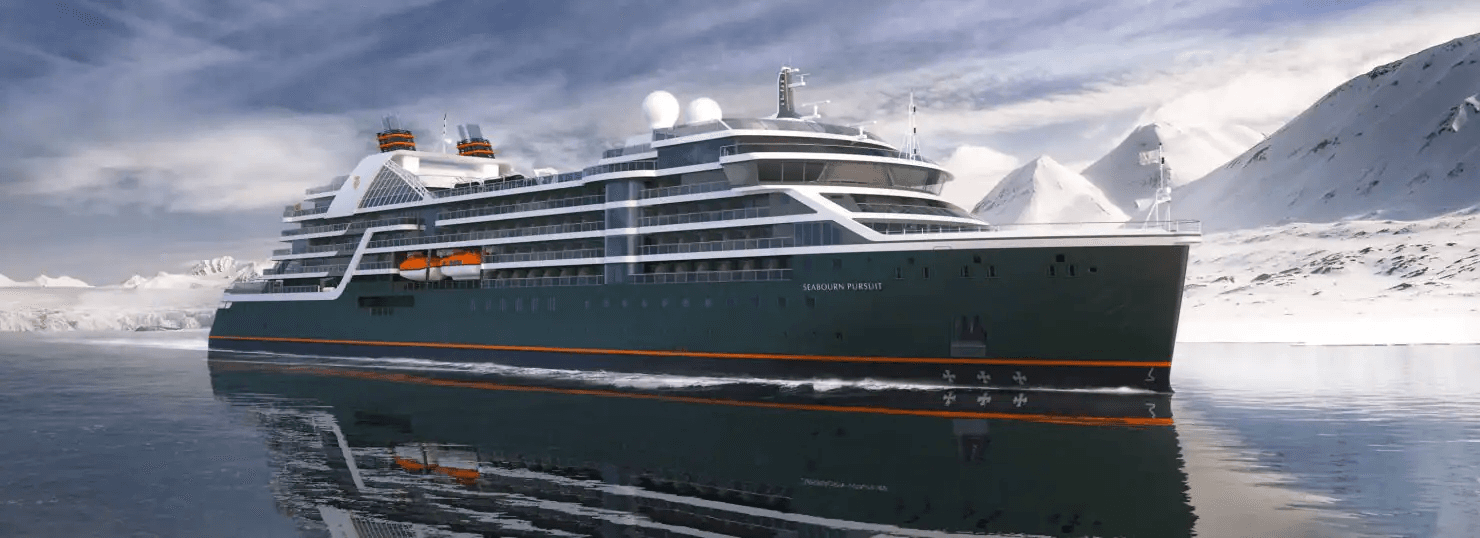
At a glance
- Built
- 2023
- Tonnage
- 23000
- Cabins
- 132
- Crew
- 120
Construction for Seabourn Pursuit began in fall 2020 during a ceremony in San Giorgo di Nogare, Italy, and the build process is well underway. The ship is scheduled for delivery in 2023, with its sister ship, Seabourn Venture, slated for delivery in 2022. Seabourn Pursuit is the second Seabourn expedition ship slated to launch in 2023.
Ask our cruise specialists about cruise line loyalty benefits, status match options, drinks packages, gratuities and any current offers available on this sailing.
On board

Bowlounge

Colonnade
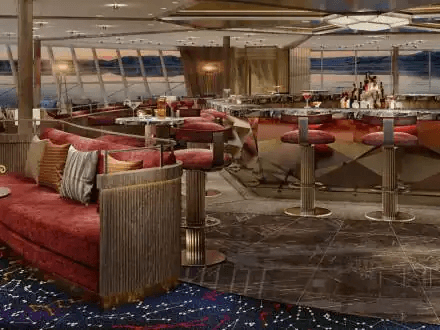
Constellationlounge

Discoverycenter

Expeditionlounge

Landing
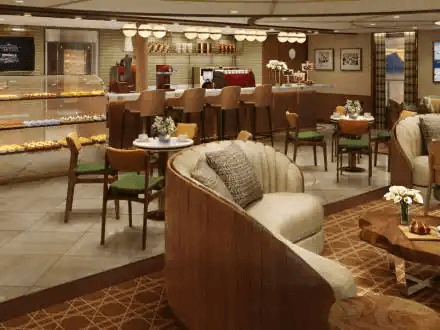
Pursuit square
Itinerary
Cruise from Genoa, Italy to Belfast
Day 1GenoaMay 23, 2028 • Departs at: 5 pm
Genoa (Genova) is a port city and the capital of northwest Italy's Liguria region. It's known for its central role in maritime trade over many centuries. In the old town stands the Romanesque Cathedral of San Lorenzo, with its black-and-white-striped facade and frescoed interior. Narrow lanes open onto monumental squares like Piazza de Ferrari, site of an iconic bronze fountain and Teatro Carlo Felice opera house.
Day 2St Tropez, FranceMay 24, 2028 • Arrives at: 8 am • Departs at: 6 pm
On the southern shore of one of the most beautiful bays of the Riviera, the little port of St. Tropez has become one of the best known resorts in Europe, a crossroads where journalists, photographers, writers, artists and celebrities meet. Guy de Maupassant discovered the town, but it was the painters who made it more widely known - Signac, Matisse, Bonnard, Marquet, Camoin - who all stayed for varying amounts of time. The harbor teems with life. Fishing boats, excursion craft and hundreds of yachts share the harbor. On the waterfront are old pink and yellow houses, which have been converted into cafes, cabarets and restaurants, luxury boutiques, galleries and antique shops. A picturesque and cosmopolitan crowd strolls the streets in season.
Day 3Port Vendres, FranceMay 25, 2028 • Arrives at: 8 am • Departs at: 6 pm
The gem of the Vermillion Coast, the chosen retreat of kings past, the inspiration of great 20th-century artists, Collioure is nestled in a small, rocky bay, dwarfed by the Alberes Mountains. The village is perfectly integrated into the countryside; the church and the stone chateau are the color of the rocks, the beach and the mountains. The town has kept much of its medieval character, with the bay separated into halves by the 13th-century royal castle of the Kings of Mallorca. Between the castle and the sea is a bustling old town, full of cafes, shops and art galleries. Among the great artists who have congregated here are Matisse, Picasso, Braque, Dufy and Derain.
Day 4Mahon, Menorca, SpainMay 26, 2028 • Arrives at: 8 am • Departs at: 6 pm
Mahon is the capital of Menorca, second largest of the Balearic Islands. It stands out from the others because of the abundance of prehistoric structures, and because its culture was influenced by British occupation in the 18th century. The people who built the prehistoric constructions are believed to have been responsible for similar works in Sardinia, and for Stonehenge in England. Believed to have been founded by the Carthaginian General Mago, Mahon was held by the Moors from the 8th to the 13th century and in turn occupied by the English, the French and the Spanish. Mahon was finally ceded to Spain by the Treaty of Amiens in 1802.
Day 5At SeaMay 27, 2028
Day 6Motril (Granada), SpainMay 28, 2028 • Arrives at: 8 am • Departs at: 6 pm
This city of the Mediterranean coast is the second largest on the so-called Costa Tropical. But for us it is the port from which to ascend the slopes of the snow-capped Sierra Nevada to the ethereal Moorish city of Granada and the astounding complex of the Alhambra, the most beautiful display of Islamic architecture in Europe. Dramatically sited overlooking the city, the walled series of halls, courts, gardens and colonnades drip with airy carving and elaborate decorative reliefs that embody the term Arabesque. The sprawling Generalife Gardens adjoining the fortress are a memorable site unto themselves. Elsewhere in Granada, the Capilla Real is a purely Spanish Gothic building, holding the marble tombs of the Reyes Catolicos Ferdinand and Isabella behind a gilded wrought-iron screen.
Day 7Tangier, MoroccoMay 29, 2028 • Arrives at: 7 am • Departs at: 5 pm
Situated just across the narrow Strait of Gibraltar from Europe, Tangier has long comprised a hybrid culture that is nearly as European as it is African. Standing atop Cap Spartel, one can gaze down on the place where the Atlantic meets the Mediterranean. The “Hollywood” district where the foreign embassies have traditionally been located reflects the European influence. But ascending the hill above the waterfront, one enters the narrow, winding alleys of the Kasbah, the city’s oldest, most Moroccan section. Down the coast, nearby Tetouan retains a nearly untouched walled medina, with sections originally occupied by Andalusian, Berber and Jewish populations. It is small enough that visitors can explore it without risking becoming lost, making it a perfect choice as a UNESCO World Heritage Site.
Day 8Seville, SpainMay 30, 2028 • Arrives at: 12 pm
With its warm weather and attractive scenery, Andalusia was settled successively by Phoenicians, Greeks, Romans and Vandals. But it was the Moors who graced it with a rich medieval culture of silver filigree, arches and arabesques, and the domes and minarets of its mosques, making it the center of the most highly developed civilization of the Middle Ages. Sherry wines, well-disciplined horses, brave bulls and the flamboyant flamenco are all part of its allure. Seville has been called "the most interesting town in all of Spain," and this pretty city, sparkling in the Andalusian sun, has played its part as the setting for Don Juan, Carmen, and Rossini's famous barber.
Day 9Seville, SpainMay 31, 2028 • Departs at: 11:30 am
With its warm weather and attractive scenery, Andalusia was settled successively by Phoenicians, Greeks, Romans and Vandals. But it was the Moors who graced it with a rich medieval culture of silver filigree, arches and arabesques, and the domes and minarets of its mosques, making it the center of the most highly developed civilization of the Middle Ages. Sherry wines, well-disciplined horses, brave bulls and the flamboyant flamenco are all part of its allure. Seville has been called "the most interesting town in all of Spain," and this pretty city, sparkling in the Andalusian sun, has played its part as the setting for Don Juan, Carmen, and Rossini's famous barber.
Day 10Portimao, PortugalJun 1, 2028 • Arrives at: 8 am • Departs at: 5 pm
With a population of almost 40,000, Portimão in Portugal's Algarve region, is one of the country's largest coastal towns. Its perennially sunny climate, beautiful beaches and historic buildings make it a tourist destination in its own right. The Bio-park Monchique is famous for its abundance of flora and spectacular views. Off shore, fishing and dolphin spotting make for exciting pastimes.
Day 11Lisbon, PortugalJun 2, 2028 • Arrives at: 7 am • Departs at: 5 pm
The great period of "the Discoveries" accounted for phenomenal wealth brought back from India, Africa and Brazil by the great Portuguese navigators. Gold, jewels, ivory, porcelain and spices helped finance grand new buildings and impressive monuments in Lisbon, the country's capital city. As you sail up the Tagus River, be on deck to admire Lisbon's panorama and see some of the great monuments lining the river. Lisbon is one of Europe's smallest capital cities but considered by many visitors to be one of the most likeable. Spread over a string of seven hills, the city offers a variety of faces, including a refreshing no-frills simplicity reflected in the people as they go unhurriedly through their day enjoying a hearty and delicious cuisine accompanied by the country's excellent wines.
Day 12At SeaJun 3, 2028
Day 13At SeaJun 4, 2028
Day 14Cherbourg (Normandy), FranceJun 5, 2028 • Arrives at: 8 am • Departs at: 9 pm
The seaport and naval station of Cherbourg is situated along the English Channel northwest of Paris at the mouth of the Divette River. Believed to rest on the site of an ancient Roman station, Cherbourg has been occupied since ancient times and was frequently contested by the French and English in the Middle Ages because of its strategic location. Most recently passed to France in the late 18th century, the town was extensively fortified by Louis XVI. During WWII the Germans held Cherbourg until it was captured by the American forces shortly after the Normandy landings. Following a vast rehabilitation program that returned it to working condition, Cherbourg became an important Allied supply port. Today, Cherbourg is important for transatlantic shipping, shipbuilding, electronics and telephone equipment manufacturing, yachting and commercial fishing.
Day 15Plymouth, EnglandJun 6, 2028 • Arrives at: 8 am • Departs at: 6 pm
Plymouth, the largest city in Devon, has a long maritime history. Construction on the Royal Naval Dockyard was begun by William III in the late 17th century, and the site continues to serve as a naval base today. Excellent views of Plymouth Sound, with its many bays and inlets, may be enjoyed from the grassy esplanade known as the Hoe. Although heavy bombing destroyed much of Plymouth during World War II, a fascinating part of the past may still be seen in the Barbican, the oldest surviving section of the city. The Mayflower Steps mark the spot from which the Pilgrims sailed for the New World in 1620. You may wish to take a look inside the massive Royal Citadel, built by Charles II in 1666. The city houses Europe's premier oceanography institute with an unrivalled aquarium. An excursion into the lovely Devonshire countryside should prove a most pleasant diversion.
Day 16Lundy Island, United KingdomJun 7, 2028 • Arrives at: 12 pm • Departs at: 8 pm
A delightful escape from the hubbub of the modern world, three-and-a-half-mile-long Lundy Island is located where the Atlantic Ocean meets the Bristol Channel. Roads are undisturbed by cars. There's a small village, a Victorian church, even a 13th-century castle. The surrounding waters are home to Great Britain's first marine nature reserve. On this granite outcropping, there are farms and open moorlands. Seals blanket the eastern shore. Owned by Britain's National Trust and maintained by the Landmark Trust, the island evokes a more tranquil time.
Day 17Skomer Island, WalesJun 8, 2028 • Arrives at: 7 am • Departs at: 3 pm
Surrounded by high dramatic sea cliffs, treeless Skomer Island is a National Nature Reserve and one of the finest wildlife sites in the country. This is truly a birders paradise! It’s best known for its large population of breeding seabirds, most notably some 600,000 Manx shearwaters and 20,000 Atlantic puffins, the largest puffin colony in Britain. Nesting razorbills, fulmars, Storm petrels and gannets, as well as the endemic Skomer vole are found here. It is surrounded by nutrient rich waters where harbour porpoises and magnificent whales come to feed. Grey seals are also plentiful on Skomer, especially during the pupping season in September. Currently uninhabited, the island has several important archeological sites. Stone circles, standing stones and the remnants of prehistoric houses, date ancient human settlements as far back as 5,000 years. The volcanic basaltic rocks of which Skomer is comprised date from the Silurian Period around 440 million years ago.
Day 18Bantry, IrelandJun 9, 2028 • Arrives at: 7 am • Departs at: 8 pm
Bantry Bay, framed by the Sheep's Head Hills and the Caha Mountains, offers one of the Ireland’s most magnificent seascapes and picturesque harbors. As with other areas on Ireland's south-west coast, Bantry claims an ancient connection to the sixth-century Saint Breandán the Navigator, who was, in Irish folklore, the first person to discover America. A highlight of the area is stately Bantry House and Garden Estate. The magnificent garden is laid out in the Italian style over seven terraces. In addition to the many spirited Irish pubs are the Bantry Museum and the architecture of St. Brendan's and St. Finbarr's Churches. There are pristine, white-sand beaches, interspersed with jagged outcrops of rock and bordered by the verdant-green hills that make Ireland famous. County Cork is renowned for its megalithic stone circles and standing stones. Historic castles dot the landscape. The coastline of Cork is also home to basking sharks and fin, pilot, and minke whales.
Day 19Schull, IrelandJun 10, 2028 • Arrives at: 7 am • Departs at: 5 pm
Day 20Cape Clear Island, IrelandJun 11, 2028 • Arrives at: 7 am • Departs at: 5 pm
Day 21Kinsale, IrelandJun 12, 2028 • Arrives at: 7 am • Departs at: 5 pm
Day 22Calf of Man, Isle of ManJun 13, 2028 • Arrives at: 12 pm • Departs at: 8 pm
Day 23Cruise returns to BelfastJun 14, 2028 • Arrives at: 7 am
Belfast, Northern Ireland's largest urban area is situated on Ireland's eastern coast. To the northwest, the city is flanked by hills, including Cavehill, thought to be Jonathan Swift's inspiration for his novel, "Gulliver's Travels." Belfast's location is ideal for the shipbuilding industry that once made it famous. The Titanic was built here in 1912, at the largest shipyard in the world. Until the Good Friday Agreement of 1998 was reached, the worst of Ireland's "troubles" was experienced in Belfast, which suffered almost half the conflict's resulting deaths. Since that time, however, Belfast's city center has emerged into an attractive pedestrian-oriented environment with street musicians and the like, and a revitalized river front.
Cabin options
Compare the cabin types and onboard features shown for this sailing. Final price and availability are confirmed by our team when you inquire.
10 cabin grades listed for this sailing.
Next step
Cabin grades and prices
View every cabin grade and current availability on the next step.