
Baltic & Western Europe Combination Cruise: Helsinki, Glasgow & Bordeaux
Azamara · Azamara Quest
Depart
Aug 10, 2028
Return
Sep 13, 2028
Port
Stockholm
Nights
34 nights
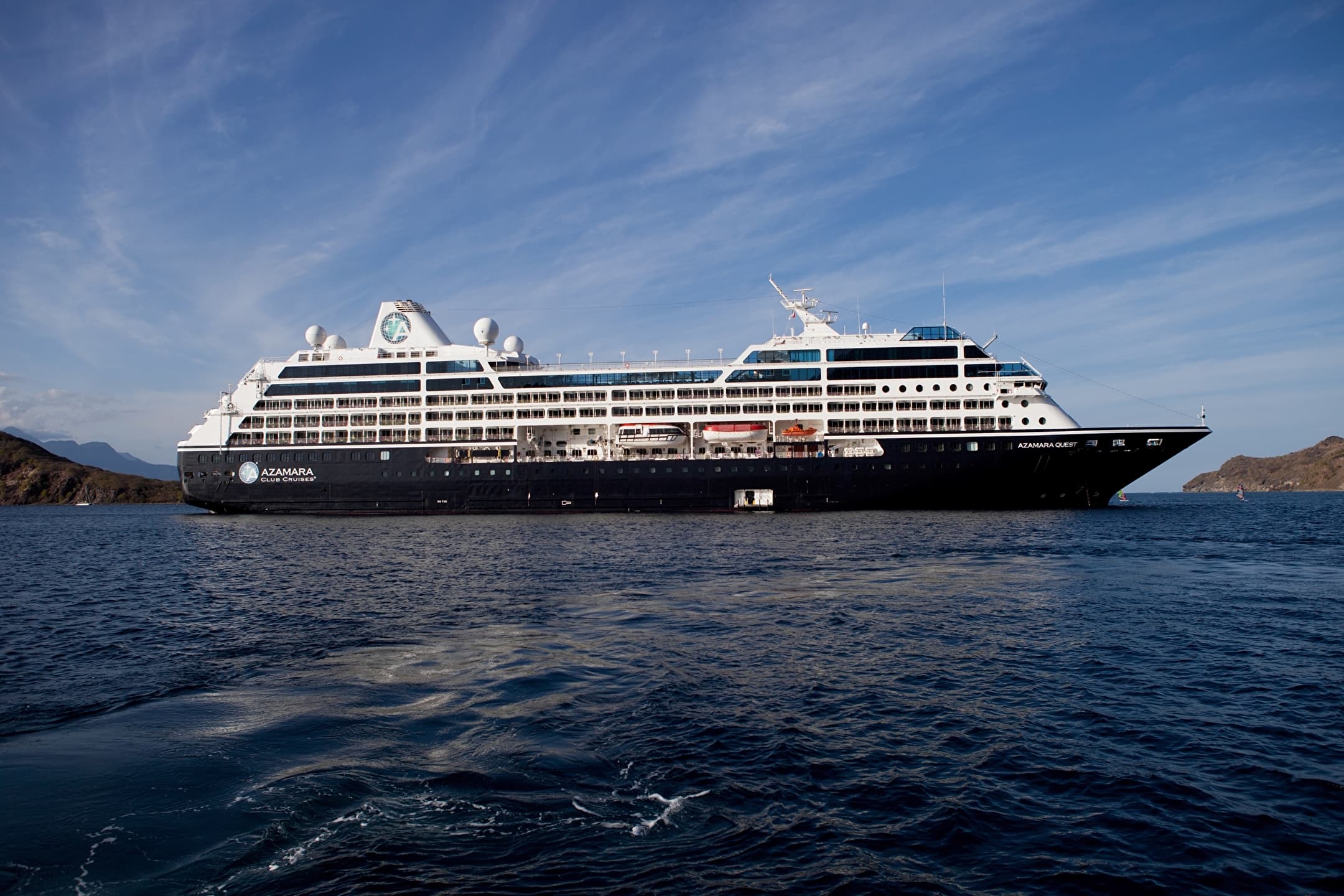
At a glance
- Built
- 2007
- Tonnage
- 30277
- Cabins
- 355
- Crew
- 408
Your boutique hotel at sea, the Azamara Quest is a mid-sized ship with a deck plan that’s intimate but never crowded, and offers everything modern voyagers are looking for—plus some unexpected extras. Across the fleet, our authentic service goes beyond the expectations of even the most well-traveled cruisers. Friendly and approachable, our staff are attentive, and happy to offer everything from poolside service to recommendations for your on-shore exploration.
Ask our cruise specialists about cruise line loyalty benefits, status match options, drinks packages, gratuities and any current offers available on this sailing.
On board

Aqualina Restaurant
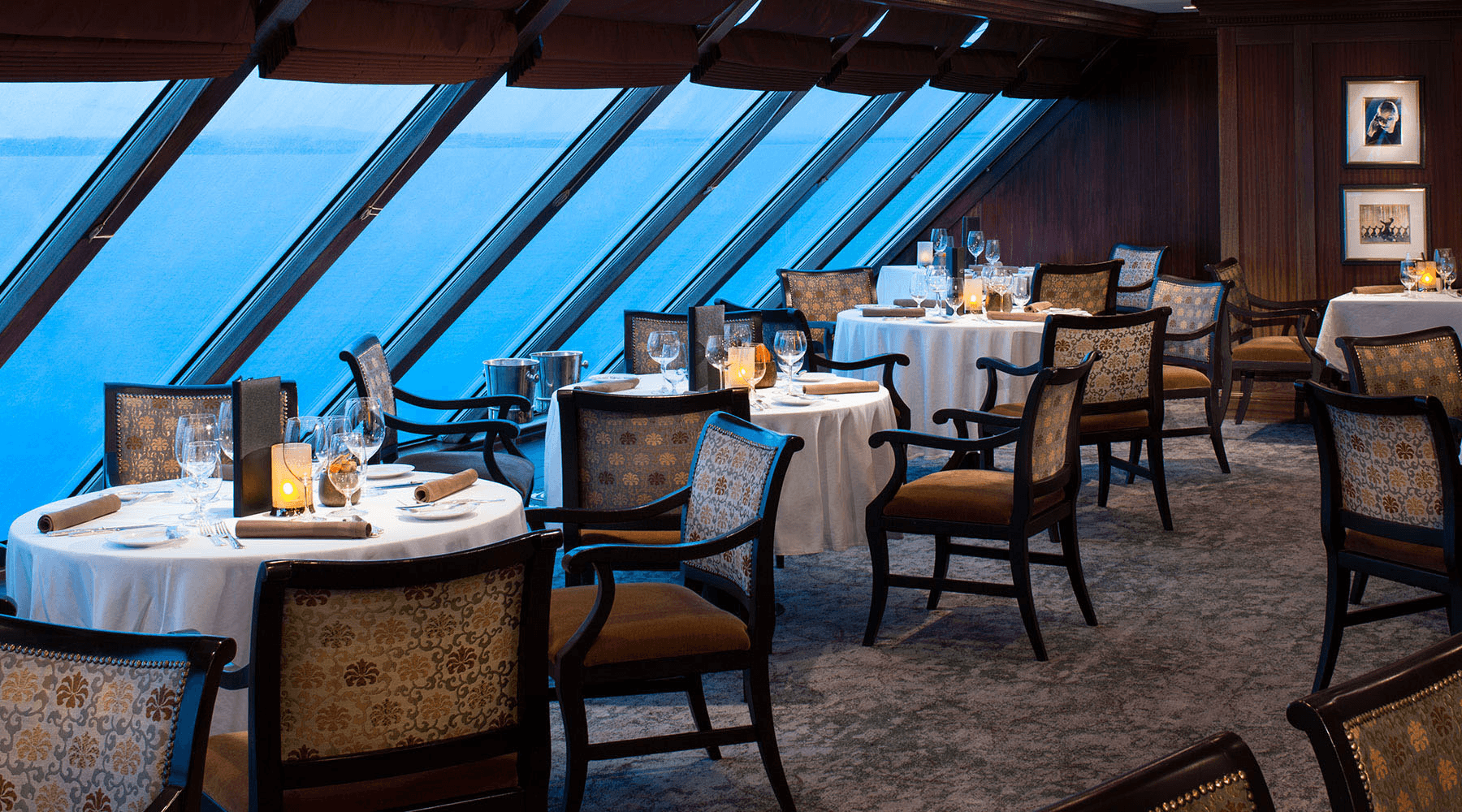
Onboard Dining

Restaurant
Itinerary
Cruise from Stockholm to Lisbon
Day 1Cruise departs from StockholmAug 10, 2028 • Departs at: 5 pm
Lively, cosmopolitan Stockholm sports an appealing mix of modern Scandinavian architecture and fairy tale palaces, watched over by a Board of Beauty, responsible for preserving the city. One third of its area is devoted to green space, and another third to waterways, providing lots of room to breathe. Gamla Stan is the oldest section, retaining the medieval layout of narrow meandering paths. For the contemporary take there's Sodermalm, known trendily as SoFo, with welcoming restaurants and pubs, specialty shops and boutiques. Stieg Larson fans hang out here, as it is the area of the city where most action in the Millennium novels takes place.
Day 2HelsinkiAug 11, 2028 • Arrives at: 11:30 am • Departs at: 10 pm
Helsinki is a successful blend of traditional and modern architecture and design, interwoven with the beauty of nature, and a few quirky, purely Finnish touches - such as a church built inside a giant chunk of granite, and a venue that is a unique combination of café, restaurant, bar, laundromat, and sauna. Classic Russian onion-domed churches share the stage with Nordic minimalism, and a large concentration of Art Nouveau buildings. Prominent globally in the fields of technology (think Nokia) and design (Marimekko and Aero), Finland has also recently topped the charts as having the world's best educational system.
Day 3TallinnAug 12, 2028 • Arrives at: 8 am • Departs at: 10 pm
Despite occupation at one time or another by each of its near neighbors, Tallinn is independent-minded and has creative ways of showing it - consider the Singing Revolution of 1988, the massive musical demonstration against Soviet rule that set Estonia on the path to independence. Visit St Olav's Church, once the tallest building in the world, at least until 1625. Then pull up a chair at one of the cafés in the charming town square, heart of the city for 800 years. After your coffee, explore St. Catherine's Passage, a quaint old lane, home to a collection of craft workshops, and check out the secret 17th C. tunnel system.
Day 4At SeaAug 13, 2028
Day 5RigaAug 14, 2028 • Arrives at: 7 am • Departs at: 6 pm
Riga’s Old Town is a UNESCO World Heritage site, its winding, wobbly lanes are beautiful to wander through. But the most outstanding are the avenues of art nouveau buildings some, with their adornments of femmes fatales and fiendish gargoyles, are so amazing you can’t pass without stopping.
Day 6Klaipeda, LithuaniaAug 15, 2028 • Arrives at: 1 pm • Departs at: 10 pm
Walk the cobblestoned Old Town in Klaipėda and you’ll see its German heritage in the half-timbered architecture, beginning at Theatre Square where Hitler once spoke. The old warehouses by the Dane River are now pubs and restaurants - try a traditional Lithuanian lunch of fish stew with warm black bread. There’s a museum in the remnants of Memelburg Castle with fascinating photos from WWII, the Blacksmith Museum with intriguing iron works, and the Clock Museum with, well, clocks.
Day 7Gdansk (Gdynia), PolandAug 16, 2028 • Arrives at: 7:30 am • Departs at: 8 pm
Gdańsk is a 1,000-year-old port city on the Baltic coast of Poland, which, together with the city of Gdynia and the town of Sopot, makes up the metropolitan area Trójmiasto, “the Tricity”. Home to the Westerplatte, where World War II broke out in 1939, Gdańsk was mostly destroyed during the war, but there are still many impressive sights. Wander through cobblestone streets and mazes of red-brick buildings to discover the Upland Gate, St. Mary’s Church, the medieval Gdańsk Crane or the stunning façade of the Great Arsenal. Explore treasures of “Baltic Gold” at the Amber Museum or collections of paintings, fabrics, and furniture at the National Museum, housed in a former Franciscan monastery. Relax at a beer garden or restaurant and take in the beautiful coastline. Make your way to Gdynia, home of the Polish navy, to feast on seafood or a visit to a floating museum in the form of two ships—Dar Pomorza and Blyskawica.
Day 8KarlskronaAug 17, 2028 • Arrives at: 9 am • Departs at: 6 pm
Day 9Ronne, BornholmAug 18, 2028 • Arrives at: 8 am • Departs at: 6 pm
The island of Bornholm is a far-flung bit of Denmark that appears to have gotten lost in the Baltic Sea between Sweden and Poland. It boasts numerous picturesque fishing villages and 15 medieval churches, some of which are 12th century round structures with unique artwork and architecture. Take a stroll down quiet cobbled lanes in the old part of the capital, Ronne, a garden town, where backyard plots produce flowers and fruit, though they may not be easy to spot behind the fine half-timbered houses. Wednesday is market day on the main square of St. Tory, a great opportunity to chat up the locals, and see what’s on offer at their stalls.
Day 10SzczecinAug 19, 2028 • Arrives at: 8 am • Departs at: 6 pm
Day 11Helsingborg, SwedenAug 20, 2028 • Arrives at: 8 am • Departs at: 4 pm
Day 11Copenhagen, DenmarkAug 20, 2028 • Arrives at: 8 pm
Copenhagen is known as a city of spires: the skyline of its medieval core is punctuated only by the steeples of churches and towers of palaces, though a modern building boom has overtaken other parts of the city. Today's Copenhagen is known for its excellent quality of life and environmental consciousness - with many parks, it is green both literally and in today's sense of the word. It is also bicycle-friendly, with bike paths lining almost every major street. After a ride or wander through the old town, stop for a local repast of Smørrebrød, traditional open-face sandwiches, or a mouthwatering Danish pastry.
Day 12Copenhagen, DenmarkAug 21, 2028 • Arrives at: 9 am • Departs at: 5 pm
Copenhagen is known as a city of spires: the skyline of its medieval core is punctuated only by the steeples of churches and towers of palaces, though a modern building boom has overtaken other parts of the city. Today's Copenhagen is known for its excellent quality of life and environmental consciousness - with many parks, it is green both literally and in today's sense of the word. It is also bicycle-friendly, with bike paths lining almost every major street. After a ride or wander through the old town, stop for a local repast of Smørrebrød, traditional open-face sandwiches, or a mouthwatering Danish pastry.
Day 13At SeaAug 22, 2028
Day 14Leith (Edinburgh), ScotlandAug 23, 2028 • Arrives at: 5:30 pm
Day 15Leith (Edinburgh), ScotlandAug 24, 2028 • Departs at: 4:15 pm
Day 16Aberdeen, ScotlandAug 25, 2028 • Arrives at: 7 am • Departs at: 4 pm
Where the rivers Dee and Don meet the North Sea, you’ll find the harbor city of Aberdeen. Remote and northerly, Scotland’s third largest city is a surprising gem with distinctive architecture and a cosmopolitan feel. Encompassing a veritable wonderland of urban delights and pastoral pursuits, Aberdeen stands apart from other Scottish cities. You won’t hear Gaelic around these parts, as this bright sunny port more closely resembles a typical English city.
Day 17UllapoolAug 26, 2028 • Arrives at: 9 am • Departs at: 6 pm
Day 18LondonderryAug 27, 2028 • Arrives at: 10 am • Departs at: 8:30 pm
Northern Ireland’s second largest city, Derry’s ancient walls hide a saga of strength and struggle. One of the oldest inhabited places in the whole of Ireland, this picturesque town has witnessed some of history’s most prominent events. After undergoing a renaissance in recent years, today Derry is an emerging cosmopolitan city where youth culture meets some of the country’s oldest and best preserved monuments. Complete with quaint restaurants, hearty pubs, and fantastic independent shops, Derry’s small size is perfect to explore on foot. Or, take a quick ride with one of the city’s many friendly taxi drivers to learn about some local haunts.
Day 19Glasgow (greenock)Aug 28, 2028 • Arrives at: 9 am • Departs at: 8 pm
Greenock is a town and administrative centre in the Inverclyde council area in Scotland and a former burgh within the historic county of Renfrewshire, located in the west central Lowlands of Scotland. It forms part of a contiguous urban area with Gourock to the west and Port Glasgow to the east.
Day 20BelfastAug 29, 2028 • Arrives at: 8 am • Departs at: 8 pm
Belfast in the early 20th century had the largest and most productive shipyard in the world, gaining global renown with the launch of the RMS Titanic. Located on the slipways where she was built is a stunning new museum, opened in time for the 100th anniversary of Titanic’s only voyage and tragic demise. Today the city and riverfront are undergoing a 21st century transformation, but many exuberant Victorian and Edwardian buildings still sport the carved heads of kings and queens. As you explore the city, keep an eye out for “the murals.” These somewhat troubling freelance works appearing on building walls provide insight into the period known simply as “The Troubles."
Day 21Dublin (Dun Laoghaire)Aug 30, 2028 • Arrives at: 8 am • Departs at: 7 pm
Day 22Cork (Cobh)Aug 31, 2028 • Arrives at: 8:30 am • Departs at: 6 pm
Located on the south coast of County Cork, Ireland, the quaint seaside town of Cobh is known for its great maritime heritage and seafaring history. As Ireland’s only dedicated cruise terminal, Cobh was the departure point for 2.5 million of the six million Irish people that immigrated to North America between 1848 and 1950, and to this day, it remains a popular port of call for cruise liners from all over the world. Perhaps this is due in part to the fact that Cobh, formerly known as Queenstown, is renowned as the last port of call for RMS Titanic—and since that fateful day in 1912, Cobh has remained largely unchanged, with the piers and streetscape appearing the much the same as it did over 100 years ago. Many of Cobh’s sites focus on its maritime history, including the Titanic Experience, Titanic Trail walking tour, the Queenstown Story Heritage Centre and tours to Spike Island. There are also hourly rail connections to the lovely town of Cork, situated just 20 minutes away from Cob…
Day 23Fowey, UkSep 1, 2028 • Arrives at: 9:30 am • Departs at: 4 pm
Fowey is a small town, civil parish and cargo port at the mouth of the River Fowey in south Cornwall, England, United Kingdom.
Day 24Portsmouth, UKSep 2, 2028 • Arrives at: 6:30 am • Departs at: 6 pm
Day 25CaenSep 3, 2028 • Arrives at: 8 am • Departs at: 6 pm
Day 26St. MaloSep 4, 2028 • Arrives at: 9 am • Departs at: 8 pm
The walled city of St. Malo is a quaint maze of fine old buildings, museums, and cafés serving Breton specialties of crepes and cider. Stroll along the ramparts, walk the cobblestone streets, and hear tales of corsairs, privateers grown rich off captured ships and their booty, authorized by the government during wartime, in order to hinder the enemy. Nearby is the rocky tidal island of Mont St. Michel. The perfect spot for a religious retreat, the first monastic settlement was built here in the 8th century, and the Romanesque church that is its crowning glory in the 11th.
Day 27At SeaSep 5, 2028
Day 28BordeauxSep 6, 2028 • Arrives at: 10:30 am
Bordeaux’s fortunes have long been tied to viticulture, beginning with an expansion of the wine trade with England in the 14th century. As a result it is a handsome and cohesive city of uniform classical and neoclassical style, with monumental buildings and many fine mansions financed by the almighty grape. The nearby countryside is alive with wine chateaux sporting impressive appellations such as Pauillac, Sauternes, Margaux, and Saint-Emilion. A visit is an excellent opportunity to learn more about wine production and appreciation, which of course requires a considerable amount of tasting to accomplish.
Day 29BordeauxSep 7, 2028
Bordeaux’s fortunes have long been tied to viticulture, beginning with an expansion of the wine trade with England in the 14th century. As a result it is a handsome and cohesive city of uniform classical and neoclassical style, with monumental buildings and many fine mansions financed by the almighty grape. The nearby countryside is alive with wine chateaux sporting impressive appellations such as Pauillac, Sauternes, Margaux, and Saint-Emilion. A visit is an excellent opportunity to learn more about wine production and appreciation, which of course requires a considerable amount of tasting to accomplish.
Day 30BordeauxSep 8, 2028 • Departs at: 10:30 am
Bordeaux’s fortunes have long been tied to viticulture, beginning with an expansion of the wine trade with England in the 14th century. As a result it is a handsome and cohesive city of uniform classical and neoclassical style, with monumental buildings and many fine mansions financed by the almighty grape. The nearby countryside is alive with wine chateaux sporting impressive appellations such as Pauillac, Sauternes, Margaux, and Saint-Emilion. A visit is an excellent opportunity to learn more about wine production and appreciation, which of course requires a considerable amount of tasting to accomplish.
Day 31BilbaoSep 9, 2028 • Arrives at: 8 am • Departs at: 10 pm
If Bilbao wasn't always a household name, it was transformed with the opening of Frank Gehry's groundbreaking Guggenheim Museum in 1997. Located in the heart of the Basque Country, Bilbao became an instant media darling and tourist mecca. And that was just the beginning of an exciting phase of development in infrastructure and cultural activity, which combined with the Basque love of food, wine, and laughter, solidified the city's place in the annals of tourism.
Day 32GijonSep 10, 2028 • Arrives at: 8 am • Departs at: 1:30 pm
On the Bay of Biscay, in the self-governing community of Asturias, lies the northern city of Gijón. This region is known for its verdant hills; the greenest perhaps in all of Spain. The contrast against the bay is stunning; however, the main attraction is the fishing village of Cimadevilla, meaning 'top of the village.' Step back in time as you stroll its tiny streets with renovated buildings in every imaginable hue.
Day 33VigoSep 11, 2028 • Arrives at: 10 am • Departs at: 8 pm
Catholic pilgrims flock to the nearby sacred cathedral of Santiago de Compostela, built over the burial spot of St. James. In Vigo, Galicia province's most populated city, El Sireno, a gilded sculpture depicting a half-man-half-sea-creature, towers over your head and the city's lovely gardens and well-preserved historical buildings.
Day 34Porto (Leixoes), PortugalSep 12, 2028 • Arrives at: 7 am • Departs at: 3:30 pm
At the mouth of the Rio Douro lies the city of Porto, known mostly for its port wine trade. With origins dating back to the 5th century, there is plenty to see in this town that was named European Capital of Culture in 2001. Stroll the Ribeira neighborhood along the river, explore the Cathedral area, or tour the port lodges of Vila Nova de Gaia across the river.
Day 35Cruise returns to LisbonSep 13, 2028 • Arrives at: 6:30 am
Lisbon is one of the oldest cities in the world. Its magnificent harbor made it a logical trading port as far back as the Phoenicians, as well as a departure point for 15th century voyages sponsored by Prince Henry the Navigator, patron of Portuguese explorers. The city is rich in architecture, from Romanesque and Gothic to Post Modern, and criss-crossed by monument-studded grand boulevards. Today it is seeking a place on the world stage by hosting, in addition to its own active cultural calendar, film festivals, art, fashion, and design shows, book fairs, marathons, and rock concerts.
Cabin options
Compare the cabin types and onboard features shown for this sailing. Final price and availability are confirmed by our team when you inquire.
26 cabin grades listed for this sailing.
Next step
Cabin grades and prices
View every cabin grade and current availability on the next step.