The Three Oceans
Silversea · Silver Dawn
Depart
Jan 8, 2027
Return
Jun 6, 2027
Port
Los Angeles, CA
Nights
149 nights
At a glance
- Launched
- 2022
- Tonnage
- 40700
- Cabins
- 288
- Crew
- 411
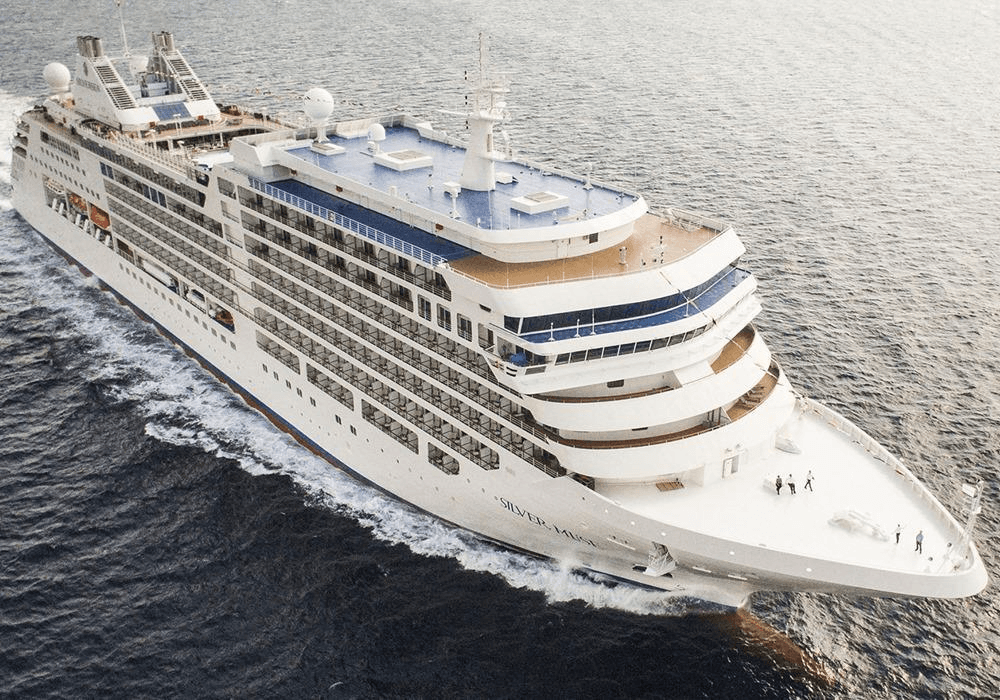
A new world of luxury is waiting aboard Silver Dawn. Elegant and modern, Silver Dawn is the natural evolution of our fleet. Large enough to offer eight dining options – including the superb Sea and Land Taste (S.A.L.T.) programme – yet small enough for the famed Silversea onboard ambience, Silver Dawn inherits the best features of her sister ships Silver Muse and Silver Moon, but is in a class all of her own. With sumptuous suites, outstanding itineraries, plus cutting-edge design and technology and the outstanding OTIVM wellness concept, Silver Dawn sets new standards of luxury. Wake up to a new dawn with Silversea.
Ship features
- Casino
- Dolce Vita
- Fitness Centre
- Zagara Beauty Spa
Ask our cruise specialists about cruise line loyalty benefits, status match options, drinks packages, gratuities and any current offers available on this sailing.
On board
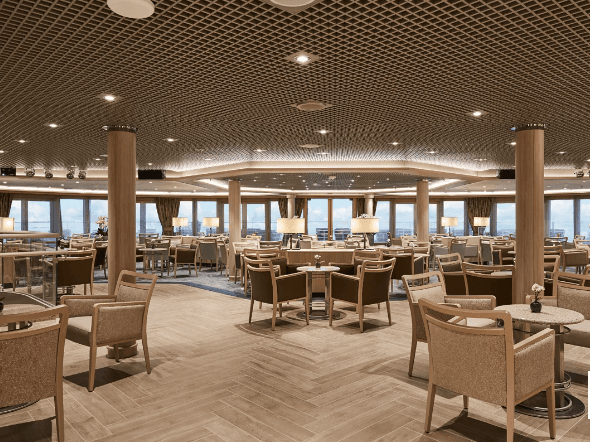
Panorama Lounge
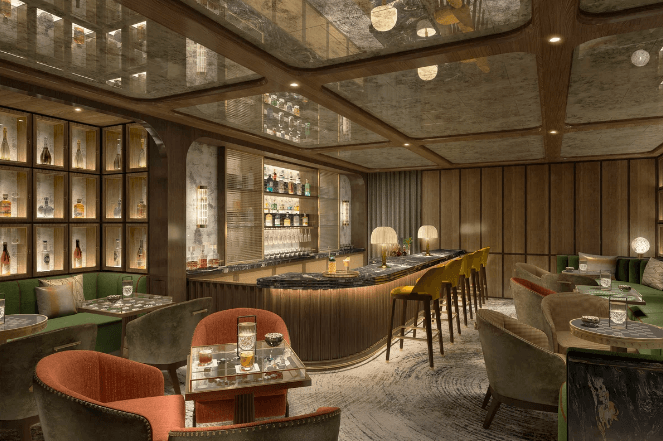
S.a.l.t. Bar
Itinerary
- 1Los Angeles, CaliforniaDay 1
- 2Hilo, Hawaii , United StatesDay 7
- 3Kahului, HawaiiDay 8
- 4Nawiliwili, Kauai, HawaiiDay 9
- 5Honolulu, Oahu, Hawaii , United StatesDay 10
- 6Nuku Hiva, Marquesas IslandsDay 17
- 7Rangiroa, French PolynesiaDay 19
- 8Moorea IslandDay 20
- 9RaiateaDay 21
- 10Papeete (Tahiti)Day 22
- 11Bora Bora (Society Islands)Day 24
- 12RarotongaDay 26
- 13Pago Pago , American SamoaDay 29
- 14ApiaDay 31
- 15LautokaDay 35
- 16Champagne Beach, VanuatuDay 39
- 17Port VilaDay 40
- 18Lifou, New CaledoniaDay 41
- 19Noumea, New CaledoniaDay 42
- 20Brisbane, AustraliaDay 45
- 21Airlie Beach, AustraliaDay 48
- 22Cairns, AustraliaDay 49
- 23Darwin, AustraliaDay 54
- 24Benoa, BaliDay 57
- 25Lembar LombokDay 59
- 26Semarang (Gateway for Borobodur)Day 61
- 27SingaporeDay 63
- 28Penang, George TownDay 66
- 29Phuket, ThailandDay 67
- 30Hambantota, Sri LankaDay 70
- 31Colombo, Sri LankaDay 72
- 32MaleDay 75
- 33Praslin, SeychellesDay 79
- 34Mahe, SeychellesDay 80
- 35Port Louis, MauritiusDay 83
- 36Pointe des GaletsDay 84
- 37Richards Bay, South AfricaDay 88
- 38Durban, South AfricaDay 89
- 39Port Elizabeth, South AfricaDay 91
- 40LangebaanDay 93
- 41Cape Town, South AfricaDay 94
- 42Luderitz, NamibiaDay 97
- 43Walvis BayDay 98
- 44LuandaDay 102
- 45Tema (Accra)Day 106
- 46TakoradiDay 107
- 47Abidjan, Ivory CoastDay 108
- 48Banjul, GambiaDay 112
- 49Dakar, SenegalDay 113
- 50Praia Da Vitoria, AzoresDay 115
- 51Santa Cruz de Tenerife , SpainDay 118
- 52Arrecife, Canary Islands, SpainDay 119
- 53Agadir, MoroccoDay 120
- 54Casablanca, MoroccoDay 122
- 55Cadiz, SpainDay 123
- 56Portimao, PortugalDay 124
- 57LisbonDay 125
- 58Leixoes - OportoDay 126
- 59SantanderDay 128
- 60San Sebastian , SpainDay 129
- 61Bordeaux, FranceDay 130
- 62Falmouth, EnglandDay 133
- 63Cobh, IrelandDay 134
- 64Dublin (Dun Laoghaire)Day 135
- 65Holyhead , United KingdomDay 136
- 66BelfastDay 137
- 67Greencastle (Londonderry)Day 138
- 68Stornoway (Isle Of Lewis)Day 139
- 69Kirkwall, Orkney Islands, ScotlandDay 140
- 70Trondheim (Trondelag)Day 142
- 71Andalsnes, NorwayDay 143
- 72Alesund, NorwayDay 144
- 73Olden, NorwayDay 145
- 74Bergen, NorwayDay 146
- 75StavangerDay 147
- 76KristiansandDay 148
- 77Oslo, NorwayDay 149
- 78Copenhagen, DenmarkDay 151
Port locations are shown; visiting order is not confirmed on this map. 3 port locations are not available.
Cruise from Los Angeles, CA to Copenhagen, Denmark
Day 1Cruise departs from Los Angeles, CAJan 8, 2027 • Departs at: 7 pm
Los Angeles, L.A. and City of Angels are all names for this sprawling Southern California megalopolis known for its glamour, its ethnic diversity and its dynamic energy. The largest city in the state of California and the second largest in the United States, Los Angeles is a relatively young city. In 1820, it was a bicultural community of just 650 American and Mexican residents. After the completion of the transcontinental railroads in the 1880s, it began to grow. The old ranches were subdivided; the symbol of the city became the suburban house, set amid the orange groves in a glorious land of sunshine. The real boom came with the mushrooming aeronautics business, and the film and television industries. L.A.'s colourful melange of shopping malls, palm trees and swimming pools is at once bafflingly strange and startlingly familiar thanks to the celluloid self-image that has spread all over the world. Los Angeles is glitz and glamour, but also rich in artistic creativity as evident in i…
Day 2At SeaJan 9, 2027
Day 3At SeaJan 10, 2027
Day 4At SeaJan 11, 2027
Day 5At SeaJan 12, 2027
Day 6At SeaJan 13, 2027
Day 7Hilo, Hawaii , United StatesJan 14, 2027 • Arrives at: 8 am • Departs at: 9 pm
Hilo on the Big Island's east coast is Hawaii's charming capital and its largest town. Frequent rainfall in the area around Hilo accounts for an abundance of tropical plants and has earned Hilo the nickname “City of Rainbows”. Hawaii, which lends its name to the rest of the Aloha State, is called the “Big Island” because it is larger than the next three largest Hawaiian Islands combined. The island continues to grow due to the seemingly endless lava flowing from Kilauea, the world's most active volcano. More of “Old Hawaii” survives on the Big Island than on any of the others. All across the island one can find sleepy old towns, little changed for a century. This was the birthplace of King Kamehameha, and the base from which he ruled all of the Hawaiian Islands.
Day 8Kahului, HawaiiJan 15, 2027 • Arrives at: 8 am • Departs at: 7 pm
Day 9Nawiliwili, Kauai, HawaiiJan 16, 2027
Nawiliwili Beach Park is a beach park and port on the south-east coast of the island of Kauai in the Hawaiian Islands.
Day 10Honolulu, Oahu, Hawaii , United StatesJan 17, 2027 • Arrives at: 8 am
Honolulu's setting on the Pacific Ocean, backed by dramatic cliffs and the extinct volcanoes of Punchbowl and Diamond Head, is spectacular. Three-quarters of Hawaii's population live on the island of Oahu and 80 percent of visitors to Hawaii arrive in Honolulu. Some remain here for their entire vacation; others use it as gateway to the other islands. Until the arrival of Europeans, Honolulu was just a small, laid-back town. As more and more foreign ships arrived and used adjacent Pearl Harbour, King Kamehameha declared Honolulu the capital.
Day 11Honolulu, Oahu, Hawaii , United StatesJan 18, 2027 • Departs at: 6 pm
Honolulu's setting on the Pacific Ocean, backed by dramatic cliffs and the extinct volcanoes of Punchbowl and Diamond Head, is spectacular. Three-quarters of Hawaii's population live on the island of Oahu and 80 percent of visitors to Hawaii arrive in Honolulu. Some remain here for their entire vacation; others use it as gateway to the other islands. Until the arrival of Europeans, Honolulu was just a small, laid-back town. As more and more foreign ships arrived and used adjacent Pearl Harbour, King Kamehameha declared Honolulu the capital.
Day 12At SeaJan 19, 2027
Day 13At SeaJan 20, 2027
Day 14At SeaJan 21, 2027
Day 15At SeaJan 22, 2027
Day 16At SeaJan 23, 2027
Day 17Nuku Hiva, Marquesas IslandsJan 24, 2027 • Arrives at: 8 am • Departs at: 6 pm
Think of French Polynesia and you are automatically transported to the white sands of Tahiti, the blue seas of Bora Bora or, at the very least, the iconic statues of Easter Island. Now, imagine a place that is home to that majestic trinity, but has no crowds and is full of island authenticity that is rare in these global times. You have just imagined Nuku Hiva. The island is the second largest after Tahiti in the archipelago, but is yet to be discovered by tourism.
Day 18At SeaJan 25, 2027
Day 19Rangiroa, French PolynesiaJan 26, 2027 • Arrives at: 8 am • Departs at: 5 pm
Rangiroa, meaning ‘Vast Sky’ in Puamotu, is the largest atoll in the Tuamotu Archipelago and one of the largest in the world. Surrounded by two legendary bodies of water, Moana-tea (Peaceful Ocean) and Moana-uri (Wild Ocean), the atoll consists of about 250 islets and sandbars, with approximately 100 narrow passages in the fringing reef. The lagoon covers 618 square miles (1,600 square km), large enough that it has its own horizon.
Day 20Moorea IslandJan 27, 2027 • Arrives at: 8 am • Departs at: 10 pm
Tahiti's heart-shaped sister island Moorea is located only nine miles across the Sea of the Moon from Tahiti. While Bora Bora and Tahiti are the destinations most prominently advertised, it is Moorea, the Magical Island that is the best-kept secret of the trio of famous French Polynesian islands. In fact, Moorea has often been likened to James Michener's mythological island of Bali Hai - and it is easy to see why. Picture perfect lagoons and gleaming white beaches are surrounded by jagged mountains and volcanic spires. Its six mountains include Mount Rotui. From its summit there are spectacular views of Opunohu Bay and the island. Captain Samuel Wallis was the European discoverer of the Windward Island in 1767. After leaving Tahiti, he passed along the north coast of Moorea without landing. The first European visitors to the island include botanist Joseph Banks and some sailors sent ashore by Captain Cook in 1769. Captain Cook himself anchored in Opunohu Bay for one week in 1777, but…
Day 21RaiateaJan 28, 2027 • Arrives at: 8 am • Departs at: 11 pm
The largest of the Leeward Islands, Raiatea is totally surrounded by a reef but has several navigable passes and the only navigable river in French Polynesia. Raiatea shares a protected lagoon with the island of Taha'a; legends tell how the two islands were cut apart by a mythical eel. Although it has no beaches, there are picture-postcard motus (flat reef islets) with nice beaches in the lagoon. One of the nicest things about Raiatea is that it remains "undiscovered" by most visitors to French Polynesia. Before European encroachment, Raiatea was the religious, cultural and political center of Tahiti-Polynesia. It was also Captain Cook's favorite island. The last resistance to the French takeover on the island lasted until 1897, when French troops and warships used arms to conquer the island. The native leader of the resistance, Teraupoo, was deported to New Caledonia. Raiatea is an archaeologist's delight. Scientists have unearthed artifacts linking the island with Hawaii. Local trad…
Day 22Papeete (Tahiti)Jan 29, 2027 • Arrives at: 8 am
Formed by two ancient volcanoes and joined at the isthmus of Taravao, Tahiti is the largest island of the Society Archipelago and the economic heart of French Polynesia. Ever since the famous French impressionist painter Paul Gauguin immortalized Tahitian maidens in vibrant colors on his canvasses, Tahiti has had a mysterious allure and still summons up all the romance of the South Pacific as a tropical paradise. Rising in the center, Mount Orohena and Mount Aorai are the highest points; deep valleys radiate in all directions from these central peaks. Steep slopes drop abruptly from the high plateaus to coastal plains. The northeast coast is rugged and rocky without a barrier reef, and thus exposed to intense, pounding surf. Villages lie on a narrow strip between mountains and ocean. The south coast is broad and gentle with large gardens and coconut groves; a barrier reef shields it from the sea.
Day 23Papeete (Tahiti)Jan 30, 2027
Formed by two ancient volcanoes and joined at the isthmus of Taravao, Tahiti is the largest island of the Society Archipelago and the economic heart of French Polynesia. Ever since the famous French impressionist painter Paul Gauguin immortalized Tahitian maidens in vibrant colors on his canvasses, Tahiti has had a mysterious allure and still summons up all the romance of the South Pacific as a tropical paradise. Rising in the center, Mount Orohena and Mount Aorai are the highest points; deep valleys radiate in all directions from these central peaks. Steep slopes drop abruptly from the high plateaus to coastal plains. The northeast coast is rugged and rocky without a barrier reef, and thus exposed to intense, pounding surf. Villages lie on a narrow strip between mountains and ocean. The south coast is broad and gentle with large gardens and coconut groves; a barrier reef shields it from the sea.
Day 24Bora Bora (Society Islands)Jan 31, 2027 • Arrives at: 8 am • Departs at: 9 pm
If you have ever dreamt up your ideal island holiday, we suspect it goes something like this: Soapy blue seas? Check. Sparkling white beaches? Check. Thatched wooden huts, gently sloping palm trees and kaleidoscopic marine life? Check, check and check. And yet, even by ticking every box, first time viewing of Bora Bora still beggars belief. This tropical hideaway less than 12 m2 in the heart of the South Pacific has been toping travel wish lists for years. Long considered the realm of honeymooners – spectacularly romantic sunsets are a speciality – Bora Bora is not just for wandering with your love. If the prismatic shades of blue of the world’s most beautiful lagoon do not fill you up, then perhaps underwater scooters and aqua Safaris will charge your batteries. If exploring Bora Bora’s lush hinterland is more your glass of tequila sunrise, then trips around the island (often stopping off at the celebrity haunt Bloody Mary Restaurant & Bar) are a must. Bora Bora’s peaceful ambience h…
Day 25At SeaFeb 1, 2027
Day 26RarotongaFeb 2, 2027 • Arrives at: 8 am • Departs at: 7 pm
The Cook Islands are scattered like tiny jewels over a large stretch of sea between Tahiti and Samoa, lying virtually in the center of the Polynesian Triangle of the South Pacific. The first settlers arrived around the 8th century from the Society Islands, Samoa and the Marquesas, while the first Europeans made contact at the turn of the 16th century. In 1824, a Russian cartographer put the islands on the map, naming them after Captain Cook, who discovered five of the islands in the Southern Group in the 1770s. The natural beauty of Rarotonga, the principal island of the Cook archipelago, is profound and overwhelming. Its forest-covered mountains, deep valleys, fertile slopes of red soil and sparkling aquamarine lagoons make it a likely Eden.
Day 27At SeaFeb 3, 2027
Day 28At SeaFeb 4, 2027
Day 29Pago Pago , American SamoaFeb 5, 2027
The high, volcanic islands of American Samoa sit along the Pacific Ring of Fire; their cone-shaped mountains rise with abrupt steepness. These islands are stunningly green, the windward hillsides carpeted thickly with coconut palms, breadfruit and mango, while the leeward side is punctuated by steep cliffs. Pago Pago (pronounced Pahngo Pahngo), on the island of Tutuila, boasts one of the world's most beautiful natural harbors that thrusts as a fjordlike arm deep into the land.
Day 30Date Line lose a dayFeb 6, 2027
Day 31ApiaFeb 8, 2027 • Arrives at: 8 am • Departs at: 7 pm
As the first independent state of Polynesia, Samoa is considered the cradle of the nation, a place where the Earth and the heart fuse seamlessly fuse together. Incidentally, were one to translate the word “Samoa” into the traditional Polynesia dialect, they would find that the words “Sa” and “Moa” mean exactly that: earth and centre. Apia, Samoa’s only town, is found central north coast of Upolu, Samoa’s second largest island. Originally a tiny village of just over 300 inhabitants (c. View less 1800), the town’s population has grown to be just shy of 40,000. While a population of such size might mean forgetting traditional roots in favour of modern life, this has not been the case (too much) in Apria. The Samoan way of life is still very much the order of the day; traditional open-sided houses with thatched roofs on platforms of coral or concrete, also known as ‘fales’, can be seen everywhere and nearly all of the population (including the policemen) wear the typical local dress; skir…
Day 32At SeaFeb 9, 2027
Day 33Nuku'alofa, TongatapuFeb 10, 2027 • Arrives at: 8 am • Departs at: 7 pm
Nukuʻalofa is the capital of Tonga. It is located on the north coast of the island of Tongatapu, in the country's southernmost island group.
Day 34At SeaFeb 11, 2027
Day 35LautokaFeb 12, 2027 • Arrives at: 7 am • Departs at: 8 pm
Lautoka is often described as the sugar city. Sugar cane is the major industry of Fiji and Lautoka is its main base. Here are the industries' headquarters, the largest sugar mill, modern loading facilities and a large wharf. It features 70 miles of roads, almost all paved, a wonderful botanical garden and royal palm trees decorating the city's main street, Vitogo Parade. The municipal market is another attraction from both outside and inside. Fiji typifies the image of paradise. The people here live as they have done for centuries, retaining their ancient traditions and simple and carefree lifestyle supported by the harvest of a generous land and bountiful sea.
Day 36Kadavu IslandFeb 13, 2027 • Arrives at: 8 am • Departs at: 7 pm
Day 37At SeaFeb 14, 2027
Day 38At SeaFeb 15, 2027
Day 39Champagne Beach, VanuatuFeb 16, 2027 • Arrives at: 8 am • Departs at: 7 pm
As world famous beaches go, Champagne Beach is one of the big hitters. In 2003, CNN ranked it number nine in its list of top 100 beaches and independent travel specialists permanently include it on their list of 50 best beaches worldwide. It’s one of the world’s greatest natural beauties: picture-perfect beach white sand, turquoise water and nothing – save for the occasional cow or curious turtle - around. With only coconut plantations and a few friendly locals to keep you company, this might just be the island of your dreams. The glorious name “Champagne Beach” was given to the island in the 17th century, when Pedro de Quirós believed he had reached the famous unknown southern land or the “Tierra Australis Incognita” (or Australia as we now know it). He believed the effervescent bubbles of volcanic origin that bubble up from the crystal clear waters were reminiscent of the bubbles of Champagne. Additionally, the coastline is shaped like an art deco Champagne saucer, so the name stuck…
Day 40Port VilaFeb 17, 2027 • Arrives at: 8 am • Departs at: 6 pm
An archipelago of smiles and warm welcomes, Vanuatu enjoys a reputation as the happiest place in the world. With an abundance of stunning isolated beaches, and endless reefs offering idyllic escape from the humdrum, it’s easy enough to understand why. Green-clad volcanoes rise from the depths of the South Pacific Ocean, creating 83 lush islands. Port Vila is the capital of this scattering of geothermal isles, where mountains brood, hot springs gurgle, and thick rainforests sway. View less The sounds of water rushing - as you cut through rainforest trails - offers a clue that you’re getting close to the Mele Cascades - one of Port Vila’s most dramatic and spectacular natural sights. A remarkable collection of plumes rolls through the jungle, and down into the refreshing splash pool waiting below. Jump in, to experience the cool hit of the fall’s pure waters. Offshore islands offer exemplary snorkelling opportunities, and glass-bottom boat rides give privileged windows into the swirling…
Day 41Lifou, New CaledoniaFeb 18, 2027 • Arrives at: 8 am • Departs at: 7 pm
Lifou Island or Drehu in the local language is the largest, most populous and most important island of the Loyalty Islands, in the archipelago of New Caledonia, an overseas territory of France in the Pacific Ocean. With a total area of 1,207 square kilometers Lifou is located east of Australia at 20.9°S
Day 42Noumea, New CaledoniaFeb 19, 2027 • Arrives at: 7 am • Departs at: 7 pm
Perched overlooking the life-filled reefs of Noumea Lagoon, Noumea is the vibrant and colourful capital of New Caledonia. Catch some shade in the city’s centre, below Coconut Palm Square, and absorb the vibrant fusion of French and Kanak cultures. Or take a leisurely open-air stroll along the waterfront, where white boats bob and jostle on the lapping waters. Bring your tongs - the local word for flipflops - there will be plenty of time to swim, sunbathe and leaf through paperbacks on dazzling beaches. View less Noumea is a perfect jumping-off point for serene island adventures too. Enjoy a voyage to the island paradise of Amedee Isl - a tiny green land with a narrow historic lighthouse rocketing up from its centre. Climb 247 steps for the stunning view of the blotchy blue waters all around. Or, explore the waters to swim among turtles and orange clownfish. Set among the New Caledonian barrier reef, there are incredible diving opportunities, and glass-bottom boats offer you a dry wind…
Day 43At SeaFeb 20, 2027
Day 44At SeaFeb 21, 2027
Day 45Brisbane, AustraliaFeb 22, 2027 • Arrives at: 2 pm
They don’t call it the Sunshine State for nothing, and Brisbane’s modern metropolis fully exploits its sun-blessed location, basking in Queensland’s generous year-round glow. The envied climate makes Brisbane a city of outdoor adventure, activity and relaxation, where days drift by surfing rollers, or relaxing in the shade of swaying palms. While Brisbane may play second fiddle to Sydney and Melbourne at times, it radiates a creative and contemporary energy, offering visitors a refreshing combination of laidback waterfront luxury and urban sophistication. Sandy islands nearby provide scenic diving and oceanside relaxation opportunities, while the city's animal santuaries offer opportunities to meet unbearably cute koalas and kangaroos. Brisbane’s impressive skyline of metallic cylinders rises high above the broad Brisbane River below, which curves lazily through downtown. The rolling waves of the Pacific are close by, but there’s something special about relaxing on soft sand in the ve…
Day 46Brisbane, AustraliaFeb 23, 2027 • Departs at: 7 pm
They don’t call it the Sunshine State for nothing, and Brisbane’s modern metropolis fully exploits its sun-blessed location, basking in Queensland’s generous year-round glow. The envied climate makes Brisbane a city of outdoor adventure, activity and relaxation, where days drift by surfing rollers, or relaxing in the shade of swaying palms. While Brisbane may play second fiddle to Sydney and Melbourne at times, it radiates a creative and contemporary energy, offering visitors a refreshing combination of laidback waterfront luxury and urban sophistication. Sandy islands nearby provide scenic diving and oceanside relaxation opportunities, while the city's animal santuaries offer opportunities to meet unbearably cute koalas and kangaroos. Brisbane’s impressive skyline of metallic cylinders rises high above the broad Brisbane River below, which curves lazily through downtown. The rolling waves of the Pacific are close by, but there’s something special about relaxing on soft sand in the ve…
Day 47At SeaFeb 24, 2027
Day 48Airlie Beach, AustraliaFeb 25, 2027 • Arrives at: 9 am • Departs at: 4 pm
With the finest powder sand, knots of deep green rainforest and ankle-deep shelves of turquoise sea water - Airlie Beach is your gateway to some of the world’s most spectacular beaches. This lively town welcomes wide-eyed young adventurers and the yachting crowd alike to the Whitsunday Islands’ serenity, and the hiss of espresso machines, and excited chatter of adventure, spills out from its many cafes and bars. Relax at Airlie Beach Lagoon – the social hub of this town - where sun-heated saltwater invites you to wade, before flaming fresh coral trout over a barbecue as the sun sets. Or, take a seat at one of the glorious restaurants offering uninterrupted views out over the waters of Pioneer Bay, towards the 74 islands that make up the Whitsundays. These heavenly waters don't just attract humans. Humpback and pilot whales also migrate here to indulge in the warm waters and sheltered location. Spot the majestic creatures breaching and gulping in huge gasps of oxygen as you explore. Fe…
Day 49Cairns, AustraliaFeb 26, 2027 • Arrives at: 2 pm
It wasn't that long ago that Cairns (pronounced Cans), the heart of the remote Australian area known as "The Deep North," was a sleepy little outpost in the midst of the tropics. Founded in 1876 as a port for inland gold fields, Cairns is a tribute to the first surveyors who cleared just enough scrub land to set up their tents before mapping out streets wide enough for a future city. Later, Cairns was a railhead from which produce grown on the fertile Atherton Tableland and sugar cane from the coastal plains was transported to other parts of the country.
Day 50Cairns, AustraliaFeb 27, 2027 • Departs at: 7 pm
It wasn't that long ago that Cairns (pronounced Cans), the heart of the remote Australian area known as "The Deep North," was a sleepy little outpost in the midst of the tropics. Founded in 1876 as a port for inland gold fields, Cairns is a tribute to the first surveyors who cleared just enough scrub land to set up their tents before mapping out streets wide enough for a future city. Later, Cairns was a railhead from which produce grown on the fertile Atherton Tableland and sugar cane from the coastal plains was transported to other parts of the country.
Day 51At SeaFeb 28, 2027
Day 52At SeaMar 1, 2027
Day 53At SeaMar 2, 2027
Day 54Darwin, AustraliaMar 3, 2027 • Arrives at: 8 am • Departs at: 7 pm
"Australia's capital of the north is a uniquely tropical city, and a historically isolated outpost of this vast, diverse country. Reaching up towards the equator, a full 2,000 miles from Sydney and Melbourne, the city was named in honour of Charles Darwin by the British settlers who established a frontier outpost here. With a unique history, beautiful islands nearby, and a palette of sizzling Pacific flavours, colourful Darwin is an enchanting and exotic Australian destination. Crocodiles patrol the jungled waterways and tropical rainforests around Australia's gateway to the Top End. Explore via airboat to look down on the veiny waterways of the mist-laced Kakadu National Park. The sounds of chattering birdlife and the gentle splash of fountains and waterfalls will fill your ears in George Brown Darwin Botanic Gardens. Soak it all in, before kicking back and relaxing with a picnic and a crackling barbecue. The sunshine and famous tropical pink sunsets mean many visitors naturally grav…
Day 55At SeaMar 4, 2027
Day 56At SeaMar 5, 2027
Day 57Benoa, BaliMar 6, 2027 • Arrives at: 1 pm
Thanks to its spectacular natural beauty and rich culture, Bali has long been Indonesia’s most popular destination. Stone inscriptions dating from around the 9th century A.D. are the earliest records found on Bali; by that time, the island was already developing irrigation systems and a lifestyle that drew many comparisons to what visitors find here today.
Day 58Benoa, BaliMar 7, 2027 • Departs at: 11 pm
Thanks to its spectacular natural beauty and rich culture, Bali has long been Indonesia’s most popular destination. Stone inscriptions dating from around the 9th century A.D. are the earliest records found on Bali; by that time, the island was already developing irrigation systems and a lifestyle that drew many comparisons to what visitors find here today.
Day 59Lembar LombokMar 8, 2027 • Arrives at: 8 am • Departs at: 7 pm
An island of startling contradictions and contrasts, Lombok exudes an aura of the staid and the rural, a genteel way of life in a quiet backwater. Located to the east and across a deep strait from its illustrious neighbor Bali, the island of Lombok offers unique culture, beautiful landscapes and a far less frenetic, pressured atmosphere than Bali. However, savvy travelers agree that Lombok’s calm existence may soon come to an end, as it is fast becoming the new "in place" after Bali. View less The island was once ruled by a series of Sasak princes who spent their time fending off successive invasions from Sumbawanese and Makassarese attackers. In 1740, the Balinese established a stronghold here and imposed their culture on the Sasaks. Later, Lombok came under Dutch rule until the country achieved independence. The western part of the almost circular island is well irrigated by mountain streams and artesian springs. Here Balinese and Sasaks have sculpted handsome rice terraces; Hindu t…
Day 60At SeaMar 9, 2027
Day 61Semarang (Gateway for Borobodur)Mar 10, 2027 • Arrives at: 7 am • Departs at: 7 pm
Semarang is one of the oldest cities in Indonesia, situated on Java's north coast between the shore of the Java Sea and a small ridge of mountains. Ceded to the Dutch West India Company in 1677 by King Amangkurat I in payment of his debts, it became their headquarters and the seat of the Dutch governor of the northeast provinces. Semarang's usefulness as a port waned due to the gradual silting up of the harbor. By the 19th century, Surabaya had eclipsed Semarang as Java's premier port.
Day 62At SeaMar 11, 2027
Day 63SingaporeMar 12, 2027 • Arrives at: 4 pm
Advanced, airy and elevated, Singapore is a spectacular, futuristic vision of utopian city life. A healthy population of almost six million call it home, but this is a city designed with space to breathe, and gorgeous outdoor parks, massive indoor greenhouses and beautiful recreational spaces spread between the City of Gardens' skyscrapers and soaring structures. Once a quiet fishing village, now a glistening island city-state and an international beacon of science, education and technology. View less Singapore is almost intimidatingly clean - and the hyper-efficient public transport system whips residents and visitors across the city's neighbourhoods in a heartbeat. Glorious fountains and audacious skyscrapers loom up - nodding to traditional feng shui beliefs - and putting on dazzling illuminated displays after dark. The lush green botanical gardens are a spectacular UNESCO World Heritage Site, covering 52 hectares and decorated with impressive colourful orchids. Or breathe in more…
Day 64SingaporeMar 13, 2027 • Departs at: 7 pm
Advanced, airy and elevated, Singapore is a spectacular, futuristic vision of utopian city life. A healthy population of almost six million call it home, but this is a city designed with space to breathe, and gorgeous outdoor parks, massive indoor greenhouses and beautiful recreational spaces spread between the City of Gardens' skyscrapers and soaring structures. Once a quiet fishing village, now a glistening island city-state and an international beacon of science, education and technology. View less Singapore is almost intimidatingly clean - and the hyper-efficient public transport system whips residents and visitors across the city's neighbourhoods in a heartbeat. Glorious fountains and audacious skyscrapers loom up - nodding to traditional feng shui beliefs - and putting on dazzling illuminated displays after dark. The lush green botanical gardens are a spectacular UNESCO World Heritage Site, covering 52 hectares and decorated with impressive colourful orchids. Or breathe in more…
Day 65At SeaMar 14, 2027
Day 66Penang, George TownMar 15, 2027 • Arrives at: 8 am • Departs at: 7 pm
An incredible, disorientating collage of cultures and heritage, Georgetown is a fascinating layered city of countless influences. Taking its name from King George III, Malaysia’s cultural capital, Georgetown, has long been a trading hub and outward-looking city. Grand colonial architecture mixes with Chinese, Indian and British influences, forming an artsy, exotic melting pot of food, colour and extraordinary heritage. Quirky coffee shops hum, while the fragrances of incense and sounds of gong strikes reverberate from temples. View less Rickshaws trundle through its streets, as modern street art adds interest to every spare wall. Shophouses, passed down through generations, add more colour to the rich mosaic of life on show here. Bright pagodas, layered with deities rise up, while multi-coloured paintwork shimmers in the sunshine of this UNESCO World Heritage Site city’s historic streets. The fragrant spices of Little India offer a slice of Delhi - although if you’re feeling hungry, C…
Day 67Phuket, ThailandMar 16, 2027 • Arrives at: 8 am • Departs at: 6 pm
Thailand's only island province is connected to the mainland by the Thep Krasettree Causeway. Known as the "Pearl of Thailand," Phuket offers pristine beaches, lush vegetation, traditional villages and seascapes of huge limestone pillars that rise above the turquoise waters of Phang Nga Bay. With a land area of 215 square miles, Phuket Island is Thailand's largest island and about the same size as Singapore. Arab and Indian navigators have called here since the end of the 9th century, while the first Europeans arrived in the 16th century.
Day 68At SeaMar 17, 2027
Day 69At SeaMar 18, 2027
Day 70Hambantota, Sri LankaMar 19, 2027 • Arrives at: 6 pm
Far to the south of Sri Lanka is the city of Hambantota with a colorful and storied traditional Ruhuna past and great promise for the future. This gateway to Sri Lanka is rich in resources and since being upset by the 2004 Indian Ocean Tsunami, has put great emphasis on rebuilding and moving progressively into a central role in the development of the southern region of Sri Lanka. Traditionally an agricultural area, the region is also known for having some of the country’s most skilled jewelers and crafts people.
Day 71Hambantota, Sri LankaMar 20, 2027 • Departs at: 7 pm
Far to the south of Sri Lanka is the city of Hambantota with a colorful and storied traditional Ruhuna past and great promise for the future. This gateway to Sri Lanka is rich in resources and since being upset by the 2004 Indian Ocean Tsunami, has put great emphasis on rebuilding and moving progressively into a central role in the development of the southern region of Sri Lanka. Traditionally an agricultural area, the region is also known for having some of the country’s most skilled jewelers and crafts people.
Day 72Colombo, Sri LankaMar 21, 2027 • Arrives at: 8 am
Perfumed flower garlands, colonial roots, and lavish afternoon teas welcome you to the former garden city of Colombo. Sri Lanka’s easy breezy city is certainly intoxicating, with its cinnamon dusted air, steaming cups of delicate ceylon, and sassy seaside charm. A place of full sensory immersion, explore tangled streets to sidestep frantic tuk-tuks and gaze in awe at grand colonial buildings turned heritage hotels. Cute cafes usher you inside for sweet lassi, and the walls are made for a pleasantly laxidasical pace of walking. They're perhaps most impressive on stormy days, when you can watch bruised clouds tumble and roil across the sea from this perfect vantage point. Back in the capital, stroll the ornate halls of the National Museum where gilded swords, studded masks, and rare artefacts from the ancient world and colonial times are gathered. Visit the Gangaramaya Temple, to walk among the orange-robed monks who glide between flora-strewn alters, or plunge into the chaos of Pettah…
Day 73Colombo, Sri LankaMar 22, 2027 • Departs at: 11 pm
Perfumed flower garlands, colonial roots, and lavish afternoon teas welcome you to the former garden city of Colombo. Sri Lanka’s easy breezy city is certainly intoxicating, with its cinnamon dusted air, steaming cups of delicate ceylon, and sassy seaside charm. A place of full sensory immersion, explore tangled streets to sidestep frantic tuk-tuks and gaze in awe at grand colonial buildings turned heritage hotels. Cute cafes usher you inside for sweet lassi, and the walls are made for a pleasantly laxidasical pace of walking. They're perhaps most impressive on stormy days, when you can watch bruised clouds tumble and roil across the sea from this perfect vantage point. Back in the capital, stroll the ornate halls of the National Museum where gilded swords, studded masks, and rare artefacts from the ancient world and colonial times are gathered. Visit the Gangaramaya Temple, to walk among the orange-robed monks who glide between flora-strewn alters, or plunge into the chaos of Pettah…
Day 74At SeaMar 23, 2027
Day 75MaleMar 24, 2027 • Arrives at: 8 am • Departs at: 7 pm
The Maldives encompass a chain of more than a thousand small, low-lying coral islands. Created by the peaks of an ancient submerged volcanic mountain range, the islands are protected from the open ocean by barrier reefs that enclose crystal-clear lagoons and brilliant white beaches. The atoll stretches across the equator in a thin strip 452 miles long and 70 miles wide. There are no hills or rivers in the Maldives and none of the islands rise more than nine feet above sea level. It is feared that the whole archipelago could be submerged within 30 years because of the rising sea level caused by the greenhouse effect. The history of the Maldives can be divided into two stages - before and after the conversion to Islam in 1153. According to a theory by Kon-Tiki explorer Thor Heyerdahl, the islands lying at the trading crossroads of several ancient maritime nations date from around 2000 BC. The first settlers are thought to have arrived from Ceylon and southern India at around 500 BC. Whi…
Day 76At SeaMar 25, 2027
Day 77At SeaMar 26, 2027
Day 78At SeaMar 27, 2027
Day 79Praslin, SeychellesMar 28, 2027 • Arrives at: 8 am • Departs at: 10 pm
This tropical Eden covers 14.5 square miles and lies a mere 28 miles from the island of Mahé. In addition to glorious beaches and fantastic marine life, Praslin is best known for the Vallée de Mai World Heritage Site where the botanical rarity, the coco de mer, grows wild. In fact, this incredible palm forest earned the island its original name of "Isle de Palme," accorded by the French navigator Lazare Picault who had to carve his way through the tangled undergrowth of the inland hills. In 1768 Marion Dufresne led an expedition to the island and renamed it Praslin. He placed a Deed of Possession in a bottle which he buried in the sands of the northern coast. In the early 1800s the total population of the island amounted to ten families. Nothing noteworthy happened through most of the century, except for the arrival of General Charles Gordon in 1881. The hero of Khartoum thought he had found the biblical Garden of Eden and pronounced that the coco de mer was the biblical tree of knowl…
Day 80Mahe, SeychellesMar 29, 2027 • Arrives at: 7 am • Departs at: 7 pm
Like jade-colored jewels in the Indian Ocean, the more than 100 Seychelles Islands are often regarded as the Garden of Eden. Lying just four degrees south of the equator, the Seychelles are some 1,000 miles from the nearest mainland Africa. Little more than 200 years ago, all 115 islands were uninhabited.Then in 1742 a French ship dispatched from Mauritius sailed into one of the small bays. Captain Lazare Picault was the first to explore these unnamed islands. He encountered breathtaking vistas of rugged mountains, lagoons, coral atolls, splendid beaches and secluded coves. After Picault sailed away, the islands remained untouched for the next 14 years. Then France took possession of the seven islands in the Mahé group. During an expedition Captain Morphey named them the Sechelles, in honor of Vicomte Moreau de Sechelles.This name was later anglicized to Seychelles. The first settlers arrived at St. Anne's Island in 1770; 15 years later the population of Mahé consisted of seven Europe…
Day 81At SeaMar 30, 2027
Day 82At SeaMar 31, 2027
Day 83Port Louis, MauritiusApr 1, 2027 • Arrives at: 8 am • Departs at: 7 pm
Located just off the east coast of Madagascar, Mauritius is fast making a name for itself as the tropical paradise of the Indian Ocean. A volcanic island approximately 10 million years old, Mauritius is thought to be the peak of an enormous sunken volcanic chain stretching from the Seychelles to Réunion. In fact, volcanic lakes and inactive craters can be found scattered throughout the island. Mauritius also boasts a unique marine environment. Surrounded by one of the largest unbroken coral reefs on the planet, conservationists are now campaigning to protect its white coral sand beaches and fragile ecosystem. Though it can be found on the maps of early Arab mariners, Mauritius remained uninhabited until the end of the 16th century. The Portuguese became the first European visitors in 1510, however, they did not lay claim to the island. In 1598 Dutch colonists settled on the island, naming it after Prince Maurice of Nassau. The Dutch colonial period saw the development of thriving suga…
Day 84Pointe des GaletsApr 2, 2027 • Arrives at: 7 am • Departs at: 6 pm
Located about 480 miles east of Madagascar and 102 miles southwest of Mauritius, Réunion is the largest of the Mascarene Islands. The archipelago, consisting of Rodrigues, Mauritius and Réunion, was named The Mascarentes following its discovery in 1512 by the Portuguese navigator, Pedro de Mascarenhas. The French made the decision to settle Réunion in 1642, but no one actually lived here until four years later when the French governor of Fort Dauphin in Madagascar exiled a dozen mutineers to the island. In 1649, the king of France officially took possession of Réunion and renamed the island Colbert Bourbon. After the French Revolution, the island took back its original name. Since 1946, Réunion has been administered by France as an Overseas Department, with St. Denis as its capital. Facilities here are comparable to any major town in metropolitan France. St. Denis straddles the mouth of the St. Denis River and sweeps upward into the flanks of la Montagne where modern apartment complex…
Day 85At SeaApr 3, 2027
Day 86At SeaApr 4, 2027
Day 87At SeaApr 5, 2027
Day 88Richards Bay, South AfricaApr 6, 2027
Richards Bay was named after Frederick William Richards of the British Royal Navy. When he learned of the conflict the English experienced in Zululand, Richards arrived with 250 men in support of his fellow countrymen. He also made a survey of the coast in 1879. In 1906, development of the area got underway with the founding of the Zululand Fisheries and the first ox wagon trek to the town of Empangeni. In 1928, Richards Bay got a hotel and a store, from which it gradually developed into the economic center of Northern Kwazulu-Natal. A new deep-water port inaugurated in 1976 is the second largest port in the country after Durban. In its wake, a number of large and small industries, hotels, shops and restaurants have sprung up, causing the town to develop at a record-breaking pace. The most important attractions however are found outside Richards Bay in the game reserves and cultural villages. For many visitors Zululand represents some of the "real" Africa, an area that covers much of…
Day 89Durban, South AfricaApr 7, 2027 • Arrives at: 8 am • Departs at: 11 pm
The great natural harbor of Port Natal, on whose shores the city of Durban now stands, was thought by early Portuguese navigators to be a lagoon at the mouth of a large river. They called the harbor Rio de Natal (Christmas River), as its discovery fell on Christmas Day in 1497. The name Durban was acquired in 1843 when Port Natal was renamed for Sir Benjamin D'Urban, the Cape governor who had ordered the British annexation of Natal. Durban became a municipality in 1854 and a city in 1935. Today it is one of the principal cargo ports on the African continent, a center for industry and a major holiday resort. With a population of almost one million people, Durban is a bustling, subtropical city with a warm, more often hot and sultry climate that favors the luxuriant growth of trees and gardens. It is considered to be the Asian capital of South Africa with a massive Indian population. While the downtown area is predominantly Muslim, Hindu Durban lies to the north of the city center. It w…
Day 90At SeaApr 8, 2027
Day 91Port Elizabeth, South AfricaApr 9, 2027 • Arrives at: 8 am • Departs at: 10 pm
Port Elizabeth is the third largest port and the fifth largest city in South Africa. The center is spread over steep hills overlooking Algoa Bay. Except for some interesting historical architecture, 21st-century Port Elizabeth, or PE as it is commonly known, has few attractions of note. To compensate, the town is surrounded by charming countryside; it bills itself as the Friendly City. Its origins go back to the site of Fort Frederick around which settlers from Britain established Port Elizabeth in 1820.
Day 92At SeaApr 10, 2027
Day 93LangebaanApr 11, 2027 • Arrives at: 8 am • Departs at: 10 pm
Day 94Cape Town, South AfricaApr 12, 2027 • Arrives at: 7 am
Sprawling across endless, staggeringly blue coastline, and watched over by the iconic plane of Table Mountain, Cape Town is without doubt one of the world’s most beautiful cities. A blend of spectacular mountain scenery, multiculturalism and relaxed ocean charm awaits in the Mother City, where you can venture out to rolling vineyards, dine in laid back sea suburbs, or spend days exploring cool urban culture. Cape Town’s natural splendour fully reveals itself as the cable car rears sharply to the top of Table Mountain. From the summit, 3,500 feet above sea level, you can let the scale of the panoramic vistas of the city rolling down towards the ocean wash over you. Another heavenly perspective waits at the top of Lion's Head’s tapering peak. A sharp hike and an early start is required, but the views of the morning sun painting Table Mountain honey-gold are some of Cape Town’s finest. Cape Town’s glorious sunshine and inviting blue rollers can be a little deceiving - these oceans are an…
Day 95Cape Town, South AfricaApr 13, 2027 • Departs at: 7 pm
Sprawling across endless, staggeringly blue coastline, and watched over by the iconic plane of Table Mountain, Cape Town is without doubt one of the world’s most beautiful cities. A blend of spectacular mountain scenery, multiculturalism and relaxed ocean charm awaits in the Mother City, where you can venture out to rolling vineyards, dine in laid back sea suburbs, or spend days exploring cool urban culture. Cape Town’s natural splendour fully reveals itself as the cable car rears sharply to the top of Table Mountain. From the summit, 3,500 feet above sea level, you can let the scale of the panoramic vistas of the city rolling down towards the ocean wash over you. Another heavenly perspective waits at the top of Lion's Head’s tapering peak. A sharp hike and an early start is required, but the views of the morning sun painting Table Mountain honey-gold are some of Cape Town’s finest. Cape Town’s glorious sunshine and inviting blue rollers can be a little deceiving - these oceans are an…
Day 96At SeaApr 14, 2027
Day 97Luderitz, NamibiaApr 15, 2027 • Arrives at: 7 am • Departs at: 6 pm
The scorched desert that surrounds Luderitz means the city’s collection of German art nouveau architecture couldn't look more unusually placed along the Namibian coastline. This quirkiness is what gives the destination its charm. See gangs of playful penguins skipping across the waves, pink flamingos wading by the coast, and dolphins leaping into the air near Penguin Island and Seal Island.
Day 98Walvis BayApr 16, 2027 • Arrives at: 12 pm
Home to a beautiful lagoon, washed pale pink by a colony of resident flamingos, Walvis Bay is a colourful African call, where you can meet some of the continent’s most flamboyant wildlife. A small Namibian city on the Atlantic coast of southern Africa, the city takes its name from Whale Bay - which gives a clue as to the wonderful wildlife watching opportunities available here. The deep-water blossoms with rich levels of plankton, drawing curious marine mammals in large numbers to feast.
Day 99Walvis BayApr 17, 2027 • Departs at: 7 pm
Home to a beautiful lagoon, washed pale pink by a colony of resident flamingos, Walvis Bay is a colourful African call, where you can meet some of the continent’s most flamboyant wildlife. A small Namibian city on the Atlantic coast of southern Africa, the city takes its name from Whale Bay - which gives a clue as to the wonderful wildlife watching opportunities available here. The deep-water blossoms with rich levels of plankton, drawing curious marine mammals in large numbers to feast.
Day 100At SeaApr 18, 2027
Day 101At SeaApr 19, 2027
Day 102LuandaApr 20, 2027 • Arrives at: 8 am • Departs at: 7 pm
A study in contrasting economies, Luanda is a boisterous coastal city of haves and have-nots. As capital of Africa’s second-largest oil-producing country, it has been deemed the world’s most expensive city, and since independence in 2002, everyone seems to be gunning for a piece of the post-civil war economy. Its renaissance offers a range of experiences, from cushy hotels to a restaurant-lined oceanfront promenade to locals hawking handmade goods at crowded public markets.
Day 103At SeaApr 21, 2027
Day 104At SeaApr 22, 2027
Day 105At SeaApr 23, 2027
Day 106Tema (Accra)Apr 24, 2027 • Arrives at: 8 am • Departs at: 7 pm
From a modest fishing port to the biggest in Ghana, Tema’s industrial activity has all but tarnished the charming, postcard scenery of the region. The neighbouring white-sanded beaches remain immaculate, still serving as a testimony of the rich variety of birds that can be found in the area.In the way Mother Nature intended it, gannets, boobies and kingfishers amongst other species fish in and around the cerulean waters of the coast.
Day 107TakoradiApr 25, 2027 • Arrives at: 8 am • Departs at: 7 pm
Ghana's fourth-largest city plays serene beaches against a bustling commercial centre. People from around the world visit the shore, both for its beauty and to enjoy the fresh seafood served right on the sands. Frantic city life awaits a short distance inland, where an economy fuelled by Ghana’s oil industry is most apparent in the maze of vendors at Market Circle. Takoradi is also the gateway to the UNESCO World Heritage sites of Elmina and Cape Coast Castle.
Day 108Abidjan, Ivory CoastApr 26, 2027 • Arrives at: 8 am • Departs at: 7 pm
Located on Africa’s Ivory Coast, Abidjan lies amid canals and waterways. It’s a modern African city, affectionately known as Babi by locals, or, more optimistically, Paris of West Africa. This last moniker could be due to two things: one, Abidjan is both the economic and cultural capital of West Africa and two: it truly is a city of lights. It is also the most populous French speaking country in the continent, so welcome, bienvenue to Abidjan! Looking at Abidjan’s towering skyscrapers, you would be surprised to think that the sprawling city was originally a small fishing village. The French established a protectorate in Abidjan in 1842, and eventually colonised the region in 1893. Under French rule Abidjan quickly became a major port terminus, exporting mainly timber and coffee to Europe. Cote d’Ivoire was granted independence in 1960 but Abidjan remained the country’s capital until 1983. Today it considered one of the foremost African cities in terms of fashion, culture and the stand…
Day 109At SeaApr 27, 2027
Day 110At SeaApr 28, 2027
Day 111At SeaApr 29, 2027
Day 112Banjul, GambiaApr 30, 2027
The Republic of The Gambia borders around the Gambia River, thus appearing on a map as a sliver out of Senegal. It enjoys a cooperative relationship with its neighbour Senegal, having separated from their federation of Senegambia in the early 1990s. This Western Africa country, which its shores on the northern Atlantic is approximately 4,363 square miles (11,300 km sq) in size, smallest country on the continent. Its first historical accounts come from the records of the Arab traders in the 9th and 10th centuries, who were in search of gold, ivory and slaves. The Portuguese then ruled over the area and subsequently sold the trade rights to the British. It officially became a British colony in 1889. Today, it is an independent democracy. Sadly, as many as three million of its inhabitants were taken from the country and enslaved until the British ended the practice in the 1800s. Alex Haley in his epic “Roots” was able to trace his family ancestors to rural Gambia, where Kunta Kinteh's tr…
Day 113Dakar, SenegalMay 1, 2027 • Arrives at: 7 am • Departs at: 10 pm
Capital of Senegal, and a major gateway to Western Africa, the former colonial trading post of Dakar stamps the Cap-Vert peninsular with glorious surf-fringed beaches. Enjoy the thrum of markets - where colourful textiles are exchanged - and wander streets where jazz, sambar and mbalax spill from every ajar door. Offering tropical island-style beaches in an incongruous urban setting, Dakar is a wild and urgent experience for the senses. Watch on as surfers revel in consistent rollers on this, the most westerly peninsula of continental Africa. Scuba divers can explore worlds below the surface in Dakar's diving areas, or you can head to sandy beaches like Plage des Mamelles' cove, which provide endless options for cooling off. Looking for a little more activity, loosen up and play on golf courses that unroll along the sun-kissed Senegalese coastline, or visit startling natural sites like the vivid pink water of the salty pink Lake Retba. Cultural relevance abounds in Dakar - those wanti…
Day 114At SeaMay 2, 2027
Day 115Praia Da Vitoria, AzoresMay 3, 2027 • Arrives at: 8 am • Departs at: 7 pm
Set on the east of is the seventh island in the Azores (if you’re starting from the west) Praia da Vitoria often gets overlooked on your way to reach the mainland after days at sea. While many assume the Azores archipelago only offer hardy respite – not to mention terra firma – for travellers who have been enjoying a transatlantic crossing, the archipelago is beginning to gain global recognition as destinations that are well worth visiting in their own right. View less Praia da Vitoria literally translates as “the beach of victory” yet with such an auspicious name, one would be wrong to assume that it is only fun in the sun on the island. Laden with history dating back to the 15th century, Gaspar Frutuoso (the celebrated Azorean historian and priest), wrote about Praia in the 16th century calling it “noble and sumptuous”. The adjectives certainly ring true even today, with its jumble of narrow streets, recently modernised marina promenade and architectural marvels (the old town dates…
Day 116At SeaMay 4, 2027
Day 117At SeaMay 5, 2027
Day 118Santa Cruz de Tenerife , SpainMay 6, 2027 • Arrives at: 8 am • Departs at: 7 pm
Although this busy port city is smaller, quieter and less attractive than Las Palmas in Gran Canaria, Santa Cruz has its own share of elegant monuments. Until 1837, the island's capital was La Laguna, not Santa Cruz, so there are only a few of the buildings in the city center that are any older than that. At the busy Plaza de España, there are several pedestrian streets leading north and to the area west of the port, where you'll find the city's stunning auditorium and maritime park. View less A real highlight of the city are its ramblas, long tree-lined boulevards that fall steeply from the north end of the city to the sea.
Day 119Arrecife, Canary Islands, SpainMay 7, 2027 • Arrives at: 8 am • Departs at: 5 pm
Nestled on the east coast of Lanzarote, Arrecife takes its name from the rocky reefs and outcrops that dominate its coastline. This pretty working city has a friendly, authentic feel, and has managed to remain true to its roots as a historic fishing village. There’s a lot to explore, and whether you want to lie back on long swathes of opulent golden sand, or strap on hiking boots to crunch across Lanzarote’s scorched volcanic scenery, this versatile capital has so much to offer. With castles, caves, sleepy beaches, and a glittering saltwater lagoon, Arrecife is the perfect place to get acquainted with the sun-kissed appeal of the Canary Islands. Lanzarote’s charcoal desert vistas radiate a remarkable luna-like quality, but dotted cacti, waving palms, and bursts of vibrant wildflowers add an accent of colour to the canvas. Arrecife itself boasts apricot-coloured beaches and labyrinthine lanes of white-wash buildings within its Old Quarter, where you can smell fresh fish grilling, and s…
Day 120Agadir, MoroccoMay 8, 2027 • Arrives at: 9 am • Departs at: 10 pm
Boasting an impressive 300 days of sun per year, there is a reason why Agadir is Morocco’s premier holiday resort. Nicknamed the “Miami of Morocco”, the resort has sea and sand in abundance, along with a dreamy 10 km beach – perfect for travellers who want sheltered swimming or enjoy water-based fun in the sun. By contrast to the rest of the country, Agadir is thoroughly modern. An earthquake destroyed the city in 1960, killing 15,00 in 13 seconds and leaving another 35,000 homeless. In its place, and under the direction of Le Corbusier, a new city with a new direction was built. Instead of souks and medinas, think modern architecture, wide, tree-lined avenues, open squares and pedestrian precincts. Low rise hotels, boutiques and apartment blocks line the splendid waterfont. While all the original landmarks were destroyed (many not once, but twice, in the 1960 earthquake but also in the 1755 Lisbon earthquake), Agadir strove to rebuild as much as it could. Thus the fabled 1540 Oufla F…
Day 121At SeaMay 9, 2027
Day 122Casablanca, MoroccoMay 10, 2027 • Arrives at: 8 am • Departs at: 6 pm
Immortal lines from the silver screen may have imprinted a warm, fuzzy visage of old Casablanca into our minds, but this thriving city is a curious example of what Morocco’s modernity looks like. Glistening white art deco buildings line the wide pathways that sweep through Casablanca, as the sea sparkles like a thin mirage on the horizon. There’s an aura of creativity amid Casablanca’s culture and chaos, helping to make the city one of Morocco’s most curious and compelling. The Hassan II Mosque took a staggering seven years and 10,000 artists to craft its legacy as the country's largest mosque, and to bring the world's tallest minaret to sky-high reality. A vision of cool to the touch marble, cavernous prayer rooms and intricate inlays, the mosque is extraordinary in scale and ambition. Retractable roofs let the sun flood in, while dizzying glass floors dazzle, and the blue Atlantic waves surge below your feet. After that humbling visit, stroll along La Corniche - where surfers glide…
Day 123Cadiz, SpainMay 11, 2027 • Arrives at: 8 am • Departs at: 11 pm
More than a hundred watchtowers gaze out across the waves surrounding this ancient Andalusian city. Sprinkled with evocative cobbled side streets, you’ll explore 3,000 years’ worth of history, while stumbling across palm-tree lined plazas of shaded coffee sippers. Cadiz claims the mantle of Western Europe’s oldest city, and every piece of architecture - and every wrong turn - offers a chance to discover fascinating new tales. Founded by the Phoenicians in 1100BC, Christopher Columbus used the city as a base for his exploratory, map-defining voyages of 1493 and 1502. The port grew in importance and wealth as Cadiz’s strategic location close to Africa’s northern tip helped it blossom into a centre for New World trade. Catedral de Cádiz, is a display of the city’s wealth and importance, looming spectacularly over the Atlantic’s waves, with cawing seagulls sweeping between its twin bell towers. Inside, treasures from the city’s trading exploits in the West Indies and beyond - which helped…
Day 124Portimao, PortugalMay 12, 2027 • Arrives at: 8 am • Departs at: 6 pm
Located on the estuary of the Arade River, Portimao has made its living from fishing since pre-Romans times. Today a sprawling port and a major sardine-canning centre, the town is also a base for the construction industries generated by the tourist boom. Although summer is the busiest time of the year, the mild climate of the Algarve and many sunny winter days attract multinational tourists in all seasons, coming here to visit historical sites, playing golf, strolling along the river boulevard or exploring the many shopping opportunities. Stunning rock formations and warm seawaters make the beaches particularly alluring. The most beautiful on the entire coast is Praia da Rocha, the first one of several Algarve resort developments. Its wide expanse of sand is framed by jagged sea cliffs and the walls of an old fort that once protected the mouth of the Arade River. From Portimao, explorations can be made along the coast all the way to Cape St. Vincent, Europe's most westerly point, and…
Day 125LisbonMay 13, 2027 • Arrives at: 7 am • Departs at: 7 pm
Lisbon, the capital of Portugal, is a city open to the sea and carefully planned with 18th-century elegance. Its founder is said to be the legendary Ulysses, but the theory of an original Phoenician settlement is probably more realistic. Known in Portugal as Lisboa, the city was inhabited by the Romans, Visigoths and, beginning in the 8th century, the Moors. Much of the 16th century was a period of great prosperity and overseas expansion for Portugal. Tragedy struck on All Saints' Day in 1755 with a devastating earthquake that killed about 40,000 people. The destruction of Lisbon shocked the continent. As a result, the Baixa (lower city) emerged in a single phase of building, carried out in less than a decade by the royal minister, the Marques de Pombal. His carefully planned layout of a perfect neo-classical grid survived to this day and remains the heart of the city. Evidence of pre-quake Lisbon can still be seen in the Belém suburb and the old Moorish section of the Alfama that spr…
Day 126Leixoes - OportoMay 14, 2027 • Arrives at: 9 am • Departs at: 10 pm
Lively, commercial Oporto is the second largest city in Portugal after Lisbon. Also called Porto for short, the word easily brings to mind the city's most famous product - port wine. Oporto’s strategic location on the north bank of the Douro River has accounted for the town’s importance since ancient times. The Romans built a fort here where their trading route crossed the Douro, and the Moors brought their own culture to the area. Oporto profited from provisioning crusaders en route to the Holy Land and enjoyed the riches from Portuguese maritime discoveries during the 15th and 16th centuries.
Day 127At SeaMay 15, 2027
Day 128SantanderMay 16, 2027 • Arrives at: 8 am • Departs at: 11 pm
Northern Spain might not have the same allure as the Mediterranean end of the country, yet as every traveller knows, often the best places are those that are the least known. Enter Santander. With heritage hailing from the prehistoric, Roman and Middle ages, suffice to say that Santander’s roots stretch very far back. As one of Spain’s more important ports during the New World trading era, Santander enjoyed great wealth during the Middle Ages. View less King Alfonso 13th (1886-1941) made the city his summer residence, bringing about a further economic boom and laying the foundations for modern Santander: a popular summer resort that enjoys one of the most beautiful bay in Spain, a fantastic art and cultural hub (don’t miss the Centro Botin) and a great lust for la vida. Tragically, a two-day fire in 1941 destroyed much of the city, including almost all the medieval heritage. Thus, Santander is today a city of two faces. One: an elegant seaside resort with at least six urban beaches, f…
Day 129San Sebastian , SpainMay 17, 2027 • Arrives at: 8 am • Departs at: 6 pm
Unspoiled, green and lush, this UNESCO Biosphere Reserve has many secrets to reveal. A Canary Island capital like no other, life is lived at a refreshingly lackadaisical pace here. Wander between San Sebastian's faded pastel hues, which spill across the coastline, and bathe in this seaside city's warm sunshine, as waves splash onto sunny beaches. A sleepy capital city, travellers have been resting, relaxing and rejuvenating here for centuries – including Christopher Columbus, whose presence remains in museums dedicated to his visit. View less He called in to restock water supplies while voyaging to discover the new world. Silbo, an extraordinary whistling language, used to communicate over great distances, adds even more cultural fascination to this luscious island’s mountain scenery, crafts and traditions. Head to beaches like Playa de San Sebastian to revel in the black volcanic sand that the Canaries are known for, and Playa de la Cueva, where you can look across to Tenerife’s soar…
Day 130Bordeaux, FranceMay 18, 2027 • Arrives at: 10 am
The name alone conjures images of sun-ripened grapes, splashes of refined flavour, and the joy of clinking glasses. Bordeaux is synonymous with quality and prestige, and the promise of endless opportunities to sample the city’s famous, full-bodied red wines makes a visit to this elegant French port city one to truly savour. Sprinkled with scenic, turret-adorned mansion castles, which stand above soil softened by the Atlantic and winding flow of the Garonne River, the vineyards of Bordeaux consistently produce revered wines, enjoyed right across the globe. Explore France’s largest wine region, walking through vineyards where dusty clumps of grapes hang, before descending into cellars to see the painstaking processes that make this region a global wine centre. The acclaimed, sensory experience of Cité du Vin wine museum lets you put your own nose to the test, learning more about the craft involved in producing world class vintages. Brush up on your wine knowledge, with our blog [insert…
Day 131Bordeaux, FranceMay 19, 2027 • Departs at: 7 pm
The name alone conjures images of sun-ripened grapes, splashes of refined flavour, and the joy of clinking glasses. Bordeaux is synonymous with quality and prestige, and the promise of endless opportunities to sample the city’s famous, full-bodied red wines makes a visit to this elegant French port city one to truly savour. Sprinkled with scenic, turret-adorned mansion castles, which stand above soil softened by the Atlantic and winding flow of the Garonne River, the vineyards of Bordeaux consistently produce revered wines, enjoyed right across the globe. Explore France’s largest wine region, walking through vineyards where dusty clumps of grapes hang, before descending into cellars to see the painstaking processes that make this region a global wine centre. The acclaimed, sensory experience of Cité du Vin wine museum lets you put your own nose to the test, learning more about the craft involved in producing world class vintages. Brush up on your wine knowledge, with our blog [insert…
Day 132At SeaMay 20, 2027
Day 133Falmouth, EnglandMay 21, 2027 • Arrives at: 8 am • Departs at: 6 pm
England’s Cornish coast is often touted as being one of the loveliest on earth, and Falmouth is testament to that. A lovely jumble of traditional seaside charm, long stretches of sandy beach and quintessential Britishness, Falmouth offers much in the way of entertainment. Think bags of style, a community spirit and a modern, arty, edge, and you have just about summed Falmouth up. It was recently voted as the UK’s best town to live, so it must be doing something right! With Falmouth, appearances can be deceptive – while one might think it is a twee seaside village that owes its livelihood to tourism, it is actually a university town, full of art galleries, independent book shops and of course buzzing bars and restaurants. Get a taste of the student life by wandering the seafront and the Prince of Wales Pier, ice-cream in hand. While the town might have embraced its future, its past is still very relevant. A major port in the 18-century the National Maritime Museum has a great deal of h…
Day 134Cobh, IrelandMay 22, 2027 • Arrives at: 8 am • Departs at: 7 pm
The picturesque little seaside town of Cobh, pronounced Cove, has a magnificent natural harbor, the second largest in the world. This contributed to Cobh's connection with some of the world's most famous ships. Of all the passenger ships that sailed from here though, the most notorious must be the Titanic, Cobh being her final port of call. Not surprisingly there are plenty of memorials to the ship in town including the not to be missed Titanic Experience. Through interactive experiences, visitors get the chance to experience life on board the ship and to discover more about the passengers who made that ill-fated voyage.
Day 135Dublin (Dun Laoghaire)May 23, 2027 • Arrives at: 8 am • Departs at: 10 pm
Atmospheric cobbled streets, with buskers scraping fiddles and characterful pubs inviting passersby inside, is Dublin in a snapshot. A city of irrepressible energy and lust for life, Ireland's capital is as welcoming a place as you'll find. Horse-drawn carriages plod along cobbled centuries-old streets, blending with an easy-going, cosmopolitan outlook. Known for its fun-filled gathering of pubs, any excuse works to enjoy a celebratory toast and chat among good company. Home to perhaps the world's most famous beer - slurp perfect pourings of thick, dark Guinness - cranked out for the city's thirsty punters. Learn more of the humble pint's journey at the Guinness Storehouse. Dublin has come along way since the Vikings established a trading port here, back in the 9th Century. In the time since, the city became the British Empire's defacto second city, and the Georgian imprint still adds oodles of historic character. Learn of 1916's Easter Uprising, when the Irish rebelled and establishe…
Day 136Holyhead , United KingdomMay 24, 2027 • Arrives at: 8 am • Departs at: 7 pm
Once a major defence point against Irish invaders Holyhead now extends the hand of friendship across the Irish Sea and is a major ferry port connecting the two countries. Discover a scenic and spectacular place whatever the weather – whether the sun’s bouncing off the blotched blue sea or the waves are swelling moodily as rain thrashes down.
Day 137BelfastMay 25, 2027 • Arrives at: 7 am • Departs at: 10 pm
Reborn as a cool, modern city, Belfast has successfully left its troubles behind, emerging as a hotbed of culture and architecture, where the comfort of a cosy pub is never far away. Take a voyage of discovery in its maritime quarter, home to a celebrated museum dedicated to the most famous ship ever built, which was constructed right here in the city’s shipyards. A walk across the Lagan Weir Footbridge brings you to Belfast’s fascinating Titanic District – an area of the city devoted to its rich ship-building heritage. The state-of-the-art Titanic Museum brings the story of the doomed vessel to life, and is the largest museum dedicated to the infamously ‘unsinkable’ ship. Wind up a nautical-themed ramble along the Maritime Mile with a visit to SS Nomadic, the smaller cousin of the Titanic, and a ship which serves as a fascinating time capsule back to the pomp and grandeur of the Titanic, while also telling its own stories of service in both World Wars. There’s just enough time to giv…
Day 138Greencastle (Londonderry)May 26, 2027 • Arrives at: 8 am • Departs at: 6 pm
Derry, also known as Londonderry, is a city on the River Foyle in Northern Ireland. It’s known for the intact 17th-century Derry’s Walls with 7 gates. Within the walls, spired St. Columb’s Cathedral displays artefacts from the 1688–9 Siege of Derry. Near the Peace Bridge, the Tower Museum has city views and historical exhibits. Huge stained-glass windows adorn the neo-Gothic red sandstone Guildhall.
Day 139Stornoway (Isle Of Lewis)May 27, 2027 • Arrives at: 8 am • Departs at: 7 pm
The Hebrides, or Western Isles, are a group of more than 500 islands off Scotland's west coast in the Atlantic Ocean of which about one hundred are inhabited. They are divided into the Inner and Outer Hebrides. The Inner Hebrides are comprised of Skye, Mull, Islay, and Jura. The Outer Hebrides include Lewis and Harris, North and South Uist, Benbecula, Barra, Saint Kilda, and the Flannan Islands. The archipelago covers an area of 4,500 square miles (7,200 sq km). Most of its islands are covered by sparse vegetation and boast a fairly mild climate. Tourism, sheep and cattle raising, and the manufacture of textiles are the principal sources of income. The most famous export item is no doubt the excellent Harris tweed.
Day 140Kirkwall, Orkney Islands, ScotlandMay 28, 2027 • Arrives at: 8 am • Departs at: 7 pm
Scattered just off the northern tip of Scotland, Kirkwall is the capital of the Orkney Islands - a scenic archipelago of fascinating, dual heritage. The Viking influence is deep, while a prehistoric past and World War history adds to the endless stories that these dramatic islands have to tell. Sparse and beautiful, let the sweeping seascapes of frothing waves, and dance of the northern lights, enchant you as you explore. Windswept beaches are inhabited by whooping swans, while grassy cliffs hide puffins amid their wavy embrace. View less Sea caves and crumbling castles - and the dramatic meeting of the North Sea and the Atlantic Ocean add to the romantic beauty of these lands, which may be physically close to the UK, but feel an entire world away. The sandstone St. Magnus Cathedral is the centrepiece of Orkney's main town - a place of winding lanes and atmospheric walks - and Britain's northernmost cathedral is a masterpiece that took 300 years to complete. Started in 1137, the beaut…
Day 141At SeaMay 29, 2027
Day 142Trondheim (Trondelag)May 30, 2027 • Arrives at: 8 am • Departs at: 7 pm
A colourful, historic capital of Norway, Trondheim's history reaches back to 997 AD, when it was founded by Viking King Olav Tryggvason. It may be Norway's third-biggest city, but there's a welcoming and intimate feel here, with a photogenic waterfront, and glowing wooden warehouses adding old-time charm. The history runs deep, but nowadays Trondheim is also a leading technology centre, and home to 30,000 students, who inject youth and vitality into the city's streets. View less Museums dedicated to Norway's musical heritage will strike a sweet chord, while the endless wilds of central Norway and the Trondheim Fjord unveil themselves close by. A destructive fire laid to rest to old Trondheim's narrow wooden alleyways, but a flavour of the old city survives in the Bakklandet neighbourhood. Traditional timber houses and colourful wharves line up along the waterfront, painting a pretty picture with pistachio-green and turmeric-yellow licks of paint. Vibrating cyclists rattle along the co…
Day 143Andalsnes, NorwayMay 31, 2027 • Arrives at: 8 am • Departs at: 7 pm
Åndalsnes is located at the mouth of the river Rauma, at the shores of the Romsdalsfjord, one of the fjords protected as a UNESCO world heritage site. Famous in the 19th century for salmon fishing, the Rauma flows through the Romsdalen Valley widely considered some of the most breathtaking scenery in all of Norway. Although the river’s salmon stocks are now being replenished, today Andalsnes is better known as a centre of excellenece for Norwegian alpine sports. Mountaineering, climbing, hiking and even base jumping are all readably accessible. A newly opened Norwegian Mountaineering centre boasts Norway’s highest indoor climbing wall. Some 15 kms out of Andalsnes is the Trollstigen (Troll Road), a mountain road that climbs the pass between the Isterdalen and Valldal valley. It’s one of Norway’s major attractions due to the steep inclines and eleven hairpin bends, only open in the summer months. Equally exciting is a three hour round rail trip from Andalsnes to Dombas on the Rauma Rai…
Day 144Alesund, NorwayJun 1, 2027 • Arrives at: 8 am • Departs at: 7 pm
Decorative turrets, pastel-coloured paint and elegant buildings reflect in the glass-smooth harbour waters of Ålesund, welcoming you to one of the world’s finest havens of Art Nouveau architecture. A perfect complement of natural and man-made beauty, the city’s distinctive jugendstil style is enhanced by a thrilling location amid colossal fjord scenery. Geirangerfjord World Heritage Site of is one of Norway’s most spectacular fjords, and it comes alive in summer with gushing meltwater falls plummeting from steep banks to pristine water below. View less Undoubtedly one of the most beautiful towns in Norway, practically every building in Ålesund boasts fantastical flourishes and eccentric quirks. Rebuilt from the ashes of the devastating fire that swept through in 1904, the town is now a unique historic treasure trove. Wander fairy-tale cobbled streets, and admire endless dainty turrets and decorative swirls, before reaching the Aksla Viewpoint and letting the true majesty of the town’s…
Day 145Olden, NorwayJun 2, 2027 • Arrives at: 8 am • Departs at: 6 pm
The village of Olden clings to the banks of the Nordfjord, surrounded by steep mountains and lovely valleys. Boating on the fjord, hiking on nearby scenic mountain trails, as well as salmon and sea-trout fishing in the River Olden combine to make this small town an enjoyable holiday destination. The summer season brings visitors to the area who are interested in glacier skiing on the Briksdal Glacier and the Jostedal Glacier, Europe's biggest. Enthusiasts enjoy not only challenging skiing but the ride up to the glacier aboard local horse drawn carriages. These powerful, yet compact, miniature horses are accustomed to climbing up this mountainous terrain. Most of us would consider it a bit too enthusiastic actually swim in the waters found pooled atop these slopes. These chilling pools are a bit more “refreshing” than most of us would like, for they feature tiny icebergs that float along past those brave enough to actually swim here. The scenery along the fjord is varied, featuring wel…
Day 146Bergen, NorwayJun 3, 2027 • Arrives at: 8 am • Departs at: 7 pm
The crooked, pastel-coloured warehouses of Bergen’s World Heritage waterfront lean together charmingly, welcoming visitors to this city at the heart of Norway’s most extraordinary cinematic landscapes. It may be the country’s second largest city, but the villagey feel here always provides a warm welcome - even when the weather is living up to its famously damp reputation. Bergen’s colourful waterfront, Bryggen, is a ramshackle line-up of incredible Hanseatic warehouses, built following the devastating fire of 1702, which ransacked the city. These iconic warehouses have stood proudly ever since, with Bergen growing and expanding around the colourful facades. Behind them, a labyrinth of narrow alleyways and wooden decking waits, alive with artisan craft shops and bustling galleries. Fløyen mountain watches over the city, and you can take a short but steep hike up to the panoramic viewpoints, or jump on the funicular, which trundles visitors up and down the incline. At the top, spectacul…
Day 147StavangerJun 4, 2027 • Arrives at: 8 am • Departs at: 7 pm
Located on the west coast of southern Norway and, with a population of 100,000 the country's fourth largest city, Stavanger is something of a survivor. While other Norwegian coastal towns have experienced serious decline because of the precarious fortunes of fishing, Stavanger has over the years grown into one of the country's most dynamic economic power bases, thanks to the creation of a merchant fleet, fish canning, shipbuilding and, more recently, the oil industry. With more than 3,000 foreign oil business people residing here who have made English virtually the first language, Stavanger is often referred to as the “Oil Capital of Norway.” To support the offshore oilfields, the port serves refineries and is also involved in the construction of oil rigs. Today's Stavanger is a charming blend of fishing village and modern city, sprinkled with parks, gardens and lakes. The elegant old town with its 12th century cathedral deserves a closer look, and the Canning and Maritime Museums are…
Day 148KristiansandJun 5, 2027 • Arrives at: 8 am • Departs at: 7 pm
Day 149Oslo, NorwayJun 6, 2027 • Arrives at: 8 am • Departs at: 7 pm
The capital of Norway since 1299, Oslo is the nation's largest city. Located on an island-studded fjord, with its forest-clad hills and lakes in the hinterland, Oslo provides recreational opportunities that few capital cities can match. According to historians, the city was founded in 1050 by Harold III. In later years, Hakon V declared Oslo the capital of Norway and built Akershus Castle. As the country's capital, Oslo is the royal residence, seat of government, Supreme Court, and also the site of Norway's oldest university. Through its 950-year history, the city suffered many fires, including an especially devastating one in 1624. As a result, Oslo presents a mixture of several architectural styles. Visitors will find a full range of activities among the numerous galleries, museums, restaurants, nightclubs and theaters. With a fairly compact city center, many of Oslo's attractions can be reached on foot; ferryboats departing from the harbor can easily reach the Bygdøy peninsula.
Day 150At SeaJun 7, 2027
Day 151Cruise returns to Copenhagen, DenmarkJun 8, 2027 • Arrives at: 7 am
Effortlessly cool and down to earth, Copenhagen is a contemporary, clean and classy highlight of Scandinavia. A city built to be liveable, Copenhagen has refused to compromise, resulting in a forward-thinking metropolis that’s green and clean. Swim in the waters of Havnebadet Islands during summer, or shelter from winter’s bite by snuggling in beside a roaring open fire during winter. You can even hop on a train to Sweden, traversing the famous span of a Nordic Noir star - the Öresund Bridge. It takes just a touch over half an hour to step off the train in Malmö. There’s only one way to truly explore Copenhagen and that’s on two wheels. Easy bike hire schemes will get you moving across this flat city, designed with bikes at the forefront of the mind. Choose a model with electronic assistance to take the strain out of any journey, giving you the freedom to whizz around and explore the modern angular architecture of the centre, and the pastoral colours of Nyhavn waterfront. Head out to…
Cabin options
Choose your cabin type, compare its fares, then pick your cabin. Prices and availability are checked for your party.
See cabins to check current grades, prices and availability for your party.
Next step
Choose your cabin type
View every cabin grade and current availability on the next step.