
Southeast Asia & Japan with Halong Bay
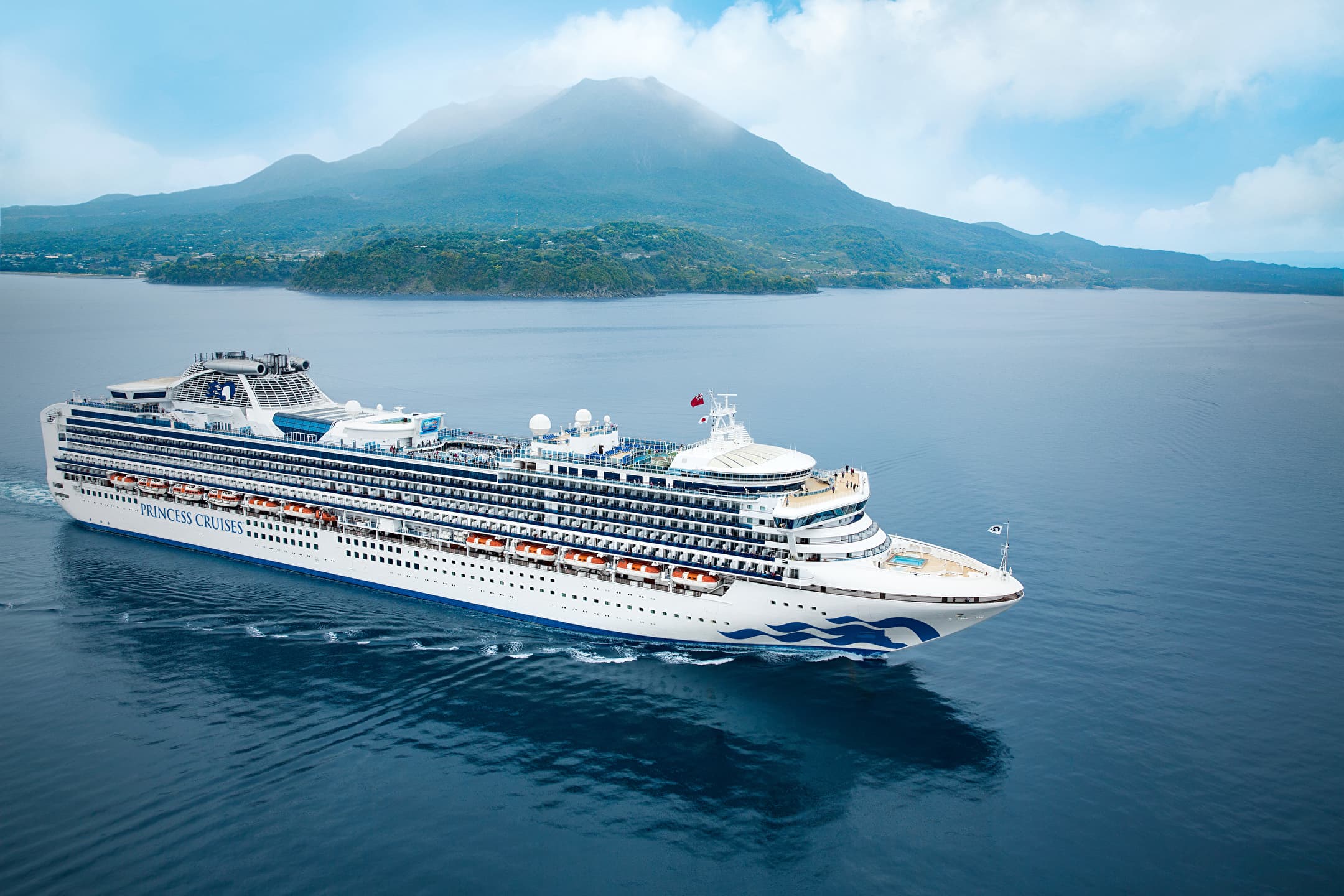
Princess Cruises · Diamond Princess
Depart
Feb 13, 2027
Return
Mar 16, 2027
Port
Singapore
Nights
31 nights
At a glance
- Built
- 2004
- Tonnage
- 115875
- Cabins
- 1337
- Crew
- 1,100
Diamond Princess is a treasure trove of exceptional delights waiting to be discovered. Dine on freshly prepared sashimi in Kai Sushi, watch street performers in the dazzling Atrium, or take in a lavish production show in our state-of-the-art theater. And for a unique treat visit the Izumi Japanese Bath, the largest of its kind at sea.
Ask our cruise specialists about cruise line loyalty benefits, status match options, drinks packages, gratuities and any current offers available on this sailing.
On board

Internet Cafe
Itinerary
Cruise from Singapore to Yokohama, Tokyo
Day 1Cruise departs from SingaporeFeb 13, 2027 • Departs at: 4 pm
Singapore - the very name summons visions of the mysterious East. The commercial center of Southeast Asia, this island city-state of four million people is a metropolis of modern high-rise buildings, Chinese shop-houses with red-tiled roofs, sturdy Victorian buildings, Buddhist temples and Arab bazaars. Founded in 1819 by Sir Stamford Raffles of the fabled East India Company, the city is a melting pot of people and cultures. Malay, Chinese, English and Tamil are official languages. Buddhism, Taoism, Islam, Hinduism and Christianity are the major faiths. Singapore is an ever-fascinating island boasting colorful traditions, luxurious hotels and some of the finest duty-free shopping in the world. Lying just 85 miles north of the Equator at the tip of the Malay Peninsula, the island was a haven for Malay pirates and Chinese and Arab traders.
Day 2Kuala Lumpur (Port Kelang)Feb 14, 2027 • Arrives at: 8 am • Departs at: 6 pm
From a lawless huddle of kampongs in the trackless jungle, Kuala Lumpur, the capital city has grown into a fascinating metropolis. Steel and glass towers stand side by side with graceful stone colonial buildings and mosques adorned with slender minarets. The commercial, financial, economic and cultural heart of Malaysia, Kuala Lumpur (better known as KL), is a melting pot. Its population of 1.6 million is comprised of Malays, Chinese, Indians, and a mix of different cultures including Eurasians and others.
Day 3LangkawiFeb 15, 2027 • Arrives at: 11 am • Departs at: 8 pm
Langkawi comprises a group of 99 tropical islands lying off the northwestern coast of Peninsular Malaysia. The main island is known as Pulau Langkawi. The islands are shrouded with an intriguing heritage of myths and legends that feature ogres and gigantic birds, warriors and fairy princesses, battles and romance. Langkawi has been accorded the Geopark status by UNESCO, for its beautiful geological heritage of stunning landscapes, karsts, caves, sea-arches, stacks, glacial dropstones and fossils. With a geological history dating back 500 million years, the islands contain unique rock formations that stir the imagination and baffle the mind.
Day 4PenangFeb 16, 2027 • Arrives at: 7 am • Departs at: 5 pm
In 1786 Francis Light persuaded the Sultan of Kedah to cede Pulau Pinang - the "Isle of Betel nut" - to the English crown. Legend has it that Light persuaded his men to clear the overgrown island of Penang by firing a cannon filled with gold coins into the jungle as an incentive. The island was renamed Prince of Wales Island, and its major town was christened Georgetown after King George III. Whether the story is true or not, Penang quickly became a major trading port for tea, spices, china and cloth. Here European, Malaysian, Hindu, Arabic and Chinese cultures met, melded and flourished. Today George Town is a cosmopolitan city that has preserved its unique heritage and its exotic blend of cultures. George Town is perhaps the best-preserved city in Southeast Asia. It boasts a European-style esplanade and a wealth of temples, mosques and Chinese clan houses. Listed as a UNESCO World Cultural Heritage Site in 2008, this virgin paradise has no shortage of cultural sights and natural sce…
Day 5PhuketFeb 17, 2027 • Arrives at: 7 am • Departs at: 6 pm
Hailed as the "Pearl of the Andaman Sea," this island off Thailand's long southern coast boasts a colorful history. A crossroads for trade, Phuket has been a melting pot of Thai, Malay, Chinese and Western influences. Its importance over the past 500 years stemmed from the island's natural resources, which include tin, hardwoods and rubber. In the past half-century, Phuket has enjoyed wide popularity as one of the premier travel destinations in Southeast Asia. Travelers are drawn to the island's beaches, crystalline waters, and dramatic, forested hills.
Day 6At SeaFeb 18, 2027
Day 7At SeaFeb 19, 2027
Day 8At SeaFeb 20, 2027
Day 9Cam Ranh (Nha Trang)Feb 21, 2027 • Arrives at: 7 am • Departs at: 4 pm
One of Vietnam's most popular seaside resorts, Nha Trang offers white-sand beaches, azure waters and palm trees swaying in the breeze. Gaily painted fishing boats line the harbors. Small farm villages nestle in the countryside's lush valleys. Yet this relaxed city of some 300,000 souls boasts a long and storied past. Nha Trang was the capital of the Champa Kingdom, which dominated this corner of Southeast Asia for 13 centuries. North of the city, the great Cham Tower complex overlooks the Cai River and offers mute testimony to the kingdom's glory. Today, the towers attract locals and visitors alike, many of whom come to meditate while contemplating superb views of the river and the bay. Nha Trang's tourist district consists of a scattering of colonial-era beachfront hotels and sidewalk cafes. The city was a popular spot for U.S. servicemen during the Vietnam War.
Day 10At SeaFeb 22, 2027
Day 11Halong Bay/Hanoi (Cai Lan)Feb 23, 2027 • Arrives at: 9 am
The deepwater port of Cai Lan is your gateway to the splendors of North Vietnam. Nearby Halong Bay is one of the world's extraordinary scenic wonders. This World Heritage Site boasts a calm bay studded with over 3,000 dramatic limestone islands, islets and rock formations. Visitors to Cai Lan can also venture up the Red River to fabled Hanoi, the "Pearl of the North." Today, with memories of the Vietnam War fading, the city impresses with its splendid colonial architecture, ancient temples, superb parks and myriad lakes. It's little wonder that Northern Vietnam remains one of Asia's most popular vacation destinations. The limestone islands in Halong Bay are riddled with caves. The French who once ruled Vietnam called Go Dao Cave the Grotte de Merveilles, the grotto of marvels. Of course, they left their graffiti among the astounding assortment of stalactites and stalagmites.
Day 12Halong Bay/Hanoi (Cai Lan)Feb 24, 2027 • Departs at: 9 am
The deepwater port of Cai Lan is your gateway to the splendors of North Vietnam. Nearby Halong Bay is one of the world's extraordinary scenic wonders. This World Heritage Site boasts a calm bay studded with over 3,000 dramatic limestone islands, islets and rock formations. Visitors to Cai Lan can also venture up the Red River to fabled Hanoi, the "Pearl of the North." Today, with memories of the Vietnam War fading, the city impresses with its splendid colonial architecture, ancient temples, superb parks and myriad lakes. It's little wonder that Northern Vietnam remains one of Asia's most popular vacation destinations. The limestone islands in Halong Bay are riddled with caves. The French who once ruled Vietnam called Go Dao Cave the Grotte de Merveilles, the grotto of marvels. Of course, they left their graffiti among the astounding assortment of stalactites and stalagmites.
Day 12Scenic Cruising Halong BayFeb 24, 2027 • Arrives at: 9:30 am • Departs at: 11:30 am
Day 13Da Nang/Hue (Chan May)Feb 25, 2027 • Arrives at: 8 am • Departs at: 5:30 pm
The port of Chan May is located halfway between two historic and important cities: Da Nang and Hue. At the height of the Vietnam War, Da Nang was America's major strategic base. And the 1968 Tet Offensive marked a major turning point in that conflict - particularly in the bitter fighting for control of the old imperial capital. But that was nearly four decades ago. Today Hue is a World Heritage Site. Visitors will long remember its imposing Imperial Citadel and the serene harmony of the Thien Mu Pagoda. Marble Mountain Beach, where American marines stormed ashore in 1965, is now an internationally renowned resort. The surrounding coast is lined with superb white-sand beaches. Vietnam's major cultural attractions are within an easy drive.
Day 14At SeaFeb 26, 2027
Day 15Ho Chi Minh City (Phu My)Feb 27, 2027 • Arrives at: 7 am • Departs at: 5:30 pm
Over three decades have passed since the Vietnam War ended with the fall of Saigon. Today, the name of this bustling metropolis on the Mekong River is Ho Chi Minh City. Yet, the essence of the city, a major trading center since the 18th century, remains unchanged. The air is filled with the cries of street hawkers and honking horns. Bicycles, motorbikes and automobiles fly down the boulevards at dizzying speeds. And everywhere, friendly faces and warm greetings meet you. The port of Phu My (pronounced "Foo Me") is your gateway to Ho Chi Minh City and the seaside resort of Vung Tau.
Day 16At SeaFeb 28, 2027
Day 17SingaporeMar 1, 2027 • Arrives at: 7 am • Departs at: 4 pm
Singapore - the very name summons visions of the mysterious East. The commercial center of Southeast Asia, this island city-state of four million people is a metropolis of modern high-rise buildings, Chinese shop-houses with red-tiled roofs, sturdy Victorian buildings, Buddhist temples and Arab bazaars. Founded in 1819 by Sir Stamford Raffles of the fabled East India Company, the city is a melting pot of people and cultures. Malay, Chinese, English and Tamil are official languages. Buddhism, Taoism, Islam, Hinduism and Christianity are the major faiths. Singapore is an ever-fascinating island boasting colorful traditions, luxurious hotels and some of the finest duty-free shopping in the world. Lying just 85 miles north of the Equator at the tip of the Malay Peninsula, the island was a haven for Malay pirates and Chinese and Arab traders.
Day 18At SeaMar 2, 2027
Day 19Ho Chi Minh City (Phu My)Mar 3, 2027 • Arrives at: 8 am • Departs at: 6:30 pm
Over three decades have passed since the Vietnam War ended with the fall of Saigon. Today, the name of this bustling metropolis on the Mekong River is Ho Chi Minh City. Yet, the essence of the city, a major trading center since the 18th century, remains unchanged. The air is filled with the cries of street hawkers and honking horns. Bicycles, motorbikes and automobiles fly down the boulevards at dizzying speeds. And everywhere, friendly faces and warm greetings meet you. The port of Phu My (pronounced "Foo Me") is your gateway to Ho Chi Minh City and the seaside resort of Vung Tau.
Day 20At SeaMar 4, 2027
Day 21Da Nang/Hue (Chan May)Mar 5, 2027 • Arrives at: 8 am • Departs at: 5:30 pm
The port of Chan May is located halfway between two historic and important cities: Da Nang and Hue. At the height of the Vietnam War, Da Nang was America's major strategic base. And the 1968 Tet Offensive marked a major turning point in that conflict - particularly in the bitter fighting for control of the old imperial capital. But that was nearly four decades ago. Today Hue is a World Heritage Site. Visitors will long remember its imposing Imperial Citadel and the serene harmony of the Thien Mu Pagoda. Marble Mountain Beach, where American marines stormed ashore in 1965, is now an internationally renowned resort. The surrounding coast is lined with superb white-sand beaches. Vietnam's major cultural attractions are within an easy drive.
Day 22At SeaMar 6, 2027
Day 23Hong KongMar 7, 2027 • Arrives at: 7 am • Departs at: 11 pm
Skyscrapers form a glistening forest of steel and glass, junks and sampans ply the busy harbor waters, and the green, dragon-crested hills of Kowloon beckon. Welcome to Hong Kong, one of the world's great travel destinations. Now a semi-autonomous region of China, Hong Kong - literally "Fragrant Harbor" - has lost none of its charm, excitement or exoticism. Modern skyscrapers and luxury hotels climb the slopes of Hong Kong Island. Narrow streets are crammed with noodle vendors, fortunetellers and bonesetters. The endless array of shops offer the visitor everything from hand-tailored suits and ancient porcelain to the latest consumer electronics. And everywhere more than seven million people are moving at a breathtaking pace in one of the world's great monuments to capitalism, commerce and enterprise. The former Crown Colony has enough attractions to last a lifetime. To take in the entire spectacle, head to Victoria Peak for panoramic views. Enjoy lunch on one of the city's floating re…
Day 24At SeaMar 8, 2027
Day 25Taipei (Keelung)Mar 9, 2027 • Arrives at: 7 am • Departs at: 6 pm
The oldest Chinese reference to Taiwan dates back to the Han Dynasty in the 3rd century B.C. However, it wasn't until the 17th century A.D. that Chinese Hakka traders first settled on the island. These bold merchants were soon followed by European and Asian adventurers seeking to control and colonize the strategic island. The most famous migration of all occurred in 1948, when the government of the Republic of China fled the mainland. Taipei is one of the world's most important commercial centers. Despite its turbulent history, Taiwan today boasts an economy that is the envy of the world. Modern Taiwan is a world leader in the production of bicycles, computer chips, plastics, chemicals and computer notebooks. Taipei is a sophisticated modern metropolis that has not forgotten its rich traditional past. The port of Keelung is your gateway to Taiwan. Visit the bustling city of Taipei and other interesting areas surrounding on this fascinating island in the East China Sea.
Day 26IshigakiMar 10, 2027 • Arrives at: 7 am • Departs at: 4 pm
The balmy, subtropical climate draws countless visitors to its sandy shores, but Ishigaki offers much more than your typical island getaway. It is the cultural, political and economic center of the Yaeyama Islands, originally founded in 1908 as Yaeyama Village and becoming Ishigaki Town in 1926. Ishigaki was elevated to city status on July 10, 1947. A hilltop Shinto shrine which dates back to 1614 is the perfect place to start your exploration of this lovely town. Noted for its white-sand beaches and turquoise waters to which snorkelers flock for a glimpse of the island's famed manta rays, Ishigaki Island offers many opportunities to commune with nature. Ishigaki has palm forests, mangrove-lined rivers suited for kayaking, and jungle-covered mountains perfect for hiking adventures. Amidst such natural beauty, you'll find an abundance of cultural sites with ties to the island's rich history. The Yaeyama Museum displays historic artifacts as well as traditional cultural items, and a vis…
Day 27OkinawaMar 11, 2027 • Arrives at: 7 am • Departs at: 7 pm
The largest island in the Ryukyu Archipelago, Okinawa has been a center of trade and a source for conflict through its history. The island has been an independent kingdom, the feudal possession of a Japanese daimyo and a prefecture of Japan following the Meiji Restoration of 1866. Okinawa was the scene of bitter fighting during the closing days of World War II. Over 100,000 civilians perished and the island was left in ruins. A US military possession, Okinawa returned to Japanese rule in 1972. Naha is the island's largest city and the capital of Okinawa Prefecture. Okinawa is the birthplace of karate. One of the world's most popular martial arts, karate is a fusion of Chinese kung fu and traditional island martial arts.
Day 28At SeaMar 12, 2027
Day 29KochiMar 13, 2027 • Arrives at: 9 am • Departs at: 6 pm
Kochi sits on the broad alluvial plain facing Urado Bay. This city in Shikoku takes its name from the great feudal castle that sits at its very heart. Completed in 1611, Kochi Castle was the seat of Yamauchi Kazutoyo, a noted warrior who supported Tokugawa Ieyasu in his successful quest to become Shogun. Tosa Province and Kochi Castle were Yamauchi's reward for faithful service. There is an historical irony here: 250 years later, a Kochi native son - a former low-ranked samurai and now ronin named Sakamoto Ryoma - played a pivotal role in bringing the Tokugawa Shogunate to an end and restoring the Emperor of Japan to political prominence. The prize once awarded for faithful service had become a hotbed of support for the Meiji Restoration. Kochi is one of the wettest places in Japan - and a frequent target for cyclonic storms or typhoons. Southeast of the city, warm oceans currents washing against the Aki Mountains create a subtropical landscape of hibiscus, palm and ficus at Muroto-An…
Day 30KobeMar 14, 2027 • Arrives at: 7 am • Departs at: 7 pm
The Port of Kobe is a Japanese maritime port in Kobe, Hyōgo in the greater Osaka area, backgrounded by the Hanshin Industrial Region.
Day 31At SeaMar 15, 2027
Day 32YokohamaMar 16, 2027 • Arrives at: 6:30 am
Yokohama and Edo began life as sleepy fishing villages. That changed in the early 17th century after Tokugawa Ieyasu became Shogun. Edo became the center of political power in Japan, a position the city retained even after the restoration of Imperial rule in 1866. Contemporary Tokyo may be the most astonishing city on earth. It's a paradoxical mix of ancient tradition and postmodern culture. The Ginza - an international shopping mecca - stands near the serene grounds of the Imperial Palace, and the hyper-speed of 21st century consumerism is mysteriously reconciled with the elegance and serenity of traditional culture. Tokyo provides the traveler with a dizzying experience. With the Meiji Restoration of 1868, Edo was renamed Tokyo, the "Eastern Capital," to distinguish it from the old imperial capital at Kyoto, the "Western Capital."
Cabin options
Compare the cabin types and onboard features shown for this sailing. Final price and availability are confirmed by our team when you inquire.
32 cabin grades listed for this sailing.
Next step
Cabin grades and prices
View every cabin grade and current availability on the next step.