
129-Day Grand World Voyage
Holland America Line · Volendam
Depart
Jan 5, 2027
Return
May 14, 2027
Port
Fort Lauderdale
Nights
129 nights
At a glance
- Built
- 1999
- Tonnage
- 61214
- Cabins
- 716
- Crew
- 615
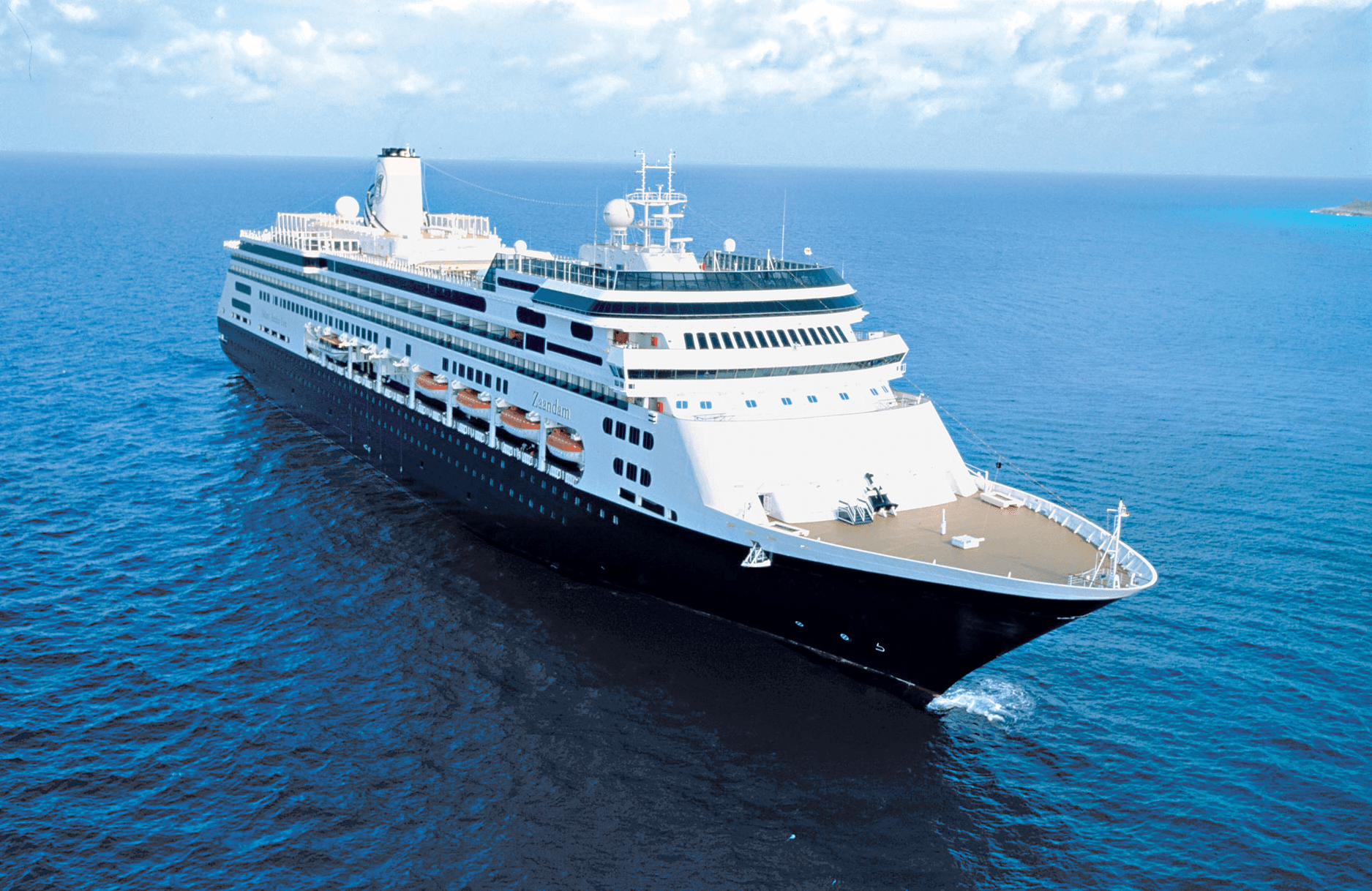
Elegant and spacious, Volendam takes her décor cues from the garden. Her grand public spaces are graced with floral fabrics and tapestries, as well as huge vases of fresh floral arrangements. While on board, explore the wonders of nature in BBC Earth Experiences. Enjoy regional cooking demonstrations and food and wine tastings with EXC Port to Table programming. Relax with a spa treatment at the Greenhouse Salon & Spa.
Ask our cruise specialists about cruise line loyalty benefits, status match options, drinks packages, gratuities and any current offers available on this sailing.
On board

Pinnacle Grill

The Dining Room
Itinerary
Cruise from Fort Lauderdale and back
Day 1Cruise departs from Fort LauderdaleJan 5, 2027 • Departs at: 7 pm
There is an abundance of things to see and do in the Ft. Lauderdale area: visit the newly redesigned Ft. Lauderdale Beach and cafes, stroll the historic Riverwalk, shop the luxurious stores on Las Olas Boulevard or adventure to the Everglades for an intriguing air boat excursion.
Day 2At SeaJan 6, 2027
Day 3At SeaJan 7, 2027
Day 4At SeaJan 8, 2027
Day 5Enter Panama Canal at CristobalJan 9, 2027 • Arrives at: 6 am • Departs at: 6 am
Day 5Cruising Panama CanalJan 9, 2027
Day 5Exit Panama Canal BalboaJan 9, 2027 • Arrives at: 6 pm • Departs at: 6 pm
Day 6Crossing the EquatorJan 10, 2027
Day 7MantaJan 11, 2027 • Arrives at: 5 am • Departs at: 4 pm
Just outside this tranquil coast town lie the villages where the famous Panama hats are woven. Farther afield: colonial Quito, so perfectly preserved the entire Old Town has been designated a World Heritage Site. Sample shore excursions: A Day in Quito; Manta & Montecristi.
Day 8At SeaJan 12, 2027
Day 9Callao (Lima)Jan 13, 2027 • Arrives at: 10 am
Peru's bone-dry capital (only Cairo is drier as far as national capitals go), Lima is a booming energetic metropolis built on ancient foundations millennia in the making. At first she is no looker, but scratch that parched surface below the high-rise offices and dust-settled dwellings and Lima's charms begin to shine: Strikingly preserved pre-Columbian ruins sit defiantly among modern skyscrapers, a cultural potpourri of world-class museums, sun-toasted beaches beautifully illuminated by nightly sunsets and one of the most exciting and dynamic culinary landscapes in the world. Lima is a tale of two cities. Colonial charms abound in the city's historic center, where impressive plazas—including the cinematic 16th-century Plaza de Armas, the handiwork of Spanish conquistador Francisco Pizarro—are overseen by Baroque and neoclassical cathedrals, palaces, monasteries and remnants of ancient city walls. But a different Lima emerges in the cliff-hugging seaside barrios of Miraflores and Barr…
Day 10Callao (Lima)Jan 14, 2027 • Departs at: 6 pm
Peru's bone-dry capital (only Cairo is drier as far as national capitals go), Lima is a booming energetic metropolis built on ancient foundations millennia in the making. At first she is no looker, but scratch that parched surface below the high-rise offices and dust-settled dwellings and Lima's charms begin to shine: Strikingly preserved pre-Columbian ruins sit defiantly among modern skyscrapers, a cultural potpourri of world-class museums, sun-toasted beaches beautifully illuminated by nightly sunsets and one of the most exciting and dynamic culinary landscapes in the world. Lima is a tale of two cities. Colonial charms abound in the city's historic center, where impressive plazas—including the cinematic 16th-century Plaza de Armas, the handiwork of Spanish conquistador Francisco Pizarro—are overseen by Baroque and neoclassical cathedrals, palaces, monasteries and remnants of ancient city walls. But a different Lima emerges in the cliff-hugging seaside barrios of Miraflores and Barr…
Day 11At SeaJan 15, 2027
Day 12At SeaJan 16, 2027
Day 13At SeaJan 17, 2027
Day 14At SeaJan 18, 2027
Day 15At SeaJan 19, 2027
Day 16Easter IslandJan 20, 2027 • Arrives at: 8 am • Departs at: 5 pm
The imposing stone statues - known as moai - on Easter Island have long fascinated anthropologists (and travelers). Who were the people that carved, moved and erected such giants? What was the statues' significance? Why did the culture disappear? The statues won t say. Ponder the mysteries yourself on an island tour.
Day 17At SeaJan 21, 2027
Day 18At SeaJan 22, 2027
Day 19Pitcairn IslandJan 23, 2027 • Arrives at: 8 am • Departs at: 12 pm
This largely uninhabited island's rugged cliffs plunge into the blue waters of the South Pacific Ocean. Pitcairn Island is accessible only by boat and has 45 permanent residents. Once there, you can view ancient Polynesian rock carvings, or explore the Court House and church in Pitcairn's main square, where Fletcher Christian's Bounty bible is displayed.
Day 20At SeaJan 24, 2027
Day 21At SeaJan 25, 2027
Day 22PapeeteJan 26, 2027 • Arrives at: 8 am
When Captain James Cook first sailed to Tahiti in 1769, he and his crew all thought they’d found paradise. Cook hinted at it in his journals, in coy language that would have been acceptable in his day; his men felt considerably less reserve, and returned home sporting tattoos and stories of a people who ate what fell from trees, and lived lives of freedom unknown in Europe. All without much need for clothes. Although all of French Polynesia is sometimes referred to as Tahiti, Tahiti proper is only one island, ringed by a reef that turns the water shades of blue even sapphires can’t come near. Rivers flow down from its high peaks, and every night, the sun goes down behind the neighboring island of Moorea, outlining the mountains like a laser show. Papeete, the capital of French Polynesia, is a bustling business and government center, with black-pearl shops on almost every corner. As you move into the countryside, time starts to slip, and it's just the changeless ocean and the almost un…
Day 23PapeeteJan 27, 2027 • Departs at: 5 am
When Captain James Cook first sailed to Tahiti in 1769, he and his crew all thought they’d found paradise. Cook hinted at it in his journals, in coy language that would have been acceptable in his day; his men felt considerably less reserve, and returned home sporting tattoos and stories of a people who ate what fell from trees, and lived lives of freedom unknown in Europe. All without much need for clothes. Although all of French Polynesia is sometimes referred to as Tahiti, Tahiti proper is only one island, ringed by a reef that turns the water shades of blue even sapphires can’t come near. Rivers flow down from its high peaks, and every night, the sun goes down behind the neighboring island of Moorea, outlining the mountains like a laser show. Papeete, the capital of French Polynesia, is a bustling business and government center, with black-pearl shops on almost every corner. As you move into the countryside, time starts to slip, and it's just the changeless ocean and the almost un…
Day 23Bahia d' OpunohaJan 27, 2027 • Arrives at: 8 am • Departs at: 6 pm
Shaped like a heart and crowned with emerald-green spires, Moorea is easy to love. The Magical Island, as it's nicknamed, is celebrated for its untamed landscape and symmetrical side-by-side bays (called Opunohu and Cook's); it was said to be the inspiration for the mythical isle of Bali Hai in James Michener’s Tales of the South Pacific. Its languid lagoon seems without end, wrapping this 132-square-kilometer (50-square-mile) isle in shades of liquid blue, from pale aqua to intense turquoise. Dolphins and stingrays glide through the waves alongside snorkelers and divers exploring the stunning undersea scene. Venture inland to the valleys and another aspect of island life becomes clear: agricultural abundance, with crops that include pineapples, bananas, taro, sugarcane, coffee and cotton. Moorea has shopping, too, mainly for lustrous Tahitian black pearls and brightly patterned pareus (wraparound skirts). Wherever you head, you'll find the South Pacific you have dreamed of, moving to…
Day 24Bora BoraJan 28, 2027 • Arrives at: 7 am • Departs at: 5 pm
When you arrive to Tahiti on your Bora Bora cruise you first see it from the ship as it navigates Teavanui Pass, you'll be astonished. Brilliant blue water in far too many shades to count and palm-dotted white-sand motus (islets) encircle a lush island topped by craggy Mount Otemanu. Close your eyes and open them again. Yes, you are on a beautiful French Polynesia cruise and it’s all real! This South Pacific isle with its exotic Tahitian-French allure has been captivating honeymooners and vacationers from the time the first overwater bungalows were built here nearly 50 years ago. For years, Bora-Bora has also drawn a multitude of divers eager to scope out its array of reef fish, rays and sharks. It's hard to compete with the sheer drama of the water, or with shape-shifting Mount Otemanu, which looks completely different from every angle. In fact, Vaitape, the island's largest city with a population of about 5,000 people, doesn’t even try to compete. Not much changes in this sleepy por…
Day 25At SeaJan 29, 2027
Day 26Crossing the International Date lineJan 30, 2027
Day 27ApiaFeb 1, 2027 • Arrives at: 10 am • Departs at: 6 pm
The remote Polynesian nation of Samoa, surrounded by dragonfly-bright seas, boasts a dramatic volcanic landscape with vibrant green jungles. The country has two major landmasses: Upolu, the most populous of the Samoan islands, and Savai'i, the third-largest Polynesian island. Samoa's capital, Apia, sits midway along Upolu's north coast. This sprawling metropolitan area features a waterfront promenade and Beach Road, an avenue curving along the harbor where the Royal Samoa Police Band marches and hoists the national flag at Government House on weekday mornings. Check out their sharp ensembles, which feature navy lavalava (kilts) and robin's-egg-blue dress shirts. Adventurers will want to make a splash at Palolo Deep National Marine Reserve near Apia harbor, while bookworms make a beeline to the home and grave of Robert Louis Stevenson. But perhaps the best way to experience fa'a Samoa (the Samoan Way) is by visiting the small villages scattered throughout the two islands. Here, you'll…
Day 28At SeaFeb 2, 2027
Day 29Savusavu, Vanua Levi, FijiFeb 3, 2027 • Arrives at: 8 am • Departs at: 5 pm
Known as the hidden paradise of Fiji, the striking harbor town of Savusavu is located on the south coast of Vanua Levu Island. Backed by green hills and featuring a bustling marina and attractive waterfront, the town was originally established as a trading center for products like sandalwood, bêche-de-mer and copra. Today the town is known for its burgeoning eco-tourism infrastructure, which has spawned several luxury resorts. The surrounding waters mean an abundance of scuba diving and yachting. On land, there are historic hot springs, waterfall hikes, bird-spotting in the Waisali Rainforest Reserve and visits to traditional villages. There are several key landmarks too, including the 19th-century Copra Shed Marina, which now serves as the local yacht club, and the Savarekareka Mission, a chapel built around 1870 by the first Roman Catholic mission on Vanua Levu. Of course, it’s also possible just to relax and enjoy the palm-lined pristine beaches and the town’s assortment of restaur…
Day 30Suva, Viti Levu, Fiji IslandsFeb 4, 2027 • Arrives at: 8 am • Departs at: 5 pm
In the time before time, the people who would become the Fijians were shaped of wet earth, pulled from the sea on a giant fishhook and given more than 300 islands to live on. Or if you want to be a little more prosaic, the people of Fiji were part of the great Lapita migration, which began somewhere around Taiwan and headed east. The first boats to arrive stopped migrating when they found this maze of islands formed by the earth turning itself inside out with volcanoes. The new Fijians spent a couple centuries involved in internecine war and developed the bad habit of using clubs to bop all strangers. But strangers kept showing up for the simple reason that Fiji, especially the southeast coast of Viti Levu, was geographically wonderful: the kind of spot that made mariners chuck their anchors and start trying to make a living as a settler. And who knows, maybe the Fijians just had tired arms, but by the time missionaries came, powers had shifted and the bopping had stopped. Today that…
Day 31At SeaFeb 5, 2027
Day 32Eaos, Lifou, New CaledoniaFeb 6, 2027 • Arrives at: 9 am • Departs at: 5 pm
Easo is the capital of Lifou, the largest and most populated of the Loyalty Islands. Home to around 10,000 Kanak people, it’s a simple, relatively undeveloped and largely unspoiled place, famed for two things: a sandy palm-fringed beach that fans out on either side of the main dock, and a very friendly atmosphere. Cruise ships are often welcomed to this island paradise with traditional tribal dances as well as a colorful local market that pops up to sell food, drinks and crafts. The island itself offers a diverse landscape that ranges from the steep cliffs of the northern coast to the pristine white-sand beaches and stunning turquoise waters along the southern coast. The island’s many walking paths and trails take in pretty churches—including the famous missionary chapel, the Chapelle Notre Dame de Lourdes—and pass scenic observation points, not to mention a wide variety of wildflowers and plants. Visitors can also tour vanilla plantations to learn about this venerable spice and its p…
Day 33NoumeaFeb 7, 2027 • Arrives at: 7 am • Departs at: 3 pm
New Caledonia's lush beauty has earned it many names, including "The Island Closest to Paradise" and "The St. Tropez of the Pacific." The poincianas, or flame trees, will color the island with their bright red umbrellas when you visit.
Day 34At SeaFeb 8, 2027
Day 35At SeaFeb 9, 2027
Day 36Sydney, AustraliaFeb 10, 2027 • Arrives at: 6:30 am
If you want a snapshot of Australia's appeal, look no further than Sydney: The idyllic lifestyle, friendly locals and drop-dead natural beauty of this approachable metropolis and its attractions explain why the country tops so many travelers' wish lists. But Sydney is more than just the embodiment of classic antipodean cool—the city is in a constant state of evolution. A list of what to do in Sydney might start with the white-hot nightlife, with its new cocktail bars and idiosyncratic mixology dens. Inventive restaurants helmed by high-caliber chefs are dishing up everything from posh pan-Asian to Argentine street food, while the famous dining temples that put Sydney on the gastronomic map are still going strong too. The famed harbor is among the top sights—home to twin icons the Sydney Opera House and the Sydney Harbour Bridge, it is the stepping-off point for some of the city's best cultural attractions and sightseeing. In one day you can sail around the harbor, get a behind-the-sce…
Day 37Sydney, AustraliaFeb 11, 2027 • Departs at: 7 pm
If you want a snapshot of Australia's appeal, look no further than Sydney: The idyllic lifestyle, friendly locals and drop-dead natural beauty of this approachable metropolis and its attractions explain why the country tops so many travelers' wish lists. But Sydney is more than just the embodiment of classic antipodean cool—the city is in a constant state of evolution. A list of what to do in Sydney might start with the white-hot nightlife, with its new cocktail bars and idiosyncratic mixology dens. Inventive restaurants helmed by high-caliber chefs are dishing up everything from posh pan-Asian to Argentine street food, while the famous dining temples that put Sydney on the gastronomic map are still going strong too. The famed harbor is among the top sights—home to twin icons the Sydney Opera House and the Sydney Harbour Bridge, it is the stepping-off point for some of the city's best cultural attractions and sightseeing. In one day you can sail around the harbor, get a behind-the-sce…
Day 38At SeaFeb 12, 2027
Day 39At SeaFeb 13, 2027
Day 40Airlie BeachFeb 14, 2027 • Arrives at: 8 am • Departs at: 5 pm
Airlie Beach is the gateway to the Australia of your dreams. Although the Queensland town offers many antipodean delights such as palm-fringed beaches, a huge man-made lagoon and alfresco dining, there’s a great reason to head straight out of town: This is the jumping-off point for the magnificent Whitsundays, a group of 74 islands that are famous for their timeless natural beauty, white-sand beaches and crystal-clear water.Your options here are pretty much limitless—charter a boat and sail around the archipelago; snorkel or scuba dive the Great Barrier Reef; or snap the perfect selfie on sublime Whitehaven Beach, consistently named among the best beaches in the world. There are many other activities closer to shore—from kayaking to glass-bottom boat tours—as well as hiking through lowland tropical rain forest in Conway National Park, for those who want to keep their feet firmly on the ground. And if you’re simply looking to kick back with a drink in hand and enjoy the magnificent vie…
Day 41TownsvilleFeb 15, 2027 • Arrives at: 8 am • Departs at: 5 pm
The Townsville region in North Queensland, Australia is a bustling and vibrant destination boasting diversity in landscape, lifestyle and experiences. Experience barra fishing in the Burdekin or Hinchinbrook, snorkeling fringing reefs around Magnetic Island, scuba diving on the Great Barrier Reef, bird watching at the surrounding wetlands, skydiving The Strand in Townsville, or taking a wagon ride in Charters Towers. With reef, rainforest, outback and wetlands all within easy traveling distance of Townsville, Australia’s spectacular natural wonders await your exploration. VIEW CRUISES F
Day 42At SeaFeb 16, 2027
Day 43At SeaFeb 17, 2027
Day 44At SeaFeb 18, 2027
Day 45DarwinFeb 19, 2027 • Arrives at: 8 am • Departs at: 5 pm
Surrounded on three sides by the turquoise Timor Sea, the Northern Territory’s capital is closer in both distance and temperament to Southeast Asia than it is to most of Australia’s major cities. The lifestyle here is tropical, which means a relaxed atmosphere, balmy weather, fabulous fusion food and vibrant outdoor markets. This cosmopolitan city has fewer than 140,000 residents, but they include some 50 nationalities. After heavy bombing in World War II and a disastrous cyclone in 1974, Darwin has been largely rebuilt, and it's modern and well planned. In the downtown area you'll find everything from great shopping to a crocodile park. You can trace the region's dramatic history at innovative museums and gallery-hop to see indigenous art. After your sightseeing stroll, have a late lunch at one of the many excellent restaurants. The food options range from authentic Malaysian dishes like laksa, a spicy noodle soup, to a plethora of fresh seafood—mud crab, barramundi and more. You may…
Day 46At SeaFeb 20, 2027
Day 47At SeaFeb 21, 2027
Day 48Benoa (Denpasar)Feb 22, 2027 • Arrives at: 7 am
Indonesia is made up of more than 13,000 islands, but even with all that competition, Bali manages to stand out. Beautiful temples and shrines of all sizes are spread across the island, tucked down narrow alleyways, hidden within the jungle or serenely presiding over scenic locations, like the dramatic Pura Tanah Lot atop a rock formation just off Bali’s western coast. Bali is well known for its arts—traditional music and dance, painting, wood and stone carvings, silver jewelry and ikat and batik textiles. The island’s artistic center is the village of Ubud, and its art markets and boutiques carry beautiful Balinese pieces to take home. When it comes to dining, whether you’re craving a burrito or satay, you can find a restaurant that serves it. Don’t leave the island, however, without sampling Balinese cuisine. Local cooking, which reflects Chinese and Indian influences, uses blends of aromatic spices to season grilled meats (though not beef—Bali is an island of Hindu culture in mostl…
Day 49Benoa (Denpasar)Feb 23, 2027 • Departs at: 4 pm
Indonesia is made up of more than 13,000 islands, but even with all that competition, Bali manages to stand out. Beautiful temples and shrines of all sizes are spread across the island, tucked down narrow alleyways, hidden within the jungle or serenely presiding over scenic locations, like the dramatic Pura Tanah Lot atop a rock formation just off Bali’s western coast. Bali is well known for its arts—traditional music and dance, painting, wood and stone carvings, silver jewelry and ikat and batik textiles. The island’s artistic center is the village of Ubud, and its art markets and boutiques carry beautiful Balinese pieces to take home. When it comes to dining, whether you’re craving a burrito or satay, you can find a restaurant that serves it. Don’t leave the island, however, without sampling Balinese cuisine. Local cooking, which reflects Chinese and Indian influences, uses blends of aromatic spices to season grilled meats (though not beef—Bali is an island of Hindu culture in mostl…
Day 50SurabayaFeb 24, 2027 • Arrives at: 10 am • Departs at: 6 pm
Indonesia’s second-largest city and Java’s capital, Surabaya is known as the City of Heroes thanks to the important role it played in capturing international attention during the country’s revolution in the 1940s. And that independent spirit is still palpable among the metropolis's internationally diverse population of nearly three million people. Surabaya is home to Indonesia’s only synagogue as well as the largest mosque in East Java. And colonial-era buildings sit just a short stroll from glitzy new shopping centers. Visitors have much to experience, whether taking in the extensive artifacts in the Museum Mpu Tantular, seeing where Indonesia’s clove cigarettes got their beginnings at the House of Sampoerna or venturing into the city’s green lung with a boat ride through the mangrove forests of Wonorejo. You’ll feel transported to a Middle Eastern bazaar at the Pasar Ampel, where the vendors hawk spices, sticky sweet dates and imported carpets. And a visit to Kenjeran Beach, right i…
Day 51SemarangFeb 25, 2027 • Arrives at: 8 am • Departs at: 7 pm
Step back into the colonial days of the Dutch East India Company in Old Semerang. Or journey to Borobudur Temple, where ten massive stone terraces, each representing a different stage of enlightenment, are topped by the Great Stupa. Sample shore excursions: Semarang City Tour; Borobudur.
Day 52At SeaFeb 26, 2027
Day 53Crossing the EquatorFeb 27, 2027
Day 54SingaporeFeb 28, 2027 • Arrives at: 7 am • Departs at: 6 pm
City-states are rare in the present day—and none are quite like Singapore. In the 20th century, the Southeast Asian nation hurtled itself into the modern world, and it continues to expand its state-of-the-art transportation system and build its edgy skyline. Yet Singapore's urban plan wisely maintained its intimate neighborhoods, many with streets lined with colorful shophouses (a type of building unique to parts of Asia, with businesses located on their ground floors and residences above). Add the city’s mix of ethnic groups—mainly Malays, Chinese and Indians—and you get a vibrant cultural scene that attracts a cosmopolitan, international community. Singapore's food scene—which is arguably the world's most dynamic and runs the gamut from beloved street hawkers to Michelin-starred venues—would merit a trip alone, as would its never-ending shopping options. But the city is also packed with world-class museums, many designed by celebrated architects, and it hosts many major internationa…
Day 55Port KelangMar 1, 2027 • Arrives at: 8 am • Departs at: 6 pm
As you travel from Port Kelang to Malaysia's capital, Kuala Lumpur, 37 kilometers (23 miles) to the northeast, it can be hard to believe that the city with a skyline of soaring towers was a small mining town for much of the 19th century. That changed beginning in 1880, when the British moved the capital of Malaya here. Yap Ah Loy—a Chinese-born émigré who rose from miner to political titan—and British politician Frank Swettenham were crucial in turning KL (as it's often called) into a true city. Their program of improvements, including establishing Kuala Lumpur’s first school and building a number of roads, continues to this day. For more than a century, Kuala Lumpur has been determined to become bigger and better. For all its focus on the future, Kuala Lumpur has preserved some rich historic architecture, including the cheerful Art Deco Central Market, the Mughal-style Old Railway Station and the Tudor Revival Royal Selangor Club. These colonial-era buildings contrast nicely with new…
Day 56PenangMar 2, 2027 • Arrives at: 8 am • Departs at: 5 pm
Malaysia is the very definition of multiethnic and multicultural: Its population is a mix of Chinese, Indians and ethnic Malays, and its art, food, culture and language are influenced by former Portuguese, Dutch and British colonizers. Nowhere is this more evident than in Penang, which was the British Empire’s first settlement in Southeast Asia—the beginning of more than 150 years of British rule, which ended in 1948. Penang is divided by the Strait of Malacca into Penang Island and, on the Malay Peninsula, Seberang Perai. It’s easy to while away a day in George Town, the island’s capital and a UNESCO World Heritage Site, visiting ornate historic houses, snapping pictures of its charming streets and breaking for spicy laksa (coconut-curry soup) and kopi peng (iced coffee with condensed milk). Beyond George Town, Penang has a number of natural gems, including the idyllic Monkey Beach—with its white sand, clear waters and the occasional macaque—and Tropical Spice Garden, a must for anyo…
Day 57PhuketMar 3, 2027 • Arrives at: 8 am • Departs at: 5 pm
Situated off the west coast of Thailand in the Andaman Sea, Phuket is Thailand’s largest island. Gain an understanding of Phuket history at the Talang National Museum; marvel at the elaborate ornamental design of Wat Chalong, Phuket's most important Buddhist temple; and of course spend time on one of the islands many incredible world-class beaches. Sample shore excursions: Sea Canoe Adventure; Phang Nga Bay.
Day 58At SeaMar 4, 2027
Day 59At SeaMar 5, 2027
Day 60Hambantota, Sri LankaMar 6, 2027 • Arrives at: 9 am • Departs at: 7 pm
Off the beaten track and tranquil—those adjectives describe just part of the allure of Sri Lanka’s southeastern corner. This is a quiet, laid-back, rural region of sleepy villages, farms and seemingly endless golden-sand beaches fringed by coconut palms and fronting the Indian Ocean's cerulean waters. Beyond Hambantota's new world-class port, colorful fishing boats cluster in its small harbor; their bounty can be seen in the daily fish market. Much of this part of Sri Lanka was off-limits during the country's civil war; then, it was hit hard by the 2004 tsunami. Fortunately the region has mostly recovered and is now open to tourists, who are discovering its natural beauty and a Sri Lankan way of life that is fast disappearing.
Day 61ColomboMar 7, 2027 • Arrives at: 7 am • Departs at: 9 pm
Scarred by decades of civil war, Sri Lanka and its commercial capital, Colombo, are relatively new to modern-day tourism. But Colombo has been a crucial trading post for more than 2,000 years. The city rose to prominence as Sri Lanka's most important port town in the 16th century with the arrival of Portuguese fleets. After a period under Dutch rule, Ceylon—as Sri Lanka was then called—became part of the British Empire in 1802. Sri Lanka gained independence in 1948, but the country experienced intense unrest from 1983 until 2009, when Sri Lanka's civil war finally came to an end. Many visitors head for the pristine beaches or up to the mist-draped mountains of Sri Lanka's tea country, and find that Colombo merits more than just a quick stop. Development continues at breakneck speed here, with skyscrapers jostling for space alongside the elegant architecture of its colonial past. Bustling markets and newfangled shops rub shoulders with ancient temples and rich layers of history in this…
Day 62At SeaMar 8, 2027
Day 63MaleMar 9, 2027 • Arrives at: 8 am • Departs at: 11 pm
Densely populated and lively, Malé is the bustling island capital of the Maldives. Trace the country’s unusual history at the National Museum and visit the Old Friday Mosque, dating from 1656.
Day 64At SeaMar 10, 2027
Day 65At SeaMar 11, 2027
Day 66At SeaMar 12, 2027
Day 67At SeaMar 13, 2027
Day 68Port LouisMar 14, 2027 • Arrives at: 8 am • Departs at: 5 pm
Port Louis is the capital city of Mauritius, in the Indian Ocean. It's known for its French colonial architecture and the 19th-century Champ de Mars horse-racing track. The Caudan Waterfront is a lively dining and shopping precinct. Nearby, vendors sell local produce and handicrafts at the huge Central Market. The Blue Penny Museum focuses on the island’s colonial and maritime history, along with its culture.
Day 69La Possession, ReunionMar 15, 2027 • Arrives at: 7 am • Departs at: 4 pm
La Possession is a commune in the French overseas department of Réunion. It is located on the northwest side of the island of Réunion, between the capital of Saint-Denis and the commune of Le Port.
Day 70At SeaMar 16, 2027
Day 71At SeaMar 17, 2027
Day 72At SeaMar 18, 2027
Day 73Port Elizabeth, South AfricaMar 19, 2027 • Arrives at: 12 pm • Departs at: 9 pm
Day 74At SeaMar 20, 2027
Day 75Cape TownMar 21, 2027 • Arrives at: 8 am
Cape Town's spectacular setting on Table Bay, beneath the 1,082-meter (3,550-foot) Table Mountain and Lion's Head, seldom fails to take one's breath away, whether you are a local or a visitor. If Johannesburg is South Africa's New York, this port city of four million, settled by traders from the Dutch East India Company in 1652, is its San Francisco. With a rich array of restaurants, galleries, vineyards and countless beaches, as well as a Mediterranean climate, life on the Cape Peninsula, which stretches for some 70 kilometers (43 miles) from downtown to the most southerly point, Cape Point, is genteel and all about good, healthy living and staying outdoors as much as possible. The Table Bay side of the city, known for its luxurious seaview properties and bustling nightlife, is countered by equally intriguing False Bay, which lies behind Table Mountain and is home to quaint, cobblestoned fishing villages like Kalk Bay, as well as the city's famous penguin colony. There, too, you'll f…
Day 76Cape TownMar 22, 2027
Cape Town's spectacular setting on Table Bay, beneath the 1,082-meter (3,550-foot) Table Mountain and Lion's Head, seldom fails to take one's breath away, whether you are a local or a visitor. If Johannesburg is South Africa's New York, this port city of four million, settled by traders from the Dutch East India Company in 1652, is its San Francisco. With a rich array of restaurants, galleries, vineyards and countless beaches, as well as a Mediterranean climate, life on the Cape Peninsula, which stretches for some 70 kilometers (43 miles) from downtown to the most southerly point, Cape Point, is genteel and all about good, healthy living and staying outdoors as much as possible. The Table Bay side of the city, known for its luxurious seaview properties and bustling nightlife, is countered by equally intriguing False Bay, which lies behind Table Mountain and is home to quaint, cobblestoned fishing villages like Kalk Bay, as well as the city's famous penguin colony. There, too, you'll f…
Day 77Cape TownMar 23, 2027 • Departs at: 11:59 pm
Cape Town's spectacular setting on Table Bay, beneath the 1,082-meter (3,550-foot) Table Mountain and Lion's Head, seldom fails to take one's breath away, whether you are a local or a visitor. If Johannesburg is South Africa's New York, this port city of four million, settled by traders from the Dutch East India Company in 1652, is its San Francisco. With a rich array of restaurants, galleries, vineyards and countless beaches, as well as a Mediterranean climate, life on the Cape Peninsula, which stretches for some 70 kilometers (43 miles) from downtown to the most southerly point, Cape Point, is genteel and all about good, healthy living and staying outdoors as much as possible. The Table Bay side of the city, known for its luxurious seaview properties and bustling nightlife, is countered by equally intriguing False Bay, which lies behind Table Mountain and is home to quaint, cobblestoned fishing villages like Kalk Bay, as well as the city's famous penguin colony. There, too, you'll f…
Day 78At SeaMar 24, 2027
Day 79LuderitzMar 25, 2027 • Arrives at: 8 am • Departs at: 5 pm
Lüderitz is a coastal town in southwestern Namibia. It’s known for its German colonial buildings, including the art nouveau Goerke Haus, built into the rock face on Diamond Hill. Nearby, Felsenkirche is a hilltop church with panoramic bay views stretching around to Robert Harbor.
Day 80Walvis BayMar 26, 2027 • Arrives at: 8 am • Departs at: 5 pm
Sitting between the Namib Desert and the Atlantic Ocean, Namibia's Walvis Bay sparkles in colors both vivid and varied, from its golden beaches, blue waters and deep-pink flamingos on the coast to the red-and-tan dunes of the nearby desert and the brightly painted colonial buildings of Swakopmund, just over 40 kilometers, or 24 miles, to the north. Its unique biological diversity includes abundant marine life, particularly seals, sea turtles, dolphins and whales—in fact, the bay's name comes from the Afrikaans word for whale. To take in the scope of this paradise for birders and photographers, the area around Walvis Bay is best explored on the move: on a sightseeing flight above the massive Sossusvlei clay and salt pan, in an off-road vehicle across the shifting desert landscape, or aboard a catamaran or kayak to meet the curious wildlife. As one of the few deepwater ports on the southwest African coast, the bay has been coveted by Britain, Germany and South Africa, and it has changed…
Day 81At SeaMar 27, 2027
Day 82At SeaMar 28, 2027
Day 83At SeaMar 29, 2027
Day 84JamestownMar 30, 2027 • Arrives at: 8 am
This remote island basked in splendid isolation in the South Atlantic until Napoleon was exiled here in 1815. Visit Longwood House, where Bonaparte lived the last six years of his life; and Jamestown, proper as any country English village with stone cottages and friendly pubs lining narrow lanes.
Day 85JamestownMar 31, 2027 • Departs at: 5 pm
This remote island basked in splendid isolation in the South Atlantic until Napoleon was exiled here in 1815. Visit Longwood House, where Bonaparte lived the last six years of his life; and Jamestown, proper as any country English village with stone cottages and friendly pubs lining narrow lanes.
Day 86At SeaApr 1, 2027
Day 87At SeaApr 2, 2027
Day 88At SeaApr 3, 2027
Day 89At SeaApr 4, 2027
Day 90BanjulApr 5, 2027 • Arrives at: 8 am • Departs at: 5 pm
The Gambia is defined by a river, the one that gives the nation its name. The long, narrow country stretches from the Atlantic into Africa for some 475 kilometers (295 miles), and consists of the Gambia River and its banks—spanning only 48 kilometers (30 miles) at its widest point. This smallest country on the African mainland is also home to the continent’s smallest capital, Banjul, with fewer than 35,000 residents. Sitting on an island where the river enters the ocean, Banjul is decidedly laid-back, without the bustling city center—or traffic jams—of Africa’s larger metropolises.The Gambia also has the distinction of having enjoyed a relatively stable government since independence. That, combined with a warm tropical climate and miles of beautiful beaches along its Atlantic coastline, has attracted a thriving expat community. For most visitors to Banjul, the nearby beaches and quiet pace of life here are its main draws. Among the popular sights are The Gambia National Museum, which…
Day 91DakarApr 6, 2027 • Arrives at: 8 am • Departs at: 5 pm
Alluring and frenetic, Senegal’s capital, Dakar, was long a tiny settlement on the southern part of the Cape Verde peninsula. It now encompasses former colonial towns (it was once a French commune) and a handful of other villages. The hub is the Place de l’Indépendance, a buzzing square lined with both concrete-block and colonial buildings and from which streets with restaurants, shops and theaters radiate. Roads are often congested with buses, taxis and horse-drawn carriages, and the Medina quarter, home to the Grand Mosque and markets, is an explosion of color and commotion. The food scene has a lot of flavor, too, with influences from Senegal’s many ethnic groups, European past, and a large Lebanese expat community. Alongside trendy restaurants, you’ll find beachside night markets and traditional spots serving thieboudienne (seasoned fish served with rice and vegetables). Music makes up much of the pulse of Dakar—you'll hear the drumbeats of the local mbalax music emanating from th…
Day 92At SeaApr 7, 2027
Day 93Praia, Ilha De Santiago, Cape VerdeApr 8, 2027 • Arrives at: 8 am • Departs at: 5 pm
Day 94Mindelo, Sao VicenteApr 9, 2027 • Arrives at: 8 am • Departs at: 5 pm
Nearly 400 miles off the coast of Africa, lies a handful of islands known as Cape Verde. The islands of Cape Verde range from steep and rocky, to flat and sandy. Enjoy harbor-side bars and shops of Mindelo. Although traces of the Portuguese culture are woven throughout, Mindelo's unique atmosphere is all its own
Day 95At SeaApr 10, 2027
Day 96At SeaApr 11, 2027
Day 97Santa Cruz (Tenerife)Apr 12, 2027 • Arrives at: 8 am • Departs at: 11 pm
Though part of Spain, the Canary Islands sit in the open Atlantic Ocean, about 100 kilometers (60 miles) west of Morocco. The mild climate mixed with a rich volcanic landscape and beautiful sandy beaches makes the main city of Santa Cruz, on the largest island of Tenerife, a welcome stop for many cruise voyages. The isolated island is dominated by the Teide volcano, the tallest mountain in Spain and site of one of the world’s most popular national parks. A cable car carries visitors to the top, offering unrivaled views of the island. Travelers interested in learning about the history of the island, its unique wildlife and the population of indigenous people that lived here before the arrival of European settlers should visit the Museum of Nature and Man in Santa Cruz, while architecture buffs can stroll the streets of La Laguna to see colonial-era mansions. And travelers keen on food and wine should venture into the countryside to sample local dishes or make the drive to Casa del Vino…
Day 98Las PalmasApr 13, 2027 • Arrives at: 8 am • Departs at: 9 pm
Las Palmas is a capital of Gran Canaria, one of Spain's Canary Islands off northwestern Africa. A major cruise-ship port, the city is known for duty-free shopping and for its sandy beaches. At Playa de Las Canteras, a coral barrier lines the beach and shelters swimmers.
Day 99ArrecifeApr 14, 2027 • Arrives at: 8 am • Departs at: 5 pm
Rugged, volcanic Lanzarote—the northeasternmost island of the Canary Islands, which are part of Spain yet lie less than 200 kilometers off the coast of Morocco—is small enough that you can travel its whole length in less than an hour. Driving between the small towns on the island, dotted with some 300 volcanic cones, visitors pass wineries around La Geria valley; its vast estates are covered by odd little lava stone pits designed to protect individual vines from the wind. (Viticulture has a long history here—El Grifo winery was founded in 1775.) All over the island, the works of celebrated local sculptor, painter and architect César Manrique can be seen in the most unexpected places. A former fishing village, the port of Arrecife (meaning “reef" in Spanish and named after the offshore reefs that long provided protection from pirates) is now a medium-sized city. Despite its location in the Atlantic, Arrecife has a decidedly Mediterranean feel with seafront promenades lined with palms.…
Day 100At SeaApr 15, 2027
Day 101CasablancaApr 16, 2027 • Arrives at: 7 am • Departs at: 9 pm
Casablanca is Morocco's largest city and its most important port. While Rabat is the country's official capital, Casablanca is its economic and cultural hub, the place where Moroccans go to make it big. There has been a settlement here since before the Romans, and although the Barbary pirates and Portuguese also left their marks, it wasn't until the French colonial period that Casablanca truly came into its own. The modern city was the first in the world to be laid out by aerial survey, and was barely 20 years old when its name was framed forever in the Hollywood classic of the same name. But Casablanca isn't just a place for movie nostalgia—its tremendous Hassan II Mosque puts Moroccan tradition on a distinctly modern trajectory, while its trams whisk you past Art Deco architecture to Dubai-inspired malls and city beaches. Casablanca's central location on the Atlantic coast also means that day trips to the historic imperial cities of Marrakech and Rabat are an easy option. We suggest…
Day 102At SeaApr 17, 2027
Day 103LisbonApr 18, 2027 • Arrives at: 7 am • Departs at: 6 pm
Find your way in the city that launched the Age of Discovery. Cross the River Tagus on its soaring suspension bridge, watched over by a colossal statue of Christ. Wander the maze of streets in the Alfama, the old Moorish quarter, dominated by the medieval Castle of St George where peacocks strut and shriek. Stroll the Baixa and refuse to leave without a pair of elegant shoes.
Day 104Leixoes (Oporto)Apr 19, 2027 • Arrives at: 8 am • Departs at: 5 pm
From lovely Oporto enjoy a leisurely drive along the Rio d'Ouro (River of Gold) into port wine country. Hear the fascinating story of its origin; taste test the season's best.
Day 105At SeaApr 20, 2027
Day 106BilbaoApr 21, 2027 • Arrives at: 7 am • Departs at: 3 pm
This Basque city combines a heady mix of ancient roots and ultramodern sensibilities. If you like modern design, Bilbao’s got striking architecture—like Frank Gehry’s shiplike Guggenheim Museum, the soaring Isozaki towers and Calatrava’s glass-bottomed Zubizuri Bridge. If you seek older cultural highlights, there are historic buildings, traditional Basque cuisine and inviting cobblestone streets to explore. Outside Bilbao’s bustling center, there’s lots to discover. Find sweeping views and surprising meals—both traditional and avant-garde—waiting to be savored in hilltop communities. Learn about the Basques’ tragic history and promising future in Guernica, the city bombed by Fascist forces and immortalized by Picasso. Or spend a day in San Sebastián, exploring the historic center, the boardwalk and the curving bay, setting some time aside to sample the city's famous Michelin-star worthy cuisine.
Day 107BordeauxApr 22, 2027 • Arrives at: 10 am
Situated on the Garonne River in the southwest of France, Bordeaux is above all famous for one thing: wine. Its full-bodied reds (and to a lesser degree its whites, rosés and sparkling wines) have made this a flourishing port since ancient times when it was the capital of the Roman province of Aquitania. But there's much more to see than wine cellars and vineyards. Explore the quays of the Port de la Lune and the crescent-shaped area along the Garonne’s Rive Gauche, resplendent with neoclassical buildings, elegant fountains and grand squares. As you wander the streets here, step into the landscaped green spaces or fine art institutions that give Paris a run for its money. The restaurants here are among the country's best (naturally, to pair with the region’s wines, from the three-euro refreshers to the premier grand crus), and include old-school brasseries and sleek on-the-cutting-edge newcomers. Outside the city of Bordeaux, there are plenty of easy day trips: Medieval villages, preh…
Day 108BordeauxApr 23, 2027 • Departs at: 8:30 pm
Situated on the Garonne River in the southwest of France, Bordeaux is above all famous for one thing: wine. Its full-bodied reds (and to a lesser degree its whites, rosés and sparkling wines) have made this a flourishing port since ancient times when it was the capital of the Roman province of Aquitania. But there's much more to see than wine cellars and vineyards. Explore the quays of the Port de la Lune and the crescent-shaped area along the Garonne’s Rive Gauche, resplendent with neoclassical buildings, elegant fountains and grand squares. As you wander the streets here, step into the landscaped green spaces or fine art institutions that give Paris a run for its money. The restaurants here are among the country's best (naturally, to pair with the region’s wines, from the three-euro refreshers to the premier grand crus), and include old-school brasseries and sleek on-the-cutting-edge newcomers. Outside the city of Bordeaux, there are plenty of easy day trips: Medieval villages, preh…
Day 109At SeaApr 24, 2027
Day 110CherbourgApr 25, 2027 • Arrives at: 7 am • Departs at: 4 pm
In the 20th century, Cherbourg’s biggest claim to fame was perhaps that it had been a vital port during the Allied forces’ D-Day invasion, which landed to the southeast and traveled overland to capture the well-defended city from the Germans. However, in recent years, Cherbourg has undergone a revitalization that makes it a great place to sample local delicacies in the Place de Gaulle Market and calvados (apple brandy) from nearby orchards, plus visit the historic sites in and near town. Can’t-miss attractions include the wonderful Cité de la Mer maritime museum, as well as the Roule Fort where the Americans ousted the Germans, now home to the Museum of the Liberation. Cherbourg is also a perfect jumping off point for exploring the sights of Normandy, like the D-Day landing locations on Utah and Omaha Beaches, the historic town of Bayeux—the base of William the Conqueror before he invaded England—and the stunning scenery and sea cliffs of the Cape of La Hague.
Day 111Rotterdam, The NetherlandsApr 26, 2027 • Arrives at: 11 am • Departs at: 10 pm
Often called the gateway to Europe, the port city of Rotterdam is full of old-world charm. The harbor offers amazing views and a maze of wharves and canals, along with towering spires make for a beautiful sight. Take a stroll and duck into one of the pubs or eateries along the way. Only three pre World War II buildings in the city centre have survived and are worth a look - city hall, St. Laurence church and the White House. Explore the Museum Boymans van Beuningen, which houses a unique collection dating from the 14th century, or the Museum Voor Volkenkunde - home to ethnological exhibits. Exquisite architecture can be seen in many areas of Rotterdam, most notably in the Delfshaven quarter of the city - where 18th century houses are on display. For a laugh, check out Kijk-Kubus, an upside-down house.
Day 112At SeaApr 27, 2027
Day 113Scenic cruising OslofjordApr 28, 2027
Day 113OsloApr 28, 2027 • Arrives at: 9 am • Departs at: 5 pm
At the head of Oslofjord, Norway's handsome capital is the logical first stop in Scandinavia. Thor Heyerdahl's raft, Kon Tiki, recalls a voyage between Easter Island and Tahiti to prove a theory about the earliest colonization of Oceania. Watch the changing of the palace guard; ferry to the open-air Folke Museum with its 12th-century stave church
Day 114CopenhagenApr 29, 2027 • Arrives at: 11 am
Copenhagen is one of the easiest European capitals to fall in love with. The sights of old buildings, cobbled streets and the tower- and turret-dotted skyline lend fairy-tale charm—this was, after all, the home of author Hans Christian Andersen. But make no mistake: This is a thoroughly modern city with international clout. Restaurants around the world draw inspiration from the New Nordic cuisine pioneered by Noma and other Copenhagen restaurants, while Danish design from this century and the last is universally admired and coveted. Urban planners flock here to try to work out just how the city remains so livable and yet so functional, and despite its wealth of old buildings, Copenhagen’s not locked in the past; there are also thrilling examples of modern architecture. Copenhagen is a city that’s easy to find things to do and explore on foot or by excellent public transport, where everyone speaks perfect English, the food is fresh and innovative, and there’s plenty of locally brewed b…
Day 115CopenhagenApr 30, 2027 • Departs at: 9 pm
Copenhagen is one of the easiest European capitals to fall in love with. The sights of old buildings, cobbled streets and the tower- and turret-dotted skyline lend fairy-tale charm—this was, after all, the home of author Hans Christian Andersen. But make no mistake: This is a thoroughly modern city with international clout. Restaurants around the world draw inspiration from the New Nordic cuisine pioneered by Noma and other Copenhagen restaurants, while Danish design from this century and the last is universally admired and coveted. Urban planners flock here to try to work out just how the city remains so livable and yet so functional, and despite its wealth of old buildings, Copenhagen’s not locked in the past; there are also thrilling examples of modern architecture. Copenhagen is a city that’s easy to find things to do and explore on foot or by excellent public transport, where everyone speaks perfect English, the food is fresh and innovative, and there’s plenty of locally brewed b…
Day 116Aarhus, DenmarkMay 1, 2027 • Arrives at: 7 am • Departs at: 4 pm
Day 117At SeaMay 2, 2027
Day 118DoverMay 3, 2027 • Arrives at: 7 am • Departs at: 6 pm
Dover, in the county of Kent in southeast England, has understandably been one of the most important ports of entry to the country for centuries, given its location on the English Channel across from France. The famous White Cliffs of Dover greet you as you arrive, and the city has a number of historic sights, including a medieval castle. For many travelers, however, it is primarily a gateway to London. Few places can compete with England’s capital for sheer energy, atmosphere and variety. London’s vibrancy—in art, in music, in architecture—is formidable. It’s a city with not only multiple attractions, grand structures and great cultural institutions (though there are plenty of those) but also scenic parks, walkable villages and striking modern additions.Culinary pioneers are reviving traditional techniques and introducing menus that are at the forefront of the world’s premier restaurant experiences. Leg-powered sightseeing (by bike or on foot) around London maximizes opportunities fo…
Day 119At SeaMay 4, 2027
Day 120At SeaMay 5, 2027
Day 121At SeaMay 6, 2027
Day 122At SeaMay 7, 2027
Day 123At SeaMay 8, 2027
Day 124At SeaMay 9, 2027
Day 125At SeaMay 10, 2027
Day 126At SeaMay 11, 2027
Day 127San JuanMay 12, 2027 • Arrives at: 12 pm • Departs at: 8 pm
Massive El Morro Fortress guards Old San Juan, while the benevolent Indian spirit Yuquiyu keeps watch over the entire island from the highest peak in the rain forest. By night there are roulette wheels to spin and fiery flamenco shows to catch. Sample shore excursions: Old San Juan Historic Walking Tour; El Yunque Rain Forest Drive; World Heritage Fortress & Art Museum.
Day 128At SeaMay 13, 2027
Day 129At SeaMay 14, 2027
Day 130Cruise returns to Fort LauderdaleMay 15, 2027 • Arrives at: 7 am
There is an abundance of things to see and do in the Ft. Lauderdale area: visit the newly redesigned Ft. Lauderdale Beach and cafes, stroll the historic Riverwalk, shop the luxurious stores on Las Olas Boulevard or adventure to the Everglades for an intriguing air boat excursion.
Cabin options
Compare the cabin types and onboard features shown for this sailing. Final price and availability are confirmed by our team when you inquire.
27 cabin grades listed for this sailing.
Next step
Cabin grades and prices
View every cabin grade and current availability on the next step.