
Portsmouth To Athens Grand Voyage
Azamara · Azamara Journey
Depart
Sep 9, 2027
Return
Oct 19, 2027
Port
Portsmouth, UK
Nights
40 nights
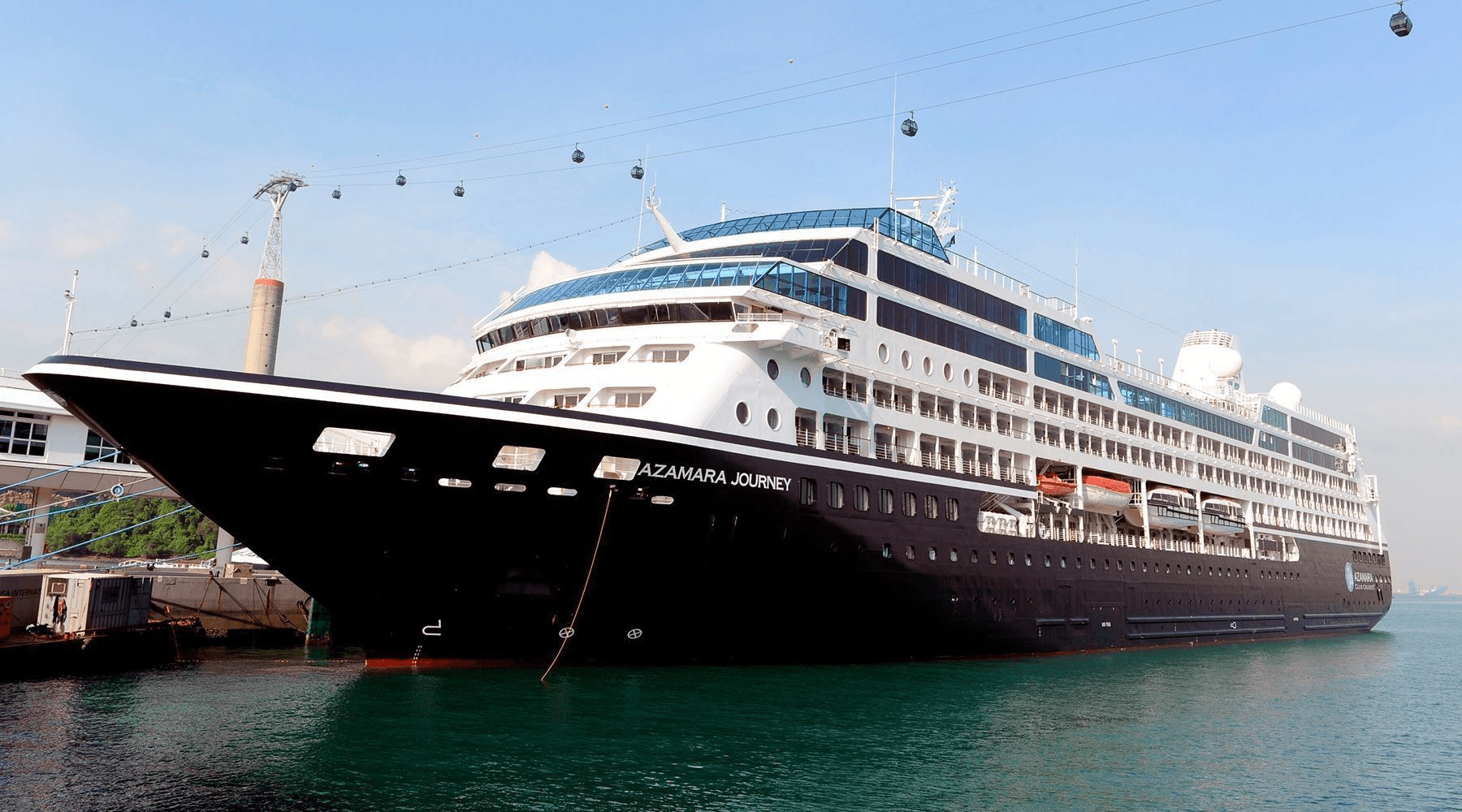
At a glance
- Built
- 2007
- Tonnage
- 30277
- Cabins
- 355
- Crew
- 408
A luxurious boutique hotel at sea, the Azamara Journey is a mid-sized ship with a deck plan that’s intimate but never crowded, and offers everything modern voyagers are looking for—plus some unexpected extras. Re-imagined staterooms include modern amenities, furnishings, and European linens. Plus the ship features a large number of staterooms and suites with verandas, perfect for starting your day with fresh sea air and stunning views.
Ask our cruise specialists about cruise line loyalty benefits, status match options, drinks packages, gratuities and any current offers available on this sailing.
On board

Aqualina Restaurant
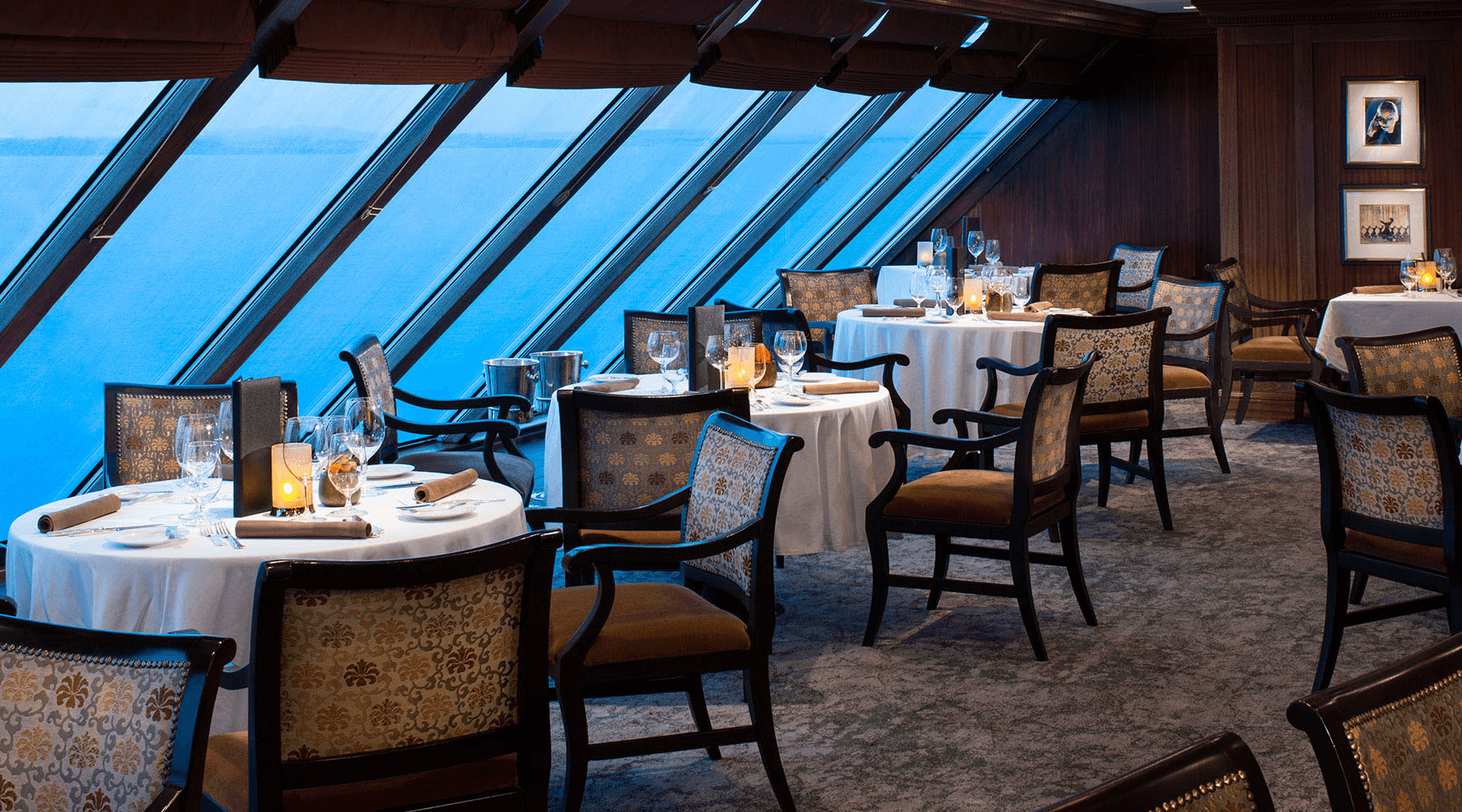
Onboard Dining

Prime Restaurant
Itinerary
Cruise from Portsmouth, UK to Athens (Piraeus), Greece
Day 1Cruise departs from Portsmouth, UKSep 9, 2027 • Departs at: 6 pm
Day 2HonfleurSep 10, 2027 • Arrives at: 7 am • Departs at: 7 pm
Honfleur is a lively town and a bustling port, where fishermen can be seen hauling in the daily catch. The maritime influence is everywhere evident; even the handsome church of Sainte Catherine has an oak ceiling that resembles the hull of an overturned ship. The charming square surrounding the church gives way to narrow cobbled lanes of half-timbered houses, elegant manors, and tall, narrow town houses. The quality of light has long attracted artists, including a particularly illustrious group, among them Monet, Corot, Turner, Courbet, Millet, Seurat – all of whom stayed at a little thatched inn called the Saint Siméon, now Honfleur's most luxurious hotel.
Day 3St. MaloSep 11, 2027 • Arrives at: 7:30 am • Departs at: 7 pm
The walled city of St. Malo is a quaint maze of fine old buildings, museums, and cafés serving Breton specialties of crepes and cider. Stroll along the ramparts, walk the cobblestone streets, and hear tales of corsairs, privateers grown rich off captured ships and their booty, authorized by the government during wartime, in order to hinder the enemy. Nearby is the rocky tidal island of Mont St. Michel. The perfect spot for a religious retreat, the first monastic settlement was built here in the 8th century, and the Romanesque church that is its crowning glory in the 11th.
Day 4At SeaSep 12, 2027
Day 5BordeauxSep 13, 2027 • Arrives at: 8 am
Bordeaux’s fortunes have long been tied to viticulture, beginning with an expansion of the wine trade with England in the 14th century. As a result it is a handsome and cohesive city of uniform classical and neoclassical style, with monumental buildings and many fine mansions financed by the almighty grape. The nearby countryside is alive with wine chateaux sporting impressive appellations such as Pauillac, Sauternes, Margaux, and Saint-Emilion. A visit is an excellent opportunity to learn more about wine production and appreciation, which of course requires a considerable amount of tasting to accomplish.
Day 6BordeauxSep 14, 2027
Bordeaux’s fortunes have long been tied to viticulture, beginning with an expansion of the wine trade with England in the 14th century. As a result it is a handsome and cohesive city of uniform classical and neoclassical style, with monumental buildings and many fine mansions financed by the almighty grape. The nearby countryside is alive with wine chateaux sporting impressive appellations such as Pauillac, Sauternes, Margaux, and Saint-Emilion. A visit is an excellent opportunity to learn more about wine production and appreciation, which of course requires a considerable amount of tasting to accomplish.
Day 7BordeauxSep 15, 2027 • Departs at: 2:30 pm
Bordeaux’s fortunes have long been tied to viticulture, beginning with an expansion of the wine trade with England in the 14th century. As a result it is a handsome and cohesive city of uniform classical and neoclassical style, with monumental buildings and many fine mansions financed by the almighty grape. The nearby countryside is alive with wine chateaux sporting impressive appellations such as Pauillac, Sauternes, Margaux, and Saint-Emilion. A visit is an excellent opportunity to learn more about wine production and appreciation, which of course requires a considerable amount of tasting to accomplish.
Day 8BilbaoSep 16, 2027 • Arrives at: 8 am • Departs at: 10 pm
If Bilbao wasn't always a household name, it was transformed with the opening of Frank Gehry's groundbreaking Guggenheim Museum in 1997. Located in the heart of the Basque Country, Bilbao became an instant media darling and tourist mecca. And that was just the beginning of an exciting phase of development in infrastructure and cultural activity, which combined with the Basque love of food, wine, and laughter, solidified the city's place in the annals of tourism.
Day 9GijonSep 17, 2027 • Arrives at: 8 am • Departs at: 1:30 pm
On the Bay of Biscay, in the self-governing community of Asturias, lies the northern city of Gijón. This region is known for its verdant hills; the greenest perhaps in all of Spain. The contrast against the bay is stunning; however, the main attraction is the fishing village of Cimadevilla, meaning 'top of the village.' Step back in time as you stroll its tiny streets with renovated buildings in every imaginable hue.
Day 10VigoSep 18, 2027 • Arrives at: 10 am • Departs at: 8 pm
Catholic pilgrims flock to the nearby sacred cathedral of Santiago de Compostela, built over the burial spot of St. James. In Vigo, Galicia province's most populated city, El Sireno, a gilded sculpture depicting a half-man-half-sea-creature, towers over your head and the city's lovely gardens and well-preserved historical buildings.
Day 11Porto (Leixoes), PortugalSep 19, 2027 • Arrives at: 7 am • Departs at: 3:30 pm
At the mouth of the Rio Douro lies the city of Porto, known mostly for its port wine trade. With origins dating back to the 5th century, there is plenty to see in this town that was named European Capital of Culture in 2001. Stroll the Ribeira neighborhood along the river, explore the Cathedral area, or tour the port lodges of Vila Nova de Gaia across the river.
Day 12LisbonSep 20, 2027 • Arrives at: 6:30 am • Departs at: 5 pm
Lisbon is one of the oldest cities in the world. Its magnificent harbor made it a logical trading port as far back as the Phoenicians, as well as a departure point for 15th century voyages sponsored by Prince Henry the Navigator, patron of Portuguese explorers. The city is rich in architecture, from Romanesque and Gothic to Post Modern, and criss-crossed by monument-studded grand boulevards. Today it is seeking a place on the world stage by hosting, in addition to its own active cultural calendar, film festivals, art, fashion, and design shows, book fairs, marathons, and rock concerts.
Day 13Portimao, PortugalSep 21, 2027 • Arrives at: 7:30 am • Departs at: 6 pm
The breathtaking scenery of Portugal’s southernmost region has long made the Algarve region a magnet for those seeking winter sun. And Portimão is a perfect example: golden sandy beaches beneath dramatic cliffs, the aroma of fresh sardines on the grill and some of the best golf courses in Europe - what could be better? This, maybe: the fabulous Autodromo Algarve Racing School, better known as the Poritmao Circuit puts you behind the wheel of a professional F1 racecar on a F1 track, pretty hard to beat.
Day 14Seville, SpainSep 22, 2027 • Arrives at: 12 pm
Seville is the capital and largest city of the Spanish autonomous community of Andalusia and the province of Seville. It is situated on the lower reaches of the River Guadalquivir, in the southwest of the Iberian Peninsula
Day 15Seville, SpainSep 23, 2027 • Departs at: 7 pm
Seville is the capital and largest city of the Spanish autonomous community of Andalusia and the province of Seville. It is situated on the lower reaches of the River Guadalquivir, in the southwest of the Iberian Peninsula
Day 16GibraltarSep 24, 2027 • Arrives at: 1 pm • Departs at: 10 pm
The towering Rock of Gibraltar is a sight to behold. Overlooking the mouth of the Mediterranean Sea from a height of 1,400 ft, it is a natural fortress, in a strategic position to control all naval traffic between the Mediterranean and the Atlantic. Only three miles long and a mile wide, this peninsula attached to the Spanish mainland juts out into the Strait of Gibraltar, which separates continental Europe from North Africa, a distance of only 14 miles. One feature most unusual for Europe is the troupes of semi-wild and curiously tailless Barbary macaques that have taken up residence on The Rock’s upper reaches.
Day 17MalagaSep 25, 2027 • Arrives at: 8 am • Departs at: 10 pm
Málaga is the lively capital of the Costa del Sol, famed for its beaches and mild climate, and gateway to Andalusia, with its Moorish architectural heritage. The city’s Alcazaba is a fine example, an 11th century citadel sitting in majestic splendor overlooking the African coast. It contains three magnificent palaces and graceful gardens with ornate fountains. In addition to their rich cultural heritage, Malagueños are also very proud of their most famous citizens – Picasso, for whom there is a museum commemorating his birth here, and actor Antonio Banderas, so far without a monument.
Day 18Granada (Motril)Sep 26, 2027 • Arrives at: 8 am • Departs at: 8 pm
In AD 711 Moors from North Africa conquered most of the Iberian Peninsula, and retained portions of it for 800 years. Granada was the last stronghold, and a symbol of economic, cultural, and artistic prosperity until it too was overcome in 1492. The city’s glory is embodied in the magnificent Alhambra, a compound of palaces and gardens that is a masterpiece of Moorish style. It appears that a primary goal of the architects was to cover every single inch with decoration. As Islam bans the representation of figures of any kind, the decorative elements are made up of complex, detailed, and intertwining geometric and floral images, and Arabic script.
Day 19Cartagena, SpainSep 27, 2027 • Arrives at: 8 am • Departs at: 6 pm
Strategically located along historic sailing routes, Cartagena has been colonized by a veritable who’s who of Mediterranean superpowers over the millennia, resulting in a rich and multi-layered cultural heritage, and a history both glorious and turbulent. From atop a hill, Concepción Castle served as a fortress for Carthaginians, Romans, Visigoths, Arabs, and Castilians. The 13th century Old Cathedral stands on the remains of a Roman Theater just discovered in 1987. More recent architectural contributions include modernist designs of public buildings and private dwellings by pupils of the famous architect Antoni Gaudi.
Day 20ValenciaSep 28, 2027 • Arrives at: 7 am • Departs at: 5 pm
One of the country's biggest and bustling cities was defended against the Moors by the legendary Spaniard "El Cid." Work up an appetite taking in la Calle de Los Caballeros and La Lonja, Valencia's old stock-exchange building of 1483, and reward your curiosities with a Paella Valenciana, Spain's most famous contribution to the world's tables.
Day 21BarcelonaSep 29, 2027 • Arrives at: 6:30 am • Departs at: 5 pm
Dynamic Barcelona is all about architecture, from the magnificent medieval buildings of the Gothic Quarter to the Modernist movement typified by the work of Antoni Gaudi. Though his materials were stone and metal, his forms were organic, awash in curves, swirls, and colors. His masterpiece is the amazing Church of the Sagrada Familia, colossal and as yet unfinished, though construction began in 1882. A contemporary contribution to the scene is Ricardo Bofill's post modernist National Theater of Catalonia, an imaginative combination of classical and modern design, with a greenhouse-like lobby.
Day 22Provence (Marseille)Sep 30, 2027 • Arrives at: 9 am • Departs at: 8 pm
Marseille, a port city in southern France, has been a crossroads of immigration and trade since its founding by the Greeks circa 600 B.C. At its heart is the Vieux-Port (Old Port), where fishmongers sell their catch along the boat-lined quay. Basilique Notre-Dame-de-la-Garde is a Romanesque-Byzantine church. Modern landmarks include Le Corbusier’s influential Cité Radieuse complex and Zaha Hadid’s CMA CGM Tower.
Day 23Monte CarloOct 1, 2027 • Arrives at: 8 am • Departs at: 8 pm
The tiny principality of Monaco, a sovereign state of just under one square mile, has an outsized resume, boasting some of the planet's most expensive real estate, and the world's most prestigious casino. Facing the sea, and engulfed on the other three sides by France, it has been the domain of the Grimaldi dynasty since the 14th century, and enjoys the same glamorous reputation as the rest of the Riviera.
Day 24Florence /pisa (Livorno), ItalyOct 2, 2027 • Arrives at: 8 am
Ah, Florence—sublime birthplace of the Renaissance, its historic center full to bursting with elegant squares, imposing palaces, magnificent churches, and museums with such an abundance of riches it could make an art lover weep for joy. The list of illustrious names connected with this city is mind-boggling: Botticelli, Dante, Da Vinci, Michelangelo, Galileo. Other colorful and fascinating characters were of dubious reputation: Machiavelli, and the religious extremist Savonarola, with his bonfire of the vanities. For many years the city was ruled by the powerful Medici family, patrons of the arts and bankers to the papacy, whose line included six kings and two popes.
Day 25Florence /pisa (Livorno), ItalyOct 3, 2027 • Departs at: 8 pm
Ah, Florence—sublime birthplace of the Renaissance, its historic center full to bursting with elegant squares, imposing palaces, magnificent churches, and museums with such an abundance of riches it could make an art lover weep for joy. The list of illustrious names connected with this city is mind-boggling: Botticelli, Dante, Da Vinci, Michelangelo, Galileo. Other colorful and fascinating characters were of dubious reputation: Machiavelli, and the religious extremist Savonarola, with his bonfire of the vanities. For many years the city was ruled by the powerful Medici family, patrons of the arts and bankers to the papacy, whose line included six kings and two popes.
Day 26Rome (Civitavecchia), ItalyOct 4, 2027 • Arrives at: 7:30 am • Departs at: 7 pm
Rome has something special to offer to all visitors, no matter their interests and tastes. Whether you daydream about fighting with gladiators in the Coliseum, debating with togaed senators in the Forum, tossing a coin in a fabled fountain, or being awestruck by the magnificence of St Peter’s Basilica and Michelangelo’s masterpieces, Rome seems to live up to its sobriquet – the Eternal City. When you need sustenance, today’s Rome will provide delizioso pasta e vino. Or perhaps you draw strength from a little retail therapy – the Italians are also renowned for their sense of style.
Day 27SorrentoOct 5, 2027 • Arrives at: 8 am • Departs at: 8 pm
A warming sun and gentle sea breezes have been attracting visitors to this fair spot for two millennia. Its reputation as a playground of the ancient rich and famous resulted in the building of lavish villas and palaces, an emperor relocated to the Isle of Capri nearby, and over the centuries it has been a haven for artists and artisans, writers and poets, politicians and philosophers, and all manner of aristocrats. You will be a welcome addition. The massive eruption of nearby Vesuvius in 79 AD caused considerable damage, but the resulting volcanic ash is responsible for Sorrento’s modern day fertility, thriving olive orchards, and excellent wine.
Day 28At SeaOct 6, 2027
Day 29KotorOct 7, 2027 • Arrives at: 10 am • Departs at: 8 pm
Kotor’s beautiful bay has long attracted passing ships that stopped to trade, plunder, or conquer, and merchants, pirates, and soldiers of numerous empires have walked this maze of cobblestone streets before you. One of Europe’s best-preserved cities of medieval or Renaissance vintage, its walls were constructed right into the steep slopes of the mountain behind it, providing protection and making it an amazing sight on approach from the sea. Venetian ramparts enclose a rich history, with churches of varying styles, and a Romanesque cathedral built on the foundations of an earlier church, and a still earlier Roman temple.
Day 30DubrovnikOct 8, 2027 • Arrives at: 8 am • Departs at: 8 pm
To visit Dubrovnik is to step back in time to the Middle Ages. The town is one massive museum, its thick walls constructed from the 13th to the 17th century encircle the entire city, and contain within them a treasure trove of striking architecture – squares, fountains, palaces, churches, and monasteries, all built from the same stone, line streets free of motor vehicles. Once the only city-state on the Adriatic to rival Venice, Dubrovnik has long been a center for Croatian culture, and home to artists and scholars of all disciplines. It is possible to circumnavigate the city atop the medieval walls.
Day 31ZadarOct 9, 2027 • Arrives at: 9 am • Departs at: 5 pm
Perched on Adriatic Sea in Croatia, Zadar is a truly captivating city, where history-drenched cobblestone streets meet contemporary life, then surrounded by deep blue sea, green olive groves, and white stone. Dubbed an “outdoor museum”, Zadar is rich in monuments and churches from ancient and medieval times—the circular 9th century Church St. Donat, the Church of St. Simeon and the Romanesque Cathedral of St. Anastasia—while nature lovers should explore Krka National Park and its seven waterfalls. Meander through the pedestrian-only Old Town, with its fortified city walls, towers and gates, then visit Zadar’s famous urban installations on the Riva, where art, architecture and science combine. Be sure to check out The Sea Organ, which extends into the sea and “whistles” with the waves and air pressure, and Greeting to the Sun, a circular construction of glass plates that produces an exceptional light show.
Day 32Venice (Fusina), ItalyOct 10, 2027 • Arrives at: 6:30 am • Departs at: 6 pm
Day 33KoperOct 11, 2027 • Arrives at: 8 am • Departs at: 10 pm
A key commercial center with a Venetian past, Koper is Slovenia's only deep-water port. Stroll the narrow streets of the "old city" to the Praetorian Palace, which could easily be the setting of a Renaissance drama, sip a coffee in the square, then visit the Cathedral of St. Nazarius, the largest in Slovenia.
Day 34OpatijaOct 12, 2027 • Arrives at: 8 am • Departs at: 6 pm
In 1844 Opatija began its life as a resort; with stunning coastal views and a mild climate it quickly drew an aristocratic clientele. The Grand Hotel Kvarner opened its doors, noblemen began to build spacious villas, and Opatija became the fashionable seaside resort of the Austro- Hungarian Empire. Here elegant ladies strolled the lush gardens and parks in the shade of parasols, and dancers swayed to the tempo of the waltz. On a terrace overlooking the blue bay, kings and emperors negotiated alliances and hatched plots. The grand residences of the wealthy are now hotels that still exude the air of elegance of a bygone age.
Day 35ZadarOct 13, 2027 • Arrives at: 8 am • Departs at: 8 pm
Perched on Adriatic Sea in Croatia, Zadar is a truly captivating city, where history-drenched cobblestone streets meet contemporary life, then surrounded by deep blue sea, green olive groves, and white stone. Dubbed an “outdoor museum”, Zadar is rich in monuments and churches from ancient and medieval times—the circular 9th century Church St. Donat, the Church of St. Simeon and the Romanesque Cathedral of St. Anastasia—while nature lovers should explore Krka National Park and its seven waterfalls. Meander through the pedestrian-only Old Town, with its fortified city walls, towers and gates, then visit Zadar’s famous urban installations on the Riva, where art, architecture and science combine. Be sure to check out The Sea Organ, which extends into the sea and “whistles” with the waves and air pressure, and Greeting to the Sun, a circular construction of glass plates that produces an exceptional light show.
Day 36SplitOct 14, 2027 • Arrives at: 8 am • Departs at: 10 pm
Its Adriatic seaside lined with palm trees, Split is the largest and most important city in Dalmatia, and custodian of the riches of culture and history found within and around the walls of the Roman emperor Diocletian’s palace. Begun in 295 AD as an imperial residence and fortified camp, its twisting cobblestone byways reveal churches and chapels both Romanesque and Gothic, and older places of worship such as the Temple of Jupiter. The old town is remarkably well preserved, and is full of museums, art galleries, and cozy cafes where you can pause along your way.
Day 37SibenikOct 15, 2027 • Arrives at: 8 am • Departs at: 8 pm
Just 55 miles north of Split is the city of Sibenik, situated where the River Krka meets the Adriatic. Since 1066, it has been under rule by Croatians, Venetians, Austro-Hungarians, Yugoslavians, and once again back to Croatians—which has resulted in a diversity of international influences. This is particularly evident in the old part of Sibenik, with its many churches, palaces, Dalmatian houses, as well in the city’s stone walls and four fortresses: St. John, St. Michael, St. Nicholas and Šubićaevac. A must see is the Cathedral Sveti Jakov, and if you love the great outdoors, then visit Krka National Park or Kornati National Park.
Day 38DubrovnikOct 16, 2027 • Arrives at: 8 am • Departs at: 10 pm
To visit Dubrovnik is to step back in time to the Middle Ages. The town is one massive museum, its thick walls constructed from the 13th to the 17th century encircle the entire city, and contain within them a treasure trove of striking architecture – squares, fountains, palaces, churches, and monasteries, all built from the same stone, line streets free of motor vehicles. Once the only city-state on the Adriatic to rival Venice, Dubrovnik has long been a center for Croatian culture, and home to artists and scholars of all disciplines. It is possible to circumnavigate the city atop the medieval walls.
Day 39KotorOct 17, 2027 • Arrives at: 8 am • Departs at: 1:30 pm
Kotor’s beautiful bay has long attracted passing ships that stopped to trade, plunder, or conquer, and merchants, pirates, and soldiers of numerous empires have walked this maze of cobblestone streets before you. One of Europe’s best-preserved cities of medieval or Renaissance vintage, its walls were constructed right into the steep slopes of the mountain behind it, providing protection and making it an amazing sight on approach from the sea. Venetian ramparts enclose a rich history, with churches of varying styles, and a Romanesque cathedral built on the foundations of an earlier church, and a still earlier Roman temple.
Day 40At SeaOct 18, 2027
Day 41Athens (Pireaus)Oct 19, 2027 • Arrives at: 5:30 am
You could spend a lifetime in Europe’s oldest city and still not see everything it has to offer. Settled over 3,500 years ago, Athens is like a mythological crossroads of the past and present, where modern buildings share the skyline with spectacular ruins like the Parthenon. To see a veritable “greatest hits” line-up, make your way to Vasilissis Amalias Street for the archaeological walk. Winding through the heart of the ancient city, the route leads to landmarks like the Temple of Olympian Zeus, Ancient Agora, Arch of Hadrian, and of course, the Acropolis.
Cabin options
Compare the cabin types and onboard features shown for this sailing. Final price and availability are confirmed by our team when you inquire.
24 cabin grades listed for this sailing.
Next step
Cabin grades and prices
View every cabin grade and current availability on the next step.