
Italy, Croatia & Spain Combination Cruise: Venice, Split & Majorca
Azamara · Azamara Journey
Depart
Oct 10, 2027
Return
Oct 31, 2027
Port
Venice (Fusina), Italy
Nights
21 nights
At a glance
- Built
- 2007
- Tonnage
- 30277
- Cabins
- 355
- Crew
- 408
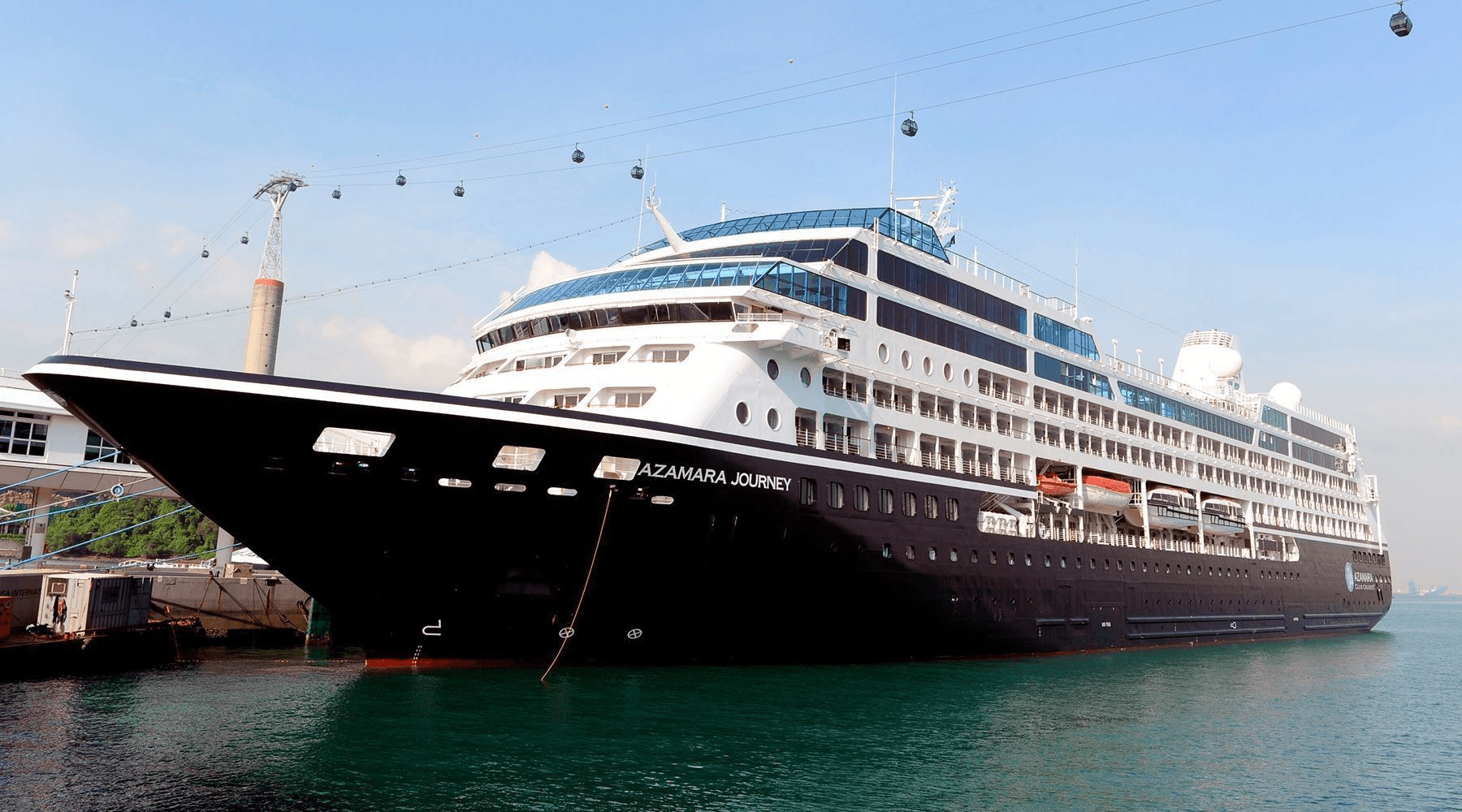
A luxurious boutique hotel at sea, the Azamara Journey is a mid-sized ship with a deck plan that’s intimate but never crowded, and offers everything modern voyagers are looking for—plus some unexpected extras. Re-imagined staterooms include modern amenities, furnishings, and European linens. Plus the ship features a large number of staterooms and suites with verandas, perfect for starting your day with fresh sea air and stunning views.
Ask our cruise specialists about cruise line loyalty benefits, status match options, drinks packages, gratuities and any current offers available on this sailing.
On board

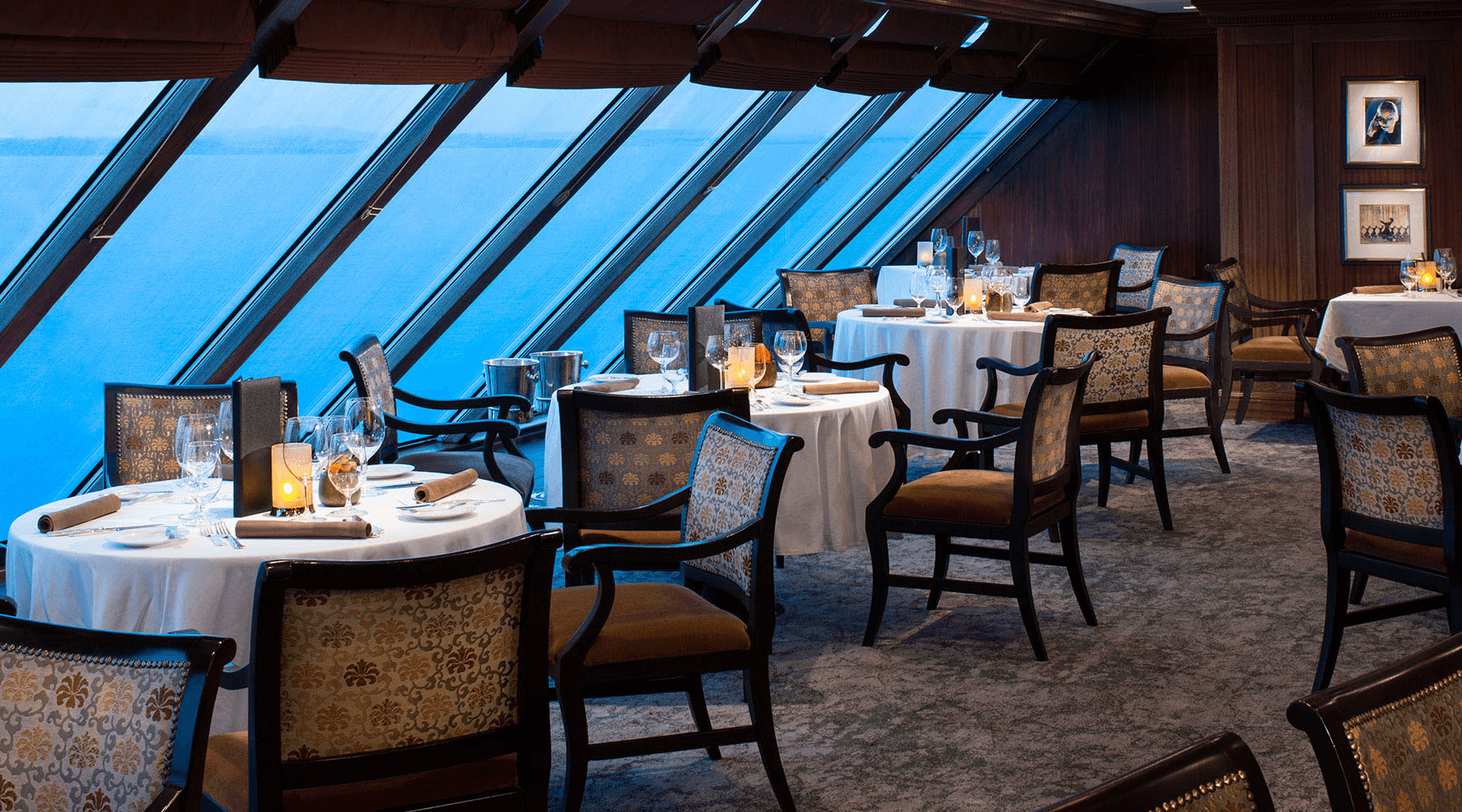
Aqualina Restaurant
Onboard Dining

Prime Restaurant
Itinerary
Cruise from Venice (Fusina), Italy to Barcelona
Day 1Cruise departs from Venice (Fusina), ItalyOct 10, 2027 • Departs at: 6 pm
Day 2KoperOct 11, 2027 • Arrives at: 8 am • Departs at: 10 pm
A key commercial center with a Venetian past, Koper is Slovenia's only deep-water port. Stroll the narrow streets of the "old city" to the Praetorian Palace, which could easily be the setting of a Renaissance drama, sip a coffee in the square, then visit the Cathedral of St. Nazarius, the largest in Slovenia.
Day 3OpatijaOct 12, 2027 • Arrives at: 8 am • Departs at: 6 pm
In 1844 Opatija began its life as a resort; with stunning coastal views and a mild climate it quickly drew an aristocratic clientele. The Grand Hotel Kvarner opened its doors, noblemen began to build spacious villas, and Opatija became the fashionable seaside resort of the Austro- Hungarian Empire. Here elegant ladies strolled the lush gardens and parks in the shade of parasols, and dancers swayed to the tempo of the waltz. On a terrace overlooking the blue bay, kings and emperors negotiated alliances and hatched plots. The grand residences of the wealthy are now hotels that still exude the air of elegance of a bygone age.
Day 4ZadarOct 13, 2027 • Arrives at: 8 am • Departs at: 8 pm
Perched on Adriatic Sea in Croatia, Zadar is a truly captivating city, where history-drenched cobblestone streets meet contemporary life, then surrounded by deep blue sea, green olive groves, and white stone. Dubbed an “outdoor museum”, Zadar is rich in monuments and churches from ancient and medieval times—the circular 9th century Church St. Donat, the Church of St. Simeon and the Romanesque Cathedral of St. Anastasia—while nature lovers should explore Krka National Park and its seven waterfalls. Meander through the pedestrian-only Old Town, with its fortified city walls, towers and gates, then visit Zadar’s famous urban installations on the Riva, where art, architecture and science combine. Be sure to check out The Sea Organ, which extends into the sea and “whistles” with the waves and air pressure, and Greeting to the Sun, a circular construction of glass plates that produces an exceptional light show.
Day 5SplitOct 14, 2027 • Arrives at: 8 am • Departs at: 10 pm
Its Adriatic seaside lined with palm trees, Split is the largest and most important city in Dalmatia, and custodian of the riches of culture and history found within and around the walls of the Roman emperor Diocletian’s palace. Begun in 295 AD as an imperial residence and fortified camp, its twisting cobblestone byways reveal churches and chapels both Romanesque and Gothic, and older places of worship such as the Temple of Jupiter. The old town is remarkably well preserved, and is full of museums, art galleries, and cozy cafes where you can pause along your way.
Day 6SibenikOct 15, 2027 • Arrives at: 8 am • Departs at: 8 pm
Just 55 miles north of Split is the city of Sibenik, situated where the River Krka meets the Adriatic. Since 1066, it has been under rule by Croatians, Venetians, Austro-Hungarians, Yugoslavians, and once again back to Croatians—which has resulted in a diversity of international influences. This is particularly evident in the old part of Sibenik, with its many churches, palaces, Dalmatian houses, as well in the city’s stone walls and four fortresses: St. John, St. Michael, St. Nicholas and Šubićaevac. A must see is the Cathedral Sveti Jakov, and if you love the great outdoors, then visit Krka National Park or Kornati National Park.
Day 7DubrovnikOct 16, 2027 • Arrives at: 8 am • Departs at: 10 pm
To visit Dubrovnik is to step back in time to the Middle Ages. The town is one massive museum, its thick walls constructed from the 13th to the 17th century encircle the entire city, and contain within them a treasure trove of striking architecture – squares, fountains, palaces, churches, and monasteries, all built from the same stone, line streets free of motor vehicles. Once the only city-state on the Adriatic to rival Venice, Dubrovnik has long been a center for Croatian culture, and home to artists and scholars of all disciplines. It is possible to circumnavigate the city atop the medieval walls.
Day 8KotorOct 17, 2027 • Arrives at: 8 am • Departs at: 1:30 pm
Kotor’s beautiful bay has long attracted passing ships that stopped to trade, plunder, or conquer, and merchants, pirates, and soldiers of numerous empires have walked this maze of cobblestone streets before you. One of Europe’s best-preserved cities of medieval or Renaissance vintage, its walls were constructed right into the steep slopes of the mountain behind it, providing protection and making it an amazing sight on approach from the sea. Venetian ramparts enclose a rich history, with churches of varying styles, and a Romanesque cathedral built on the foundations of an earlier church, and a still earlier Roman temple.
Day 9At SeaOct 18, 2027
Day 10Athens (Pireaus)Oct 19, 2027 • Arrives at: 5:30 am • Departs at: 6 pm
You could spend a lifetime in Europe’s oldest city and still not see everything it has to offer. Settled over 3,500 years ago, Athens is like a mythological crossroads of the past and present, where modern buildings share the skyline with spectacular ruins like the Parthenon. To see a veritable “greatest hits” line-up, make your way to Vasilissis Amalias Street for the archaeological walk. Winding through the heart of the ancient city, the route leads to landmarks like the Temple of Olympian Zeus, Ancient Agora, Arch of Hadrian, and of course, the Acropolis.
Day 11MykonosOct 20, 2027 • Arrives at: 8 am • Departs at: 8 pm
Mykonos is living proof that picture postcard destinations do exist. Its many charms include its iconic windmills, fabulous beaches, and an irresistible traditional town with a maze of twisting streets and alleys originally designed to confuse marauding pirates. Dazzling sunlight reflects off of whitewashed houses and hundreds of small chapels. Other adornments include shaded courtyards and balconies lush with flowers, and a lively nightlife that some claim is the best in Europe. Nearby you can visit the uninhabited island of Delos, birthplace of Apollo, fittingly the god of sunlight, music and beauty.
Day 12HeraklionOct 21, 2027 • Arrives at: 8 am • Departs at: 10 pm
History is very much alive in Iraklion. The Fountain of the Lions, built by Morozini in 1628 during the Venetian occupation of Crete, dominates the central square. Today, the city's Town Hall is located in the Venetian Loggia, a building from the same era. Stroll among the shops and cafes surrounding the central square, or follow the old Venetian walls to Koules, a bastion overlooking the old harbor. Explore the archaeological site at Knossos and walk among Minoan findings displayed in the Archaeological Museum of Iraklion. Don't miss the Historical Museum of Iraklion, which houses findings from the early era of the Christian religion.
Day 13At SeaOct 22, 2027
Day 14Siracusa, SicilyOct 23, 2027 • Arrives at: 8 am • Departs at: 10 pm
Siracusa is known for the archaeological and historical sights that define its grand past, as one of the major powers of the Mediterranean world in the 5th century BC. They include a Greek theater, still in use, where Aeschylus produced some of his plays; a dramatic necropolis with burial niches cut into the rock that include the tomb of Archimedes, famous mathematician, engineer, and inventor; and the Ear of Dionysus, a cave with amazing acoustical properties. The “modern” city was rebuilt in Sicilian Baroque style after the devastating earthquake of 1693.
Day 15VallettaOct 24, 2027 • Arrives at: 8 am • Departs at: 6 pm
Tiny Malta, smack dab in the middle of the Mediterranean and on everyone's route since ships began to ply the seas, is packed with history from top to bottom. Over time it was ruled by a variety of empires, all of which contributed to the look and culture of the islands. Valetta is living museum of baroque architecture, constructed by the Knights of St. John five centuries ago. Today the city is also a dynamic hub of cultural and commercial activity, its harbor now welcoming luxury yachts and cruise ships.
Day 16La GouletteOct 25, 2027 • Arrives at: 11:30 am • Departs at: 7 pm
Day 17Sardinia (Cagliari), ItalyOct 26, 2027 • Arrives at: 8 am • Departs at: 5 pm
You’re in luck—we happen to think the best way to arrive in Cagliari is by sea. (Not that we’re biased or anything!) This way you get to witness to full specter of this colorful city rising haphazardly from the sea, cresting with a rocky centerpiece better known as Il Castello. The capital of Sardinia, Cagliari boats over 25 centuries of history to explore in the form of Roman ruins, museums, churches, and numerous galleries.
Day 18Porto Vecchio, CorsicaOct 27, 2027 • Arrives at: 8 am • Departs at: 8 pm
Dating back to the 16th century, the fortified port town of Porto Vecchio is now a Corsican resort destination. The Old Town district—with its cobblestone streets, charming buildings, and ruins of the ancient citadel—features fashionable shops, boutiques, and cafés, while Porto Vecchio’s modern marina offers ferry rides to Bonifacio and the Lavezzi Islands nature reserve, plus a variety of places to enjoy a local beverage harborside.
Day 19AjaccioOct 28, 2027 • Arrives at: 8 am • Departs at: 2 pm
Nestled on the southwest side of the French island of Corsica, the seaside capital of Ajaccio is best known as the birthplace of famed French emperor Napolean Bonaparte. Yet there's a lot more to this charming Mediterranean city than its Napoleonic heritage. Stroll along cobblestone streets and colorful alleys to explore countless cafes and shops. Take in the Palais Fesch: From Botticelli to Bellini, it houses France's largest collection of Italian paintings outside the Louvre. Venture at sunset to the Iles Sanguinaires (Blood Islands), named so to describe the color of the islands when the sun hits the rocks, or sample local delicacies such as figatellu and other charcuterie and cheeses among scenic mountains and beautiful beaches.
Day 20Mahon, MenorcaOct 29, 2027 • Arrives at: 8 am • Departs at: 9 pm
Mahón, or Maó, is the capital of the Spanish island of Menorca. It’s known for its British-style Georgian houses and sheltered harbor. Santa María Church, with an ornate 19th-century organ, sits on central Plaça de la Constitució. Next to the church, the city hall has a Renaissance facade and a clock donated by the island’s first British governor. The Menorca Museum displays art and exhibits on the island's history.
Day 21Palma, MajorcaOct 30, 2027 • Arrives at: 7 am • Departs at: 6 pm
Palma is a resort city and capital of the Spanish island of Mallorca (Majorca), in the western Mediterranean. The massive Santa María cathedral, a Gothic landmark begun in the 13th century, overlooks the Bay of Palma. The adjacent Almudaina is a Moorish-style Arab fortress converted to a royal residence. West of the city, hilltop Bellver Castle is a medieval fortress with a distinctive circular shape
Day 22Cruise returns to BarcelonaOct 31, 2027 • Arrives at: 6:30 am
Dynamic Barcelona is all about architecture, from the magnificent medieval buildings of the Gothic Quarter to the Modernist movement typified by the work of Antoni Gaudi. Though his materials were stone and metal, his forms were organic, awash in curves, swirls, and colors. His masterpiece is the amazing Church of the Sagrada Familia, colossal and as yet unfinished, though construction began in 1882. A contemporary contribution to the scene is Ricardo Bofill's post modernist National Theater of Catalonia, an imaginative combination of classical and modern design, with a greenhouse-like lobby.
Cabin options
Compare the cabin types and onboard features shown for this sailing. Final price and availability are confirmed by our team when you inquire.
24 cabin grades listed for this sailing.
Next step
Cabin grades and prices
View every cabin grade and current availability on the next step.