Ultimate Mediterranean Grand Adventure
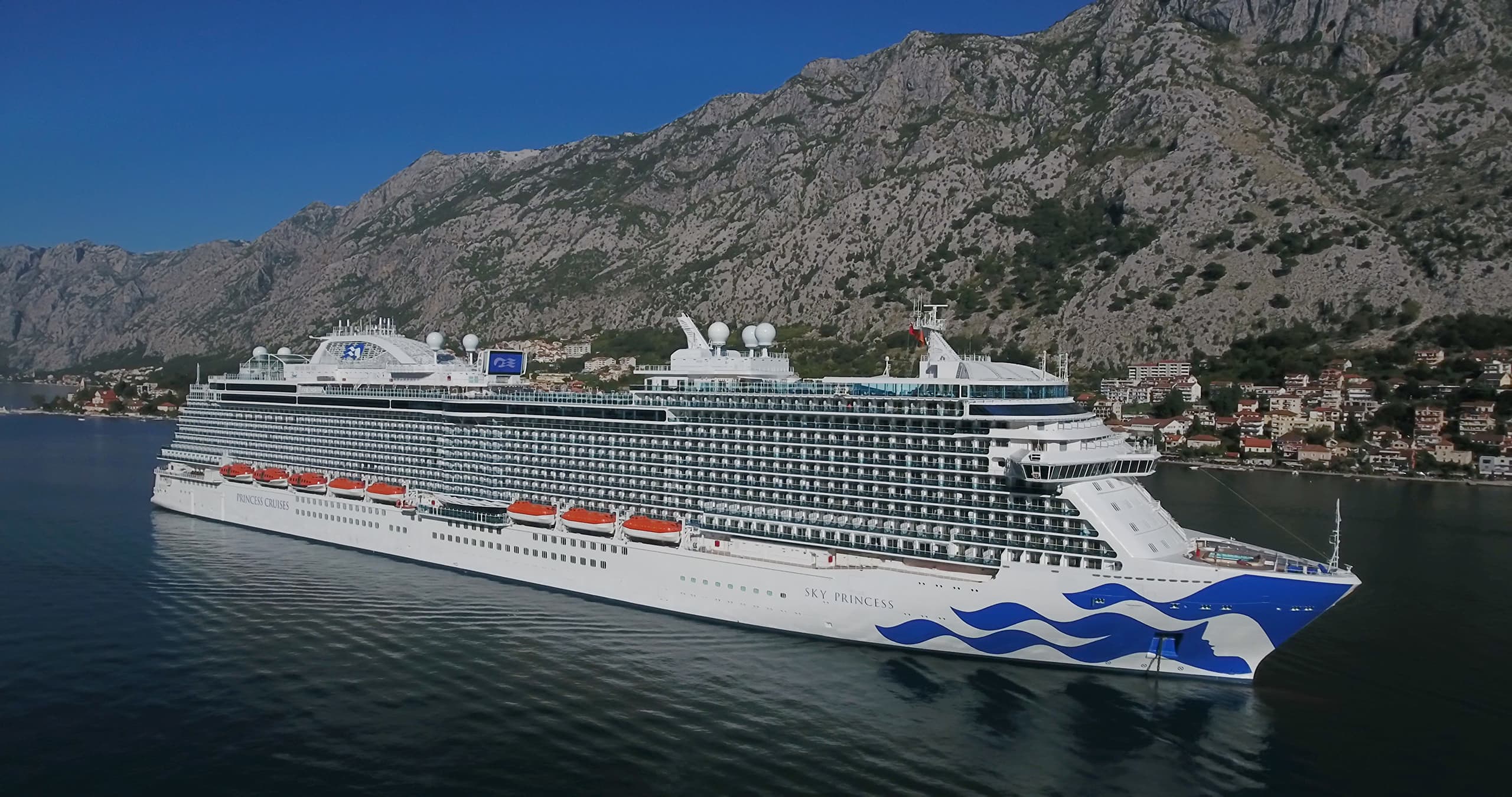
Princess Cruises · Sky Princess
Depart
Sep 25, 2027
Return
Nov 10, 2027
Port
Southampton
Nights
46 nights
At a glance
- Launched
- 2019
- Tonnage
- 141000
- Cabins
- 1830
- Crew
- 1,346
Sky Princess, the newest addition to our fleet, elevates the distinctive, contemporary design and luxurious attractions of our renowned Royal-class ships to even loftier heights. You can look forward to our most exciting entertainment venues yet, our newest dining choices and award-winning chef partnerships, as well as more staterooms than ever to relax in. And that’s just the start!
Ship features
- Ships Tour
- Shops Of Princess
- Slots Video Poker
- Sporting
Ask our cruise specialists about cruise line loyalty benefits, status match options, drinks packages, gratuities and any current offers available on this sailing.
On board
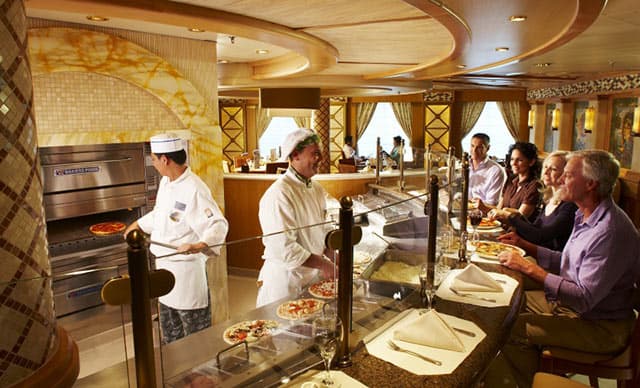
Alfredos Pizza

Traditional Dining

Ultimate Balcony Dining
Itinerary
- 1Southampton (London)Days 1, 32 · Departure
- 2Guernsey (St Peter Port)Day 2
- 3Seville (Cadiz)Day 5
- 4MalagaDay 6
- 5Cartagena, SpainDay 7
- 6BarcelonaDay 8
- 7Toulon/Provence (La Seyne)Day 9
- 8Florence/Pisa (Livorno)Day 10
- 9Rome (Civitavecchia)Day 11
- 10Naples, ItalyDay 12
- 11IstanbulDay 15
- 12Kusadasi (Ephesus)Day 18
- 13MykonosDay 19
- 14Athens (Piraeus)Day 20
- 15Crete (Chania), GreeceDay 21
- 16Katakolon (For Olympia)Day 22
- 17Sicily (Messina), ItalyDay 23
- 18VallettaDay 24
- 19Sardinia (Alghero)Day 26
- 20GibraltarDay 28
- 21La CorunaDay 30
- 22VigoDay 34
- 23LisbonDay 35
- 24Madeira (Funchal)Day 37
- 25Santa Cruz de TenerifeDay 38
- 26Fort LauderdaleDay 47
Lines connect the ports in visiting order; the sailing path may vary.
Cruise from Southampton to Fort Lauderdale
Day 1Cruise departs from SouthamptonSep 25, 2027 • Departs at: 4 pm
The south of England boasts a dramatic coastline that encloses some of the most beautiful countryside in Britain. The landscape of hills and heaths, downs and forests, valleys and dales, is without rival. Southampton serves as your gateway to the countryside - and to a wide variety of historic sites, national landmarks and charming. And of course, London is a two-hour drive by modern highway. The United Kingdom's premier passenger ship port, Southampton was home for many years to the great transatlantic liners of yesteryear.
Day 2Guernsey (St Peter Port)Sep 26, 2027 • Arrives at: 7 am • Departs at: 4 pm
The British isle of Guernsey lies just eight miles off the coast of France. The second largest of the Channel Islands, Guernsey possesses a mild climate, breathtaking scenery and a peaceful, unspoiled ambience. All these attributes combine to make it a popular destination for British and French vacationers. Once the haunt of sea dogs and pirates, St. Peter Port is one of the prettiest harbors in Europe. Castles and forts dot the Guernsey coastline, including German fortifications from World War II. The Channel Islands were the only part of the United Kingdom to be occupied by the Nazis.
Day 3At SeaSep 27, 2027
Day 4At SeaSep 28, 2027
Day 5Seville (Cadiz)Sep 29, 2027 • Arrives at: 9 am • Departs at: 9 pm
Mention Spain and the images that inevitably spring to mind are images of Andalusia - shadows falling across the bullring, the staccato rhythms of flamenco, the waft of orange blossoms from a Moorish garden. Cadiz is your gateway to this storied land and the city of Seville. Visit Seville's massive Alcazar fortress, modeled on the legendary Alhambra Palace of Granada. See the city's cathedral, a 15th-century Gothic masterwork that boasts a Moorish patio, fountain and minaret. Seville is also the legendary home of Don Juan, Bizet's Carmen and Rossini's Barber of Seville. Cadiz is one's of Europe's oldest inhabited cities, dating from 1100 B.C., and your gateway to Seville and Andalusia.
Day 6MalagaSep 30, 2027 • Arrives at: 8 am • Departs at: 6 pm
One of Spain's oldest cities, Malaga has been inhabited since the time of the Phoenicians, who called it Malaka. A city of narrow streets, whitewashed houses, churches and sunny plazas, Malaga offers an idealized image of Spain. Andalusia's main port is also your gateway to the resorts of the Costa del Sol. No visit to Malaga would be complete without a trip to Granada and a tour of the fabled Alhambra. Malaga was the chief port for the Kingdom of Granada, the last stronghold of Moorish Spain. The city fell to Ferdinand and Isabelle in 1487. The re-conquest of Spain ended with the fall of Grenada in 1492, the year Columbus discovered the New World.
Day 7Cartagena, SpainOct 1, 2027 • Arrives at: 7 am • Departs at: 4 pm
Cartagena is an ancient port - the city served as Hannibal's Spanish headquarters during the 2nd Punic War with Rome. The city remained a major trading port under the Romans and the Moors. Today, Cartagena is Spain's principal naval establishment and the site of an annual international maritime festival. The city is also your gateway to the Costa Calida, a region that boasts some of Spain's mildest weather along with 175 miles of beaches.
Day 8BarcelonaOct 2, 2027 • Arrives at: 9 am • Departs at: 7 pm
The 1992 Summer Olympics revealed to the world what Europeans and seasoned travelers already knew - Barcelona is one of the world's greatest treasures. Vibrant and earthy, commercial and cultural, this city of two million residents is the capital of Spain's autonomous region of Catalonia. Stroll along the wide, tree-lined promenades of Las Ramblas and marvel at the spires of Gaudi's Basilica La Sagrada Familia. Or visit the former Olympic Ring on the hill of Montjuic - also home to world-class parks, fountains and museums. Barcelona, which nurtured such artistic giants as Picasso, Dali, Miro and Casals, is definitely a traveler's paradise.
Day 9Toulon/Provence (La Seyne)Oct 3, 2027 • Arrives at: 8 am • Departs at: 6 pm
Toulon has been the great bastion of the French navy since 1494, when Charles VIII chose its superb harbor as the site for a naval shipyard. Today, Toulon is homeport for the French navy's nuclear-powered aircraft carrier "Charles de Gaulle." The city is also the capital of the Var and provides an excellent gateway to the riches of Provence and the Cote d'Azur. To the north and west are medieval Provencal hilltop villages and superb vineyards. To the east lie the fabled coves and beaches of the Cote d'Azur, the setting for the legendary resort of St. Tropez. And everywhere there is the miraculous fusion of sky and sea that forms the essence of Southern France. Toulon's Upper Town bears more than a strong resemblance to Paris - in the 1840s, the prefect of the Var was that same Baron Haussmann who gave the City of Light its elegant boulevards and architecture. Haussmann first tried his hand at urban renewal here in Toulon
Day 10Florence/Pisa (Livorno)Oct 4, 2027 • Arrives at: 7 am • Departs at: 7 pm
Livorno is the gateway to glorious Tuscany. Visit Florence - the cradle of the Renaissance - home to the Duomo, the Uffizi and the Ponte Vecchio. Here the Medici fostered a city-state whose cultural legacy is as great as classical Athens. Giants like Dante, Da Vinci, Michelangelo and Galileo infused the West with a new creative spirit. Then there is Pisa, Florence's rival for political power. Pisa, a brash, commercial seafaring town rivaled the great maritime powers of Venice and Genoa. The city was a leader in art and architecture second only to Florence.
Day 11Rome (Civitavecchia)Oct 5, 2027 • Arrives at: 7 am • Departs at: 8 pm
Your gateway to the Eternal City, Civitavecchia has served as Rome's seaport since the 13th century. The port has a long and venerable history. The emperor Trajan built a pleasure villa near the modern city, while Bernini and Michelangelo designed the harbor fortifications. Yet the Eternal City eternally beckons. The ancient capital of the Western World and the center of Christianity for nearly 2,000 years, Rome provides an inexhaustible feast. Visit the ruins of the Forum, view the splendors of the Sistine Chapel, or climb the Spanish Steps, once the heart of Rome's Bohemian Quarter. Rome has been a magnet luring the world's greatest artists, architects, and philosophers since the days of the Caesars.
Day 12Naples, ItalyOct 6, 2027 • Arrives at: 7 am • Departs at: 6 pm
Italy's third-largest city, Naples is a bustling metropolis famed for it stately buildings, crowded streets, pizza - and notoriously bad traffic. However, this beautiful city is rich in centuries-old culture and customs. Naples is also your gateway to the Isle of Capri, the fabled Amalfi Coast and the ruins of Pompeii, buried in ash by the cataclysmic eruption of Mt. Vesuvius in 79 A.D. Naples boasts an ideal location, with both the ruins of Roman cities and the stunning Amalfi Coast in easy reach.
Day 13At SeaOct 7, 2027
Day 14At SeaOct 8, 2027
Day 15IstanbulOct 9, 2027 • Arrives at: 7 am
Istanbul rises from the Bosphorus, a vision of minarets and domes sparkling in the light. The capital of vanished empires, Istanbul is a true crossroad, the only city on Earth to span two continents. This meeting place of Europe and Asia, of Christian and Muslim, is one of the great adventures a traveler encounters. Browse the stalls of the world's largest bazaar, explore ancient mosques and churches, and gaze at the stunning jewels in the Topkapi Palace. Istanbul has dominated the Straits of Bosphorus for 25 centuries. As Constantinople, capital of the Eastern Roman Empire, it was a metropolis of stunning splendor when the great cities of Europe were mere villages.
Day 16IstanbulOct 10, 2027 • Departs at: 11 pm
Istanbul rises from the Bosphorus, a vision of minarets and domes sparkling in the light. The capital of vanished empires, Istanbul is a true crossroad, the only city on Earth to span two continents. This meeting place of Europe and Asia, of Christian and Muslim, is one of the great adventures a traveler encounters. Browse the stalls of the world's largest bazaar, explore ancient mosques and churches, and gaze at the stunning jewels in the Topkapi Palace. Istanbul has dominated the Straits of Bosphorus for 25 centuries. As Constantinople, capital of the Eastern Roman Empire, it was a metropolis of stunning splendor when the great cities of Europe were mere villages.
Day 17At SeaOct 11, 2027
Day 18Kusadasi (Ephesus)Oct 12, 2027 • Arrives at: 7 am • Departs at: 9 pm
From the port of Kusadasi on Turkey's Anatolian Coast, one travels into the past. Nearby stand the ruins of ancient Ephesus, a major site of archeological excavation. The city was once a Roman provincial capital and trading center. Ephesus is also home to several of Christendom's holiest sites. St. Paul preached at the Great Theater and the ruins of Ephesus' Basilica cover the tomb of Christ's most beloved disciple, St. John the Apostle. In Kusadasi, whitewashed stone houses rise in tiers behind the market district. The palm-lined esplanade is the center of town life, with thousands of merchants offering wares to rival the Grand Bazaar in Istanbul.
Day 19MykonosOct 13, 2027 • Arrives at: 7 am • Departs at: 9 pm
Thanks to its proximity to the mainland, Mykonos was one of the first Greek islands to become an international travel destination. During the late '60s and early '70s, Mykonos was famed as a haunt for the rich. The island's nightlife - then and now - was a glittering whirl of colored lights, music, and parties. But there's another side to Mykonos - the neighboring island of Delos. In classical mythology, Delos was the birthplace of Apollo and his twin sister Artemis. Travelers to Delos can stroll among the island's vast ruins, which include three temples consecrated to the Sun God and the famed Lions Walk. Mykonos town features hip boutiques, restaurants, jewelry stores, souvenirs, taverns and cafés. The island's famed windmills are found just south of the waterfront.
Day 20Athens (Piraeus)Oct 14, 2027 • Arrives at: 7 am • Departs at: 9 pm
The past maintains a vibrant presence in the cradle of Western civilization. Atop the Acropolis, the serene Parthenon sails above the commotion of the modern city. The tragedies of Aeschylus, Sophocles, and Euripides were performed in the Theater of Dionysus at the foot of the Acropolis. On Pnyx Hill, citizens of a fledgling democracy gathered to cast their votes on Athens' destiny. Then there is the hustle and bustle of the modern city, a metropolis of 4.5 million that spreads out from the foot of Mt. Lycabettus and across the plain. Packed with busy shops and lively tavernas, modern Athens is a colorful counterpoint to classical Greece. Piraeus is the port city for Athens and has been Athens' port of entry for over two millennia.
Day 21Crete (Chania), GreeceOct 15, 2027 • Arrives at: 8 am • Departs at: 5 pm
Weaving a tapestry of awe and wonder, Chania is a centuries-old mix of Minoan myths, well-preserved Venetian mansions, a mesmerizing Old Town complete with labyrinthine passageways, and atmospheric Kastelli Hill, once the site of a Roman acropolis. But Chania may be best known as the gateway to the breathtaking 4,000 year-old Minoan ruins at Knossos, home of the legendary King Minos and the part man and part bull known creature as the Minotaur. And around every corner of this idyllic area you'll find picturesque villages, breathtaking views and architectural wonders that will remain with you for a lifetime.
Day 22Katakolon (For Olympia)Oct 16, 2027 • Arrives at: 7 am • Departs at: 4 pm
Perched on the west coast of the Peloponnesus, Greece's largest peninsula, this sleepy fishing village of some 300 souls is your gateway to Olympia, site of the original Olympic Games. Held every four years between 776 B.C. and 393 A.D., when the Emperor Theodosius banned pagan festivals, the Olympic Games celebrated the ideal harmony of mind and body. Every four years, the sacred flame of Altis is rekindled to light the torch for the Modern Games. Olympia's temples were destroyed after the games were banned. An earthquake in the 6th century compounded the destruction, and floods buried the site. Excavation of the ruins began in 1875, and Olympia was declared a National Park in 1976.
Day 23Sicily (Messina), ItalyOct 17, 2027 • Arrives at: 9 am • Departs at: 6 pm
Messina has played a major role in European history since its founding as a Greek colony in the 8th century B.C. During the Roman Empire, the city was a major port and commercial center, during the Middle Ages, Messina was the major port of departure for Crusaders. History has also left its scars: a massive earthquake leveled much of the city in 1908 and the World War II campaign for Sicily devastated Messina. Yet Messina emerged from that devastation with some of its historic treasures intact, including the 12th-century Annunziata dei Catalani Church. Messina is also your gateway to the rugged beauty of southeast Sicily, from the seaside resort of Taormina to Mt. Etna. Between the fall of Rome and the 1861 unification of Italy, the Arabs, the Normans, the Germans, the Spanish and the French ruled Sicily.
Day 24VallettaOct 18, 2027 • Arrives at: 8 am • Departs at: 9 pm
Malta is the largest in a group of seven islands that occupy a strategic position between Europe and Africa. The island's history is long and turbulent. Everyone from the Normans to the Nazis have vied for control of this small, honey-colored rock. For centuries the island was the possession of the knightly Order of St. John - the Knights Hospitaller. Valletta, Malta's current capital, was planned by the Order's Grandmaster Jean de la Valette to secure the island's eastern coast from Turk incursions. Founded in 1566, Valletta's bustling streets are lined with superb Baroque buildings and churches. Malta has a long history: the megalithic stone temples at Gozo may be the oldest freestanding structures on Earth. Malta has two official languages, Maltese (constitutionally the national language) and English. Malta was admitted to the European Union in 2004 and in 2008 became part of the eurozone.
Day 25At SeaOct 19, 2027
Day 26Sardinia (Alghero)Oct 20, 2027 • Arrives at: 7 am • Departs at: 4 pm
Sardinia is the second largest island in the Mediterranean. Like its neighbor Corsica, Sardinia boasts a dramatic coastline, superb small harbors and beaches that draw visitors from around the world. Gaunt hills crowned with granite outcropping take up most of the island interior, though the landscape is broken by vineyards and groves of olive trees and cork oaks. The island's harsh beauty is counterpointed by its rich culture - the island boasts extensive prehistoric ruins, fine Pisan churches and medieval walled towns. For centuries, Italian city-states and Spain vied for control of Sardinia. The old port of Alghero has a distinctive Catalan feel - it was known as "Little Barcelona." The Albi Palace was a residence for the Spanish viceroys who governed Sardinia. Alghero is an anchorage port. Passengers transfer to shore via ship's tender.
Day 27At SeaOct 21, 2027
Day 28GibraltarOct 22, 2027 • Arrives at: 9 am • Departs at: 6 pm
The Rock crouches over the sea like an ancient stone beast, looking Sphinx-like to Africa. Beneath the white cliffs of this natural fortress grows a profusion of palm, pine, and cypress. No fewer than 600 varieties of flowers thrive here, some not found anywhere else on Earth. Gibraltar's stunning setting is matched by its history - five countries have battled for 13 centuries to control the passage between the Atlantic and the Mediterranean. The result made for a cultural melting pot. Veiled Moroccan women in caftans and vacationing Englishmen and Spaniards stroll along the narrow, steep lanes. The locals revert to a liquid Spanish when talking among themselves. And visitors to a 15th-century cathedral pass through a blue-tiled courtyard, once part of a 13th-century mosque.
Day 29At SeaOct 23, 2027
Day 30La CorunaOct 24, 2027 • Arrives at: 9 am • Departs at: 6 pm
The port of La Coruña is Spain's second largest seaport and boasts one of the longest promenades in Europe. Rich in historic significance, this Galician city is a destination in its own right, as well as a pilgrimage point for Santiago de Compostela.
Day 31At SeaOct 25, 2027
Day 32Southampton (London)Oct 26, 2027 • Arrives at: 7 am • Departs at: 4 pm
The south of England boasts a dramatic coastline that encloses some of the most beautiful countryside in Britain. The landscape of hills and heaths, downs and forests, valleys and dales, is without rival. Southampton serves as your gateway to the countryside - and to a wide variety of historic sites, national landmarks and charming. And of course, London is a two-hour drive by modern highway. The United Kingdom's premier passenger ship port, Southampton was home for many years to the great transatlantic liners of yesteryear.
Day 33At SeaOct 27, 2027
Day 34VigoOct 28, 2027 • Arrives at: 9 am • Departs at: 5 pm
Vigo clings to the slope of Monte del Castro, overlooking a namesake bay so vast, it could shelter an entire fleet. The city's medieval heritage is seen in the narrow streets and granite houses of the Ribera del Berbes, the old fishermen's quarter. Vigo is also the gateway to Santiago de Compostela, the most venerated shrine in all Europe during the Middle Ages. Pilgrims from the four corners of Christendom flocked to the magnificent cathedral, built between the 11th and 13th centuries. The cathedral still draws thousands of daily visitors today. An important fishing and commercial port, Vigo was first settled by Celts 300 BC. The Celtic legacy lingers on in the province's old legends - and in the bagpipes played on festive occasions.
Day 35LisbonOct 29, 2027 • Arrives at: 10 am • Departs at: 10 pm
Draped across seven hills, Lisbon was once the center of a vast maritime empire that stretched from the west coast of Africa to the Spice Islands of the East Indies. Then, on November 1, 1755, a violent earthquake destroyed two-thirds of the city in the space of 10 minutes. Only the Alfama, the old Moorish quarter, survived. Today, Lisbon is a stately city of Neoclassical buildings and wide plazas. Eternally linked to the sea, Lisbon's magnificent harbor is spanned by the longest suspension bridge in Europe.
Day 36At SeaOct 30, 2027
Day 37Madeira (Funchal)Oct 31, 2027 • Arrives at: 7 am • Departs at: 4 pm
The capital of Madeira is named after the fennel (funcha) that once flowered there in profusion. The largest island in the Madeira Archipelago was discovered in 1419 by Portuguese explorers venturing south into the Atlantic. The island is nearly equidistant from Lisbon and the African coast, and its unique geographical position allowed Madeira to play a pivotal role in European discovery. Seamen such as Christopher Columbus gained knowledge and experience plying the routes of the island's sugar trade. When sugar declined, the island's famed wines continued to provide a robust trade. By the late 18th century, Madeira's mild climate, rocky peaks, and lush valleys provided a winter haven to Europe's aristocrats. Visitors still flock to the island today, drawn by its scenery and its weather. Funchal is noted for its superb hand-embroidery and wicker ware, both Madeira specialties. The island, of course, is also noted for its superb wines: they are perhaps the world's most complex and long…
Day 38Santa Cruz de TenerifeNov 1, 2027 • Arrives at: 8 am • Departs at: 9 pm
Tenerife is the largest island in the Canary Archipelago. Like its brethren, Tenerife was formed by fierce volcanic activity. Its landscape remains dotted with volcanic cones and areas of intense geothermal activity. Towering over the island is Mt Teide, an extinct volcano that, at 12,200 feet above sea level, is the highest peak in Spanish territory. Santa Cruz de Tenerife is the island's capital and your port of call. Tenerife's north shore is separated from the south by rugged mountains, creating a rain shadow. The majority of the islands most recent resorts are found in the sere and parched south shore.
Day 39At SeaNov 2, 2027
Day 40At SeaNov 3, 2027
Day 41At SeaNov 4, 2027
Day 42At SeaNov 5, 2027
Day 43At SeaNov 6, 2027
Day 44At SeaNov 7, 2027
Day 45At SeaNov 8, 2027
Day 46At SeaNov 9, 2027
Day 47Cruise returns to Fort LauderdaleNov 10, 2027 • Arrives at: 6 am
According to the popular 1960 beach movie, Fort Lauderdale is "where the boys are." The city's reputation as America's Spring Break capital, however, has been replaced with the more favorable image of a prime family tourist destination, attracting more than 10 million visitors annually. The most popular beach resort in Florida is even more rightly famed as the "Yachting Capital of the World," with more than 40,000 registered crafts calling its waters home. The city also prides itself on being the "Venice of America" with more than 300 miles of navigable waterways. Fort Lauderdale boasts world-class theaters, museums, sightseeing, and shopping.
Cabin options
Choose your cabin type, compare its fares, then pick your cabin. Prices and availability are checked for your party.
See cabins to check current grades, prices and availability for your party.
Next step
Choose your cabin type
View every cabin grade and current availability on the next step.