Lautoka to Valparaiso
Silversea · Silver Cloud
Depart
Sep 29, 2026
Return
Nov 5, 2026
Port
Lautoka
Nights
37 nights
At a glance
- Built
- 1993
- Tonnage
- 17400
- Cabins
- 126
- Crew
- 212
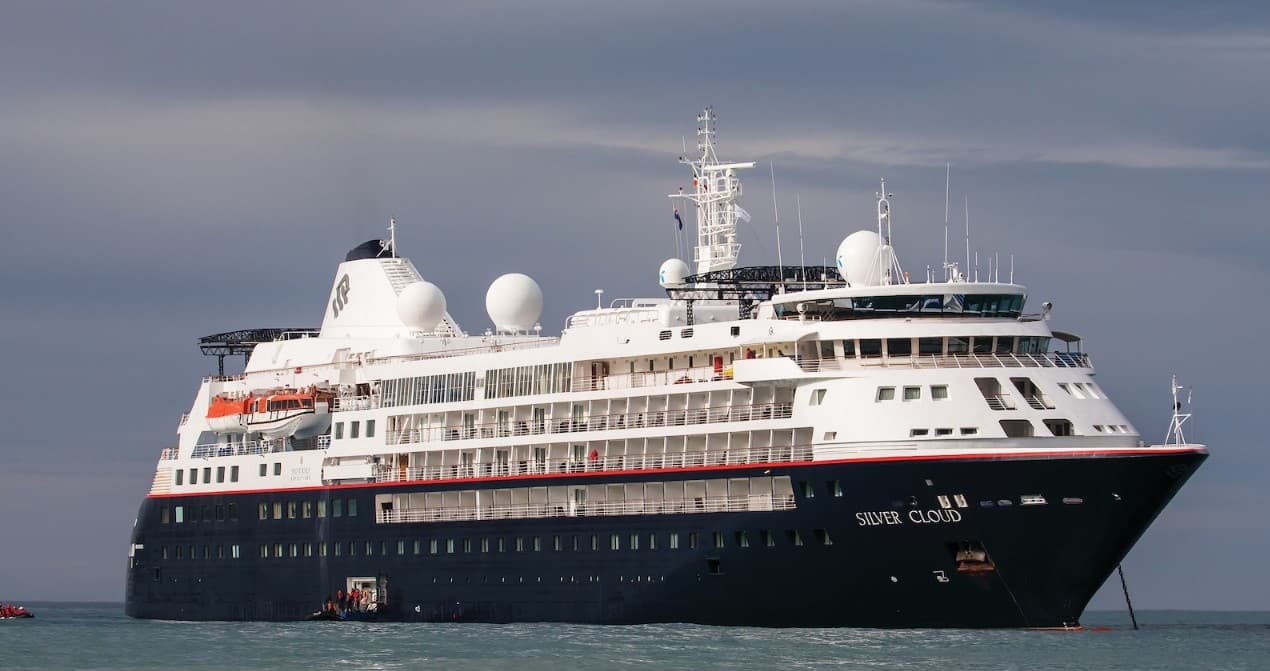
After extensive refurbishment, Silver Cloud is the most spacious and comfortable ice class vessel in expedition cruising. Her large suites, her destination itineraries and her unparalleled service make her truly special. Her four dining options will tantalise your taste buds and as 80% of her suites include a veranda, watching a breaching whale or a few cavorting penguins has never been so personal.
Ask our cruise specialists about cruise line loyalty benefits, status match options, drinks packages, gratuities and any current offers available on this sailing.
On board
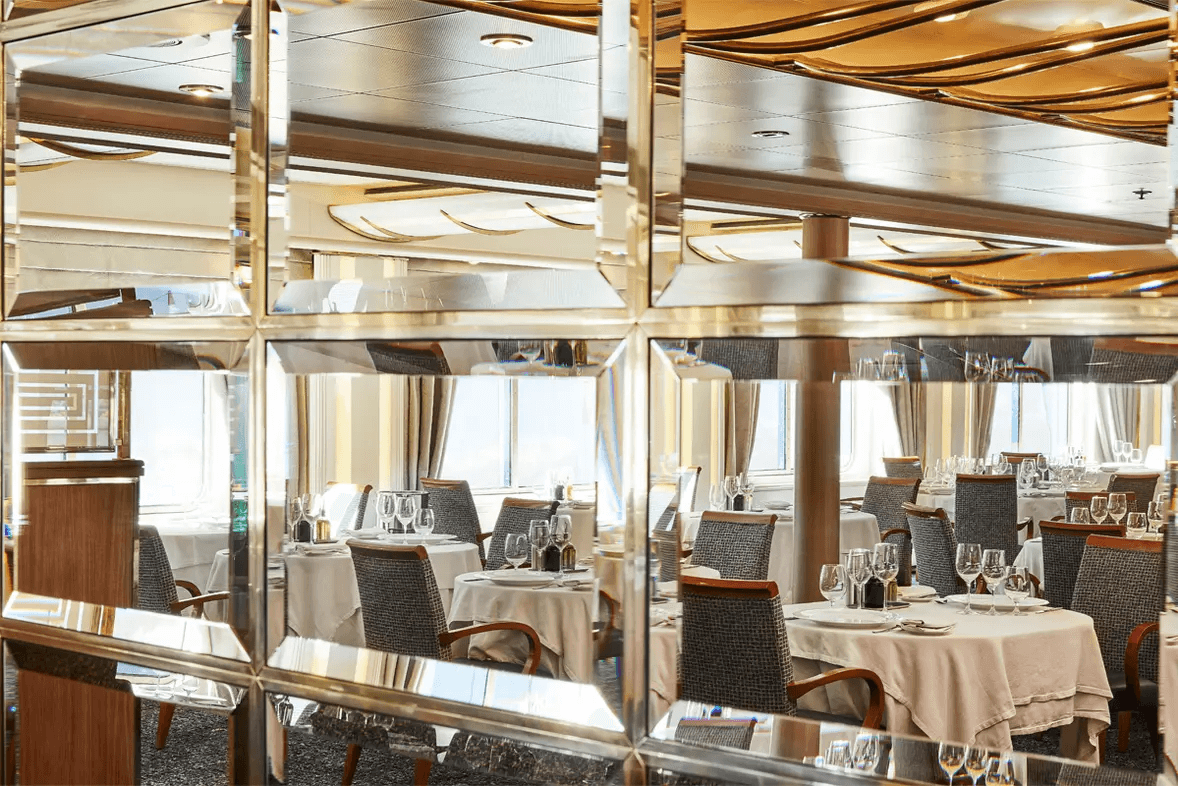
Restaurant
Itinerary
Cruise from Lautoka to Valparaiso
Day 1Cruise departs from LautokaSep 29, 2026 • Departs at: 8 pm
Lautoka is often described as the sugar city. Sugar cane is the major industry of Fiji and Lautoka is its main base. Here are the industries' headquarters, the largest sugar mill, modern loading facilities and a large wharf. It features 70 miles of roads, almost all paved, a wonderful botanical garden and royal palm trees decorating the city's main street, Vitogo Parade. The municipal market is another attraction from both outside and inside. Fiji typifies the image of paradise. The people here live as they have done for centuries, retaining their ancient traditions and simple and carefree lifestyle supported by the harvest of a generous land and bountiful sea.
Day 2Somosomo, TaveuniSep 30, 2026 • Arrives at: 12 pm • Departs at: 6:30 pm
Somosomo is the largest village on Taveuni, which in turn is Fiji’s third largest island. The village has had and still has political importance as it is the headquarters for Taveuni’s highest chief, the Tui Cakau, and Fiji’s Great Council of Chiefs met in Somosomo until 2012. Somosomo and Naqara, its immediate neighboring village with a predominantly Indo-Fijian population, are the commercial center for Taveuni. View less Slightly west of Somosomo is the 180th meridian and a sign indicating the International Dateline (which has been moved east of Tonga by now) is about 2 miles to the southwest. Somosomo is also famous for the amount of soft coral in the Somosomo Strait, just west of Somosomo and Taveuni. The reefs along the Somosomo Strait are considered among the best in the South Pacific as tidal currents and constant year–round water temperature create the ideal environment for some 390 species of hard and soft corals and over 1500 species of fish. Other attractions near Somosomo…
Day 3Ringgold IslesOct 1, 2026 • Arrives at: 6:30 am • Departs at: 12 pm
Day 3CobiaOct 1, 2026 • Arrives at: 1:30 pm • Departs at: 6 pm
The cobia is a species of carangiform marine fish, the only representative of the genus Rachycentron and the family Rachycentridae. Other common names include black kingfish, black salmon, ling, lemonfish, crabeater, prodigal son and black bonito.
Day 4Fulanga, FijiOct 2, 2026 • Arrives at: 6:30 am • Departs at: 11:30 am
As part of the Southern Lau Group, Fulanga is one of Fiji’s easternmost islands. Fulanga has a large central lagoon with a 50-meter wide pass to the ocean on its northeastern side. The crescent-shaped raised limestone island is famous for its numerous islands, mushroom-shaped islets and many sandy beaches in the calm lagoon. Some 400 residents live in three small villages. The two villages of Muana-i-rai and Muana-i-cake are quite close together on the southern exterior side with a very narrow passage allowing access to the ocean, while Naividamu, the third village, is on the interior, i.e. lagoon side. Muana-i-cake is the main village and hosts the kindergarten and primary school, a post office and first aid station. Old-style houses made of corrugated iron are predominant with limited solar power for the odd refrigerator and television set. Although many islanders have left Fulanga to look for work in Suva, traditional crafts are still practiced by men and women. The weavers and car…
Day 5Neiafu, Vava'u GroupOct 3, 2026 • Arrives at: 7:30 am • Departs at: 12:30 pm
With a population of 6,000, Neiafu is the capital of the Vava’u Group and the second largest municipality in the Polynesian nation of Tonga (a 169-island archipelago in the South Pacific). The city is situated next to a deep- water harbor (Port of Refuge) on the south coast of Vava’u, the main island of the Vava’u archipelago in northern Tonga. The waters of this region are known for their clarity and beauty, and the area attracts many humpback whales between June and November. View less A popular destination in Neiafu is the ‘Ene’io Botanical Garden, a bird sanctuary that promotes the survival of exotic and native bird species as well as supports and conserves a diverse array of plant life.
Day 5Euaiki IslandOct 3, 2026 • Arrives at: 2 pm • Departs at: 6:30 pm
Day 6Uoleva IslandOct 4, 2026 • Arrives at: 6:30 am • Departs at: 4 pm
Day 7At SeaOct 5, 2026
Day 7Date Line gain a dayOct 5, 2026 • Arrives at: 12:10 am • Departs at: 12:20 am
Day 7At SeaOct 4, 2026
Day 8RarotongaOct 5, 2026 • Arrives at: 6:30 am • Departs at: 4 pm
The Cook Islands are scattered like tiny jewels over a large stretch of sea between Tahiti and Samoa, lying virtually in the center of the Polynesian Triangle of the South Pacific. The first settlers arrived around the 8th century from the Society Islands, Samoa and the Marquesas, while the first Europeans made contact at the turn of the 16th century. In 1824, a Russian cartographer put the islands on the map, naming them after Captain Cook, who discovered five of the islands in the Southern Group in the 1770s. The natural beauty of Rarotonga, the principal island of the Cook archipelago, is profound and overwhelming. Its forest-covered mountains, deep valleys, fertile slopes of red soil and sparkling aquamarine lagoons make it a likely Eden.
Day 9Aitutaki , Cook IslandsOct 6, 2026 • Arrives at: 12 pm • Departs at: 6 pm
When Lonely Planet co-founder describes somewhere as “the world’s most beautiful island” you can be sure that you are in for a treat. Incredible Aitutaki, inspiring Aitutaki, unbelievable, idyllic and unimaginable, there are simply not enough superlatives to describe quite how amazing Aitutaki is. Brought to light in 1779 by Captain Bligh, the Mutiny on the Bounty meant that Aitutaki has something of a bloodthirsty history. While Europeans missionaries eventually settled on the island in the 19th century (evidenced by the white, coral-encrusted walls of the many churches) the island’s Polynesian history dates to around 900AD. Traditional songs and dances from this period still exist (although Christian hymns, known as “imene metua” are also popular), and are performed by islanders with gusto and much pride. The island is part of the Cook Islands, one of the most secluded and romantic archipelagos in the world. With its powder white sand, warm turquoise waters and sense of casual luxur…
Day 10At SeaOct 7, 2026
Day 11Bora Bora (Society Islands)Oct 8, 2026 • Arrives at: 8 am • Departs at: 5 pm
If you have ever dreamt up your ideal island holiday, we suspect it goes something like this: Soapy blue seas? Check. Sparkling white beaches? Check. Thatched wooden huts, gently sloping palm trees and kaleidoscopic marine life? Check, check and check. And yet, even by ticking every box, first time viewing of Bora Bora still beggars belief. This tropical hideaway less than 12 m2 in the heart of the South Pacific has been toping travel wish lists for years. Long considered the realm of honeymooners – spectacularly romantic sunsets are a speciality – Bora Bora is not just for wandering with your love. If the prismatic shades of blue of the world’s most beautiful lagoon do not fill you up, then perhaps underwater scooters and aqua Safaris will charge your batteries. If exploring Bora Bora’s lush hinterland is more your glass of tequila sunrise, then trips around the island (often stopping off at the celebrity haunt Bloody Mary Restaurant & Bar) are a must. Bora Bora’s peaceful ambience h…
Day 12Tikihau, Tuamotu ArchipelagoOct 9, 2026 • Arrives at: 9 am • Departs at: 5 pm
Tikehau or Porutu-kai is a coral atoll in the Palliser Islands group, part of the Tuamotu Archipelago in French Polynesia. It is included in the commune of Rangiroa.
Day 13Rangiroa, French PolynesiaOct 10, 2026 • Arrives at: 6 am • Departs at: 2:30 pm
Rangiroa, meaning ‘Vast Sky’ in Puamotu, is the largest atoll in the Tuamotu Archipelago and one of the largest in the world. Surrounded by two legendary bodies of water, Moana-tea (Peaceful Ocean) and Moana-uri (Wild Ocean), the atoll consists of about 250 islets and sandbars, with approximately 100 narrow passages in the fringing reef. The lagoon covers 618 square miles (1,600 square km), large enough that it has its own horizon.
Day 14Papeete (Tahiti)Oct 11, 2026 • Arrives at: 6 am
Formed by two ancient volcanoes and joined at the isthmus of Taravao, Tahiti is the largest island of the Society Archipelago and the economic heart of French Polynesia. Ever since the famous French impressionist painter Paul Gauguin immortalized Tahitian maidens in vibrant colors on his canvasses, Tahiti has had a mysterious allure and still summons up all the romance of the South Pacific as a tropical paradise. Rising in the center, Mount Orohena and Mount Aorai are the highest points; deep valleys radiate in all directions from these central peaks. Steep slopes drop abruptly from the high plateaus to coastal plains. The northeast coast is rugged and rocky without a barrier reef, and thus exposed to intense, pounding surf. Villages lie on a narrow strip between mountains and ocean. The south coast is broad and gentle with large gardens and coconut groves; a barrier reef shields it from the sea.
Day 15Fakarava, Tuamotu ArchipelagoOct 12, 2026 • Arrives at: 11:30 am • Departs at: 5 pm
Fakarava is oblong shaped and has an almost continuous string of reef and motu stretching for 40 km (25 mi) on its eastern edge. It's the second largest of the Tuamotu atolls, located 450 km (280 mi) northeast of Tahiti, and 120 km (75 mi) southeast of Rangiroa. It's renowned for the drift diving in its two passes—Garuae (also spelled Ngarue) in the north near the main town of Rotoava (and the airport) and Tamakohua Pass, 48 km (30 mi) across the lagoon in the south. The tiny village of Tetamanu, situated by the southern pass, was once the capital of the Tuamotus and houses the first church built in the archipelago in 1874. In 2006 the entire atoll was deemed an UNESCO biosphere reserve; to preserve the lagoon no overwater bungalows have been built in it. Fakarava was "discovered" by Russian explorer Fabian Gottlieb Von Bellingshausen in 1820; some 20 years later missionaries arrived, in the guise of fanatical Catholic priest Honore Laval, and began building churches.
Day 16At SeaOct 13, 2026
Day 17Atuona - Hiva Oa, Marquesas IslandOct 14, 2026
The largest of the southern islands, Hiva Oa, the master pillar or finial post of the ‘Great House’ - which represents the Marquesan archipelago in the local mythology - has always been the rival of Nuku Hiva. The island is shaped like a seahorse and has a mountain range running southwest to northeast whose main peaks, Mt. Temetiu and Mt. Feani form a real wall around Atuona. Atuona, a peaceful little port at the head of the Taaoa Bay, also known as Traitors Bay, has emerged from obscurity due to having had the privilege of being the last resting place of Paul Gauguin and of the singer Jacques Brel. The tombs of these famous personalities are on the side of the Calvary cemetery looking out across the bay and are places of great pilgrimage. In the village, the Gauguin Museum displays items related to the painter's stay there at the beginning of the century and has copies of his works.
Day 18Tahuata, Marquesas IslandsOct 15, 2026
Day 19Hatiheu, Nuku HivaOct 16, 2026 • Arrives at: 6:30 am • Departs at: 8 pm
Day 20Hanavave, Fatu HivaOct 17, 2026 • Arrives at: 6:30 am • Departs at: 6 pm
Day 21At SeaOct 18, 2026
Day 22At SeaOct 19, 2026
Day 23Mangareva (Gambier Islands)Oct 20, 2026 • Arrives at: 6:30 am • Departs at: 3 pm
In the Gambier Islands of French Polynesia, Mangareva is the largest island with a population of over 1,200 people. Most live in Rikitea, the largest village on the island. A high central ridge runs the length of Mangareva peaking with Mt. Duff, which rises over 440 meters from the sea on the island's south coast. The island has a large lagoon sprinkled with coral reefs whose tropical fish and the black-lip oysters have helped islanders survive much more successfully than on other nearby islands. View less Small ships are able to enter the lagoon of Mangareva. Ashore visitors can walk through the town, see the remains of the massive stone and coral buildings dating back to the 19th century or climb up Mt. Duff. The highlights in town include the cathedral with its mother-of-pearl shell altar and objects designed and built in the 1830s and 1840s and partially restored by the students of Rikitea’s school just a few years ago.
Day 24Adamstown (Pitcairn Island)Oct 21, 2026 • Arrives at: 1:30 pm
Home to the original mutineers of the Bounty, Adamstown’s is today the capital of all four Pitcairn Islands. The islands – the last British Overseas Territory in the Pacific – include the namesake Pitcairn Island itself, plus the uninhabited Oeno, Henderson and Ducie. Pitcairn is the archipelago’s only inhabited island, with the population of just 50 centred in Adamstown. It is no surprise that the nine mutineers along with six Tahitian men, 12 Tahitian women and one child stopped on Pitcairn in 1790; with its sloped and varied landscape, lush tropical promise and equidistant location between Peru and New Zealand, Pitcairn would have seemed an ideal hiding spot for the mutineers to settle. The ship was burnt to avoid detection (the ballast stone remains of the wreck in Bounty Bay). However, the ideal bucolic life that mutineer leader Fletcher Christian had envisaged was not to be. Poor treatment of the Tahitian men led to alcoholism, chaos and carnage and by 1800 only John Adams – who…
Day 25Adamstown (Pitcairn Island)Oct 22, 2026 • Departs at: 6 pm
Home to the original mutineers of the Bounty, Adamstown’s is today the capital of all four Pitcairn Islands. The islands – the last British Overseas Territory in the Pacific – include the namesake Pitcairn Island itself, plus the uninhabited Oeno, Henderson and Ducie. Pitcairn is the archipelago’s only inhabited island, with the population of just 50 centred in Adamstown. It is no surprise that the nine mutineers along with six Tahitian men, 12 Tahitian women and one child stopped on Pitcairn in 1790; with its sloped and varied landscape, lush tropical promise and equidistant location between Peru and New Zealand, Pitcairn would have seemed an ideal hiding spot for the mutineers to settle. The ship was burnt to avoid detection (the ballast stone remains of the wreck in Bounty Bay). However, the ideal bucolic life that mutineer leader Fletcher Christian had envisaged was not to be. Poor treatment of the Tahitian men led to alcoholism, chaos and carnage and by 1800 only John Adams – who…
Day 26At SeaOct 23, 2026
Day 27At SeaOct 24, 2026
Day 28At SeaOct 25, 2026
Day 29Easter Island, ChileOct 26, 2026 • Arrives at: 8 am
Easter Island, the easternmost settled island of Polynesia, received its European name in 1722 when the island was seen by a Dutch expedition under Roggeveen on Easter Sunday. The triangular-shaped island of 163 square kilometers is famous for the hundreds of statues known locally as moai. Rolling hills covered in grassland, eucalyptus forest and a rocky shore surround Hangaroa, the island’s only village on the southwestern coast. This is where Captain Cook landed in 1774, where missionaries built the first church and where ships find the best protection from winds and swells. Small beaches and transparent waters invite swimmers and snorkelers, but it is the cultural aspect which attracts visitors. Since 1935 the island has been a National Historic Monument and today 43.5% of the island is a national park administered by the Chilean National Forest Corporation and Mau Henua, a local community group. The island’s national park has been declared a UNESCO World Heritage Site in 1995. Fou…
Day 30Easter Island, ChileOct 27, 2026 • Departs at: 5 pm
Easter Island, the easternmost settled island of Polynesia, received its European name in 1722 when the island was seen by a Dutch expedition under Roggeveen on Easter Sunday. The triangular-shaped island of 163 square kilometers is famous for the hundreds of statues known locally as moai. Rolling hills covered in grassland, eucalyptus forest and a rocky shore surround Hangaroa, the island’s only village on the southwestern coast. This is where Captain Cook landed in 1774, where missionaries built the first church and where ships find the best protection from winds and swells. Small beaches and transparent waters invite swimmers and snorkelers, but it is the cultural aspect which attracts visitors. Since 1935 the island has been a National Historic Monument and today 43.5% of the island is a national park administered by the Chilean National Forest Corporation and Mau Henua, a local community group. The island’s national park has been declared a UNESCO World Heritage Site in 1995. Fou…
Day 31At SeaOct 28, 2026
Day 32At SeaOct 29, 2026
Day 33At SeaOct 30, 2026
Day 34At SeaOct 31, 2026
Day 35Alexander Selkirk Island, ChileNov 1, 2026 • Arrives at: 7:30 am • Departs at: 5 pm
Think of Daniel Defoe’s classic novel Robinson Crusoe and you will be picturing an intrepid castaway, marooned on a paradisiacal island. That image might be ideal for movie lovers, but the actual inspiration for Robinson Crusoe was a salty Scottish seadog who went by the name of Alexander Selkirk. Selkirk was marooned in Chile’s Juan Fernandez archipelago for four years and four months, rescued by a British private warship. Despite Selkirk’s slightly chequered past, he was greeted as a celebrity upon his return to England. His adventures were given a gloss and immortalised in the much loved 18th century classic. Alejandro Selkirk Island is located 165 kilometres west of the other islands in the archipelago, for a surface area of just under 50 m2. The island was renamed from its Spanish name Isla Más Afuera in 1966 by the Chilean government in homage to the sailor. The topography is very different form the Caribbean dream that Defoe writes about, think dense woodland, rugged coast and…
Day 36Robinson Crusoe IslandNov 2, 2026 • Arrives at: 6:30 am • Departs at: 5 pm
The friendly English-speaking population offers a unique blend of African, Spanish, Paya Indian and British cultures. British and Spanish settlers invaded the Paya as their respective countries fought over possession of Roatan in the 16th century. Soon after, pirates numbering nearly 5,000, including Henry Morgan, claimed Roatan as their stronghold. During the height of the slave trade, Roatan became a dumping ground for rebellious slaves that the British could no longer control. These marooned slaves, now called Maroons or Garifuna, form a present day ethnic group near the town of Punta Gorda. This unique mix of people and cultures, presently controlled by Honduras, has created a population that is rich in tradition yet welcoming to visitors.
Day 37At SeaNov 3, 2026
Day 37Cruise returns to ValparaisoNov 3, 2026 • Arrives at: 7 am
Since time immemorial Valparaiso has inspired writers, poets, musicians and artists alike. If the city is still a little rough around the edges, this only adds to its bohemian ambience; the architecture, style, street art, nightlife, and live music scenes of Valparaiso are some of the best in the world. Add colourful clifftop homes to the mix and you'll soon see why Valpariaso is many people's favourite Chilean city. The city was founded in 1536 by Spanish conquistador Juan de Saavedra, who named the city after his birthplace. View less Many of the colonial buildings he implemented are still standing today, despite the rain, wind, fire and several earthquakes (one of which almost levelled the city in 1906). Quirky architecture also abounds; poetry lovers and amateur architects will no doubt want to make the 45 km trip south to Chilean poet laureate (and Nobel Prize winner) Pablo Neruda’s ship-shaped house and museum for a taste of the extraordinary. The city and region are also extrem…
Cabin options
Compare the cabin types and onboard features shown for this sailing. Final price and availability are confirmed by our team when you inquire.
13 cabin grades listed for this sailing.
Next step
Cabin grades and prices
View every cabin grade and current availability on the next step.