Verdant Empire - Lima (Callao) to Rio De Janeiro
Regent Seven Seas Cruises · Seven Seas Voyager
Depart
Jan 27, 2028
Return
Feb 26, 2028
Port
Lima, Peru
Nights
30 nights
At a glance
- Built
- 2004
- Tonnage
- 42363
- Cabins
- 349
- Crew
- 455
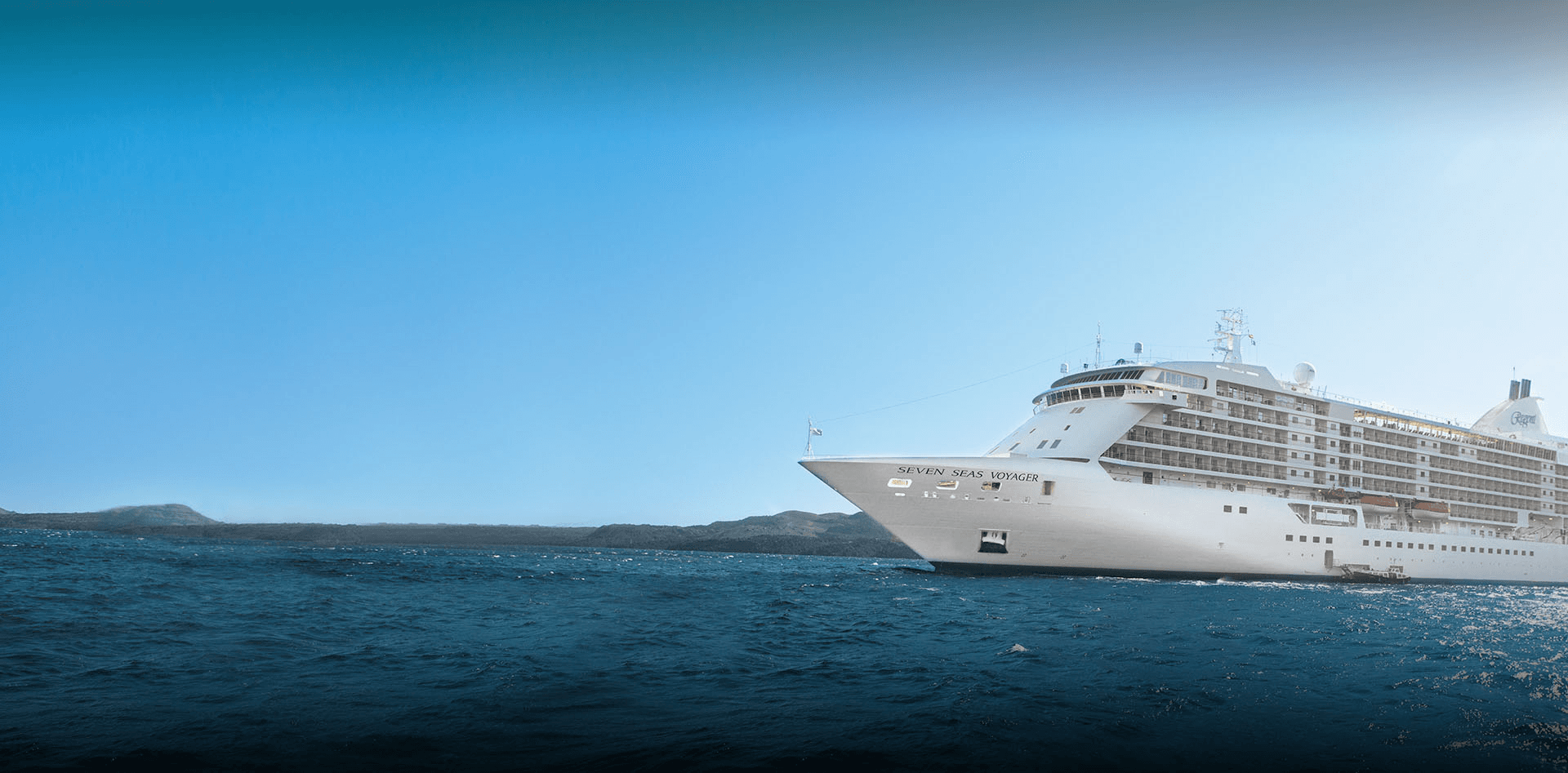
A trailblazer in the exclusive world of all-suite, all-balcony ships, Seven Seas Voyager exceeds even the loftiest expectations for luxury. Considering her size, the amenities are surprisingly plentiful and include four main dining venues where you can dine wherever, whenever and with whomever you choose. With 447 international crew members attending to a maximum of but 700 guests, personal service is exceedingly indulgent throughout.
Ask our cruise specialists about cruise line loyalty benefits, status match options, drinks packages, gratuities and any current offers available on this sailing.
On board

Internet Cafe

Pool Grill
Itinerary
Cruise from Lima, Peru to Rio de Janeiro
Day 1Lima (Callao)Jan 27, 2028 • Departs at: 5 pm
Lima was founded in 1535 by Spanish conquistador Francisco Pizarro on the banks of the Rimac river that forms a splendid and strategically located valley. At 133 meters above sea level, Lima enjoys mild yet humid weather with almost little or no rain. The city of Lima is one of South America’s largest, and is Peru’s center of political, cultural and economic life. Lima is your gateway to the splendid ruins of Cuzco and Machu Picchu, the ancient city in the clouds.
Day 2PiscoJan 28, 2028 • Arrives at: 8 am • Departs at: 5 pm
Pisco is the largest port between Callao and Matarani, Peru. There are two parts of town: Pisco Pueblo with its colonial-style homes; and Pisco Puerto, which, apart from fisheries, has been replaced as a port by the deep-water Puerto General San Martin. This area was also home of the Paracas culture, and in August 1820, the great liberator General San Martin landed on its coast, marking Pisco as the birthplace of Peru’s struggle for independence.
Day 3Pacific Ocean CruisingJan 29, 2028
Day 4AricaJan 30, 2028 • Arrives at: 8 am • Departs at: 5 pm
Arica is a port city in northern Chile, known for its surfing beaches. Near the center, a path climbs up to Morro Arica hill, which has sweeping views and the Museo Histórico y de Armas war museum. Designed by French architect Gustave Eiffel in metal and wood, Gothic San Marcos Cathedral dates from 1876. The high plains of the Andes mountains rise to the east, home to Lauca National Park and Chungará Lake.
Day 5IquiqueJan 31, 2028 • Arrives at: 8 am • Departs at: 5 pm
Founded in the 16th century, Iquique is the capital of the Iquique Province and a popular port city on the northern Pacific coast of Chile. Located west of the Atacama Desert, Iquique was part of Peru until the 19th century. Today the city is known for its duty-free commercial port center, one of the largest in South America, as well as its mild climate, beautiful beaches and archaeological treasures.
Day 6Pacific Ocean CruisingFeb 1, 2028
Day 7CoquimboFeb 2, 2028 • Arrives at: 8 am • Departs at: 5 pm
Coquimbo nestled in Northern Chile, means “place of calm water”, a happy accident of geography that encouraged its development as an important port. According to legend, the English corsair Sir Francis Drake has buried a considerable treasure in the city. In the early 19th century, Coquimbo was just a small fishing village, but when the railway reached the area joining the copper mines to the sea, the town and population increased dramatically. Today, Coquimbo offers the pleasures of a picturesque seaside promenade, the beautifully restored 19th-century architecture of the English Neighborhood and several fine beaches.
Day 8ValparaisoFeb 3, 2028 • Arrives at: 7 am • Departs at: 4 pm
Valparaíso is the principal port and second largest city of Chile. The city is situated on the shores of a sweeping bay and on a crescent of hills behind. Seen from the ocean, it presents a majestic panorama; a great circle of hills is backed by the snow-capped peaks of the distant Cordillera. Due to Valparaiso’s convenient location along the shipping routes circling Cape Horn, the port experienced a tremendous boost when the ports and the Americas were opened to world trade.
Day 9Pacific Ocean CruisingFeb 4, 2028
Day 10Puerto MonttFeb 5, 2028 • Arrives at: 7 am • Departs at: 4 pm
The first German colonists arrived to this area in 1852, and have remained to the present day, a small but influential percentage of the 130,000 inhabitants. The town spreads along a narrow seaboard and climbs the slopes enclosing it to the north. Since 1985, the city has experienced considerable growth and development, fueled by more than 30 salmon farms, in addition to forestry, fishing industries and service companies. A gateway to Chile’s picturesque lakes and spectacular indigo mountains.
Day 11Puerto ChacabucoFeb 6, 2028 • Arrives at: 10 am • Departs at: 6 pm
There is an old Chilean proverb that states, “If you are in a hurry in Patagonia, you are wasting your time.” In Puerto Chacabuco, a Chilean town in the Aysen commune, time passes at the leisurely pace of nature’s cycles. The gorgeously landscaped town is a small, isolated settlement situated along the wild-west fjordland coast. Patagonian ice sheets fall into the sea and the area provides a chance to view Black Necked Swans and the endangered Giant Condor.
Day 12Cruising the Chilean FjordsFeb 7, 2028
Day 13Cruising the Chilean FjordsFeb 8, 2028
Day 14Punta Arenas, ChileFeb 9, 2028 • Arrives at: 10 am
Punta Arenas or ‘Sandy Point,’ is the most prominent settlement on the Strait of Magellan and the capital of Chile’s Magallanes y la Antártica Chilena Region. Founded in 1848, Punta Arenas was originally a remote military garrison and penal colony. Today, it is the charming gateway for a number of exhilarating experiences viewing the awesome majesty of Torres del Paine with its soaring peaks and rugged beauty .
Day 15Punta Arenas, ChileFeb 10, 2028 • Departs at: 5 pm
Punta Arenas or ‘Sandy Point,’ is the most prominent settlement on the Strait of Magellan and the capital of Chile’s Magallanes y la Antártica Chilena Region. Founded in 1848, Punta Arenas was originally a remote military garrison and penal colony. Today, it is the charming gateway for a number of exhilarating experiences viewing the awesome majesty of Torres del Paine with its soaring peaks and rugged beauty .
Day 16Cape HornFeb 11, 2028
Cape Horn is the southernmost headland of the Tierra del Fuego archipelago of southern Chile. For years it was a major milestone on the clipper route, by which sailing ships carried trade around the world. After the opening of the Panama Canal, the need for ships to sail around the horn was greatly reduced. However, sailing around the Horn is widely regarded as one of the most difficult challenges in yachting, and it is still included in several prominent ocean yacht races.
Day 17Drake PassageFeb 12, 2028
Day 18Cruising by Paradise Bay, AntarcticaFeb 13, 2028
Day 19Cruising by Half Moon Island, AntarcticaFeb 14, 2028
Day 20Atlantic Ocean cruisingFeb 15, 2028
Day 21Port StanleyFeb 16, 2028 • Arrives at: 8 am • Departs at: 4 pm
Located about 480 miles northeast of Cape Horn, the Falklands Islands are the most easily accessible sub-Antarctic islands. The English navigator, John Davis, aboard the Desire made the first confirmed sighting of the Islands in 1592. The Falklands have been a disputed area between Great Britain and Argentina. Argentina invaded and occupied the islands in April 1982, spurring a British counter-invasion that June. With all the charm of a rural English village, Stanley is characterized by its bright rooftops, red telephone boxes, shops, and local pubs. Nearby is the Grave Cove penguin colony.
Day 22Atlantic Ocean cruisingFeb 17, 2028
Day 23Puerto MadrynFeb 18, 2028 • Arrives at: 7 am • Departs at: 3 pm
Situated snugly in a well-protected bay of the Golfo Nuevo, Puerto Madryn is the Chubut region’s natural access point for the plains of Patagonia, a vast area covering a third of the country, but occupied by less than four percent of the population. The area was originally settled by a group of adventurous Welsh immigrants some 120 years ago. Although the town appears today unmistakably Argentine, Welsh customs, names and even some of the language have survived. Purto Madryn is your portal to the amazing nature reserves of Punta Tomba and the Peninsula Valdes.
Day 24Atlantic Ocean cruisingFeb 19, 2028
Day 25MontevideoFeb 20, 2028 • Arrives at: 10 am • Departs at: 5:30 pm
Laid-back Montevideo is home to nearly half of Uruguay’s population. The relatively small capital is the nation’s only major city, yet visitors do not come here in search of the hustle and bustle of a large metropolis. It is said that Montevideanos themselves travel to Buenos Aires and São Paulo when they crave big city excitement. As Uruguay’s cultural, political and economical center, the city boasts a good number of monuments, museums and impressive architecture.
Day 26Buenos AiresFeb 21, 2028 • Arrives at: 5:45 am
Rivaling Madrid or Paris for sophistication and culture, the tree-lined boulevards of fashionable Buenos Aires are home to superb restaurants, art galleries, museums, the magnificent Teatro de Colon and the brightly colored houses of La Boca barrio. As the sun sets, Recoleta awakens and the passionate melodies of the tango rise from the milangas along San Telmo’s cobbled streets. Few cities in South America share the ambiance, lifestyle and amenities that make Buenos Aires so endearing.
Day 27Buenos AiresFeb 22, 2028 • Departs at: 6:45 pm
Rivaling Madrid or Paris for sophistication and culture, the tree-lined boulevards of fashionable Buenos Aires are home to superb restaurants, art galleries, museums, the magnificent Teatro de Colon and the brightly colored houses of La Boca barrio. As the sun sets, Recoleta awakens and the passionate melodies of the tango rise from the milangas along San Telmo’s cobbled streets. Few cities in South America share the ambiance, lifestyle and amenities that make Buenos Aires so endearing.
Day 28Atlantic Ocean cruisingFeb 23, 2028
Day 29Atlantic Ocean cruisingFeb 24, 2028
Day 30Atlantic Ocean cruisingFeb 25, 2028
Day 31Cruise returns to Rio de JaneiroFeb 26, 2028 • Arrives at: 7:30 am
There’s a little bit of Carnival celebrated here everyday. From its famous beaches to its iconic statue of Christ the Redeemer, Rio radiates an air of exuberance that is hard to find anywhere else. Make the scene on trendy Ipanema or take a cable car to the summit of Sugar Loaf Mountain and enjoy the amazing views. Sway your hips to the rhythm at a samba show or enjoy the tranquility of king Dom João VI’s Botanical Gardens and verdant Tijuca Forest.
Cabin options
Compare the cabin types and onboard features shown for this sailing. Final price and availability are confirmed by our team when you inquire.
13 cabin grades listed for this sailing.
Next step
Cabin grades and prices
View every cabin grade and current availability on the next step.