
Grand Circle Japan with Nebuta & Summer Festivals
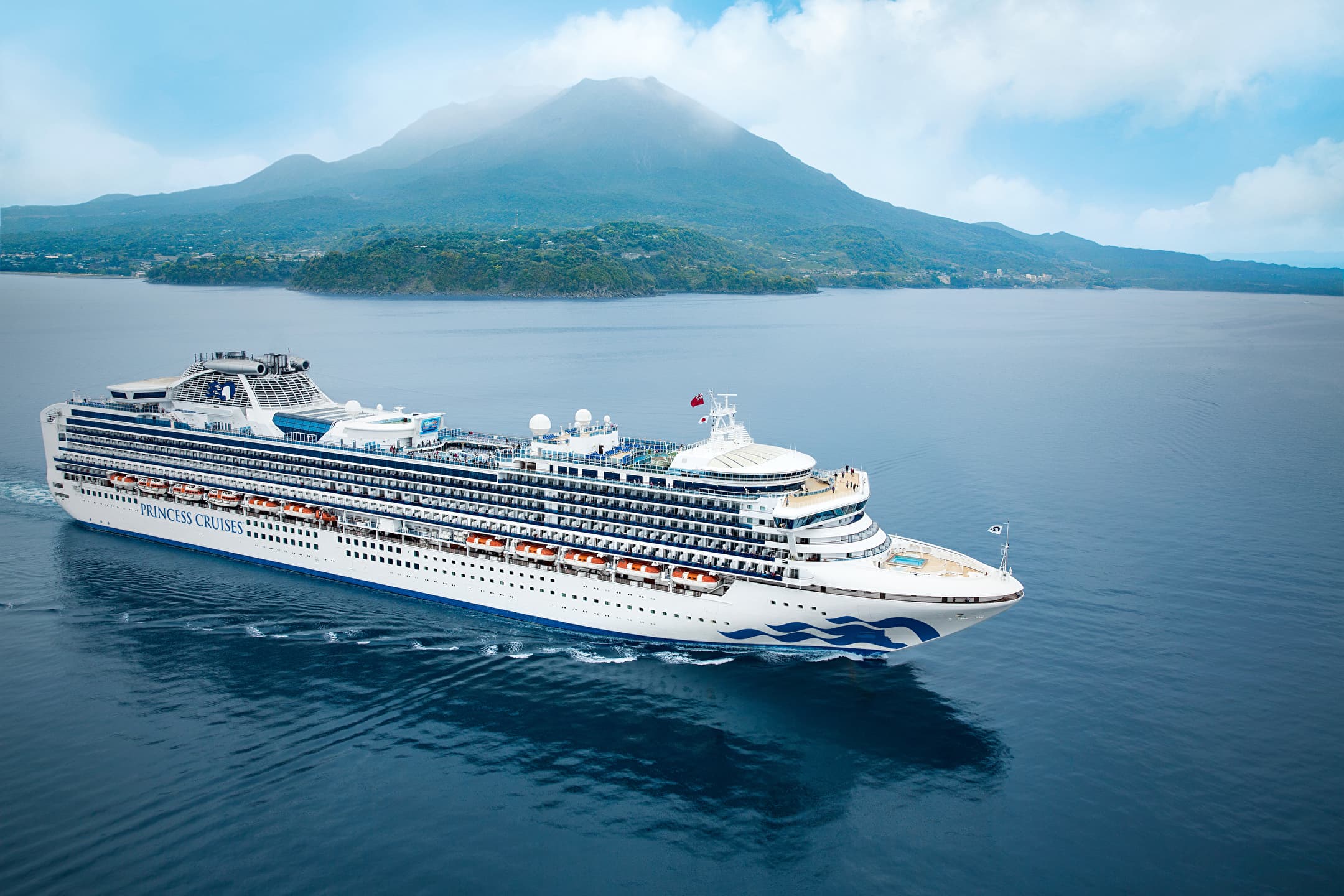
Princess Cruises · Diamond Princess
Depart
Jul 28, 2027
Return
Aug 16, 2027
Port
Yokohama, Tokyo
Nights
19 nights
At a glance
- Built
- 2004
- Tonnage
- 115875
- Cabins
- 1337
- Crew
- 1,100
Diamond Princess is a treasure trove of exceptional delights waiting to be discovered. Dine on freshly prepared sashimi in Kai Sushi, watch street performers in the dazzling Atrium, or take in a lavish production show in our state-of-the-art theater. And for a unique treat visit the Izumi Japanese Bath, the largest of its kind at sea.
Ask our cruise specialists about cruise line loyalty benefits, status match options, drinks packages, gratuities and any current offers available on this sailing.
On board

Internet Cafe
Itinerary
Cruise from Yokohama, Tokyo and back
Day 1YokohamaJul 28, 2027 • Departs at: 3 pm
Yokohama and Edo began life as sleepy fishing villages. That changed in the early 17th century after Tokugawa Ieyasu became Shogun. Edo became the center of political power in Japan, a position the city retained even after the restoration of Imperial rule in 1866. Contemporary Tokyo may be the most astonishing city on earth. It's a paradoxical mix of ancient tradition and postmodern culture. The Ginza - an international shopping mecca - stands near the serene grounds of the Imperial Palace, and the hyper-speed of 21st century consumerism is mysteriously reconciled with the elegance and serenity of traditional culture. Tokyo provides the traveler with a dizzying experience. With the Meiji Restoration of 1868, Edo was renamed Tokyo, the "Eastern Capital," to distinguish it from the old imperial capital at Kyoto, the "Western Capital."
Day 2At SeaJul 29, 2027
Day 3Yatsushiro, JapanJul 30, 2027 • Arrives at: 7 am • Departs at: 4 pm
Yatsushiro city was developed around a beautiful Shinto shrine, built during the Heian era (794–1185). Situated along the delta of the Kuma River, facing Yatsushiro Bay, this castle town and its ruins still showcase the spirit of the city. A visit to the ruins of Yatsushiro Castle (now part of a Shinto shrine) is a good place to begin your day. Another fun and scenic landmark is the flight of 777 stairs cut into the nearby mountains. Visitors are rewarded with panoramic views from the top – there are benches to rest on along the way! Yatsushiro is famous for its 16th century pottery designed with a distinctive blue-gray crackled glaze with white inlay. Craft enthusiast and collectors can visit three Kodayaki kilns in the area. Shopping enthusiasts will also enjoy the honmachi, a covered arcade that runs the length of several city blocks, and adventurous foodies can partake in some of the city's most exotic local fare, including Basashi, raw horse meat served with soy and garlic, a del…
Day 4BusanJul 31, 2027 • Arrives at: 7 am • Departs at: 4 pm
The second largest city in South Korea, Busan is your gateway to a fascinating land whose culture is a unique amalgam of old and new. Modern high-rise towers dwarf ancient Buddhist temples. The city's bustling business district offers a stark contrast to the serene grounds of Yongdusan Park. In short, Busan is a microcosm of South Korea, a nation whose startling economic success often obscures one of Asia's most sophisticated and venerable cultures. Busan was the scene of bitter fighting during the Korean War. The United Nations Memorial Cemetery marks the final resting place for the troops from 16 nations who gave their lives during the conflict.
Day 5At SeaAug 1, 2027
Day 6AomoriAug 2, 2027 • Arrives at: 8 am • Departs at: 11 pm
The capital of the Aomori Prefecture in northern Japan, Aomori derives much of its beauty from the apple orchards and cherry blossoms that encompass its landscape and the snow-covered Hakkoda Mountains that look on from a distance. Throughout its history, the city has been stricken with misfortune time and time again - in 1910, a fire destroyed Aomori, and during World War II, the city was left in ruins following an air raid - yet it always prevails. Aomori is cherished by many who believe a local legend that the grave of Jesus Christ lies within the southern part of Aomori prefecture. However, Aomori is perhaps best known for its renowned Nebuta Festival, an elaborate yearly event in which participants illuminate giant paper representations of samurai warriors, animals, and popular cartoon characters while parading them through the streets.
Day 7HakodateAug 3, 2027 • Arrives at: 8 am • Departs at: 11 pm
It took Commodore Perry and American gunboat diplomacy to open Japan to the outside world after two centuries of self-imposed isolation. In 1859, the port of Hakodate became the first Japanese city fully opened to Westerners under the Treaty of Amity and Commerce. Foreigners soon flocked to Hakodate, and today visitors wandering the cobblestone streets of the city's Motomachi District can view their Western-style frame houses. Hakodate, once a fishing port famed for its high quality fish and shellfish, quickly became Hokkaido's largest city and one of Japan's most important ports. The Great Hakodate Fire of 1934 dealt the city a near fatal blow - a blow from which Hakodate was slow to recover. Today the city is Hokkaido's third largest - surpassed by Sapporo and Asahikawa - but retains its foremost position as the finest Japanese producer of sushi's raw product: the high quality seafood caught in Hokkaido's cold waters. It may not compare to Tokyo's Tsukiji's Fish Market, but at Hakod…
Day 8At SeaAug 4, 2027
Day 9YokohamaAug 5, 2027 • Arrives at: 6:30 am • Departs at: 3 pm
Yokohama and Edo began life as sleepy fishing villages. That changed in the early 17th century after Tokugawa Ieyasu became Shogun. Edo became the center of political power in Japan, a position the city retained even after the restoration of Imperial rule in 1866. Contemporary Tokyo may be the most astonishing city on earth. It's a paradoxical mix of ancient tradition and postmodern culture. The Ginza - an international shopping mecca - stands near the serene grounds of the Imperial Palace, and the hyper-speed of 21st century consumerism is mysteriously reconciled with the elegance and serenity of traditional culture. Tokyo provides the traveler with a dizzying experience. With the Meiji Restoration of 1868, Edo was renamed Tokyo, the "Eastern Capital," to distinguish it from the old imperial capital at Kyoto, the "Western Capital."
Day 10At SeaAug 6, 2027
Day 11AomoriAug 7, 2027 • Arrives at: 8 am • Departs at: 11 pm
The capital of the Aomori Prefecture in northern Japan, Aomori derives much of its beauty from the apple orchards and cherry blossoms that encompass its landscape and the snow-covered Hakkoda Mountains that look on from a distance. Throughout its history, the city has been stricken with misfortune time and time again - in 1910, a fire destroyed Aomori, and during World War II, the city was left in ruins following an air raid - yet it always prevails. Aomori is cherished by many who believe a local legend that the grave of Jesus Christ lies within the southern part of Aomori prefecture. However, Aomori is perhaps best known for its renowned Nebuta Festival, an elaborate yearly event in which participants illuminate giant paper representations of samurai warriors, animals, and popular cartoon characters while parading them through the streets.
Day 12At SeaAug 8, 2027
Day 13SakaiminatoAug 9, 2027 • Arrives at: 7 am • Departs at: 5 pm
Wedged between sea, sky and mountains, this small fishing port has been esteemed for centuries for its superb seafood. Here, the Sea of Japan yields up both crab and hon-maguro, the prized Bluefin tuna esteemed by gourmets around the world. Sakaiminato is also your gateway to a very ancient region of Honshu. West of the city lies Izumo-taisha, one of the oldest and holiest shrines in Shinto. This area is dotted with burial mounds from Japan's Bronze Age. The town of Matsue boasts the celebrated "Black Castle," a six-story, black-walled castle that home to a clan of the mighty Tokugawa dynasty that ruled Japan for over 250 years. And to the east rises the great snow-capped summit of Mt. Daisen, considered one of the four most scenic mountains in all Japan.
Day 14BusanAug 10, 2027 • Arrives at: 7 am • Departs at: 4 pm
The second largest city in South Korea, Busan is your gateway to a fascinating land whose culture is a unique amalgam of old and new. Modern high-rise towers dwarf ancient Buddhist temples. The city's bustling business district offers a stark contrast to the serene grounds of Yongdusan Park. In short, Busan is a microcosm of South Korea, a nation whose startling economic success often obscures one of Asia's most sophisticated and venerable cultures. Busan was the scene of bitter fighting during the Korean War. The United Nations Memorial Cemetery marks the final resting place for the troops from 16 nations who gave their lives during the conflict.
Day 15At SeaAug 11, 2027
Day 16KochiAug 12, 2027 • Arrives at: 7 am • Departs at: 11:59 pm
Kochi sits on the broad alluvial plain facing Urado Bay. This city in Shikoku takes its name from the great feudal castle that sits at its very heart. Completed in 1611, Kochi Castle was the seat of Yamauchi Kazutoyo, a noted warrior who supported Tokugawa Ieyasu in his successful quest to become Shogun. Tosa Province and Kochi Castle were Yamauchi's reward for faithful service. There is an historical irony here: 250 years later, a Kochi native son - a former low-ranked samurai and now ronin named Sakamoto Ryoma - played a pivotal role in bringing the Tokugawa Shogunate to an end and restoring the Emperor of Japan to political prominence. The prize once awarded for faithful service had become a hotbed of support for the Meiji Restoration. Kochi is one of the wettest places in Japan - and a frequent target for cyclonic storms or typhoons. Southeast of the city, warm oceans currents washing against the Aki Mountains create a subtropical landscape of hibiscus, palm and ficus at Muroto-An…
Day 17Tokushima, JapanAug 13, 2027 • Arrives at: 9 am • Departs at: 11:59 pm
Born as a 16th century castle town whose remains now lay scattered near a park and museum, Tokushima is best known for its colorful summer dance festival, the Awa Odori. But it may be Mother Nature who garners the most attention. Surrounded by 3,280-foot-tall mountains that hint at the wonders that lie beyond, the city is the perfect gateway to the mesmerizing Naruto whirlpools, the panoramic views from atop Mt. Bizan, and the spectacular gorges and vine bridges of Iya Valley. Whether you're entranced with the ways of the warrior, or under the spell of the extraordinary attractions, Tokushima offers exciting new experiences and unforgettable new adventures.
Day 18OsakaAug 14, 2027 • Arrives at: 7 am • Departs at: 7 pm
For centuries, Osaka was Japan's cultural and commercial gateway to Asia - the point of entry both for trade goods and, most importantly, cultural influences that shaped Japanese society. From tea to Zen, from art to science and philosophy, Osaka was Japan's contact with the great East Asian cultures that flourished in China and Korea. The city reached its zenith in the late 16th century, when the great feudal lord Toyotomi Hideyoshi made Osaka his capital. Toyotomi was master of Japan, and an immense administrative and commercial center rapidly developed around Osaka Castle. After Toyotomi's death, the nation's seat of power shifted from Osaka to a sleepy little fishing village called Edo - modern Tokyo. While overshadowed by Tokyo, Osaka remains Japan's second largest city and a vital commercial center. Modern Osaka is home to monuments from Japan's past including Toyotomi's immense castle and the Sumiyoshi Shrine. The city is also your gateway to Kyoto, Japan's ancient imperial cap…
Day 19ShimizuAug 15, 2027 • Arrives at: 1 pm • Departs at: 7 pm
Sprawling, semi-rural Shimizu Ward is dominated by forested coastal mountains, with hiking trails and ropeway rides to dramatic viewpoints above Suruga Bay. Miho Beach Park is popular for swimming and water sports in summer, and there are baseball and soccer fields nearby, plus an aquarium at the Marine Science Center.
Day 20YokohamaAug 16, 2027 • Arrives at: 6:30 am
Yokohama and Edo began life as sleepy fishing villages. That changed in the early 17th century after Tokugawa Ieyasu became Shogun. Edo became the center of political power in Japan, a position the city retained even after the restoration of Imperial rule in 1866. Contemporary Tokyo may be the most astonishing city on earth. It's a paradoxical mix of ancient tradition and postmodern culture. The Ginza - an international shopping mecca - stands near the serene grounds of the Imperial Palace, and the hyper-speed of 21st century consumerism is mysteriously reconciled with the elegance and serenity of traditional culture. Tokyo provides the traveler with a dizzying experience. With the Meiji Restoration of 1868, Edo was renamed Tokyo, the "Eastern Capital," to distinguish it from the old imperial capital at Kyoto, the "Western Capital."
Cabin options
Compare the cabin types and onboard features shown for this sailing. Final price and availability are confirmed by our team when you inquire.
32 cabin grades listed for this sailing.
Next step
Cabin grades and prices
View every cabin grade and current availability on the next step.