
Ultimate Mediterranean: Italy & The Dalmatian Coast
Seabourn · Seabourn Ovation
Depart
May 15, 2027
Return
Jun 21, 2027
Port
Dubrovnik
Nights
37 nights
At a glance
- Built
- 2017
- Tonnage
- 40350
- Cabins
- 266
- Crew
- 330
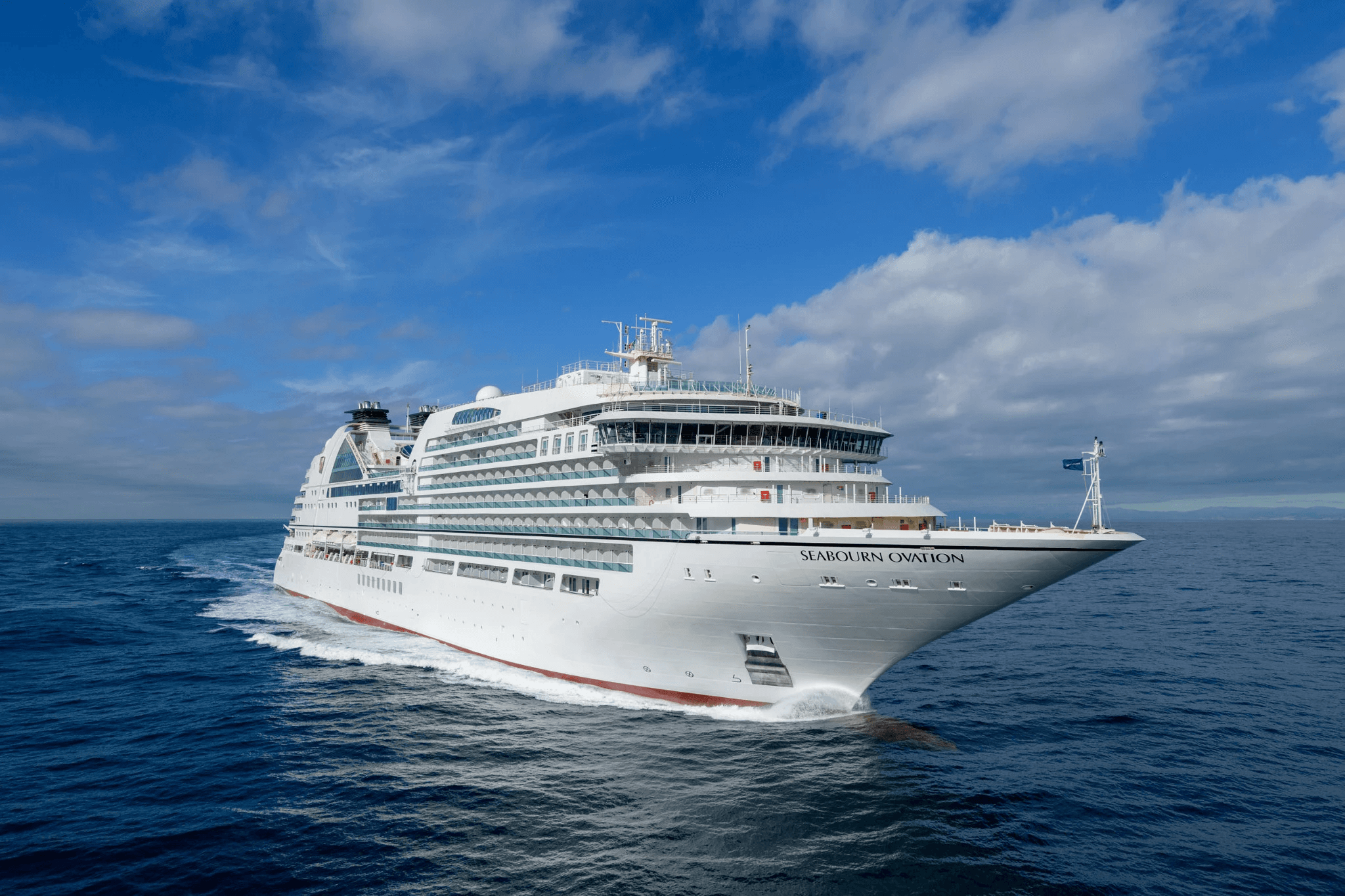
Introducing Seabourn Ovation, the sister-ship to the already prestigious Seabourn Encore. Seabourn Ovation represents another welcome stage in the evolution of small ship cruising, which Seabourn pioneered and has consistently expanded and enriched for all of our small ship cruises. Both ships will deliver a wealth of new concepts, a fresh vision and a host of illuminating ideas to delight the world's most discerning travelers.
Ask our cruise specialists about cruise line loyalty benefits, status match options, drinks packages, gratuities and any current offers available on this sailing.
On board

Grill
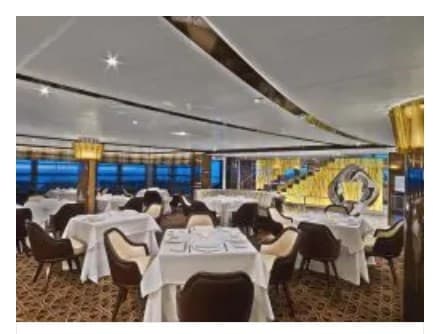
Grill by Thomas keller

Insuite Dining
Itinerary
Cruise from Dubrovnik to Civitavecchia, Rome
Day 1Cruise departs from DubrovnikMay 15, 2027 • Departs at: 3 pm
Founded in the 7th century, Dubrovnik rose to greatness as a merchant state, independent republic and cultural crossroads. The traffic-free Old Town has been called a Croatian Athens. This UNESCO designated World Heritage Site is a living museum of the ages with fortifications, chapels, monastic cloisters and Europe's second-oldest synagogue crowded into its ancient walls. Relax at a sidewalk café, listen to the chimes of the 14th-century bell tower or join the promenade down the palace-lined avenue known as the Stradun.
Day 2Kotor, MontenegroMay 16, 2027 • Arrives at: 7 am
One of the best preserved medieval towns of the Adriatic, Kotor is protected by UNESCO. Between 1420 and 1797, the area was under the rule of the Republic of Venice and the Venetian influence can be seen in its architecture. The Gulf of Kotor is sometimes called the southernmost fjord in Europe, although it is actually a submerged river canyon. The overhanging limestone cliffs of Orjen and Lovcen complete one of the Mediterranean's most beautiful landscapes.
Day 3Brindisi (Lecce), ItalyMay 17, 2027 • Arrives at: 8 am
Set on a peninsula between two arms of the Adriatic Sea, Brindisi was an important port of the Roman Empire, and later for the East India Company. In the 2nd century BC the Appian Way was built, linking the port to Rome, and a column near the harbor marks the end of that famous route. It is here that in 71 BC, the gladiator Spartacus led thousands of rebel slaves in an unsuccessful escape. Today visitors find Romanesque churches, a 13th-century castle and, in the surrounding Apulia region, remains of ancient Messapian culture.
Day 4Kerkira, GreeceMay 18, 2027 • Arrives at: 8 am • Departs at: 5 pm
A scant few miles off the Albanian coast lies the island of Corfu, one of the most richly endowed of all the Greek Isles. Praised by Homer in "The Odyssey" and selected by Shakespeare as the setting for "The Tempest," the island retains evidence of cultural heritage from each of its past rulers - Byzantium, Venice, France, Russia and Great Britain. Rolling acres of olive groves, small orchards of lemon and orange trees, tall cypress, oleander, and myrtle bushes lend a lush, verdant look to the island. While the oldest part of Corfu Town has cobblestone lanes so narrow only pedestrian travel is possible, the modern sector has wide avenues. Residents boast that its "Spianada" is the largest and most beautiful square in all Greece.
Day 5Itea (Delphi), GreeceMay 19, 2027 • Arrives at: 8 am • Departs at: 6 pm
Itea is a small bathing resort and port at the end of a bay not too far from the ancient port of Delphi. The hills are covered with olive trees belonging to the sanctuary of Apollo in ancient times. Referred to as a "sea of olives," their production is now an important part of the local economy.
Day 6At SeaMay 20, 2027
Day 7Gythion (Sparta), GreeceMay 21, 2027 • Arrives at: 8 am • Departs at: 6 pm
Gythion, the small port town for Sparta, edges its way up the hillside, which surrounds the harbor. According to Homer, Paris and Helen spent their first night together here, on a tiny islet in the bay. To commemorate the occasion, Paris erected a shrine to Aphrodite, goddess of love, only to have it torn down by the vengeful Menelaus after he recaptured Helen. In its place Menelaus erected statues honoring Praxidica (Punishment) and Themis (Justice). Not far away, at the tip of the Peloponnese, lies the Mani, a distinctive area unlike anything else in Greece. This desolate region of underground lakes and rivers and windswept landscapes is strangely beautiful. To the north of Gythion lie Sparta and Mystra, well worth a visit.
Day 8Piraeus (Athens), GreeceMay 22, 2027 • Arrives at: 7 am • Departs at: 10 pm
Piraeus has been the port for Athens since 482 BC. The busy harbor is filled with ferries and cruise ships making their way to the Greek Islands and other Mediterranean cities. The busy metropolis of Athens and its treasure trove of antiquities lie just a few miles from the port. Even as the reality of the modern city took hold, with its high-rise apartments, crowded sidewalks and bustling traffic, the beauty of the Acropolis, the outstanding museums, charming cafés, sidewalk markets and startling views come together in a cultural mosaic for all to enjoy.
Day 9Monemvasia, GreeceMay 23, 2027 • Arrives at: 8 am
Monemvasia was once on the Peloponnese mainland. Then an earthquake turned it into an island. It is now joined to the mainland by a narrow causeway that limits access, originally for reasons of defense. The tall, flat isle is completely honeycombed with nooks and grottoes, narrow alleys and rock-carved rooms. Clearly it was a formidable redoubt in times of attack, and earned its nickname the Gibraltar of the East. The upper town, long uninhabited, has narrow pathways leading to the Byzantine Aghia Sophia church, and remains of the medieval fortress and walls. In the lower town, look for the bell tower that leads you to Elkomenos Square, with its namesake medieval Elkomenos Christos church and a small museum.
Day 10Agios Nikolaos, Crete, GreeceMay 24, 2027 • Arrives at: 8 am • Departs at: 6 pm
This charming village of white houses climbing up the slopes is beautifully situated on the sparkling Gulf of Mirabello. The attractive Venetian harbor is surrounded by restaurants, outdoor cafes and clusters of shops selling everything from necessities to souvenirs. The ship docks in the center of town, and you are able to wander at will and enjoy the atmosphere of Crete's foremost resort.
Day 11Mykonos, GreeceMay 25, 2027 • Arrives at: 8 am • Departs at: 6 pm
The quintessential Greek island of Mykonos is marked by whitewashed houses, domed churches, imposing windmills, and a labyrinth of winding streets designed to disorient pirates. Everywhere there is a dash of bright, bold blue - doors, shutters and window frames, sea and sky. The harbor bustles with colorful fishing boats, vendors selling fish and locals gathered with visitors in the casual seaside cafes. The port even comes with two beloved mascots, the pelicans Petros and Irini.
Day 12Cesme, TurkeyMay 26, 2027 • Arrives at: 8 am • Departs at: 6 pm
A popular holiday and resort destination, Cesme is located on a promontory on the tip of a peninsula that carries the same name. The town itself is dominated by the medieval Cesme Castle, while the back streets invite a casual stroll with their old Ottoman and Greek houses that charm passers-by. South of the castle there is an Ottoman caravanserai built in 1528 that has since been transformed into a lovely boutique hotel, and check the Greek Orthodox church of Ayios Haralambos to see the current art exhibition. Along with the historical attractions, visitors will enjoy local pleasures, such as a dip in the thermal baths followed by the culinary delights of native fruits, artisan cheeses and local wines.
Day 13Kusadasi (Ephesus), TurkeyMay 27, 2027 • Arrives at: 8 am • Departs at: 11 pm
Kusadasi, which means "bird island," is set in a superb gulf known for its sparkling water, broad sandy beaches and large marina. The city has managed to retain a certain earthiness while doing a brisk trade in Turkish carpets and leather goods to visitors. The town's old quarter is a picturesque maze of winding streets and houses adorned with flowers and birdcages. In the center stands a 17th-century caravanserai, now converted into a hotel. The resort is also gateway to important sites of archaeological and religious interest.
Day 14At SeaMay 28, 2027
Day 15Istanbul, TurkeyMay 29, 2027 • Arrives at: 7 am
Spanning Europe and Asia, exotic Istanbul is one of the world's most fascinating cities. Domes and minarets enhance the skyline. In the old Stamboul area, traces remain of every city built since the community was established over 600 years before Christ. Once Rome's eastern capital, Istanbul was also the center of the huge Ottoman Empire. Landmarks include Hagia Sophia, once Christendom's greatest church; the Blue Mosque with its striking Iznik tiles; Topkapi Palace, containing a sultan's ransom of treasures; Chora Church with its Byzantine mosaics; and the Grand Bazaar, the ultimate shopping experience.
Day 16Canakkale, TurkeyMay 30, 2027 • Arrives at: 8 am • Departs at: 5 pm
Between 1865 and 1866, English explorer Frank Calvert and German archaeologist Heinrich Schliemann began digging trenches through a hillock outside Canakkale and discovered layer upon layer of ancient cities. Ultimately nine cities that had thrived and fallen atop each other were identified with the legendary Greek city of Troy. The site is a UNESCO World Heritage Site.
Day 17Volos, GreeceMay 31, 2027 • Arrives at: 8 am • Departs at: 6 pm
The span of highrise buildings that line the waterfront at Volos speak to modern Greece, rather than the ancient land. Indeed Volos is a very Greek city, a busy port and not high on the list of places for a traveler to visit. Yet like most places in Greece, its roots are deep in the mythic and historic soil of the country. Volos lies on the doorstep of the Plain of Thessaly, the pastures of Centaurs. In the nation’s heart, at Kalambaka, the plain erupts into a phalanx of towering granite pillars, each topped by a monastery over 600 years old. This is Meteora, one of the most unforgettable sites in Greece. Nearby, Mt. Pelion looms, its slopes dotted with picturesque villages of characteristic homes with wooden stories stacked atop stone ground floors. In the city itself, an archaeological museum holds treasures dating from the Neolithic through the Bronze Age, including jewelry fashioned 35 centuries ago.
Day 18At SeaJun 1, 2027
Day 19Patmos, GreeceJun 2, 2027 • Arrives at: 7 am • Departs at: 10 pm
Deserted for centuries because of constant raids by pirates and the Turks, this tiny arid island was first settled in 1088 when the Emperor of Constantinople made it a gift to the monk Christodoulos Latrnos so that he could establish a monastery in honor of St. John the Divine on the site. Patmos has been a place of scholarship and religious enlightenment ever since. Today this modern pilgrimage site is a quiet respite from the tourist havens many other Greek isles have become.
Day 20Rhodes, GreeceJun 3, 2027 • Arrives at: 8 am • Departs at: 6 pm
Best known of the Dodecanese Islands, Rhodes is a fascinating architectural patchwork of her past. Here the legacy of the ancient Greeks mingles with that of besieging Turks, crusading knights, and occupying Italians. Twin bronze deer, the symbol of Rhodes, guard the Mandraki Harbor where the 100-foot Colossus is said to have stood, a wonder of the ancient world. The medieval Crusader City is dominated by the Palace of the Grand Masters, while cobbled streets lead to the bustling bazaar and a lively harbor that is a center of the international yachting scene.
Day 21Santorini, GreeceJun 4, 2027 • Departs at: 6 pm
"Thira, the Wild Island" and "Kalliste, the Fairest One" - all terms of endearment for this seductive, volcanic Greek island in the Sea of Crete. Extraordinary for its black sand beaches and sheer limestone cliffs, Santorini also showcases remnants of the Phoenician, Spartan and Minoan cultures, which fell under the island's spell - an unvarying, irresistible lure that continues to this day. Fira, the picturesque, pedestrian-only capital, is reached from the seaport via a short cable car ride that offers thrilling views as you ascend.
Day 22Piraeus (Athens), GreeceJun 5, 2027 • Arrives at: 7 am
Piraeus has been the port for Athens since 482 BC. The busy harbor is filled with ferries and cruise ships making their way to the Greek Islands and other Mediterranean cities. The busy metropolis of Athens and its treasure trove of antiquities lie just a few miles from the port. Even as the reality of the modern city took hold, with its high-rise apartments, crowded sidewalks and bustling traffic, the beauty of the Acropolis, the outstanding museums, charming cafés, sidewalk markets and startling views come together in a cultural mosaic for all to enjoy.
Day 23Nafplion, GreeceJun 6, 2027 • Arrives at: 8 am • Departs at: 5 pm
Held to be one of the loveliest small towns in all the islands, Navplion has a tradition and culture all its own. The sheltered location, below a rocky headland crowned by a Venetian fortress is perhaps unrivaled in Greece. After the Greek revolution of the early 19th century, Navplion served as the first modern capital. The neoclassical houses, large official buildings and carefully planned seafront streets all date from this period.
Day 24At SeaJun 7, 2027
Day 25Kotor, MontenegroJun 8, 2027 • Arrives at: 8 am
One of the best preserved medieval towns of the Adriatic, Kotor is protected by UNESCO. Between 1420 and 1797, the area was under the rule of the Republic of Venice and the Venetian influence can be seen in its architecture. The Gulf of Kotor is sometimes called the southernmost fjord in Europe, although it is actually a submerged river canyon. The overhanging limestone cliffs of Orjen and Lovcen complete one of the Mediterranean's most beautiful landscapes.
Day 26Korcula, Croatian IsleJun 9, 2027 • Departs at: 6 pm
"The gods wanted to crown their creation so on the last day they turned tears, stars and the sea breeze into the isles of Kornati." Thus wrote George Bernard Shaw referring to the largest archipelago in the Mediterranean, the islands, islets, and reefs of the Dalmatian coast. Korcula, the town and port on an island of the same name, could be called a Dubrovnik in miniature. Situated at the most strategic point of the island, along ancient sea trade routes, it has always attracted travellers and settlers. It is a window onto thousands of years of European culture; down through the centuries Hellenic, Roman, Illyrian, Croatian and Venetian civilizations have all left their mark. The Trojan hero Antenor was the legendary founder of the island, and it is well known as the birthplace of that great traveler, seaman, and explorer - Marco Polo. Inside the town walls is a diversity of architecture which has remained untouched through the centuries. Wander through its narrow lanes, visit the go…
Day 27Hvar, CroatiaJun 10, 2027 • Arrives at: 8 am • Departs at: 6 pm
Beautifully situated on a large natural bay, the ancient town of Hvar, on the island of the same name, served as an important harbor for Venice's Adriatic fleet from the 12th through the 18th centuries. Vestiges of this momentous time are reflected in the fortifications that still stand guard over the harbor, and in the very heart of the port, a large arsenal. Hvar today is a quiet spot reminiscent of the French Riviera at the turn-of-the-last-century. Sail and fishing boats bob and sway in the harbor and a 17th-century bell tower marks off the hours. Winding limestone lanes converge onto an expansive piazza, the largest in Dalmatia, which connects the older part of town to the ""modern"" side - that built after the 15th century. Inland, Hvar's green hills are woven with vineyards and lavender fields, and offshore tiny islets are scattered like pearls in a clear cobalt sea.
Day 28Vodice (Sibenik)Jun 11, 2027 • Arrives at: 8 am • Departs at: 5 pm
Vodice is a popular seaside town on the Dalmatian coast of the Adriatic Sea. It has the familiar red-tiled roofs and wide stone seaside promenades of other Dalmatian ports. In the town, there are several interesting features. One is the old Church of St. Cross dating from 1402, and the newer, baroque Parish Church of St. Cross from 1746, with a tall bell tower. The Church of St. Elijah is even older, dating from 1298. There are several popular pebble and sand beaches around Vodice. Outside town are a pair of fields with archaeological remains of Roman era occupation, including walls, cisterns, wells and fortifications. Each field also holds a small church. The Coric Tower is a fortified manor built by a powerful family during the mid-17th century to protect against Turkish attacks. From Vodice it is also easy to access the seaside town of Sibenik, the waterfalls and pools of Krka National Park and the offshore islands of the Kornati National Park.
Day 29Piran, SloveniaJun 12, 2027 • Arrives at: 8 am • Departs at: 6 pm
From walled Piran, visit a medieval church with a fresco of the Danse Macabre, the UNESCO-cited caves of Skocjan, or Lipica stud farms, the home of the famed Lippizaner horses.
Day 30Fusina (Venice), ItalyJun 13, 2027 • Arrives at: 7 am
Day 31Rovinj, CroatiaJun 14, 2027 • Arrives at: 8 am • Departs at: 6 pm
Nestled among the myriad islets of the Istrian coast in the Gulf of Venice, the charming harbor of Rovinj is comprised of candy-colored buildings, fringed with marinas and dominated by the fairytale spire of the Cathedral of Saint Euphemia, modeled on St. Marks' in Venice. The old town is a treasury of historic monuments - a 13th-century Romanesque baptistry, a baroque City Hall, and an 18th-century monastery - all tucked among cobbled streets that invite exploration. Known as the "Montmartre of Istria," this is an artists' colony with many galleries.
Day 32Vis Island, CroatiaJun 15, 2027 • Arrives at: 8 am • Departs at: 6 pm
Vis
Day 33At SeaJun 16, 2027
Day 34Valletta, MaltaJun 17, 2027 • Arrives at: 8 am • Departs at: 6 pm
Occupied successively by the Phoenicians, Greeks, Carthaginians, Romans, Arabs, French and British, Malta has been of strategic importance throughout history. A British Crown Colony until 1964, Malta received the George Cross for its valiant resistance to German occupation in WWII. The island's rich heritage is reflected in the architecture of Valletta, the current capital, and Medina, the capital until 1565. In Valletta the Knights of St. John built such masterpieces as St. John's Co-Cathedral and the Palace of the Grand Masters, along with the fortifications that guard the town's magnificent harbors.
Day 35Giardini Naxos (Taormina), ItalyJun 18, 2027 • Arrives at: 8 am • Departs at: 6 pm
This harbor on the eastern shore of Sicily near Messina gives us close access to the fabulous Greco-Roman ruins of Taormina, as well as the active volcano Mt. Etna. The temples, streets and large amphitheater of Taormina make it one of Italy’s premier ancient sites. Its location overlooking the sea and with the backdrop of snow-capped Etna complete the package and make it among the most famous attractions in the Mediterranean region. Giardini Naxos itself boasts a lovely beach at Lido Europa, and intrepid visitors can climb Mt. Etna to see a volcano close up
Day 36Lipari, ItalyJun 19, 2027 • Arrives at: 8 am • Departs at: 6 pm
Lipari is the largest of the seven major islands making up the Aeolian Islands. They were originally named after Aeolus, the mythical god of wind who the ancients believed made his home in a cave here. Recently renamed the Lipari Islands, they were created by volcanic eruptions thousands of years ago and have a primitive rocky beauty accented by Mediterranean greenery. Their natural beauty and easy lifestyle have made the islands increasingly popular for those who wish to escape the modern world and its stresses. The crystal clear aqua-blue waters and the volcanic beaches are some of the most inviting in Italy. Many are inaccessible except by fishermens' boats. An abundance of fish and shell fish makes for some very good restaurants specializing in seafood.
Day 37Sorrento, ItalyJun 20, 2027 • Arrives at: 8 am • Departs at: 6 pm
With an idyllic cliff-top location on the Bay of Naples, Sorrento has inspired legends for centuries. In Greek mythology, the Sirens were said to live here, luring sailors onto the rocks. Today, citrus trees scent the air and add zest to the city's limoncello liqueur. Sorrento is an ideal place to savor the local color, and to shop for embroidered linens, cameos and Capodimonte ceramics, all of which can be found in Old Town and along the pedestrian-only Via San Cesareo.
Day 38Civitavecchia (Rome), ItalyJun 21, 2027 • Arrives at: 7 am
Originally built by Emperor Trajan who had a villa here, Civitavecchia has flourished as a major port for Rome since the 13th century. Today it is an important ferry terminal and for many travelers the gateway to the Eternal City, Rome. The Renaissance fortifications that surround the harbor area were begun by Bramante and completed by Michelangelo in 1535.
Cabin options
Compare the cabin types and onboard features shown for this sailing. Final price and availability are confirmed by our team when you inquire.
14 cabin grades listed for this sailing.
Next step
Cabin grades and prices
View every cabin grade and current availability on the next step.