
Dublin to Leith
Silversea · Silver Wind
Depart
May 31, 2027
Return
Jun 11, 2027
Port
Dublin
Nights
11 nights
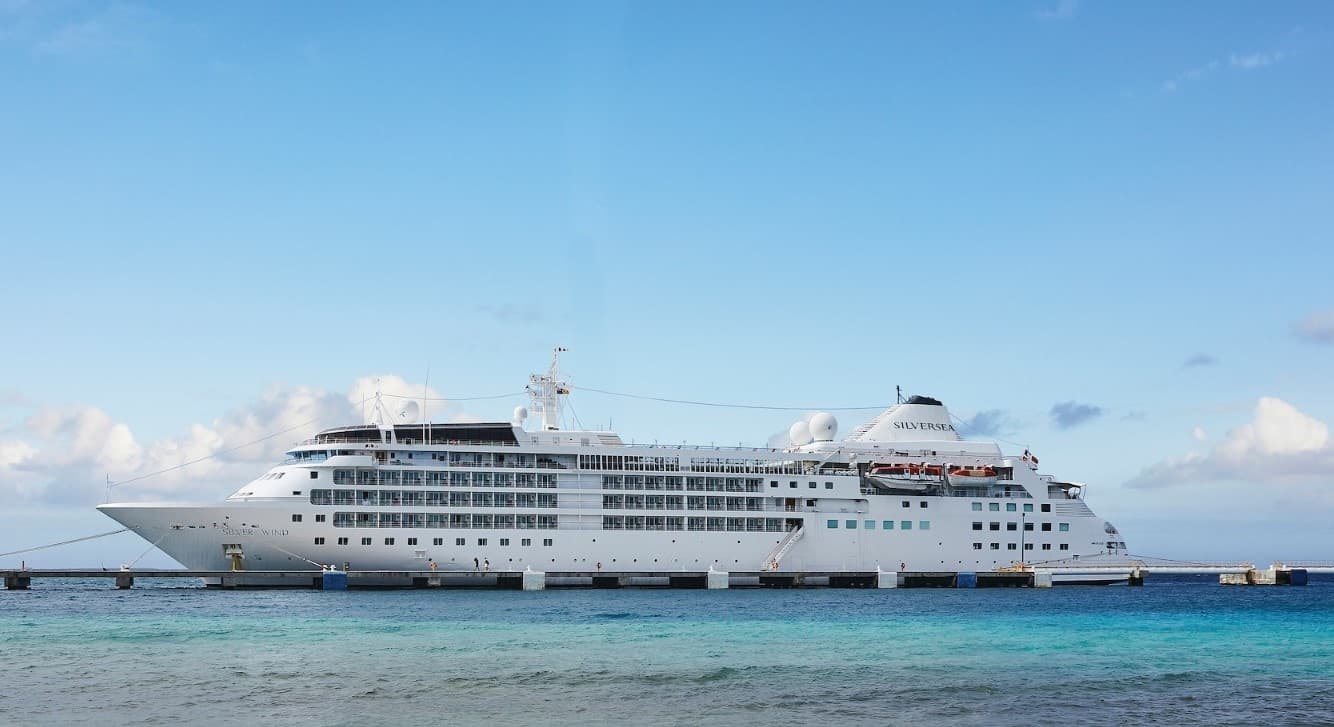
At a glance
- Built
- 1995
- Tonnage
- 17400
- Cabins
- 148
- Crew
- 222
A major upgrade in December 2018 will see Silver Wind looking better than ever. A second refurbishment in summer 2020 will see her benefitting from a strengthened to ice-class hull and will make her one of the most adaptable ships in our fleet.
Ask our cruise specialists about cruise line loyalty benefits, status match options, drinks packages, gratuities and any current offers available on this sailing.
On board
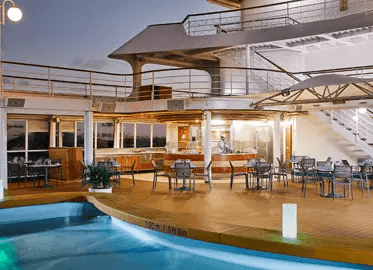
The Grill
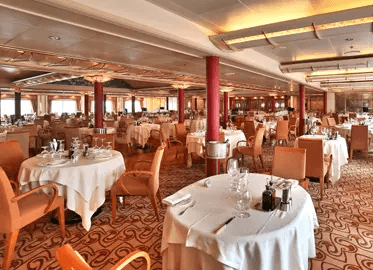
The Restaurant
Itinerary
Cruise from Dublin to Rosyth, Edinburgh
Day 1Cruise departs from DublinMay 31, 2027 • Departs at: 9 pm
Day 2Isle of ManJun 1, 2027 • Arrives at: 7 am • Departs at: 5 pm
The Isle of Man, off England’s west coast (and Ireland’s east) needs no introduction. Its Celtic history is legendary, its political past labyrinthine and its national symbol – a three legged figure with neither body nor head – an enigma that has been foxing historians for centuries. Do not confuse the Isle of Man with the United Kingdom. It does have “crown dependency” similar to Jersey, but the 32-mile-long island is entirely self-governed. View less It changed hands between England and Scotland many times during the middle ages but fell under British rule in 1399. However, when the feudal lordship was revested in 1765, the island never became part of the United Kingdom. And has remained independent ever since. The island is, quite literally, shrouded in a cloak of secrecy. This is called Manannán’s (or sea mist) after the obscure Celtic Sea God. Legend has it that Manannán’s cloak hides the island from invaders, so they just sail past. But that’s just the beginning of the island’s…
Day 3LungaJun 2, 2027 • Arrives at: 7 am • Departs at: 12 pm
The stunning Isle of Lunga is the largest island in the Treshnish archipelago. With volcanic origin the isle was populated until the 19th Century, and remains of black houses can be seen around this magnificent coastal jewel. Abundant plant life and exotic birdlife are now the main inhabitants of the area. Fortunate visitors view the magnificent array of birds, especially the great puffins that breed on the islands plateau. One can sit within just a few feet away without disturbing the avian ambassador’s peace. View less The 81 hectare island is home to many rare and endangered plants such as, primroses and orchids. Views over the landscape and across the ocean can be seen from the 300 foot high cliffs.
Day 3IonaJun 2, 2027 • Arrives at: 2:15 pm • Departs at: 7:30 pm
If tiny islands that resonate with peace and tranquillity are your idea of travel heaven, then welcome to Iona. Almost 200 miles east of Edinburgh, set in Scotland’s Inner Hebrides, this magical island has a spiritual reputation that precedes it. And luckily, more than lives up to. The island is miniscule. Just three miles long and only one and a half miles wide, this is not a place that hums with urban attractions. View less 120 people call Iona home (this number rises significantly if the gull, tern and Kittiwake population is added), although residential numbers do go up (to a whopping 175) in summer. The beautiful coastline is lapped by the gulf stream and gives the island a warm climate with sandy beaches that look more Mediterranean than Scottish! Add to that a green field landscape that is just beautiful, and you’ll find that Iona is a place that stays with you long after you leave. Iona’s main attraction is of course its abbey. Built in 563 by Saint Columbia and his monks, the…
Day 4Shiant Islands, ScotlandJun 3, 2027 • Arrives at: 6 am • Departs at: 11:30 am
Day 4Loch EweJun 3, 2027 • Arrives at: 2:30 pm • Departs at: 8 pm
Loch Ewe is the only north facing Loch in Scotland, with an interesting history and a fine scenic landscape this area has a true natural beauty. During WW2 the loch was a convoy collecting point with a strong naval presence; it was therefore protected by light and heavy aircraft guns, a boom net and mine defence system helped to shield this precious settlement
Day 5St. Kilda, United KingdomJun 4, 2027 • Arrives at: 6:30 am • Departs at: 12:30 pm
Gloriously remote, St. Kilda is an archipelago 50 miles off the Isle of Harris. Although the four islands are uninhabited by humans, thousands of seas birds call these craggy cliffs home, clinging to the sheer faces as if by magic. Not only is St. Kilda home to the UK’s largest colony of Atlantic Puffin (almost 1 million), but also the world largest colony Gannets nests on Boreray island and its sea stacks. View less The islands also home decedents of the world’s original Soay sheep as well as having a breed of eponymously named mice. The extremely rare St. Kilda wren unsurprisingly hails from St. Kilda, so birders should visit with notebook, binoculars and camera to hand. While endemic animal species is rife on the island, St. Kilda has not been peopled since 1930 after the last inhabitants voted that human life was unsustainable. However, permanent habitation had been possible in the Medieval Ages, and a vast National Trust for Scotland project to restore the dwellings is currently…
Day 6Tórshavn (Faroe Islands)Jun 5, 2027 • Arrives at: 8:30 am • Departs at: 9 pm
More than 600 miles (nearly 1,000 kilometres) from Denmark’s west coast lie the Faroes, a triangle of eighteen windswept islands, seventeen of which are inhabited. Only 48,500 people plus some 70,000 sheep roam these remote lands. Much of the islands’ heritage reflects a medieval past, beginning with the arrival of farmers from western Norway who settled here in the 9th century. Evidence of this Scandinavian heritage is preserved through centuries of isolation; ancient structures can still be seen in villages clustered around old churches.
Day 7Vestmanna (Faroe Islands)Jun 6, 2027 • Arrives at: 6 am • Departs at: 11:30 am
Surrounded by the mountains of Hægstafjall, Økslin, Loysingafjall, and Moskurfjall, Vestmanna sits quietly on the banks of Streymoy, on the North Atlantic Ocean. With 1,200 inhabitants, the colourful little village itself is lovely; a few shops and cafes selling locally made cakes and handicrafts, as well as the island’s native seafood soup dish. While those wishing to stretch their legs will enjoy the surrounding area for its stunning countryside, Vestmanna’s main attraction is beyond any doubt its bird cliffs. View less Youi don’t have to be a birder to appreciate these magnificent cliffs, although if you are the cliffs are the stuff of dreams. At almost 700-metres high (and six kilometres long), the cliffs rise steeply out of the water and are covered with tens of thousands of seabirds, zooming through the air, swooping into the water and nesting in the crevices. The near vertical cliffs are home to numerous species including kittiwakes, Common Guillemots, Black Guillemots and the…
Day 8Lerwick, Shetland Islands, ScotlandJun 7, 2027 • Arrives at: 8 am • Departs at: 9 pm
Adrift between the Scottish and Norwegian coasts, the craggy Shetland Islands form the most northerly point of the British Isles. Sprawling across 100 islands, connected by sandy bridges and crisscrossing ferries, explore the highlights of this scenic archipelago outpost. With incredible Neolithic history, spanning 5,000 years of human heritage, these islands, which sit just shy of the Arctic Circle, are an isolated and immense treasure trove of history and thrilling scenery. Look out over dramatic coastline from atmospheric Iron Age towers. View less Sweeping, windswept beaches and wisps of sand connect islands and rugged cliffs - stand back as the sounds of the waves smashing against the shore and calling gulls fills the air. The islands are also home to some of the most adorable four-legged creatures you’ll ever meet, the diminutive and wavy-fringed, Shetland Ponies who roam the hills and reach a maximum size of 42 inches. Don't be fooled, though, they are amongst the strongest and…
Day 9Fair IsleJun 8, 2027 • Arrives at: 6:30 am • Departs at: 1 pm
Lying mid-way between Shetland and the Orkney islands, Fair Isle is a tiny jewel in the sea. Famous for birds, knitwear and historic shipwrecks, the island offers a warm and friendly welcome to visitors. With a population of only around 70 people this island is truly a beautiful setting and is one of Britain’s most successful communities. View the cloudy light turquoise water as it drifts out to sea beneath the breath-taking Sheep Rock, rising over 100 metres, which is almost an isle of its own.
Day 10Lindisfarne IslandJun 9, 2027 • Arrives at: 7 am • Departs at: 12:30 pm
Day 10Farne islandsJun 9, 2027 • Arrives at: 2:30 pm • Departs at: 9 pm
His favourite place in the UK to see nature at its best, is how David Attenborough described the Farne Islands. The scatter of small islands begins 2.4 kilometres (1.5 miles) off the Northumberland Coast. The islands are dolerite which formed from liquid rock cooling underground. Softer overlying rock has eroded to leave hard rounded columns and fissured dolerite cliffs. The treeless landscape makes viewing of the island wildlife and history easy, even from a boat. The Farnes are cared for by the National Trust.
Day 11Isle of May, United KingdomJun 10, 2027 • Arrives at: 6 am • Departs at: 2 pm
The Isle of May in Scotland is owned and managed by Scottish Natural Heritage as a National Nature Reserve and is an important breeding ground for approximately one-quarter of a million seabirds. In fact, over 40,000 puffin burrows have been counted as occupied. Not only kittiwakes, shags, eiders, and guillemots but also Razorbills, Arctic Terns, Sandwich Terns and Common Terns, Lesser Gulls, Herring Gulls and Great Black-backed Gulls nest here. View less The island is located roughly four nautical miles off the coast of mainland Scotland and is used by biologists for surveying migrating passerines and for ringing breeding seabirds to better study their movements and breeding success. While hosting an impressive array and quantity of seabirds, the island itself is small at only 1.8 kilometers (1.1 miles) long, and less than half a kilometer (one-third of a mile) wide.
Day 11RosythJun 10, 2027 • Arrives at: 6 pm
Welcome to Edinburgh, the administrative and cultural capital of Scotland. The present city had its origin in the 11th century.Towards the end of the Middle Ages, Edinburgh's development prompted the construction of two walls to encircle the settlement and to protect her citizens. Adversely, the walls inhibited expansion and contained the city for almost 250 years. After Scotland was joined with England in 1707, defense was no longer a key issue and the city began to spread beyond the protective walls. Edinburgh entered its golden age in the late 18th century and emerged as one of Europe's great intellectual capitals. Dominating the city from atop Castle Rock is the oldest and most prominent surviving structure, Edinburgh Castle. The Royal Mile links the castle with the 16th-century Holyroodhouse Palace, the official residence of the Queen when she visits Edinburgh. The Throne Room and the State Apartments, with their rich tapestries and period furnishings, are of particular interest.…
Day 12RosythJun 11, 2027
Welcome to Edinburgh, the administrative and cultural capital of Scotland. The present city had its origin in the 11th century.Towards the end of the Middle Ages, Edinburgh's development prompted the construction of two walls to encircle the settlement and to protect her citizens. Adversely, the walls inhibited expansion and contained the city for almost 250 years. After Scotland was joined with England in 1707, defense was no longer a key issue and the city began to spread beyond the protective walls. Edinburgh entered its golden age in the late 18th century and emerged as one of Europe's great intellectual capitals. Dominating the city from atop Castle Rock is the oldest and most prominent surviving structure, Edinburgh Castle. The Royal Mile links the castle with the 16th-century Holyroodhouse Palace, the official residence of the Queen when she visits Edinburgh. The Throne Room and the State Apartments, with their rich tapestries and period furnishings, are of particular interest.…
Cabin options
Compare the cabin types and onboard features shown for this sailing. Final price and availability are confirmed by our team when you inquire.
11 cabin grades listed for this sailing.
Next step
Cabin grades and prices
View every cabin grade and current availability on the next step.