
Nuuk (Godthab) to Nuuk (Godthab)
Silversea · Silver Wind
Depart
Aug 22, 2027
Return
Sep 11, 2027
Port
Nuuk Godthaab
Nights
20 nights
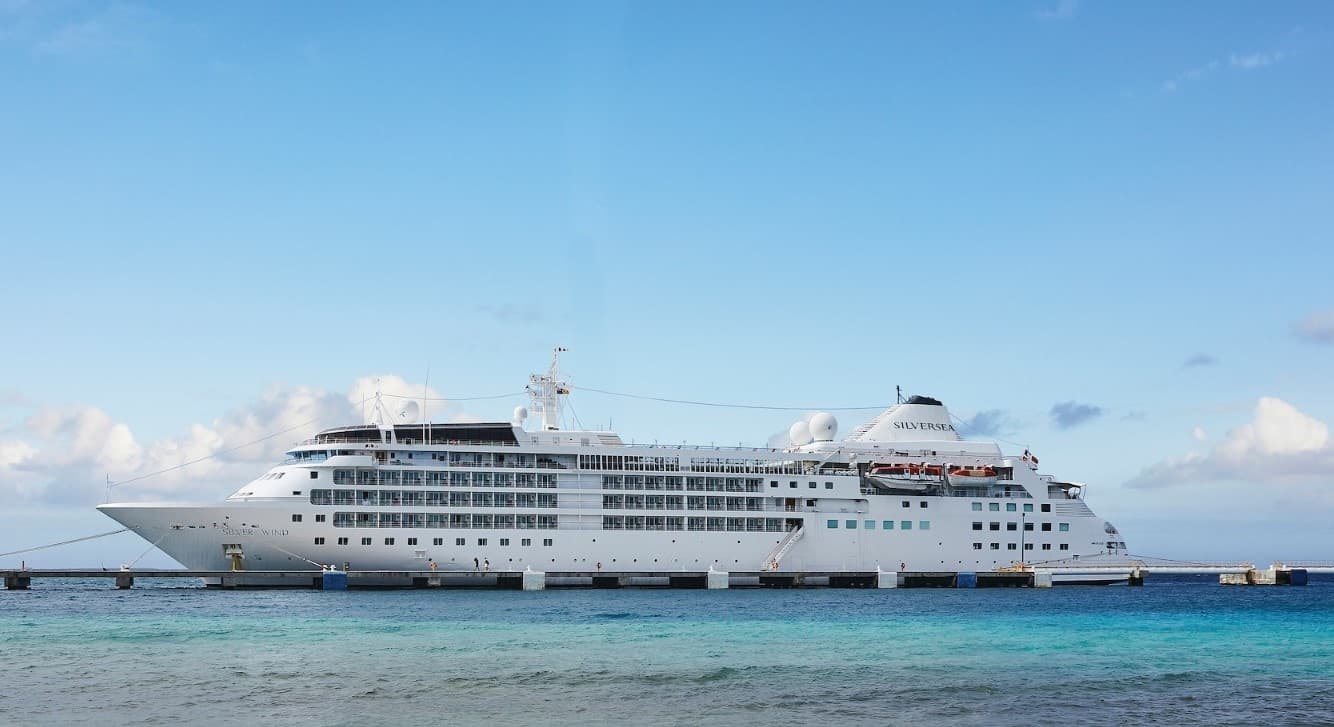
At a glance
- Built
- 1995
- Tonnage
- 17400
- Cabins
- 148
- Crew
- 222
A major upgrade in December 2018 will see Silver Wind looking better than ever. A second refurbishment in summer 2020 will see her benefitting from a strengthened to ice-class hull and will make her one of the most adaptable ships in our fleet.
Ask our cruise specialists about cruise line loyalty benefits, status match options, drinks packages, gratuities and any current offers available on this sailing.
On board
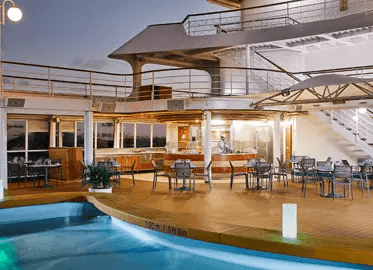
The Grill
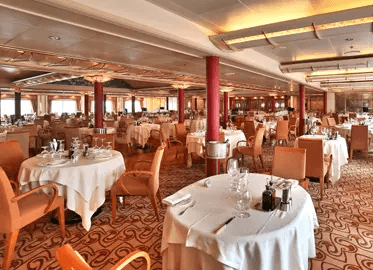
The Restaurant
Itinerary
Cruise from Nuuk Godthaab and back
Day 1NuukAug 22, 2027 • Departs at: 6 pm
In the bustling capital city of Greenland, you could be forgiven for forgetting you are in such a vast and isolated country. Nuuk is Greenland's economic and social hub, home to more than a third of Greenland's population, and although it feels like a world capital, scratch the surface, and a uniquely Greenlandic character can be found underneath. Nuuk Cathedral overlooks the gorgeous old Colonial Harbour district and the Greenland National Museum, resting place of the legendary Qilakitsoq mummies, the true highlight of the museum's archaeological collection. View less Above the Colonial Harbour sits downtown Nuuk, with lines of Scandistyle apartments, a bustling shopping district, the Greenlandic Parliament, Nuuk City Hall (which welcomes visitors to see its artwork) and even outdoor cafes selling locally produced food and beer. These nods to modernity compete for space with local artisan boutiques, the meat market selling the catch from Nuuk's vast fjord-lands, and the stunning Katu…
Day 2SermilinnguaqAug 23, 2027 • Arrives at: 12:01 pm • Departs at: 6 pm
Some 60 kilometers southeast of the entrance to Kangerlussuaq Fjord and halfway between Maniitsoq and Kangaamiut is Sermilinnguaq, one of the smaller fjords leading to the Greenland Icecap’s westernmost valley glaciers in South Greenland. Northeast of Maniitsoq’s rugged scenery with peaks rising hundreds of meters into the sky, the narrow fjord with its steep mountainsides is one of the preferred halibut fishing areas for the local fishermen from Maniitsoq and Kangaamiut. View less In 2019, the Greenland Environment Fund granted resources to clean up and remove derelict fishing gear which had washed up along the Sermilinnguaq Fjord based on the fishermen’s request. Razorbills, Brünnich’s Guillemots (Thick-billed Murres), Common Guillemots, and Black Guillemots, Glaucous Gulls, and Black-legged Kittiwakes –all attracted by the rich fishing grounds- have formed eight bird colonies in Sermilinnguaq. As a result, 3,000 hectares of the fjord are considered an Important Bird Area.
Day 3EvighedsfjordAug 24, 2027 • Arrives at: 7:30 am • Departs at: 6 pm
Evighedsfjord (Eternity Fjord) is a large fjord northeast of Kangaamiut in southwest Greenland. The fjord has a length of 75 kilometers and several branches with numerous glaciers coming down from the Maniitsoq Ice Cap to the north can be seen. The Evighedsfjord has several bends and whenever the ship reaches the supposed end the fjord continues in another direction and seems to go on forever. Qingua Kujatdleq Glacier is at its southeastern end. At the northwestern end a U-shaped valley has seven glaciers coming down from the mountains but not reaching the water. The glaciers had their maximum extent around the year 1870 and have gone through several cycles of advance and retreat. The mountains on either side of the fjord can reach in excess of 2,000 meters and the fjord has a depth of up to 700 meters. Evighedsfjord’s snowline is at 1,100 meters and the Evighedsfjord region is famous as one of Greenland’s best heli-skiing areas.
Day 4SisimiutAug 25, 2027 • Arrives at: 7:30 am • Departs at: 5 pm
Sisimiut ('The People of the Fox Holes') is Greenland's second city, the largest Arctic City in North America, and a hub between the warmer South and the frozen North of the country. With a young, dynamic population, including students from all over the country, Sisimiut is one of the fastest growing cities in Greenland. View less Inhabited for more than four and a half thousand years, the Danish Colonial Era saw the rapid development of the city into a trade centre, and the old buildings and artefacts can be seen at Sisimiut Museum, a collection of beautifully restored buildings displaying everything from ancient turf houses to modern Inuit art. The local artisans are considered some of the best in Greenland, and often sell their wares direct from their communal workshop in the harbour, where they barter with hunters for raw materials. Today, modern industry focussed on processing sea food and shipping; KNI, the state-run chain of general stores operating in even the most remote sett…
Day 5IlulissatAug 26, 2027 • Arrives at: 8 am • Departs at: 1 pm
Ilulissat is a coastal town in western Greenland. It's known for the Ilulissat Icefjord and for huge icebergs Disko Bay, shed by the Sermeq Kujalleq glacier. Trails run to the Sermermiut settlement for dramatic views over the ice. The Ilulissat Museum traces the area’s history and the life of local-born explorer Knud Rasmussen. The area is home to thousands of Greenland dogs, used for dogsledding.
Day 6At SeaAug 27, 2027
Day 7Pond Inlet, Nunavut, CanadaAug 28, 2027 • Arrives at: 6:30 am • Departs at: 12:30 pm
Located in northern Baffin Island Pond Inlet is a small predo¬minantly Inuit community with a population of roughly 1 ,500 inhabitants. In 1818 the British explorer John Ross named a bay in the vicinity after the English astronomer John Pond. Today Pond Inlet is considered one of Canada's "jewels of the North" thanks to several picturesque glaciers and mountain ranges nearby. Many archaeological sites of ancient Dorset and Thule peoples can be found near Pond Inlet. View less The Inuit hunted caribou, ringed and harp seals, fish, polar bears, and walrus, as well as narwhals, geese, ptarmigans and Arctic hares long before European and American whalers came here to harvest bowhead whales. Pond Inlet is also known as a major center of Inuit art especially the printmaking and stone carving.
Day 8Prince Leopold Island, Nunavut, CanadaAug 29, 2027 • Arrives at: 12:30 pm • Departs at: 6 pm
Prince Leopold Island is an island in the Qikiqtaaluk Region of Nunavut, Canada. It is located in Lancaster Sound at the junction of Prince Regent Inlet and Barrow Strait. Somerset Island is situated 13 km to the southwest; Port Leopold is the closest landmark.
Day 9Strezelecki Harbour, NunavutAug 30, 2027 • Arrives at: 12:30 pm • Departs at: 6:30 pm
Day 10Gjoa Haven, Nunavut, CanadaAug 31, 2027 • Arrives at: 1 pm • Departs at: 7 pm
King William Island’s flat coastal terrain holds only one settlement. Although the area around Gjoa Haven had already been used by the Netsilik Inuit, the Scandinavian name was given to it by Amundsen during his crossing of the Northwest Passage when he overwintered for two years with his ship Gjøa in the natural harbor on King William Island’s southeastern side. 250 kilometers above the Arctic Circle the average temperature hovers around 0 degrees Celsius in September. View less Amundsen’s presence (with a ship full of interesting supplies specifically brought for trade) attracted Netsilik from camps in the vicinity. The Netsilik had been here at Usqsuqtuuq -meaning “place of plenty blubber”- because of the fat fish and sea mammals in nearby waters. In 1927 the Hudson’s Bay Company set up a trading post and the community has grown from then on. Today some 1,500 predominantly Inuit inhabitants live in Gjoa Haven. There is a path connecting several sites forming the Northwest Passage T…
Day 11King William IslandSep 1, 2027 • Arrives at: 7:30 am • Departs at: 1:30 pm
Day 12Flexure Bay, NunavutSep 2, 2027 • Arrives at: 6:30 am • Departs at: 2 pm
Day 13Beechey IslandSep 3, 2027 • Arrives at: 6 am • Departs at: 11:30 am
Beechey Island is a small island off the southwest coast of Devon Island, separated by a narrow waterway called the Barrow Strait. Captain William Edward Parry was the first European to visit the island in 1819. His lieutenant, Frederick William Beechey, named the island after his father, the artist William Beechey (1753–1839). Beechey Island played a significant role in the history of Arctic Exploration. During the winter of 1845-46, Sir John Franklin and his men camped on the island as part of their ill-fated quest to find the Northwest Passage. Mummified remains of three of Franklin’s crew were discovered, giving a better understanding of what happened before the disappearance of the expedition. In 1850 Edward Belcher used the island as a base while surveying the area. Later, in 1903, Norwegian explorer Roald Amundsen stopped at the island at the beginning of his successful voyage in search for the Northwest Passage. Subsequently, Beechey Island has been declared a "Territorial His…
Day 13Devon Island (Radstock Bay)Sep 3, 2027 • Arrives at: 2 pm • Departs at: 7:30 pm
Day 14Dundas Harbour, Devon Island, Nunavut, CanadaSep 4, 2027 • Arrives at: 1:30 pm • Departs at: 7 pm
Austere, remote and a rather severe, Devon Island is as close the closest thing to Mars on planet Earth. The rocky terrain, dry, cold climate and 14-mile wide crater on the north of the island have made it home for a team of research scientists from NASA, who live in the small research station during the Arctic summer. Other than these few men and women, Devon Island is completely unpeopled, and the largest uninhabited island in the world. There was human habitation as recently as 1951, when a Canadian Mounted Police post that had been on the island since 1924 to monitor illegal activities such as whaling closed. At 320 miles long and 80–100 miles wide, it is the largest of the Parry Islands. Dundas Harbour is found in the south of the island. Then island is set in the icy Arctic Ocean, south of Ellesmere Island and west of Baffin Bay. This make it Canada’s sixth largest island. Discovered by English explorer William Baffin in 1616, the island did not make it on to any maps until Will…
Day 15At SeaSep 5, 2027
Day 16Qikiqtarjuaq, Nunavut, CanadaSep 6, 2027 • Arrives at: 12:30 pm • Departs at: 6 pm
Day 17At SeaSep 7, 2027
Day 18Cruise & Explore Lower Savage Islands, CanadaSep 8, 2027 • Arrives at: 7 am • Departs at: 6:30 pm
Day 19Monumental IslandSep 9, 2027 • Arrives at: 6 am • Departs at: 11:30 am
Monumental Island is a splinter of ancient metamorphic rock, hunching in the frigid waters of the Davis Strait, defying the ocean and ice around it. Named to honour the legendary Polar Explorer Sir John Franklin, the island displays at times displays everything Nunavut has to offer, in an ocean studded with vast icebergs drifting across from Greenland. View less Monumental Island is a well known den site for polar bears, the icon of the Arctic; there is a good chance to see mother bears with cubs on the island, as the bears become trapped by the lack of summer ice, using the island as a base to hunt until the ice returns in the Autumn. Seeing the white silhouette of a polar bear against the ancient black rock and autumn tundra colours is an experience that will remain long after returning on board. Groups of harp seals are a common sight in the waters around Monumental Island, and can be very curious, often swimming very close to investigate new objects such as boats. There are severa…
Day 19Lady Franklin IslandSep 9, 2027 • Arrives at: 1:30 pm • Departs at: 6:30 pm
Named in honour of Sir John Franklin’s widow, the lonely and uninhabited Lady Franklin Island lies off of Baffin Island’s Hall Peninsula at the entrance to Cumberland Sound. The island is named for the wife of Sir John Franklin, the Arctic explorer who died trying to discover the Northwest Passage. The geology of the island is striking with vertical cliffs of Archean rocks, likely to be some of the oldest stone in Canada. The waters around Lady Franklin Island offer an abundance seabirds, ducks, seals, and walrus. View less With a bit of luck it is possible to see Atlantic Puffins here and perhaps even a rare Sabine’s Gull.
Day 20At SeaSep 10, 2027
Day 21NuukSep 11, 2027 • Arrives at: 7 am
In the bustling capital city of Greenland, you could be forgiven for forgetting you are in such a vast and isolated country. Nuuk is Greenland's economic and social hub, home to more than a third of Greenland's population, and although it feels like a world capital, scratch the surface, and a uniquely Greenlandic character can be found underneath. Nuuk Cathedral overlooks the gorgeous old Colonial Harbour district and the Greenland National Museum, resting place of the legendary Qilakitsoq mummies, the true highlight of the museum's archaeological collection. View less Above the Colonial Harbour sits downtown Nuuk, with lines of Scandistyle apartments, a bustling shopping district, the Greenlandic Parliament, Nuuk City Hall (which welcomes visitors to see its artwork) and even outdoor cafes selling locally produced food and beer. These nods to modernity compete for space with local artisan boutiques, the meat market selling the catch from Nuuk's vast fjord-lands, and the stunning Katu…
Cabin options
Compare the cabin types and onboard features shown for this sailing. Final price and availability are confirmed by our team when you inquire.
11 cabin grades listed for this sailing.
Next step
Cabin grades and prices
View every cabin grade and current availability on the next step.