South Pacific - Los Angeles to Singapore
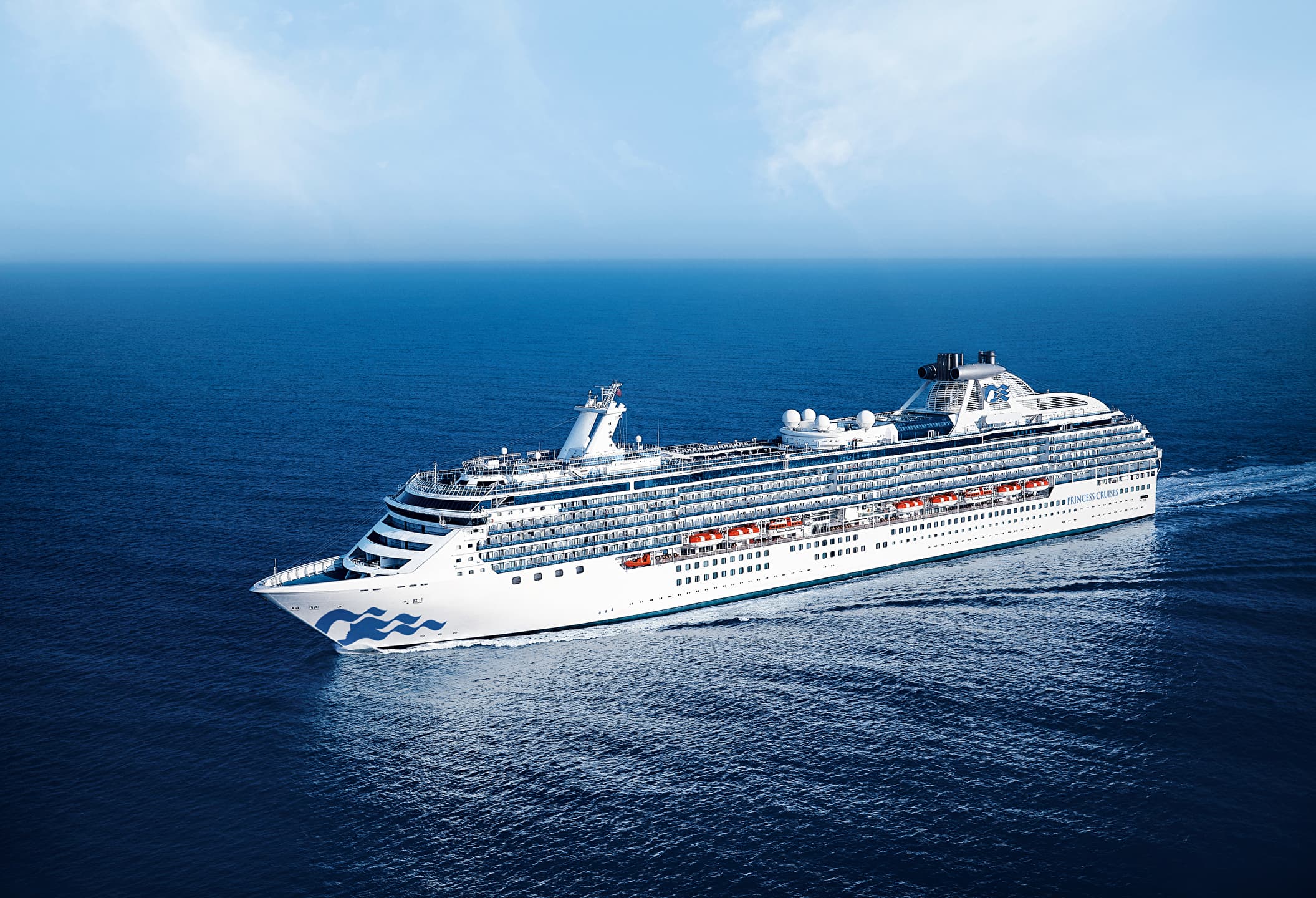
Princess Cruises · Coral Princess
Depart
Jan 21, 2027
Return
Mar 30, 2027
Port
Los Angeles, CA
Nights
68 nights
At a glance
- Launched
- 2003
- Tonnage
- 91627
- Cabins
- 1000
- Crew
- 895
Coral Princess, with more than 700 balcony staterooms, was custom built to navigate the historic Panama Canal. Be sure to try the Bayou Cafe and Steakhouse, which features New Orleans-inspired Cajun and Creole cuisine, join friends for cocktails and Movies Under the Stars by the pool or try some decadent treats at the International Cafe.
Ship features
- Pool Woman Splash
- Casino
- Mini Golf
- Onboard Shopping
Ask our cruise specialists about cruise line loyalty benefits, status match options, drinks packages, gratuities and any current offers available on this sailing.
On board
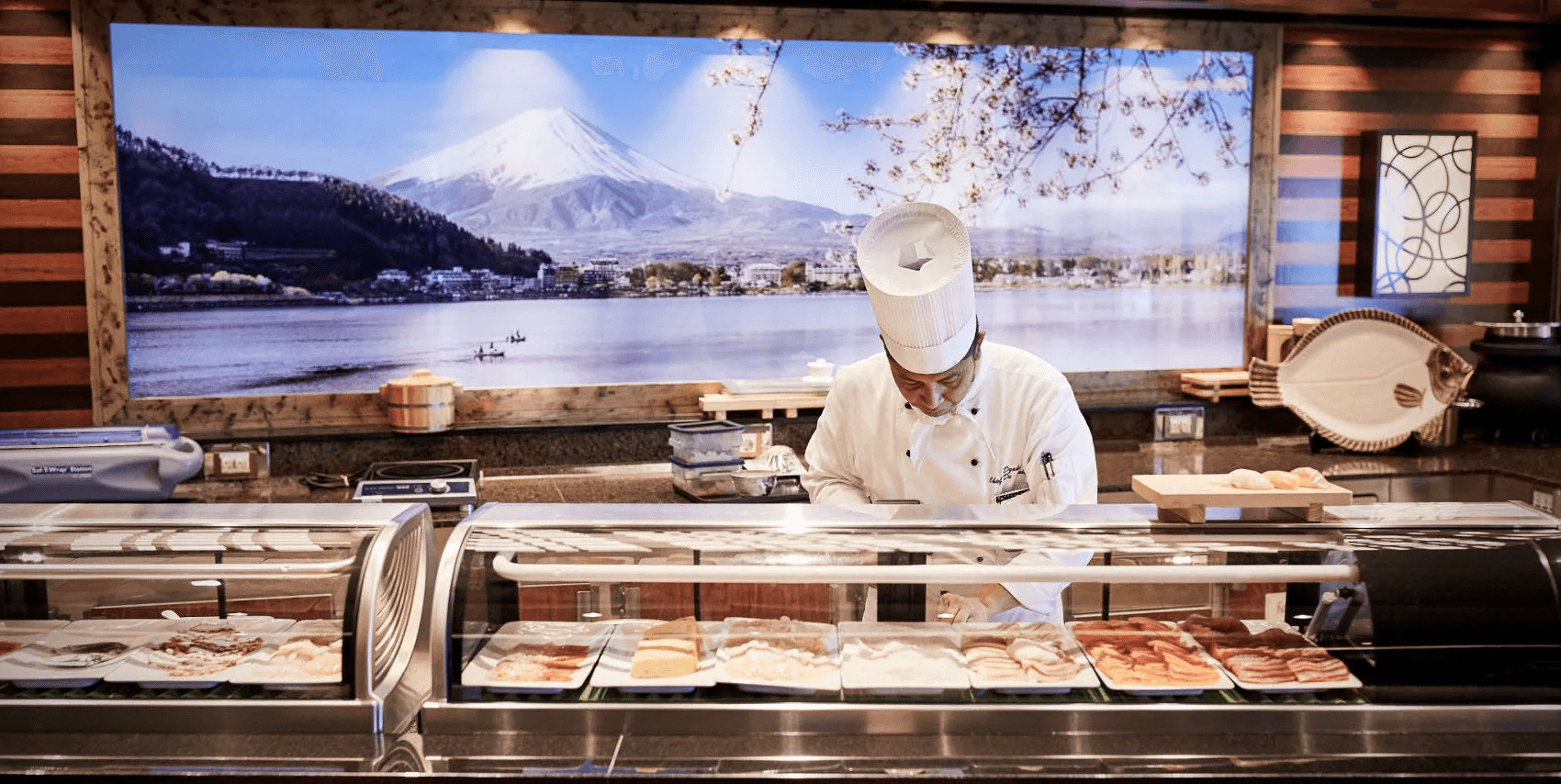
Ocean Terrace Sushi
Itinerary
- 1Los Angeles, CADay 1
- 2HiloDay 7
- 3KahuluiDay 8
- 4HonoluluDay 9
- 5Kauai (Nawiliwili)Day 10
- 6Pago PagoDay 17
- 7SuvaDay 19
- 8Dravuni IslandDay 20
- 9Port VilaDay 22
- 10LuganvilleDay 23
- 11Kiriwina IslandDay 28
- 12Alotau (Milne Bay)Day 29
- 13CairnsDay 31
- 14Airlie BeachDay 33
- 15BrisbaneDay 35
- 16Sydney, AustraliaDay 37
- 17AucklandDay 41
- 18Christchurch (Lyttelton)Day 44
- 19Dunedin (Port Chalmers)Day 45
- 20Fiordland National ParkDay 46
- 21Hobart, TasmaniaDay 49
- 22Adelaide, AustraliaDay 52
- 23Perth (Fremantle), AustraliaDay 56
- 24DarwinDay 62
- 25Bali (Benoa)Day 65
- 26LombokDay 66
- 27SingaporeDay 69
Port locations are shown; visiting order is not confirmed on this map. 4 port locations are not available.
Cruise from Los Angeles, CA to Singapore
Day 1Cruise departs from Los Angeles, CAJan 21, 2027 • Departs at: 4 pm
The City of Angels always hovers between dream and reality. Once a near-forgotten colonial outpost, the pueblo metamorphosed into an agrarian paradise before reinventing itself as a movie colony. Perhaps no other city owes so much to the technological innovations of the 20th century, from the automobile to the airplane. Little wonder that LA is oft described as the "dream machine." In LA, reinvention is a way of life. Yet this talent for change has created a city with a rich ethnic diversity and a sizzling culture. LA is the source for trends that migrate across the country and then the world. Where else can you enjoy a Thai taco or munch on a kosher burrito? Or travel from downtown's high rises to the beaches of Malibu, shopping in Beverly Hills along the way? Los Angeles is a port of embarkation and disembarkation for some cruises.
Day 2At SeaJan 22, 2027
Day 3At SeaJan 23, 2027
Day 4At SeaJan 24, 2027
Day 5At SeaJan 25, 2027
Day 6At SeaJan 26, 2027
Day 7HiloJan 27, 2027 • Arrives at: 8 am • Departs at: 5 pm
Welcome to the Big Island of Hawaii - a paradise of black-sand beaches, tropical rainforest and volcanic mountains. Mauna Loa, the largest mountain on the planet, soars above the bleak lava fields of Hawaii Volcanoes National Park. In the heart of the Big Island's lush rainforest lies the remote and stunning Wai'po Valley (Valley of the Kings). Hawaii's history matches its incomparable landscape - it is a saga of mighty Polynesian kings, sugar barons, war and treachery. The landscape of the Big Island ranges from black-sand beaches to tropical rain forest to the alpine terrain of Mauna Loa and Mauna Kea. At 13,796 feet above sea level, the summit of Mauna Kea is the highest point in the entire Pacific basin.
Day 8KahuluiJan 28, 2027 • Arrives at: 7 am • Departs at: 6 pm
Maui has always occupied a special place in the hearts of Hawaiians. The great warrior King Kamehameha, who united the islands under his rule, chose to make Lahaina his capital and Ka'anapali was once the favorite playground of Hawaiian royalty. And no wonder - Maui boasts stunning landscapes and superb beaches. Mt. Haleakala, a dormant volcano, rises 10,000 feet above the Pacific Ocean. Once hailed as "The Valley of the Kings," Maui's Iao Valley is a tropical paradise dominated by the Needle, a volcanic monolith towering over the valley floor. Then there is Lahaina, once home to a royal court and a raucous port-of-call enjoyed by 19th-century Yankee whalers. Haleakala means "The House of the Sun." To the Hawaiians, it appeared that the sun both rose from and set in the depths of its massive crater. Today, the centerpiece of Haleakala National Park, it is one of Maui's major attractions.
Day 9HonoluluJan 29, 2027 • Arrives at: 7 am • Departs at: 11 pm
Home to nearly half a million people, Honolulu is Hawaii's state capital and only major city. The city of Honolulu and the island of Oahu offer a wealth of historic, cultural and scenic attractions. Waikiki Beach and Diamond Head are two of the city's enduring symbols. Pearl Harbor, site of the USS Arizona Memorial and the "Punchbowl," are haunting reminders of the tragic events of December 7, 1941, when the Japanese surprise attack on Pearl Harbor forced America into World War II. Honolulu is also home to the historic Iolani Palace, the official residence of Hawaii's last royals. Beyond the city lie tropical rain forests, the Pali Lookout and the North Shore known for its surfing beaches.
Day 10Kauai (Nawiliwili)Jan 30, 2027 • Arrives at: 8 am • Departs at: 5 pm
The fourth largest island in the Hawaiian group, Kauai is known as the "Garden Island." The terrain ranges from the volcanic slopes of Mt. Waialeale and the desert-like beauty of Waimea Canyon to the Wailua River's lush Fern Grotto. Ironically this once isolated island was the site of the first meeting between Europeans and Hawaiians. On January 19, 1778, Captain James Cook anchored his ships off the mouth of the Waimea River, becoming the first in a long line of enthusiastic visitors.
Day 11At SeaJan 31, 2027
Day 12At SeaFeb 1, 2027
Day 13At SeaFeb 2, 2027
Day 14At SeaFeb 3, 2027
Day 15At SeaFeb 4, 2027
Day 16At SeaFeb 5, 2027
Day 17Pago PagoFeb 6, 2027 • Arrives at: 7 am • Departs at: 4 pm
Pago Pago Bay is one of the most dramatic harbors in the South Pacific, a region known for dramatic landscapes. Eons ago, the massive seaward wall of a volcano collapsed and the sea poured in. Today, dramatic mountain peaks encircle the deep harbor. The capital of American Samoa, Pago Pago is more village than city. The town is dominated by looming Mt. Pioa, whose summit draws moisture-bearing clouds, earning it the nickname of "The Rainmaker." Indeed, Pago Pago draws more than its fair share of rain - the island of Tutuila is a vision of deep, verdant green. Pronounced "Pango Pango," this island paradise awaits exploration.
Day 17Cross International Date LineFeb 6, 2027
Day 18At SeaFeb 8, 2027
Day 19SuvaFeb 9, 2027 • Arrives at: 8 am • Departs at: 9 pm
The Fiji archipelago is at the cross roads of the South Pacific. In the days of sailing ships, it was known as "The Cannibal Isles," where mariners carefully avoided its fierce warriors and perfidious waters. Thankfully, Fiji's pagan days live only in the tales recalled by tour guides - in rituals such as firewalking, Kava Ceremonies and in renditions of tribal drumming, dance and song. Fiji is an exotic destination, with 333 islands that provide an exciting adventure or peaceful repose. The northwest region, where the sun shines almost every day and a tropical shower ends as quickly as it began, is home to the majority of the resorts. Suva, the political, administrative, educational and commercial center, has a backdrop of lush rainforest maintained by the inevitable "tropical downpour." The people of Fiji are the most multiracial and multicultural of all South Pacific island countries - this being reflected in churches of all denominations, mosques, temples and shrines. Built around…
Day 20Dravuni IslandFeb 10, 2027 • Arrives at: 7 am • Departs at: 5 pm
Less than two miles in length from north to south, Dravuni Island lies in the Kadavu Island group of Fiji. Its volcanic peaks give way to a remote village of just 200 or so friendly villagers who live amongst the island's shady palms. These welcoming locals and their children often sing to arriving visitors. Well-worn trails scattered with coconuts snake around the unspoiled beaches, the soft sands beckoning underwater adventurers towards the crystal-clear waters. Many visitors come to snorkel in the Great Astrolabe Reef, or to hike Dravuni Island's highest peak for magnificent once-in-a-lifetime views of the surrounding islands.
Day 21At SeaFeb 11, 2027
Day 22Port VilaFeb 12, 2027 • Arrives at: 7 am • Departs at: 5 pm
Vila is the capital of Vanuatu, an archipelago of some 83 islands in the Coral Sea. Vanuatu is a new republic, having achieved independence from France and Britain in 1988. Before then the archipelago was better known as the New Hebrides, the name given the islands by Captain Cook. Cloaked in dense rainforest, these volcanic islands were little known until World War II, when the islands of Espiritu Santo and Efate served as Allied bases. Today increasing numbers of travelers visit Vila, drawn by its easy-going charm, superb white-sand beaches and pristine rainforest. The islands are also renowned for their excellent dive sites and for their big game fishing. Vanuatu's visibility on the American scene increased when the CBS television series "Survivor" filmed in the archipelago. Vanuatu is also noted among anthropologist - its island of Tanna is home to the unique "John Frum" cargo cult.
Day 23LuganvilleFeb 13, 2027 • Arrives at: 7 am • Departs at: 5 pm
The second largest town in Vanuatu - the former New Hebrides - Luganville is a child of World War II. When America forces arrived on Espirito Santo in 1942, there were no facilities to unload ships, house troops or land American bombers. Engineers went to work erecting both the town and the BP Wharf. The island was soon home to the largest Pacific military base outside of Hawaii. Today, Luganville remains an important copra shipping port - but more and more seasoned travelers are drawn to Espirito Santo's promise of unspoiled beauty and relaxed island ways. Luganville is handy to superb white-sand beaches, tropical rainforest and some of the finest diving and snorkeling in the Pacific. Divers consider the wreck of the President Coolidge one of the world's top dive sites. The 654-foot liner was serving as a troop transport when she struck two mines and went down in the Segond Channel in 1942. The ship's holds are still filled with her cargo of military supplies.
Day 24At SeaFeb 14, 2027
Day 25At SeaFeb 15, 2027
Day 26At SeaFeb 16, 2027
Day 27RabaulFeb 17, 2027 • Arrives at: 7 am • Departs at: 4 pm
The former capital of New Britain has a history of destruction and resurrection - the city rebuilt after a massive 1937 volcanic eruption only to be destroyed by Allied bombing in World War II. In 1994, the eruption of Mt. Tavurvur dropped hot ash and rock on Rabaul, leading to its partial abandonment. Since that cataclysm, the city has slowly returned to life - hotels have resumed operating, the market continues to trade, and the harbor remains one of the most impressive in the entire Pacific basin. During World War II, Rabaul served as a forward operating base for the Imperial Japanese Army and Navy. Allied bombing forced the Japanese defenders underground, into a complex system of bunkers and tunnels on the Gazelle Peninsula.
Day 28Kiriwina IslandFeb 18, 2027 • Arrives at: 9 am • Departs at: 6 pm
Kiriwina is the largest of the Trobriand Islands, with an area of 290.5 km². It is part of the Milne Bay Province of Papua New Guinea. Most of the 12,000 people who live in the Trobriands live on Kiriwina.
Day 29Alotau (Milne Bay)Feb 19, 2027 • Arrives at: 7 am • Departs at: 6 pm
Welcome to an undiscovered paradise of white-sand beaches, crystal waterfalls and volcanic mountains. And if you've come for history, you'll find that, too. This peaceful town was the site of fierce fighting during World War II. Today, it's a peaceful retreat offering the vacationer plenty of time to relax and connect with nature. Beyond the city you'll find a tropical rainforest full of birds of paradise and a laid-back ease worth discovering.
Day 30At SeaFeb 20, 2027
Day 31CairnsFeb 21, 2027 • Arrives at: 8 am • Departs at: 9 pm
Cairns is one of Australia's hottest vacation destinations. Cairns boasts three of Australia's great natural wonders. Just offshore, immense bastions of living coral form the Great Barrier Reef. Sixteen miles of superb beaches stretch to the north of the city - the famed Marlin Coast. And inland lays the immense Daintree National Park. Cairns itself basks in tropical sunshine, balmy breezes waft in from Trinity Bay. The city's graceful, tree-lined esplanade was once the gateway to the gold fields of North Queensland. Cairns graceful, tree-lined esplanade was once the gateway to the gold fields of North Queensland. A travel tip - Cairns is pronounced "cans."
Day 32At SeaFeb 22, 2027
Day 33Airlie BeachFeb 23, 2027 • Arrives at: 7 am • Departs at: 5 pm
Airlie Beach is your gateway to the Whitsunday Archipelago. These 74 islands feature pristine fringing reefs, calm, lagoon-like waters, and superb beaches. The archipelago is one of Australia's premier playgrounds. The Whitsundays were once mountains. Rising seas at the end of the Ice Age formed the Whitsunday Passage between the islands and the mainland.
Day 34At SeaFeb 24, 2027
Day 35BrisbaneFeb 25, 2027 • Arrives at: 7 am • Departs at: 5 pm
Once considered the "country cousin" among Australian cities, Brisbane is today the nation's third-largest metropolis - and one of the most desirable places to live in the country. Lying on the banks of the meandering Brisbane River, this cosmopolitan city boasts elegant 19th-century sandstone buildings, a lively cultural scene and superb parklands. Brisbane is also your gateway to uniquely Australian adventures, be it the theme parks of the Gold Coast or Queensland's dazzling beaches. The beaches south of Brisbane form Queensland's Gold Coast. Travel tip: Brisbane is pronounced "Bris-bin."
Day 36At SeaFeb 26, 2027
Day 37Sydney, AustraliaFeb 27, 2027 • Arrives at: 6 am • Departs at: 9 pm
Sydney, capital of New South Wales and one of Australia's largest cities, is best known for its harbourfront Sydney Opera House, with a distinctive sail-like design. Massive Darling Harbour and the smaller Circular Quay port are hubs of waterside life, with the arched Harbour Bridge and esteemed Royal Botanic Garden nearby.
Day 38At SeaFeb 28, 2027
Day 39At SeaMar 1, 2027
Day 40At SeaMar 2, 2027
Day 41AucklandMar 3, 2027 • Arrives at: 6:30 am • Departs at: 7 pm
Straddling a narrow isthmus created by 60 different volcanoes, New Zealand's former capital boasts scenic beauty, historical interest and a cosmopolitan collection of shops, restaurants, museums, galleries and gardens. Rangitoto, Auckland's largest and youngest volcano, sits in majestic splendor just offshore. Mt. Eden and One Tree Hill, once home to Maori earthworks, overlook the city. One of New Zealand's fine wine districts lies to the north of Auckland. Auckland served as New Zealand's capital from 1841 until 1865, when the seat of government moved to Wellington.
Day 42TaurangaMar 4, 2027 • Arrives at: 7:30 am • Departs at: 6:30 pm
New Zealand's natural bounty is always on display at the Bay of Plenty. It was Captain James Cook who in 1769 aptly named this bay after he was able to replenish his ship's provisions, thanks to the prosperous Maori villages of the region. Tauranga, the chief city, is a bustling port, an agricultural and timber center and a popular seaside resort. Tauranga is also the gateway to Rotorua - a geothermal wonderland that is the heart of Maori culture. A 90-minute drive from Tauranga, Rotorua is New Zealand's primary tourist attraction. Your ship docks near the foot of Mt. Maunganui, which rises 761 feet above the bay. Across the harbor, Tauranga offers scenic tidal beaches at Omokoroa and Pahoia. The region boasts fine beaches, big-game fishing, thermal springs and seaside resorts.
Day 43At SeaMar 5, 2027
Day 44Christchurch (Lyttelton)Mar 6, 2027 • Arrives at: 8 am • Departs at: 5 pm
Christchurch has a rich history of adventurers who used Christchurch as a gateway for Antarctic explorations. Famed explorers Robert Falcon Scott and Ernest Shackleton used the port of Lyttelton as a departure point for their expeditions.
Day 45Dunedin (Port Chalmers)Mar 7, 2027 • Arrives at: 7 am • Departs at: 5 pm
Perched on the hills above one of New Zealand's loveliest harbors, Dunedin is a Kiwi city with a Scottish heart. Hailed as the "Edinburgh of New Zealand," Dunedin is proud of its heritage. A statue of famed Scottish poet Robert Burns graces downtown, and the presence of New Zealand's only kilt maker and whisky distillery - as well as many bagpipe bands - keep Dunedin's ties to Scotland alive. The city also boasts a distinguished architectural and cultural history, a legacy of New Zealand's 1860s gold rush. Port Chalmers, gateway to Dunedin, is located eight miles from the city center. Dunedin is a planned city: its streets and suburbs fan out from the city's octagon.
Day 46Fiordland National ParkMar 8, 2027 • Arrives at: 9 am • Departs at: 6 pm
New Zealand's largest national park was formed millennia ago by massive glacial flows that carved deep fiords into the coast of New Zealand's South Island. At the heart of Fiordland National Park lies Milford Sound. Lined by cliffs that soar nearly a mile above its surface, Milford Sound cuts into the heart of the Southern Alps. Rainforest clings to the cliffs and graceful waterfalls plummet into the void. Mile-high Mitre Peak dominates the upper reaches of the sound. The town of Te Anau in Fiordland National Park is also your gateway to the South Island's other natural wonders including Lake Wakatipu, the resort of Queenstown and Mt. Cook National Park.
Day 47At SeaMar 9, 2027
Day 48At SeaMar 10, 2027
Day 49Hobart, TasmaniaMar 11, 2027 • Arrives at: 7 am • Departs at: 5 pm
Tasmania's capital has much in common with Sydney. Founded but a few years later, Hobart also owes its origins to the establishment of a penal colony - and its natural setting is just as impressive. Seen from its fine deep-water harbor, Hobart spills over the lower reaches of the Derwent Valley as Mt. Wellington towers in the background. Much of the city's heritage is centered on the historic waterfront. North of the city stretches the vast parkland of the Queen's Domain. Many of Tasmania's other attractions are within easy reach of Hobart. With more than 90 National Trust buildings, Hobart, founded in 1804, combines colonial character with a sophisticated metropolitan lifestyle.
Day 50At SeaMar 12, 2027
Day 51At SeaMar 13, 2027
Day 52Adelaide, AustraliaMar 14, 2027 • Arrives at: 7 am • Departs at: 7 pm
Founded in 1836, this graceful city lies nestled on the coastal plain between Gulf St. Vincent and the Adelaide Hills. Adelaide was the vision of Colonel William Light, Australia's Surveyor General, who created a one-mile-square grid for the city's center and surrounded it with a belt of stunning parkland. Today, Adelaide is a metropolis of over one million people, boasting wide, tree-lined boulevards, superb Victorian and Edwardian architecture, tranquil parks, world-class shopping, and the highest number of restaurants per capita of any city in Australia. Beyond the city and the rugged Adelaide Hills lie the Barossa and Eden Valleys. Here Australian vintners are winning international acclaim for their Cabernet Sauvignon, Riesling, Sauvignon Blanc and Shiraz.
Day 53At SeaMar 15, 2027
Day 54At SeaMar 16, 2027
Day 55At SeaMar 17, 2027
Day 56Perth (Fremantle), AustraliaMar 18, 2027 • Arrives at: 7 am • Departs at: 5 pm
Lying at the mouth of the Swan River, historic Fremantle - founded in 1829 - is your gateway to Perth, the capital of Western Australia. Situated on the banks of the Swan River some 15 miles upriver from Fremantle, Perth is a bustling city where soaring high-rises co-exist with elegant sandstone buildings from the colonial era. Life here moves at a slower pace, so during your visit, relax and savor the bounties of Western Australia, from the wonders of the bush to the wineries of the Swan Valley, from excellent shopping to a leisurely cruise on the Swan River.
Day 57At SeaMar 19, 2027
Day 58At SeaMar 20, 2027
Day 59At SeaMar 21, 2027
Day 60Kimberley Coast Scenic CruisingMar 22, 2027 • Arrives at: 3 pm • Departs at: 7 pm
Located in the northern part of Western Australia, Kimberley is one of the continent's earliest settled regions, dating as far back as 40,000 years. But although its mainland has been inhabited for centuries, its over 8,000 miles of ruggedly beautiful coastline remain so unspoiled that the Kimberley Coast has been identified as one of the least impacted marine environments in the world. Healthy reefs and incredible biodiversity make the Kimberley Coast a prime spot for marine wildlife viewing, from sea turtles to blue crabs, manta rays and the planet's largest population of humpback whales. Approaching the Kimberley Coast from the Indian Ocean, you'll make out dramatic red cliffs that stand out in stark contrast to the aquamarine waters of the fringing reefs below. More than 2,600 islands are scattered beyond the reefs, serving as nesting grounds to a variety of seabirds, including cormorants, giant Australian pelicans and Red-footed Boobies. The islands also provide breathtaking scen…
Day 61At SeaMar 23, 2027
Day 62DarwinMar 24, 2027 • Arrives at: 7 am • Departs at: 5 pm
Closer to Indonesia than to any other Australian city, Darwin is the capital of the "Top End" - the remote, vast Northern Territory. Home to more than half of the territory's population, the city reflects the rugged endurance and individualism required to survive the Outback. Darwin also boasts a colorful history to add to that heritage. During World War II the Japanese bombed the city and threatened invasion. In 1974, Cyclone Tracy cut a destructive swath through the region. In addition, man-eating crocodiles, tropical monsoons, searing heat and bush fires that burn for weeks are all part of everyday life. Locals in the Top End consume over 60 gallons of beer a year. All those empties don't go to waste: Each year Darwin residents compete in the Beer Can Regatta, a race with boats, rafts and other vessels manufactured out of beer cans.
Day 63At SeaMar 25, 2027
Day 64At SeaMar 26, 2027
Day 65Bali (Benoa)Mar 27, 2027 • Arrives at: 7 am • Departs at: 8 pm
For over a century, Bali has fascinated the Western imagination. The island embodies the very essence of the exotic and mysterious East. Steep hillsides of tropical green reveal terraced rice paddies while plantations of coffee, banana, cacao and fragrant spices line the roads. Monkeys haunt the grounds of a sacred temple in a forest, while traditional villages produce intricately stylized batik, superb jewelry and beautiful paintings. And Balinese dance, with its angular movements and rhythms, remains somehow stirring and shocking. Bali may be accessible, but it remains forever exotic. For all Bali's scenic beauty, the island has weathered great natural disasters, from the 1963 eruption of Mt. Agung to a massive earthquake in 1976. The island emerged relatively unscathed from the great tsunami of 2004. Note: All motorcoaches are equipped with air-conditioning.
Day 66LombokMar 28, 2027 • Arrives at: 7 am • Departs at: 6 pm
The crystalline waters of the Lombok Strait separate the island of Lombok from its neighbor Bali. For experienced travelers, Lombok will seem a throwback to Bali's halcyon days - reminiscent, indeed, of that island some 30 years ago, before globalization brought a steady stream of development to its shores. Like its neighbor, Lombok is renowned for its traditional craft villages. Artisans produce the exquisite brocaded cloth called songket, elegant woodcarvings, and superb pottery made from local hillside clays. The island also possesses great natural beauty, from the dramatic rice terraces and plantations of the south to the tropical rain and cloud forests of the north. Lombok is home to Mt. Rinjani, Indonesia's second highest peak, a magnificent volcano soaring over 12,000 feet above sea level. The Lombok Strait is part of the Wallace Line - a major eco-geographical boundary separating the flora and fauna of East Indonesia and Australia from West Indonesia. Many species found on Lom…
Day 67At SeaMar 29, 2027
Day 68At SeaMar 30, 2027
Day 69Cruise returns to SingaporeMar 31, 2027 • Arrives at: 7 am
Singapore - the very name summons visions of the mysterious East. The commercial center of Southeast Asia, this island city-state of four million people is a metropolis of modern high-rise buildings, Chinese shop-houses with red-tiled roofs, sturdy Victorian buildings, Buddhist temples and Arab bazaars. Founded in 1819 by Sir Stamford Raffles of the fabled East India Company, the city is a melting pot of people and cultures. Malay, Chinese, English and Tamil are official languages. Buddhism, Taoism, Islam, Hinduism and Christianity are the major faiths. Singapore is an ever-fascinating island boasting colorful traditions, luxurious hotels and some of the finest duty-free shopping in the world. Lying just 85 miles north of the Equator at the tip of the Malay Peninsula, the island was a haven for Malay pirates and Chinese and Arab traders.
Cabin options
Choose your cabin type, compare its fares, then pick your cabin. Prices and availability are checked for your party.
See cabins to check current grades, prices and availability for your party.
Next step
Choose your cabin type
View every cabin grade and current availability on the next step.