
Spain, France & Italy Combination Cruise: Barcelona, Nice & Portovenere
Azamara · Azamara Onward
Depart
Jun 2, 2028
Return
Jun 29, 2028
Port
Barcelona
Nights
27 nights
At a glance
- Built
- 2022
- Tonnage
- 30277
- Cabins
- 352
- Crew
- 400
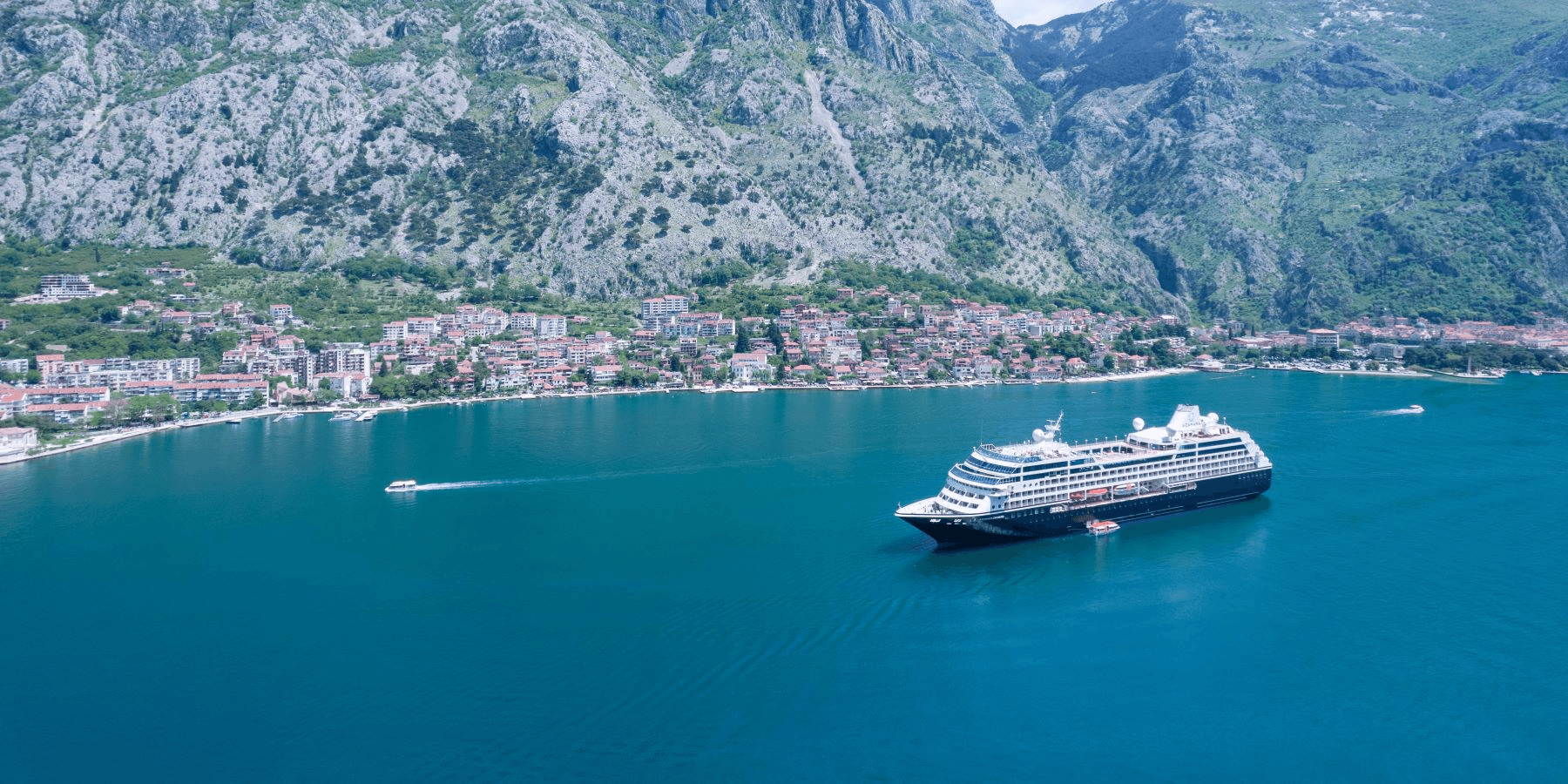
Step aboard the new Azamara Onward℠, and arrive at the doorstep of the globe’s most hidden gems and storied cities. Built to cross oceans, cruise along scenic waterways and dock at locations larger ships can’t access — this small ship cruising experience is unlike any other. Throughout your journey, you’ll find so many ways to immerse yourself in your travels.
Ask our cruise specialists about cruise line loyalty benefits, status match options, drinks packages, gratuities and any current offers available on this sailing.
On board

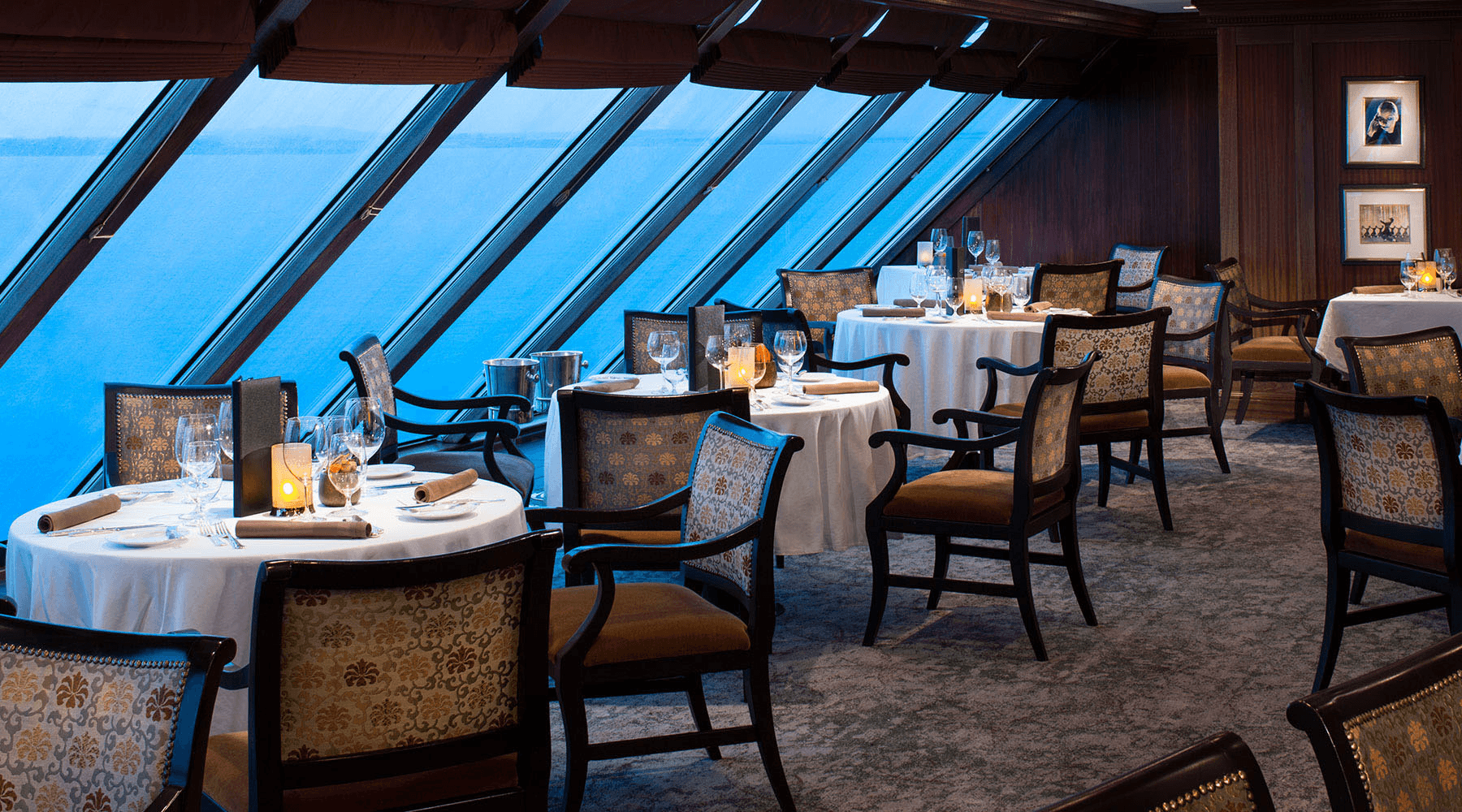
Aqualina Restaurant
Onboard Dining

Prime Restaurant

Restaurant
Itinerary
Cruise from Barcelona to Athens (Piraeus), Greece
Day 1Cruise departs from BarcelonaJun 2, 2028 • Departs at: 8 pm
Dynamic Barcelona is all about architecture, from the magnificent medieval buildings of the Gothic Quarter to the Modernist movement typified by the work of Antoni Gaudi. Though his materials were stone and metal, his forms were organic, awash in curves, swirls, and colors. His masterpiece is the amazing Church of the Sagrada Familia, colossal and as yet unfinished, though construction began in 1882. A contemporary contribution to the scene is Ricardo Bofill's post modernist National Theater of Catalonia, an imaginative combination of classical and modern design, with a greenhouse-like lobby.
Day 2Provence (Marseille)Jun 3, 2028 • Arrives at: 9:30 am • Departs at: 8 pm
Marseille, a port city in southern France, has been a crossroads of immigration and trade since its founding by the Greeks circa 600 B.C. At its heart is the Vieux-Port (Old Port), where fishmongers sell their catch along the boat-lined quay. Basilique Notre-Dame-de-la-Garde is a Romanesque-Byzantine church. Modern landmarks include Le Corbusier’s influential Cité Radieuse complex and Zaha Hadid’s CMA CGM Tower.
Day 3NiceJun 4, 2028 • Arrives at: 7 am • Departs at: 10 pm
Nice, Queen of the Riviera, is imbued with the joie de vivre that epitomizes this fabled coastline. Perhaps it is that famous light and color that has long attracted artists, that makes one feel so alive, makes a stroll down the wide seaside Promenade des Anglais so exhilarating. The old town is a warren of meandering lanes edged by tall houses, and small, alluring shops. A treasure trove of archaeological and fine art museums is not to be ignored, nor is the famous flower market, awash in the heady scent and glowing hues of blossoms, and amazing displays of produce.
Day 4PortovenereJun 5, 2028 • Arrives at: 8 am • Departs at: 8 pm
When you picture classic Italian romance (think Lady-and-the-Tramp-sharing-a-plate-of-spaghetti-and-meatballs-while-staring-into-each-other’s-eyes romance), the setting could be Portovenere. Set on the Gulf of Poets (Golfo dei Poeti), Portovenere served as inspiration for the works of English poets Lord Byron and Percy Shelley in the early 1800s, which speaks volumes for just how romantic this idyllic seaside village really is.
Day 5Florence /pisa (Livorno), ItalyJun 6, 2028 • Arrives at: 8 am
Ah, Florence—sublime birthplace of the Renaissance, its historic center full to bursting with elegant squares, imposing palaces, magnificent churches, and museums with such an abundance of riches it could make an art lover weep for joy. The list of illustrious names connected with this city is mind-boggling: Botticelli, Dante, Da Vinci, Michelangelo, Galileo. Other colorful and fascinating characters were of dubious reputation: Machiavelli, and the religious extremist Savonarola, with his bonfire of the vanities. For many years the city was ruled by the powerful Medici family, patrons of the arts and bankers to the papacy, whose line included six kings and two popes.
Day 6Florence /pisa (Livorno), ItalyJun 7, 2028 • Departs at: 10 pm
Ah, Florence—sublime birthplace of the Renaissance, its historic center full to bursting with elegant squares, imposing palaces, magnificent churches, and museums with such an abundance of riches it could make an art lover weep for joy. The list of illustrious names connected with this city is mind-boggling: Botticelli, Dante, Da Vinci, Michelangelo, Galileo. Other colorful and fascinating characters were of dubious reputation: Machiavelli, and the religious extremist Savonarola, with his bonfire of the vanities. For many years the city was ruled by the powerful Medici family, patrons of the arts and bankers to the papacy, whose line included six kings and two popes.
Day 7Porto Santo StefanoJun 8, 2028 • Arrives at: 8 am • Departs at: 6 pm
Day 8Rome (Civitavecchia), ItalyJun 9, 2028 • Arrives at: 6:30 am • Departs at: 8 pm
Rome has something special to offer to all visitors, no matter their interests and tastes. Whether you daydream about fighting with gladiators in the Coliseum, debating with togaed senators in the Forum, tossing a coin in a fabled fountain, or being awestruck by the magnificence of St Peter’s Basilica and Michelangelo’s masterpieces, Rome seems to live up to its sobriquet – the Eternal City. When you need sustenance, today’s Rome will provide delizioso pasta e vino. Or perhaps you draw strength from a little retail therapy – the Italians are also renowned for their sense of style.
Day 9SorrentoJun 10, 2028 • Arrives at: 9 am • Departs at: 10 pm
A warming sun and gentle sea breezes have been attracting visitors to this fair spot for two millennia. Its reputation as a playground of the ancient rich and famous resulted in the building of lavish villas and palaces, an emperor relocated to the Isle of Capri nearby, and over the centuries it has been a haven for artists and artisans, writers and poets, politicians and philosophers, and all manner of aristocrats. You will be a welcome addition. The massive eruption of nearby Vesuvius in 79 AD caused considerable damage, but the resulting volcanic ash is responsible for Sorrento’s modern day fertility, thriving olive orchards, and excellent wine.
Day 10AmalfiJun 11, 2028 • Arrives at: 8 am • Departs at: 8 pm
Renowned for its sheer cliffs and striking beauty, the town of Amalfi on the Gulf of Salerno is known for its photographic splendor and its close proximity to Sorrento, Positano and Isle of Capri. This enviable area of Italy also produces the most beautiful handmade paper. For a most interesting afternoon, take a tour the Museo della Carta, the paper museum, and take home the most beautiful souvenirs. Amalfi is also the burial place of Saint Andrew; the town's cathedral is named in his honor.
Day 11Siracusa, SicilyJun 12, 2028 • Arrives at: 1 pm • Departs at: 10 pm
Siracusa is known for the archaeological and historical sights that define its grand past, as one of the major powers of the Mediterranean world in the 5th century BC. They include a Greek theater, still in use, where Aeschylus produced some of his plays; a dramatic necropolis with burial niches cut into the rock that include the tomb of Archimedes, famous mathematician, engineer, and inventor; and the Ear of Dionysus, a cave with amazing acoustical properties. The “modern” city was rebuilt in Sicilian Baroque style after the devastating earthquake of 1693.
Day 12VallettaJun 13, 2028 • Arrives at: 8 am • Departs at: 10 pm
Tiny Malta, smack dab in the middle of the Mediterranean and on everyone's route since ships began to ply the seas, is packed with history from top to bottom. Over time it was ruled by a variety of empires, all of which contributed to the look and culture of the islands. Valetta is living museum of baroque architecture, constructed by the Knights of St. John five centuries ago. Today the city is also a dynamic hub of cultural and commercial activity, its harbor now welcoming luxury yachts and cruise ships.
Day 13At SeaJun 14, 2028
Day 14KotorJun 15, 2028 • Arrives at: 9:30 am • Departs at: 8 pm
Kotor’s beautiful bay has long attracted passing ships that stopped to trade, plunder, or conquer, and merchants, pirates, and soldiers of numerous empires have walked this maze of cobblestone streets before you. One of Europe’s best-preserved cities of medieval or Renaissance vintage, its walls were constructed right into the steep slopes of the mountain behind it, providing protection and making it an amazing sight on approach from the sea. Venetian ramparts enclose a rich history, with churches of varying styles, and a Romanesque cathedral built on the foundations of an earlier church, and a still earlier Roman temple.
Day 15SibenikJun 16, 2028 • Arrives at: 9 am • Departs at: 6 pm
Just 55 miles north of Split is the city of Sibenik, situated where the River Krka meets the Adriatic. Since 1066, it has been under rule by Croatians, Venetians, Austro-Hungarians, Yugoslavians, and once again back to Croatians—which has resulted in a diversity of international influences. This is particularly evident in the old part of Sibenik, with its many churches, palaces, Dalmatian houses, as well in the city’s stone walls and four fortresses: St. John, St. Michael, St. Nicholas and Šubićaevac. A must see is the Cathedral Sveti Jakov, and if you love the great outdoors, then visit Krka National Park or Kornati National Park.
Day 16PiranJun 17, 2028 • Arrives at: 8 am • Departs at: 8 pm
Day 17VeniceJun 18, 2028 • Arrives at: 8 am
Day 18VeniceJun 19, 2028 • Arrives at: 7 am • Departs at: 8 pm
Day 19Rovinj (Istria),CroatiaJun 20, 2028 • Arrives at: 8 am • Departs at: 2 pm
Day 20DubrovnikJun 21, 2028 • Arrives at: 8 am • Departs at: 9 pm
To visit Dubrovnik is to step back in time to the Middle Ages. The town is one massive museum, its thick walls constructed from the 13th to the 17th century encircle the entire city, and contain within them a treasure trove of striking architecture – squares, fountains, palaces, churches, and monasteries, all built from the same stone, line streets free of motor vehicles. Once the only city-state on the Adriatic to rival Venice, Dubrovnik has long been a center for Croatian culture, and home to artists and scholars of all disciplines. It is possible to circumnavigate the city atop the medieval walls.
Day 21CorfuJun 22, 2028 • Arrives at: 1 pm • Departs at: 10 pm
One of the most beautiful islands in all of the Mediterranean, Corfu is said to cast a spell upon those who land upon its shores, which is perhaps why Shakespeare set his magical play, The Tempest, here. Millions of silvery olive trees grace the hillsides, the scent of lemon blossoms perfumes the air, and picturesque views of sapphire bays set against verdant hills capture your attention. A leisurely stroll through the narrow alleyways of Corfu old town will reveal many local treasures - old churches, a Byzantine cathedral, small enticing shops, and tavernas offering local wines and fresh seafood.
Day 22ArgostoliJun 23, 2028 • Arrives at: 8 am • Departs at: 4 pm
The capital and “heart” of the Greek Island of Kefalonia, Argostoli is a modern town with a traditional soul. Although devastated by a major earthquake in 1953, the city has been largely rebuilt, and there are still many places of myth and legend to explore. With its stunning display of stalactites and stalagmites, the famous Drogati Cave and underground Melissani Lake routinely top must-see lists. There’s also the vibrant central square, Plateia Valianou, with its many bars, restaurants and tavernas, and the picturesque Lithostroto, a pedestrian-only cobblestoned shopping street.
Day 23Monemvasia, GreeceJun 24, 2028 • Arrives at: 9:30 am • Departs at: 8 pm
One look at Monemvasia as you pull in to port and it’s easy to understand why locals nicknamed it The Rock. Shrouded by precipitous cliffs along the brilliant teal waters of the Myrtoan Sea, Monemvasia is a castle town suspended in history. Adding to the feeling that it comes from another time, Monemvasia is tethered to our world by a simple causeway.
Day 24SantoriniJun 25, 2028 • Arrives at: 8 am • Departs at: 8 pm
Your daydream of a Greek island meets reality in Santorini – its whitewashed villages cling to cliff sides, and bright blue roofs reflect the sea and sky. So beautiful is it, that you can almost believe the myths that claim it as the birthplace of gods. Born itself as a volcanic cone, the island blew its top in 1450 BC, its center sank, and it assumed its current crescent shape, outlined by three main islands. The capital, Fira, a pedestrian haven with narrow, meandering cobblestone lanes, is reachable only by cable car, donkey, or for the fit and fearless, a flight of 600 steps.
Day 25RhodesJun 26, 2028 • Arrives at: 8 am • Departs at: 10 pm
Rhodes, the friendliest city in the Mediterranean, welcomes you with seemingly eternal sunshine thanks to more sunny days than any other place in Europe. Situated at the island's most northern point, Rhodes' only neighbors on the east and west are gleaming blue seas. This sunny retreat is also home to many historic sites ranging from the ruins of the Temple of Venus to the medieval Street of Knights.
Day 26BodrumJun 27, 2028 • Arrives at: 8 am • Departs at: 8 pm
As the site of the ancient city of Halikarnassus (and its famous Mausoleum of Halikarnassus, one of the Seven Wonders of the Ancient World, destroyed in the Middle Ages), Bodrum’s ties to the past are everywhere. There’s the Bodrum Amphitheater that dates back to 4th century BC and Myndos Gate, where Alexander the Great staged one of his greatest battles during his siege of the city. And there’s even the Castle of St. Peter, one of the best-preserved medieval monuments in the world and home to the outstanding Museum of Underwater Archaeology.
Day 27SyrosJun 28, 2028 • Arrives at: 8 am • Departs at: 5 pm
Syros, or Siros or Syra is a Greek island in the Cyclades, in the Aegean Sea. It is located 78 nautical miles south-east of Athens. The area of the island is 83.6 km² and it has 21,507 inhabitants. The largest towns are Ermoupoli, Ano Syros, and Vari.
Day 28Athens (Pireaus)Jun 29, 2028 • Arrives at: 5:30 am
You could spend a lifetime in Europe’s oldest city and still not see everything it has to offer. Settled over 3,500 years ago, Athens is like a mythological crossroads of the past and present, where modern buildings share the skyline with spectacular ruins like the Parthenon. To see a veritable “greatest hits” line-up, make your way to Vasilissis Amalias Street for the archaeological walk. Winding through the heart of the ancient city, the route leads to landmarks like the Temple of Olympian Zeus, Ancient Agora, Arch of Hadrian, and of course, the Acropolis.
Cabin options
Compare the cabin types and onboard features shown for this sailing. Final price and availability are confirmed by our team when you inquire.
24 cabin grades listed for this sailing.
Next step
Cabin grades and prices
View every cabin grade and current availability on the next step.