Exploring Spain, France, Italy, Malta & Montenegro
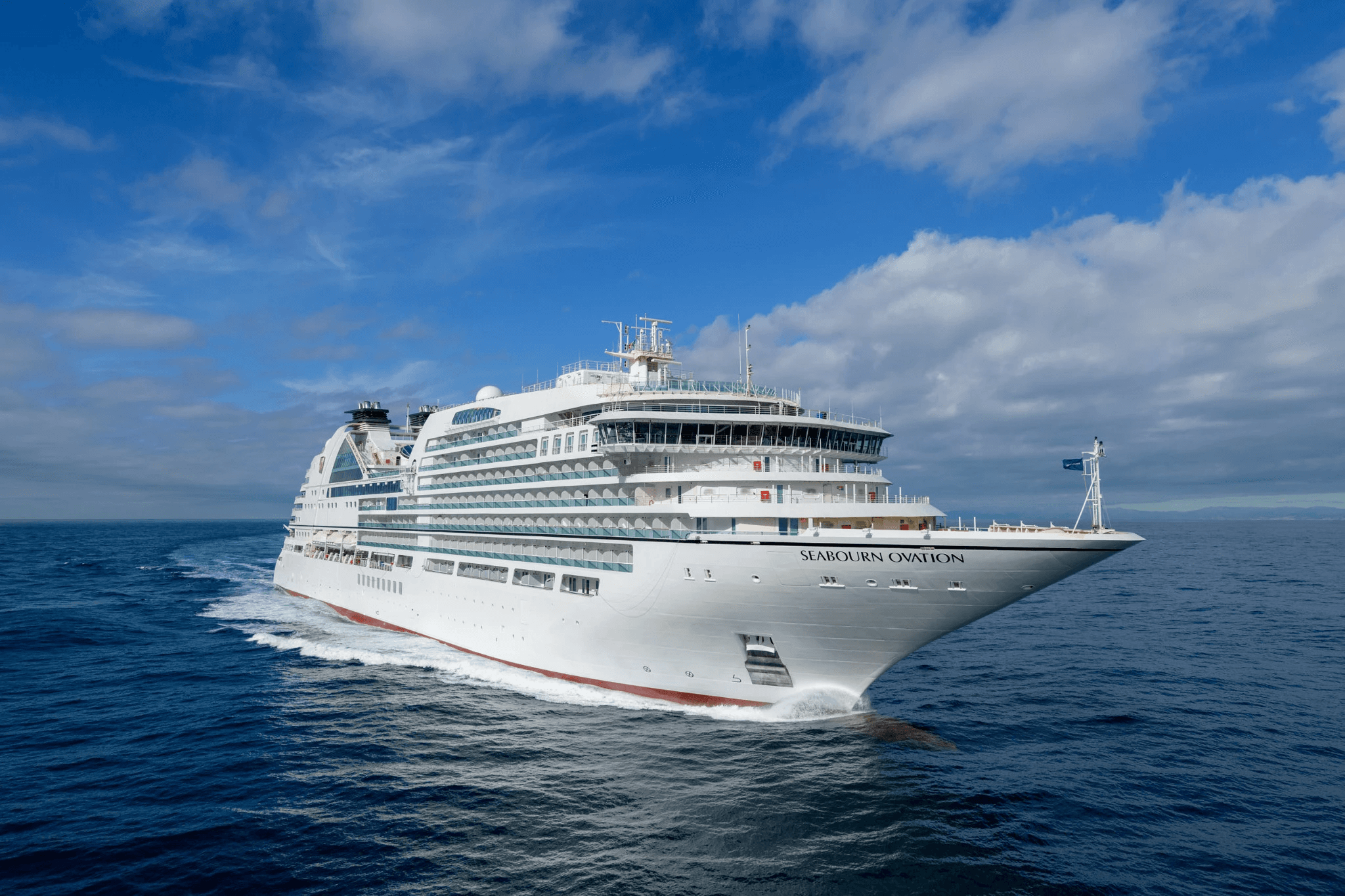
Seabourn · Seabourn Ovation
Depart
Apr 6, 2028
Return
Apr 29, 2028
Port
Lisbon
Nights
23 nights
At a glance
- Built
- 2017
- Tonnage
- 40350
- Cabins
- 266
- Crew
- 330
Introducing Seabourn Ovation, the sister-ship to the already prestigious Seabourn Encore. Seabourn Ovation represents another welcome stage in the evolution of small ship cruising, which Seabourn pioneered and has consistently expanded and enriched for all of our small ship cruises. Both ships will deliver a wealth of new concepts, a fresh vision and a host of illuminating ideas to delight the world's most discerning travelers.
Ask our cruise specialists about cruise line loyalty benefits, status match options, drinks packages, gratuities and any current offers available on this sailing.
On board

Grill
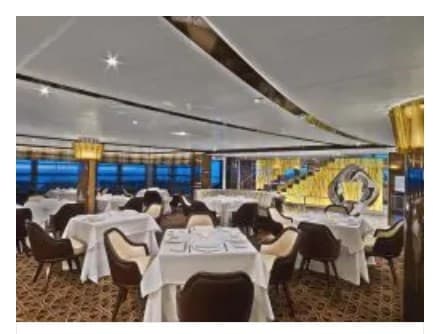
Grill by Thomas keller

Insuite Dining
Itinerary
Cruise from Lisbon to Dubrovnik
Day 1Cruise departs from LisbonApr 6, 2028 • Departs at: 6 pm
The great period of "the Discoveries" accounted for phenomenal wealth brought back from India, Africa and Brazil by the great Portuguese navigators. Gold, jewels, ivory, porcelain and spices helped finance grand new buildings and impressive monuments in Lisbon, the country's capital city. As you sail up the Tagus River, be on deck to admire Lisbon's panorama and see some of the great monuments lining the river. Lisbon is one of Europe's smallest capital cities but considered by many visitors to be one of the most likeable. Spread over a string of seven hills, the city offers a variety of faces, including a refreshing no-frills simplicity reflected in the people as they go unhurriedly through their day enjoying a hearty and delicious cuisine accompanied by the country's excellent wines.
Day 2At SeaApr 7, 2028
Day 3Cadiz (Seville), SpainApr 8, 2028 • Arrives at: 7 am • Departs at: 7 pm
To taste the true flavor of this ancient port city, one should stroll its seaside promenade, pausing to rest beneath the huge banyan trees. The narrow, winding streets of the old town fan out from the port, leading you to sunny, palm-lined plazas. Visit the Catedral Nueva (New Cathedral), begun in the early 1800s but not completed for 116 years. Its dramatic, golden dome rises over a striking interior. For those who enjoy people-watching as much as sightseeing, the seafood restaurants along the eastern edge of the port provide the ideal setting.
Day 4Tangier, MoroccoApr 9, 2028 • Arrives at: 7 am • Departs at: 7 pm
Situated just across the narrow Strait of Gibraltar from Europe, Tangier has long comprised a hybrid culture that is nearly as European as it is African. Standing atop Cap Spartel, one can gaze down on the place where the Atlantic meets the Mediterranean. The “Hollywood” district where the foreign embassies have traditionally been located reflects the European influence. But ascending the hill above the waterfront, one enters the narrow, winding alleys of the Kasbah, the city’s oldest, most Moroccan section. Down the coast, nearby Tetouan retains a nearly untouched walled medina, with sections originally occupied by Andalusian, Berber and Jewish populations. It is small enough that visitors can explore it without risking becoming lost, making it a perfect choice as a UNESCO World Heritage Site.
Day 5Ceuta, Spanish North AfricaApr 10, 2028 • Arrives at: 7 am • Departs at: 7 pm
Spain maintains this tiny slice of the Moroccan coast as its own, and the beaches are popular with visitors from across the Gibraltar Strait. A day-trip across the border brings you to Tetouan, a picturesque Moroccan town.
Day 6Puerto Banus, SpainApr 11, 2028 • Arrives at: 8 am • Departs at: 6 pm
Day 7Motril (Granada), SpainApr 12, 2028 • Arrives at: 9 am • Departs at: 7 pm
This city of the Mediterranean coast is the second largest on the so-called Costa Tropical. But for us it is the port from which to ascend the slopes of the snow-capped Sierra Nevada to the ethereal Moorish city of Granada and the astounding complex of the Alhambra, the most beautiful display of Islamic architecture in Europe. Dramatically sited overlooking the city, the walled series of halls, courts, gardens and colonnades drip with airy carving and elaborate decorative reliefs that embody the term Arabesque. The sprawling Generalife Gardens adjoining the fortress are a memorable site unto themselves. Elsewhere in Granada, the Capilla Real is a purely Spanish Gothic building, holding the marble tombs of the Reyes Catolicos Ferdinand and Isabella behind a gilded wrought-iron screen.
Day 8Cartagena, SpainApr 13, 2028 • Arrives at: 7 am • Departs at: 7 pm
Founded by Carthaginians in the third century BC, this ancient Mediterranean port city exemplifies the region's tumultuous history. Romans, Visigoths, Castilians and Moors have all left their marks. Under King Philip II, Cartagena's naturally deep, sheltered harbor was developed into the nation's premier naval base, a position it still enjoys today. Ancient ramparts remain, as does a lighthouse erected in Moorish times.
Day 9Tarragona, SpainApr 14, 2028 • Arrives at: 7 am • Departs at: 7 pm
This quaint city on the Costa Dorada recalls the glory of the Roman Empire, and promises rich classical remains- she does not disappoint. Its ancient amphitheatre, circus and walls are clustered high on a hill, with a beautiful beach hidden below. As capital of the Roman province of Tarraconensis (from 218 BC), Tarraco, as it was then called, formed the empire's principal stronghold in Spain. Tarragona hosted the 1993 World Archaeology Conference and is clearly divided into old and new by the wide Rambla Vella boulevard.
Day 10Barcelona, SpainApr 15, 2028 • Arrives at: 7 am
Barcelona, the capital of Catalonia, is said to have been founded by the Phoenicians, and was once the rival of the powerful states of Venice and Genoa for control of the Mediterranean trade. Today, it is Spain's second largest city and has long rivaled, even surpassed Madrid in industry and commerce. The medieval atmosphere of the Gothic Quarter and the elegant boulevards combine to make the city one of Europe's most beautiful. Barcelona's active cultural life and heritage brought forth such greats as the architect Antonio Gaudi, the painter Joan Miro, and Pablo Picasso, who spent his formative years here. Other famous native Catalan artists include cellist Pau Casals, surrealist Salvador Dali, and opera singers Montserrat Caballe and Josep Carreras. Barcelona accomplished a long-cherished goal with the opportunity to host the Olympics in 1992. This big event prompted a massive building program and created a focal point of the world's attention.
Day 11Rosas (Roses), SpainApr 16, 2028 • Arrives at: 8 am • Departs at: 6 pm
Founded by Greeks in the pre-Christian era, the Catalan town is set on a lovely curve of beaches on Spain’s Costa Brava. It is crowned by the Castell de la Trinitat, which anchored the wall that encircled the entire town in medieval times. It was the site, until 2011, of Ferran Adria’s Michelin three-star restaurant El Bulli, which will reportedly reopen in 2014 as a culinary creativity center. Shop for a souvenir from the back of a street hawker’s donkey, or wander to nearby Figueres or Cadaques to visit one of Salvador Dali’s museums.
Day 12At SeaApr 17, 2028
Day 13Sanary-Sur-Mer, FranceApr 18, 2028 • Arrives at: 7 am • Departs at: 6 pm
Along the Cote d'Azur, nothing is so rare as a genuine, old-fashioned fishing village. Strolling the inner harbour here, you'll see the men of the working fishing fleet going about their business as if they weren't a part of the world's most glamorous seacoast. Simply put, Sanary and her old streets and charming quay invite discovery.
Day 14Calvi, Corsica, FranceApr 19, 2028 • Arrives at: 8 am • Departs at: 6 pm
Settled first by the Romans, then ruled by Genoans for nearly half a millennium, Calvi was freed by Corsica's native son Napoleon in 1791. In 1982 it was given special status and now enjoys a uniquely autonomous position within the realm of France. Ringed with alternating precipitous cliffs and fine sand beaches, the island resembles a mountain thrust up out of the water, but its ruggedness is tempered by brilliant sunlight and groves of olive and orange trees. Napoleon once said that he could recognize Corsica with his eyes closed - by its perfume alone. While touring Corsica, be advised that the roads about this mountainous island are quite winding with many curves.
Day 15Olbia, Sardinia, ItalyApr 20, 2028 • Arrives at: 7 am • Departs at: 7 pm
The rugged Italian island of Sardinia is blessed with a rocky coastline interrupted by soft sand beaches and washed by limpid seas. Olbia is a very ancient town. It was founded by Phoenicians, and later occupied by Greeks and Romans in their turns. The church of San Simplicio dates from the 11th or 12th century, and that dedicated to St. Paul the Apostle is medieval. The town’s Museum of Archaeology can help you visualize the timeline. Everything changed dramatically in the 1960s, when the Prince Karim Aga Khan selected a 20-kilometer stretch of the nearby coastline to develop an exclusive resort complex he called the Costa Smeralda. Today this enchanting shoreline is encrusted with jewel-like resorts and hotels, private villas and beach facilities, yacht marinas and heliports. It is reputedly the most expensive real estate per square meter in Europe. Without doubt it is beautiful, and it is not necessarily that expensive to just look.
Day 16Porto Santo Stefano, ItalyApr 21, 2028 • Arrives at: 7 am • Departs at: 6 pm
Day 17Civitavecchia (Rome), ItalyApr 22, 2028 • Arrives at: 8 am • Departs at: 7 pm
Originally built by Emperor Trajan who had a villa here, Civitavecchia has flourished as a major port for Rome since the 13th century. Today it is an important ferry terminal and for many travelers the gateway to the Eternal City, Rome. The Renaissance fortifications that surround the harbor area were begun by Bramante and completed by Michelangelo in 1535.
Day 18SalernoApr 23, 2028 • Arrives at: 9 am • Departs at: 6 pm
Day 19Giardini Naxos (Taormina), ItalyApr 24, 2028 • Arrives at: 7 am • Departs at: 7 pm
This harbor on the eastern shore of Sicily near Messina gives us close access to the fabulous Greco-Roman ruins of Taormina, as well as the active volcano Mt. Etna. The temples, streets and large amphitheater of Taormina make it one of Italy’s premier ancient sites. Its location overlooking the sea and with the backdrop of snow-capped Etna complete the package and make it among the most famous attractions in the Mediterranean region. Giardini Naxos itself boasts a lovely beach at Lido Europa, and intrepid visitors can climb Mt. Etna to see a volcano close up
Day 20Mgarr (Victoria), MaltaApr 25, 2028 • Arrives at: 7 am • Departs at: 6 pm
A port not often visited by cruise ships, being more accustomed to welcoming fishing boats and private yachts. Malta’s smaller sister-isle has a lot of charm to offer. Villages such as Mgarr all boast tall, elaborately carved churches, the result of a combination of fine-grained, easily carved stone, time, and stonemasons whose skill is matched only by their religious devotion. The city of Victoria was so named to honor the British queen’s Diamond jubilee.
Day 21Valletta, MaltaApr 26, 2028 • Arrives at: 8 am • Departs at: 5 pm
Occupied successively by the Phoenicians, Greeks, Carthaginians, Romans, Arabs, French and British, Malta has been of strategic importance throughout history. A British Crown Colony until 1964, Malta received the George Cross for its valiant resistance to German occupation in WWII. The island's rich heritage is reflected in the architecture of Valletta, the current capital, and Medina, the capital until 1565. In Valletta the Knights of St. John built such masterpieces as St. John's Co-Cathedral and the Palace of the Grand Masters, along with the fortifications that guard the town's magnificent harbors.
Day 22At SeaApr 27, 2028
Day 23Kotor, MontenegroApr 28, 2028 • Arrives at: 8 am • Departs at: 6 pm
One of the best preserved medieval towns of the Adriatic, Kotor is protected by UNESCO. Between 1420 and 1797, the area was under the rule of the Republic of Venice and the Venetian influence can be seen in its architecture. The Gulf of Kotor is sometimes called the southernmost fjord in Europe, although it is actually a submerged river canyon. The overhanging limestone cliffs of Orjen and Lovcen complete one of the Mediterranean's most beautiful landscapes.
Day 24Cruise returns to DubrovnikApr 29, 2028 • Arrives at: 9 am
Founded in the 7th century, Dubrovnik rose to greatness as a merchant state, independent republic and cultural crossroads. The traffic-free Old Town has been called a Croatian Athens. This UNESCO designated World Heritage Site is a living museum of the ages with fortifications, chapels, monastic cloisters and Europe's second-oldest synagogue crowded into its ancient walls. Relax at a sidewalk café, listen to the chimes of the 14th-century bell tower or join the promenade down the palace-lined avenue known as the Stradun.
Cabin options
Compare the cabin types and onboard features shown for this sailing. Final price and availability are confirmed by our team when you inquire.
14 cabin grades listed for this sailing.
Next step
Cabin grades and prices
View every cabin grade and current availability on the next step.