Buenos Aires to Lisbon
Silversea · Silver Endeavour
Depart
Mar 25, 2027
Return
May 1, 2027
Port
Buenos Aires
Nights
37 nights
At a glance
- Launched
- 2022
- Tonnage
- 16800
- Cabins
- 100
- Crew
- 200
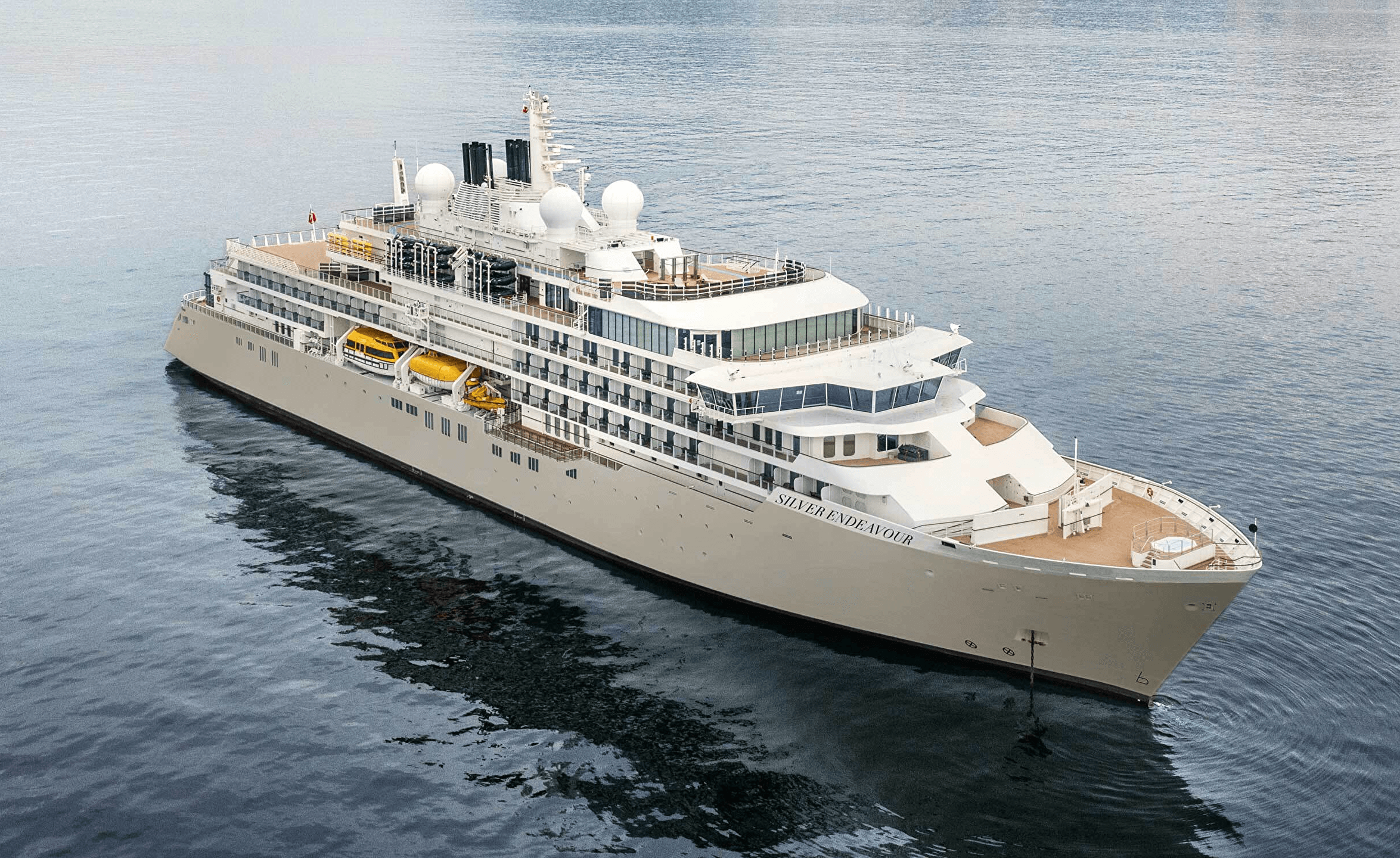
Silversea Cruises welcomes Silver Endeavour to its fleet—one of the world’s most luxurious expedition ships. The fifth expedition ship in its fleet of 11, Silver Endeavour strengthens Silversea’s position as the leader in ultra-luxury expedition cruising, broadening the industry’s most diverse polar offering for guests’ enjoyment. “One of the most luxurious expedition ships afloat, Silver Endeavour will accelerate our strategy of growth, enriching our offering to unprecedented levels and reaffirming our position as the leading ultra-luxury expedition cruise line,” said Roberto Martinoli, President and CEO, Silversea Cruises. “The expedition cruising industry is poised to resume accelerated growth, driven by demand among high-end, affluent customers for travel to remote and hard-to-access destinations. Silver Endeavour will strengthen our polar offering, further diversifying our broad-ranging product. With the ongoing support of Royal Caribbean Group, we are enhancing the cruise experience for our guests, unlocking the world’s most rewarding destinations in a way that only Silversea can.” “To honour the spirit of expedition travel, we have renamed the ship Silver Endeavour—paying testament to one of history’s most famous vessels,” said Barbara Muckermann, Chief Commercial Officer, Silversea Cruises. “Aboard Silver Endeavour, travellers will channel the same sense of discovery that guided pioneering explorers, such as James Cook, in bygone eras.” Built to PC6 polar class specifications, Silver Endeavour is designed for polar exploration. She carries state-of-the-art amenities, with an industry-leading Zodiac-to-guest ratio; kayaks; and cutting-edge navigation and exploration technology, including a remote gimbal camera system, which can capture high-quality images from 5km, among other amenities. She will maintain Silversea’s trademark level of luxury, with a crew-to-guest ratio of approximately 1:1. Spread over eight public decks, the all-suite Silver Endeavour offers guests the most spacious accommodations in expedition cruising, upholding Silversea’s trademark level of comfort; multiple restaurants, bars and lounges; an expansive spa; a two-storied solarium with a swimming pool and whirlpool; and an array of indoor and outdoor observation areas. She fosters an intimate onboard atmosphere, enabling guests to discover destinations like Antarctica in depth, with great interaction between travellers and Silversea’s expedition experts.
Ship features
- Fitness Center
- Beauty Salon
- Observation Lounge
- Otium Spa
Ask our cruise specialists about cruise line loyalty benefits, status match options, drinks packages, gratuities and any current offers available on this sailing.
On board
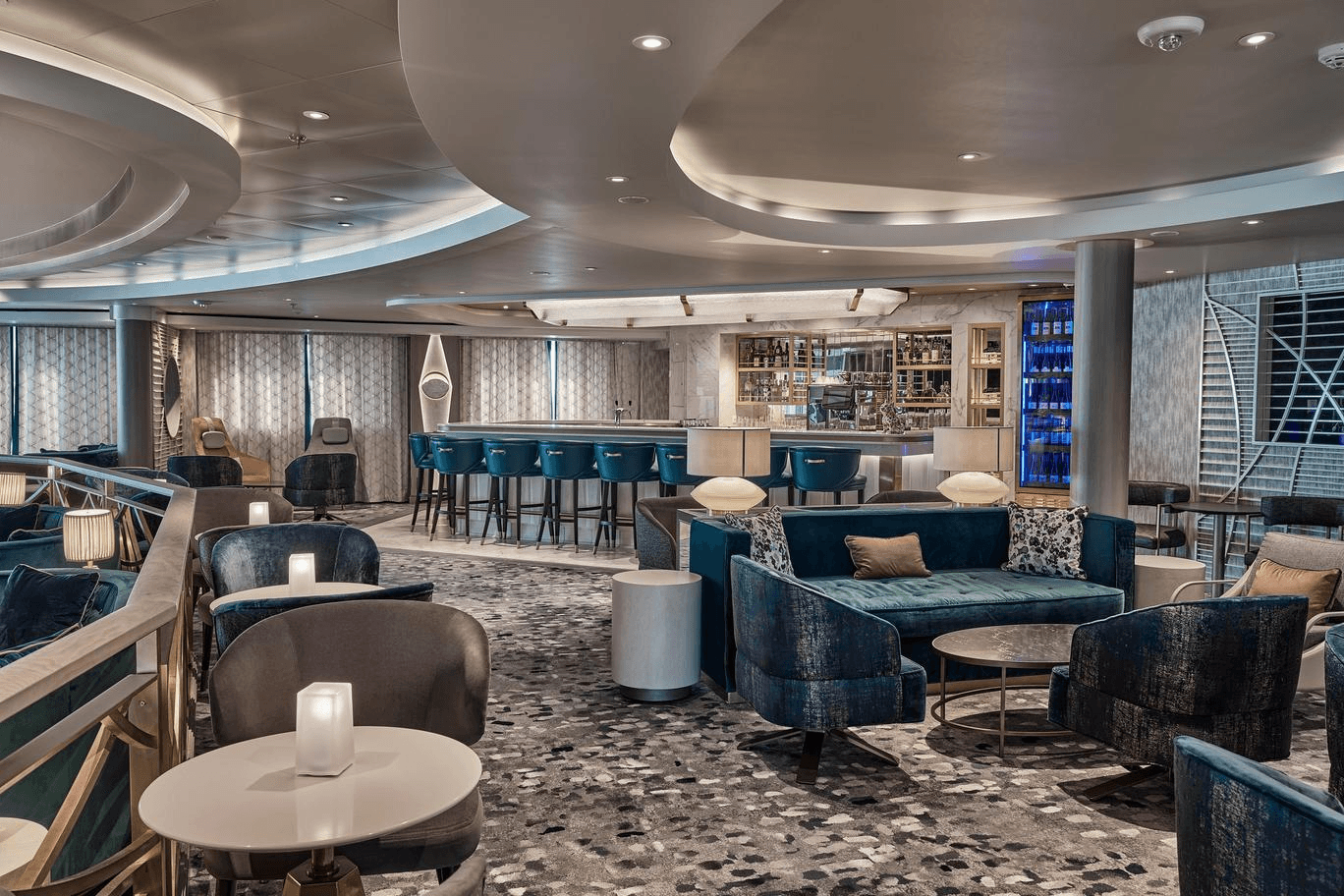
Explorer Lounge
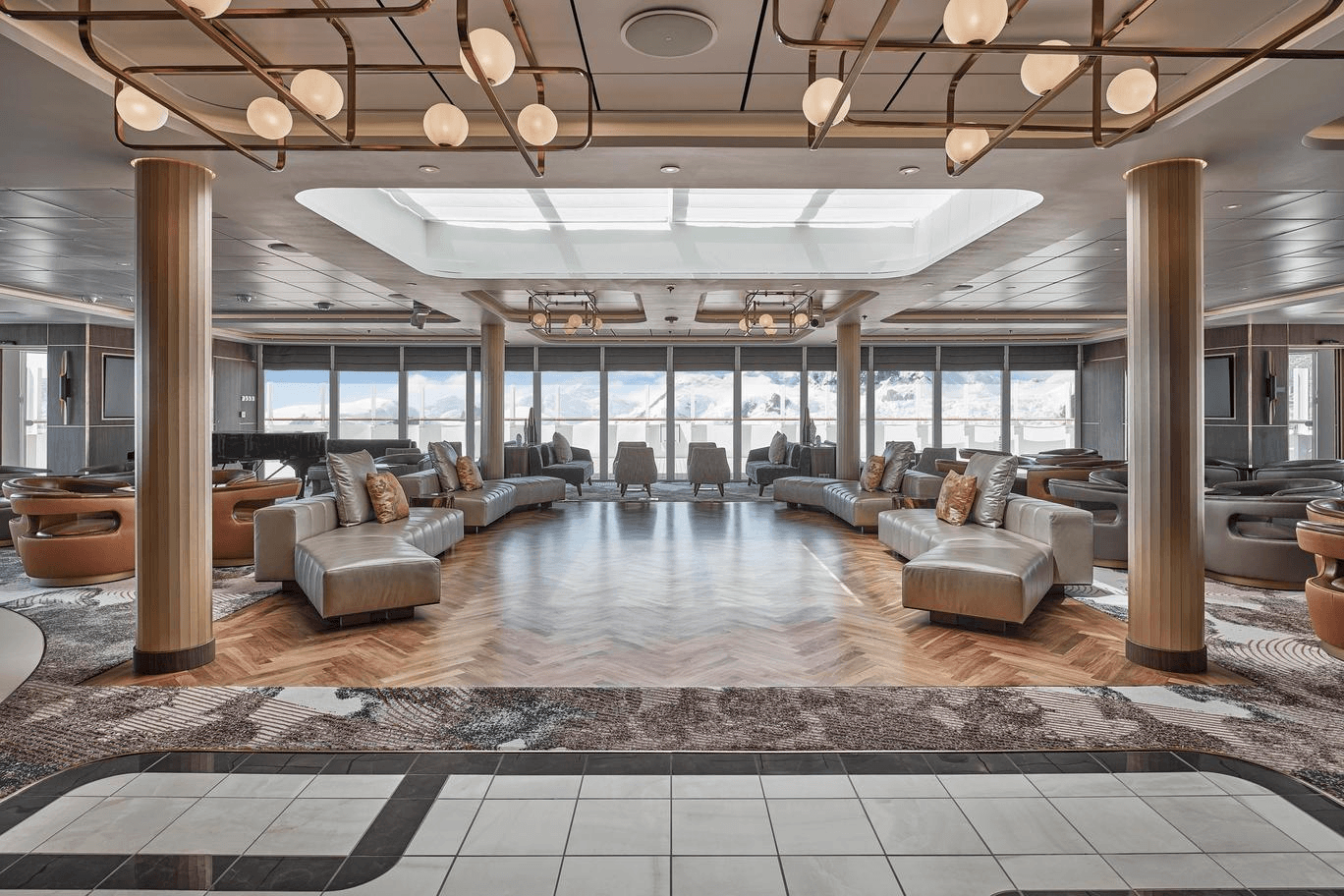
Observation Lounge
Itinerary
- 1Buenos AiresDay 1
- 2Montevideo, UruguayDay 2
- 3Punta del Este, UruguayDay 3
- 4ParanaguaDay 6
- 5Paraty, BrazilDay 7
- 6Rio de Janeiro, BrazilDay 8
- 7Porto Seguro, BrazilDay 11
- 8NatalDay 14
- 9Aberdeen, Sierra LeoneDay 19
- 10Bijagos ArchipelagoDay 21
- 11Dakar, SenegalDay 24
- 12Porto NovoDay 27
- 13Santa Cruz De La Palma (Canary Islands)Day 30
- 14San Sebastian , SpainDay 31
- 15Funchal, MadeiraDay 32
- 16Porto Santo, MadeiraDay 33
- 17Agadir, MoroccoDay 35
- 18Safi, MoroccoDay 36
- 19LisbonDay 38
Port locations are shown; visiting order is not confirmed on this map. 3 port locations are not available.
Cruise from Buenos Aires to Lisbon
Day 1Cruise departs from Buenos AiresMar 25, 2027 • Departs at: 6:30 pm
Passionate, and alive with an infectious crackling energy, the Argentine capital is a breathlessly romantic city, which blends old-world colonial architecture with a down-to-earth Latin American clamour. Famed for steamy tango interplays, and expertly seared steak slabs, a visit to Buenos Aires is a fiery fiesta for the senses. Parque Tres de Febrero is a 400-hectare oasis where 18,000 rose bushes bloom, and skyscrapers give way to still lakes and pretty paths of rollerblading locals. Mighty palm trees - that look like exploding fireworks - stand tall in Plaza de Mayo, the heart of this sprawling cosmopolitan capital of 48 barrios. The square has served as the stage for many fundamental events in this country’s history, and the location where the seeds of independence were sewn continues to serve as the city’s gathering point - and is a place for solidarity, rebellion and revolution. The presidential Casa Rosada’s salmon-hued Palatial Palace borders the plaza, while nearby Museum Naci…
Day 2Montevideo, UruguayMar 26, 2027 • Arrives at: 7 am • Departs at: 6 pm
With its population of 1,362,000, Montevideo is home to nearly half of Uruguay's population. The relatively small capital is the nation's only major city, yet visitors do not come here in search of the hustle and bustle of a large metropolis. Montevideanos themselves travel to Buenos Aires and São Paulo when they crave big-city excitement. As Uruguay's cultural, political and economic center, the city boasts a good number of monuments, museums and impressive architecture. There are sidewalk cafés, fine restaurants, chic shops, casinos and miles of clean beaches. For such a small country, Uruguay boasts an astonishing literary and artistic tradition. Theater is a popular medium and playwrights are very prominent. Uruguayan artists such as Pedro Figari have earned recognition well beyond the country's border. The tango is nearly as popular here as in Argentina. Afro-Uruguayan Candomblé music and dance add a unique dimension.
Day 3Punta del Este, UruguayMar 27, 2027 • Arrives at: 6:30 am • Departs at: 6 pm
Renowned for its international conferences and film festivals, Punta del Este is one of the finest beach resorts in South America. Many wealthy Uruguayans, Argentines and Brazilians have built spectacular mansions along the magnificent coastline. Celebrities and jet-setters from across the globe frequent Punta del Este for the beaches, fresh air and nightlife. For many of Montevideo's residents this fashionable resort provides a popular weekend getaway. With a skyline of alternating high-rise towers and million-dollar mansions, Punta del Este is host to a sophisticated culture and a swinging social scene. During the day locals and visitors hit the beaches of the peninsula that provide a perfect setting for a variety of watersports. The land side, with its sand dunes, large forests of pines, eucalyptus and mimosa, makes a fitting contrast. A marina full of sleek yachts, excellent restaurants, chic boutiques, art galleries, a renowned museum, casinos and three golf courses add to a Rivi…
Day 4At SeaMar 28, 2027
Day 5At SeaMar 29, 2027
Day 6ParanaguaMar 30, 2027 • Arrives at: 5:30 am • Departs at: 5 pm
Atlantic rainforest draws us inland from the Paranaguá port, and it is fun exploring it by boat, coach, foot or even up a tower! Much of the rich and diverse forests of Brazil’s Atlantic coast has been cleared but here the largest surviving tracts are preserved in national parks and reserves. The uniqueness and rarity of the forest’s biology led to the declaration of the Atlantic Forests of South Eastern Brazil World Heritage Area.
Day 7Paraty, BrazilMar 31, 2027 • Arrives at: 1:30 pm • Departs at: 6 pm
The Costa Verde's main attraction, the coastal village of Parati, is about 180 miles south of Rio de Janeiro. Inhabited since 1660, this small town has remained fundamentally unaltered since its heyday. It was a staging post for 18th-century trade in Brazilian gold from Minas Gerais to Portugal. Raids and pirate attacks necessitated the establishment of a new route linking Minas Gerais directly with Rio de Janeiro. A decline in Parati's fortunes resulted; being off the beaten track, it remained quietly hidden away. Parati's population of some 15,000 people depends on fishing, farming and tourism for its livelihood. Local artists display their attractive crafts in galleries and souvenir shops. The town, reached via a long pier from the tender landing, must be explored on foot. Among Parati's attractions is the 1722 Church of Santa Rita de Cassia, a classic example of Brazilian baroque architecture. The surrounding area boasts a scenic backdrop with green-clad mountains and numerous isl…
Day 8Rio de Janeiro, BrazilApr 1, 2027 • Arrives at: 7 am • Departs at: 11 pm
Today, with the center rebuilt many times since colonial days, the major interest lies in the beach communities south of the city center rather than in Rio's buildings and monuments. For some 60 years, the beach districts of Copacabana, Ipanema and Leblon have been Rio's heart and soul, providing a constant source of recreation to maintain the city's fame as the most dynamic and captivating tourist capital in South America.
Day 9At SeaApr 2, 2027
Day 10Abrolhos ArchipelagoApr 3, 2027 • Arrives at: 6:30 am • Departs at: 6 pm
Day 11Porto Seguro, BrazilApr 4, 2027 • Arrives at: 6:30 am • Departs at: 6 pm
Porto Seguro – loosely translated as safe bay – is known as “Brazil’s birth certificate”. The port was the first place that Alavares Cabralone and his crew set foot on while on their way their way to India in 1500. This makes the town the oldest in the country at 500 years. With three churches and around 40 buildings (both private residential houses and public institutions), restored by the state government for the 500th anniversary celebration of Brazilian discovery, Porto Seguro wears its age well. View less The whole historic centre has been a National Heritage site since 1973 by the National Historical and Artistic Heritage Institute (IPHAN) as well as an example of UNESCO Natural Heritage of Humanity since 2000. Although the main area of the lower town is small, the colourful houses that line the streets are definitely worth a visit. The main road is called “Passerela do Alcool” or alcohol alley, and was the route from the Cidade Alta - old town - that smugglers used to take the…
Day 12At SeaApr 5, 2027
Day 13At SeaApr 6, 2027
Day 14NatalApr 7, 2027 • Arrives at: 7 am • Departs at: 4 pm
Deemed the “Sun Capital” in a nation of sun and beach worshippers, Natal has much more to offer besides its expansive stretches of sand. North of the city, spectacular sand dunes tumble down to the sea. Inventive locals make the most of them, using skis, toboggans, dune buggies – even camels! – to traverse them. Founded on Christmas Day (Natal in Portuguese) in 1599, the city has preserved a number of edifices dating to colonial days. Three King's Fortress and the recently restored Metropolitan Cathedral both date back to the turn of the 16th Century. The landmark Albert Maranhão Theater dates back to 1898. Used as a strategic bridge to invade Brazil by the French, Portuguese and Dutch at various times, Natal was also home to an American airbase during World War II. The closest port to Africa in the Americas, Natal played a vital role in the Allies' struggle during the war. The base was used for anti-submarine service in the South Atlantic as well as the transport of planes, troops an…
Day 15At SeaApr 8, 2027
Day 16At SeaApr 9, 2027
Day 17At SeaApr 10, 2027
Day 18At SeaApr 11, 2027
Day 19Aberdeen, Sierra LeoneApr 12, 2027 • Arrives at: 12:30 pm • Departs at: 8 pm
Standing on the rocks of Sierra Leone’s Western Peninsular, the rusting, photogenic Aberdeen Lighthouse welcomes sea-faring visitors ashore. Aberdeen juts out into the Atlantic waves to the north of Sierra Leone’s sprawling capital city, Freetown. A lively, well-heeled spot, Aberdeen has a relaxed and leisurely atmosphere, which attracts adventurous holidaymakers and explorers to these shores. The air is thick with history too - a colony was established here to repatriate former slaves of the British Empire, and you can explore the monuments and reminders of this important past in Freetown. The Cotton Tree is a national symbol of liberation, while former slaves would walk through King’s Yard Gate as they reclaimed their freedom. Sierra Leone is known for offering up some of the best beaches in Western Africa. The most accessible of which is the golden band of sand of Lumley Beach, which stretches from Aberdeen for three miles down to Lumley - the southern portion forms a palm-backed p…
Day 20TokehApr 13, 2027 • Arrives at: 6:30 am • Departs at: 12 pm
Tokeh, or Tokeh Town as it is also known, is a coastal resort town that relies mainly on fishing and tourism. Only twenty miles outside Freetown, the capital of Sierra Leone, this town is nestled in an area of beautiful scenery, surrounded by mountains, forests and beaches. The Tokeh Beach is considered one of the largest and most attractive beaches in West Arica. This town was first founded by a Sherbo fisherman who settled along the river bank. View less Much later, in 1968, a prominent barrister from Sierra Leone purchased the land, and in partnership with a French company, developed the village. Today, it is a thriving town with the resort, a church, mosque, community center, school and about 6000 residents.
Day 21Bijagos ArchipelagoApr 14, 2027 • Arrives at: 12:30 pm
The cluster of islands off the coast of the West African nation of Guinea-Bissau—the Bijagós archipelago—are a semitropical land with abundant flora, fauna and natural resources. Despite centuries of slave trading and colonial oppression, the ethnic Bijagós people have remained fiercely independent and continue to practice their land-based religion, which restricts access and activities within sacred sites. These traditional management practices have contributed toward conserving the islands’ biodiversity. Today, in the face of threats like industrial fishing, ship breaking and the growth of international drug trafficking, it is even more important that Bijágos values be maintained.
Day 22Bijagos ArchipelagoApr 15, 2027
The cluster of islands off the coast of the West African nation of Guinea-Bissau—the Bijagós archipelago—are a semitropical land with abundant flora, fauna and natural resources. Despite centuries of slave trading and colonial oppression, the ethnic Bijagós people have remained fiercely independent and continue to practice their land-based religion, which restricts access and activities within sacred sites. These traditional management practices have contributed toward conserving the islands’ biodiversity. Today, in the face of threats like industrial fishing, ship breaking and the growth of international drug trafficking, it is even more important that Bijágos values be maintained.
Day 23Bijagos ArchipelagoApr 16, 2027 • Departs at: 5 pm
The cluster of islands off the coast of the West African nation of Guinea-Bissau—the Bijagós archipelago—are a semitropical land with abundant flora, fauna and natural resources. Despite centuries of slave trading and colonial oppression, the ethnic Bijagós people have remained fiercely independent and continue to practice their land-based religion, which restricts access and activities within sacred sites. These traditional management practices have contributed toward conserving the islands’ biodiversity. Today, in the face of threats like industrial fishing, ship breaking and the growth of international drug trafficking, it is even more important that Bijágos values be maintained.
Day 24Dakar, SenegalApr 17, 2027 • Arrives at: 6:30 am
Capital of Senegal, and a major gateway to Western Africa, the former colonial trading post of Dakar stamps the Cap-Vert peninsular with glorious surf-fringed beaches. Enjoy the thrum of markets - where colourful textiles are exchanged - and wander streets where jazz, sambar and mbalax spill from every ajar door. Offering tropical island-style beaches in an incongruous urban setting, Dakar is a wild and urgent experience for the senses. Watch on as surfers revel in consistent rollers on this, the most westerly peninsula of continental Africa. Scuba divers can explore worlds below the surface in Dakar's diving areas, or you can head to sandy beaches like Plage des Mamelles' cove, which provide endless options for cooling off. Looking for a little more activity, loosen up and play on golf courses that unroll along the sun-kissed Senegalese coastline, or visit startling natural sites like the vivid pink water of the salty pink Lake Retba. Cultural relevance abounds in Dakar - those wanti…
Day 25At SeaApr 18, 2027
Day 26Fogo, Cape VerdeApr 19, 2027 • Arrives at: 7 am • Departs at: 6 pm
Fogo and neighboring Ilha Brava are the southernmost islands of Cape Verde and at the western end of the Sotavento group. Unlike some of the other islands in the archipelago which were named after saints, Fogo’s name goes back to the volcanic activity of its dominant feature Pico do Fogo, at 2,829 meters the highest elevation of Cape Verde and also its largest volcano.
Day 27Porto NovoApr 20, 2027 • Arrives at: 7 am • Departs at: 6 pm
Porto Novo is found on Sao Antonio, the northwesternmost of the Cape Verde Islands, and is the island’s largest town with approximately 17,400 inhabitants. Located on Sao Antonio’s southeastern and arid side, Porto Novo began as a fishing village and only in 2005 it was recognized as a city. Since the island has no airport and Porto Novo faces the town of Mindelo on the island of Sao Vicente, this harbor is the main link to the other islands in Cape Verde and the outside world. View less A monument above the port shows a woman waving goodbye to those emigrating from the Cape Verde Islands. Roads leading out of Porto Novo have to either go along the impressive northeast coast or cross the island’s mountains through a rugged and even more spectacular landscape. The third highest peak of the Cape Verde islands at 1,979 meters is the Tope de Coroa to the west of Porto Novo.
Day 28At SeaApr 21, 2027
Day 29At SeaApr 22, 2027
Day 30Santa Cruz De La Palma (Canary Islands)Apr 23, 2027 • Arrives at: 7:30 am • Departs at: 3 pm
Santa Cruz de Tenerife is the capital of the island of La Palma. Because of its spectacular vegetation and exuberant natural beauty, it is considered by many the most beautiful of the Canary Islands and referred to as the Pretty Isle – La Isla Bonita. In addition to its outstanding natural attributes, the island boasts a culture full of traditions, cuisine, crafts and folklore from the time of the original inhabitants, who left a variety of archaeological riches. View less Once an important transatlantic port during colonial days, today Santa Cruz has the look of a genuine open-air museum. With colonial houses and carved balconies lining the streets, the port city retains the old-world charm of its glory days. Acclaimed attractions in the interior include the Taburiente National Park with its giant crater that has been photographed from the Space Shuttle, and the Roque de los Muchachos Astrophysics Observatory, standing on the island's highest point (7,260 feet) and considered the mos…
Day 31San Sebastian , SpainApr 24, 2027 • Arrives at: 7:30 am • Departs at: 3 pm
Unspoiled, green and lush, this UNESCO Biosphere Reserve has many secrets to reveal. A Canary Island capital like no other, life is lived at a refreshingly lackadaisical pace here. Wander between San Sebastian's faded pastel hues, which spill across the coastline, and bathe in this seaside city's warm sunshine, as waves splash onto sunny beaches. A sleepy capital city, travellers have been resting, relaxing and rejuvenating here for centuries – including Christopher Columbus, whose presence remains in museums dedicated to his visit. View less He called in to restock water supplies while voyaging to discover the new world. Silbo, an extraordinary whistling language, used to communicate over great distances, adds even more cultural fascination to this luscious island’s mountain scenery, crafts and traditions. Head to beaches like Playa de San Sebastian to revel in the black volcanic sand that the Canaries are known for, and Playa de la Cueva, where you can look across to Tenerife’s soar…
Day 32Funchal, MadeiraApr 25, 2027 • Arrives at: 11 am • Departs at: 10 pm
Bedecked with dramatic cliffs, fertile mountains and sun-gorged beaches, Madeira is a lush, colourful island of plants, paradise and Portuguese-flavoured pleasures. Bathing in year-round sunshine, Funchal - the lowkey capital of Madeira - is perfect for slowing the pace, and toasting the thrilling scenery with a bottle of the island's famous wine. Narrow, cobblestone streets line the old town, where whitewash buildings, iron-wrought balconies, and tiled patterns carry echoes of Lisbon. Rua de Santa Maria is the city's oldest street, and the doors have been vividly painted by local artists. Sit for a drink, to sample your choice of Madeira's renowned wines - Boal is the ideal option for those with a sweeter tooth. You'll also find Corpo Santo Chapel here, one of the few remaining buildings to have survived from the 15th century. Blossoming parks and gardens splash colour around, and the sweet smell of pollen lingers in Parque de Santa Catarina. Look out over Funchal harbour between the…
Day 33Porto Santo, MadeiraApr 26, 2027 • Arrives at: 7 am • Departs at: 10 pm
Porto Santo is a small island in the Portuguese archipelago of Madeira. It’s known for its warm waters, dive sites and the long, sandy Porto Santo Beach. In the capital, Vila Baleira, the Christopher Columbus House Museum has displays on maritime history in the Italian explorer's former home. Near the summit of Ana Ferreira peak, the Pedreira viewpoint has sweeping views and a towering rock face of multihued columns.
Day 34At SeaApr 27, 2027
Day 35Agadir, MoroccoApr 28, 2027 • Arrives at: 7 am • Departs at: 6 pm
Boasting an impressive 300 days of sun per year, there is a reason why Agadir is Morocco’s premier holiday resort. Nicknamed the “Miami of Morocco”, the resort has sea and sand in abundance, along with a dreamy 10 km beach – perfect for travellers who want sheltered swimming or enjoy water-based fun in the sun. By contrast to the rest of the country, Agadir is thoroughly modern. An earthquake destroyed the city in 1960, killing 15,00 in 13 seconds and leaving another 35,000 homeless. In its place, and under the direction of Le Corbusier, a new city with a new direction was built. Instead of souks and medinas, think modern architecture, wide, tree-lined avenues, open squares and pedestrian precincts. Low rise hotels, boutiques and apartment blocks line the splendid waterfont. While all the original landmarks were destroyed (many not once, but twice, in the 1960 earthquake but also in the 1755 Lisbon earthquake), Agadir strove to rebuild as much as it could. Thus the fabled 1540 Oufla F…
Day 36Safi, MoroccoApr 29, 2027 • Arrives at: 7 am • Departs at: 10 pm
Lying in a natural harbour to the west of Morocco, Safi (formerly Asafi) carries the weight of legend. As one of the oldest cities in Morocco, it is thought to have been founded by Hanno the Navigator in the 5th or 6th century BC. The etymology of the city’s name allegedly comes from a sailor who got lost and sighed as he passed Safi’s coastline (Safi meaning “oh my regret”). However, there could be another, more literal translation. View less In Berber, the word Asafi means to spill or flood, undoubtedly referring to the rich sea that makes Safi one of the biggest and safest seaports in the country. The city has been - and still is - a major player in Morocco’s trading industry. Its port has seen everything from gold in the 11th century to today’s principal export, sardines. Portuguese rule in the 1500s saw the Castelo do Mar be built, an imposing fortress that still presides over the city today. Under Portuguese rule, other Europeans came and by the mid-16th century, Safi was Morocc…
Day 37At SeaApr 30, 2027
Day 38Cruise returns to LisbonMay 1, 2027 • Arrives at: 8 am
Lisbon, the capital of Portugal, is a city open to the sea and carefully planned with 18th-century elegance. Its founder is said to be the legendary Ulysses, but the theory of an original Phoenician settlement is probably more realistic. Known in Portugal as Lisboa, the city was inhabited by the Romans, Visigoths and, beginning in the 8th century, the Moors. Much of the 16th century was a period of great prosperity and overseas expansion for Portugal. Tragedy struck on All Saints' Day in 1755 with a devastating earthquake that killed about 40,000 people. The destruction of Lisbon shocked the continent. As a result, the Baixa (lower city) emerged in a single phase of building, carried out in less than a decade by the royal minister, the Marques de Pombal. His carefully planned layout of a perfect neo-classical grid survived to this day and remains the heart of the city. Evidence of pre-quake Lisbon can still be seen in the Belém suburb and the old Moorish section of the Alfama that spr…
Cabin options
Choose your cabin type, compare its fares, then pick your cabin. Prices and availability are checked for your party.
See cabins to check current grades, prices and availability for your party.
Next step
Choose your cabin type
View every cabin grade and current availability on the next step.