
Tokyo to Tokyo
Silversea · Silver Muse
Depart
Sep 1, 2027
Return
Sep 25, 2027
Port
Tokyo (Yokohama), Japan
Nights
24 nights
At a glance
- Built
- 2017
- Tonnage
- 40700
- Cabins
- 288
- Crew
- 411
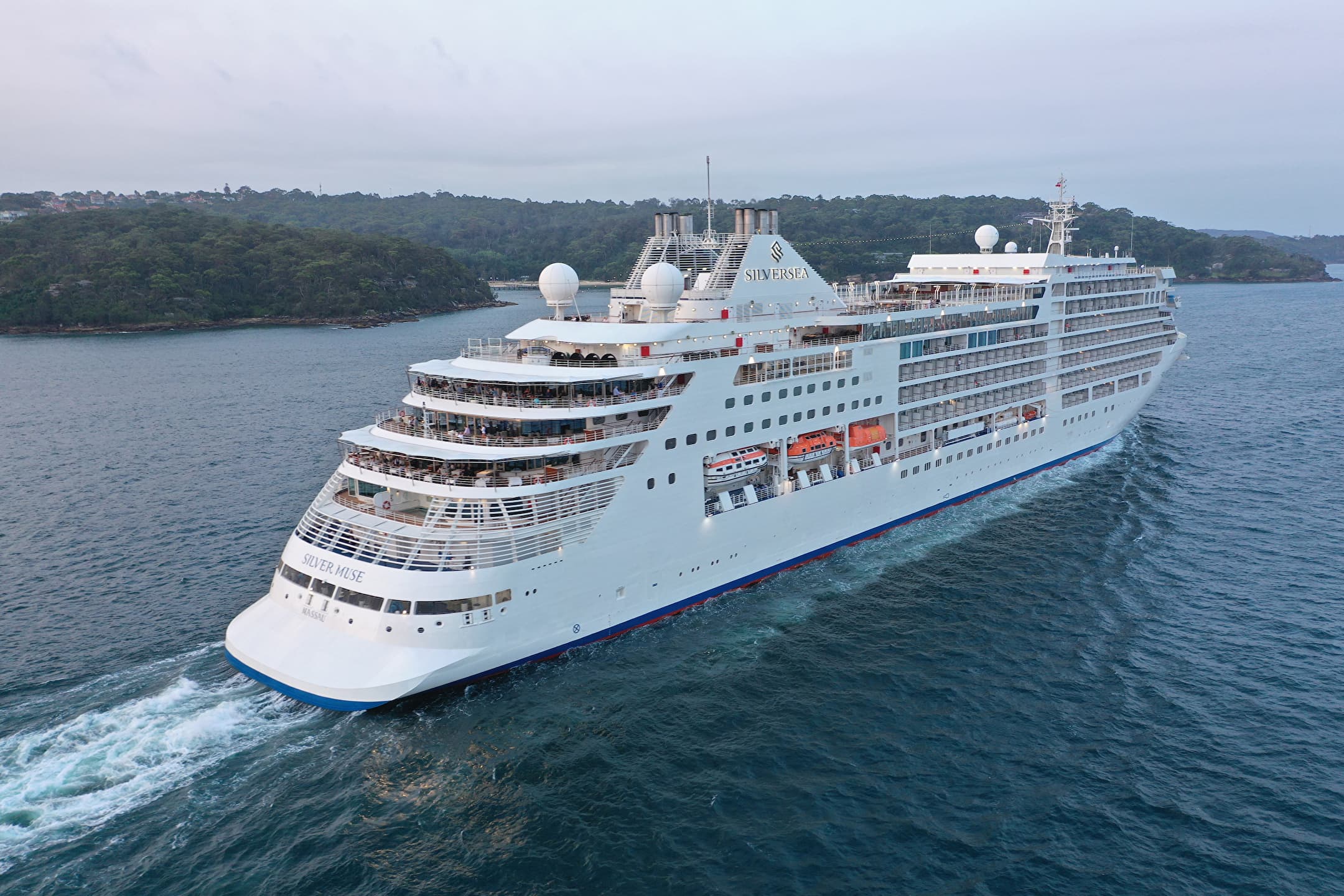
Silver Muse is without question an inspirational work of art. The best place between sea and sky, eight dining venues, spacious outdoor areas and up-to-the-minute technology makes her simply divine. Silversea Cruises is happy to present our new flagship, Silver Muse. Delivered in spring of 2017, the new ultra-luxury ship was built by Fincantieri and at 40,700 grt accommodates 596 guests.
Ask our cruise specialists about cruise line loyalty benefits, status match options, drinks packages, gratuities and any current offers available on this sailing.
On board
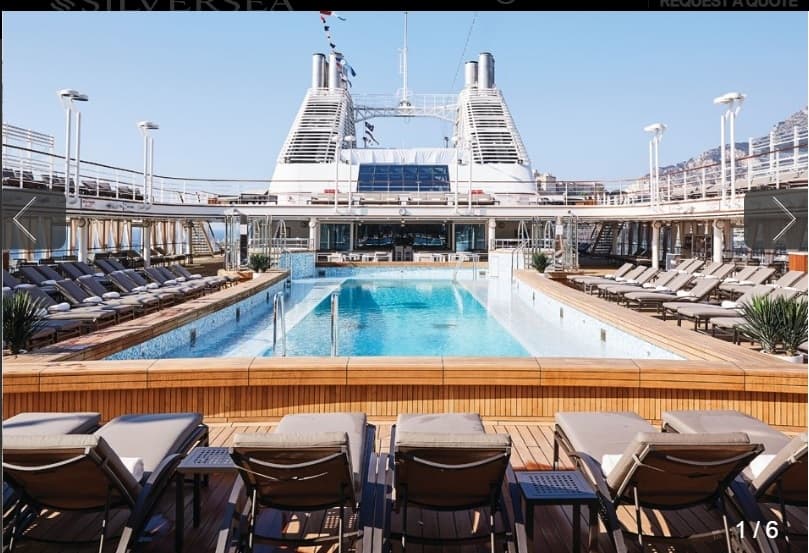
Pool Deck & Jacuzzi Area
Itinerary
Cruise from Tokyo (Yokohama), Japan and back
Day 1Tokyo, JapanSep 1, 2027 • Departs at: 7 pm
Dense and delightful, there’s nowhere else like Japan’s kinetic capital - a city where ancient traditions blend seamlessly with a relentless pursuit for the future’s sharpest edge. See the city from above, as elevators rocket you up to towering viewing platforms, from which you can survey a vast urban ocean, interspersed with sky-scraping needles. Look out as far as the distant loom of Mount Fuji’s cone on clear days. View less Futuristic – second-accurate - transport seamlessly links Tokyo’s 14 districts, while the glow of flashing advertisement boards, clanks of arcade machines, and waves of humanity flowing along its streets, adds to the sense of mesmerising, dizzying and glorious sensory overload. One of Tokyo’s most iconic sights, don’t miss the flood of people scrambling to cross Shibuya’s famous intersection. Join the choreographed dance, as crowds of briefcase-carrying commuters are given the green light to cross at the same time – bathed in the light of massive neon advertise…
Day 2ShimizuSep 2, 2027 • Arrives at: 8 am • Departs at: 3 pm
Feel your heart thumping, at your first sight of Japan’s most heavenly vision - Mount Fuji’s cone emerging through the haze. With its summit dipped in pure white snow, the iconic volcano’s cone is one of the most famous natural landmarks in the world - and a picturesque backdrop for Shimizu. View less Come ashore to this serene vision of beauty – and whether you head straight for the siren-call of the volcano’s slopes, or the sanctuary of gorgeous, heritage-rich shrines, and tranquil tea plantations - spine-tingling views of Japan’s most tallest mountain are never far away. A perfectly symmetrical spectacle, visible for miles around, Mount Fuji is an adored national symbol of Japan. Travel closer to its slopes to soak in some of the country’s finest panoramas. Or take in the views with a dash of local culture, at the Fujisan Hongu Sengen Shrine – an elegant shrine, that stands in thrall to the salt and pepper volcano close by. The Shiraito Waterfall World Heritage Site flows just bene…
Day 3Kobe, JapanSep 3, 2027 • Arrives at: 1:30 pm
The Japanese city of Kobe needs no introduction. The name is synonymous with its home grown superstar. We are not talking of its stunning shrines, cherry trees laden with blossom during sakura or effervescent city, buzzing with life 24/7. We are of course talking of a much more grass roots hero – its eponymous beef. The delicacy might have put the city on the map, but there is far more to Kobe than its meat. Naturally, Kobe wears its cuisine as a badge of honour. View less Its port history has given it a gastronomy that is quite different from its neighbours. Seafood and sushi is naturally some of the freshest and most diverse you can find, but Kobe’s multi-cultural nature (the city is home to 98 different nationalities) means that it has one of the most diverse gastronomic cultures in Japan. Bread and bakeries are also an (unexpected) delicacy. Additionally, Sake is taken very seriously – Kobe even has its own museum dedicated to the national spirit. Historically, Kobe has always bee…
Day 4Kobe, JapanSep 4, 2027 • Departs at: 10 pm
The Japanese city of Kobe needs no introduction. The name is synonymous with its home grown superstar. We are not talking of its stunning shrines, cherry trees laden with blossom during sakura or effervescent city, buzzing with life 24/7. We are of course talking of a much more grass roots hero – its eponymous beef. The delicacy might have put the city on the map, but there is far more to Kobe than its meat. Naturally, Kobe wears its cuisine as a badge of honour. View less Its port history has given it a gastronomy that is quite different from its neighbours. Seafood and sushi is naturally some of the freshest and most diverse you can find, but Kobe’s multi-cultural nature (the city is home to 98 different nationalities) means that it has one of the most diverse gastronomic cultures in Japan. Bread and bakeries are also an (unexpected) delicacy. Additionally, Sake is taken very seriously – Kobe even has its own museum dedicated to the national spirit. Historically, Kobe has always bee…
Day 5At SeaSep 5, 2027
Day 6NagasakiSep 6, 2027 • Arrives at: 8 am • Departs at: 5 pm
You will want to be on deck as the ship cruises into this splendid natural harbor, which has played such an important role in the history of this city, and Japan as a whole. The accidental arrival of an off-course Portuguese ship in 1543 was the beginning of Nagasaki's longtime role as Japan's “Door to the West.” The missionary St. Francis Xavier visited briefly, and there was a substantial number of converts during the period known as the “Christian Century.” Eventually the Japanese authorities perceived the growing influence of Christianity to be a threat, leading to the banning of the religion. The Catholic Spanish and Portuguese were expelled in favor of the Dutch, who were felt to be more interested in trade than religion. All contact with foreigners was forbidden, and no Japanese were allowed to travel abroad. The only exception was the closely watched Dutch enclave of Dejima. Through this small outpost a trickle of Western thought and science continued to filter into the countr…
Day 7Jeju, South KoreaSep 7, 2027 • Arrives at: 7 am • Departs at: 5 pm
Jeju province encompasses the South Korean island of Jeju in the Korea Strait. It's known for its beach resorts and volcanic landscape of craters and cavelike lava tubes. Hallasan Mountain, a dormant volcano, features hiking trails, a crater lake at the 1,950m summit and nearby Gwaneumsa Temple. The Geomunoreum Lava Tube System includes 7km-long Manjanggul Cave, created centuries ago when Hallasan was still active
Day 8At SeaSep 8, 2027
Day 9Naha OkinawaSep 9, 2027 • Arrives at: 7 am • Departs at: 5 pm
Day 10Naze, Amani Oshima JapanSep 10, 2027 • Arrives at: 7 am • Departs at: 5 pm
Amami Oshima is something of an enigma for historians. No one can accurately place its age: stone tools suggest habitation as early as the Japanese Paleolithic period (pre-10,000 BC), while other artefacts, including pottery, indicate human presence much later, from the bronze age onwards. Great clumps of the sub-tropical cycad plant — one of the oldest surviving species in the world, said to be over 250 million years old — cover the island in profusion, immediately conjuring up images of dinosaurs chomping on the enormous leaves. View less In other words, it’s very, very old. You won’t find the island’s port, Naze, mentioned in many guidebooks, nor indeed will you find much documentation about the island itself. Despite being the largest island in the Amami archipelago, tourism has not stretch this far. Closer to Taiwan than Tokyo, Amami Oshima is about as far off the beaten track as it gets. Do not expect the usual Japanese hybrid of techno wizardry versus ancient tradition here. Mo…
Day 11KagoshimaSep 11, 2027 • Arrives at: 9 am • Departs at: 4 pm
One of Japan's most southerly major cities, Kagoshima is dominated by the imposing Sakurajima volcano's cone – a legendary active volcano that broods, churns and puffs out ash nearby. A pretty old-time ferry chugs across the still waters to the gently sloping foothills of the volcano's cone, and it's easy to imagine where the comparisons with its sister city Naples materialised, as you sail the glorious sweeping Kinko Bay, below beaming sunshine, towards the immense volcanic spectacle. View less This is certainly no historic relic, and the volcano remains revered and feared, with the most dramatic recent eruption taking place in 1914, and spewing out a new bridge of land into the sea. Make the most of the geothermal activity in the area by indulging in a stress-simmering black sand bath. Incredibly relaxing, you'll be submerged in the warm sand, as you feel your muscles relaxing in the heat, and rejuvenating blood pumping around your body. Enjoy a privileged view of the iconic volcano…
Day 12At SeaSep 12, 2027
Day 13Tokyo, JapanSep 13, 2027 • Arrives at: 8 am
Dense and delightful, there’s nowhere else like Japan’s kinetic capital - a city where ancient traditions blend seamlessly with a relentless pursuit for the future’s sharpest edge. See the city from above, as elevators rocket you up to towering viewing platforms, from which you can survey a vast urban ocean, interspersed with sky-scraping needles. Look out as far as the distant loom of Mount Fuji’s cone on clear days. View less Futuristic – second-accurate - transport seamlessly links Tokyo’s 14 districts, while the glow of flashing advertisement boards, clanks of arcade machines, and waves of humanity flowing along its streets, adds to the sense of mesmerising, dizzying and glorious sensory overload. One of Tokyo’s most iconic sights, don’t miss the flood of people scrambling to cross Shibuya’s famous intersection. Join the choreographed dance, as crowds of briefcase-carrying commuters are given the green light to cross at the same time – bathed in the light of massive neon advertise…
Day 14At SeaSep 14, 2027
Day 15Osaka, JapanSep 15, 2027 • Arrives at: 7 am
Japan’s third-biggest city has thrown off its shackles and stepped out of the shadows to light up the sky with glaring neon signs and a larger than life outlook. Giant octopuses cling to buildings and bustling restaurants pack in the crowds in this great and garish place, which is Japan at its most friendly, extroverted and flavourful. So dive in headfirst to experience an all-out sensory assault of delicious food, shopping cathedrals and glittering temples. View less Dotombori Bridge bathes in the multicoloured, jewel-like lights of signage-plastered buildings, and the neon lights dance on the canal's waters below. Osaka is known as the nation's kitchen, and the Kuromon Ichiba Market has served as the city's spot to tuck in for almost 200 years. Full of street food stalls - try pufferfish, savoury Okonomiyaki pancakes, or ginger and onion flavoured octopus, among the endless feast of exotic flavours. Osaka Castle is another of the city’s landmarks, built in the 16th century by Toyoto…
Day 16Osaka, JapanSep 16, 2027 • Departs at: 2 pm
Japan’s third-biggest city has thrown off its shackles and stepped out of the shadows to light up the sky with glaring neon signs and a larger than life outlook. Giant octopuses cling to buildings and bustling restaurants pack in the crowds in this great and garish place, which is Japan at its most friendly, extroverted and flavourful. So dive in headfirst to experience an all-out sensory assault of delicious food, shopping cathedrals and glittering temples. View less Dotombori Bridge bathes in the multicoloured, jewel-like lights of signage-plastered buildings, and the neon lights dance on the canal's waters below. Osaka is known as the nation's kitchen, and the Kuromon Ichiba Market has served as the city's spot to tuck in for almost 200 years. Full of street food stalls - try pufferfish, savoury Okonomiyaki pancakes, or ginger and onion flavoured octopus, among the endless feast of exotic flavours. Osaka Castle is another of the city’s landmarks, built in the 16th century by Toyoto…
Day 17Hiroshima, JapanSep 17, 2027 • Arrives at: 12 pm • Departs at: 7 pm
History buffs will want to write home Hiroshima. Despite being devastated in 1945, this Japanese city is known to all for its commitment peace – its ruin on the 6th August 1945 led to the end of the war and today, the Peace Memorial (a UNESCO World Heritage Site) , is a constant reminder of the destruction that war brings. A walk in the leafy boulevards of Peace Memorial Park brings quiet contemplation. View less The Flames of Peace – set in the park’s central feature pond – burn brightly and will continue to do so until all the nuclear bombs I the world have been destroyed. There are many other inspiring messages of hope around the city too; the Children’s’ Peace Monument just north of the park is a homage to little Sadako Sasaki, who was just two in 1945. When she developed leukemia in 1956, she believed that if she folded 1,000 paper cranes – a symbol of longevity and happiness in Japan – she would recover. Sadly she died before she finished her task but her classmates finished the…
Day 18At SeaSep 18, 2027
Day 19Busan, South KoreaSep 19, 2027 • Arrives at: 7 am • Departs at: 5 pm
"A tapestry of kaleidoscopic colours, intense seafood flavours, and urban beach bliss, Busan rolls across a glorious natural setting on the Korean Peninsula's south-east. One of the largest and busiest ports in the world, 3.5 million people call South Korea's second city home, and the amiable locals help to lend the city its quirky, offbeat outlook. A spacious, playful and cosmopolitan place, Busan is a lively, liveable city, cradled by lush mountains and endless ocean scenery. Haedong Yonggung Temple nestles on a dramatic cliffside, just above the crumbling rocks and crashing waves of the East Sea. Dating back to 1376, the temple's multi-storey pagoda is adorned with lions - each representing a different emotion. Elsewhere, lanterns glitter in the night sky around Mount Geumjeongsan, freshly released from the beautiful Beomeosa Temple, which was established in AD 678. The hillside shantytown of Gamcheon Culture Village has completed an improbable transformation, blossoming from a sea…
Day 20SakaiminatoSep 20, 2027 • Arrives at: 8 am • Departs at: 6 pm
Sakaiminato is a city in Tottori Prefecture, Japan
Day 21KanazawaSep 21, 2027 • Arrives at: 8 am • Departs at: 6 pm
The capital of the Ishikawa Prefecture, Kanazawa once rivalled Kyoto and Edo (Tokyo) as a town rich in cultural achievements. Kanazawa escaped destruction during World War II and accordingly has been able to preserve many of the old districts in good shape. The city is famous because of Kenrokuen. Located next to Kanazawa Castle, Kenrokuen is classified as “One of the Three Gardens of Japan”. The garden has an artificial pond, and hills and houses are dotted within the 11.4 hectares. View less It has Japan’s oldest fountain using natural water pressure and a tea-house dating back to 1774. Close by is the Higashi Chaya Gai Geisha District, designated a National Cultural Asset and the biggest of the Geisha districts of Kanazawa. Some of the houses not only retain the original structure, but still are used as Geisha houses. Some of the streets have traditional shops creating a nostalgic atmosphere. Kanazawa is also known for its lacquer ware, Kutani-style pottery, gold-leaf workmanship a…
Day 22NiigataSep 22, 2027 • Arrives at: 8 am • Departs at: 4 pm
A sophisticated sake capital, Niigata is an intoxicating, creative place of Japanese traditions and flavours. Learn of the many crafts and creativities that are practised here, from kite-making to alcohol fermentation and ceramic work, and immerse yourself in the beautiful coastline and waterfall-laced mountains of Niigata prefecture. The city evolves with each season, taking on a new appearance - whether it's the thick layers of snow during winter, or the cherry blossoms of spring. View less Look out for the gorgeous curved black roof tiers of Shibata Castle, rising from a picturesque bed of pale-pink flowers. Sitting overlooking the Sea of Japan, out towards the intrigues of Sado Island, where the rare Toki bird - with its scythe-like beak - lives protected. This busy port city is famous for the high-quality and pure taste of its rice. As a result, sake produced here is among Japan's finest, and distilleries will teach you the artistry behind its creation, and to appreciate the subt…
Day 23Hakodate (Hokkaido)Sep 23, 2027 • Arrives at: 10 am • Departs at: 6:30 pm
Gaze down over Hakodate, from the heights of its namesake peak - Mount Hakodate - to see the city stretching out spectacularly, with back-to-back twin bays splitting the ocean. Hakodate port was one of the first to open Japan up to the world, and to international trade in 1859 - a fact reflected in the architecture, with its influences from the West and beyond. The port area is a redbrick wash of warehouses turned shopping malls, all observed by the onion domes of the city's Russian Orthodox church. View less Elsewhere, the star-shaped Goryokaku fortress glows with natural colours and a beautiful haze of cherry blossom during the season. Goryokaku Tower, which rises up beside it, offers a sweeping bird's eye view of the green fortress and mountain backdrop. Buses trundle up the 335-metre incline to the top of Mount Hakodate, but the best way to reach the views is to jump on the ropeway, which swings high above downtown's buildings, over a carpet of pine trees. Head up to the mountain'…
Day 24At SeaSep 24, 2027
Day 25Tokyo, JapanSep 25, 2027 • Arrives at: 8 am
Dense and delightful, there’s nowhere else like Japan’s kinetic capital - a city where ancient traditions blend seamlessly with a relentless pursuit for the future’s sharpest edge. See the city from above, as elevators rocket you up to towering viewing platforms, from which you can survey a vast urban ocean, interspersed with sky-scraping needles. Look out as far as the distant loom of Mount Fuji’s cone on clear days. View less Futuristic – second-accurate - transport seamlessly links Tokyo’s 14 districts, while the glow of flashing advertisement boards, clanks of arcade machines, and waves of humanity flowing along its streets, adds to the sense of mesmerising, dizzying and glorious sensory overload. One of Tokyo’s most iconic sights, don’t miss the flood of people scrambling to cross Shibuya’s famous intersection. Join the choreographed dance, as crowds of briefcase-carrying commuters are given the green light to cross at the same time – bathed in the light of massive neon advertise…
Cabin options
Compare the cabin types and onboard features shown for this sailing. Final price and availability are confirmed by our team when you inquire.
13 cabin grades listed for this sailing.
Next step
Cabin grades and prices
View every cabin grade and current availability on the next step.