
Singapore to Tokyo
Silversea · Silver Muse
Depart
Feb 11, 2028
Return
Apr 2, 2028
Port
Singapore
Nights
51 nights
At a glance
- Built
- 2017
- Tonnage
- 40700
- Cabins
- 288
- Crew
- 411
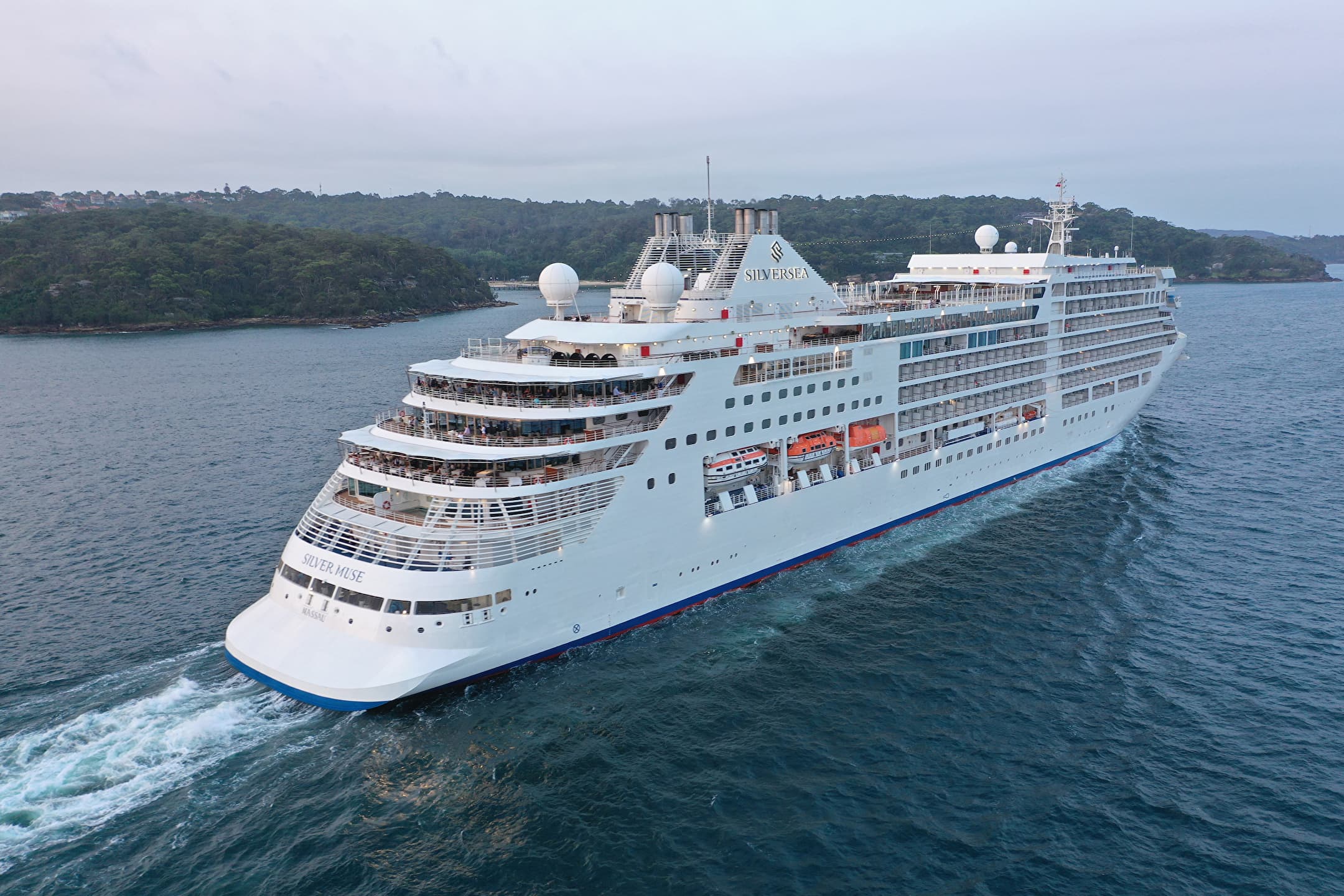
Silver Muse is without question an inspirational work of art. The best place between sea and sky, eight dining venues, spacious outdoor areas and up-to-the-minute technology makes her simply divine. Silversea Cruises is happy to present our new flagship, Silver Muse. Delivered in spring of 2017, the new ultra-luxury ship was built by Fincantieri and at 40,700 grt accommodates 596 guests.
Ask our cruise specialists about cruise line loyalty benefits, status match options, drinks packages, gratuities and any current offers available on this sailing.
On board
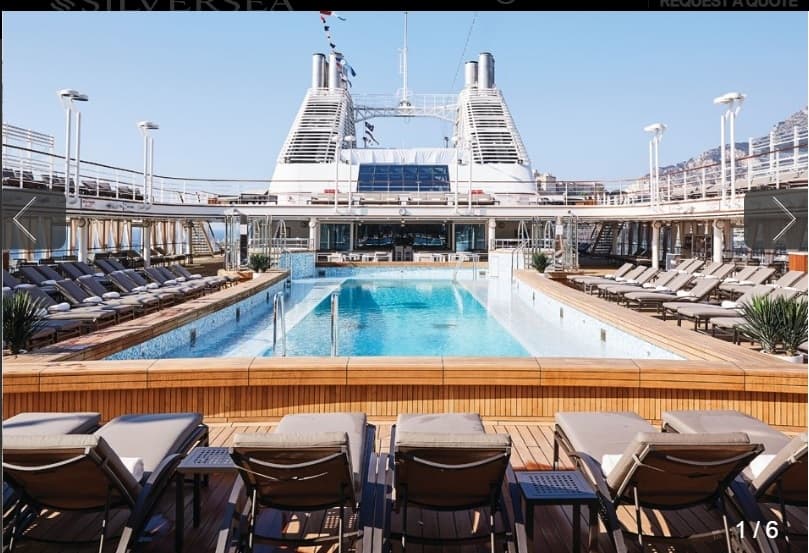
Pool Deck & Jacuzzi Area
Itinerary
Cruise from Singapore to Tokyo (Yokohama), Japan
Day 1Cruise departs from SingaporeFeb 11, 2028 • Departs at: 7 pm
Advanced, airy and elevated, Singapore is a spectacular, futuristic vision of utopian city life. A healthy population of almost six million call it home, but this is a city designed with space to breathe, and gorgeous outdoor parks, massive indoor greenhouses and beautiful recreational spaces spread between the City of Gardens' skyscrapers and soaring structures. Once a quiet fishing village, now a glistening island city-state and an international beacon of science, education and technology. View less Singapore is almost intimidatingly clean - and the hyper-efficient public transport system whips residents and visitors across the city's neighbourhoods in a heartbeat. Glorious fountains and audacious skyscrapers loom up - nodding to traditional feng shui beliefs - and putting on dazzling illuminated displays after dark. The lush green botanical gardens are a spectacular UNESCO World Heritage Site, covering 52 hectares and decorated with impressive colourful orchids. Or breathe in more…
Day 2At SeaFeb 12, 2028
Day 3Phuket, ThailandFeb 13, 2028 • Arrives at: 8 am
Thailand's only island province is connected to the mainland by the Thep Krasettree Causeway. Known as the "Pearl of Thailand," Phuket offers pristine beaches, lush vegetation, traditional villages and seascapes of huge limestone pillars that rise above the turquoise waters of Phang Nga Bay. With a land area of 215 square miles, Phuket Island is Thailand's largest island and about the same size as Singapore. Arab and Indian navigators have called here since the end of the 9th century, while the first Europeans arrived in the 16th century.
Day 4Phuket, ThailandFeb 14, 2028 • Departs at: 6 pm
Thailand's only island province is connected to the mainland by the Thep Krasettree Causeway. Known as the "Pearl of Thailand," Phuket offers pristine beaches, lush vegetation, traditional villages and seascapes of huge limestone pillars that rise above the turquoise waters of Phang Nga Bay. With a land area of 215 square miles, Phuket Island is Thailand's largest island and about the same size as Singapore. Arab and Indian navigators have called here since the end of the 9th century, while the first Europeans arrived in the 16th century.
Day 5LangkawiFeb 15, 2028 • Arrives at: 8 am • Departs at: 7 pm
Langkawi is the main island in a group of 104 islands that comprise the Langkawi archipelago, which is located where the Straits of Melaka meet the waters of the Andaman Sea. Once a sanctuary for pirates, Langkawi Island was a well-kept secret until it was made a duty-free port in 1987. Since then, the construction of modern amenities has created an idyllic Malaysian getaway. Its natural beauty and intriguing past make Langkawi a treasure trove for visitors to discover. The name is coined from the Malay words Lang, a brown eagle, and Kawi, a local manganese stone.
Day 6Penang, George TownFeb 16, 2028 • Arrives at: 8 am • Departs at: 7 pm
An incredible, disorientating collage of cultures and heritage, Georgetown is a fascinating layered city of countless influences. Taking its name from King George III, Malaysia’s cultural capital, Georgetown, has long been a trading hub and outward-looking city. Grand colonial architecture mixes with Chinese, Indian and British influences, forming an artsy, exotic melting pot of food, colour and extraordinary heritage. Quirky coffee shops hum, while the fragrances of incense and sounds of gong strikes reverberate from temples. View less Rickshaws trundle through its streets, as modern street art adds interest to every spare wall. Shophouses, passed down through generations, add more colour to the rich mosaic of life on show here. Bright pagodas, layered with deities rise up, while multi-coloured paintwork shimmers in the sunshine of this UNESCO World Heritage Site city’s historic streets. The fragrant spices of Little India offer a slice of Delhi - although if you’re feeling hungry, C…
Day 7Port Klang (Kuala Lumpur)Feb 17, 2028 • Arrives at: 8 am • Departs at: 11 pm
Towered over by the world's most famous architectural siblings - the Petronas Twin Towers - Kuala Lumpur is a staggering melting pot of influences. These twin towers stand 451 metres over the city and bathe in bright lights as night's cloak descends. The glittering skyline mingles with colonial architecture and ornate temples, which decorate lush hillsides around the city. Haggle your way through humming markets, visit cultural treasures and historic sites, and dive headfirst into this city, where tradition collides head-on with modernity. View less The capital of Malaysia, Kuala Lumpur, is a multicultural metropolis of lively markets and tongue-tantalising street food. Globe-trot between different streets and influences in minutes, as you discover diverse architectural treasures all over the city. Evenings are spent shopping in air-conditioned malls and bustling streets filled with sprawling outdoor markets. Fill up on fragrant coconut rice of nasi lemak and sink ice-cold beers to so…
Day 8MalaccaFeb 18, 2028 • Arrives at: 8 am • Departs at: 6 pm
Malacca City (also spelled Melaka) is the capital of the coastal state of Malacca, in southwestern Malaysia. At its center, Jonker Street, Chinatown’s main thoroughfare, is known for antique shops and its night market. Nearby, the 17th-century Chinese Cheng Hoon Teng temple has ornate decorations and multiple prayer halls. A green, 3-tiered roof tops the 18th-century, Javanese-influenced Kampung Kling Mosque. ― Google
Day 9At SeaFeb 19, 2028
Day 10At SeaFeb 20, 2028
Day 11Koh SamuiFeb 21, 2028 • Arrives at: 8 am • Departs at: 6 pm
Day 12Bangkok (Laem Chabang)Feb 22, 2028 • Arrives at: 1 pm
Bangkok, also known as the City of Angels and Venice of the East thrills with energy. There's such a vast array of sightseeing, shopping, and eating possibilities that you'll have little time to rest. When you do find a moment, pamper yourself with spa treatments, skyline-view bars, luxurious hotels, and excellent restaurants. The city is a mesmerizing blend of old and new, East and West, and dizzying contradictions. Temples and red-light districts, languid canals and permanent gridlock, streetside vendors and chic upscale eateries, all make their home together, all at the same time. Bangkok rarely fails to make an impression, and yes, you might need to go spend a few days on the beach to recover from it all. Although Bangkok is not known for jaw-dropping tourist attractions, it does have an endless supply of worthwhile pilgrimages. The Grand Palace, Wat Phra Kaew, and the Emerald Buddha are tops on every visitor's itinerary, and lesser-known temples, such as Wat Benjamabophit, the go…
Day 13Bangkok (Laem Chabang)Feb 23, 2028
Bangkok, also known as the City of Angels and Venice of the East thrills with energy. There's such a vast array of sightseeing, shopping, and eating possibilities that you'll have little time to rest. When you do find a moment, pamper yourself with spa treatments, skyline-view bars, luxurious hotels, and excellent restaurants. The city is a mesmerizing blend of old and new, East and West, and dizzying contradictions. Temples and red-light districts, languid canals and permanent gridlock, streetside vendors and chic upscale eateries, all make their home together, all at the same time. Bangkok rarely fails to make an impression, and yes, you might need to go spend a few days on the beach to recover from it all. Although Bangkok is not known for jaw-dropping tourist attractions, it does have an endless supply of worthwhile pilgrimages. The Grand Palace, Wat Phra Kaew, and the Emerald Buddha are tops on every visitor's itinerary, and lesser-known temples, such as Wat Benjamabophit, the go…
Day 13Bangkok (Laem Chabang)Feb 23, 2028 • Departs at: 6 pm
Bangkok, also known as the City of Angels and Venice of the East thrills with energy. There's such a vast array of sightseeing, shopping, and eating possibilities that you'll have little time to rest. When you do find a moment, pamper yourself with spa treatments, skyline-view bars, luxurious hotels, and excellent restaurants. The city is a mesmerizing blend of old and new, East and West, and dizzying contradictions. Temples and red-light districts, languid canals and permanent gridlock, streetside vendors and chic upscale eateries, all make their home together, all at the same time. Bangkok rarely fails to make an impression, and yes, you might need to go spend a few days on the beach to recover from it all. Although Bangkok is not known for jaw-dropping tourist attractions, it does have an endless supply of worthwhile pilgrimages. The Grand Palace, Wat Phra Kaew, and the Emerald Buddha are tops on every visitor's itinerary, and lesser-known temples, such as Wat Benjamabophit, the go…
Day 14At SeaFeb 24, 2028
Day 15Ho Chi Minh City, VietnamFeb 25, 2028 • Arrives at: 1 pm
A chaotic, enchanting swirl of sensory stimulation - Ho Chi Minh City is a place of incense-infused temples, colonial architecture, warm people and delicious street food. Formerly known as Saigon, the city was affectionately-labelled the Pearl of the Orient by the French. Afternoons here drift by lazily on the gentle chaos of the River Saigon, as taxi boats and motor canoes flit up and down, and parks fill out with locals playing jianzi, kicking shuttlecocks back and forth. View less The French colonial imprint is evidenced in the Saigon Notre Dame Basilica, which stands out with its grand double bell towers and red brick hue. Just across the road, you'll also find the celebrated Ho Chi Minh Post office, which was erroneously credited as a Gustav Eifel creation. In reality, the architect was another Frenchman, Alfred Foulhoux. The French also caffeinated this city with coffee culture, and a refreshing iced coffee, from the innumerable coffee shops, will perk you up instantly. Taste th…
Day 16Ho Chi Minh City, VietnamFeb 26, 2028
A chaotic, enchanting swirl of sensory stimulation - Ho Chi Minh City is a place of incense-infused temples, colonial architecture, warm people and delicious street food. Formerly known as Saigon, the city was affectionately-labelled the Pearl of the Orient by the French. Afternoons here drift by lazily on the gentle chaos of the River Saigon, as taxi boats and motor canoes flit up and down, and parks fill out with locals playing jianzi, kicking shuttlecocks back and forth. View less The French colonial imprint is evidenced in the Saigon Notre Dame Basilica, which stands out with its grand double bell towers and red brick hue. Just across the road, you'll also find the celebrated Ho Chi Minh Post office, which was erroneously credited as a Gustav Eifel creation. In reality, the architect was another Frenchman, Alfred Foulhoux. The French also caffeinated this city with coffee culture, and a refreshing iced coffee, from the innumerable coffee shops, will perk you up instantly. Taste th…
Day 17Ho Chi Minh City, VietnamFeb 27, 2028 • Departs at: 2 pm
A chaotic, enchanting swirl of sensory stimulation - Ho Chi Minh City is a place of incense-infused temples, colonial architecture, warm people and delicious street food. Formerly known as Saigon, the city was affectionately-labelled the Pearl of the Orient by the French. Afternoons here drift by lazily on the gentle chaos of the River Saigon, as taxi boats and motor canoes flit up and down, and parks fill out with locals playing jianzi, kicking shuttlecocks back and forth. View less The French colonial imprint is evidenced in the Saigon Notre Dame Basilica, which stands out with its grand double bell towers and red brick hue. Just across the road, you'll also find the celebrated Ho Chi Minh Post office, which was erroneously credited as a Gustav Eifel creation. In reality, the architect was another Frenchman, Alfred Foulhoux. The French also caffeinated this city with coffee culture, and a refreshing iced coffee, from the innumerable coffee shops, will perk you up instantly. Taste th…
Day 18Nha Trang, VietnamFeb 28, 2028 • Arrives at: 9 am • Departs at: 11 pm
The two-tiered city of Nha Trang offers both a sleepy seaside community and a bustling city center with buildings dating from the French colonial time to post-1975 Vietnam. The palm-lined seafront is dotted with cafés and food stalls and a scenic landscape is dotted with the characteristic Cham Towers. Nha Trang and its beaches have every potential of one day being developed into a major seaside tourist destination, but for now you can still enjoy a relaxed resort town with a lively market, wide streets and uncrowded beaches.
Day 19At SeaFeb 29, 2028
Day 20Chan MayMar 1, 2028 • Arrives at: 7 am • Departs at: 6 pm
Experience the rich imperial past, stoic resilience, and blissful beaches of central Vietnam, as you delve deep into this fascinating country’s past and present. The sheer beauty and vitality of the scenery will amaze you, as you explore the stories this now tranquil land has to tell - all the while surrounded by rolling rice paddies, freely grazing water buffalo and soaring limestone scenery. Cut in half by the evocatively named Perfume River, and home to a spectacular sprawling citadel, Hue is a true experience for the senses. Vietnam's timeless beauty outshines the shadows of its past, but Hue still bears the heavy scars of war - whether it's from American bombs, or harrowing events like those of Hue Jungle Crevice - where the Viet Cong pushed 3,000 civilians to their deaths. Hue’s Old City was once the jewel of Vietnam, standing proudly as its Imperial Capital. Lotus flowers now twirl peacefully in the grand moat around its mighty walls, which encase a spectacular array of charred…
Day 21At SeaMar 2, 2028
Day 22Ha Long Bay, VietnamMar 3, 2028 • Arrives at: 8 am • Departs at: 7 pm
The extraordinary, mossy limestone mountains that rear from the waters of Ha Long Bay form one of the most spectacular natural landscapes on the planet. At least 1,600 green islands rise over a flotilla of strung-together fishing boats and floating villages. Spectacular at any time, sunset bathes the remarkable limestone formations in warm, honey-coloured light, adding an extra layer to the seascape's heart-stirring beauty. Emerald green sea washes around this immense network of islands and limestone outcrops, which you can explore at leisure on junk boats and by sea kayak. View less Local legend says the islands were formed when a dragon descended, spitting fire and emerald and jade jewels across the water to deter invaders. The sheer scale points to the supernatural – but scientists stubbornly maintain that this collection of towering sculptures was the result of various forms of erosion and a flood of seawater following the ice age. The water continues to chip away at the islands,…
Day 23At SeaMar 4, 2028
Day 24Hong Kong, ChinaMar 5, 2028 • Arrives at: 7 am
A spectacular, serrated skyline of soaring towers and neon lights, Hong Kong is a vibrant, immersive metropolis and cultural hub. Dramatic harbour-front light shows transform the waterfront’s gleaming buildings into a colourful canvas – best seen from the Star Ferry, when the Symphony of Lights blares into life each evening. A city where future and tradition collides - perhaps best illustrated by the skyscrapers that feature gaping holes, designed to allow spirit dragons to soar from the hills to the waterfront unimpeded. View less Wander flowing shopping streets, wade through sprawling markets and soak up the neon glory of this one-of-a-kind city - which continues to reach for the sky. Hong Kong's dense jumble of activity is one of its main appeals, but once you've felt the thrill of rising to towering observation decks, to see the soaring city from above, it's surprisingly easy to find peace among Hong Kong's intense urban wonders. Victoria Peak is the highest point and it offers st…
Day 24Hong Kong, ChinaMar 5, 2028 • Departs at: 5 pm
A spectacular, serrated skyline of soaring towers and neon lights, Hong Kong is a vibrant, immersive metropolis and cultural hub. Dramatic harbour-front light shows transform the waterfront’s gleaming buildings into a colourful canvas – best seen from the Star Ferry, when the Symphony of Lights blares into life each evening. A city where future and tradition collides - perhaps best illustrated by the skyscrapers that feature gaping holes, designed to allow spirit dragons to soar from the hills to the waterfront unimpeded. View less Wander flowing shopping streets, wade through sprawling markets and soak up the neon glory of this one-of-a-kind city - which continues to reach for the sky. Hong Kong's dense jumble of activity is one of its main appeals, but once you've felt the thrill of rising to towering observation decks, to see the soaring city from above, it's surprisingly easy to find peace among Hong Kong's intense urban wonders. Victoria Peak is the highest point and it offers st…
Day 25At SeaMar 6, 2028
Day 26KaohsiungMar 7, 2028 • Arrives at: 8 am • Departs at: 4 pm
Adorned with huge public artworks and thrumming night markets, Kaohsiung is the perfect introduction to energetic Taiwan. The busy harbour of the country's third-biggest city fuelled rapid growth here, and while it's vast in scale, Kaohsiung has wide and airy boulevards - interspersed with parks where fountains fire water high into the sky. Filled with cultural splendour – you can visit soaring temples lit by softly glowing lanterns, and taste exotic street foods as you fall for this city, which is dissected by the Love River. View less The vividly coloured Dragon and Tiger Pagodas soar into the sky above the blooming flowers of Lotus Lake, promising visitors good luck – on the proviso that they enter through the dragon's mouth and leave via the tiger. The good fortune kicks in instantly, as you emerge to see the zigzagging path that leads to the Pei Chi Pavilion. Rows of long fishing rods lean out over the walls of Cijin Island, while the fruits of the ocean are served up amid a sens…
Day 27Keelung, TaiwanMar 8, 2028 • Arrives at: 9 am • Departs at: 7 pm
Located on the north coast of Taiwan, and embraced by lush green mountains, Keelung City is Taiwan’s second-biggest port and a major gateway to Taipei's glittering lights and spectacular skyscrapers. It can get a little damp here at times - the city is known as the 'Rainy Port' after all - but even the elements fail to dampen the spirits in this Taiwanese hotbed of tradition, modernity and rich culture. View less Keelung is famous for its Mid-Summer Ghost festival – when dragons decorated with flowers and spitting pyrotechnics are paraded through the streets. Flickering lanterns glitter on the water’s waves, creating a beautiful, ethereal scene. If you do linger in Keelung, witness the city coming to life as the sun dips - and Keelung Miaokou night market floods with people below a blinding wash of lights. Most will choose to take the ride to the country's capital, Taipei, and visit this mesmerising modern city, which blends influences from around the world. A quirky city of museums a…
Day 28Ishigaki Ryukyu IslandsMar 9, 2028 • Arrives at: 7 am • Departs at: 3 pm
Ishigaki is a city in Okinawa Prefecture, Japan, and includes Ishigaki Island and the disputed Senkaku Islands territory. Ishigaki City is the political, cultural, and economic centre of the Yaeyama Islands. At approximately 85 square miles (221 square kilometres) Ishigaki City covers all of Ishigaki Island. Ishigaki Island is part of the island chain comprising the Yaeyama Archipelago, and surrounded by coral reefs. Its highest point is Omoto, an approximately 1,726-foot-high (about 526-metre-high) mountain located on Ishigaki Island, and the tallest mountain in the Okinawa Prefecture. View less Together with Kabira Bay, Mount Omoto is a nationally-designated Place of Scenic Beauty. The uninhabited Senkaku Islands are located approximately 93 miles (about 150 kilometres) north of Ishigaki Island, and have an area of approximately 2.4 square miles (about 6.3 square kilometres).
Day 29Naha OkinawaMar 10, 2028 • Arrives at: 8 am • Departs at: 5 pm
Day 30At SeaMar 11, 2028
Day 31Shanghai, ChinaMar 12, 2028 • Arrives at: 10 am
Strategically located where the Yangtze River, Grand Canal and Pacific Ocean meet, Shanghai has served as a major commercial port since the Song Dynasty (10th century). From here, the region's substantial cotton crop was shipped to Beijing and more remote regions in China and Japan. By the Qing Dynasty, vast mercantile guilds, organized by trade, had established economic and a considerable amount of political control of the city. In the 1840s Shanghai was described by a representative of the British East India Company as “the principal emporium of Eastern Asia.” Not surprisingly, after the Opium Wars the British moved in under the Treaty of Nanking, followed by the French, and set up the first foreign concessions in the city.
Day 32Shanghai, ChinaMar 13, 2028
Strategically located where the Yangtze River, Grand Canal and Pacific Ocean meet, Shanghai has served as a major commercial port since the Song Dynasty (10th century). From here, the region's substantial cotton crop was shipped to Beijing and more remote regions in China and Japan. By the Qing Dynasty, vast mercantile guilds, organized by trade, had established economic and a considerable amount of political control of the city. In the 1840s Shanghai was described by a representative of the British East India Company as “the principal emporium of Eastern Asia.” Not surprisingly, after the Opium Wars the British moved in under the Treaty of Nanking, followed by the French, and set up the first foreign concessions in the city.
Day 33Shanghai, ChinaMar 14, 2028 • Departs at: 4 pm
Strategically located where the Yangtze River, Grand Canal and Pacific Ocean meet, Shanghai has served as a major commercial port since the Song Dynasty (10th century). From here, the region's substantial cotton crop was shipped to Beijing and more remote regions in China and Japan. By the Qing Dynasty, vast mercantile guilds, organized by trade, had established economic and a considerable amount of political control of the city. In the 1840s Shanghai was described by a representative of the British East India Company as “the principal emporium of Eastern Asia.” Not surprisingly, after the Opium Wars the British moved in under the Treaty of Nanking, followed by the French, and set up the first foreign concessions in the city.
Day 34At SeaMar 15, 2028
Day 35At SeaMar 16, 2028
Day 36Tianjin (Beijing)Mar 17, 2028 • Arrives at: 7 am
Set on the north-east coast of the Bohai Sea, Tianjin’s port opens up the city and serves as a gateway to Beijing - which lies approximately three-hours drive inland. Tianjin is a vast and impressive city in its own right, with oodles of character and charm – especially since it received a comprehensive facelift for China’s Olympic Games in 2008. There is deep international history here, as the area was conceded to foreign powers during the Opium Wars. View less As a result, it’s peppered with historical buildings, temples and palaces, and you'll encounter a dizzying swirl of cultures. There is a distinctive European flavour in places - notably the architecture of the Five Avenues, which features a blend of historical buildings from Europe's past empires. The skyscrapers of modern China’s booming economy have also sprung up, along with ambitious structures like the flowing curves of the library. Unique creations like the Tianjin Eye span the river – a fusion between a ferris wheel and…
Day 37Tianjin (Beijing)Mar 18, 2028 • Departs at: 7 pm
Set on the north-east coast of the Bohai Sea, Tianjin’s port opens up the city and serves as a gateway to Beijing - which lies approximately three-hours drive inland. Tianjin is a vast and impressive city in its own right, with oodles of character and charm – especially since it received a comprehensive facelift for China’s Olympic Games in 2008. There is deep international history here, as the area was conceded to foreign powers during the Opium Wars. View less As a result, it’s peppered with historical buildings, temples and palaces, and you'll encounter a dizzying swirl of cultures. There is a distinctive European flavour in places - notably the architecture of the Five Avenues, which features a blend of historical buildings from Europe's past empires. The skyscrapers of modern China’s booming economy have also sprung up, along with ambitious structures like the flowing curves of the library. Unique creations like the Tianjin Eye span the river – a fusion between a ferris wheel and…
Day 38At SeaMar 19, 2028
Day 39Incheon (Seoul)Mar 20, 2028 • Arrives at: 7 am
The bright lights of neighbouring big city Seoul might burn brightly but Incheon, just 27 kilometres away, has nothing to be ashamed of. The coastal city was the first to open its borders to the world in 1883, and as such has always enjoyed a special relationship with the west. So much so that it was granted “English Status” in 2007, with many residents priding themselves on their command of the language. View less The city’s love of English has made it a business powerhouse so expect soaring skyscrapers and smart technology as part of the landscape. Incheon was also the first to welcome the Chinese and today the city’s Chinatown is one of the most vibrant and welcoming there is. A frenetic and exciting hybrid of Chinese and Korean heritage, it is said that Jjajangmyeon (black soy bean noodles), South Korea’s de facto national dish originates from here. Try a steaming bowl from one of the many vendors, then walk it off with the short 15-minute stroll from Chinatown to the traditional…
Day 39Incheon (Seoul)Mar 20, 2028 • Departs at: 7 pm
The bright lights of neighbouring big city Seoul might burn brightly but Incheon, just 27 kilometres away, has nothing to be ashamed of. The coastal city was the first to open its borders to the world in 1883, and as such has always enjoyed a special relationship with the west. So much so that it was granted “English Status” in 2007, with many residents priding themselves on their command of the language. View less The city’s love of English has made it a business powerhouse so expect soaring skyscrapers and smart technology as part of the landscape. Incheon was also the first to welcome the Chinese and today the city’s Chinatown is one of the most vibrant and welcoming there is. A frenetic and exciting hybrid of Chinese and Korean heritage, it is said that Jjajangmyeon (black soy bean noodles), South Korea’s de facto national dish originates from here. Try a steaming bowl from one of the many vendors, then walk it off with the short 15-minute stroll from Chinatown to the traditional…
Day 40At SeaMar 21, 2028
Day 41SaseboMar 22, 2028 • Arrives at: 8 am • Departs at: 6 pm
Sitting at the southern east point of Japan, Sasebo went from being a small fishing port in Japan’s early years to a tactical naval base location during Japan’s Meiji period, The town’s proximity to China and Korea allowed it to play a central role in both Sino-Japanese Wars as well as during the Russo-Japanese War. Today, Sasebo thrives in tourism thanks to its beautiful coast line, parks...
Day 42KagoshimaMar 23, 2028 • Arrives at: 8 am • Departs at: 7 pm
One of Japan's most southerly major cities, Kagoshima is dominated by the imposing Sakurajima volcano's cone – a legendary active volcano that broods, churns and puffs out ash nearby. A pretty old-time ferry chugs across the still waters to the gently sloping foothills of the volcano's cone, and it's easy to imagine where the comparisons with its sister city Naples materialised, as you sail the glorious sweeping Kinko Bay, below beaming sunshine, towards the immense volcanic spectacle. View less This is certainly no historic relic, and the volcano remains revered and feared, with the most dramatic recent eruption taking place in 1914, and spewing out a new bridge of land into the sea. Make the most of the geothermal activity in the area by indulging in a stress-simmering black sand bath. Incredibly relaxing, you'll be submerged in the warm sand, as you feel your muscles relaxing in the heat, and rejuvenating blood pumping around your body. Enjoy a privileged view of the iconic volcano…
Day 43At SeaMar 24, 2028
Day 44Hiroshima, JapanMar 25, 2028 • Arrives at: 8 am • Departs at: 7 pm
History buffs will want to write home Hiroshima. Despite being devastated in 1945, this Japanese city is known to all for its commitment peace – its ruin on the 6th August 1945 led to the end of the war and today, the Peace Memorial (a UNESCO World Heritage Site) , is a constant reminder of the destruction that war brings. A walk in the leafy boulevards of Peace Memorial Park brings quiet contemplation. View less The Flames of Peace – set in the park’s central feature pond – burn brightly and will continue to do so until all the nuclear bombs I the world have been destroyed. There are many other inspiring messages of hope around the city too; the Children’s’ Peace Monument just north of the park is a homage to little Sadako Sasaki, who was just two in 1945. When she developed leukemia in 1956, she believed that if she folded 1,000 paper cranes – a symbol of longevity and happiness in Japan – she would recover. Sadly she died before she finished her task but her classmates finished the…
Day 45BeppuMar 26, 2028 • Arrives at: 9:30 am • Departs at: 7 pm
The lantern-lit hot springs of Beppu, known for its eight scorching “Hells”, is a town that’s prettier than a picture. The town is found in a particularly volcanically active part of Japan (hence the abundance of hot springs, or in Japanese, onsens). The viewing pools have evocative names; think Sea Hell, Blood Pond Hell and Tornado Hell. While the names might seem a little off putting, the reality is stunning; sulphur laced air and vast spectrums of blues and reds, depending on the mineralisation of the earth. As if the gorgeous palette of colours at the onsen was not enough, Beppu is also world famous for its Sakura, or cherry blossom season. More than 2,000 cherry trees near the base of the ropeway to Mount Tsurumi make for one of Beppu’s most impressive hanami (flower viewing) spots. If not lucky enough to be in the area during Sakura, from May to June rhododendrons colour the mountain. The view from this 1,375m mountain is beyond impressive, allowing you to see all the way to the…
Day 46At SeaMar 27, 2028
Day 47Kobe, JapanMar 28, 2028 • Arrives at: 8 am
The Japanese city of Kobe needs no introduction. The name is synonymous with its home grown superstar. We are not talking of its stunning shrines, cherry trees laden with blossom during sakura or effervescent city, buzzing with life 24/7. We are of course talking of a much more grass roots hero – its eponymous beef. The delicacy might have put the city on the map, but there is far more to Kobe than its meat. Naturally, Kobe wears its cuisine as a badge of honour. View less Its port history has given it a gastronomy that is quite different from its neighbours. Seafood and sushi is naturally some of the freshest and most diverse you can find, but Kobe’s multi-cultural nature (the city is home to 98 different nationalities) means that it has one of the most diverse gastronomic cultures in Japan. Bread and bakeries are also an (unexpected) delicacy. Additionally, Sake is taken very seriously – Kobe even has its own museum dedicated to the national spirit. Historically, Kobe has always bee…
Day 48Kobe, JapanMar 29, 2028 • Departs at: 5 pm
The Japanese city of Kobe needs no introduction. The name is synonymous with its home grown superstar. We are not talking of its stunning shrines, cherry trees laden with blossom during sakura or effervescent city, buzzing with life 24/7. We are of course talking of a much more grass roots hero – its eponymous beef. The delicacy might have put the city on the map, but there is far more to Kobe than its meat. Naturally, Kobe wears its cuisine as a badge of honour. View less Its port history has given it a gastronomy that is quite different from its neighbours. Seafood and sushi is naturally some of the freshest and most diverse you can find, but Kobe’s multi-cultural nature (the city is home to 98 different nationalities) means that it has one of the most diverse gastronomic cultures in Japan. Bread and bakeries are also an (unexpected) delicacy. Additionally, Sake is taken very seriously – Kobe even has its own museum dedicated to the national spirit. Historically, Kobe has always bee…
Day 49KomatsushimaMar 30, 2028 • Arrives at: 8 am • Departs at: 5 pm
Day 50NagoyaMar 31, 2028 • Arrives at: 9 am • Departs at: 7 pm
Home to Toyota, Lexus and Mitsubishi among many other, Nagoya is one of Japan’s industrial powerhouses. A veritable economic tour de force, the city is the fourth largest in the country, and boasts multiple excellent museums, significant temples and, unsurprisingly, excellent shopping. Located on the Pacific coast, the city is often overlooked as a travel destination. View less Sandwiched between the neon lights of Tokyo 350 km to the east and the history laden walls of Kyoto just 120 km to the west, Nagoya has been dubbed – by the country’s Prime Minister no less – as “the most boring city in Japan.” However, that view might be subjective. Beginning with Nagoya’s cuisine, the city offers much in the way of tasty treats. Many traditional dishes that originate here, such as the popular rice dish Hitsumabushi and the chicken based Tebasaki. The city’s many shrines and castles are not only among the oldest in Japan but are also some of the country’s National Treasures. The aforementioned…
Day 51ShimizuApr 1, 2028 • Arrives at: 8 am • Departs at: 6 pm
Feel your heart thumping, at your first sight of Japan’s most heavenly vision - Mount Fuji’s cone emerging through the haze. With its summit dipped in pure white snow, the iconic volcano’s cone is one of the most famous natural landmarks in the world - and a picturesque backdrop for Shimizu. View less Come ashore to this serene vision of beauty – and whether you head straight for the siren-call of the volcano’s slopes, or the sanctuary of gorgeous, heritage-rich shrines, and tranquil tea plantations - spine-tingling views of Japan’s most tallest mountain are never far away. A perfectly symmetrical spectacle, visible for miles around, Mount Fuji is an adored national symbol of Japan. Travel closer to its slopes to soak in some of the country’s finest panoramas. Or take in the views with a dash of local culture, at the Fujisan Hongu Sengen Shrine – an elegant shrine, that stands in thrall to the salt and pepper volcano close by. The Shiraito Waterfall World Heritage Site flows just bene…
Day 52Tokyo, JapanApr 2, 2028 • Arrives at: 8 am
Dense and delightful, there’s nowhere else like Japan’s kinetic capital - a city where ancient traditions blend seamlessly with a relentless pursuit for the future’s sharpest edge. See the city from above, as elevators rocket you up to towering viewing platforms, from which you can survey a vast urban ocean, interspersed with sky-scraping needles. Look out as far as the distant loom of Mount Fuji’s cone on clear days. View less Futuristic – second-accurate - transport seamlessly links Tokyo’s 14 districts, while the glow of flashing advertisement boards, clanks of arcade machines, and waves of humanity flowing along its streets, adds to the sense of mesmerising, dizzying and glorious sensory overload. One of Tokyo’s most iconic sights, don’t miss the flood of people scrambling to cross Shibuya’s famous intersection. Join the choreographed dance, as crowds of briefcase-carrying commuters are given the green light to cross at the same time – bathed in the light of massive neon advertise…
Cabin options
Compare the cabin types and onboard features shown for this sailing. Final price and availability are confirmed by our team when you inquire.
13 cabin grades listed for this sailing.
Next step
Cabin grades and prices
View every cabin grade and current availability on the next step.