14-Day Hidden Gems Of Sweden, Norway & France
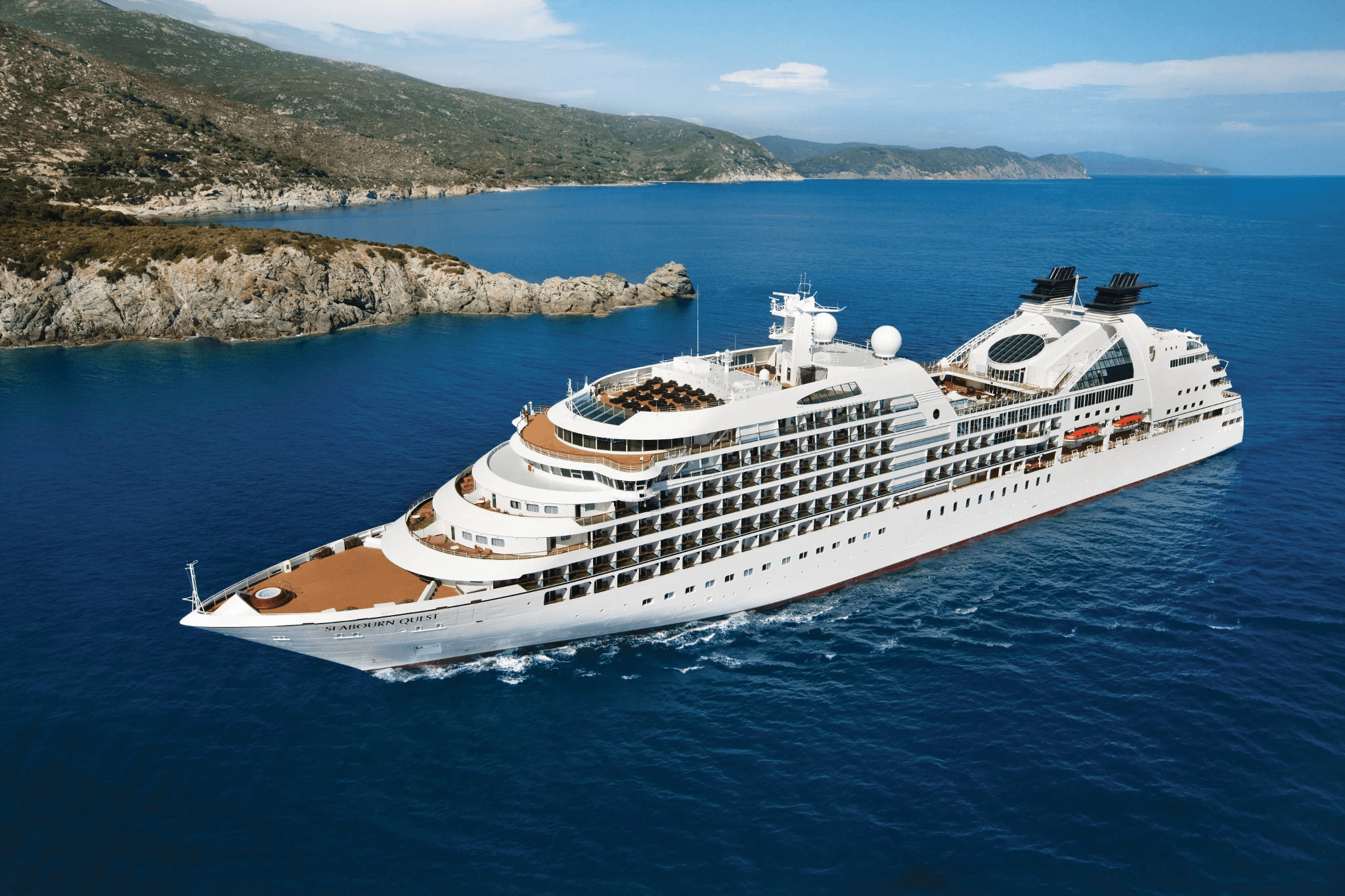
Seabourn · Seabourn Quest
Depart
Jun 1, 2028
Return
Jun 15, 2028
Port
Copenhagen, Denmark
Nights
14 nights
At a glance
- Built
- 2011
- Tonnage
- 32000
- Cabins
- 225
- Crew
- 330
Seabourn Quest is the third iteration of the vessel design that has been called “a game-changer for the luxury segment. ” True to her Seabourn bloodlines, wherever she sails around the world, Seabourn Quest carries with her a bevy of award-winning dining venues that are comparable to the finest restaurants to be found anywhere.
Ask our cruise specialists about cruise line loyalty benefits, status match options, drinks packages, gratuities and any current offers available on this sailing.
On board

Club

Patio Bar
Itinerary
Cruise from Copenhagen, Denmark to Dover, UK
Day 1Cruise departs from Copenhagen, DenmarkJun 1, 2028
Denmark's capital is arguably one of the world's best-loved cities, and certainly the liveliest of all the Scandinavian capitals. It is a gracious and comfortable place, with a decidedly friendly, hospitable and fun-loving atmosphere. If there is such a thing as a cozy city, Copenhagen is it. From the lingering memory of the tales of Hans Christian Andersen to the colored lights of Tivoli Gardens, there is a delightful ambience that surrounds the visitor everywhere. Tidy, narrow streets are lined with tempting restaurants and cafes, and the pedestrian-only Stroget abounds with stylish shops. The spirited Copenhageners are imaginative and unconventional and exude a "do-what-you-want" philosophy that embraces and respects almost all aspects of life. Every friendly Dane you meet further illustrates the city's motto "Wonderful, wonderful, Copenhagen."
Day 2Copenhagen, DenmarkJun 2, 2028 • Departs at: 6 am
Denmark's capital is arguably one of the world's best-loved cities, and certainly the liveliest of all the Scandinavian capitals. It is a gracious and comfortable place, with a decidedly friendly, hospitable and fun-loving atmosphere. If there is such a thing as a cozy city, Copenhagen is it. From the lingering memory of the tales of Hans Christian Andersen to the colored lights of Tivoli Gardens, there is a delightful ambience that surrounds the visitor everywhere. Tidy, narrow streets are lined with tempting restaurants and cafes, and the pedestrian-only Stroget abounds with stylish shops. The spirited Copenhageners are imaginative and unconventional and exude a "do-what-you-want" philosophy that embraces and respects almost all aspects of life. Every friendly Dane you meet further illustrates the city's motto "Wonderful, wonderful, Copenhagen."
Day 2Helsingborg, SwedenJun 2, 2028 • Arrives at: 8 am • Departs at: 6 pm
Although Helsingborg appears small and quaint, it actually has a rich history and emerges for the first time in 10th century sagas. Since then it has been the site of many battles between Denmark and Sweden. Incorporated into Sweden in 1658 it was totally destroyed by the Danes in 1710. After the city was rebuilt, Jean-Baptiste Bernadotte, the founder of the Swedish royal dynasty, landed here in 1810. The town's attractions include the surviving center tower (the Keep) of Helsingborg Castle and the Town Hall, which has a small museum featuring exhibits about the city and the region. The Grand Hotel, one of Sweden's oldest hotels, is known for its excellent dining room. A stroll along the pedestrian mall is a delightful way to pass some time. Please be aware that most shops are normally closed on Sunday.
Day 3Lysekil, SwedenJun 3, 2028 • Arrives at: 8 am • Departs at: 6 pm
Historically, Lysekil was mainly known as a bathing location in Sweden in the 19th century, due to its popular bathing house dating from 1847. Once again, Lysekil is a popular summer resort located in Sweden's Bohuslän province and one of the sunniest places on the Scandinavian peninsula. Because of its favorable weather and picturesque archipelago dotted with small islands and protected fjord-like water ways it attracts many yachts and sun worshipers from the North who annually flock to their summer cottages in this area. Along with fishing, which is featured in its coat of arms, tourism has become important to Lysekil's economy.
Day 4Oslo, NorwayJun 4, 2028 • Arrives at: 8 am • Departs at: 5 pm
Norway's capital lies at the head of the majestic Oslofjord, encircled by wooded hills and snowcapped peaks. Dating back to the mid-11th century, it was at one time renamed Christiania while under Danish and Swedish rule. An act of Parliament finally changed the name back to Oslo in 1925. With barely half a million inhabitants, Oslo is the smallest among the Scandinavian capitals. Yet it has much to offer - most notably its spectacular scenic beauty, as well as many of the nation's finest cultural achievements. Arriving by ship, your first sight is the imposing Akershus Fortress towering above the docks. With the city center only a few blocks from the pier, you can easily spot the handsome modern City Hall with its two block towers. Dedicated in 1950 to commemorate Oslo's 900-year anniversary, it is the city's most familiar landmark. Many of Norway's leading artists contributed to the decoration of the interior and as a result Socialist modernism in its purest form can be seen here. M…
Day 5Farsund, NorwayJun 5, 2028 • Arrives at: 8 am • Departs at: 6 pm
Farsund is located on the Lista Peninsula in southern Norway, which is filigreed with fjords and waterways such as the Lygdalsfjorden. It is a popular attraction for vacationers for its beaches and prolific birdlife, as well as hiking trails and historic events such as the pirate festival. The Vanse Church is one of Norway’s earliest, dating from 1037. The town was also an important part of the Atlantic Wall in WWII, with bunkers and fortifications such as the Nordberg Fortress, and nearby islands used as prisons for captured Axis soldiers. The Lista Lighthouse is a popular place to watch birds and get views over the beaches.
Day 6Stavanger, NorwayJun 6, 2028 • Arrives at: 8 am • Departs at: 5 pm
A Romanesque cathedral and old medieval lanes blend beautifully with Stavanger's modern city and spectacular countryside. In 872, when Harald Fairhair won the Battle of Hafrsfjord near Stavanger, he united Norway for the first time. Huge harvests of brisling, herring and sardines have made the key of a sardine can the city symbol. Today, the town is the center of Norway's oil industry, and has become one of the country's most cosmopolitan cities.
Day 7At SeaJun 7, 2028
Day 8Hamburg, GermanyJun 8, 2028 • Arrives at: 7 am • Departs at: 10 pm
The residents of Hamburg have retained the independent spirit which earned this autonomous commercial center its 'Free City' designation in the Middle Ages. One of Germany's principal ports, Hamburg is surrounded by enormous dock areas and the gaudy, licentious Reeperbahn (which translates loosely to 'Anchorage of Joy') is fully prepared to offer every form of entertainment to the world's sailors. The vaudeville acts at the Hansa-Theater are bright and clever (and language is no barrier). The Kunsthalle (art museum) boasts an outstanding collection of 16th- and 20th-century masterpieces, and the Renaissance Rathaus (city hall) sits atop some 4,000 piles driven into marshy ground proving that the engineers of Hamburg have been skilled and imaginative for centuries.
Day 9At SeaJun 9, 2028
Day 10Antwerp, BelgiumJun 10, 2028 • Arrives at: 9 am • Departs at: 6 pm
The true Flemish name of Belgium's second city is Antwerpen. In the 16th-century world, Antwerp became the most important commercial center, as well as a center of the new craft of printing. The golden age came to an end with the abdication of Charles V in 1555. The decline of Antwerp had already begun when its most illustrious painters, Rubens, Jordaens and Van Dyck reached the peak of their fame. Antwerp today is Europe's second largest port and has retained much of the zest often associated with a port.
Day 11ZeebruggeJun 11, 2028 • Arrives at: 7 am • Departs at: 5 pm
Zeebrugge is a Belgian port and seaside resort. It's linked to the city of Bruges by the Baudouin Canal. The old fish market in the marina houses Seafront, a theme park focusing on the local seafaring and fishing heritage. Exhibits include a Russian submarine. In nearby Knokke-Heist, the For Freedom Museum evokes the area’s WWII history through dioramas. West along the coast are the De Fonteintjes wetland and dunes.
Day 12Honfleur, FranceJun 12, 2028 • Arrives at: 9 am • Departs at: 6 pm
Colorful Honfleur, located on the Seine estuary, epitomizes Normandy for many people. Birthplace of impressionism and of romanticism, this picturesque port acquired its stature through maritime relations with the Americas: it was from here that Samuel de Champlain and Cavelier de la Salle set sail. Today Honfleur is one of the most popular vacation spots in northern France. During the summer the town is packed with scores of visitors who come to enjoy this living museum of half-timbered houses and cobbled streets. The 17th century harbor is fronted on one side by two-story stone houses with low, sloping roofs and on the other by tall, narrow buildings whose wooden fa\ccades are topped by slate roofs. A rich collection of pre-impressionist and contemporary paintings by Norman artists can be found in the Eugene Boudin Museum. The Maritime Museum features interesting exhibits of model ships and maritime objects which bear witness to seafarers of past centuries. A striking site in the tow…
Day 13St Malo (Le Mont Saint Michel), FranceJun 13, 2028 • Arrives at: 8 am • Departs at: 6 pm
Saint-Malo is a port city in Brittany, in France's northwest. Tall granite walls surround the old town, which was once a stronghold for privateers (pirates approved by the king). The Saint-Malo Cathedral, in the center of the old town, is built in Romanesque and Gothic styles and features stained-glass windows depicting city history. Nearby is La Demeure de Corsaire, an 18th-century privateer’s house and museum.
Day 14St Helier, JerseyJun 14, 2028 • Arrives at: 8 am • Departs at: 6 pm
Jersey is a Crown dependency. It has formal relationships with, but is not part of the European Union nor the United Kingdom. As might be expected, its setting between those two has shaped a great deal of its history. The medieval castle of Mont Orgueil overlooking Gorey Harbour is a mute testament to the shifting political tides that have washed the island, as are the elaborate works created during the German occupation between 1940 and 1945. Wineries such as La Mare take advantage of the pleasant climate, as does the 32-acre Durell Wildlife Park, founded by author and naturalist Gerald Durrell. His foundation now supports the facility, which is dedicated to preserving species at risk of extinction in the wild. Visitors are welcome to see and learn about the over 130 species they maintain, including a famous family of lowland gorillas. During your time on Jersey, you are also likely to spot an example of an indigenous domestic species: Jersey cattle, which are renowned for their high…
Day 15Dover (London), EnglandJun 15, 2028 • Arrives at: 7 am
Crossing the English Channel from continental Europe to Great Britain, the first view of England is the milky-white strip of land called the White Cliffs of Dover. As you get closer, the coastline unfolds before you in all its striking beauty. White chalk cliffs with streaks of black flint rise straight from the sea to a height of 350’ (110 m). Numerous archaeological finds reveal people were present in the area during the Stone Age. Yet the first record of Dover is from Romans, who valued its close proximity to the mainland. A mere 21 miles (33 km) separate Dover from the closest point in France. A Roman-built lighthouse in the area is the tallest Roman structure still standing in Britain. The remains of a Roman villa with the only preserved Roman wall mural outside of Italy are another unique survivor from ancient times which make Dover one of a kind.
Cabin options
Compare the cabin types and onboard features shown for this sailing. Final price and availability are confirmed by our team when you inquire.
14 cabin grades listed for this sailing.
Next step
Cabin grades and prices
View every cabin grade and current availability on the next step.