
21-Day Exploring Malta, Sicily, France, Sardinia & Corsica
Seabourn · Seabourn Ovation
Depart
Sep 23, 2028
Return
Oct 14, 2028
Port
Dubrovnik
Nights
21 nights
At a glance
- Built
- 2017
- Tonnage
- 40350
- Cabins
- 266
- Crew
- 330
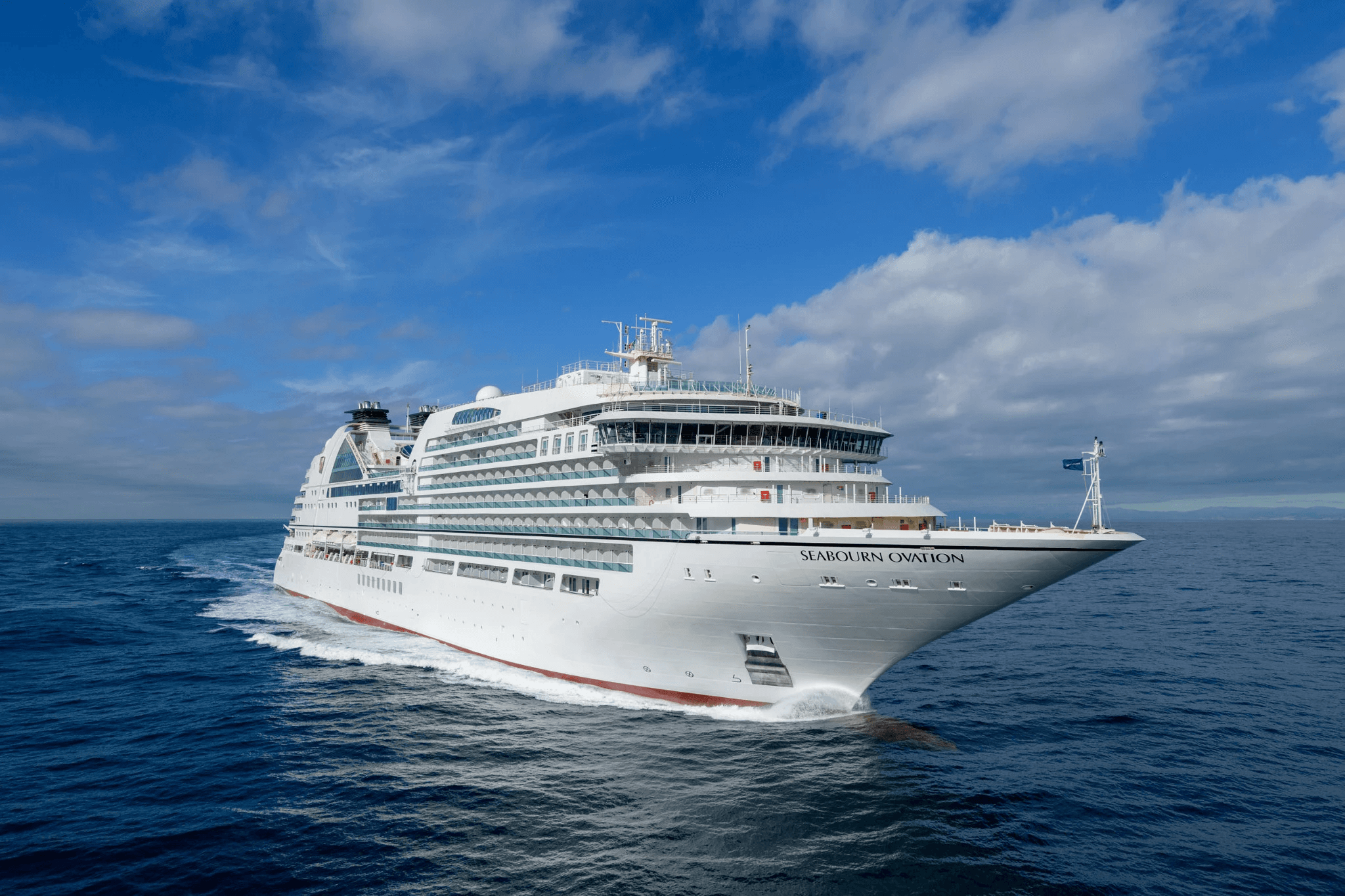
Introducing Seabourn Ovation, the sister-ship to the already prestigious Seabourn Encore. Seabourn Ovation represents another welcome stage in the evolution of small ship cruising, which Seabourn pioneered and has consistently expanded and enriched for all of our small ship cruises. Both ships will deliver a wealth of new concepts, a fresh vision and a host of illuminating ideas to delight the world's most discerning travelers.
Ask our cruise specialists about cruise line loyalty benefits, status match options, drinks packages, gratuities and any current offers available on this sailing.
On board

Grill
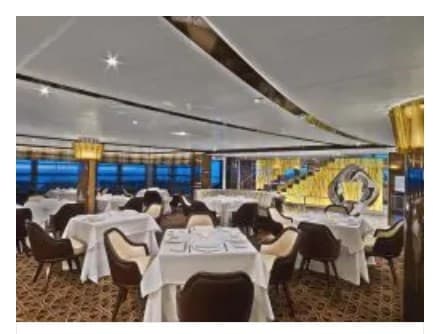
Grill by Thomas keller

Insuite Dining
Itinerary
Cruise from Dubrovnik to Monte Carlo
Day 1Cruise departs from DubrovnikSep 23, 2028 • Departs at: 11 pm
Founded in the 7th century, Dubrovnik rose to greatness as a merchant state, independent republic and cultural crossroads. The traffic-free Old Town has been called a Croatian Athens. This UNESCO designated World Heritage Site is a living museum of the ages with fortifications, chapels, monastic cloisters and Europe's second-oldest synagogue crowded into its ancient walls. Relax at a sidewalk café, listen to the chimes of the 14th-century bell tower or join the promenade down the palace-lined avenue known as the Stradun.
Day 2Kotor, MontenegroSep 24, 2028 • Arrives at: 8 am • Departs at: 6 pm
One of the best preserved medieval towns of the Adriatic, Kotor is protected by UNESCO. Between 1420 and 1797, the area was under the rule of the Republic of Venice and the Venetian influence can be seen in its architecture. The Gulf of Kotor is sometimes called the southernmost fjord in Europe, although it is actually a submerged river canyon. The overhanging limestone cliffs of Orjen and Lovcen complete one of the Mediterranean's most beautiful landscapes.
Day 3At SeaSep 25, 2028
Day 4Valletta, MaltaSep 26, 2028 • Arrives at: 8 am • Departs at: 6 pm
Occupied successively by the Phoenicians, Greeks, Carthaginians, Romans, Arabs, French and British, Malta has been of strategic importance throughout history. A British Crown Colony until 1964, Malta received the George Cross for its valiant resistance to German occupation in WWII. The island's rich heritage is reflected in the architecture of Valletta, the current capital, and Medina, the capital until 1565. In Valletta the Knights of St. John built such masterpieces as St. John's Co-Cathedral and the Palace of the Grand Masters, along with the fortifications that guard the town's magnificent harbors.
Day 5Giardini Naxos (Taormina), ItalySep 27, 2028 • Arrives at: 8 am • Departs at: 6 pm
This harbor on the eastern shore of Sicily near Messina gives us close access to the fabulous Greco-Roman ruins of Taormina, as well as the active volcano Mt. Etna. The temples, streets and large amphitheater of Taormina make it one of Italy’s premier ancient sites. Its location overlooking the sea and with the backdrop of snow-capped Etna complete the package and make it among the most famous attractions in the Mediterranean region. Giardini Naxos itself boasts a lovely beach at Lido Europa, and intrepid visitors can climb Mt. Etna to see a volcano close up
Day 6Palermo, Sicily, ItalySep 28, 2028 • Arrives at: 8 am • Departs at: 6 pm
Palermo is a fascinating combination of East and West, Christian and Moslem, Arab and Norman. Wander through the churches of Martorana and San Cataldo for a taste of the varied cultures and architectural styles, which grace this city. The catacombs of the Capuchin convent shelter thousands of mummified bodies, each dressed in what was no doubt his or her finest clothes for the "final journey." Imposing Monte Pellegrino and glorious Monreale are worthy of a special note in your travel journal. Come explore this unforgettable city, with its many textures of Mediterranean life awaiting your discovery.
Day 7SalernoSep 29, 2028 • Arrives at: 7 am • Departs at: 5 pm
Day 8Civitavecchia (Rome), ItalySep 30, 2028 • Arrives at: 7 am • Departs at: 6 pm
Originally built by Emperor Trajan who had a villa here, Civitavecchia has flourished as a major port for Rome since the 13th century. Today it is an important ferry terminal and for many travelers the gateway to the Eternal City, Rome. The Renaissance fortifications that surround the harbor area were begun by Bramante and completed by Michelangelo in 1535.
Day 9At SeaOct 1, 2028
Day 10Portofino, ItalyOct 2, 2028 • Arrives at: 7 am • Departs at: 6 pm
Portofino is a charming, popular resort village on the Italian Riviera, a favorite with artists and seasoned travelers. Situated on a beautiful bay, the surrounding mountains covered with dense vegetation of olive and cypress trees, form a unique setting of incomparable beauty. The ship will anchor in the bay and tenders will transport you to this tiny resort village, which is closed to vehicle traffic. Everything is concentrated around a small square offering an opportunity to stroll around on foot, shop, or just relax at one of the many open-air cafes.
Day 11Frejus, FranceOct 3, 2028 • Arrives at: 8 am • Departs at: 6 pm
Although today it is cut off from the sea, Fréjus was the second-largest naval port in the Roman empire in the 1st Century B.C. The town’s name descends from Forum Julii, the retirement center for the 8th Legion. The Roman ruins in the area are what draws most visitors today, and the massive pillars of the aqueducts, sections of walls and the crumbling remains of the tree-shaded theater and amphitheater are picturesquely situated and satisfying. In the town center, a central square faces the medieval stone cathedral and its adjacent cloisters, with impressive doors, handsomely carved woodwork and elaborate ceilings. Outside town, the 1889 Palladian Villa Aurelienne sits amid 60 acres of Mediterranean gardens. Fréjus suffered a terrible flood in 1959 when runoff from unprecedented rains swept down the mountains and broached the dam at Malpasset. The ruined site is a reminder of man’s fragility in the face of Nature’s power. On another hilltop, the small, octagonal Chapel of Notre Dame…
Day 12La Joliette (Marseille),FranceOct 4, 2028 • Arrives at: 8 am • Departs at: 6 pm
Marseille is the second largest city in France after Paris. It is also one of the oldest continuously inhabited cities in the Mediterranean. Cave paintings in the nearby Calanques are estimated to be 30,000 years old, and remains of brick habitations date from 6,000 BCE. The more recent history begins with a Hellenic port in about 600 BCE, some remains of which are on view at the city’s History Museum. It has been one of the world’s major seaports almost from its founding, and served as the main European terminus of the French colonial empire in Africa and the Far East. It is located in the Provence-Alpes-Cote d’Azur region and is the capital of the Bouches-du-Rhone department. On an island in the expansive bay of Marseille stands the prison of Chateau d’If made famous by the Alexandre Dumas novel “The Count of Monte Cristo.” The Vieux-Port with its atmospheric buildings and wharves is the area where visitors can search for the perfect example of the local specialty bouillabaisse, a r…
Day 13Sete, FranceOct 5, 2028 • Arrives at: 8 am • Departs at: 6 pm
The port town of Sete hugs the tiny Mont St. Clair, and is caught between the Mediterranean and the Bassin de Thau, a salt lake directly behind it. It is crisscrossed by numerous canals which link the lake to the sea, and connected by 12 bridges. Along the quay, renovated buildings provide a multitude of architectural details from the 18th and 19th centuries. The life of the town is found in its squares: Place Leon Blum, with its fountain and Wednesday morning flower market; Place Aristide, with its old fashioned bandstand; and Place de la Republique, with its huge retaining walls and vaulted loggias. Sete retains its historic purpose as a fishing boat haven for North African trade; the old harbor dates from the time of Louis XIV.
Day 14Port Vendres, FranceOct 6, 2028 • Arrives at: 8 am • Departs at: 6 pm
The gem of the Vermillion Coast, the chosen retreat of kings past, the inspiration of great 20th-century artists, Collioure is nestled in a small, rocky bay, dwarfed by the Alberes Mountains. The village is perfectly integrated into the countryside; the church and the stone chateau are the color of the rocks, the beach and the mountains. The town has kept much of its medieval character, with the bay separated into halves by the 13th-century royal castle of the Kings of Mallorca. Between the castle and the sea is a bustling old town, full of cafes, shops and art galleries. Among the great artists who have congregated here are Matisse, Picasso, Braque, Dufy and Derain.
Day 15Barcelona, SpainOct 7, 2028 • Arrives at: 7 am • Departs at: 5 pm
Barcelona, the capital of Catalonia, is said to have been founded by the Phoenicians, and was once the rival of the powerful states of Venice and Genoa for control of the Mediterranean trade. Today, it is Spain's second largest city and has long rivaled, even surpassed Madrid in industry and commerce. The medieval atmosphere of the Gothic Quarter and the elegant boulevards combine to make the city one of Europe's most beautiful. Barcelona's active cultural life and heritage brought forth such greats as the architect Antonio Gaudi, the painter Joan Miro, and Pablo Picasso, who spent his formative years here. Other famous native Catalan artists include cellist Pau Casals, surrealist Salvador Dali, and opera singers Montserrat Caballe and Josep Carreras. Barcelona accomplished a long-cherished goal with the opportunity to host the Olympics in 1992. This big event prompted a massive building program and created a focal point of the world's attention.
Day 16Sete, FranceOct 8, 2028 • Arrives at: 8 am • Departs at: 6 pm
The port town of Sete hugs the tiny Mont St. Clair, and is caught between the Mediterranean and the Bassin de Thau, a salt lake directly behind it. It is crisscrossed by numerous canals which link the lake to the sea, and connected by 12 bridges. Along the quay, renovated buildings provide a multitude of architectural details from the 18th and 19th centuries. The life of the town is found in its squares: Place Leon Blum, with its fountain and Wednesday morning flower market; Place Aristide, with its old fashioned bandstand; and Place de la Republique, with its huge retaining walls and vaulted loggias. Sete retains its historic purpose as a fishing boat haven for North African trade; the old harbor dates from the time of Louis XIV.
Day 17St Tropez, FranceOct 9, 2028 • Arrives at: 8 am • Departs at: 6 pm
On the southern shore of one of the most beautiful bays of the Riviera, the little port of St. Tropez has become one of the best known resorts in Europe, a crossroads where journalists, photographers, writers, artists and celebrities meet. Guy de Maupassant discovered the town, but it was the painters who made it more widely known - Signac, Matisse, Bonnard, Marquet, Camoin - who all stayed for varying amounts of time. The harbor teems with life. Fishing boats, excursion craft and hundreds of yachts share the harbor. On the waterfront are old pink and yellow houses, which have been converted into cafes, cabarets and restaurants, luxury boutiques, galleries and antique shops. A picturesque and cosmopolitan crowd strolls the streets in season.
Day 18At SeaOct 10, 2028
Day 19Olbia, Sardinia, ItalyOct 11, 2028 • Arrives at: 8 am • Departs at: 6 pm
The rugged Italian island of Sardinia is blessed with a rocky coastline interrupted by soft sand beaches and washed by limpid seas. Olbia is a very ancient town. It was founded by Phoenicians, and later occupied by Greeks and Romans in their turns. The church of San Simplicio dates from the 11th or 12th century, and that dedicated to St. Paul the Apostle is medieval. The town’s Museum of Archaeology can help you visualize the timeline. Everything changed dramatically in the 1960s, when the Prince Karim Aga Khan selected a 20-kilometer stretch of the nearby coastline to develop an exclusive resort complex he called the Costa Smeralda. Today this enchanting shoreline is encrusted with jewel-like resorts and hotels, private villas and beach facilities, yacht marinas and heliports. It is reputedly the most expensive real estate per square meter in Europe. Without doubt it is beautiful, and it is not necessarily that expensive to just look.
Day 20Bastia, Corsica, FranceOct 12, 2028 • Arrives at: 8 am • Departs at: 6 pm
Corsica’s most important port is nestled at the base of the northward-pointing finger of Cap Corse, between a looming mountain and the sea. The oldest part of town is dominated by the honey-colored Genoese citadel, which today holds the museum of history. The busy, 19th Century Place St-Nicolas is bordered in plane trees and pleasant cafes. There are a number of interesting churches, including the twin-steepled St. Jean-Batiste and the church of St.-Croix, which has a gilded ceiling and a curious black oak cross recovered from the sea in 1428. Climb the winding stairway from the waterfront to the Jardin Romieu for wonderful views over the town and the Vieux Port.
Day 21Calvi, Corsica, FranceOct 13, 2028 • Arrives at: 8 am • Departs at: 6 pm
Settled first by the Romans, then ruled by Genoans for nearly half a millennium, Calvi was freed by Corsica's native son Napoleon in 1791. In 1982 it was given special status and now enjoys a uniquely autonomous position within the realm of France. Ringed with alternating precipitous cliffs and fine sand beaches, the island resembles a mountain thrust up out of the water, but its ruggedness is tempered by brilliant sunlight and groves of olive and orange trees. Napoleon once said that he could recognize Corsica with his eyes closed - by its perfume alone. While touring Corsica, be advised that the roads about this mountainous island are quite winding with many curves.
Day 22Cruise returns to Monte CarloOct 14, 2028 • Arrives at: 7 am
The Principality of Monaco is the epitome of Riviera chic. This tiny enclave of 370 acres surrounds a sheltered harbor that draws yachts from around the world to enjoy the beautiful scenery, mild weather and elegant casino. Glamorous Monte Carlo is one of Monaco's four quarters, which also include La Condamine, the business district; Monaco-ville, the capital; and Fontvieille, an area built on reclaimed land. Ruled by Prince Albert II, Monaco has a population of over 32,000, of which about 16 percent are citizens, or Monégasques.
Cabin options
Compare the cabin types and onboard features shown for this sailing. Final price and availability are confirmed by our team when you inquire.
14 cabin grades listed for this sailing.
Next step
Cabin grades and prices
View every cabin grade and current availability on the next step.