
82-Day Isles Of The Uk & In-Depth Greenland Exploration
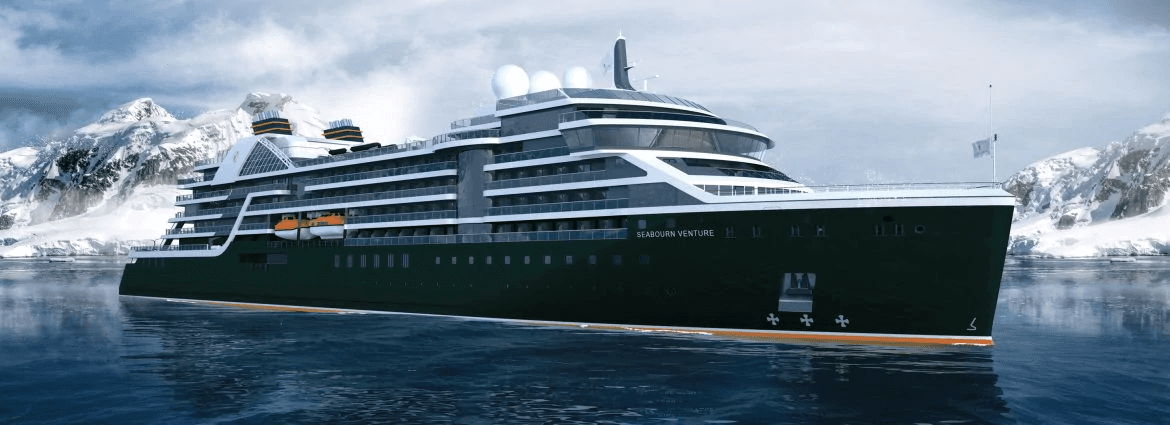
Seabourn · Seabourn Venture
Depart
Apr 24, 2028
Return
Jul 15, 2028
Port
Lisbon
Nights
82 nights
At a glance
- Built
- 2021
- Tonnage
- 23000
- Cabins
- 132
- Crew
- 120
Seabourn's ultra-luxury purpose-built expedition ship Seabourn Venture, paying tribute to the remote destinations visited by the brand’s highly successful expedition and Ventures by Seabourn excursion programs and the fascinating places yet to be explored in the future. Seabourn Venture is scheduled to launch in June 2021, with a second yet-to-be-named sister ship slated to launch in May 2022.
Ask our cruise specialists about cruise line loyalty benefits, status match options, drinks packages, gratuities and any current offers available on this sailing.
On board

Grill

Insuite Dining
Itinerary
Cruise from Lisbon to Reykjavik, Iceland
Day 1Cruise departs from LisbonApr 24, 2028 • Departs at: 5 pm
The great period of "the Discoveries" accounted for phenomenal wealth brought back from India, Africa and Brazil by the great Portuguese navigators. Gold, jewels, ivory, porcelain and spices helped finance grand new buildings and impressive monuments in Lisbon, the country's capital city. As you sail up the Tagus River, be on deck to admire Lisbon's panorama and see some of the great monuments lining the river. Lisbon is one of Europe's smallest capital cities but considered by many visitors to be one of the most likeable. Spread over a string of seven hills, the city offers a variety of faces, including a refreshing no-frills simplicity reflected in the people as they go unhurriedly through their day enjoying a hearty and delicious cuisine accompanied by the country's excellent wines.
Day 2At SeaApr 25, 2028
Day 3At SeaApr 26, 2028
Day 4Cherbourg (Normandy), FranceApr 27, 2028 • Arrives at: 7 am • Departs at: 5 pm
The seaport and naval station of Cherbourg is situated along the English Channel northwest of Paris at the mouth of the Divette River. Believed to rest on the site of an ancient Roman station, Cherbourg has been occupied since ancient times and was frequently contested by the French and English in the Middle Ages because of its strategic location. Most recently passed to France in the late 18th century, the town was extensively fortified by Louis XVI. During WWII the Germans held Cherbourg until it was captured by the American forces shortly after the Normandy landings. Following a vast rehabilitation program that returned it to working condition, Cherbourg became an important Allied supply port. Today, Cherbourg is important for transatlantic shipping, shipbuilding, electronics and telephone equipment manufacturing, yachting and commercial fishing.
Day 5Plymouth, EnglandApr 28, 2028 • Arrives at: 7 am • Departs at: 5 pm
Plymouth, the largest city in Devon, has a long maritime history. Construction on the Royal Naval Dockyard was begun by William III in the late 17th century, and the site continues to serve as a naval base today. Excellent views of Plymouth Sound, with its many bays and inlets, may be enjoyed from the grassy esplanade known as the Hoe. Although heavy bombing destroyed much of Plymouth during World War II, a fascinating part of the past may still be seen in the Barbican, the oldest surviving section of the city. The Mayflower Steps mark the spot from which the Pilgrims sailed for the New World in 1620. You may wish to take a look inside the massive Royal Citadel, built by Charles II in 1666. The city houses Europe's premier oceanography institute with an unrivalled aquarium. An excursion into the lovely Devonshire countryside should prove a most pleasant diversion.
Day 6Lundy Island, United KingdomApr 29, 2028 • Arrives at: 12 pm • Departs at: 8 pm
A delightful escape from the hubbub of the modern world, three-and-a-half-mile-long Lundy Island is located where the Atlantic Ocean meets the Bristol Channel. Roads are undisturbed by cars. There's a small village, a Victorian church, even a 13th-century castle. The surrounding waters are home to Great Britain's first marine nature reserve. On this granite outcropping, there are farms and open moorlands. Seals blanket the eastern shore. Owned by Britain's National Trust and maintained by the Landmark Trust, the island evokes a more tranquil time.
Day 7Skomer Island, WalesApr 30, 2028 • Arrives at: 7 am • Departs at: 3 pm
Surrounded by high dramatic sea cliffs, treeless Skomer Island is a National Nature Reserve and one of the finest wildlife sites in the country. This is truly a birders paradise! It’s best known for its large population of breeding seabirds, most notably some 600,000 Manx shearwaters and 20,000 Atlantic puffins, the largest puffin colony in Britain. Nesting razorbills, fulmars, Storm petrels and gannets, as well as the endemic Skomer vole are found here. It is surrounded by nutrient rich waters where harbour porpoises and magnificent whales come to feed. Grey seals are also plentiful on Skomer, especially during the pupping season in September. Currently uninhabited, the island has several important archeological sites. Stone circles, standing stones and the remnants of prehistoric houses, date ancient human settlements as far back as 5,000 years. The volcanic basaltic rocks of which Skomer is comprised date from the Silurian Period around 440 million years ago.
Day 8Bantry, IrelandMay 1, 2028 • Arrives at: 7 am • Departs at: 8 pm
Bantry Bay, framed by the Sheep's Head Hills and the Caha Mountains, offers one of the Ireland’s most magnificent seascapes and picturesque harbors. As with other areas on Ireland's south-west coast, Bantry claims an ancient connection to the sixth-century Saint Breandán the Navigator, who was, in Irish folklore, the first person to discover America. A highlight of the area is stately Bantry House and Garden Estate. The magnificent garden is laid out in the Italian style over seven terraces. In addition to the many spirited Irish pubs are the Bantry Museum and the architecture of St. Brendan's and St. Finbarr's Churches. There are pristine, white-sand beaches, interspersed with jagged outcrops of rock and bordered by the verdant-green hills that make Ireland famous. County Cork is renowned for its megalithic stone circles and standing stones. Historic castles dot the landscape. The coastline of Cork is also home to basking sharks and fin, pilot, and minke whales.
Day 9Schull, IrelandMay 2, 2028 • Arrives at: 7 am • Departs at: 5 pm
Day 10Cape Clear Island, IrelandMay 3, 2028 • Arrives at: 7 am • Departs at: 5 pm
Day 11Kinsale, IrelandMay 4, 2028 • Arrives at: 7 am • Departs at: 5 pm
Day 12Calf of Man, Isle of ManMay 5, 2028 • Arrives at: 12 pm • Departs at: 8 pm
Day 13Belfast, Northern IrelandMay 6, 2028 • Arrives at: 7 am • Departs at: 10 pm
Belfast, Northern Ireland's largest urban area is situated on Ireland's eastern coast. To the northwest, the city is flanked by hills, including Cavehill, thought to be Jonathan Swift's inspiration for his novel, "Gulliver's Travels." Belfast's location is ideal for the shipbuilding industry that once made it famous. The Titanic was built here in 1912, at the largest shipyard in the world. Until the Good Friday Agreement of 1998 was reached, the worst of Ireland's "troubles" was experienced in Belfast, which suffered almost half the conflict's resulting deaths. Since that time, however, Belfast's city center has emerged into an attractive pedestrian-oriented environment with street musicians and the like, and a revitalized river front.
Day 14Calf of Man, Isle of ManMay 7, 2028 • Arrives at: 7 am • Departs at: 12 pm
Day 14Douglas, Isle of ManMay 7, 2028 • Arrives at: 2 pm • Departs at: 8 pm
Douglas is the capital of the Isle of Man. Mann, as it is also called, is a British Crown Dependency, with its own parliament and postage stamps (a popular souvenir). Here visitors can sample means of transport ranging from horse-drawn trams, to steam trains and the high-speed motorcycles that compete in the renowned Isle of Man TT races. In summer the town maintains much of the seaside resort charm of an earlier period, including the Victorian-era Grand Union Camera Obscura, now restored for your amusement.
Day 15Brodick, Isle of ArranMay 8, 2028 • Arrives at: 7 am • Departs at: 6 pm
Brodick is the main village on the Isle of Arran, in the Firth of Clyde, Scotland. It is halfway along the east coast of the island, in Brodick Bay below Goat Fell, the tallest mountain on Arran. The name is derived from the Norse "breda-vick" meaning "Broad Bay".
Day 16Rathlin IslandMay 9, 2028 • Arrives at: 7 am • Departs at: 5 pm
Rathlin Island is an island and civil parish off the coast of County Antrim in Northern Ireland. It is Northern Ireland's northernmost point.
Day 17Baile MorMay 10, 2028 • Arrives at: 7 am • Departs at: 12 pm
Day 17Staffa, Scotland, UKMay 10, 2028 • Arrives at: 1 pm • Departs at: 7 pm
The tiny island of Staffa, part of the Inner Hebrides, is celebrated for its stunning geology. Vikings named it Stafyi-øy meaning ‘stave island,’ as its rock formations reminded them of the vertically placed logs used to construct their houses. Staffa is made up completely of hexagonal columnar basalt. Sixty-five million years ago, erupting lava cooled quickly, forming these distinctive shapes. Hexagons are most often associated with honeycombs in beehives, however, they are also characteristic in volcanic formations. Over time, a weakness in the rock was eroded by fierce Atlantic waves, creating legendary Fingal’s Cave. It was once known as ‘The Musical Cave’ for the wonderful sounds of the sea water reverberating against the sides of its large cavern. The island was first promoted by Sir Joseph Banks, who was Captain James Cook’s naturalist in 1772. In the 19th century, Jules Verne, William Wordsworth, John Keats, Alfred Lord Tennyson, Queen Victoria, Prince Albert, the artist JMW T…
Day 18Tobermory, Scotland, UKMay 11, 2028 • Arrives at: 7 am • Departs at: 2 pm
Tiny, tidy Tobermory welcomes you to the Isle of Mull, largest of the Inner Hebrides. The colorful town is curved around its harbor, and the Mull Museum is a good place to start discovering more about the island, as well as its maritime and crofting background. Iona Abbey is an atmospheric relic of ancient times, with a Gothic and Romanesque nave. Nearby Duart Castle is one of the oldest inhabited castle in Ireland, the seat of Clan MacClean. The central keep was built in 1360. Glengorm Castle is scenically situated overlooking the sea and the distant Outer Hebrides. Retire to the small Tobermory Distillery, one of Scotland’s earliest, for a taste of single malt whisky, then keep an eye out for a glimpse of the magnificent white-tailed sea eagles recently re-introduced on the island.
Day 18Isle of EiggMay 11, 2028 • Arrives at: 3 pm • Departs at: 7 pm
Day 19Am Baile, St Kilda, Scotland, United KingdomMay 12, 2028 • Arrives at: 7 am • Departs at: 5 pm
The St Kilda volcanic archipelago has the highest sea cliffs in Britain and the most important seabird breeding colonies in northwestern Europe. The entire archipelago is owned by the National Trust for Scotland and is one of the few UNESCO World Heritage Sites chosen for both its natural and cultural qualities. In spite of its extreme isolation, some 40 miles (64 km) off of the remote Hebrides, there has been permanent habitation here for 2,000 years. The one-time population of hardy Kildians were finally forced to leave because of starvation. Their abandoned stone huts stand as silent witnesses to past settlement, but two of their ancient sheep species, dating from the Neolithic and Iron Ages, continue to thrive here. Some one million nesting seabirds breed in St Kilda, including the largest colony of guillemots on earth, and the largest colony of gannets, fulmars, Leach's petrels and Atlantic puffins in Britain. The St Kilda wren and the St Kilda field mouse are species found only…
Day 19Scenic CruisingMay 12, 2028 • Arrives at: 5:30 pm • Departs at: 7:30 pm
Day 20Stornoway (Isle of Lewis), UKMay 13, 2028 • Arrives at: 7 am • Departs at: 5 pm
Stornoway, on the Isle of Lewis in the Outer Hebrides, was founded by Vikings in the 9th century. But the Hebridean culture goes back much further, as testified by the circles of standing stones that are found on the island, and shards of pottery dated from at least 5,000 years in the past. There are remnants of various historic periods to be seen here, including traditional blackhouses, an ancient design, some of which were incredibly still in use into the 1970s. Lews Castle, which overlooks the town, is a more modern copy of a Tudor manse, which was built by a former owner of the island. Latta’s Mill, a 19th century overshot water mill, has been reconstructed and operates as an attraction. The main occupations on Lewis are fishing, farming, and production of Harris Tweed, a traditional cloth named for another nearby Hebrides isle.
Day 21KirkwallMay 14, 2028 • Arrives at: 7 am • Departs at: 10 pm
Kirkwall is the largest town of Orkney, an archipelago to the north of mainland Scotland. The name Kirkwall comes from the Norse name Kirkjuvágr, which later changed to Kirkvoe, Kirkwaa and Kirkwall.
Day 22Copinsay Island, ScotlandMay 15, 2028 • Arrives at: 7 am • Departs at: 3 pm
Day 23Leith (Edinburgh), UKMay 16, 2028 • Arrives at: 8:45 am
Two miles distant from its ancient seaport of Leith lies Edinburgh, Scotland's national capital. The Scottish capital since the 15th century, Edinburgh is comprised of two distinct areas - the Old Town, dominated by a medieval fortress, and the neoclassical New Town, whose development from the 18th century onwards had a far-reaching influence on European urban planning. The harmonious juxtaposition of these two contrasting historic areas, each with many important buildings, is what gives the city its unique character. Always favored by geography, Edinburgh is ideally situated on the Firth of Forth, an inlet from the North Sea, and built on extinct volcanoes surrounded by woods, rolling hills and lakes. On a clear day, there are glorious vistas from each of these hilltops. Looming above the city is the striking fairy tale castle built on the site of a 7th-century fortress. Towards the Middle Ages life within the fortress spilled onto the long ridge running to the foot of Arthur's Seat,…
Day 24Leith (Edinburgh), UKMay 17, 2028 • Departs at: 5 pm
Two miles distant from its ancient seaport of Leith lies Edinburgh, Scotland's national capital. The Scottish capital since the 15th century, Edinburgh is comprised of two distinct areas - the Old Town, dominated by a medieval fortress, and the neoclassical New Town, whose development from the 18th century onwards had a far-reaching influence on European urban planning. The harmonious juxtaposition of these two contrasting historic areas, each with many important buildings, is what gives the city its unique character. Always favored by geography, Edinburgh is ideally situated on the Firth of Forth, an inlet from the North Sea, and built on extinct volcanoes surrounded by woods, rolling hills and lakes. On a clear day, there are glorious vistas from each of these hilltops. Looming above the city is the striking fairy tale castle built on the site of a 7th-century fortress. Towards the Middle Ages life within the fortress spilled onto the long ridge running to the foot of Arthur's Seat,…
Day 25Invergordon (Inverness), Scotland, United KingdomMay 18, 2028 • Arrives at: 10 am • Departs at: 6 pm
Invergordon, the port for Inverness, is located in the northern part of Scotland on the Moray Firth. The quaint town of Inverness has reminders of such historical figures as St. Columba, Mary Queen of Scots, and Oliver Cromwell. Its attractions include a 17th-century clock tower, part of a fort erected by Cromwell's army and the 19th-century cathedral. Regarded as the "Capital of the Highlands," the town holds many traditional Scottish events each summer.
Day 26KirkwallMay 19, 2028 • Arrives at: 7 am • Departs at: 10 pm
Kirkwall is the largest town of Orkney, an archipelago to the north of mainland Scotland. The name Kirkwall comes from the Norse name Kirkjuvágr, which later changed to Kirkvoe, Kirkwaa and Kirkwall.
Day 27Fair IsleMay 20, 2028 • Arrives at: 7 am • Departs at: 6 pm
Fair Isle is an island in Shetland, in northern Scotland. It lies about halfway between mainland Shetland and Orkney. It is known for its bird observatory and a traditional style of knitting. The island has been owned by the National Trust for Scotland since 1954.
Day 28Mousa, Shetland IslandsMay 21, 2028 • Arrives at: 7 am • Departs at: 12 pm
Mousa is a small island in Shetland, Scotland, uninhabited since the nineteenth century. The island is known for the Broch of Mousa, an Iron Age round tower, and is designated as a Special Protection Area for storm-petrel breeding colonies.
Day 28Isle of NossMay 21, 2028 • Arrives at: 1 pm • Departs at: 5 pm
Day 28LerwickMay 21, 2028 • Arrives at: 6 pm
Lerwick, Britain's most northerly town, and is a small, bustling, cosmopolitan seaport with a population of over 7,000 people and fine architecture. Shetland Museum, located on Hay's Dock, is an award- winning attraction. Discover the island’s many secrets through its exhibits, and take a look in the boat shed, where you can see demonstrations of traditional boat building. Also of interest is the stone-walled town hall, built in 1884, displaying an impressive array of beautifully intricate stained glass. Towering St. Magnus Cathedral, constructed in 1863, is likewise well worth a visit. People have lived and prospered here since Neolithic times. The site of Clickimin Broch, a hollow-stone-walled structure, was a Late Bronze Age farmstead of the 7th century BCE. Historic Fort Charlotte, built in 1653, is a five-sided fortress, with cannon batteries pointing out to sea. The Shetland Textile Museum, with its fine weaving, and the quaint Crofters Museum will detail life in a much gentler…
Day 29LerwickMay 22, 2028 • Departs at: 4 pm
Lerwick, Britain's most northerly town, and is a small, bustling, cosmopolitan seaport with a population of over 7,000 people and fine architecture. Shetland Museum, located on Hay's Dock, is an award- winning attraction. Discover the island’s many secrets through its exhibits, and take a look in the boat shed, where you can see demonstrations of traditional boat building. Also of interest is the stone-walled town hall, built in 1884, displaying an impressive array of beautifully intricate stained glass. Towering St. Magnus Cathedral, constructed in 1863, is likewise well worth a visit. People have lived and prospered here since Neolithic times. The site of Clickimin Broch, a hollow-stone-walled structure, was a Late Bronze Age farmstead of the 7th century BCE. Historic Fort Charlotte, built in 1653, is a five-sided fortress, with cannon batteries pointing out to sea. The Shetland Textile Museum, with its fine weaving, and the quaint Crofters Museum will detail life in a much gentler…
Day 30Tvoroyri, Faroe IslandsMay 23, 2028 • Arrives at: 9 am • Departs at: 6 pm
Day 30Torshavn, Faroe IslandMay 23, 2028 • Arrives at: 11 pm
A distant outpost of Denmark, the Faroe Islands suddenly appear out of the misty North Atlantic, nearly 200 miles from the nearest landfall. Of the twenty-two islands in the group, seventeen are inhabited, with a population of 17,000 residing in the capital city of Torshavn. Irish monks discovered the islands in the 8th century and became the first settlers, only to be driven out by Viking explorers a century later. The traditions and legends of their Viking forefathers are kept alive in a language so close to old Norse that Faroe Islanders can still read the ancient texts inscribed centuries ago. The name Faroe comes from faereyjar, the Old Norse word meaning "Sheep Islands." With thousands of sheep dotting the hillsides, the name remains apt today. While sheep are important to the economy, the real wealth of the islands comes from the fishing industry. A fleet of over 300 trawlers and line-fishing boats bring in an average annual haul of 245,000 tons of cod and herring. Ultra-modern…
Day 31Torshavn, Faroe IslandMay 24, 2028
A distant outpost of Denmark, the Faroe Islands suddenly appear out of the misty North Atlantic, nearly 200 miles from the nearest landfall. Of the twenty-two islands in the group, seventeen are inhabited, with a population of 17,000 residing in the capital city of Torshavn. Irish monks discovered the islands in the 8th century and became the first settlers, only to be driven out by Viking explorers a century later. The traditions and legends of their Viking forefathers are kept alive in a language so close to old Norse that Faroe Islanders can still read the ancient texts inscribed centuries ago. The name Faroe comes from faereyjar, the Old Norse word meaning "Sheep Islands." With thousands of sheep dotting the hillsides, the name remains apt today. While sheep are important to the economy, the real wealth of the islands comes from the fishing industry. A fleet of over 300 trawlers and line-fishing boats bring in an average annual haul of 245,000 tons of cod and herring. Ultra-modern…
Day 32Torshavn, Faroe IslandMay 25, 2028 • Departs at: 4 am
A distant outpost of Denmark, the Faroe Islands suddenly appear out of the misty North Atlantic, nearly 200 miles from the nearest landfall. Of the twenty-two islands in the group, seventeen are inhabited, with a population of 17,000 residing in the capital city of Torshavn. Irish monks discovered the islands in the 8th century and became the first settlers, only to be driven out by Viking explorers a century later. The traditions and legends of their Viking forefathers are kept alive in a language so close to old Norse that Faroe Islanders can still read the ancient texts inscribed centuries ago. The name Faroe comes from faereyjar, the Old Norse word meaning "Sheep Islands." With thousands of sheep dotting the hillsides, the name remains apt today. While sheep are important to the economy, the real wealth of the islands comes from the fishing industry. A fleet of over 300 trawlers and line-fishing boats bring in an average annual haul of 245,000 tons of cod and herring. Ultra-modern…
Day 32KlaksvikMay 25, 2028 • Arrives at: 8 am • Departs at: 6 pm
Day 33At SeaMay 26, 2028
Day 34Seydisfjordur, IcelandMay 27, 2028 • Arrives at: 8 am • Departs at: 5 pm
The remote town of Seydisfjördur is perched at the end of a narrow twisting fjord in East Iceland. A very picturesque village of 700 people, it is known for its thriving arts scene and large number of resident artists. Tourism is on the rise as well, as its natural setting of mountains and waterfalls is simply breathtaking. Surrounded by impressive 1,085 meter (3,560’) tall snow-capped mountains, Seydisfjördur is home to the Technical Museum of Iceland and hosts populations of both eider ducks and Atlantic puffins. It was settled by Norwegian fishermen in 1848 and quickly became an important trading center between Iceland and Europe. It is known throughout Iceland for its colorful Norwegian-style wooden houses. The first telegraph cable connecting Iceland to Europe made landfall here in 1906. A large dam was constructed here in 1913, which produced power for the country’s first high voltage AC power plant, a revolutionary achievement for its time.
Day 35Siglufjordur, IcelandMay 28, 2028 • Arrives at: 9 am • Departs at: 7 pm
Siglufjörður is the northernmost town on the Icelandic mainland, a small fishing village of some 1,200 people. Founded in 1918, it was in the past the capital of the North Atlantic herring fishing industry. The Síldarminjasafnið Herring Era Museum, one of Iceland's largest seafaring and industrial museums, houses three different areas where one can learn about both the traditional and the modern herring industry. A collection of many historic fishing vessels and artifacts is proudly displayed by the people of Siglufjörður, detailing how herring was salted, processed and collected. The small harbor with its colorful fishing boats and the red-roofed steeple of the Lutheran church dominate the village-scape. The natural beauty of the area includes high mountains that rim the fjord, freshwater lakes, the Hólsá river, black sand beaches, and a wealth of birdlife all around. This northernmost region of Iceland is renowned for some of the largest and most dramatic waterfalls in the country.
Day 36Patreksfjordur, IcelandMay 29, 2028 • Arrives at: 8 am • Departs at: 3 pm
Day 36Dynjandi, IcelandMay 29, 2028 • Arrives at: 6 pm • Departs at: 9 pm
Day 37Grundarfjordur, IcelandMay 30, 2028 • Arrives at: 8 am • Departs at: 5 pm
The charming small fishing village of Grundarfjörður is located in the middle of the Snæfellsnes Peninsula and thus provides easy access to Stykkishólmur, Snæfellsbær and the Snæfellsnes National Park. Its best-known landmark is undoubtedly the peak of Mt. Kirkjufell. Translated as ‘church mountain,’ Kirkjufell is the most easily recognizable peak, and one of the most photographed mountains in Iceland. During summer months a Viking Village is built in the center of town where Viking re-enactments occur quite regularly. During the Á góðri stund town festival in July, the town’s 900 residents decorate their houses in red, blue, yellow, and green, transforming the town into a spinning kaleidoscope of color. The town first began trade in 1786, and around 1800, French merchants came to Iceland and settled in Grundarfjörður, where they constructed a church and a hospital. The town has prospered through the fishing industry for a long time. The surrounding sea is rich with birdlife & marine…
Day 38Reykjavik, IcelandMay 31, 2028 • Arrives at: 7 am • Departs at: 5 pm
Warmed by the Gulf Stream as well as by highly active thermal hot springs and volcanoes, Iceland is somewhat misnamed. While it is a stark and barren country with three huge areas of glaciers, one theory is that early Norsemen sought to mislead other potential settlers by giving a pleasant name to fierce, inhospitable Greenland, and a forbidding name to the imminently habitable Iceland. Irish monks and hermits established themselves here in the 8th century, but left a century later when the pagan Norsemen arrived. Europe's first Parliament of General Assembly, the Althing, was established in the year 930 and still functions as the legislative body, although it was suspended by the Danes at the end of the 18th century and not reconvened until 1843. Reykjavik was the site picked by the island's first permanent resident, Ingolfur Arnarson in 874, and is home to more than half of the island's total population. The world's northernmost capital, Reykjavik is proud of its virtual lack of air…
Day 39Exploring The Outer Islands of HeimaeyJun 1, 2028 • Arrives at: 7 am • Departs at: 11 am
Day 39Heimaey, Westman Islands, IcelandJun 1, 2028 • Arrives at: 12 pm • Departs at: 7 pm
Day 40At SeaJun 2, 2028
Day 41At SeaJun 3, 2028
Day 42Kangikitsok, GreenlandJun 4, 2028 • Arrives at: 7 am • Departs at: 12 pm
Day 42Prins Christian Sund, GreenlandJun 4, 2028 • Arrives at: 1 pm • Departs at: 6 pm
Day 43Qaqortoq, GreenlandJun 5, 2028 • Arrives at: 8 am • Departs at: 2 pm
The largest town in South Greenland with over 3,500 citizens, Qaqortoq was founded in 1775 and still reveals some examples of colonial-period architecture. There is not infrastructure to support shore excursions here, but guests can explore the town and its museum, or possibly arrange a visit to a nearby hot springs. Like other towns in Greenland, there are also possibilities to buy examples of traditional Inuit arts and crafts, including items crafted of bone, soapstone and wild-harvested furs.
Day 43HvalseyJun 5, 2028 • Arrives at: 3 pm • Departs at: 8 pm
Twelve miles by Zodiac up the Hvalseyjarfjord from Qaqortoq, the largest community in South Greenland, lies the most prominent Norse archaeological site in Greenland. The so-called Eastern Settlement lasted from the 10th until the mid-15th century. Your expedition team archaeologist can interpret for you the ruins of the great halls and church at Hvalsey that hint of a prospering medieval farmstead. The site evokes an era when the Norse were trading with the indigenous Thule people of the area for furs and ivory, which were a prized commodities in Europe. A wedding held in the church in 1408 comprises the last written record of the Norse adventure in Greenland. Within a few years, Hvalsey and the rest of other Norse communities of Greenland withered as immigrants returned to the more established communities in Iceland and Norway. The site’s meadows of wildflowers sloping up from the fjord give a sense of the peaceful community that existed here in that long-ago summer.
Day 44Brattahlid (Qassiarsuk), GreenlandJun 6, 2028 • Arrives at: 7 am • Departs at: 12 pm
Day 45At SeaJun 7, 2028
Day 46Nain, Labrador, CanadaJun 8, 2028 • Arrives at: 8 am • Departs at: 5 pm
Day 47Nachvak Fiord, Torngat Mts, CanadaJun 9, 2028 • Arrives at: 10 am • Departs at: 6 pm
Day 48Saglek Fjord, Labrador, CanadaJun 10, 2028 • Arrives at: 7 am • Departs at: 5 pm
Day 49Hopedale, Labrador, CanadaJun 11, 2028 • Arrives at: 12 pm • Departs at: 7 pm
Day 50Indian Harbour, NL, CanadaJun 12, 2028 • Arrives at: 7 am • Departs at: 4 pm
Day 51L Anse aux Meadows, Newfoundland, CanadaJun 13, 2028 • Arrives at: 8 am • Departs at: 6 pm
Located at the most northerly tip of Newfoundland, L'Anse aux Meadows is nestled near the fishing village of St. Anthony. It is the site of the first European settlement in the New World, approximately 500 years before Columbus' arrival. Other Norse groups had relocated from their homelands to the New World. In 1961, explorer and writer Helge Instad discovered a group of large mounds in the countryside. These mounds were excavated revealing the remains of a Norse settlement. This site became L'Anse aux Meadows National Historic Park in 1977 and is noted on the UNESCO World Heritage List of important cultural properties. The site at L'Anse aux Meadows has been completely excavated allowing visitors to see the remains of the homes, a smithy, and various worksheds. The park's interpretive center displays Norse artifacts from the excavation which include iron rivets, a flywheel and the floorboard of a boat. Researchers still debate as to whether the site at L'Anse aux Meadows is Leif Erik…
Day 52At SeaJun 14, 2028
Day 53St John's, NewfoundlandJun 15, 2028 • Arrives at: 7 am • Departs at: 9 pm
St. John's is the most easterly point in North America and closest point of land to Europe. Due to it strategic location, St. John's has been vitally important for centuries to explorers, adventurers, merchants, soldiers, pirates, and all manner of seafarers, who provided the foundation for this thriving modern day city. Explore this, one of the oldest cities in North America, and a city unlike any other. This "City of Legends" is cradled in a harbor carved from granite, and surrounded by hills running down to the ocean. Quaint side streets of a thousand colors are home to friendly faces that wait to greet you.
Day 54At SeaJun 16, 2028
Day 55Red Bay, Labrador, CanadaJun 17, 2028 • Arrives at: 7 am • Departs at: 5 pm
Red Bay is a National Historic Site of Canada, and has been nominated by Canada for inclusion as a UNESCO World Heritage Site. One of the reasons is the importance of the Basque whaling activity that thrived here in the 16th and early 17th centuries. Sunken Basque galleons and smaller boats from the period have been discovered just offshore. Although the whale population is much diminished today, it is still a popular activity to watch them, as well as the icebergs that float down from the seas further north.
Day 56Battle Harbour, Labrador, CanadaJun 18, 2028 • Arrives at: 7 am • Departs at: 5 pm
Day 57Indian Harbour, NL, CanadaJun 19, 2028 • Arrives at: 7 am • Departs at: 4 pm
Day 58Nain, Labrador, CanadaJun 20, 2028 • Arrives at: 7 am • Departs at: 4 pm
Day 59Saglek Fjord, Labrador, CanadaJun 21, 2028 • Arrives at: 7 am • Departs at: 5 pm
Day 60Eclipse Channel, Labrador, CanadaJun 22, 2028 • Arrives at: 7 am • Departs at: 5 pm
Day 61Resolution Island, Nunavut, CanadaJun 23, 2028 • Arrives at: 7 am • Departs at: 12 pm
Day 61Lower Savage Islands, CanadaJun 23, 2028 • Arrives at: 1 pm • Departs at: 6 pm
Day 62Monumental Island, Nunavut, CanadaJun 24, 2028 • Arrives at: 7 am • Departs at: 12 pm
In 1845, British explorer Sir John Franklin, on the period’s most technologically advanced expedition, vanished in search of the fabled Northwest Passage. Monumental Island was named by fellow Arctic explorer Charles Francis Hall in memory of Franklin. Located in Davis Strait south of Baffin Island, it is known as Oomienwa in the local Inuktitut language. This barren, rocky and windswept island is home to a variety of wildlife. Nesting black guillemots are the most prolific seabird. The Island is a favorite resting spot for walrus and they may be viewed at numerous haul-outs around the island. The elusive polar bears patrol the ice-floes in search of seals while whales feed offshore. This is also an excellent location for viewing elaborately sculpted icebergs of all sizes and shapes. Numerous glaciers descend from the island’s high peaks, their crevasses appearing almost to glow an iridescent blue against a landscape of stark white
Day 62Lady Franklin Island, Nunavut, CanadaJun 24, 2028 • Arrives at: 1 pm • Departs at: 6 pm
Lady Franklin Island, is an uninhabited Baffin Island offshore island located in the Canadian Arctic Archipelago in the territory of Nunavut. The island lies in Davis Strait, 25 mi from Hall Peninsula. There are at least seven smaller, unnamed islands off its northwest shore.
Day 63At SeaJun 25, 2028
Day 64Isabella Bay (Ninginganiq), Nunavut, CanadaJun 26, 2028 • Arrives at: 7 am • Departs at: 5 pm
Day 65Qikiqtarjuaq, Nunavut, CanadaJun 27, 2028 • Arrives at: 7 am • Departs at: 5 pm
Day 66At SeaJun 28, 2028
Day 67Sisimiut (Holsteinsborg), GreenlandJun 29, 2028 • Arrives at: 7 am • Departs at: 5 pm
Sisimiut is Greenland’s second-largest town, and large by Greenland standards, housing some 6,000 people. It is located just north of the Arctic Circle, and is a popular base for visitors seeking adventurous pastimes in the surrounding country. Although there are no shore excursions planned for Sisimiut, guests may wish to investigate the local market, where the products of the country are sold, including meat from whales, reindeer, musk oxen and many kinds of fish. Watch for the stocky little Icelandic horses trotting along the highways, and keep an eye out for sea eagles often seen perched on the surrounding mountains. Whales are also often seen in the sea nearby. On the hill above the harbor, there is an artisan’s workshop where they create and sell Inuit crafts, and nearby is the town museum, which has examples of colonial period houses, peat houses and other early buildings.
Day 68KangerlussuaqJun 30, 2028 • Arrives at: 7 am • Departs at: 8 pm
In October, 1941 the United States Army Air Force constructed an airbase at the site of Kangerlussuaq. It served as a refuelling stop for single-engine military aircraft being flown to Britain during World War II. Form their last port of call, Goose Bay, Labrador, it was 1,600 kilometers (1,000 miles) to Kangerlussuaq until they could refuel. Kangerlussuaq fjord (‘Big Fjord’), is 170 kilometers (105 miles) long and was often shrouded in fog, providing a serious navigation problem for those aircrews. Today, with the use of modern technology, navigation is no longer an issue. The landscape was ideal for the site of an airport. A large alluvial plain, deposited by the nearby glacial-outflow river, provided a perfectly flat environment for an airport. Kangerlussuaq is the largest commercial airport in Greenland and supports a population of 500. A little known fact, from 1971 to 1987, 33 missiles from various countries, were fired from Kangerlussuaq for upper atmospheric scientific researc…
Day 69Sisimiut (Holsteinsborg), GreenlandJul 1, 2028 • Arrives at: 8 am • Departs at: 5 pm
Sisimiut is Greenland’s second-largest town, and large by Greenland standards, housing some 6,000 people. It is located just north of the Arctic Circle, and is a popular base for visitors seeking adventurous pastimes in the surrounding country. Although there are no shore excursions planned for Sisimiut, guests may wish to investigate the local market, where the products of the country are sold, including meat from whales, reindeer, musk oxen and many kinds of fish. Watch for the stocky little Icelandic horses trotting along the highways, and keep an eye out for sea eagles often seen perched on the surrounding mountains. Whales are also often seen in the sea nearby. On the hill above the harbor, there is an artisan’s workshop where they create and sell Inuit crafts, and nearby is the town museum, which has examples of colonial period houses, peat houses and other early buildings.
Day 70EvighedsfjordenJul 2, 2028 • Arrives at: 7 am • Departs at: 12 pm
Day 71Nuuk (Godthab), GreenlandJul 3, 2028 • Arrives at: 7 am • Departs at: 7 pm
Greenland’s capital boasts some 16,000 inhabitants. Although the town does not offer us any shore excursions, there are several attractions which guests may wish to visit. One is the roofed town market, where the products of the nearby sea and wilderness are for sale, including the meat of whales, seals, birds and fish. The Katuaq Cultural Center offers changing exhibitions. Especially worth a visit is the National Museum, which besides many historic objects, contains the quite famous 500-year old mummies recovered from Qilakitsoq. The nearby Museum of Art has works by both Inuit and Nordic artists. There is also an artisan’s center where guests may purchase locally produced works, and a collection of traditional houses.
Day 72Ivittuut, GreenlandJul 4, 2028 • Arrives at: 12 pm • Departs at: 6 pm
Day 73Brattahlid (Qassiarsuk), GreenlandJul 5, 2028 • Arrives at: 7 am • Departs at: 2 pm
Day 74Qaqortoq, GreenlandJul 6, 2028 • Arrives at: 7 am • Departs at: 2 pm
The largest town in South Greenland with over 3,500 citizens, Qaqortoq was founded in 1775 and still reveals some examples of colonial-period architecture. There is not infrastructure to support shore excursions here, but guests can explore the town and its museum, or possibly arrange a visit to a nearby hot springs. Like other towns in Greenland, there are also possibilities to buy examples of traditional Inuit arts and crafts, including items crafted of bone, soapstone and wild-harvested furs.
Day 74HvalseyJul 6, 2028 • Arrives at: 3 pm • Departs at: 8 pm
Twelve miles by Zodiac up the Hvalseyjarfjord from Qaqortoq, the largest community in South Greenland, lies the most prominent Norse archaeological site in Greenland. The so-called Eastern Settlement lasted from the 10th until the mid-15th century. Your expedition team archaeologist can interpret for you the ruins of the great halls and church at Hvalsey that hint of a prospering medieval farmstead. The site evokes an era when the Norse were trading with the indigenous Thule people of the area for furs and ivory, which were a prized commodities in Europe. A wedding held in the church in 1408 comprises the last written record of the Norse adventure in Greenland. Within a few years, Hvalsey and the rest of other Norse communities of Greenland withered as immigrants returned to the more established communities in Iceland and Norway. The site’s meadows of wildflowers sloping up from the fjord give a sense of the peaceful community that existed here in that long-ago summer.
Day 75Nanortalik, GreenlandJul 7, 2028 • Arrives at: 7 am • Departs at: 5 pm
The immense scale of the peaks around this village dwarfs anything built there. Still, the tall white steeple of the church juts up with a spirit of endurance and perseverance that matches the character of those who make this arctic outpost their home. It also echoes the shape of icebergs floating in the surrounding seas, shed from the immense icefields that cover much of the island.
Day 76Kangikitsok, GreenlandJul 8, 2028 • Arrives at: 7 am • Departs at: 12 pm
Day 76Prins Christian Sund, GreenlandJul 8, 2028 • Arrives at: 1 pm
Day 77Prins Christian Sund, GreenlandJul 9, 2028 • Departs at: 1 pm
Day 78UmivikJul 10, 2028 • Arrives at: 8 am • Departs at: 6 pm
Umivik Bay, also known as Umiivik and Umerik, is a bay in King Frederick VI Coast, southeastern Greenland. It is part of the Sermersooq municipality. Unlike the jagged and forbidding appearance of most fjord systems in East Greenland, the Umivik area has a relatively gentle shape
Day 79Tasiilaq, GreenlandJul 11, 2028 • Arrives at: 7 am • Departs at: 5 pm
Tasiilaq, formerly Ammassalik and Angmagssalik, is a town in the Sermersooq municipality in southeastern Greenland. With 1,985 inhabitants as of 2020, it is the most populous community on the eastern coast, and the seventh-largest town in Greenland.
Day 80East Greenland ExperienceJul 12, 2028 • Arrives at: 7 am • Departs at: 5 pm
Day 81At SeaJul 13, 2028
Day 82Grundarfjordur, IcelandJul 14, 2028 • Arrives at: 7 am • Departs at: 5 pm
The charming small fishing village of Grundarfjörður is located in the middle of the Snæfellsnes Peninsula and thus provides easy access to Stykkishólmur, Snæfellsbær and the Snæfellsnes National Park. Its best-known landmark is undoubtedly the peak of Mt. Kirkjufell. Translated as ‘church mountain,’ Kirkjufell is the most easily recognizable peak, and one of the most photographed mountains in Iceland. During summer months a Viking Village is built in the center of town where Viking re-enactments occur quite regularly. During the Á góðri stund town festival in July, the town’s 900 residents decorate their houses in red, blue, yellow, and green, transforming the town into a spinning kaleidoscope of color. The town first began trade in 1786, and around 1800, French merchants came to Iceland and settled in Grundarfjörður, where they constructed a church and a hospital. The town has prospered through the fishing industry for a long time. The surrounding sea is rich with birdlife & marine…
Day 83Cruise returns to Reykjavik, IcelandJul 15, 2028 • Arrives at: 7 am
Warmed by the Gulf Stream as well as by highly active thermal hot springs and volcanoes, Iceland is somewhat misnamed. While it is a stark and barren country with three huge areas of glaciers, one theory is that early Norsemen sought to mislead other potential settlers by giving a pleasant name to fierce, inhospitable Greenland, and a forbidding name to the imminently habitable Iceland. Irish monks and hermits established themselves here in the 8th century, but left a century later when the pagan Norsemen arrived. Europe's first Parliament of General Assembly, the Althing, was established in the year 930 and still functions as the legislative body, although it was suspended by the Danes at the end of the 18th century and not reconvened until 1843. Reykjavik was the site picked by the island's first permanent resident, Ingolfur Arnarson in 874, and is home to more than half of the island's total population. The world's northernmost capital, Reykjavik is proud of its virtual lack of air…
Cabin options
Compare the cabin types and onboard features shown for this sailing. Final price and availability are confirmed by our team when you inquire.
10 cabin grades listed for this sailing.
Next step
Cabin grades and prices
View every cabin grade and current availability on the next step.