12-Day Wild Scottish Isles, Faroe Islands & Icelandic Isles
Seabourn · Seabourn Pursuit
Depart
Jun 14, 2028
Return
Jun 26, 2028
Port
Belfast
Nights
12 nights
At a glance
- Built
- 2023
- Tonnage
- 23000
- Cabins
- 132
- Crew
- 120
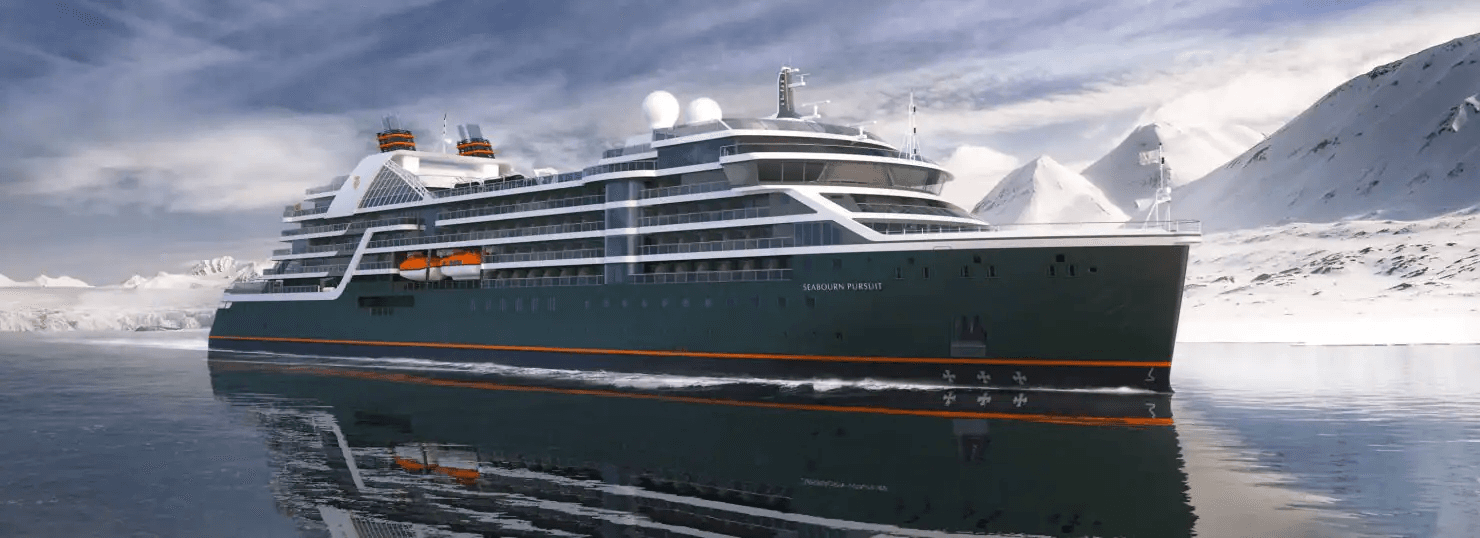
Construction for Seabourn Pursuit began in fall 2020 during a ceremony in San Giorgo di Nogare, Italy, and the build process is well underway. The ship is scheduled for delivery in 2023, with its sister ship, Seabourn Venture, slated for delivery in 2022. Seabourn Pursuit is the second Seabourn expedition ship slated to launch in 2023.
Ask our cruise specialists about cruise line loyalty benefits, status match options, drinks packages, gratuities and any current offers available on this sailing.
On board

Bowlounge

Colonnade
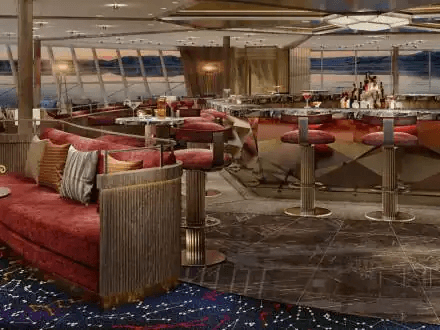
Constellationlounge

Discoverycenter

Expeditionlounge

Landing
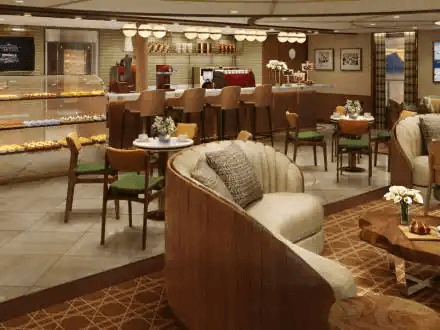
Pursuit square
Itinerary
Cruise from Belfast to Reykjavik, Iceland
Day 1Cruise departs from BelfastJun 14, 2028 • Departs at: 5 pm
Belfast, Northern Ireland's largest urban area is situated on Ireland's eastern coast. To the northwest, the city is flanked by hills, including Cavehill, thought to be Jonathan Swift's inspiration for his novel, "Gulliver's Travels." Belfast's location is ideal for the shipbuilding industry that once made it famous. The Titanic was built here in 1912, at the largest shipyard in the world. Until the Good Friday Agreement of 1998 was reached, the worst of Ireland's "troubles" was experienced in Belfast, which suffered almost half the conflict's resulting deaths. Since that time, however, Belfast's city center has emerged into an attractive pedestrian-oriented environment with street musicians and the like, and a revitalized river front.
Day 2Calf of Man, Isle of ManJun 15, 2028 • Arrives at: 7 am • Departs at: 12 pm
Day 2Douglas, Isle of ManJun 15, 2028 • Arrives at: 2 pm • Departs at: 8 pm
Douglas is the capital of the Isle of Man. Mann, as it is also called, is a British Crown Dependency, with its own parliament and postage stamps (a popular souvenir). Here visitors can sample means of transport ranging from horse-drawn trams, to steam trains and the high-speed motorcycles that compete in the renowned Isle of Man TT races. In summer the town maintains much of the seaside resort charm of an earlier period, including the Victorian-era Grand Union Camera Obscura, now restored for your amusement.
Day 3Rothesay, Isle of ButeJun 16, 2028 • Arrives at: 7 am • Departs at: 6 pm
Rothesay, standing along the Firth of Clyde, presents the visitor with a combination of illustrious gardens and grand architecture. The magnificent ruins of Rothesay Castle, which date from the 13th century, are what most people visualize when they think of a medieval castle. With a drawbridge, encircling moat, immense circular curtain wall and tall stone towers, Rothesay is unique in Scotland for its circular plan. The ruins of St Blane's Chapel, a 6th century monastery, sit atop a hill with views over the Sound of Bute. For true elegance, visit the country estate of Mount Stuart House with its colonnaded Marble Hall and extraordinary Marble Chapel. Built in the late 1870’s in the Gothic Revivalist style, it was constructed of reddish-brown stone and houses a library of 25,000 books. The Ardencraig Gardens, sitting atop Canada Hill, feature a walled garden and exotic aviary. Ascog Hall Fernery, located on the grounds of a baronial-style house from 1844, is a beautiful garden with the…
Day 4Tobermory, Scotland, UKJun 17, 2028 • Arrives at: 7 am • Departs at: 2 pm
Tiny, tidy Tobermory welcomes you to the Isle of Mull, largest of the Inner Hebrides. The colorful town is curved around its harbor, and the Mull Museum is a good place to start discovering more about the island, as well as its maritime and crofting background. Iona Abbey is an atmospheric relic of ancient times, with a Gothic and Romanesque nave. Nearby Duart Castle is one of the oldest inhabited castle in Ireland, the seat of Clan MacClean. The central keep was built in 1360. Glengorm Castle is scenically situated overlooking the sea and the distant Outer Hebrides. Retire to the small Tobermory Distillery, one of Scotland’s earliest, for a taste of single malt whisky, then keep an eye out for a glimpse of the magnificent white-tailed sea eagles recently re-introduced on the island.
Day 4Isle of EiggJun 17, 2028 • Arrives at: 3:30 pm • Departs at: 7 pm
Day 5Am Baile, St Kilda, Scotland, United KingdomJun 18, 2028 • Arrives at: 7 am • Departs at: 12 pm
The St Kilda volcanic archipelago has the highest sea cliffs in Britain and the most important seabird breeding colonies in northwestern Europe. The entire archipelago is owned by the National Trust for Scotland and is one of the few UNESCO World Heritage Sites chosen for both its natural and cultural qualities. In spite of its extreme isolation, some 40 miles (64 km) off of the remote Hebrides, there has been permanent habitation here for 2,000 years. The one-time population of hardy Kildians were finally forced to leave because of starvation. Their abandoned stone huts stand as silent witnesses to past settlement, but two of their ancient sheep species, dating from the Neolithic and Iron Ages, continue to thrive here. Some one million nesting seabirds breed in St Kilda, including the largest colony of guillemots on earth, and the largest colony of gannets, fulmars, Leach's petrels and Atlantic puffins in Britain. The St Kilda wren and the St Kilda field mouse are species found only…
Day 6Fair IsleJun 19, 2028 • Arrives at: 7 am • Departs at: 12 pm
Fair Isle is an island in Shetland, in northern Scotland. It lies about halfway between mainland Shetland and Orkney. It is known for its bird observatory and a traditional style of knitting. The island has been owned by the National Trust for Scotland since 1954.
Day 6LerwickJun 19, 2028 • Arrives at: 7 pm
Lerwick, Britain's most northerly town, and is a small, bustling, cosmopolitan seaport with a population of over 7,000 people and fine architecture. Shetland Museum, located on Hay's Dock, is an award- winning attraction. Discover the island’s many secrets through its exhibits, and take a look in the boat shed, where you can see demonstrations of traditional boat building. Also of interest is the stone-walled town hall, built in 1884, displaying an impressive array of beautifully intricate stained glass. Towering St. Magnus Cathedral, constructed in 1863, is likewise well worth a visit. People have lived and prospered here since Neolithic times. The site of Clickimin Broch, a hollow-stone-walled structure, was a Late Bronze Age farmstead of the 7th century BCE. Historic Fort Charlotte, built in 1653, is a five-sided fortress, with cannon batteries pointing out to sea. The Shetland Textile Museum, with its fine weaving, and the quaint Crofters Museum will detail life in a much gentler…
Day 7LerwickJun 20, 2028 • Departs at: 3 pm
Lerwick, Britain's most northerly town, and is a small, bustling, cosmopolitan seaport with a population of over 7,000 people and fine architecture. Shetland Museum, located on Hay's Dock, is an award- winning attraction. Discover the island’s many secrets through its exhibits, and take a look in the boat shed, where you can see demonstrations of traditional boat building. Also of interest is the stone-walled town hall, built in 1884, displaying an impressive array of beautifully intricate stained glass. Towering St. Magnus Cathedral, constructed in 1863, is likewise well worth a visit. People have lived and prospered here since Neolithic times. The site of Clickimin Broch, a hollow-stone-walled structure, was a Late Bronze Age farmstead of the 7th century BCE. Historic Fort Charlotte, built in 1653, is a five-sided fortress, with cannon batteries pointing out to sea. The Shetland Textile Museum, with its fine weaving, and the quaint Crofters Museum will detail life in a much gentler…
Day 7Isle of NossJun 20, 2028 • Arrives at: 4 pm • Departs at: 10 pm
Day 8Tvoroyri, Faroe IslandsJun 21, 2028 • Arrives at: 2 pm • Departs at: 8 pm
Day 9Torshavn, Faroe IslandJun 22, 2028 • Arrives at: 7 am • Departs at: 5 pm
A distant outpost of Denmark, the Faroe Islands suddenly appear out of the misty North Atlantic, nearly 200 miles from the nearest landfall. Of the twenty-two islands in the group, seventeen are inhabited, with a population of 17,000 residing in the capital city of Torshavn. Irish monks discovered the islands in the 8th century and became the first settlers, only to be driven out by Viking explorers a century later. The traditions and legends of their Viking forefathers are kept alive in a language so close to old Norse that Faroe Islanders can still read the ancient texts inscribed centuries ago. The name Faroe comes from faereyjar, the Old Norse word meaning "Sheep Islands." With thousands of sheep dotting the hillsides, the name remains apt today. While sheep are important to the economy, the real wealth of the islands comes from the fishing industry. A fleet of over 300 trawlers and line-fishing boats bring in an average annual haul of 245,000 tons of cod and herring. Ultra-modern…
Day 10KlaksvikJun 23, 2028 • Arrives at: 7 am • Departs at: 5 pm
Day 11At SeaJun 24, 2028
Day 12Exploring The Outer Islands of HeimaeyJun 25, 2028 • Arrives at: 7 am • Departs at: 11 am
Day 12Heimaey, Westman Islands, IcelandJun 25, 2028 • Arrives at: 12 pm • Departs at: 7:30 pm
Day 13Cruise returns to Reykjavik, IcelandJun 26, 2028 • Arrives at: 7 am
Warmed by the Gulf Stream as well as by highly active thermal hot springs and volcanoes, Iceland is somewhat misnamed. While it is a stark and barren country with three huge areas of glaciers, one theory is that early Norsemen sought to mislead other potential settlers by giving a pleasant name to fierce, inhospitable Greenland, and a forbidding name to the imminently habitable Iceland. Irish monks and hermits established themselves here in the 8th century, but left a century later when the pagan Norsemen arrived. Europe's first Parliament of General Assembly, the Althing, was established in the year 930 and still functions as the legislative body, although it was suspended by the Danes at the end of the 18th century and not reconvened until 1843. Reykjavik was the site picked by the island's first permanent resident, Ingolfur Arnarson in 874, and is home to more than half of the island's total population. The world's northernmost capital, Reykjavik is proud of its virtual lack of air…
Cabin options
Compare the cabin types and onboard features shown for this sailing. Final price and availability are confirmed by our team when you inquire.
10 cabin grades listed for this sailing.
Next step
Cabin grades and prices
View every cabin grade and current availability on the next step.