Grand Japan with Summer Festivals & Kumano Fireworks
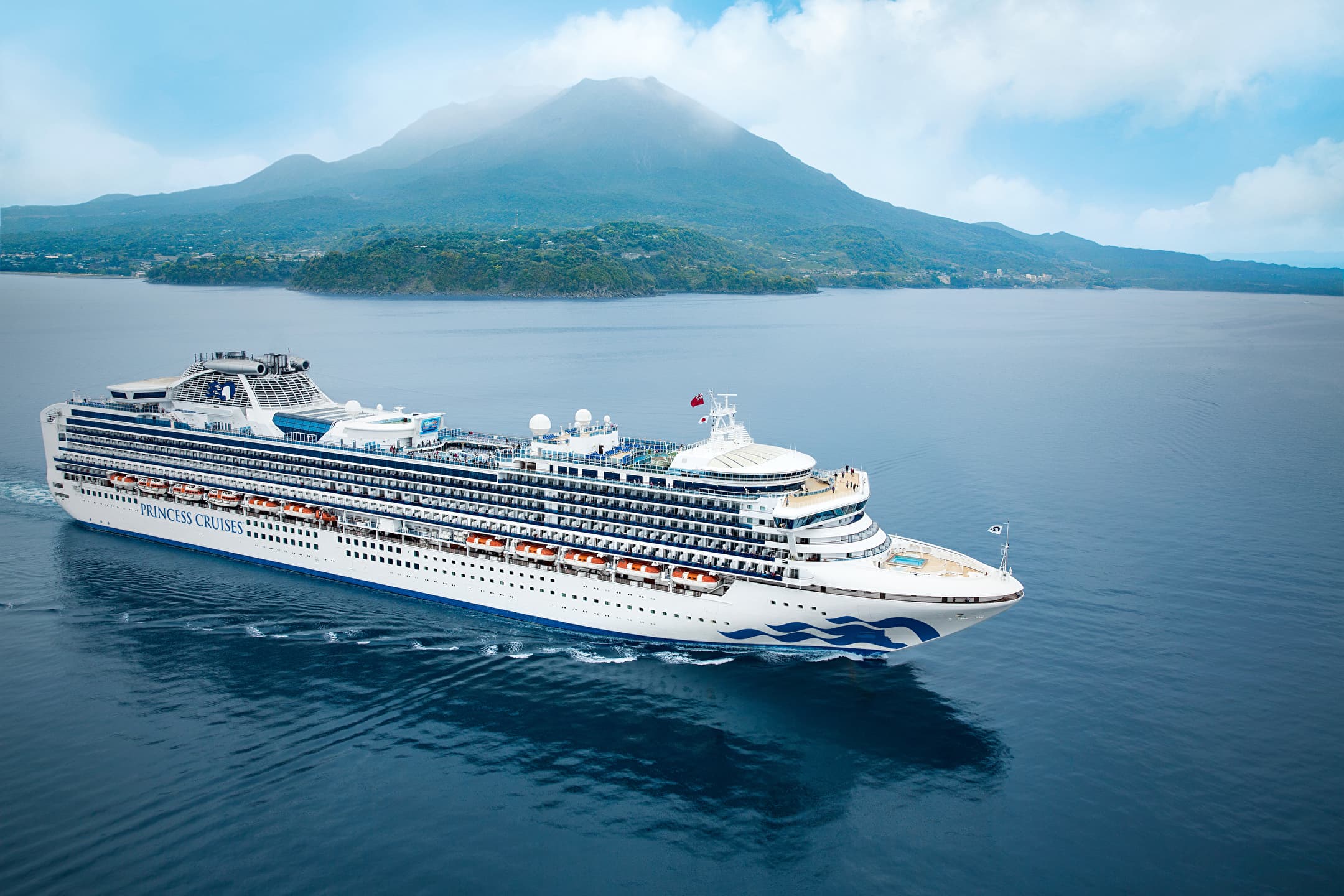
Princess Cruises · Diamond Princess
Depart
Aug 14, 2028
Return
Sep 3, 2028
Port
Tokyo
Nights
20 nights
At a glance
- Built
- 2004
- Tonnage
- 115875
- Cabins
- 1337
- Crew
- 1,100
Diamond Princess is a treasure trove of exceptional delights waiting to be discovered. Dine on freshly prepared sashimi in Kai Sushi, watch street performers in the dazzling Atrium, or take in a lavish production show in our state-of-the-art theater. And for a unique treat visit the Izumi Japanese Bath, the largest of its kind at sea.
Ask our cruise specialists about cruise line loyalty benefits, status match options, drinks packages, gratuities and any current offers available on this sailing.
On board

Internet Cafe
Itinerary
Cruise from Tokyo and back
Day 1Cruise departs from TokyoAug 14, 2028 • Departs at: 4 pm
Day 2Tokushima, JapanAug 15, 2028 • Arrives at: 1 pm • Departs at: 11:59 pm
Born as a 16th century castle town whose remains now lay scattered near a park and museum, Tokushima is best known for its colorful summer dance festival, the Awa Odori. But it may be Mother Nature who garners the most attention. Surrounded by 3,280-foot-tall mountains that hint at the wonders that lie beyond, the city is the perfect gateway to the mesmerizing Naruto whirlpools, the panoramic views from atop Mt. Bizan, and the spectacular gorges and vine bridges of Iya Valley. Whether you're entranced with the ways of the warrior, or under the spell of the extraordinary attractions, Tokushima offers exciting new experiences and unforgettable new adventures.
Day 3OsakaAug 16, 2028 • Arrives at: 8 am • Departs at: 11 pm
For centuries, Osaka was Japan's cultural and commercial gateway to Asia - the point of entry both for trade goods and, most importantly, cultural influences that shaped Japanese society. From tea to Zen, from art to science and philosophy, Osaka was Japan's contact with the great East Asian cultures that flourished in China and Korea. The city reached its zenith in the late 16th century, when the great feudal lord Toyotomi Hideyoshi made Osaka his capital. Toyotomi was master of Japan, and an immense administrative and commercial center rapidly developed around Osaka Castle. After Toyotomi's death, the nation's seat of power shifted from Osaka to a sleepy little fishing village called Edo - modern Tokyo. While overshadowed by Tokyo, Osaka remains Japan's second largest city and a vital commercial center. Modern Osaka is home to monuments from Japan's past including Toyotomi's immense castle and the Sumiyoshi Shrine. The city is also your gateway to Kyoto, Japan's ancient imperial cap…
Day 4Kumano, JapanAug 17, 2028 • Arrives at: 6 pm • Departs at: 10 pm
Kumano is a city located in Mie Prefecture, Japan. As of August 2015, the city had an estimated population of 17,727 and a population density of 47.4 persons per km². The total area was 373.35 square kilometres.
Day 5At SeaAug 18, 2028
Day 6NagasakiAug 19, 2028 • Arrives at: 9 am • Departs at: 6 pm
For most travelers, Nagasaki is a symbol of the horror and the inhumanity of war. An estimated 75,000 people perished in 1945 when the city became the second target of a nuclear attack. Today, Nagasaki's Peace Park and Atomic Bomb Museum draw visitors from around the world. But this beautiful city on Kyushu offers other sights. Often described as the San Francisco of Japan, the city occupies verdant hills surrounded by a deep-water bay. For three centuries, Nagasaki was Japan's sole window on the world. The city is also celebrated as the setting for Puccini's opera "Madame Butterfly."
Day 7BusanAug 20, 2028 • Arrives at: 7 am • Departs at: 4 pm
The second largest city in South Korea, Busan is your gateway to a fascinating land whose culture is a unique amalgam of old and new. Modern high-rise towers dwarf ancient Buddhist temples. The city's bustling business district offers a stark contrast to the serene grounds of Yongdusan Park. In short, Busan is a microcosm of South Korea, a nation whose startling economic success often obscures one of Asia's most sophisticated and venerable cultures. Busan was the scene of bitter fighting during the Korean War. The United Nations Memorial Cemetery marks the final resting place for the troops from 16 nations who gave their lives during the conflict.
Day 8At SeaAug 21, 2028
Day 9KochiAug 22, 2028 • Arrives at: 7 am • Departs at: 3 pm
Kochi sits on the broad alluvial plain facing Urado Bay. This city in Shikoku takes its name from the great feudal castle that sits at its very heart. Completed in 1611, Kochi Castle was the seat of Yamauchi Kazutoyo, a noted warrior who supported Tokugawa Ieyasu in his successful quest to become Shogun. Tosa Province and Kochi Castle were Yamauchi's reward for faithful service. There is an historical irony here: 250 years later, a Kochi native son - a former low-ranked samurai and now ronin named Sakamoto Ryoma - played a pivotal role in bringing the Tokugawa Shogunate to an end and restoring the Emperor of Japan to political prominence. The prize once awarded for faithful service had become a hotbed of support for the Meiji Restoration. Kochi is one of the wettest places in Japan - and a frequent target for cyclonic storms or typhoons. Southeast of the city, warm oceans currents washing against the Aki Mountains create a subtropical landscape of hibiscus, palm and ficus at Muroto-An…
Day 10ShimizuAug 23, 2028 • Arrives at: 1 pm • Departs at: 7 pm
Sprawling, semi-rural Shimizu Ward is dominated by forested coastal mountains, with hiking trails and ropeway rides to dramatic viewpoints above Suruga Bay. Miho Beach Park is popular for swimming and water sports in summer, and there are baseball and soccer fields nearby, plus an aquarium at the Marine Science Center.
Day 11TokyoAug 24, 2028 • Arrives at: 6 am • Departs at: 4 pm
Day 12NagoyaAug 25, 2028 • Arrives at: 7 am • Departs at: 3 pm
Nagoya, capital of Japan’s Aichi Prefecture, is a manufacturing and shipping hub in central Honshu. The city’s Naka ward is home to museums and pachinko (gambling machine) parlors. Naka also includes the Sakae entertainment district, with attractions like the Sky-Boat Ferris wheel, which is attached to a mall.
Day 13OsakaAug 26, 2028 • Arrives at: 8 am • Departs at: 8 pm
For centuries, Osaka was Japan's cultural and commercial gateway to Asia - the point of entry both for trade goods and, most importantly, cultural influences that shaped Japanese society. From tea to Zen, from art to science and philosophy, Osaka was Japan's contact with the great East Asian cultures that flourished in China and Korea. The city reached its zenith in the late 16th century, when the great feudal lord Toyotomi Hideyoshi made Osaka his capital. Toyotomi was master of Japan, and an immense administrative and commercial center rapidly developed around Osaka Castle. After Toyotomi's death, the nation's seat of power shifted from Osaka to a sleepy little fishing village called Edo - modern Tokyo. While overshadowed by Tokyo, Osaka remains Japan's second largest city and a vital commercial center. Modern Osaka is home to monuments from Japan's past including Toyotomi's immense castle and the Sumiyoshi Shrine. The city is also your gateway to Kyoto, Japan's ancient imperial cap…
Day 14KochiAug 27, 2028 • Arrives at: 7 am • Departs at: 3 pm
Kochi sits on the broad alluvial plain facing Urado Bay. This city in Shikoku takes its name from the great feudal castle that sits at its very heart. Completed in 1611, Kochi Castle was the seat of Yamauchi Kazutoyo, a noted warrior who supported Tokugawa Ieyasu in his successful quest to become Shogun. Tosa Province and Kochi Castle were Yamauchi's reward for faithful service. There is an historical irony here: 250 years later, a Kochi native son - a former low-ranked samurai and now ronin named Sakamoto Ryoma - played a pivotal role in bringing the Tokugawa Shogunate to an end and restoring the Emperor of Japan to political prominence. The prize once awarded for faithful service had become a hotbed of support for the Meiji Restoration. Kochi is one of the wettest places in Japan - and a frequent target for cyclonic storms or typhoons. Southeast of the city, warm oceans currents washing against the Aki Mountains create a subtropical landscape of hibiscus, palm and ficus at Muroto-An…
Day 15KagoshimaAug 28, 2028 • Arrives at: 10 am • Departs at: 7 pm
From the 12th century to the Meiji Restoration of 1868, Kagoshima was the chief stronghold of the mighty Shimazu clan. The city lies at the top of the Satsuma Peninsula, a mountainous, geothermal wonderland of hot springs and geysers. The area is also rich in modern Japanese history: Saigo Takamori and the Satsuma samurai were leaders of the Meiji Restoration that toppled the shogun and restored the Emperor to power in 1868. In 1877, dissatisfied with the direction of the new government, Saigo led the Satsuma Rebellion, which ended in his death and the final defeat of the samurai. The symbol of Kagoshima is Sakura Jima - the volcanic island that sits just offshore. The volcano has erupted over 30 times in recorded history.
Day 16NagasakiAug 29, 2028 • Arrives at: 9 am • Departs at: 6 pm
For most travelers, Nagasaki is a symbol of the horror and the inhumanity of war. An estimated 75,000 people perished in 1945 when the city became the second target of a nuclear attack. Today, Nagasaki's Peace Park and Atomic Bomb Museum draw visitors from around the world. But this beautiful city on Kyushu offers other sights. Often described as the San Francisco of Japan, the city occupies verdant hills surrounded by a deep-water bay. For three centuries, Nagasaki was Japan's sole window on the world. The city is also celebrated as the setting for Puccini's opera "Madame Butterfly."
Day 17BusanAug 30, 2028 • Arrives at: 7 am • Departs at: 4 pm
The second largest city in South Korea, Busan is your gateway to a fascinating land whose culture is a unique amalgam of old and new. Modern high-rise towers dwarf ancient Buddhist temples. The city's bustling business district offers a stark contrast to the serene grounds of Yongdusan Park. In short, Busan is a microcosm of South Korea, a nation whose startling economic success often obscures one of Asia's most sophisticated and venerable cultures. Busan was the scene of bitter fighting during the Korean War. The United Nations Memorial Cemetery marks the final resting place for the troops from 16 nations who gave their lives during the conflict.
Day 18Kanmon Straits, JapanAug 31, 2028 • Arrives at: 3 pm • Departs at: 5 pm
The Kanmon Straits or the Straits of Shimonoseki is the stretch of water separating Honshu and Kyushu, two of Japan's four main islands. On the Honshu side of the strait is Shimonoseki and on the Kyushu side is Kitakyushu, whose former city and present ward, Moji, gave the strait its "mon".
Day 19HiroshimaSep 1, 2028 • Arrives at: 7 am • Departs at: 5 pm
On August 6, 1945, human history was irrevocably altered when the American bomber Enola Gay dropped an atomic bomb on Hiroshima. The bomb was code-named "Little Boy," but its detonation left half the city in ruins and aflame. Today, Hiroshima is a monument not only to the destructive forces harnessed by men but also to the indomitable will of the human spirit to overcome tragedy. At the heart of the city lies Peace Memorial Park and the Atomic Bomb Dome. The gutted walls of the city's old Industry Promotion Hall and the skeletal frame that supported its copper dome, vaporized in the blast, are instantly recognizable symbols of Hiroshima. Travelers to Hiroshima will discover a more serene note at nearby Miyajima Island. One of the top-three scenic spots of Japan, the island is home to ancient Itsukushima Shrine, a designated National Treasure.
Day 20At SeaSep 2, 2028
Day 21Cruise returns to TokyoSep 3, 2028 • Arrives at: 6 am
Cabin options
Compare the cabin types and onboard features shown for this sailing. Final price and availability are confirmed by our team when you inquire.
32 cabin grades listed for this sailing.
Next step
Cabin grades and prices
View every cabin grade and current availability on the next step.